
Do these 3 things before closing this tab:
1Scan for outdated or missing drivers - takes under a minute2Repair Windows errors before they cause bigger problems3Fix the driver behind crashes, sound loss and screen glitchesiTechGuides is reader-supported. When you buy through links on our site, we may earn an affiliate commission. As an Amazon Associate I earn from qualifying purchases. Learn more
The best hosted endpoint protection and security software depends on your environment: Microsoft Defender is the strongest value for Microsoft 365 businesses, CrowdStrike Falcon is the premium EDR choice, SentinelOne excels at automated response, Bitdefender suits prevention-focused SMBs, and Huntress is the better fit when people—not just software—must monitor and respond to threats.
Hosted endpoint protection usually means a cloud-managed security console and cloud-delivered threat intelligence, with a locally installed agent protecting each laptop, desktop, server, or mobile device. Hosted does not automatically mean managed: most products still require your team to review alerts and handle incidents unless you purchase MDR.
Key takeaways
- Microsoft Defender for Business costs $3 per user per month when paid yearly in the U.S., while Microsoft 365 Business Premium costs $22 per user per month and includes Defender for Business, Intune P1, and Entra ID P1.
- CrowdStrike Falcon Go is listed at $7.99 per device per month or $59.99 per device per year in U.S. pricing observed on August 16, 2026, but Falcon Go is not equivalent to Falcon Enterprise or Falcon Complete.
- SentinelOne Singularity is a strong independent EDR alternative when automated containment and remediation matter more than transparent self-service pricing.
- Bitdefender GravityZone is a practical prevention-first option for small businesses and MSPs, while Sophos Intercept X is particularly compelling for existing Sophos customers.
- Huntress should be evaluated as a managed detection and response service for businesses that lack staff to investigate and respond to endpoint alerts.
- Buying EDR without assigning someone to monitor alerts, isolate devices, and coordinate remediation creates a false sense of security.
Which hosted endpoint protection and security software is best?
There is no universal winner. The right product depends on your Microsoft licensing, endpoint operating systems, fleet size, security expertise, server requirements, regulatory obligations, and whether you need human monitoring.
| Buyer profile | Best starting point | Why it fits | Main caution |
|---|---|---|---|
| Microsoft 365-heavy business | Microsoft Defender for Business or Defender for Endpoint | Integrates with Microsoft 365, Intune, Entra ID, identity, email, and Microsoft security services | Configuration and advanced hunting can require Microsoft security expertise |
| Premium EDR and threat hunting | CrowdStrike Falcon | Cloud-managed prevention, endpoint telemetry, investigation, response, and hunting path | Higher tiers cost more and require staff or an MDR service |
| Automated endpoint response | SentinelOne Singularity | Endpoint-focused behavioral detection and automated containment and remediation options | Exact tier, automation scope, and pricing require confirmation |
| Small-business prevention and cloud management | Bitdefender GravityZone Business Security | Centralized cloud administration, broad business protection, and independent-test visibility | Feature tiers and advanced add-ons can be difficult to compare |
| Existing Sophos customer | Sophos Intercept X Advanced | Can align endpoint protection with Sophos firewall, email, and MDR products | Capabilities depend on the Intercept X and MDR tier purchased |
| Low-overhead administration | ESET PROTECT Cloud | Granular administration and a comparatively lightweight endpoint positioning | Verify the exact EDR, server, and managed-service entitlements |
| No internal security operations staff | Huntress Managed EDR or MDR | Human monitoring and response are the central differentiator | It is a managed service, not a like-for-like replacement for every enterprise EDR platform |
| MSP multi-tenancy | GravityZone MSP, SentinelOne partner offerings, or Huntress | Channel-oriented management, tenant separation, and service-provider purchasing paths | Compare APIs, billing, tenant isolation, and response authority before signing |
What does hosted endpoint protection mean?
Hosted endpoint protection means the vendor operates the management infrastructure as a cloud service while an agent runs on each protected endpoint. Administrators use a browser-based console to create policies, view alerts, investigate activity, and issue response actions.
Popular on Amazon

- SPEED-OPTIMIZED, CROSS-PLATFORM PROTECTION: World-class antivirus security and cyber protection for Windows (Windows 7 with Service Pack 1, Windows 8, Windows 8.1, Windows 10, and Windows 11), Mac OS (Yosemite 10.10 or later), iOS (11.2 or later), and Android (5.0 or later). Organize and keep your digital life safe from hackers
- SAFE ONLINE BANKING: A unique, dedicated browser secures your online transactions; Our Total Security product also includes 200MB per day of our new and improved Bitdefender VPN
- ADVANCED THREAT DEFENSE: Real-Time Data Protection, Multi-Layer Malware and Ransomware Protection, Social Network Protection, Game/Movie/Work Modes, Microphone Monitor, Webcam Protection, Anti-Tracker, Phishing, Fraud, and Spam Protection, File Shredder, Parental Controls, and more
- ECO-FRIENDLY PACKAGING: Your product-specific code is printed on a card and shipped inside a protective cardboard sleeve. Simply open packaging and scratch off security ink on the card to reveal your activation code. No more bulky box or hard-to-recycle discs. PLEASE NOTE: Product packaging may vary from the images shown, however the product is the same.
A hosted platform commonly provides a cloud administration console, cloud policy management, reputation and threat-intelligence services, machine-learning services, remote investigation, remote response, automatic agent updates, and automatic intelligence updates. Hosted management removes the need to operate the product’s primary endpoint-management server on your own premises.
The endpoint agent still matters. A laptop cannot be protected merely because a cloud console exists; the agent must be installed, healthy, licensed, and able to enforce local controls. Ask the vendor what protection continues when a device is offline, how long telemetry is buffered, and which response actions require a connection.
What hosted endpoint protection does not necessarily include
- 24/7 human monitoring or a security operations center.
- A guaranteed remediation outcome or an incident-response retainer.
- Identity, email, SaaS, network, or cloud-workload protection.
- Backup, disaster recovery, or ransomware recovery.
- Vulnerability remediation and patch deployment.
- Compliance certification.
“Cloud-managed,” “24/7 protection,” and “no infrastructure required” are narrower claims than many buyers assume. Cloud-managed may still require deployment tools, identity integration, proxy configuration, TLS-inspection exceptions, and local administrators. Twenty-four-hour software availability is not the same as twenty-four-hour human response.
Free tools Windows power users keep installed
One-click scans. No signup required.
How are antivirus, EPP, EDR, XDR, and MDR different?
Antivirus is the oldest and narrowest term in the group. Modern endpoint platforms usually combine multiple layers, but vendors package those layers differently, so compare the exact SKU rather than the vendor name.
| Technology | Primary job | What the buyer should expect | What it does not guarantee |
|---|---|---|---|
| Traditional antivirus | Recognize known malicious files and reputations | Signatures, reputation checks, and basic scanning | Complete visibility into hands-on-keyboard attacks |
| EPP | Prevent endpoint threats | Malware, ransomware, exploit, script, and unwanted-application controls | That a person is investigating every alert |
| EDR | Investigate and respond to endpoint activity | Timelines, process trees, hunting, isolation, remediation, and endpoint search | That the customer has the staff or service to use it |
| XDR | Correlate multiple security signals | Endpoint data combined with identity, email, cloud, network, or other telemetry | That every integration is included in the purchased tier |
| MDR | Provide human monitoring and response | A provider reviews alerts and acts according to an agreed service scope | That patching, backups, MFA, and every security control are covered |
A basic antivirus tier should not be compared with a full EDR or MDR package and then used to declare one vendor universally cheaper or better. Microsoft Defender, CrowdStrike, SentinelOne, Sophos, and Bitdefender all have multiple packages with materially different capabilities.
How do the leading hosted endpoint platforms compare?
The comparison below identifies the product tier or service being considered. Exact operating-system versions, kernel support, server entitlements, data retention, and mobile capabilities change frequently and must be confirmed in the quotation and current technical documentation.
| Product or tier | Management model | EPP | EDR/XDR position | MDR option | Price signal | Best fit | Main limitation |
|---|---|---|---|---|---|---|---|
| Microsoft Defender for Business | Microsoft cloud console and agent | Yes | Endpoint detection with broader Microsoft integration; advanced capabilities vary by licensing | Microsoft and partner options; verify package | $3/user/month, annual U.S. price signal | Up to 300-employee Microsoft 365 businesses | Value and usability depend on Microsoft licensing and expertise |
| CrowdStrike Falcon Go | Cloud console and endpoint agent | Yes | Entry Falcon tier; higher tiers add EDR, intelligence, and hunting | Falcon Complete is separate and quote-based | $7.99/device/month or $59.99/device/year | Small businesses wanting a simple Falcon entry point | Limited to 100 devices; not equivalent to enterprise tiers |
| CrowdStrike Falcon Pro | Cloud console and endpoint agent | Yes | More advanced response and EDR capabilities than Go | Separate managed options | $14.99/device/month or $99.99/device/year | Businesses needing a stronger self-managed EDR path | More expensive and operationally demanding |
| CrowdStrike Falcon Enterprise | Cloud console and endpoint agent | Yes | Enterprise EDR, intelligence, and hunting capabilities | Falcon Complete is separate | $19.99/device/month or $184.99/device/year | Organizations with mature security operations | Quote and entitlement details require verification |
| SentinelOne Singularity | Cloud platform and endpoint agent | Yes | Tier-dependent EDR, response, and broader platform options | Managed options available; verify scope | Usually quote-based or partner-mediated | Automated endpoint response and Microsoft-independent deployments | Transparent self-service pricing is generally unavailable |
| Bitdefender GravityZone Business Security | Cloud-managed GravityZone console | Yes | Advanced EDR, XDR, vulnerability, and MDR features depend on edition | Available in selected offerings | Tier, count, term, and channel dependent | SMBs and MSPs prioritizing prevention | Product tiers require careful entitlement review |
| Sophos Intercept X Advanced | Sophos Central cloud console and endpoint agent | Yes | EDR and response depend on selected Intercept X package | Sophos MDR available separately or in selected bundles | Generally quote-based | Businesses already using Sophos infrastructure | Unified-vendor benefits do not automatically mean simpler operation |
| ESET PROTECT Cloud | Cloud console and endpoint agent | Yes | Exact EDR and response depth depends on edition | Verify current managed-service availability | Edition, count, and term dependent | Low-overhead administration and granular controls | May not match premium EDR ecosystem breadth |
| Huntress Managed EDR/MDR | Managed service using endpoint and related telemetry | Service scope dependent | Managed investigation and response rather than only a self-service console | Human monitoring is the core offering | Usually partner- or quote-based | Small businesses without a security team | Still requires patching, backups, MFA, and defined contacts |
Why is Microsoft Defender best for many Microsoft 365 businesses?
Microsoft Defender for Business is the strongest starting point for organizations already standardized on Microsoft 365, Windows, Entra ID, and Intune because the buyer may already own related identity, device-management, email, and security capabilities.
Quick wins for a faster PC:
Clear out junk files and repair common Windows errorsFree Scan →Fix the driver behind crashes, sound loss and screen glitchesFind Drivers →Microsoft’s U.S. small-business pricing page lists standalone Defender for Business at $3 per user per month, paid yearly, as observed in August 2026. Microsoft lists Microsoft 365 Business Premium at $22 per user per month, paid yearly, and says the bundle includes Defender for Business, Entra ID P1, Intune P1, and other security capabilities.
Microsoft says Defender for Business supports organizations with up to 300 employees, covers Windows, macOS, iOS, and Android, includes up to five devices per user, and has no minimum device requirement. Those statements describe the product’s licensing position; they do not replace checking the current supported operating-system and feature matrix.
For larger organizations, Microsoft’s enterprise Defender pricing page lists Microsoft 365 E5 at $60 per user per month, paid yearly, and the Microsoft Defender Suite at $12 per user per month when added to eligible Microsoft 365 E3 or equivalent enterprise licensing.
Also popular on Amazon
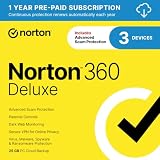
- ONGOING PROTECTION Download instantly & install protection for 3 PCs, Macs, iOS or Android devices in minutes!
- TOP-PERFORMING VPN Faster speeds, more server locations, and greater connection control to protect your privacy across all your devices, including Smart TVs.
- ADVANCED SCAM PROTECTION Help spot hidden scams online. With the built-in Genie AI assistant, you’ll never wonder if a message or email is suspicious again.
- REAL-TIME PROTECTION Advanced security protects against existing and emerging malware threats, including ransomware and viruses, and it won’t slow down your device performance.
- DARK WEB MONITORING Identity thieves can buy or sell your information on websites and forums. We search the dark web and notify you should your information be found.
Microsoft Defender strengths and weaknesses
- Strengths: Strong ecosystem integration, user-based licensing, identity and email context, Intune policy management, and a potentially compelling bundled cost.
- Weaknesses: Configuration can become complex; advanced hunting and XDR features require expertise; the complete experience may involve Intune, Entra, Sentinel, or premium Defender licensing.
- Choose another platform when: Microsoft is not central to your environment, your team lacks Microsoft security expertise, or you want to reduce dependence on Microsoft’s ecosystem.
Is CrowdStrike Falcon worth the premium?
CrowdStrike Falcon is the premium choice for organizations that prioritize cloud-managed prevention, EDR telemetry, threat hunting, and a clear path to enterprise-grade investigation and response. Falcon is not one product with one feature set: Falcon Go, Pro, Enterprise, and Falcon Complete have different capabilities and operating models.
The Tool Desk
Outbyte Driver Updater FREEScan for outdated or missing drivers - takes under a minuteDriver Scan →Outbyte PC Repair FREEClear out junk files and repair common Windows errorsFree Scan →CrowdStrike’s Falcon Go pricing page lists Falcon Go at $7.99 per device per month or $59.99 per device per year in U.S. pricing observed on August 16, 2026. Falcon Go purchases are limited to 100 devices. CrowdStrike lists Falcon Pro at $14.99 per device per month or $99.99 per device per year, and Falcon Enterprise at $19.99 per device per month or $184.99 per device per year. Falcon Complete requires contacting sales.
CrowdStrike describes Falcon Go as including next-generation antivirus, device control, mobile protection, and express support. CrowdStrike describes higher tiers as adding capabilities such as host firewall management, EDR, threat intelligence, and hunting. Confirm the exact entitlement matrix before purchase because packaging can change.
CrowdStrike’s Falcon trial documentation says the trial is preconfigured to a high-security setting and works optimally when Falcon is the only antivirus product on the endpoint. During migration, do not assume two real-time agents can safely coexist.
CrowdStrike strengths and weaknesses
- Strengths: Mature cloud telemetry, premium EDR positioning, investigation and hunting path, and an accessible entry tier for small businesses.
- Weaknesses: Advanced tiers can be expensive; alert volume and console complexity may require trained staff or MDR; device pricing must be compared fairly with user-based Microsoft bundles.
- Choose another platform when: You need only basic low-cost protection or you actually need a fully managed SOC but are buying a self-managed tier.
When should you choose SentinelOne Singularity?
SentinelOne Singularity is a strong choice when automated endpoint containment and remediation matter, and when the organization wants an endpoint-centered alternative that does not depend on Microsoft’s broader licensing ecosystem.
SentinelOne pricing is commonly quote-based or partner-mediated, so an exact price should not be inferred from comparison articles. Ask for the exact Singularity tier—such as Core, Control, or Complete—and identify whether EDR, cloud, identity, data retention, and managed-service features are included.
Automated response must be tested against administrative workflows and business applications. A response action that is technically effective but interrupts a production application can create operational risk. Pilot automation, define exclusions narrowly, and document who can approve destructive remediation.
SentinelOne trade-offs
- Strengths: Behavioral endpoint detection, automated response options, and a Microsoft-independent platform direction.
- Weaknesses: Quote-based pricing, tier differences, and the need to validate remediation behavior in the buyer’s environment.
- Choose another platform when: Transparent self-service pricing or a broad first-party identity, email, and productivity ecosystem is a primary requirement.
Is Bitdefender GravityZone a good small-business option?
Bitdefender GravityZone is a strong prevention-first option for small and midsize businesses that want centralized cloud administration, broad endpoint coverage, and an MSP-friendly purchasing model.
Bitdefender’s GravityZone Business Security Premium datasheet describes a business endpoint-security product that extends beyond traditional malware protection. The current feature and licensing matrix should be verified from the live vendor quotation because Business Security, Business Security Premium, Enterprise, and MSP versions are not interchangeable.
Recommended Free Tools
GravityZone Business Security Premium was included in the AV-Comparatives March–June 2026 business test. Bitdefender’s MSP documentation describes tiered pricing and pay-as-you-go licensing for service providers, making GravityZone commercially relevant for MSPs that need multi-tenant management.
Also popular on Amazon

- THREAT DETECTION – Stay one step ahead. Suspicious links, risky sites, viruses, and scams, caught automatically before they reach you.
- PERSONAL INFO PROTECTION – Keep your personal info safer. Identity monitoring watches for your exposed info and tells you what to do about it.
- SECURE CONNECTIONS – Just a few easy clicks, and we'll automatically protect your info on public Wi‑Fi, every time you connect.
- GUIDED ACTION – Know what matters and what to do next. Clear alerts and simple guidance make it easy to take action.
- MORE THAN ANTIVIRUS – Scam protection, identity monitoring, VPN, web protection, and antivirus work together to protect you, all in one place.
Bitdefender trade-offs
- Strengths: Prevention-oriented controls, cloud management, independent-test visibility, and MSP relevance.
- Weaknesses: Feature tiers can be difficult to compare, while EDR, XDR, vulnerability management, and MDR may be separately packaged.
- Choose another platform when: You insist on simple transparent pricing or need a large first-party identity and productivity ecosystem.
When is Sophos Intercept X the better choice?
Sophos Intercept X Advanced is most compelling for a business already using Sophos Firewall, email, wireless, or MDR services because coordinated purchasing and shared security context may reduce operational fragmentation.
Sophos pricing is generally quote-based through Sophos or an authorized partner. Confirm whether the proposal includes endpoint protection, server coverage, mobile protection, EDR, response, and Sophos MDR. Do not assume that buying several products from one vendor automatically produces a simpler workflow; test console usability and integration depth.
Sophos is a weaker default choice for organizations without Sophos infrastructure that primarily want transparent pricing and easy independent comparison. Sophos Intercept X capabilities depend materially on the selected product and MDR tier.
Who should consider ESET PROTECT Cloud?
ESET PROTECT Cloud suits businesses that prioritize comparatively low administrative overhead, granular controls, and broad endpoint support over a large integrated XDR ecosystem.
ESET pricing varies by edition, endpoint count, and contract term. The buyer should verify whether the selected edition includes the cloud console, EDR, server protection, premium support, and any managed-service capability. “Lightweight” is a product-positioning description here, not a measured performance claim.
ESET may be less suitable for a buyer seeking the market’s deepest premium EDR ecosystem or fully managed 24/7 human response. ESET remains worth evaluating when policy precision and a broad endpoint footprint matter more than ecosystem breadth.
When is Huntress better than another endpoint console?
Huntress is the most relevant alternative when a small business or MSP lacks the personnel to investigate and respond to alerts. Huntress Managed EDR or MDR should be evaluated as a human-operated security service, not as a direct antivirus equivalent.
What’s actually slowing this PC down?
Pick the symptom - the matching free tool is one click away.
Ask Huntress or the partner to define service scope, response authority, supported integrations, retention, escalation procedures, and the conditions under which the provider can isolate a device or remediate a threat. A managed service does not eliminate the need for patching, backups, MFA, email security, endpoint inventory, and a responsible incident-contact process.
Huntress may be a poor fit for a large enterprise requiring deep native endpoint telemetry, extensive XDR integrations, or a single-vendor global security platform. For a small organization, however, human alert review can be more valuable than buying a sophisticated self-managed EDR console that nobody monitors.
How should independent endpoint-security tests affect your decision?
Independent tests are useful evidence about protection, performance, usability, and false positives, but they do not identify a universal best hosted endpoint platform. Test scope, operating system, product version, tier, configuration, and measured category all matter.
Also popular on Amazon

- THREAT DETECTION – Stay one step ahead. Suspicious links, risky sites, viruses, and scams, caught automatically before they reach you.
- PERSONAL INFO PROTECTION – Keep your personal info safer. Identity monitoring watches for your exposed info and tells you what to do about it.
- SECURE CONNECTIONS – Just a few easy clicks, and we'll automatically protect your info on public Wi‑Fi, every time you connect.
- GUIDED ACTION – Know what matters and what to do next. Clear alerts and simple guidance make it easy to take action.
- MORE THAN ANTIVIRUS – Scam protection, identity monitoring, VPN, web protection, and antivirus work together to protect you, all in one place.
According to AV-TEST’s June 2026 business Windows test, 16 business endpoint products were evaluated on Windows 11 during May and June 2026 using current publicly available versions and vendor-default settings. Products could update and query cloud services during testing. AV-TEST scores protection, performance, and usability out of six points each, for a maximum of 18; a score of at least 10 earns the AV-TEST seal, while 17.5 or higher earns the “TOP PRODUCT” designation.
Crashes, No Sound, or Screen Glitches?
Random freezes, missing sound and display glitches usually trace back to one bad driver. Find and replace yours safely.Free scan · under a minutePC Slower Than It Used to Be?
A free scan shows the junk files, broken settings and background clutter dragging Windows down - then fixes them in one click.Free scan · Windows 10 & 11The AV-TEST results awarded high scores to products including Acronis, Avast, Kaspersky, Microsoft Defender Antivirus Enterprise, Norton Small Business, Sophos, Symantec, and WithSecure. The test covered Windows endpoints; it does not establish superiority in EDR investigation, cloud security, identity protection, integrations, or managed response.
AV-Comparatives’ March–June 2026 business test evaluated products on 64-bit Windows 11 and included business malware protection and real-world protection components. The test included Bitdefender GravityZone, CrowdStrike Falcon Enterprise, Microsoft Defender with Microsoft Endpoint Manager, Sophos Intercept X Advanced, ESET PROTECT, Elastic, Cisco, and Trellix, among others.
AV-Comparatives reported above-average false-positive counts for some products, including CrowdStrike, Elastic, ManageEngine, and Trellix, on non-business software. A false positive can block legitimate business applications and create help-desk and deployment costs. AV-Comparatives’ 2026 certification factsheet states that certification requires at least 90% in the Malware Protection Test, zero false alarms on common business software, and a non-business false-positive rate below its “Remarkably High” threshold.
SentinelOne, Huntress, and some MDR offerings may not appear in the cited business antivirus tests. Absence from a test is not evidence of weakness; it means the cited test does not provide evidence for that product or service.
Which endpoint-security controls should you compare?
Compare controls against actual business risks rather than counting marketing labels. A small office, a software-development company, a file-server-heavy business, and a regulated enterprise need different policies.
| Control area | Questions to ask | Why it matters |
|---|---|---|
| Malware and ransomware prevention | What local prevention operates offline, and which protections require cloud connectivity? | Endpoints need protection during travel, outages, and disconnected use |
| Exploit and memory protection | Are exploit, credential-theft, script, macro, and memory-attack controls included in the chosen tier? | File scanning alone does not describe modern attack prevention |
| Application and device control | Can administrators allowlist applications and control USB or removable media? | Controls reduce unwanted software and removable-media risk |
| Host firewall and web protection | Can the console manage host firewall rules, web access, and DNS protection? | Central policy is more consistent than unmanaged local settings |
| Response | Can an operator isolate a device, terminate a process, quarantine a file, search for an IOC, and remediate remotely? | Prevention does not replace containment after compromise |
| Recovery | Does the exact tier provide rollback or recovery, and what prerequisites apply? | Ransomware recovery claims need operational and licensing detail |
| Vulnerability management | Does the product prioritize vulnerabilities, or does it only report them? | Reporting a weakness is not the same as fixing it |
| Cross-domain telemetry | Are identity, email, SaaS, cloud, and network integrations included or separately licensed? | XDR value depends on actual connected data sources |
| Administration | Are RBAC, audit logs, APIs, SIEM export, and retention included? | Security operations and compliance require traceability and usable data |
What should you test in an EDR console?
EDR quality is more than the presence of an alert page. During a trial or technical evaluation, test whether an administrator can understand an incident quickly and take safe action.
- Open an endpoint timeline and determine whether the sequence of processes, users, files, network activity, and alerts is understandable.
- Inspect process-tree visibility and search for an indicator of compromise across the fleet.
- Test the query language, search speed, alert grouping, and case-management workflow.
- Confirm whether remote shell, device isolation, process termination, file quarantine, and remediation are available in the quoted tier.
- Check retention periods for raw telemetry, alerts, cases, and hunting data.
- Test API access, SIEM integration, RBAC, audit logs, export formats, and any data-retention fees.
- Confirm which actions work while the endpoint is offline and which actions wait for reconnection.
A sophisticated console is a liability if no one reviews alerts. Before purchase, name the person or service that receives high-severity alerts, define the response SLA, decide who may isolate a device, identify who approves destructive remediation, and cover nights and weekends.
Independent reader supportYour contribution helps us test, update, and keep practical guides available for everyone.How much does hosted endpoint security cost?
Hosted endpoint-security cost depends on more than the advertised agent price. Compare user or device units, annual or monthly billing, servers, mobile devices, EDR and XDR add-ons, MDR, data retention, premium support, implementation, and internal labor.
| Offering | Published price signal | Unit and term | Important qualification |
|---|---|---|---|
| Microsoft Defender for Business | $3 | Per user per month, paid yearly | U.S. small-business pricing observed August 2026; standalone Defender licensing does not equal a full Microsoft security stack |
| Microsoft 365 Business Premium | $22 | Per user per month, paid yearly | U.S. price observed August 2026; includes Defender for Business, Entra ID P1, Intune P1, and other capabilities |
| CrowdStrike Falcon Go | $7.99 monthly or $59.99 yearly | Per device; U.S. dollars | Purchases limited to 100 devices; observed August 16, 2026 |
| CrowdStrike Falcon Pro | $14.99 monthly or $99.99 yearly | Per device; U.S. dollars | Observed August 16, 2026; verify current entitlement matrix |
| CrowdStrike Falcon Enterprise | $19.99 monthly or $184.99 yearly | Per device; U.S. dollars | Observed August 16, 2026; Falcon Complete requires contacting sales |
| SentinelOne Singularity | Quote-based or partner-mediated | Exact unit and term require quote | Request the exact Core, Control, Complete, or managed-service tier |
| Bitdefender GravityZone | Quote-based and channel-dependent | Tier, endpoint count, and term dependent | MSP documentation describes tiered and pay-as-you-go licensing |
| Sophos Intercept X | Generally quote-based | Package and channel dependent | Separate endpoint, server, mobile, EDR, and MDR entitlements |
| ESET PROTECT Cloud | Edition and term dependent | Device count and edition dependent | Verify cloud, EDR, server, and support inclusions |
| Huntress Managed EDR/MDR | Partner- or quote-based | Service scope and endpoint coverage dependent | Compare human monitoring, response authority, retention, and escalation |
Microsoft’s $3 per-user price should not be compared directly with a complete per-device EDR platform unless the comparison includes Microsoft 365, identity, device management, email security, SIEM, and the internal labor needed to operate each option. Conversely, a premium EDR price does not automatically include a human SOC.
Also popular on Amazon
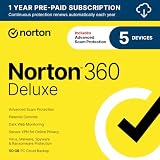
- ONGOING PROTECTION Download instantly & install protection for 5 PCs, Macs, iOS or Android devices in minutes!
- TOP-PERFORMING VPN Faster speeds, more server locations, and greater connection control to protect your privacy across all your devices, including Smart TVs.
- ADVANCED SCAM PROTECTION Help spot hidden scams online. With the built-in Genie AI assistant, you’ll never wonder if a message or email is suspicious again.
- REAL-TIME PROTECTION Advanced security protects against existing and emerging malware threats, including ransomware and viruses, and it won’t slow down your device performance.
- DARK WEB MONITORING Identity thieves can buy or sell your information on websites and forums. We search the dark web and notify you should your information be found.
What operating systems and endpoint types must you verify?
Every vendor proposal should include an explicit compatibility matrix. The dossier identifies Windows 10, Windows 11, Windows Server, macOS, Linux, iOS, Android, virtual desktops, cloud workloads, removable storage, ARM devices, and legacy operating systems as decision points, but it does not provide a current per-product version matrix. Do not infer exact support from a general product page.
| Endpoint type | Verification question | Common licensing or technical trap |
|---|---|---|
| Windows 10 and Windows 11 | Which editions, build levels, and security features are supported? | A Windows test result does not prove support for every business build |
| Windows Server | Which Server versions and roles are supported? | Workstation licenses may not cover servers |
| macOS | Which macOS releases and system extensions are supported? | Feature parity may differ from Windows |
| Linux | Which distributions, kernels, architectures, and server roles are supported? | Kernel limitations can affect prevention and telemetry |
| iOS and Android | Is the offering mobile threat defense, antivirus, MDM integration, or a separate app? | “Mobile support” does not necessarily mean full endpoint protection |
| Virtual desktops | Are nonpersistent images and golden-image deployments supported? | Licensing and agent identity can differ from physical devices |
| Cloud workloads | Are cloud servers and workloads included or separately licensed? | Endpoint protection may not equal workload security |
| ARM and legacy systems | Are the processor architecture and legacy operating system supported? | Unsupported systems may need compensating controls or replacement |
Also verify outbound connectivity, proxy support, TLS-inspection exceptions, regional data hosting, telemetry retention, subprocessors, cross-border transfers, customer-managed encryption, and whether telemetry can contain usernames, command lines, file paths, or other sensitive metadata.
How much administration does each model require?
Hosted software removes server maintenance, not security responsibility. Choose the operating model your organization can sustain.
| Operating model | Typical capability | Required responsibility | Risk if mismatched |
|---|---|---|---|
| Low administration | Basic EPP with guided policies | Maintain agents, review important alerts, and manage exclusions | Advanced attacks may receive limited investigation |
| Moderate administration | EPP plus EDR | Review alerts, investigate timelines, isolate devices, and remediate incidents | EDR data accumulates without meaningful response |
| High administration | Advanced EDR or XDR | Threat hunting, tuning, integration management, and incident coordination | Complexity, alert fatigue, and poorly tuned policies |
| Managed | MDR with human monitoring | Provide contacts, approve or delegate response authority, and fix underlying weaknesses | Service scope may be misunderstood as complete security coverage |
The decisive question is often “Who responds when an alert arrives?” Ask who receives high-severity alerts, the response SLA, who can isolate a device, who approves destructive actions, how nights and weekends are covered, and whether alerts flow into a SIEM or ticketing platform.
How can performance and false positives be assessed?
Evaluate security software on representative workloads instead of relying only on marketing claims or a laboratory score. Test boot and login impact, CPU and memory use, developer tools and build pipelines, database and file-server workloads, virtual machines, large software deployments, and line-of-business applications.
False positives deserve equal attention. Blocking legitimate business software can generate help-desk costs and interrupt operations. Exclusions should be narrow, documented, time-limited where possible, and reviewed after software changes. Excluding development folders, mail stores, databases, or entire drives can create dangerous blind spots.
Use pilot groups to test exploit prevention, controlled-folder access, behavioral blocking, rollback, VPN connectivity, backup software, development workflows, and business applications. Do not disable broad protections merely because a pilot exposed a conflict; first determine whether a narrow exception or policy adjustment solves the problem.
Free tools Windows power users keep installed
One-click scans. No signup required.
What are the most common deployment failures?
- Two real-time agents remain installed: Duplicate agents can conflict, increase resource use, generate duplicate alerts, and cause failed deployments. Test removal, tamper protection, and reboot behavior before broad rollout.
- EDR alerts are ignored: A self-managed EDR product is not MDR. Assign ownership, escalation, response authority, and coverage outside business hours.
- The cloud console is unreachable: Local prevention may continue, but remote response and policy changes may not. Verify offline enforcement and telemetry buffering.
- Ransomware controls block a business application: Use a pilot group and narrow documented exclusions rather than disabling protection globally.
- Server workloads use desktop policies: File servers, domain controllers, databases, terminal servers, and virtualization hosts require separate policy and licensing review.
- Mobile coverage is overstated: Distinguish mobile threat defense, mobile antivirus, MDM integration, and mobile-device licensing.
- Data residency is overlooked: Confirm telemetry regions, retention, subprocessors, encryption, cross-border transfers, and contractual requirements before deployment.
How should you migrate from an existing endpoint product?
- Inventory endpoints, servers, operating systems, architectures, virtual desktops, and critical applications.
- Export existing exclusions, policies, device groups, and alert-routing rules.
- Identify unsupported operating systems, servers, mobile devices, and workloads.
- Pilot the new agent on representative Windows, macOS, Linux, server, developer, VPN, backup, and line-of-business systems.
- Test performance, business applications, VPN, EDR visibility, isolation, remediation, uninstall, tamper protection, and reboot behavior.
- Confirm alert routing, escalation contacts, response SLAs, and after-hours coverage.
- Remove the previous agent only after the new platform reports correctly and the old agent’s tamper protection has been addressed.
- Roll out in staged groups rather than changing the entire fleet at once.
- Review incidents, false positives, exclusions, and performance after 7, 30, and 90 days.
- Document the exit process, data export, retained evidence, and how licenses and agents will be removed if the platform changes.
What should you ask before signing?
- What is the exact SKU, edition, and feature entitlement?
- Is billing per user or per device, and are servers and mobile devices separate?
- What are the minimum seats, annual or monthly terms, taxes, renewal changes, auto-renewal, and cancellation conditions?
- Which Windows, macOS, Linux, iOS, Android, server, ARM, VDI, and legacy versions are supported?
- What protection and telemetry continue while an endpoint is offline?
- Where is telemetry stored, how long is it retained, and what subprocessors or cross-border transfers apply?
- Are EDR, XDR, vulnerability management, host firewall, device control, SIEM export, APIs, and premium support included?
- What are the retention limits and data charges for EDR telemetry and threat hunting?
- Who monitors alerts, what is the response SLA, and who can isolate or remediate a device?
- Does MDR have authority to act automatically, or must the customer approve every response?
- What implementation assistance, training, and migration support are included?
- How can the customer export investigations and remove agents at contract termination?
Bottom line: which platform should you buy?
Start with fit, not a universal ranking. A Microsoft 365 Business Premium customer should first evaluate Defender because the bundle may provide the best practical value. A security team seeking premium EDR and hunting should compare CrowdStrike Falcon and SentinelOne Singularity. A prevention-focused SMB or MSP should examine Bitdefender GravityZone. A Sophos customer should test Intercept X in the existing Sophos Central environment. A business without security staff should prioritize Huntress or another clearly scoped MDR service.
Use independent Windows test results as evidence about protection, performance, usability, and false positives—not as proof of EDR quality or MDR effectiveness. Finally, buy only the tier that matches the person responsible for responding when the alert arrives.
Frequently Asked Questions
Is hosted endpoint protection the same as managed detection and response?
No. Hosted endpoint protection normally provides a cloud console and endpoint agent, while managed detection and response adds human monitoring and response by a security provider. A hosted EDR product still requires the customer to investigate alerts unless MDR is included.
Is Microsoft Defender for Business cheaper than CrowdStrike Falcon?
Microsoft Defender for Business has a lower published standalone U.S. price signal at $3 per user per month paid yearly, while CrowdStrike Falcon Go is listed at $7.99 per device per month or $59.99 per device per year. The comparison is not like-for-like because Microsoft licensing is user-based and Microsoft 365 bundles may include identity, device-management, and email capabilities.
Outdated Drivers Are Slowing You Down
One free scan finds every outdated or missing driver and matches the right update for your exact hardware.Free scan · exact hardware matchPC Slower Than It Used to Be?
A free scan shows the junk files, broken settings and background clutter dragging Windows down - then fixes them in one click.Free scan · Windows 10 & 11Can two endpoint-security products run at the same time?
Two real-time endpoint agents can conflict, reduce performance, create duplicate alerts, or cause deployment failures. Test migration and vendor-recommended coexistence behavior before installing a replacement alongside an existing antivirus product.
Does buying EDR provide 24/7 human response?
No. EDR provides endpoint telemetry and investigation or response tools; 24/7 human monitoring is an MDR service feature. Confirm who receives alerts, the response SLA, the provider’s authority to isolate or remediate devices, and after-hours coverage.
Quick Recap
Product prices and availability are accurate as of the date/time indicated and are subject to change. Any price and availability information displayed on Amazon at the time of purchase will apply.

