

iTechGuides is reader-supported. When you buy through links on our site, we may earn an affiliate commission. As an Amazon Associate I earn from qualifying purchases. Learn more
The best AI image generator in 2026 depends on the job: Design.com is the strongest fit when an image needs to become a finished marketing asset, ChatGPT Images is the strongest general-purpose starting point, Higgsfield suits a recurring character across a series of images, Midjourney leads for artistic images, Gemini/Imagen 4 suits photorealistic ideation, Firefly fits Adobe workflows, and Ideogram is the safest first choice for readable text in posters and graphics.
This comparison ranks nine user-facing products by workflow—not by a single “image quality” score. The products combine different underlying models, editors, reference-image tools, pricing systems, privacy settings, and commercial terms, so the best choice for a cinematic illustration may be the wrong choice for a product label or API pipeline.
Key takeaways
- Design.com is the best fit when generated images need to move directly into branded posts, ads, flyers, or presentations.
- ChatGPT Images and Gemini/Imagen 4 are the best general-purpose starting points, but they target different workflows: conversational editing versus Google-integrated photorealistic ideation.
- Midjourney is the strongest specialist recommendation for cinematic and artistic images, while Ideogram is the specialist to test first for posters, logos, and readable words.
- Adobe Firefly is the most natural fit for Adobe-centered commercial production, but Adobe’s “commercially safe” positioning is not a universal guarantee for every partner model available inside Firefly.
- Google describes Imagen 4 as supporting image generation up to 2K resolution and warns that complicated compositions, small faces, text, and thin structures can still be difficult.
- OpenAI’s GPT Image 2 API pricing snapshot lists $8 per 1 million input image tokens, $2 per 1 million cached input tokens, and $30 per 1 million output image tokens; API pricing is separate from ChatGPT subscriptions.
Quick comparison: which AI image generator should you choose?
| Tool | Best for | Generation and editing profile | Text and design fit | Main limitation |
|---|---|---|---|---|
| Design.com | AI images and branded marketing content | Text-to-image generation with detailed prompts, iterative generation, and AI editing | Strong fit for branded content; generated images can be used with templates, logos, colors, fonts, and 50+ design and AI tools | Less suited to users who only need a standalone image generator |
| ChatGPT Images / GPT Image 2 | General-purpose creation and conversational editing | Text-to-image, image input, and editing through conversational or API workflows | Strong practical text and multilingual instruction-following; test production typography | Consumer subscription limits and API token pricing are not directly comparable |
| Higgsfield | Consistent characters and campaign visuals | 15+ image models in one workspace, Soul ID character consistency, inpainting, and image-to-video | Nano Banana Pro is its option for headlines and labels; check spelling on final assets | Credit-based plans; cost depends on the model and resolution you choose |
| Melius | Image, video, and audio projects on one canvas | Node-based canvas with many image, video, and audio models; an agent wires the steps and picks models | Depends on the chosen model; the library includes Ideogram and GPT Image | Generating needs credits from a paid plan or a credit purchase |
| Midjourney | Artistic quality and cinematic images | Generation and visual exploration; less like a conventional layer-based editor | Excellent for mood, style, and art direction; not the first choice for exact layout | Less suitable for predictable object-level editing and enterprise-style workflows |
| Gemini / Imagen 4 | Photorealism and fast Google-based ideation | Generation through Gemini, Whisk, AI Studio, APIs, and Google platforms | Google reports improved typography, but documents remaining text and composition limitations | Access, quotas, and terms vary by Gemini, Flow, API, and enterprise product |
| Adobe Firefly | Adobe users and commercially cautious teams | Generation and editing across Adobe’s own and partner models | Strongest when the output continues into Photoshop, Illustrator, or other Adobe tools | Credits, model availability, and partner-model protections differ |
| Ideogram | Posters, logos, and text-heavy graphics | Creator-oriented image generation with a typography-focused reputation | Best specialist starting point for words inside an image; verify with identical prompts | Not a complete replacement for a layout or vector-editing application |
| FLUX.2 / Black Forest Labs | Developers, APIs, and open or self-hosted workflows | Hosted products and developer/open-weight variants | Useful where teams need pipeline control rather than a simple consumer editor | Models, licenses, hosting, resolutions, and commercial permissions vary |
These are editorial “best for” recommendations, not independently verified benchmark rankings. Prices, quotas, model names, regional availability, and terms can change; check the linked official plan or product page before subscribing.
What’s actually slowing this PC down?
Pick the symptom - the matching free tool is one click away.
What counts as an AI image generator?
An AI image generator is not limited to a text box that creates a picture from a prompt. The category includes text-to-image generation, image-to-image transformation, inpainting, outpainting, reference-image conditioning, character or product consistency, typography generation, vector creation, APIs, local models, and integrated design editors.
Popular on Amazon
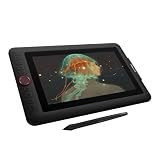
- Universal Compatibility: It's compatible with Windows 7/8/10/11, Mac 10.10 or later, Linux. Compatible with Photoshop, Illustrator, SAI, Painter, MediBang, Clip Studio, and more. It's ideal for digital drawing, animation, sketching, photo editing, 3D sculpting, and more (XP-PEN Artist12 drawing tablet must be connected to a computer to work).
- 11.6 HD IPS display: Artist12 drawing tablet is the XP-PEN’s latest smallest 1920x1080 HD display paired with 72% NTSC(100%SRGB) Color Gamut, presenting vivid images, vibrant colors and extreme detail for a stunning display of your artwork. It's pre-installed anti-reflective screen protector already. The slim touch bar can be programmed to zoom in and out, scroll up and down. Its 6 shortcut keys are customizable, XP-PEN driver allows the shortcut keys to be attuned to other different software
- Battery-free stylus with a digital eraser at the end: XP-PEN advanced P06 passive pen was made for a traditional pencil-like feel! Featuring a unique hexagonal design, non-slip & tack-free flexible glue grip, partial transparent pen tip, and an eraser at the end! Delivering technical sense, high efficiency, with a fashionable and comfortable grip, and there are 8 replacement pen nibs included with the multi-function pen holder
- XP-PEN Artist12 drawing tablet with screen is ideal for online education and remote work. Set the Artist12 drawing screen as an extended display when working from home, visually present your handwritten notes on the screen directly. Teachers and students can write and edit complicated functional equations with ease. It's compatible with XSplit, Zoom, Twitch, Microsoft Teams, ezTalks Webinar, Idroo, Scribbiar, wiziQ, and more
- XP-PEN provides a one-year warranty and lifetime technical support for all our drawing pen tablets/displays. Register your XP-PEN Artist12 drawing tablet on xp-pen web to apply for an ArtRage 5, openCanvas, or Explain Everything. Your laptop/desktop needs to have HDMI and USB-A ports available for the connection, or you need an extra converter(such as Thunderbolt to HDMI, depends on what ports that your laptop/desktop has) for the connection
The distinction matters because the nine products are not interchangeable. Midjourney is principally a generation and exploration environment. ChatGPT Images combines generation with conversational editing. Firefly is a multi-model creative platform, while Canva is primarily a design-production environment with AI generation inside it. FLUX is both a model family and a developer ecosystem. Ranking only the underlying model would hide the workflow a buyer is actually paying for.
How were the nine tools evaluated?
The August 16, 2026 research snapshot supports use-case recommendations and official product signals, but it does not provide a fully published, identical hands-on benchmark across all nine tools. The article therefore labels judgments as editorial recommendations rather than scientific scores.
A proper comparison should use the same account region, model version, aspect ratio, seed settings where available, prompt, and number of attempts. The useful question is not only whether an image looks impressive; it is whether the tool produces a usable final asset without excessive retries or manual repair.
| Criterion | What to inspect |
|---|---|
| Prompt adherence | Whether the tool follows all requested subjects, colors, poses, exclusions, and composition instructions |
| Image quality | Faces, hands, lighting, perspective, materials, reflections, and product geometry |
| Text rendering | Spelling, hierarchy, placement, multilingual text, numbers, and whether typography remains editable |
| Editing | Masked edits, object removal, background replacement, outpainting, and preservation of unaffected areas |
| Consistency | Whether a character, product, logo, or location survives across multiple scenes |
| Control and output | References, seeds, masks, aspect ratios, resolution, transparency, vectors, upscaling, and export formats |
| Business fit | Price per useful final asset, privacy, commercial terms, team controls, API access, and auditability |
1. Design.com: best for AI images and branded content
Choose Design.com when you want to generate custom AI images and turn them into finished designs in the same platform. Its AI image generator creates visuals from everyday text prompts that include the subject, setting, style, mood, lighting, colors, and composition. It can produce realistic scenes, product concepts, illustrations, backgrounds, abstract imagery, and other creative visuals within seconds.
Design.com’s main advantage is its wider design ecosystem. Generated images can be added to templates and combined with logos, brand colors, fonts, and other elements using 50+ design and AI tools. This makes it useful for creating social media posts, ads, flyers, posters, presentations, website graphics, and other branded content without switching platforms.
You can generate images without an account, while AI editing is also available for a limited number of free edits. The AI Design Plan starts at $3 per month when billed annually and includes 50 AI-generated images per month, 50+ design and AI tools, and access to 651,000+ templates.
Best for: marketers, content creators, entrepreneurs, and small businesses that want AI image generation alongside branding and design tools.
Do these 3 things before closing this tab:
1Repair Windows errors before they cause bigger problems2Scan for outdated or missing drivers - takes under a minute3Clear out junk files and repair common Windows errorsSkip it when: you only need a standalone image generator and do not plan to turn your images into branded or marketing content.
2. ChatGPT Images / OpenAI GPT Image 2: best general-purpose AI image generator
Choose ChatGPT Images when you want to describe, revise, and edit an image conversationally. ChatGPT Images is the best general-purpose starting point in this list for users who need more than a one-shot prompt. GPT Image 2 supports image input and output and is available through image-generation and image-edit endpoints, according to OpenAI’s GPT Image 2 model documentation.
GPT Image 2 is particularly useful when the request evolves: create a product scene, change the background, preserve the product, alter the lighting, and extend the canvas. The conversational workflow reduces the need to learn a model-specific prompt syntax. Practical text and multilingual instruction-following are important advantages, although no generator should be described as producing perfect typography every time.
For developers, OpenAI lists the model snapshot as gpt-image-2-2026-04-21 in the research snapshot. The same snapshot reports API pricing of $8 per 1 million input image tokens, $2 per 1 million cached input tokens, and $30 per 1 million output image tokens, according to OpenAI’s developer announcement. Those figures describe API usage, not a ChatGPT subscription, and actual workflow cost depends on image size, edits, retries, and output volume.
Best for: beginners who want an assistant-like workflow, marketers creating variations, and developers adding generation or editing to an application.
Skip it when: you need a dedicated art-direction community, fully deterministic local generation, or conventional editable layers for every element.
3. Higgsfield: best for consistent characters and campaign visuals
Choose Higgsfield when the same character or product has to appear across a series of images, and you want several leading models in one workspace. Higgsfield gives access to more than 15 image models, including Nano Banana Pro, GPT Image, Seedream, FLUX, Kling O1, and its own Soul model, so you can run the same prompt through different models and compare the outputs without changing tools.
Its distinguishing feature is Soul ID, which Higgsfield says helps keep a recognizable character across generations, even when the outfit, setting, or style changes. That makes it a practical choice for lookbooks, storyboards, and campaigns that need the same face in every frame. Use only a face you own or have permission to use, and treat consistency as something to verify in your own images rather than a guarantee.
Quick wins for a faster PC:
Scan for outdated or missing drivers - takes under a minuteDriver Scan →Clear out junk files and repair common Windows errorsFree Scan →Also popular on Amazon
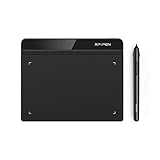
- Battery-Free Pen: StarG640 drawing tablet is the perfect replacement for a traditional mouse! The XPPen advanced Battery-free PN01 stylus does not require charging, allowing for constant uninterrupted Draw and Play, making lines flow quicker and smoother, enhancing overall performance
- Ideal for Online Education: XPPen G640 graphics tablet is designed for digital drawing, painting, sketching, E-signatures, online teaching, remote work, photo editing, it's compatible with Microsoft Office apps like Word, PowerPoint, OneNote, Zoom, Xsplit etc. Works perfect than a mouse, visually present your handwritten notes, signatures precisely
- Compact and Portable: The G640 art tablet is only 2 mm thick, it's as slim as all primary level graphic tablets, allowing you to carry it with you on the go
- Chromebook Supported: XPPen G640 digital drawing tablet is ready to work seamlessly with Chromebook devices now, so you can create information-rich content and collaborate with teachers and classmates on Google Jamboard’s whiteboard; Take notes quickly and conveniently with Google Keep, and effortlessly sketch diagrams with the Google Canvas
- Multipurpose Use: Designed for playing OSU! Game, digital drawing, painting, sketch, sign documents digitally, this writing tablet also compatible with Microsoft Office programs like Word, PowerPoint, OneNote and more. Create mind-maps, draw diagrams or take notes as replacement for mouse
Higgsfield lists native generation at up to 4K (4096 × 4096) with Nano Banana Pro and Seedream, standard aspect ratios including 1:1, 9:16, and 16:9, and brush-based inpainting for swapping objects, fixing backgrounds, or rewriting labels without regenerating the whole image. A finished image can also be turned into a video clip with supported models such as Kling and Seedance. Plans are credit-based, so check how many credits your chosen model and resolution consume before committing to a plan.
Best for: marketers, fashion and e-commerce teams, storyboard artists, and creators who need a recurring character or product across many images.
Skip it when: you need vector exports, editable layers, or a single-model tool without a credit system.
4. Melius: best for image, video, and audio work on one canvas
Melius is an AI-native operating system for creators where they work with an AI agent on a node-based canvas. It’s great for creators who want access to many leading model families and want to use each model’s strengths for different steps of a job, while the Melius agent takes on the time-consuming work of wiring it all together on one canvas. Beyond individual creators, it works well for marketers, e-commerce teams, and agencies that want a repeatable workflow or need to test many variants. Every node stays editable, so creators can step in and adjust any part of the work at any point.
Free tools Windows power users keep installed
One-click scans. No signup required.
5. Midjourney: best for artistic quality and cinematic images
Choose Midjourney when visual style, atmosphere, and cinematic impact matter more than conventional editing. Current comparison coverage places Midjourney among the leading options for artistic quality and cinematic still images. Midjourney is especially compelling for concept exploration, editorial illustration, environments, fashion-like imagery, and mood boards.
Midjourney’s advantage is not that it wins every technical category. Its strongest use case is producing an aesthetically coherent starting point quickly and helping an art director explore visual directions. Its weaker fit is a workflow requiring precise typography, editable layers, exact product geometry, or reliable local changes that leave every other pixel untouched.
Secondary comparison coverage has reported entry pricing around $10 per month, but the permitted research did not retrieve an official pricing page confirming current plan names, fast or relaxed quotas, privacy options, or commercial terms. Check the Midjourney account page and official documentation immediately before purchase.
Best for: artists, art directors, illustrators, and anyone prioritizing finished-looking cinematic images.
The Tool Desk
Outbyte PC Repair FREEClear out junk files and repair common Windows errorsFree Scan →Outbyte Driver Updater FREEScan for outdated or missing drivers - takes under a minuteDriver Scan →Skip it when: you need a conventional Photoshop-like editor, exact poster text, or a tightly governed team production pipeline.
6. Google Gemini / Imagen 4: best for photorealistic ideation
Choose Gemini with Imagen 4 when photorealistic scenes, rapid ideation, and Google ecosystem access are the priorities. Google describes Imagen 4 as its leading text-to-image model, with improved photorealism, detail, typography, and image generation up to 2K resolution on its official Imagen page.
Imagen 4 is a strong candidate for product concepts, people, environments, and realistic lighting studies. Google also explicitly acknowledges limitations with complicated compositions, small faces, text, thin structures, centered images, and nonsensical prompts. That qualification is important: a photorealistic first impression does not guarantee accurate labels, technical diagrams, or dense poster layouts.
Imagen access can appear through Gemini, Whisk, Google AI Studio, the Gemini API, and enterprise or developer platforms. Google’s Flow research snapshot displayed Google AI Pro at $19.99 per month with 1,000 monthly Flow credits and Google AI Ultra at $99.99 per month with 10,000 monthly Flow credits. Those are bundled Google AI plan signals, not proof of a standalone Imagen subscription; see the Google Flow plan page for current availability and conditions.
Google says Imagen outputs include SynthID, an invisible watermark intended to identify AI-generated images. SynthID helps with provenance, but it does not by itself resolve copyright, trademark, likeness, or permission questions.
Best for: Google users, realistic people and products, and quick visual exploration.
Skip it when: the image depends on dense exact typography, many interacting objects, or thin technical structures without manual review.
Also popular on Amazon
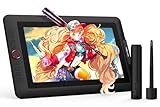
- PLEASE NOTE:XPPen Artist13.3 Pro drawing tablet Need to connect with computer,you need to use it with your computer or laptop, the 3 in 1 cable is included
- Drawing Tablet with Screen: Tilt Function- XPPen Artist 13.3 Pro supports up to 60 degrees of tilt function, so now you don't need to adjust the brush direction in the software again and again. Simply tilt to add shading to your creation and enjoy smoother and more natural transitions between lines and strokes
- Graphics Tablets: High Color Gamut- The 13.3 inch fully-laminated FHD Display pairs a superb color accuracy of 88% NTSC (Adobe RGB≧91%,sRGB≧123%) with a 178-degree viewing angle and delivers rich colors, vivid images, and dazzling details in a wider view. Your creative world is now as powerful as it is colorful
- Drawing Pad: One is enough- The sleek Red Dial on the display is expertly designed with creators in mind, its strategic placement allows for natural drawing postures. With just one wheel, you can effortlessly zoom in and out, adjust brush sizes, and flip the canvas—all tailored to suit the habits of everyday artists. The 8 customizable shortcut keys allow you to personalize your setup, streamlining your workflow and enhancing creative efficiency
- Universal Compatibility & Software Support:supports Windows 7 (or later), Mac OS X 10.10 (or later), Chrome OS 88 (or later), and Linux systems. Fully compatible with major creative software including Photoshop, Illustrator, SAI, and Blender 3D. Register your device to access additional programs like ArtRage 5 and openCanvas for expanded creative possibilities.
7. Adobe Firefly: best for Adobe users and commercially cautious teams
Choose Adobe Firefly when generated assets need to move directly into an Adobe-centered production workflow. Adobe presents Firefly as a platform for generating and editing images, video, audio, and designs. Adobe’s product material also lists Adobe models alongside partner models from companies including Google, OpenAI, Black Forest Labs, Runway, Luma, and Ideogram on the Firefly product page.
Firefly’s practical advantage is workflow continuity: a designer can generate, revise, and continue production in tools such as Photoshop or Illustrator rather than exporting an image into an unrelated application. Adobe positions its own Firefly models around commercially safe generation and production-oriented controls. “Commercially safe” is a vendor positioning claim, not a universal guarantee that every output is infringement-free or that every partner model inside Firefly has identical protections.
For client work, inspect the specific model, plan, and terms used. Check whether the image contains a recognizable person, trademark, copyrighted character, or reference asset supplied without permission. Current Firefly prices, generative-credit quantities, partner-model access, and any “unlimited” conditions should be rechecked on Adobe’s current Creative Cloud plans and the generative credits FAQ.
Best for: designers, agencies, marketers, and Adobe subscribers who need generation plus finishing tools.
Skip it when: you want the simplest low-cost image-only tool or need every partner model to carry the same commercial terms.
Outdated Drivers Are Slowing You Down
One free scan finds every outdated or missing driver and matches the right update for your exact hardware.Free scan · exact hardware matchPC Slower Than It Used to Be?
A free scan shows the junk files, broken settings and background clutter dragging Windows down - then fixes them in one click.Free scan · Windows 10 & 118. Ideogram: best for readable text, posters, and logos
Choose Ideogram first when the image must contain a readable headline, label, number, or wordmark-like design. Current comparison coverage consistently positions Ideogram as a specialist for typography, posters, logos, and images containing text. That is a strong editorial category recommendation, not a claim that Ideogram renders every paragraph or language perfectly; identical prompt testing is still necessary.
Test Ideogram with a short headline, a five-word product label, prices and numbers, non-English text, a logo-like wordmark, and text placed in a specified region. Also check whether the output is raster artwork or editable vector text. A correctly spelled word inside a generated image is not the same as an editable logo or legally protectable trademark.
Ideogram is often more useful than an art-first generator for a poster concept, but a finished production asset may still require Illustrator, Canva, Photoshop, or another layout application. Review current plan limits and commercial terms on the official Ideogram site and its features page.
Best for: event posters, social graphics, marketing concepts, signs, labels, and typography-heavy visuals.
Recommended Free Tools
Skip it when: you need a full layer-based design workflow, local generation, or painterly cinematic exploration above all else.
9. FLUX.2 / Black Forest Labs: best for developers and open-model flexibility
Choose FLUX when you need API integration, deployment control, or the possibility of using an open-weight variant. FLUX.2 is not one uniform consumer product. The ecosystem includes hosted products and developer-oriented or downloadable variants, and current coverage places it among the major API and open-model options.
Before selecting a FLUX variant, identify the exact model and distribution channel. Hosted Pro or Max products can have different prices, resolutions, rate limits, retention practices, and commercial permissions from a downloadable or self-hosted model. “Open” may refer to open weights, source code, or a permissive license; those are not interchangeable claims.
Local generation can improve privacy and control, but it transfers responsibility to the operator. The operator must evaluate hardware, model licenses, checkpoints, datasets, prompt and upload retention, output review, and deployment security. Start with the Black Forest Labs site and FLUX documentation rather than treating third-party hosted access as equivalent to the original model.
Best for: developers, internal creative pipelines, API users, and technical teams that value control.
Skip it when: you want a polished consumer editor with minimal setup or do not want to manage licensing and infrastructure questions.
Also popular on Amazon

- Ergonomic& Fanless Design for Continuous Creative Comfort: The seamless, button-free display keeps your hand movements natural and uninterrupted, allowing your wrist to glide smoothly across its surface, and the symmetrical design enables comfortable creation in both landscape or portrait orientation, accomodating you no matter which position you prefer to work in. For increased comfort, the fanless, high-quality metal backing ensures rapid heat dissipation, so you can focus on creating while your device stays cool and silent.
- Excellent Color Performance: The 10-bit display delivers 1.07 billion colors, ensuring incredible color accuracy amongst any creative project. Additionally, the Pen Display 16 Lite offers strong Color Space performance, covering some of the most commonly used standards across different creative designations, allowing you to view your work as needed without requiring color calibration of your display.
- Super AG Etching Technology: Xencelabs art drawing display comes with screen's anti-glare technology, Super AG Etching, reduces screen reflections for a clear, distraction-free view, even in well-lit rooms or where there are ceiling lights, and there is no sparkling effect to distract or tire your eyes.
- Studio Level Pen Display: Experience fluid, accurate, and responsive pen strokes. With the Pen Display 16 Lite's meticulously tuned pressure curve, pressure ranges from the initial 3g to 500g, catering to various drawing styles and hand weights. With its Super AG Etching surface, the Pen Display 16 Lite provides smooth pen control and a pen-and-paper-like drawing experience.
- Thin, Lightweight, Portable: Because it was designed with portability in mind, the Pen Display 16 Lite features a 16-inch screen with a thickness of only 0.47 inches (12mm) and weight of only 2.67lbs (1.21kgs). It also has single USB-C cable connectivity, allowing for easy use and flexible positioning.
Which AI image generator is best for each use case?
| Use case | Best first choice | Why | Important qualification |
|---|---|---|---|
| Best for branded marketing content | Design.com | Generated images go straight into templates and the editor with your logo, brand colors, and fonts. | Best when the deliverable is a finished marketing asset, not only a standalone image. |
| Best overall for beginners | ChatGPT Images | Conversational prompting and iterative editing are easy to understand | Subscription access and image limits differ from API access |
| Best for a consistent character across images | Higgsfield | Soul ID helps keep a recognizable character as outfits, settings, and styles change | Use only faces you own or have permission to use, and compare every frame before publishing |
| Best for artistic or cinematic images | Midjourney | Strong aesthetic output and visual style exploration | Less suited to exact layout and conventional layer editing |
| Best for photorealistic people and products | Gemini / Imagen 4 | Google emphasizes photorealism and detail improvements | Complex compositions, small faces, text, and thin structures still require checking |
| Best for readable text | Ideogram | Its current product positioning and comparison coverage emphasize typography | Run identical spelling and layout tests; add final type in a design tool when necessary |
| Best for editing an existing image | ChatGPT Images | GPT Image 2 supports image input and editing | Test whether edits preserve labels, faces, and unaffected areas |
| Best for Adobe production | Firefly | Generation is connected to Adobe’s broader creative workflow | Partner-model terms may differ from Adobe-model terms |
| Best for developers and APIs | FLUX or GPT Image 2 | FLUX offers model/deployment flexibility; GPT Image 2 offers a documented image API | Compare exact output costs, licenses, latency, hosting, and retention |
| Best for privacy or local generation | A suitable self-hosted FLUX variant | Local deployment can reduce reliance on a consumer gallery or hosted workflow | Privacy improves only if the deployment, logs, hardware, and model license are managed correctly |
How good is text rendering in 2026?
AI image generators can produce useful text, but no tool should be described as perfect. Text accuracy is a separate capability from image quality, and a generator that creates a beautiful scene may still misspell a label or distort a headline during a later edit.
Use a common test such as: “Design a square event poster that says exactly ‘NIGHT MARKET — FRIDAY 8 PM’ in large, legible cream-colored lettering, with a red lantern, dark navy background, and generous margins.” Record exact spelling, placement, hierarchy, punctuation, and whether the result remains usable without manual correction. Then test numbers, non-English text, curved text, a logo-like wordmark, and text in a specified region.
Free tools Windows power users keep installed
One-click scans. No signup required.
Short text in a prominent region is generally a more realistic target than a paragraph-sized poster. For dependable production typography, generate the artwork without words and add the final text in Canva, Photoshop, Illustrator, or another conventional layout tool. Ideogram is the first specialist to test, while Google reports improved typography for Imagen 4; neither claim establishes universal superiority without identical in-house tests.
How good is AI image editing?
AI image editing ranges from true masked editing to whole-image regeneration, conversational revision, generative fill, reference conditioning, and ordinary filters. Those operations should not be treated as equivalent.
| Editing requirement | What a serious test should request | What to verify |
|---|---|---|
| Object removal | Remove one object while preserving the subject and lighting | Whether shadows, texture, and surrounding geometry remain believable |
| Color change | Change clothing or product color without changing shape | Whether the face, material, reflections, and silhouette remain intact |
| Background replacement | Replace the background while preserving the foreground subject | Edges, lighting direction, perspective, and contact shadows |
| Local correction | Fix one hand or facial region | Whether the rest of the image changes unexpectedly |
| Outpainting | Extend the canvas horizontally | Seamless perspective, lighting, repeated objects, and resolution |
| Label preservation | Change the scene while retaining a product label | Exact spelling and logo shape after editing |
OpenAI’s documentation specifically describes GPT Image 2 as supporting image inputs and editing. Conversational editing is its clearest general-purpose advantage. For any product, however, test a common source image and compare the requested region with the untouched region; a visually attractive regeneration may not be a faithful edit.
Independent reader supportYour contribution helps us test, update, and keep practical guides available for everyone.How can you keep a character or product consistent?
No AI image generator should be treated as guaranteeing perfect character or product consistency. Independent generations commonly drift in facial features, clothing, dimensions, logo placement, lighting, or camera position.
Windows Errors? Fix Them Before They Spread
Repair common Windows errors and clear accumulated junk for a smoother, more stable PC - no reinstall needed.Free scan · no reinstallOutdated Drivers Are Slowing You Down
One free scan finds every outdated or missing driver and matches the right update for your exact hardware.Free scan · exact hardware match- Use a reference image where the product allows it.
- Reuse the same prompt, camera description, aspect ratio, and style instructions.
- Reuse or lock a seed when the product supports that control.
- Prefer image-to-image or editing workflows over unrelated text-to-image generations.
- Generate the scene first and make local changes afterward.
- Use manual compositing when identity or packaging must be exact.
Test three scenes with the same character or product. Compare face and clothing, product dimensions, logo placement, lighting continuity, and unwanted changes after edits. A consistency feature that exists only on a particular model or paid plan should not be generalized to the entire product.
What does “free” mean for AI image generators?
“Free” can mean a daily limit, trial credits, slower generation, access to an older model, account-required access, or a plan whose commercial rights differ from paid access. The research snapshot does not provide verified current free-plan quotas for all nine products, so exact free limits should not be treated as stable facts.
Before relying on a free tier, check six details: which model is included, image resolution, queue speed, daily or monthly quota, watermark or gallery settings, and commercial-use terms. Never call a plan unlimited without identifying the model, speed or relaxed-queue conditions, resolution, fair-use throttling, and whether edits or upscaling consume additional credits.
How should you compare subscription and API costs?
Compare the cost of a usable final asset, not simply the advertised price or cost per generation. A cheap image that requires twenty retries can cost more in credits and staff time than a higher-priced first-pass result.
The Tool Desk
Outbyte PC Repair FREEClear out junk files and repair common Windows errorsFree Scan →Outbyte Driver Updater FREEFix the driver behind crashes, sound loss and screen glitchesFind Drivers →Consumer subscriptions, bundled plans, hosted APIs, and self-hosted models have different cost structures. OpenAI’s GPT Image 2 API token prices cannot be compared directly with a ChatGPT monthly subscription. Google AI Pro and Ultra include broader Google services and Flow credits, so their value depends on whether the reader uses those bundled services. FLUX self-hosting may avoid a consumer subscription but introduces hardware, maintenance, electricity, licensing, and engineering costs.
| Buying situation | Most sensible comparison | Common mistake |
|---|---|---|
| Occasional personal images | Free access, output quality, account requirements, and editing convenience | Paying for a high-volume plan used only a few times |
| Daily creator work | Useful final assets per month, retries, resolution, upscaling, and private generation | Comparing monthly prices without comparing quotas |
| Adobe-centered work | Firefly credits plus the value of Photoshop, Illustrator, and workflow integration | Assuming every model exposed in Firefly has identical terms |
| API production | Input/output pricing, latency, resolution, rate limits, retries, and retention | Using consumer subscription pricing as an API cost estimate |
| Local deployment | Hardware and operational cost plus license permissions and privacy | Assuming open weights automatically mean open-source or unrestricted commercial use |
Can you sell AI-generated images?
You may be able to use an AI-generated image commercially, but “commercial use,” “ownership,” “copyright protection,” “licensed training data,” and “vendor indemnity” are separate questions. The answer depends on the exact product, model, plan, country, uploaded references, visible people or brands, and intended use.
Review the plan-specific license before using an image in advertising, publishing, packaging, a client campaign, or a logo. Check restrictions involving trademarks, public figures, adult content, copyrighted characters, and personal likenesses. Confirm whether the vendor can use prompts or uploads for product improvement, whether enterprise or API terms differ, and whether a watermark or provenance marker is applied.
Adobe emphasizes commercially safe models, but commercially safe does not mean every output is guaranteed infringement-free, particularly when a Firefly workflow uses a partner model. Google’s Labs FAQ says commercial use is governed by applicable Terms of Service and says Google will not claim ownership of original content generated by some services; that service-specific wording should not automatically be extended to every Gemini or Imagen deployment.
Users remain responsible for permission to use reference images and for reviewing recognizable people, trademarks, copyrighted characters, and confusingly similar designs. A generated wordmark is not automatically a legally controlled trademark. For high-value branding, advertising, publishing, or client work, obtain jurisdiction-specific legal advice.
Also popular on Amazon
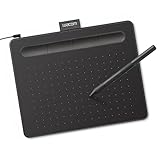
- Wacom Intuos Small Graphics Drawing Tablet: Enjoy industry leading tablet performance in superior control and precision with Wacom's EMR, battery free technology that feels like pen on paper
- Works With All Software: Wacom Intuos tablet can be used in any software program to explore new facets of digital creativity; draw, paint, edit photos/videos, create designs, and mark up documents
- What the Professionals Use: Wacom's industry leading pen technology and pen to paper feeling makes it the preferred drawing tablet of professional graphic designers
- Software and Training Included: Only Wacom gives you software with every purchase. Register your Intuos tablet and gain access to some of the best creative software and Wacom's online training
- Wacom is the Global Leader in Drawing Tablet and Displays: For over 40 years in pen display and tablet market, you can trust that Wacom to help you bring your vision, ideas and creativity to life
What privacy and team features matter?
Privacy is a product and plan property, not a general property of AI image generation. Ask whether prompts and uploads are retained, whether they may be used for model improvement, whether public galleries are enabled, whether content can be deleted, and whether business or enterprise terms change the answer.
Teams should also check shared libraries, brand kits, permissions, administrative controls, prompt and asset history, batch generation, approval workflows, API access, export formats, and provenance. A consumer plan may be excellent for an individual creator but unsuitable for confidential client material or an auditable production pipeline.
What should you do when an AI image fails?
Garbled or incorrect text
- Shorten the wording and place the exact text in quotation marks.
- Specify large, centered, high-contrast lettering with generous margins.
- Generate the artwork without text and add typography in Canva, Photoshop, Illustrator, or another editor.
- Try Ideogram for a text-focused comparison.
The model ignores a long prompt
- Reduce simultaneous constraints.
- Put the most important subject and composition first.
- Organize the prompt into subject, setting, camera, lighting, style, and exclusions.
- Generate the broad scene first and edit details afterward.
Hands, faces, or thin objects look wrong
Crop or enlarge the affected area, simplify the pose, regenerate locally, and use conventional retouching for the final correction. Google specifically documents continuing Imagen limitations involving complicated compositions, small faces, text, and thin structures.
Quick wins for a faster PC:
Scan for outdated or missing drivers - takes under a minuteDriver Scan →Clear out junk files and repair common Windows errorsFree Scan →The tool refuses a prompt
A refusal can result from a safety classifier, a public-figure or copyrighted-character reference, sensitive content, a policy change, or an account or regional limit. Do not attempt to evade safety controls. Rewrite the request around an original subject and consult the vendor’s current policy.
When should you not use an AI image generator?
A conventional design, illustration, retouching, or 3D tool is often better when the deliverable requires exact typography, a legally controlled logo, pixel-perfect product packaging, a precise technical diagram, a faithful likeness, editable layers, guaranteed repeatability, or a complete audit trail.
AI generation is often most valuable for ideation, variations, backgrounds, mood boards, concept exploration, and assets that receive human finishing. The more expensive, regulated, brand-sensitive, or repeatable the final deliverable, the more important it becomes to preserve source files, approvals, licenses, reference permissions, and human review.
Is a two-tool workflow better than one subscription?
For many serious users, the best answer is a combination: one tool for visual generation and another for typography, layout, retouching, or production control.
| Combination | Best workflow |
|---|---|
| Midjourney + Photoshop | Art direction and cinematic exploration followed by professional finishing |
| Ideogram + Illustrator or Canva | Poster or text concept generation followed by controlled typography and layout |
| Firefly + Photoshop | Adobe-centered generation, generative editing, and finishing |
| GPT Image + Canva or Photoshop | Conversational generation and revisions followed by campaign layout |
| FLUX/API + internal pipeline | Developer-controlled, high-volume, or self-hosted production |
Final recommendations
There is no universal best AI image generator in 2026. Start with ChatGPT Images for general-purpose creation and editing, Higgsfield for a consistent character across images, Midjourney for artistic quality, Gemini/Imagen 4 for photorealistic ideation, Firefly for Adobe production, Ideogram for text, FLUX for developer control, and Canva for finished social and marketing designs.
Frequently Asked Questions
What is the best AI image generator in 2026?
ChatGPT Images is the best general-purpose starting point for conversational generation and editing. Midjourney is a better choice for cinematic artistic output, Gemini/Imagen 4 for Google-integrated photorealism, Firefly for Adobe workflows, and Ideogram for text-heavy graphics.
Which AI image generator keeps the same character consistent across images?
Higgsfield is built for it: Soul ID helps keep a recognizable character across generations, even when the outfit, setting, or style changes, and you can test the same character with several models, including Nano Banana Pro and Seedream, in one workspace. Use only a face you own or have permission to use, and compare the results side by side before publishing.
Which AI image generator is best for text in images?
Ideogram is the strongest specialist starting point for readable text, posters, logos, and typography-heavy visuals according to current comparison coverage. Test exact spelling, numbers, language, placement, and edit stability before using the output commercially.
Recommended Free Tools
Can AI-generated images be used commercially?
Commercial use depends on the exact tool, model, plan, location, reference assets, and intended use. Review current plan-specific terms and check trademarks, likenesses, copyrighted characters, uploaded references, privacy, and vendor indemnity rather than assuming that commercial use means the image is infringement-free or copyright-protected.
What is the best AI image generator for developers?
FLUX is the strongest first option for developers who need hosted APIs, open-model flexibility, or possible self-hosting, while GPT Image 2 is a strong documented image-generation and editing API option. Compare the exact model license, output pricing, rate limits, hosting, latency, and data-retention terms.
Is a free AI image generator enough for professional work?
A free plan may be enough for experimentation and occasional personal images, but professional work requires checking model access, resolution, quotas, queue speed, watermarks, privacy, and commercial terms. Free access can have different limits or rights from paid access.
The Bottom Line
Bottom line: Choose the tool that matches the deliverable, not the most impressive demo. Use Design.com when generated images need to become branded marketing materials, Midjourney for art, ChatGPT Images for conversational editing, Higgsfield when the same character must carry across a series, Imagen for realistic ideation, Firefly for Adobe-centered work, Ideogram for readable words, and FLUX for technical control. For important commercial work, combine generation with human editing and a plan-specific rights review.

