
iTechGuides is reader-supported. When you buy through links on our site, we may earn an affiliate commission. As an Amazon Associate I earn from qualifying purchases. Learn more
HBM, CDM, and MM are three device-level electrostatic-discharge (ESD) test models, not interchangeable voltage scales. HBM simulates a discharge from a charged person, CDM a discharge from a charged device, and MM a discharge from machinery or handling equipment. Current device qualification generally uses HBM and CDM; MM is mainly relevant when a legacy specification or a specific equipment-related question calls for it.
How HBM, CDM, and MM differ
| Comparison | HBM | CDM | MM |
|---|---|---|---|
| What is charged? | A human body. | The device itself, charged by an electric field. | Machinery, furniture, or automated handling equipment is represented by the model. |
| What does it discharge to? | A semiconductor device. | A conductive contact or ground when the charged device makes contact. | A device pin in the machine-model test setup. |
| Discharge character | A defined human-body-model discharge. | A small, very fast field-induced discharge from the device. | A machine-model discharge; the cited guidance does not give a pulse-duration value. |
| Damage relationship | Can produce damage similar to MM, but results are not identical. | Represents a different charge and discharge path from HBM and MM. | Damage is often similar to HBM damage and occurs at a significantly lower voltage, according to ESD Association guidance. |
| Governing method or guidance | ANSI/ESDA/JEDEC JS-001-2024. | ANSI/ESDA/JEDEC JS-002-2025. | ESD Association machine-model guidance and procedure; no standard number is established here. |
| Role in qualification today | Used for current device qualification. | Used for current device qualification. | Rapidly being discontinued as a component qualification requirement; may still be requested for a legacy specification or investigation. |
| How to report a result | State the HBM model and the tested voltage/classification. | State the CDM model and the tested voltage/classification. | State the MM model and the tested voltage/classification. |
The model name matters as much as the voltage. A rating without its model does not tell you which discharge the device was tested against.
What each test represents
HBM: a charged person discharging into a device
ANSI/ESDA/JEDEC JS-001-2024 defines procedures for testing, evaluating, and classifying devices for sensitivity to a specified human-body-model ESD discharge. Its scope includes packaged semiconductor devices, thin-film circuits, optoelectronic devices, hybrid circuits, discrete devices, multi-chip modules, bare die, and wafer die. The standardized method is intended to make classifications repeatable across devices and testers.
Free tools Windows power users keep installed
One-click scans. No signup required.
CDM: a charged device discharging on contact
Under ANSI/ESDA/JEDEC JS-002-2025, the device is charged by an electric field and then discharged. The model reflects a handling or assembly event in which a charged component touches grounded metal or another conductive contact. The standard covers packaged semiconductor and related device classes, and excludes socketed discharge-model testers.
Popular on Amazon
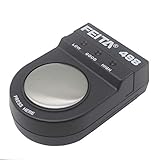
- √ ESD wrist strap tester is widely used and can be connected to all ESD-compliant wired wrist straps with a banana jack.
- √ Many wrist straps work well together, have tight contacts, low contact resistance, good connectivity, long life, and good oxidation resistance.
- √ FEITA 498 tester eliminate product damage caused by static electricity and ensure the safety of every employee.
- √ Various grounding systems can be quickly and easily inspected from any location.
MM: a machine-related discharge model
The machine model approximates ESD from machinery, furniture, or automated handling equipment. ESD Association fundamentals guidance describes a procedure using three pulses on each pin under test, with several pin combinations and a one-second delay between consecutive pulses. MM damage is often similar to HBM damage, but the reported MM voltage can be significantly lower; that observation does not provide a conversion between the models.
Is HBM harsher than CDM?
There is no useful universal answer based on the voltage numbers alone. The tests create different discharge paths and pulse characteristics: HBM models a person discharging into a device, while CDM models the device discharging after it has become charged. A higher numerical voltage in one model does not establish that it is the harsher test or that the device will be more robust in a real-world event.
Also popular on Amazon

- Compact and Portable Design: Small size, cordless, portable operation for use in any work area
- Clear Pass/Fail Indicators: Provides clear audible and visible fail/pass indications with LED lights and buzzer system
- Convenient Ground System Testing: Quickly and easily check ground systems at any place in your workspace
- Simple Push Button Operation: Responsive push button wrist strap tester with standard ground wrist strap compatibility using wire with banana plug male end (wrist strap not included)
- Durable ESD-Safe Construction: Fabricated in a durable, ESD-safe plastic housing and equipped with a 9V lithium battery
Use the test model, its specified procedure, and the device’s classification together when interpreting results. The cited standards define separate methods, so comparing their voltage ratings as if they measured the same event is misleading.
Crashes, No Sound, or Screen Glitches?
Random freezes, missing sound and display glitches usually trace back to one bad driver. Find and replace yours safely.Free scan · under a minutePC Slower Than It Used to Be?
A free scan shows the junk files, broken settings and background clutter dragging Windows down - then fixes them in one click.Free scan · Windows 10 & 11Can HBM, CDM, and MM voltage ratings be converted?
No direct conversion is established. HBM and MM results can be related in the broad sense that they may produce similar damage, but they are not identical; IEC 60749-26:2018, technically based on JS-001-2014, explicitly notes that HBM and MM results are similar but not identical. CDM differs in its charging and discharge path and is usually a much shorter event. Do not infer an MM or CDM rating from an HBM number, or an HBM rating from either of the others.
Also popular on Amazon

- Verifies the functionality of an operator’s wrist strap and footwear
- Footwear test requires foot plate
- A rocker switch allows the operator to select a wrist strap or footwear test
- Audible and visual alarm
- If failure occurs, the tester will also display grounding device’s resistance is too low or too high
When comparing datasheets or qualification reports, match like with like: the same model, the applicable test method and edition, and the voltage or classification reported under that method. If a customer requirement names a model, a rating under another model does not demonstrate compliance with it.
Which ESD tests are used for qualification today?
For current device qualification, the relevant methods are JS-001 for HBM and JS-002 for CDM. The ESD Association says the industry is moving away from MM as a component qualification requirement and toward HBM plus CDM. MM can still matter when a customer’s legacy specification requires it, when investigating a failure, or when a particular machine-related discharge scenario needs evaluation.
Also popular on Amazon
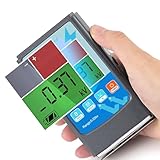
- 【2 IN 1 Versatility】Effortlessly tackle two critical ESD tasks with one versatile tool. This 2-in-1 meter precisely measures surface static voltage on objects (0 to ±20kV) and accurately evaluates the performance of your ionization equipment by testing ion balance (0 to ±200V).
- 【Precision Engineering】Measurement range: 0-20kv | Ion Balance Measurement Range 0~±200V | Measurement Accuracy: ±10% | Engineered for reliable, accurate results. The integrated grounding buckle ensures a stable reference for precise readings. For clear and consistent measurements, two LED guide lights maintain the perfect 1-inch distance from the object.
- 【Instant-Read LCD Display】The high-contrast LCD screen updates 5 times per second for real-time data tracking. It intelligently uses red to indicate positive charges and blue for negative charges, making polarity identification immediate.
- 【Sound Alarm】Automatic alarm when the electrometer is turned on, automatically shut down and exceeds the measurable range. These smart alerts prevent user error and inform you of the instrument's status at all times, enhancing operational safety and convenience.
- 【Broad Industry Application】: Your go-to meter for multiple industries and materials. Ideal for ESD-sensitive environments like electronics manufacturing, laboratories, and cleanrooms. Confidently test a wide range of materials including textile fibers, carpets, paper, rubber, plastics, and PCBs.
There is a version distinction worth checking: the ESD Association laboratory-certification program lists JS-001-2024 and JS-002-2022 as device-level qualification methods, while the current CDM standard identified here is JS-002-2025. Confirm the required edition with the customer, laboratory, or qualification plan rather than assuming those references are interchangeable.
Do these 3 things before closing this tab:
1Fix the driver behind crashes, sound loss and screen glitches2Clear out junk files and repair common Windows errors3Scan for outdated or missing drivers - takes under a minuteWhat the IEC ESD-control thresholds mean
IEC 61340-5-1:2024 applies to organizations handling parts rated at least 100 V HBM and 200 V CDM, and addresses isolated conductors below 35 V. These figures describe the applicability of an ESD-control-program standard; they are not universal product pass/fail limits and do not mean every semiconductor must meet those ratings.
Keep two questions separate: what ESD-control measures an organization’s handling program requires, and what HBM or CDM sensitivity classification a particular device achieved. The IEC thresholds address the former, not a substitute for the device’s test result.
Quick Recap
How to read an ESD rating in a datasheet
- Find the model label: HBM, CDM, or MM. Do not treat a bare voltage value as a complete rating.
- Check the cited standard and edition, especially if a customer or qualification plan names a specific revision.
- Read the classification or voltage in the context of that model’s test; do not convert it to another model.
- For a product requirement, confirm that the datasheet’s model and method match the requirement. A rating under a different model does not establish compliance.

