
Quick wins for a faster PC:
Fix the driver behind crashes, sound loss and screen glitchesFind Drivers →Clear out junk files and repair common Windows errorsFree Scan →Scan for outdated or missing drivers - takes under a minuteDriver Scan →iTechGuides is reader-supported. When you buy through links on our site, we may earn an affiliate commission. As an Amazon Associate I earn from qualifying purchases. Learn more
Demand for AI data centers, GPUs and electricity comes from a reinforcing chain: more people and businesses use AI, newer applications require more computation per task, and providers add accelerated servers to keep up. Those servers concentrate far more power and heat than conventional equipment, creating additional demand for high-bandwidth memory, networking, liquid cooling, transformers, grid connections and storage. Global data-center electricity use was about 415 TWh in 2024, and the International Energy Agency’s base case reaches roughly 945 TWh in 2030. Whether every announced facility is built depends on chips, power infrastructure, permits, financing and local grid capacity.
What is driving demand for AI data centers?
The immediate driver is the number and type of AI tasks being run. Training a model consumes electricity, but so does every inference request after launch. When AI is embedded in search, office software, customer service, coding tools, industrial systems and autonomous workflows, each product adds recurring server-hours. The International Energy Agency (IEA) describes the outcome as an interaction between efficiency improvements, surging adoption and changing model capabilities.

More users and more applications
The IEA’s 2026 update reports that major model providers saw a threefold increase in active users and fivefold revenue growth over the prior year. These are provider-reported indicators rather than a complete global census, because comprehensive usage data are not available. They nevertheless show why operators are building capacity before demand is fully visible in public statistics.
Harder tasks consume more computation
Energy per simple text task is falling as software and hardware improve. That trend does not guarantee lower total consumption. Video generation, long-context reasoning and agentic systems can require hundreds or thousands of times more energy per query than simple text generation. A smaller energy bill per basic request can therefore be overwhelmed by more users, longer sessions and a shift toward demanding workloads.
#1 Best Overall

- NVIDIA Volta GV100 Architecture — 4,608 CUDA Cores, 640 1st-Gen Tensor Cores delivering 14 TFLOPS FP32 and 112 TFLOPS deep learning performance for AI training, inference, HPC, and scientific computing workloads
- 32GB HBM2 ECC Memory — 900 GB/s Bandwidth — High-bandwidth memory on a 4096-bit bus with ECC error correction provides the memory capacity and throughput required for the largest AI models, simulations, and datasets
- PCIe 3.0 x16 Interface — 250W TDP — Standard PCIe Gen3 connectivity with passive cooling designed for enterprise rack server deployment in HPE ProLiant, Dell PowerEdge, and Supermicro platforms with adequate chassis airflow
- NVLink — Scale to 96GB Unified Memory — Connect two V100 GPUs via NVLink at 300 GB/s bi-directional bandwidth to scale GPU memory from 32GB to 96GB for larger AI training and HPC workloads
- Multi-Precision Computing — Supports FP64 (7 TFLOPS), FP32 (14 TFLOPS), FP16 (112 TFLOPS) and INT8 precision modes for flexible deployment across training, inference, and scientific simulation workloads
Training and inference have different demand profiles
Training frontier models creates large, concentrated bursts of computation. Inference is more distributed and continues for as long as users and applications call the model. Capacity planners must account for both: training clusters need dense accelerator fleets and high-speed interconnects, while inference facilities need enough headroom for daily peaks, geographic latency targets and future model upgrades.
Why do AI models need so many GPUs and other accelerators?
Modern AI relies on enormous numbers of parallel mathematical operations. GPUs and other specialised accelerators perform those operations much more efficiently than general-purpose CPUs for many training and inference workloads. A typical AI server still includes CPUs for operating-system tasks, data preparation and control, but accelerators supply most of the compute that drives model performance.
Accelerators create a whole-server demand multiplier
Buying an accelerator is not an isolated hardware decision. Each device requires high-bandwidth memory, fast networking, power-delivery equipment and cooling. Multiple devices are assembled into dense racks so that they can exchange model data quickly. As a result, accelerator demand increases demand for servers, switches, optical links, memory modules, racks, heat-rejection equipment and the building capacity to house them.
Why the mix matters more than server count
Two facilities with the same number of servers can have very different electricity requirements. A conventional enterprise rack may use modest power, while an AI rack filled with accelerators can draw many times more. In the IEA’s 2025 base case, electricity use by accelerated servers grows about 30% per year and supplies almost half of net data-center electricity growth. The accelerator share of a site’s workload is therefore a better demand indicator than a simple server count.
How much electricity will data centers use?
Available estimates show rapid growth, but they are scenario-based rather than guaranteed outcomes. The IEA’s figures differ by publication and update, so each number should be kept with its date and scenario.
| Measure | Electricity use | Qualification |
|---|---|---|
| Global data centers, 2024 | About 415 TWh | Approximately 1.5% of global electricity demand, according to the IEA |
| IEA base case, 2030 | About 945 TWh | Scenario projection from the IEA’s 2025 Energy and AI outlook |
| IEA 2026 central update, 2025 | About 485 TWh | Updated starting point in the 2026 analysis |
| IEA 2026 central update, 2030 | About 950 TWh | Central projection in the 2026 analysis |
The IEA says data-center electricity demand grew 17% in 2025, in line with its projections. These totals include all data-center activity, not only AI, but AI is the main source of incremental demand in the current outlook. Efficiency gains, model adoption, chip availability, electricity prices and construction delays can move actual use above or below either projection.
Why are local grid effects bigger than the global percentage?
A few percent of worldwide electricity can still be a severe regional planning problem when large facilities cluster in the same transmission area. A data center operates like a major industrial load that needs firm, high-quality power around the clock. Utilities must provide generation, substations, transmission capacity, transformers and protection systems before a campus can energize.
Do these 3 things before closing this tab:
1Fix the driver behind crashes, sound loss and screen glitches2Repair Windows errors before they cause bigger problems3Scan for outdated or missing drivers - takes under a minuteRack density is rising sharply
According to the IEA, AI-server power density increased 11-fold between 2020 and 2025. The agency projects a possible further fourfold increase by 2027. At that level, an advanced rack’s peak demand could equal the electricity use of about 65 households. Higher density allows more computation in less floor space, but it also makes electrical design and heat removal harder.
Power quality and fast changes matter
Accelerator workloads can change power draw rapidly as jobs start, synchronize and finish. Facilities therefore need power electronics, uninterruptible systems and operating controls that can handle fluctuations without harming equipment or the wider grid. A connection with enough annual megawatt-hours is not automatically adequate if it cannot supply the required ramp rate, voltage quality and redundancy.
How much are hyperscalers investing in AI capacity?
Investment announcements indicate strong expectations of future demand. The IEA’s 2026 update says the largest technology companies’ capital expenditure exceeded USD 400 billion in 2025 and was expected to rise another 75% in 2026. It also reports that AI-factory capacity more than tripled over the preceding 18 months.
Those figures describe spending plans and capacity signals, not a guarantee that every announced campus will be completed or fully utilized. Projects can be resized, delayed or cancelled when chip deliveries, interconnection dates, financing costs, local opposition or expected AI returns change.
The Tool Desk
Outbyte Driver Updater FREEFix the driver behind crashes, sound loss and screen glitchesFind Drivers →Outbyte PC Repair FREERepair Windows errors before they cause bigger problemsFix Now →What physical bottlenecks limit data-center growth?
High-bandwidth memory and advanced chips
Accelerators need specialised memory and advanced manufacturing capacity. The IEA’s 2026 update expects high-bandwidth-memory shortages to persist at least through the end of 2027. Even when a data-center shell is ready, a lack of accelerators or memory can leave expensive electrical and cooling capacity unused.
Transformers and power electronics
Large campuses require medium- and high-voltage transformers, switchgear, converters and protection equipment. Manufacturing lead times for these components can exceed the construction schedule, creating a bottleneck between a signed utility agreement and actual energization.
Cooling and heat rejection
More watts per rack means more heat per square metre. Air cooling may remain suitable for lower-density equipment, but high-density accelerator halls increasingly require liquid cooling and dedicated heat-rejection systems. Water availability, ambient temperature, discharge rules and the reliability of pumps and heat exchangers all affect site design.
Construction, permitting and community acceptance
Data-center campuses need land, substations, fiber routes, roads and skilled construction labor. Planning approvals can take longer when residents raise concerns about noise, water use, backup generators or electricity prices. A project with chips and financing can still miss its target date if local approvals or transmission work fall behind.
Free tools Windows power users keep installed
One-click scans. No signup required.
Financing and expected returns
AI infrastructure is capital-intensive before it produces revenue. Investors must decide whether utilization, pricing and model demand will support the debt and equity committed to a facility. Tighter credit markets or weaker expectations for AI returns can slow construction even when technical demand remains strong.
Rank #3
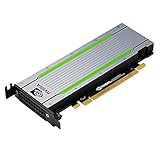
- Original premium quality
- Item weight: 0.55 kg
- Size: Full-Height/Full-Length (FH/FL)
Will AI cause a power shortage?
AI is unlikely to create one uniform worldwide shortage, but it can intensify shortages or connection delays in specific regions. The outcome depends on how quickly generation and transmission are added relative to new loads, whether utilities can procure firm capacity, and whether projects are concentrated in already-constrained areas.
Generation and transmission must arrive together
A new power plant without transmission cannot serve a remote data center, and a new substation cannot help if regional generation is insufficient. Developers therefore evaluate interconnection-queue timing, available transmission, electricity-price volatility and the carbon intensity of marginal power, not just the nameplate capacity advertised by a utility.
Storage can support reliability
The IEA discusses a possible 20–25 GW of battery storage installed in data centers worldwide by 2030. Batteries can bridge short outages, smooth rapid load changes and reduce the amount of grid capacity reserved for brief peaks. They do not replace the need for sustained generation during multi-hour or multi-day shortages.
What the United States estimate means
A U.S. Department of Energy announcement on 20 December 2024, summarizing Lawrence Berkeley National Laboratory work, used the headline “Domestic Energy Usage from Data Centers Expected to Double or Triple by 2028.” The estimate applies to U.S. domestic use and a specific study horizon; it should not be treated as a forecast for every country or for all years.
Which regions are positioned for the most growth?
The IEA identifies the United States, China and Europe as the largest data-center electricity markets. In its 2025 outlook, the United States and China account for nearly 80% of global data-center electricity growth through 2030. That concentration reflects existing cloud infrastructure, capital, networks, chip supply chains and large pools of users, but it also increases local grid and permitting pressure.
How should companies compare data-center locations or projects?
A credible comparison combines workload, infrastructure and financial variables. Use the following checklist rather than ranking sites by electricity price alone:
- Workload: training, inference, video, reasoning and agentic tasks have different compute intensity and duty cycles.
- Hardware mix: measure accelerated versus conventional servers, accelerator generation, memory capacity and networking requirements.
- Density and cooling: check rack kilowatts, liquid-cooling readiness, heat-rejection capacity, water conditions and expansion space.
- Grid schedule: verify the interconnection date, transmission deliverability, firm-power arrangements, redundancy and exposure to curtailment.
- Energy economics: model electricity price, volatility, carbon profile, storage cost and the treatment of backup generation.
- Supply chain: confirm access to accelerators, high-bandwidth memory, transformers, construction labor and fiber connectivity.
- Permitting and policy: assess approval timelines, tax incentives, environmental rules and community acceptance.
- Capital plan: test construction cost, utilization assumptions, financing terms and the expected return under slower AI adoption.
What can slow electricity growth without stopping AI adoption?
Efficiency can reduce energy per task through better algorithms, quantization, model distillation, scheduling and more capable chips. The effect on total demand depends on whether those savings are reinvested in more usage or more demanding features. Providers can also improve utilization by consolidating workloads and shifting flexible jobs to times or locations with available power.
What’s actually slowing this PC down?
Pick the symptom - the matching free tool is one click away.
Siting decisions matter as well. A facility that uses existing transmission, has a realistic cooling design and can obtain firm low-carbon power may add less strain than an identical campus in a congested region. These measures change the pace and location of growth; they do not eliminate the underlying demand created by more AI services.
Rank #4

- DP/N JDJ9W (Brand New)
- Xe-HPG (Arctic Sound, ACM-G11, DG2-128)
- 12GB GDDR6 Memory
What should a buyer know about GPU accelerator hardware?
GPU accelerator cards are only one part of an AI system. Buyers should match accelerator memory, interconnect bandwidth, software support, server thermals and expected utilization to the workload. A card that looks efficient in an isolated specification can deliver poor economics if the host system, networking or cooling cannot keep it busy.
For small models, preprocessing and orchestration, CPUs may be sufficient or may work alongside a smaller accelerator. Frontier-model training and high-volume inference generally require clusters of specialised accelerators, which is why hardware choices propagate into facility power and cooling requirements. Category-level comparisons are more durable than a single model recommendation because product availability and performance change quickly.
What is the outlook through 2030?
The direction is clear: AI adoption and more capable workloads are pushing data-center electricity, accelerated servers and supporting infrastructure higher. The exact level is uncertain because efficiency, usage, chip supply, financing, policy and grid construction interact. Forecasts should therefore be treated as scenarios, while project decisions should use explicit assumptions for utilization, power density, connection dates and backup capacity.
The IEA summarizes the dependency directly: “There is no AI without energy — specifically electricity for data centres.” Meeting demand is not only a matter of buying more GPUs. It requires coordinated investment in generation, transmission, storage, memory, cooling, construction and the capital needed to complete each link in that chain.
Frequently Asked Questions
Does improving chip efficiency make AI electricity demand fall?
Not necessarily. Efficiency lowers the energy required for a given task, but lower costs can encourage more users, longer interactions and computationally heavier features. Total consumption falls only when those new workloads do not grow faster than the savings.
Do all AI workloads need GPU clusters?
No. Lightweight models, data preparation and control tasks can run on CPUs or modest accelerators. Large-model training and high-volume, low-latency inference are the workloads that typically require dense clusters and the associated power and cooling systems.
What does firm power mean for an AI data center?
Firm power is dependable electricity available when the facility needs it, with defined limits on interruptions, curtailment and ramping. A project should verify the utility commitment, backup systems and storage behavior rather than relying on an annual energy total.
Why can a funded data-center project still be delayed?
Funding does not guarantee delivery of high-bandwidth memory, accelerators, transformers or a grid connection. Permits, construction labor, transmission upgrades and equipment lead times can each become the critical path, so schedules need independent checks for every dependency.
Quick Recap
Product prices and availability are accurate as of the date/time indicated and are subject to change. Any price and availability information displayed on Amazon at the time of purchase will apply.

