
Do these 3 things before closing this tab:
1Scan for outdated or missing drivers - takes under a minute2Repair Windows errors before they cause bigger problems3Fix the driver behind crashes, sound loss and screen glitchesiTechGuides is reader-supported. When you buy through links on our site, we may earn an affiliate commission. As an Amazon Associate I earn from qualifying purchases. Learn more
Instructions per second (IPS) measures how many machine instructions a processor executes in one second. MIPS means millions of instructions per second, so 1 MIPS equals 1,000,000 instructions per second. IPS is an execution rate—not a universal measure of how quickly a processor completes useful work.
How is instructions per second calculated?
For a specific program, the rate in MIPS can be calculated as:
MIPS = instruction count ÷ (execution time in seconds × 1,000,000)
The result describes instructions actually executed during the measured run. It depends on the program, the instruction set, and how the processor carries out the work; a CPU does not have one meaningful MIPS value that applies to every task.
Popular on Amazon
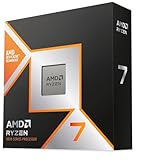
- The world’s fastest gaming processor, built on AMD ‘Zen5’ technology and Next Gen 3D V-Cache.
- 8 cores and 16 threads, delivering +~16% IPC uplift and great power efficiency
- 96MB L3 cache with better thermal performance vs. previous gen and allowing higher clock speeds, up to 5.2GHz
- Drop-in ready for proven Socket AM5 infrastructure
- Cooler not included
Why IPS and MIPS can be misleading
An instruction is not a fixed unit of useful work. Some instructions take longer to execute than others, and processors with different instruction sets may use different numbers or kinds of instructions to accomplish similar tasks. A higher instruction rate can reflect the instruction mix rather than faster completion of the work you care about.
For that reason, comparing bare MIPS figures—especially across different processor architectures—does not reliably show which CPU will finish an application sooner. Historical government performance-evaluation material and a publisher-hosted computer organization chapter discuss these limits: instruction-rate evaluation and computer organization and design.
Also popular on Amazon

- AMD Ryzen 9 9950X3D Gaming and Content Creation Processor
- Max. Boost Clock : Up to 5.7 GHz; Base Clock: 4.3 GHz
- Form Factor: Desktops , Boxed Processor
- Architecture: Zen 5; Former Codename: Granite Ridge AM5
How to compare processors for a real task
Use benchmarks that resemble the work you plan to do, and compare results produced with comparable software and test methods. When possible, look at real-world application results as well as synthetic tests, and consider task completion time or another metric that directly reflects the workload.
What’s actually slowing this PC down?
Pick the symptom - the matching free tool is one click away.
Intel’s benchmark guidance advises checking several tests because processors can perform differently across benchmark types: Intel CPU benchmark guidance. For current Xeon context, Intel says MIPS is not typically used to specify modern Xeon performance and points readers toward workload-specific metrics; its support article was last reviewed February 5, 2026: Intel Xeon MIPS support article.
Quick Recap
Also popular on Amazon

- Processor provides dependable and fast execution of tasks with maximum efficiency.Graphics Frequency : 2200 MHZ.Number of CPU Cores : 8. Maximum Operating Temperature (Tjmax) : 89°C.
- Ryzen 7 product line processor for better usability and increased efficiency
- 5 nm process technology for reliable performance with maximum productivity
- Octa-core (8 Core) processor core allows multitasking with great reliability and fast processing speed
- 8 MB L2 plus 96 MB L3 cache memory provides excellent hit rate in short access time enabling improved system performance
Also popular on Amazon
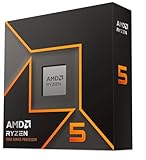
- Pure gaming performance with smooth 100+ FPS in the world's most popular games
- 6 Cores and 12 processing threads, based on AMD "Zen 5" architecture
- 5.4 GHz Max Boost, unlocked for overclocking, 38 MB cache, DDR5-5600 support
- For the state-of-the-art Socket AM5 platform, can support PCIe 5.0 on select motherboards
- Cooler not included
Also popular on Amazon
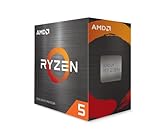
- Can deliver fast 100 plus FPS performance in the world's most popular games, discrete graphics card required
- 6 Cores and 12 processing threads, bundled with the AMD Wraith Stealth cooler
- 4.2 GHz Max Boost, unlocked for overclocking, 19 MB cache, DDR4-3200 support
- For the advanced Socket AM4 platform
What to remember
- IPS counts machine instructions executed per second; MIPS counts millions of instructions per second.
- A measured rate belongs to a particular program and set of measurement conditions, not to a processor in isolation.
- Instruction counts are not directly comparable across different instruction sets or workloads.
- For practical CPU comparisons, use multiple workload-relevant benchmarks rather than a single IPS or MIPS figure.

