
Recommended Free Tools
iTechGuides is reader-supported. When you buy through links on our site, we may earn an affiliate commission. As an Amazon Associate I earn from qualifying purchases. Learn more
As of August 9, 2026, the U.S. search antitrust case against Google is not over. Google was found liable in August 2024 for unlawfully maintaining monopolies in general search services and general search text advertising. The court entered a final remedies judgment on December 5, 2025, but it did not order Google to sell Chrome, break up Android, or stop all payments to Apple and other distribution partners.
Instead, the judgment limits certain exclusivity and tying arrangements and requires Google to create data-sharing and search-syndication programs for qualified competitors. The contractual restrictions took effect on February 3, 2026, but the data and syndication systems were still being built in the latest public filings. Google’s appeal and the government’s cross-appeal remain pending in the D.C. Circuit.
What case is this?
The proceeding is United States et al. v. Google LLC, pending before Judge Amit P. Mehta in the U.S. District Court for the District of Columbia. The principal case is docket number 20-cv-3010; the related states’ action is 20-cv-3715. The federal government filed the first lawsuit on October 20, 2020, joined by 11 states. Colorado and other states later brought a related case, which was consolidated with the federal action.
By the remedies stage, the plaintiffs included the United States, 49 states, two territories, and the District of Columbia, according to the Department of Justice.
#1 Best Overall

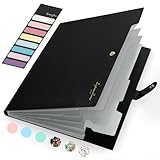
- Size: 13 x 10 x 0.7 inches. Fits A4 and letter-size paper, standard documents and filing needs.
- User-Friendly Features: Included sticker labels allow you to easily distinguish between different categories of files, maintaining neatness and enhancing productivity!
- Sleek and Portable: Designed to slip seamlessly into backpacks, laptop bags, or file cabinets, our lightweight folder keeps your documents tidy and accessible wherever you go.
- Built to Last: Crafted from polypropylene, our folders resist tears and deformation while remaining flexible. The secure snap closure offers easy access while keeping your papers securely in place.
- Versatile Utility: This folder isn't limited to organizing course papers for college students; it's perfect for storing business tax documents, recipes, important receipts, and more!
This is a civil antitrust case. Google was found liable; it was not criminally convicted. It is also separate from:
- the DOJ’s Google ad-tech monopolization case filed in 2023;
- state and private lawsuits involving local search, advertising, privacy, or app stores;
- European Union proceedings against Google; and
- Epic Games v. Google, which concerns Google Play and Android app distribution.
What did the government allege?
The government challenged Google’s distribution agreements and payments involving Apple, Android device manufacturers, wireless carriers, browser developers, and other partners. These arrangements helped make Google Search the preset or default search engine at important access points, such as web browsers, phones, and other devices.
The government’s theory was broader than saying Google became dominant because it had a popular product. It argued that Google used contracts and payments to secure distribution while discouraging or restricting the distribution of rival search engines. That gave Google an enormous flow of queries and user data, which in turn helped it improve search quality, advertising, and monetization. Rivals allegedly could not obtain enough query volume and data to reach a competitive scale.
That distinction matters in antitrust law:
- Market power means the ability to act with limited competitive pressure.
- Unlawful maintenance of monopoly power requires more than a large market share or a successful product. The government must show exclusionary conduct that harms the competitive process rather than ordinary competition on the merits.
Google’s position is that its success resulted from product quality, innovation, consumer preference, and lawful competition for distribution. In its appeal, Google argues that the district court improperly treated defaults and competition for distribution as unlawful exclusion instead of distinguishing legitimate competition from conduct that harms competition. Google’s appellate arguments are set out in its May 22, 2026 principal brief.
The case did not concern an allegation that Google illegally monopolized the entire internet or every part of online advertising. The legally defined markets were general search services and general search text advertising.
What happened at the liability trial?
The liability phase was a bench trial held from September through November 2023. On August 5, 2024, Judge Mehta ruled that Google unlawfully maintained monopolies in both general search services and general search text advertising.
The court found that Google possessed monopoly power and that its distribution agreements were exclusive in practice. In other words, an agreement did not have to formally ban every rival for the court to find that its real-world effect was to prevent or materially discourage rival distribution.
Quick wins for a faster PC:
Scan for outdated or missing drivers - takes under a minuteDriver Scan →Clear out junk files and repair common Windows errorsFree Scan →Fix the driver behind crashes, sound loss and screen glitchesFind Drivers →The liability ruling focused on Google’s distribution conduct and its effect on competition in the defined search markets. It did not declare Google’s entire advertising business unlawful. The court then scheduled a separate remedies phase to determine what relief could address the violation.
What happened during the remedies phase?
The remedies hearing took place from April through May 2025 and included a 15-day evidentiary hearing. The government sought substantial structural and behavioral relief, including:
- divestiture of Chrome;
- possible contingent divestiture of Android;
- restrictions or a broad ban on search-related payments to distribution partners;
- sharing search-index and user-side data with competitors;
- search-result and search-text-ad syndication;
- limits on using Chrome, Android, Google Play, Assistant, and Google AI products to reinforce Search distribution; and
- technical monitoring and other enforcement measures.
Google proposed narrower restrictions focused largely on preventing contracts that prohibited partners from distributing rival general search services. The court ultimately adopted important behavioral, data, and syndication remedies but rejected the government’s most aggressive structural proposals. The remedies opinion was issued on September 2, 2025, followed by the Final Judgment on December 5, 2025.
What did Judge Mehta actually order?
| Issue | What the government sought | What the court ordered |
|---|---|---|
| Chrome | Divestiture or sale | Google may keep Chrome; no sale was ordered. |
| Android | Contingent divestiture | Google may keep Android; no breakup was ordered. |
| Search payments | A broad or complete ban on payments to distribution partners | No complete payment ban. Some payment conditions and arrangements are restricted. |
| Distribution contracts | Limits on exclusivity, tying, and related conduct | Ordered, including restrictions involving Search, Chrome, Assistant, Google GenAI products, and rival products. |
| Search data | Access for qualified competitors | Specified index and user-side data must be made available under privacy, security, and use restrictions. |
| Search results | Syndication access | Five-year real-time API licenses must be offered to qualified competitors on specified terms. |
| Search text ads | Advertising syndication and auction transparency | Five-year search-text-ad syndication licenses and specified reporting obligations. |
| Oversight | Technical enforcement mechanisms | A five-person Technical Committee assists with certification, safeguards, audits, licenses, and complaints. |
Google can keep Chrome
The government’s proposed Chrome divestiture was not adopted. There is no order in this case requiring Google to sell Chrome or separate it from Alphabet.
The Tool Desk
Outbyte Driver Updater FREEFix the driver behind crashes, sound loss and screen glitchesFind Drivers →Outbyte PC Repair FREERepair Windows errors before they cause bigger problemsFix Now →Google can keep Android
The court also rejected a contingent Android divestiture. Android remains with Google. The judgment instead restricts how Google may use licensing, payments, and product distribution to reinforce Search, Chrome, Assistant, or Google generative-AI products.
Rank #2

- Fireproof and Water-resistant: The multi-Layer file organizer is made of silicone coated material and aluminum foil which withstand the temperature up to 5200℉(double safe protection).Aluminum foil lining isn’t easily melt under high temperature after several tests. It has been passed the UL94 -V0/5VA flame retardant test.The bag is fireproof and Water-resistant, which can effectively protect your important documents in a fire,flood,and wet weather. They will further keep your files intact
- Large-capacity(15.1"x11.2"x4.3"): Compared with other bags,our fireproof file bag adopts a multi-layer design that can meet all your storage needs. These include 13 colorful accordion pockets with labels(each expanding to 1.2 inches),8 passport mesh bags,16 card slots,4 U Disk pockets, 7 folder layers and one main pocket with a large space. It can store your important documents,money,passport,U Disk,cards,laptop,certificates in a safe and orderly way. Perfect for daily file filing and storage.
- Combination Lock Protection: Compared with other bags,our multi-Layer fireproof document organizer bag can lock files and items inside the bag for safety. High-quality password lock provides maximum security for your valuables such as contracts, cards, certificates, conference materials, passports, etc. The package includes an instruction manual for lock(The folders inside can be disassembled and used separately).The double zipper design makes it easier to open and close. No keys required.
- Multiple security protection: Design with a strong grab handle for carrying everything you needed easily, the zipper has a safer waterproof design,strap handle design on the back(with reflective strip) allows you to insert a suitcase handle. Buckle can hold documents in place.Not only can you put it in your home, office, car, safe box,cabinet, you can also take it to travel and various outdoor activities. Of course, giving it as a Christmas gift to your family is also a good choice.
- Trusted after sales service: In the event of an emergency, our fireproof file bags are lighter, easier to carry than fireproof safes and quick to grab and go. We only wish to present the best to customers,to protect your valuables.If there any quality problem, please feel free to let us know.We promise to arrange a REPLACEMENT or 100% REFUND immediately. Ready to respond within a 24 hour time,your suggestion has a great impact on the upgrade of our products.(Comes with white label)
The Apple search deal was not simply banned
The judgment does not categorically prohibit Google from paying Apple or another partner to make Google Search a default. It regulates how those arrangements may be structured, including exclusivity, tying one product or access point to another, cross-device conditions, and the duration and terms of certain default agreements.
Certain default-placement agreements involving Apple and browser developers must expire after one year. They must also expressly permit the partner to promote third-party general search services and third-party generative-AI products. The judgment includes separate provisions addressing Apple features and access points such as Safari, Siri, Spotlight, and privacy modes.
That is materially different from saying that the Apple-Google search agreement ended or that all default agreements are illegal.
PC Slower Than It Used to Be?
A free scan shows the junk files, broken settings and background clutter dragging Windows down - then fixes them in one click.Free scan · Windows 10 & 11Outdated Drivers Are Slowing You Down
One free scan finds every outdated or missing driver and matches the right update for your exact hardware.Free scan · exact hardware matchThe contractual restrictions
Under the Final Judgment, Google cannot condition the distribution, preloading, placement, or payment associated with various Google products on a partner agreeing to:
- distribute or preload Google Search;
- distribute or preload Chrome;
- distribute Google Assistant;
- distribute a Google GenAI product;
- refrain from distributing a third-party general search service;
- refrain from distributing a third-party browser; or
- refrain from distributing a third-party GenAI product.
Google also cannot condition payment for one product or access point on the partner placing another Google product or access point. The restrictions address exclusivity and tying; they are not a universal ban on Google products being defaults.
What search data must Google share?
The phrase Google must share its search data
is too broad. The order covers specified categories of information, not Google’s entire search technology or unrestricted access to its systems.
Within 30 days after a qualified competitor is certified, unless additional time is granted, Google must make certain web-search-index data available at marginal cost. The covered categories include:
- a unique document identifier;
- information identifying duplicate documents;
- a document-ID-to-URL map;
- when a URL was first seen;
- when a URL was last crawled;
- a spam score; and
- a device-type flag.
The obligation covers the full web-search index used for Google.com, the Google Search application, and future Google general-search products. The Final Judgment makes clear that providing this information does not transfer third-party intellectual-property rights to the recipient.
This is not a transfer of Google’s ranking algorithm. The judgment excludes trade secrets such as algorithms, ranking signals, and post-trained large language models. The precise scope and delivery mechanisms remain part of the implementation process.
User-side data: GLUE and RankEmbed
Google must also make available, subject to privacy and security safeguards:
- user-side data used to build, create, or operate Google’s GLUE statistical models; and
- user-side data used to train, build, or operate RankEmbed models.
The judgment requires at least two disclosures. The court will determine the precise number and frequency after consultation with the plaintiffs and the Technical Committee.
Access is limited to qualified competitors and permitted uses. Recipients cannot simply resell or redistribute the data. Privacy-enhancing techniques, security standards, audits, and other controls must be established before the remedy can operate at scale. The government’s rationale is that the data advantage helped create a moat around Google’s search business; Google has raised concerns about the privacy, security, and competitive risks of compelled data sharing.
Rank #3

- Ultimate Fireproof & Water-Resistant Protection: Keep your valuables safe with our DocSafe Hard-Shell fireproof file organizer. It is made of thickened silicone coated fireproof heat insulated cotton material and hard-shell material which can stands up against fire and passed the UL94 -V0/5VA flame retardant test. Fireproof box is both fireproof and water-resistant, ensuring your documents stay protected during fires, floods, or wet weather. It may fit both letter and legal-size files
- Upgraded Hard-Shell Design Fireproof Box: Our fireproof document box combines hard-shell construction with fireproof materials, offering unmatched protection and durability. Unlike traditional soft case, our design withstands extreme conditions while maintaining a sleek, professional look. The Non-dusty material actively repels dust,hair and stains, keeping your box clean and tidy for years. It’s the ultimate solution for safeguarding your important documents, laptop, and valuables
- Large-capacity: Outside size: 15.5" x 11.5" x 3"(Thickness can be expanded up to 4"). Our Accordion fireproof document box adopts a multi-layer design that can meet all your storage needs. These include 13 accordion Pockets with labels,1 zipper pocket,4 pen slot,14 card slots,4 passport holder,4 small mesh bags,2 mesh bags,and 1 main pocket. It can store your important documents,money,passport,U Disk,cards,laptop,certificates in a safe and orderly way. Perfect for daily file filing and storage
- Fireproof File Organizer with Lock: Protect your valuables with the built-in high-quality combination lock (No keys required). Featuring a double metal zipper for convenient opening and closing. Design with a strong handle for carrying everything you needed easily. The fireproof file folder is suitable for business, travel, office, school, home storage, you can be 100% sure that your important documents are in a safe place. Of course, giving it as a gift to your family is also a good choice
- Trusted after sales service: Nothing is completely foolproof, but added protection is always a good idea. In an emergency, our fireproof document organizer ensures your files stay intact, giving you time to save your important documents. It is lighter, easier to carry than fireproof safes and quick to grab and go. If there any quality problem, please feel free to let us know. We are committed to solving your problem immediately, your suggestion has a great impact on the upgrade of our products
Search-result syndication
Google must offer qualified competitors a five-year search-syndication license through real-time APIs. Subject to the Final Judgment’s terms, the service must provide:
- ranked organic results for desktop and mobile;
- user-facing query rewriting, correction, modification, or expansion features;
- Local and Maps content;
- Video;
- Images; and
- Knowledge Panel content.
The license must be offered on terms no worse than the most favorable terms Google provides under its existing search-syndication agreements.
The 40% first-year limit
A qualified competitor may use Google syndication for no more than 40% of its annual U.S. queries during the first year. Use is expected to decline over the five-year period so that the competitor develops independent search capabilities. The court, in consultation with the plaintiffs and the Technical Committee, will determine how that taper works.
What’s actually slowing this PC down?
Pick the symptom - the matching free tool is one click away.
The syndication obligation is narrower than unlimited access to Google’s search infrastructure. It applies to queries originating in the United States from human end users. It does not cover a syndicator’s own queries, synthetic queries, or unrestricted bulk access for testing or scraping.
Search-text-ad syndication
The judgment separately addresses the market in general search text advertising. Google must offer qualified competitors a five-year Search Text Ads Syndication License that includes:
- functionally equivalent latency, reliability, and performance;
- financial terms no worse than those offered to other users of Google’s search-text-ad syndication products;
- access to available types of search text ads, including assets and extensions;
- the ability to use other ad providers or display the competitor’s own ads; and
- inclusion in Google’s Search Partner Network.
Google must also provide a process for reporting certain changes to its search-text-ad auction, while protecting trade secrets. This does not cover every part of Google’s advertising business, such as all display, video, or ad-tech products.
How the Technical Committee fits in
The court ordered a five-person Technical Committee with expertise in areas including software engineering, information retrieval, artificial intelligence, economics, behavioral science, and data privacy and security.
Do these 3 things before closing this tab:
1Clear out junk files and repair common Windows errors2Fix the driver behind crashes, sound loss and screen glitches3Repair Windows errors before they cause bigger problemsThe committee is important because the Final Judgment creates technical obligations that cannot be implemented by a single broad prohibition. Its work includes helping determine:
- privacy and data-security standards;
- qualification and certification of competitors;
- syndication-license terms;
- permitted data uses;
- audit procedures; and
- responses to compliance complaints.
As of the August 6, 2026 status report, the parties were still resolving operational questions involving whether Technical Committee staff could be compelled to testify, indemnification and insurance for committee staff, and post-committee employment restrictions. Those disputes show that implementation is an active administrative process, not a finished handoff of Google’s data to rivals. The latest filings are available on the DOJ case page.
What has actually changed so far?
The first detailed compliance report, filed on May 4, 2026, reported the following:
- The contractual injunctions in Section III had been effective since February 3, 2026.
- Google said it had taken the steps it believed were necessary to comply with Section III.
- Google was still preparing the systems needed for data sharing and syndication.
- The plaintiffs were reviewing at least one recent Google third-party agreement for compliance.
- Qualified competitors had not yet begun receiving the relevant data or syndication access.
- The data-sharing and syndication systems were still being implemented.
- Qualified competitors might begin receiving access in late fall 2026 or early winter 2027 at the earliest.
Google’s first proposed internal compliance officer was rejected by the plaintiffs. Google later proposed Terry Morrison-Wells, Alphabet’s head of enterprise risk management, and the plaintiffs approved her on March 26, 2026.
The latest public district-court status report, filed August 6, 2026, did not announce that a named rival had begun receiving the required search datasets. Therefore, it would be premature to say that OpenAI, Microsoft, Brave, or any other specific company is already using Google’s court-ordered data or syndication service.
Rank #4
- Eye-Catching Colors: Designed to stand out, this folder combines fresh, vibrant hues with sleek patterns, making organization not just functional but stylish. Perfect for adding a touch of charm and energy to your workspace
- Upgraded Spine for Larger Capacity: Our accordion file organizer with expandable spine design is more stretchy to fit over 250 sheets without bulking up too much. Unlike regular spines that can easily get dented, our spine is made for quality and not easy to deform in transit
- Easy Organization: This expanding file folder makes sorting and organizing your papers a breeze. Featuring 5 pockets with tabs and colorful labels for quick sorting and retrieval
- Made to Last: Reinforced plastic document folders resists tearing and creasing, with a secure snap closure to keep papers in place
- Portable & Lightweight: 13 x 9.5 inches. Fit A4/letter size documents. Compact and lightweight for easy carrying. Easily take your paperwork to a meeting or school
Appeal status: what Google and the government are asking for
Google’s appeal
Google filed its notice of appeal on January 22, 2026. The appeal is associated with D.C. Circuit case number 26-5023. In its May 22 principal brief, Google challenges both liability and remedies, not merely the size of the penalty or the implementation details.
Google’s principal arguments challenge:
- the definition of the relevant market for general search services;
- the finding that Google had monopoly power in general-search-text advertising;
- the finding that Google’s distribution agreements were exclusive in practice;
- the finding that the agreements harmed competition; and
- the remedies as contrary to law or unsupported by sufficient evidence.
Google argues that the district court improperly converted successful competition for defaults into unlawful exclusion and that Google achieved its position through quality, innovation, lawful business decisions, and consumer preference.
Google also challenges applying some remedies to generative-AI products and competitors. Its position, in substance, is that AI products were not part of the historical conduct alleged in the original case. The government responds that generative-AI products can function as search access points and could become competitive threats that Google might otherwise suppress.
Free tools Windows power users keep installed
One-click scans. No signup required.
The government’s cross-appeal
The United States and the co-plaintiff states filed notices of cross-appeal in February 2026. The appeals were consolidated with Google’s appeal under proceedings associated with 26-5023, 26-5047, and 26-5049.
In its July 28, 2026 response and cross-appeal brief, the government asks the D.C. Circuit to:
- affirm the liability findings;
- affirm most of the remedies;
- reverse the district court’s rejection of a payment ban; and
- hold that the district court should have determined whether the less restrictive remedy would actually restore competition.
The government expressly does not cross-appeal the divestiture ruling. Thus, the current appellate briefing does not ask the D.C. Circuit to order Chrome divestiture directly.
As of August 9, 2026, the reviewed public materials did not show that oral argument had occurred, that an appellate decision had been issued, or that the Supreme Court had agreed to hear the case. The appeal does not automatically mean that every remedy is paused; the contractual provisions were reported as effective while implementation proceedings continued. An appellate decision could nevertheless affirm, reverse, or send parts of the case back to the district court.
What the case means for users, companies, and advertisers
For ordinary Google users
There is no immediate requirement for users to see a new choice screen, select a different default search engine, install another browser, or stop using Google Search. The judgment primarily changes Google’s agreements with distributors and creates mechanisms intended to improve rivals’ ability to compete.
If the remedies work, users could eventually see more meaningful alternatives in browsers, phones, AI assistants, and other search access points. But the judgment does not guarantee that any particular rival will become successful or that Google’s search results will immediately change.
For Apple, browsers, carriers, and device makers
Partners retain flexibility to choose defaults and may still be able to receive payments. However, certain arrangements cannot require exclusivity, tie one Google product or access point to another, or prevent the partner from promoting rival search, browser, or GenAI products. Some Apple and browser default arrangements are limited to one-year terms.
For rival search engines and AI companies
Qualified competitors may eventually gain access to specified search-index data, user-side data, Google search results, and search-text ads. That could reduce some of Google’s scale and data advantages and allow a rival to launch or improve a search product without immediately rebuilding every component from scratch.
Do these 3 things before closing this tab:
1Fix the driver behind crashes, sound loss and screen glitches2Clear out junk files and repair common Windows errors3Scan for outdated or missing drivers - takes under a minuteThe remedy has important limits. Competitors must qualify, satisfy privacy and security requirements, use the information only for permitted purposes, and comply with syndication limits. Search syndication also tapers over time, and Google keeps its ranking algorithms and other excluded trade secrets. The order does not guarantee that a particular AI company will qualify, receive access by a particular date, or become a viable Google competitor.
Best Value

- Zipper Closure for True Security: Unlike folders using elastic bands that can let contents slip out, our expanding file folder features a dependable zipper closure, ensures everything stay safely secured inside, safe and sound. No more worries about losing small items.
- Sleek Design with Fresh Colors: 4 assorted pastels colored add a soft, delicate touch (purple, pink, sky blue, green). The black and gray hues present you a professional image. The tactile pattern exterior enhances and enriches the bright on trend colour-way.
- Unrivaled Durability: Say hello to an excellent all-rounder for secure and long-lasting storage. Made of PP tough shell (42% thickness upgraded) that endures daily handling and wear, and never tears. Acid-free, PVC-free. The metal zipper pull and reinforced edge construction offer reliable usage over time.
- Truly Large Capacity: 14 x 11.2 inches. Fit A4/letter size. This portable file organizer with expandable spine design is more stretchy to fit over 400 sheets without bulking up too much. Convenient size to carry around. Easily take your paperwork to a meeting or school.
- Monthly labels for Quick Retrieval: Customizable pastels stickers and 13 tabbed pockets allow you to sort by subject or task, bonus monthly labels increase its ease of locate and access.
For advertisers
The search-text-ad syndication provisions could eventually give rival search services a way to display Google search text ads or use another ad provider while maintaining specified performance and financial terms. The judgment also requires reporting about certain auction changes. That may create additional distribution options, but it does not immediately replace Google Ads or regulate every Google advertising product.
For publishers and websites
Publishers may eventually see more search services able to crawl, index, rank, and present web content. However, the order does not guarantee higher traffic, improved ranking, or different referral terms for any publisher. Its direct obligations run primarily between Google and qualified competitors.
Why the implementation timeline matters
The most important practical question is not simply whether the Final Judgment says Google must share data. It is whether a competitor can get certified, satisfy security and privacy requirements, negotiate or receive a license, obtain usable data through the required systems, and build an independent product before the syndication allowance tapers.
Free tools Windows power users keep installed
One-click scans. No signup required.
Several gates affect the outcome:
- Certification: A company must qualify as a competitor under the judgment.
- Technical rules: The Technical Committee and court must address security, privacy, audits, and permitted uses.
- Implementation: Google must build and operate the data and API systems.
- Commercial terms: Syndication licenses must meet the judgment’s requirements, including performance and most-favored-term provisions.
- Independent capability: A competitor must use the access to build its own search technology because syndication is temporary and subject to the 40% first-year cap and later tapering.
- Appellate risk: The D.C. Circuit could modify the liability findings or remedies while this work proceeds.
The privacy trade-off is also real. Sharing user-side information may reduce Google’s data moat, but it creates security and privacy risks that the court’s safeguards are intended to control. The result will depend heavily on how those safeguards work in practice.
Complete timeline
| Date | Event |
|---|---|
| October 20, 2020 | The DOJ, joined by 11 states, files the federal search antitrust case. |
| September–November 2023 | Judge Mehta holds the bench trial on liability. |
| August 5, 2024 | The court finds Google liable for unlawfully maintaining monopolies in general search services and general search text advertising. |
| April–May 2025 | The court holds the remedies hearing, including 15 days of evidence. |
| September 2, 2025 | Judge Mehta issues the remedies opinion. |
| December 5, 2025 | The court enters the Final Judgment. |
| January 22, 2026 | Google files its notice of appeal in the D.C. Circuit. |
| February 3, 2026 | The contractual injunctions take effect. |
| March 26, 2026 | The plaintiffs approve Terry Morrison-Wells as Google’s internal compliance officer. |
| May 4, 2026 | The first detailed compliance report describes ongoing preparation and says qualified competitors had not yet received the required access. |
| May 22, 2026 | Google files its principal appellate brief challenging liability and remedies. |
| July 28, 2026 | The United States and states file their response and cross-appeal brief, including a challenge to the rejection of a complete payment ban. |
| August 6, 2026 | The latest publicly listed district-court status report describes continuing Technical Committee implementation issues. |
| August 9, 2026 | The case remains active: the Final Judgment is being implemented, and the appeals remain pending. |
Bottom line: did Google lose, and is it being broken up?
Google lost the liability phase: the district court found that it unlawfully maintained monopolies in general search services and general search text advertising. But Google is not being broken up under the judgment currently being implemented. Chrome and Android remain with Google, and the court did not impose a complete ban on payments to Apple and other distribution partners.
The practical remedy is a package of contract restrictions, controlled data sharing, search-result and search-ad syndication, and technical oversight. Those mechanisms are not yet fully operational. As of August 9, 2026, no public filing reviewed for this update confirmed that a named rival had begun receiving the required data or syndication access, and the parties were still working through implementation issues.
Google’s appeal could change the liability ruling or the remedies. The government’s cross-appeal could seek stronger restrictions on search-related payments, but it does not currently seek a direct Chrome divestiture order. The next major developments are therefore likely to come from D.C. Circuit briefing and decisions, competitor certification, Technical Committee procedures, and the rollout of the data-sharing and syndication systems.
Frequently Asked Questions
Does Google have to sell Chrome because of the search antitrust case?
No. The government proposed Chrome divestiture, but Judge Mehta rejected that remedy. The Final Judgment does not require Google to sell or separate Chrome.
Can Google still pay Apple to make Google Search the default?
The court did not impose a complete ban on search-related payments. Google may still be able to make payments, but certain arrangements are restricted, including some exclusivity, tying, cross-product, cross-device, and duration terms. Certain Apple and browser default agreements must expire after one year and permit promotion of rival search and GenAI products.
Have competitors already received Google’s search data?
The latest public materials reviewed as of August 9, 2026, did not confirm that qualified competitors had begun receiving the required search-index or user-side data. The compliance reports described ongoing technical, privacy, security, certification, and licensing work, with access potentially beginning in late fall 2026 or early winter 2027 at the earliest.
Will the ruling immediately give users a new search-engine choice screen?
No. The Final Judgment does not immediately require a new choice screen, a different default search engine, or a different browser. It changes distribution agreements and creates access mechanisms intended to help rivals compete over time.
Has Google’s appeal been decided?
No. Google’s appeal and the government’s cross-appeal remain pending in the D.C. Circuit as of August 9, 2026. Google challenges liability and remedies; the government asks the appeals court to affirm most of the ruling but reconsider the rejection of a complete payment ban.
The Bottom Line
Bottom line: Google was found liable, but it was not ordered to sell Chrome or Android. The court instead imposed behavioral, data-sharing, search-syndication, advertising-syndication, and technical-oversight remedies. Those remedies are being implemented while Google’s liability appeal and the government’s payment-ban cross-appeal continue.
Quick Recap
Product prices and availability are accurate as of the date/time indicated and are subject to change. Any price and availability information displayed on Amazon at the time of purchase will apply.

