
iTechGuides is reader-supported. When you buy through links on our site, we may earn an affiliate commission. As an Amazon Associate I earn from qualifying purchases. Learn more
Thomson Reuters won the first major AI copyright case in the US at the trial-court level on February 11, 2025, when a Delaware judge found Ross Intelligence copied 2,243 Westlaw headnotes and rejected fair use. The decision is significant, but it is not a nationwide ban on AI training and remains under Third Circuit review.
The case matters because it is one of the clearest U.S. judicial examinations of whether copyrighted material can be copied to develop an AI-powered product. The answer was no for Ross on the specific record before the court: Ross used Westlaw’s editorial content to help build a competing legal-research system.
The details are more important than the headline. The case involved a non-generative legal-search product, not a chatbot or image generator; Westlaw’s editorial headnotes, not ownership of judicial opinions; and a district-court ruling, not a final rule governing every AI company.
Recommended Free Tools
Key takeaways
- On February 11, 2025, the U.S. District Court for the District of Delaware rejected Ross Intelligence’s fair-use defense and found direct infringement involving 2,243 Westlaw headnotes.
- The court examined 2,830 headnotes, but the 2,243-copying figure is a case-specific finding—not a general threshold for AI copyright infringement.
- The dispute concerned Westlaw’s original editorial expression and organization, not Thomson Reuters’ ownership of judicial opinions or the underlying law.
- Ross was developing a competing AI-powered legal-research product, and the direct-substitute relationship weighed heavily against fair use.
- The ruling involved a non-generative legal-search system and did not decide whether training every large language model or generative-AI system is lawful.
- As of August 18, 2026, the ruling remains under interlocutory appeal in the Third Circuit in case No. 25-2153 after oral argument on June 11, 2026.
What did Thomson Reuters win in the first major AI copyright case in the US?
Thomson Reuters won summary judgment on important copyright-infringement and fair-use issues, not an unreviewable nationwide victory. Judge Stephanos Bibas, sitting by designation in the U.S. District Court for the District of Delaware, held that Ross Intelligence infringed copyrights in Westlaw headnotes and rejected Ross’s fair-use defense.
Popular on Amazon

- 360° Adjustable Viewing, Unlock Comfort in Any Scenario - Horizontal 360° rotation + vertical 0-180° tilt (15 locking positions) for desks, beds, sofas. - Ergonomic arm design enables eye-level reading whether sitting or standing, reducing neck strain by 30%. *Based on ergonomic lab tests
- TripleGuard Stability System, Focus Without Distraction - 3cm deep non-slip clamps + silicone pads hold textbooks up to 5kg (11lbs) and 15.6" laptops securely. - Weighted aluminum alloy base prevents wobbling even during vigorous page-turning.
- Baby-Safe Materials, Built to Last - Food-grade wood veneer + aerospace-grade aluminum frame resists stains; wipes clean instantly. - Smooth rounded edges protect tiny hands—no snags or scratches.
- 4-in-1 Multi-Task Master: From Study to Kitchen - Converts between book stand, writing board, tablet holder & cookbook station. - Features: elastic page clips, anti-slip grooves, detachable splash-proof panel for messy kitchens.
- 3-Second Fold, Space-Saving Hero - Ultra-slim 1.6" (4cm) profile when folded—fits in drawers/bookshelves. - Built-in hanging hooks for vertical storage (door/wall mount).
The opinion in Thomson Reuters Enterprise Centre GmbH and West Publishing Corp. v. Ross Intelligence Inc. was issued on February 11, 2025. The district-court opinion granted most of Thomson Reuters’ motion for partial summary judgment on direct infringement and resolved major liability questions.
The ruling was widely described as the first major U.S. decision to address fair use in the context of using copyrighted material to train or develop an AI system. “First major” is a useful description of the ruling’s importance, but it is not a formal legal category. The decision is not a Supreme Court ruling, not binding nationwide precedent, and not a holding that all unlicensed AI training is unlawful.
How did the Thomson Reuters and Ross Intelligence dispute begin?
Thomson Reuters and West Publishing sued Ross Intelligence in 2020 after Ross began developing an AI-powered legal-research product intended to compete with Westlaw. Ross later ceased operations, reportedly in 2021, but the lawsuit continued.
The dispute was not simply about feeding public court opinions into an algorithm. Ross used an outside vendor called LegalEase to create materials known as “Bulk Memos.” Thomson Reuters alleged that the Bulk Memos contained legal questions and answers derived from Westlaw headnotes and that Ross used those materials while developing its legal-search system.
Westlaw contains public judicial opinions, but it also adds editorial material. That material includes headnotes—short statements summarizing legal propositions identified by editors—and the Key Number System, which organizes legal issues into a structured classification scheme. The case focused on the protected aspects of that editorial work.
The distinction is fundamental. The lawsuit did not establish that Thomson Reuters owns judicial opinions or that an AI system is forbidden from learning from the underlying law. Government-produced judicial opinions are generally public-domain works. The legal dispute concerned Westlaw’s editorial choices in selecting, characterizing, wording, and organizing legal principles.
What did the Delaware judge find about the 2,243 Westlaw headnotes?
Judge Bibas found actual copying involving 2,243 of the 2,830 headnotes examined in the relevant comparison. The reproduced district-court materials and appellate filings identify the 2,830-headnote examination and the 2,243-copying finding.
The Tool Desk
Outbyte Driver Updater FREEScan for outdated or missing drivers - takes under a minuteDriver Scan →Outbyte PC Repair FREEClear out junk files and repair common Windows errorsFree Scan →| Case detail | What it means |
|---|---|
| 2,830 headnotes examined | The court reviewed a defined body of Westlaw editorial material in the case. |
| 2,243 headnotes found actually copied | The judge made a specific copying finding after examining the relevant materials. |
| Partial summary judgment | The ruling resolved important liability and fair-use issues without necessarily ending every claim, remedy, or damages question. |
| Appeal pending as of August 18, 2026 | The district-court reasoning remains subject to review by the U.S. Court of Appeals for the Third Circuit. |
The number 2,243 should not be treated as a legal threshold. Copyright law does not say that copying fewer than 2,243 headnotes is permitted or that copying more than 2,243 automatically establishes infringement. The figure describes what the Delaware court found on this particular evidentiary record.
The court also held that the relevant Westlaw editorial material was sufficiently original to receive copyright protection. A headnote may discuss a public legal proposition, but the editor’s selection and phrasing can contain protectable expression. Copyright protection for that expression can be narrow without being nonexistent.
Also popular on Amazon
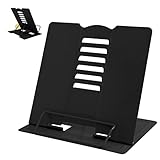
- 【Book Holder】 Book Holder to reduce head and neck strain Children can effectively correct bad reading posture.
- 【Adjustable Book Holder】 Book Holder have six reading positions,The multiple notches on the backrest can adjust its height and angle.Adjust the height between the eyes and reading books or documents well
- 【Book Stand for Reading】Length-8.3in, Width-6.3in There are 4 skid-proof pad glued at the bottom of the book display stand on kitchen top desktop countertop or other flat and smooth surface while holding without sliding off or falling down
- 【Book Holder for Reading】The book holder is designed for keeping your hands-free when we are reading cookbook magazine painting papers documents text books sheet music catalogs notetablet or iPad. Support thicker books in school library dorm office or any other desktop.
- Our service: Thank you for your trust in camelmother Book Holder
Why are Westlaw headnotes copyrightable if the law is public?
Westlaw headnotes were copyrightable in this dispute because the court treated them as editorial expression rather than as the law itself. Westlaw editors made choices about which portions of a judicial opinion to summarize, how to describe the legal principle, how to phrase the summary, and where to place it within Westlaw’s organizational system.
Those choices matter under copyright law. Facts, ideas, legal rules, and government works may not receive ordinary copyright protection, but an original expression or compilation of otherwise public material may receive protection. A person may use the underlying legal rule without being entitled to copy a proprietary editorial summary word for word or reproduce the protected structure surrounding it.
What’s actually slowing this PC down?
Pick the symptom - the matching free tool is one click away.
This does not mean every legal summary is automatically protected. Copyrightability depends on originality and the amount of expressive choice available. Legal propositions can constrain how an editor writes a headnote, which can make protection “thin”: only the original expression is protected, not the underlying idea or law. The district court nevertheless concluded that Ross’s copying crossed that line on the record before it.
The distinction also explains why describing the case as Ross “stealing the law” is inaccurate. The court’s finding concerned Thomson Reuters’ editorial analysis and expression, not ownership of court decisions.
Why did Ross lose its fair-use defense?
Ross lost its fair-use defense because the court weighed the traditional four factors against Ross’s use of Westlaw’s editorial material. The court did not announce that commercial AI training is always unfair; the commercial purpose, the copying, the product’s competitive function, and the market relationship mattered together.
1. Purpose and character of the use
Ross’s use was commercial. Ross was developing a product intended to compete with Westlaw, and the court regarded that competitive purpose as weighing against fair use.
The decision is more nuanced than “commercial use equals infringement.” Commercial status is one consideration, not an automatic outcome. The important combination here was commercial development, use of copied editorial content, and a product designed to serve the same legal-research market as the source platform.
2. Nature of the copyrighted works
The headnotes concerned legal and factual subject matter, which can favor fair use because facts and ideas generally receive less protection than creative expression. The court nevertheless found that Westlaw’s headnotes contained original editorial expression.
The result illustrates an important copyright principle: a work can be factual in subject matter and still contain protectable wording or editorial selection. Thin protection limits the copyright owner’s reach; it does not make every form of copying lawful.
Also popular on Amazon

- MULTI-FUNCTIONAL DISPLAY STAND: This cook book stand for kitchen counter expertly displays cookbooks, books and tablets; perfect for reading, painting, sheet music, magazines, vinyl records, photos and crafts
- PERFECT SIZE: This adjustable recipe book stand with dual configurations supports hardcovers from 4.25" x 6.87" to 8.5" x 11", secures 600-page professional cookbooks, and fits display items of all sizes
- UNIQUE DESIGN: The X-frame cookbook holders for the kitchen counter dismantle effortlessly in seconds, featuring smooth contact surfaces to protect delicate items while the locking joints ensure a rigid wobble-proof assembly
- STURDY & DURABLE: Crafted with 9-layer solid wood for enhanced stability versus raw timber, this cook book holder for kitchen counter prevents breakage from accidental drops and is built to last for years
- STUNNING GIFT: This upgraded recipe book holder stand for kitchen combines novel design with stable construction for lasting use, serving as the perfect choice for housewarming celebrations, birthdays and Mother's Day
3. Amount and substantiality of the copying
The court found actual copying involving 2,243 headnotes after examining 2,830. That was not an isolated quotation or incidental reference. The scale of the copying therefore weighed against Ross.
The qualitative importance of the material also mattered. The headnotes were not random background text; they represented the editorial summaries that made Westlaw’s legal-research system useful. The 2,243 figure remains specific to this case and should not be converted into a universal numerical rule.
4. Effect on the market
The market-effect factor was particularly damaging because Ross’s product was intended to compete directly with Westlaw. The court treated Ross’s legal-search system as a potential substitute for the database whose editorial material had been copied.
Direct substitution is one of the ruling’s most important limits. A general-purpose model trained on a broad collection may have a different function, output pattern, and competitive relationship from the particular database that supplied training material. A market analysis for a chatbot, image generator, coding model, or search product may therefore produce different results.
The full district-court opinion is the appropriate source for the court’s factor-by-factor reasoning, rather than headlines that reduce the decision to “AI training is not fair use.”
Do these 3 things before closing this tab:
1Scan for outdated or missing drivers - takes under a minute2Clear out junk files and repair common Windows errors3Fix the driver behind crashes, sound loss and screen glitchesWhat did the case involve—and what did it not decide?
| This case involved | The ruling did not decide |
|---|---|
| A non-generative AI-powered legal-search system | Whether all chatbots, image generators, or large language models are lawful |
| Westlaw headnotes and related editorial content | Whether every copyrighted training corpus is protected in the same way |
| Documented copying used to build a competing legal-research product | Whether every commercial AI product directly substitutes for its training sources |
| A Delaware federal district-court ruling | A nationwide Supreme Court rule or universal ban on AI training |
| Specific findings about copyrightability, copying, and fair use | Whether every intermediate copy made during AI development is infringing |
| Important liability issues on partial summary judgment | A verified monetary damages award or every remaining issue in the case |
Was Ross’s system a generative AI model?
No. Ross’s system was a non-generative legal-search tool, not a chatbot or open-ended generative model. The product’s function, source material, development process, and direct competition with Westlaw were central to the district court’s analysis.
The distinction does not make the case irrelevant to generative AI. The ruling may influence lawsuits involving large language models and other systems because it addresses copying during AI development and the relationship between training material and a commercial product. But the opinion did not determine whether systems such as ChatGPT, image generators, or other generative models were trained lawfully.
Training and output are also separate questions. This case focused on the use of copyrighted material during development. The ruling did not establish a universal rule that every AI-generated output derived from copyrighted training material infringes copyright.
Does the ruling mean AI companies cannot train on copyrighted material?
No. The ruling does not mean that AI companies categorically cannot train on copyrighted material. The narrower holding is that Ross’s use of the Westlaw headnotes was not fair use on the facts of this case.
Free tools Windows power users keep installed
One-click scans. No signup required.
Also popular on Amazon

- RELIEVE NECK STRAIN DURING LONG READING SESSIONS: Adjustable height and tilt raise the book to eye level, so you stop hunching during study, work, or marathon reading
- SHARE OR SWITCH without moving the stand — the 360° swivel base rotates smoothly, so you can show a page to a study partner or flip between a textbook and a tablet on the same desk.
- FOLDS FLAT IN SECONDS — collapse the stand and tuck it into a drawer or shelf when not in use. Ideal for small desks, kitchen counters, or dorm rooms where space is tight.
- HOLDS THICK BOOKS UP TO BIBLE SIZE — the upgraded elastic page clips grip thick hardcovers, study Bibles, and 1000+ page reference volumes firmly, so pages stay open without you holding them down. No more clips that slip off thick spines.
- WOOD & ALUMINUM FRAME, STABLE BASE — the combination of wood and aluminum keeps the stand steady during page turns. The base swivels smoothly without wobbling when placed on a flat, level surface.
Several facts make the decision narrower than a general AI-training ban:
- The copied material was editorial content with claimed expressive choices, rather than only public judicial opinions.
- The court found substantial, documented copying involving 2,243 headnotes.
- Ross was developing a product to compete with the source database.
- The court considered the product’s market-substitution effect.
- The ruling came from a federal district court and is subject to appellate review.
For AI developers, the practical lesson is not that fair use has disappeared. The practical lesson is that relying on fair use becomes riskier when a company copies expressive, commercially valuable material and uses it to build a product that competes directly with the source.
What does the ruling mean for AI companies and rights holders?
The ruling creates practical signals for both sides of the AI copyright debate, although these signals are implications rather than universal holdings.
Implications for AI developers
- Track data provenance. Developers should know what data entered a training or development pipeline, where the data came from, and whether the data includes editorial adaptations of public material.
- Separate public sources from proprietary enhancements. Public court opinions are not the same as a commercial database’s headnotes, annotations, summaries, citations, or classification system.
- Document independent development. Records showing how a system was built, what data was used, and why particular copies were necessary can matter when a company relies on an intermediate-copying theory.
- Assess competitive substitution. A system designed to replace a particular database may face a different fair-use analysis from a general-purpose model serving a substantially different function.
- Do not assume intermediate copying is automatically lawful. A temporary or internal copy can still create legal risk; the purpose, necessity, transformation, and market effect remain relevant.
Implications for rights holders
- Identify the protectable layer. A rights holder may have a stronger argument when it can distinguish original editorial expression from uncopyrightable facts, ideas, or public-domain government works.
- Document copying and market harm. Evidence of what was copied and how the defendant’s product competes with the source can be central to fair-use litigation.
- Do not overclaim ownership. A copyright in an editorial summary does not necessarily confer ownership of the underlying public law or facts.
- Expect fact-specific litigation. The Westlaw result may be persuasive in other disputes, but different content, model architecture, licensing arrangements, and outputs can change the analysis.
How is this case different from a typical generative-AI copyright lawsuit?
This case differs from many generative-AI disputes because the court evaluated a defined body of editorial legal content and a product aimed at the same market as the content provider. The comparison below shows why the ruling should not be generalized without examining the facts.
| Issue | Ross case | Broader generative-AI disputes |
|---|---|---|
| System type | Non-generative legal-search system | May involve language, image, audio, video, or coding models |
| Source material | Westlaw headnotes and editorial organization | May involve books, articles, websites, images, code, or mixed corpora |
| Product relationship | Designed to compete with Westlaw legal research | May or may not substitute for any particular source |
| Copying evidence | District court found 2,243 copied headnotes out of 2,830 examined | Evidence and scale vary by defendant and dataset |
| Legal status | District-court ruling under Third Circuit review | Must be determined case by case; this ruling is not a universal answer |
What is the current appeal status?
The case remains under interlocutory appeal in the U.S. Court of Appeals for the Third Circuit as of August 18, 2026. The Third Circuit granted permission to appeal on June 17, 2025; the matter was transferred to merits docket No. 25-2153 on June 24, 2025; and the court heard oral argument on June 11, 2026.
The preliminary Third Circuit docket records the permission-to-appeal stage, while the merits docket for No. 25-2153 tracks the appellate case. A Baker Botts review also reports the June 11, 2026 oral argument.
As of the stated date, no appellate decision is identified in the searched docket and coverage. The live appellate questions include whether the Westlaw headnotes were sufficiently original for copyright protection and whether Ross’s use qualified as fair use.
| Date | Procedural event |
|---|---|
| 2020 | Thomson Reuters and West Publishing sued Ross Intelligence. |
| February 11, 2025 | The Delaware district court issued its ruling rejecting Ross’s fair-use defense and finding key infringement. |
| June 17, 2025 | The Third Circuit granted permission for an interlocutory appeal. |
| June 24, 2025 | The appeal moved into merits docket No. 25-2153. |
| June 11, 2026 | The Third Circuit heard oral argument. |
| August 18, 2026 | No appellate decision had been identified in the searched docket and coverage. |
What could the Third Circuit decide?
The Third Circuit could affirm the district court, reverse or narrow its copyrightability analysis, reverse or narrow the fair-use ruling, or remand for further proceedings. The appellate court could also address the certified legal questions without resolving every remaining issue, leaving damages and other matters for later proceedings.
Quick wins for a faster PC:
Fix the driver behind crashes, sound loss and screen glitchesFind Drivers →Repair Windows errors before they cause bigger problemsFix Now →An affirmance could strengthen the persuasive force of the district court’s reasoning within the Third Circuit, particularly regarding original editorial summaries, documented intermediate copying, and direct market competition. A reversal or narrowing could limit the reach of the headnote and fair-use analysis. Neither outcome would automatically resolve every AI-training lawsuit in the United States.
Also popular on Amazon

- Built-in Storage Tray Keeps Essentials Organized: The integrated tray on the base holds pens, sticky notes, earbuds and reading glasses within arm's reach, helping you avoid searching for supplies while cooking or studying and keeping your desk or kitchen counter tidy and accessible
- 360° Rotation Base with Secure Page Clips: Spring-loaded clips hold cookbooks, textbooks and magazines firmly open for hands-free use while cooking, studying or typing; the 360-degree rotating base with adjustable height and angle helps you find a comfortable viewing position and reduces neck strain from holding heavy books
- Sturdy Metal Frame for Cookbooks, Tablets & 13" Laptops: Made of premium metal construction for strong stability, the stand securely holds thick cookbooks, tablets and up to 13-inch laptops; non-slip base pads keep it steady on kitchen counters, office desks and bedside tables during page turns and typing
- Ready to Use in Seconds & No Assembly Required: Pull it out of the box and start reading immediately. Folds flat to just 1.9" for easy storage in drawers or bookshelves when not in use. Great for dorms, small apartments, or anyone who hates complicated setup
- Rounded Edges and Non-Slip Base for Safe Daily Use: Smooth rounded edges protect hands and surfaces from scratches; non-slip silicone pads keep the stand firmly in place on countertops and desks, and it is built for long-lasting daily use in kitchens, offices and classrooms
The searched sources do not establish a final damages award. Thomson Reuters should therefore be described as having won key district-court liability and fair-use issues, not as having received a specific monetary recovery.
Should readers treat this as binding precedent?
Readers should not treat the February 2025 Delaware decision as binding precedent for every U.S. court. A federal district-court opinion can be influential and persuasive, but it does not establish a nationwide rule equivalent to a Supreme Court decision.
The Third Circuit’s eventual opinion may carry binding force within the federal courts covered by that circuit, subject to the scope of the appellate holding and later review. The appellate decision still would not necessarily answer every question involving different AI systems, different copyrighted works, different licensing arrangements, or different markets.
PC Slower Than It Used to Be?
A free scan shows the junk files, broken settings and background clutter dragging Windows down - then fixes them in one click.Free scan · Windows 10 & 11Crashes, No Sound, or Screen Glitches?
Random freezes, missing sound and display glitches usually trace back to one bad driver. Find and replace yours safely.Free scan · under a minuteFrequently Asked Questions
Did Thomson Reuters win a final nationwide AI copyright ruling?
No. Thomson Reuters won key infringement and fair-use issues at the Delaware district-court level on February 11, 2025, but the decision is under interlocutory appeal in the Third Circuit as of August 18, 2026. The district-court ruling is not a nationwide ban on AI training.
What did Ross Intelligence copy?
The court found that Ross copied 2,243 Westlaw headnotes out of 2,830 examined headnotes. The disputed material was Westlaw’s editorial expression and organization, not the underlying judicial opinions or the law itself.
Was Ross Intelligence building a chatbot?
No. Ross was developing a non-generative AI-powered legal-research system intended to compete with Westlaw. The case did not decide whether training a general-purpose chatbot, image generator, or large language model is lawful.
Why did fair use fail for Ross Intelligence?
Fair use failed on the specific facts because Ross made commercial use of copied editorial material to develop a competing legal-research product, and the court found substantial copying and a damaging market-substitution relationship. The court did not hold that all commercial AI training is automatically unfair.
The Bottom Line
Bottom line: Thomson Reuters achieved a major rights-holder victory when a Delaware judge found Ross Intelligence copied 2,243 Westlaw headnotes and rejected fair use. The ruling warns that copying expressive editorial content to build a directly competing AI product can be unlawful. It does not establish that all AI training on copyrighted material is illegal, and the Third Circuit appeal remained pending as of August 18, 2026.

