
Quick wins for a faster PC:
Scan for outdated or missing drivers - takes under a minuteDriver Scan →Clear out junk files and repair common Windows errorsFree Scan →iTechGuides is reader-supported. When you buy through links on our site, we may earn an affiliate commission. As an Amazon Associate I earn from qualifying purchases. Learn more
The 10 best software development books for becoming a better developer in 2026 are led by The Pragmatic Programmer, A Philosophy of Software Design, and Code Complete. Together, the list covers professional judgment, maintainable code, design, legacy systems, testing, distributed systems, reliability, and team-scale engineering—not just programming syntax.
“Best” is an editorial judgment, not an objective industry consensus. A book earns a place here when its ideas transfer across languages and frameworks, remain useful as tools change, and help with a real engineering bottleneck.


Key takeaways
- The Pragmatic Programmer, 20th Anniversary Edition is the best first choice for broad improvement in professional development habits and judgment.
- A Philosophy of Software Design, 2nd Edition is the strongest focused recommendation for managing complexity and making better design decisions.
- Code Complete, 2nd Edition remains a comprehensive construction reference, but its current edition dates from 2004 and its 960-page length makes selective reading sensible.
- Designing Data-Intensive Applications is an advanced choice for storage, replication, consistency, scalability, and distributed systems rather than a beginner programming book.
- Clean Code, 2nd Edition is listed by Pearson with an October 27, 2025 publication date, but its style rules should be treated as heuristics rather than universal laws.
- The best reading plan is to choose one title that addresses your current weakness, apply its ideas to a real codebase, and evaluate the result instead of reading all ten sequentially.
How were the 10 best software development books chosen?
The ranking measures books against six criteria rather than bestseller status or online popularity:
Free tools Windows power users keep installed
One-click scans. No signup required.
| Criterion | Weight | What it measures |
|---|---|---|
| Transferability | 25% | Whether the advice applies across languages, frameworks, and employers. |
| Practical usefulness | 20% | Whether a developer can apply the ideas to current work. |
| Durability | 20% | Whether the core lessons survive changes in tools and platforms. |
| Coverage | 15% | Whether the book contributes an important dimension missing from the others. |
| Evidence and credibility | 10% | Whether the material reflects sustained engineering practice, clear reasoning, research, or operational experience. |
| Accessibility | 10% | Whether the intended reader can understand and use the material without excessive prerequisites. |
The result deliberately balances local code quality with the wider realities of professional engineering. Readable functions do not guarantee a sound architecture. A well-designed system can still fail when dependencies, resources, or operational assumptions break. New code is only one part of the job; testing, code review, legacy maintenance, deployment, and communication matter too.
#1 Best Overall
Quick comparison of the 10 books
| Rank | Book and edition | Best for | Difficulty | Main limitation |
|---|---|---|---|---|
| 1 | The Pragmatic Programmer, 20th Anniversary Edition David Thomas and Andrew Hunt |
Broad professional judgment and habits | Accessible | Broad and aphoristic rather than systematic |
| 2 | A Philosophy of Software Design, 2nd Edition John Ousterhout |
Complexity management and design | Intermediate | Opinionated; light on team process and operations |
| 3 | Code Complete, 2nd Edition Steve McConnell |
Code construction and maintainability | Accessible but long | Published in 2004; not a current tooling guide |
| 4 | Refactoring, 2nd Edition Martin Fowler |
Improving existing code safely | Intermediate | Examples use JavaScript and some mechanics are language-specific |
| 5 | Designing Data-Intensive Applications Martin Kleppmann |
Distributed systems and data architecture | Advanced | Dense and demanding |
| 6 | Clean Code, 2nd Edition Robert C. Martin |
Readability, naming, functions, and classes | Accessible | Strongly prescriptive and easy to overapply |
| 7 | Working Effectively with Legacy Code Michael Feathers |
Changing unfamiliar, untested systems | Intermediate | Less useful as a first programming book |
| 8 | Release It!, 2nd Edition Michael T. Nygard |
Production stability and failure modes | Intermediate to advanced | Most valuable to developers shipping services |
| 9 | Test-Driven Development: By Example Kent Beck |
Fast feedback and incremental design | Accessible but technique-focused | TDD alone does not guarantee good architecture |
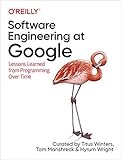
| 10 | Software Engineering at Google Titus Winters, Tom Manshreck, and Hyrum Wright |
Team-scale engineering practices | Intermediate | Google’s scale and practices are not universal |
1. The Pragmatic Programmer, 20th Anniversary Edition: best overall
The Pragmatic Programmer, 20th Anniversary Edition ranks first because it gives the widest introduction to professional software-development judgment. The second edition was substantially revised for its twentieth anniversary and focuses on producing working, maintainable software, according to the official Pragmatic Programmer title page.
What will you learn?
David Thomas and Andrew Hunt cover habits that remain useful across languages and frameworks: clarifying requirements, reducing accidental complexity, avoiding duplication, improving feedback, automating repetitive work, and treating development as an ongoing engineering practice. The book helps readers move from “I can make this feature run” toward “I can make this feature understandable, changeable, and maintainable.”
Best for: Developers moving from tutorials into professional work, or experienced developers who want a broad framework for improving their habits.
What it does not cover: The book is not a substitute for algorithms, computer-science fundamentals, a testing manual, or a current reference for a particular framework.
Main limitation: The book is broad and aphoristic. Individual maxims are useful prompts for judgment, not rules that override context.
Read it before or after: Read it first if you need orientation. Follow it with a focused book such as A Philosophy of Software Design, Refactoring, or Release It!.
Official access: The publisher provides the current edition and ebook information on its official title page.
The Tool Desk
Outbyte Driver Updater FREEFix the driver behind crashes, sound loss and screen glitchesFind Drivers →Outbyte PC Repair FREEClear out junk files and repair common Windows errorsFree Scan →2. A Philosophy of Software Design, 2nd Edition: best for software design
A Philosophy of Software Design, 2nd Edition is the strongest dedicated design pick because it concentrates on the central problem of software design: controlling complexity as a system grows.
What will you learn?
John Ousterhout explains how to identify complexity, design interfaces that hide implementation details, avoid shallow modules, reduce cognitive load, and decide when an abstraction genuinely helps. The book encourages readers to evaluate design by the complexity it imposes on future work rather than by whether the code follows a fashionable pattern.
Best for: Developers who can write working code but struggle with tangled dependencies, leaky abstractions, oversized mental models, or designs that become harder to change after every feature.
What it does not cover: It is not a comprehensive guide to team process, production operations, distributed systems, or testing strategy.
Main limitation: The book is deliberately opinionated. “Deep modules,” abstraction choices, and other recommendations are valuable heuristics, not formal laws.
Read it before or after: Read it after The Pragmatic Programmer for a natural progression from professional habits to design judgment. It also provides a useful counterweight to rigid interpretations of Clean Code.
3. Code Complete, 2nd Edition: best code-construction reference
Code Complete, 2nd Edition is the most comprehensive construction reference on the list. Steve McConnell covers naming, control structures, defensive programming, debugging, testing, code layout, complexity, and maintainability in unusually broad detail.
The Microsoft Press listing identifies the book as a second edition published in 2004 and lists 960 pages, so readers should approach it as a durable construction reference rather than a current guide to cloud platforms, containers, or modern deployment tooling. See the Microsoft Press edition listing for the edition and catalog details.
How should you read Code Complete?
Do not assume that reading all 960 pages cover to cover is the best use of time. Use the book as a reference and select chapters that match current work: construction practices, debugging, defensive programming, code quality, or managing complexity.
Best for: Developers who want detailed guidance on turning requirements and designs into robust, understandable code.
What it does not cover: It is not a modern guide to specific frameworks, cloud operations, distributed architectures, or AI-assisted development.
Main limitation: The edition’s age matters. Language examples, infrastructure assumptions, and some prescriptive guidance should be checked against current language conventions and team practice.
Read it before or after: Read selected chapters after The Pragmatic Programmer. Choose A Philosophy of Software Design first if your immediate problem is system structure rather than code construction.
4. Refactoring, 2nd Edition: best for improving existing code
Refactoring, 2nd Edition is the practical choice when code works but has become difficult to understand or change. Martin Fowler presents refactoring as a controlled way to improve internal structure without changing externally visible behavior.
What will you learn?
You learn how to recognize code smells, make small structural changes, keep the system working, and use tests as a safety net. The second edition’s examples use JavaScript, which makes some mechanics language-specific even though the underlying practice transfers to many ecosystems.
Best for: Developers responsible for evolving an existing codebase, especially when a large rewrite is tempting but risky.
Crashes, No Sound, or Screen Glitches?
Random freezes, missing sound and display glitches usually trace back to one bad driver. Find and replace yours safely.Free scan · under a minuteWindows Errors? Fix Them Before They Spread
Repair common Windows errors and clear accumulated junk for a smoother, more stable PC - no reinstall needed.Free scan · no reinstallWhat it does not cover: Refactoring does not replace architectural redesign, requirements discovery, operational planning, or a strategy for systems that have no reliable tests.
Main limitation: Refactoring is safest when behavior is protected by trustworthy tests. Without that protection, a “clean-up” can silently change behavior or merely move complexity around.
Read it before or after: Read it after Working Effectively with Legacy Code when the codebase is hard to test. Read it before A Philosophy of Software Design if you need concrete change techniques before broader design theory.
5. Designing Data-Intensive Applications: best for distributed systems
Designing Data-Intensive Applications is the advanced recommendation for developers working with databases, distributed services, data platforms, cloud backends, or AI infrastructure. Martin Kleppmann connects data models and storage engines with replication, partitioning, consistency, consensus, batch processing, stream processing, reliability, and scalability trade-offs.
Do these 3 things before closing this tab:
1Scan for outdated or missing drivers - takes under a minute2Clear out junk files and repair common Windows errors3Fix the driver behind crashes, sound loss and screen glitchesWhy is DDIA difficult?
Distributed systems fail differently from single-process applications. Network delays, partial failures, replication lag, inconsistent views, and resource limits create behavior that cannot be understood through local code quality alone. DDIA gives readers models for reasoning about those trade-offs instead of treating distributed architecture as a collection of fashionable components.
Best for: Developers with practical programming experience who already understand basic application development, databases, and networking.
What it does not cover: It is not a beginner’s programming book or a step-by-step guide to deploying one particular cloud platform.
Main limitation: The material is dense. Read the chapters that match a current system rather than treating the book as required cover-to-cover preparation.
What’s actually slowing this PC down?
Pick the symptom - the matching free tool is one click away.
Edition warning: Community discussion has mentioned a possible second edition, but the supplied research does not establish a definitive official commercial edition record. Verify the publisher’s page before buying and do not assume that a newly listed result is authoritative.
Read it before or after: Read A Philosophy of Software Design first if you need general design judgment. Read Release It! alongside DDIA when your work involves both data trade-offs and production reliability.
6. Clean Code, 2nd Edition: best for local readability—with qualifications
Clean Code, 2nd Edition belongs on the list because naming, readable control flow, understandable functions, and useful code-review vocabulary matter. Pearson’s professional-computing catalog lists the second edition with an October 27, 2025 publication date and describes expanded language coverage including Java, JavaScript, Go, Python, and Clojure; consult the Pearson catalog for that publisher information.
How should you use Clean Code?
Use the book to ask whether a name communicates intent, whether a function has a coherent responsibility, and whether a reviewer can understand the code without reconstructing hidden assumptions. Do not convert every recommendation into a rigid review gate.
Recommended Free Tools
Small code is not automatically better. More abstractions are not automatically cleaner. Duplication can be preferable to a premature abstraction. Tests can be brittle when they encode implementation details. A consistent team convention can matter more than an individual preference.
Best for: Developers learning to discuss local code structure and readability in reviews.
What it does not cover: Readable functions do not by themselves solve system architecture, distributed consistency, production failure, legacy seams, or organizational coordination.
Main limitation: The book is strongly opinionated. Compare its local style advice with Ousterhout’s broader emphasis on complexity management and with the conventions of the language and codebase you actually maintain.
Read it before or after: Read it after The Pragmatic Programmer, but pair it with A Philosophy of Software Design so “clean” does not become synonymous with stylistic conformity.
7. Working Effectively with Legacy Code: best for inherited systems
Working Effectively with Legacy Code is the most useful book when the system you inherited is difficult to test, tightly coupled, poorly documented, or full of behavior nobody wants to disturb.
What counts as legacy code?
Michael Feathers uses “legacy code” primarily to describe code without reliable tests, not merely code that is old. That distinction changes the strategy: the immediate goal is to create a safe path for change, not to condemn the existing system or rewrite it wholesale.
The book’s techniques include characterization tests that capture current behavior, seams that allow dependencies to be replaced, and ways to break dependencies so isolated tests become possible. Developers must distinguish an actual defect from undocumented behavior before changing either one.
Best for: Maintenance developers, consultants, technical leads, and anyone joining a mature application with limited test coverage.
What it does not cover: It is not a first programming book and does not provide a complete modern architecture curriculum.
Main limitation: Some examples and terminology reflect the environments in which the book was written. The underlying strategy—make behavior visible, add protection, then change incrementally—remains more important than the exact mechanics.
Read it before or after: Read it before Refactoring when the system lacks tests. Follow both with A Philosophy of Software Design to avoid improving individual parts while preserving an unhealthy overall boundary structure.
Free tools Windows power users keep installed
One-click scans. No signup required.
8. Release It!, 2nd Edition: best for production reliability
Release It!, 2nd Edition earns a place because ordinary developer book lists underrepresent what happens after code leaves the test environment. Michael T. Nygard focuses on production stability, failure modes, resilience, and operational design.
What production problems does Release It! address?
The book examines cascading failures, resource exhaustion, unsafe timeout and retry behavior, circuit breakers, bulkheads, and other stability patterns. The central lesson is that a service can be logically correct in a test environment and still fail when a dependency slows down, a resource is exhausted, or several small failures interact.
Best for: Developers shipping services, backend engineers, platform teams, and technical leads responsible for reliability.
What it does not cover: It should not be treated as a complete guide to modern cloud operations, observability platforms, or a particular deployment environment.
Main limitation: Pair its principles with current platform documentation, service-level objectives, dashboards, and your organization’s incident history. Reading about circuit breakers is not the same as designing one correctly for a specific dependency.
Read it before or after: Read it after gaining basic design experience, or alongside DDIA for systems where data architecture and runtime failure modes are tightly connected.
9. Test-Driven Development: By Example: best for feedback loops
Test-Driven Development: By Example is the clearest testing-focused choice for learning small steps, executable examples, and rapid feedback. Kent Beck presents TDD as a development technique that can support incremental design and expose uncertainty early.
Does TDD guarantee better software?
No. TDD can produce fast, valuable feedback, but tests can still encode poor requirements or brittle implementation details. Strict test-first development is not the best workflow for every system or every type of problem.
Use TDD as one tool within a broader test strategy that may also include unit, integration, contract, property-based, end-to-end, and exploratory testing. Static analysis and production observability can provide feedback that example-based unit tests cannot.
Best for: Developers whose feedback loop is slow or who struggle to make incremental changes safely.
What it does not cover: It is not a complete treatment of testing architecture, distributed testing, performance testing, or production observability.
Main limitation: A green test suite does not prove that the requirements are correct or the architecture is sound.
The Tool Desk
Outbyte Driver Updater FREEScan for outdated or missing drivers - takes under a minuteDriver Scan →Outbyte PC Repair FREEClear out junk files and repair common Windows errorsFree Scan →Read it before or after: Read it after basic programming and testing experience. Pair it with Working Effectively with Legacy Code when adding tests to an existing system rather than starting a new one.
10. Software Engineering at Google: best for team-scale engineering
Software Engineering at Google: Lessons Learned from Programming Over Time broadens the list from individual coding style to long-lived engineering systems. Titus Winters, Tom Manshreck, and Hyrum Wright address code review, testing culture, dependency management, tooling, automation, and maintaining large codebases.
What makes team-scale engineering different?
At organizational scale, good individual code is not enough. Teams need practices that make quality repeatable: review processes, automated checks, dependency policies, documentation, and tools that help many developers work safely in the same codebase.
Best for: Senior developers, technical leads, and readers curious about the difference between programming and software engineering over time.
What it does not cover: It is not a hands-on guide to writing functions, debugging a particular language, or deploying a specific service.
Main limitation: Google’s size, tooling, and engineering culture are unusual. Extract principles rather than copying internal processes mechanically into a small team or startup.
Read it before or after: Read it after developing individual code-quality habits. It pairs particularly well with Release It! and Working Effectively with Legacy Code.
Independent reader supportYour contribution helps us test, update, and keep practical guides available for everyone.What is the difference between the major books?
The books overlap, but they solve different classes of problems:
Recommended Free Tools
| Comparison | Primary emphasis | How to choose |
|---|---|---|
| Clean Code vs. A Philosophy of Software Design | Local readability and style versus broader complexity management | Choose Clean Code for code-review vocabulary; choose Ousterhout for boundaries, interfaces, and system-level design judgment. |
| Code Complete vs. The Pragmatic Programmer | Detailed construction reference versus broad professional habits | Choose The Pragmatic Programmer for orientation; use Code Complete selectively when you need depth. |
| Refactoring vs. Working Effectively with Legacy Code | Improving structure versus creating a safe path through untested code | Choose Feathers first when tests and seams are missing; choose Fowler for repeatable structural transformations. |
| DDIA vs. Release It! | Data and distributed-systems trade-offs versus runtime stability | Choose DDIA for replication, consistency, and storage; choose Release It! for failure modes, resilience, and service behavior. |
| TDD: By Example vs. broader testing practice | Test-first feedback versus selecting an appropriate testing portfolio | Choose Beck for incremental workflow; add integration, contract, property-based, static, and operational feedback where the system requires it. |
Are older software-development books still useful?
Yes, when readers separate durable ideas from historical assumptions. Complexity, clear names, useful boundaries, tests, feedback, predictable failure, and communication remain central problems even when languages and platforms change.
Older books may contain language examples, object-oriented assumptions, pre-cloud infrastructure, or deployment practices that no longer match current work. Advice about function length, class size, naming, architecture, or team process can also be too prescriptive. Treat each recommendation as a hypothesis to test against the language, performance requirements, conventions, and maintenance costs of the actual system.
Code Complete illustrates the distinction particularly well: its construction guidance can remain valuable while its 2004 edition should not be mistaken for a current reference to every modern tool. The second edition’s publication and page details are documented by Microsoft Press.
Which book should you read first?
Choose the book that addresses the bottleneck in your current work rather than buying or reading all ten in rank order.
| Reader situation | Recommended order | Why this order works |
|---|---|---|
| Beginner or junior developer | The Pragmatic Programmer → Clean Code, 2nd Edition → selected Code Complete → TDD: By Example → A Philosophy of Software Design | Starts with broad habits, then local code quality, construction, feedback, and design. |
| Developer working on an existing codebase | Working Effectively with Legacy Code → Refactoring → The Pragmatic Programmer → A Philosophy of Software Design → Release It! | Creates safety for change before applying structural improvements and operational thinking. |
| Backend or platform developer | The Pragmatic Programmer → A Philosophy of Software Design → Designing Data-Intensive Applications → Release It! → Software Engineering at Google | Moves from general judgment to design, data systems, production stability, and team-scale practices. |
| Senior developer or technical lead | A Philosophy of Software Design → Designing Data-Intensive Applications → Release It! → Software Engineering at Google → Working Effectively with Legacy Code | Prioritizes complexity, architecture, reliability, organizational scale, and safe evolution. |
How should developers using AI coding tools use these books?
AI-generated code increases the value of code review, tests, clear interfaces, and architectural judgment. The listed books do not constitute a current AI-assisted development workflow, but their durable contribution is helping developers evaluate generated code rather than merely produce more of it.
A generated function can be readable yet violate a system boundary. A generated test can pass while checking the wrong behavior. A generated retry loop can amplify an outage. The principles in these books help reviewers ask whether code is correct, understandable, changeable, testable, and safe under real operating conditions.
What books almost made the list?
| Book | Why it is valuable | Why it is not in the top 10 |
|---|---|---|
| The Mythical Man-Month | Historically important project and organizational thinking | More dated and less directly useful for everyday code improvement |
| Design Patterns | Foundational vocabulary for recurring object-oriented designs | Examples and object-oriented assumptions can feel dated; patterns are easy to overuse |
| Domain-Driven Design | Useful for complex business domains and modeling | Too specialized for a general first recommendation |
| The Programmer’s Brain | Focused guidance on code comprehension and cognition | Narrower than the selected books |
| The Practice of Programming | Strong material on testing, debugging, portability, and style | Older and less comprehensive for modern production engineering |
| Computer Systems: A Programmer’s Perspective | Excellent systems foundation | Closer to a textbook than a general developer-improvement book |
| Software Engineering Body of Knowledge | Useful map of the software-engineering field | Less readable as a conventional book |
How much do these software-development books cost?
Book prices vary by country, format, retailer, promotion, and subscription plan. Compare the exact edition and format rather than treating one displayed price as a universal current price.
A pricing check dated August 16, 2026 showed a $47.99 signal for the listed Code Complete, 2nd Edition on Microsoft Press and a $38.39 discounted ebook signal on another official listing. Those figures are format-specific and can change. The Microsoft Press listing is the appropriate place to verify availability and the current offer.
Windows Errors? Fix Them Before They Spread
Repair common Windows errors and clear accumulated junk for a smoother, more stable PC - no reinstall needed.Free scan · no reinstallCrashes, No Sound, or Screen Glitches?
Random freezes, missing sound and display glitches usually trace back to one bad driver. Find and replace yours safely.Free scan · under a minutePublisher-direct purchases are useful when edition accuracy and official access matter. Used print books can reduce the cost of older titles, but check the edition and whether supplementary digital access has expired. Libraries and institutional subscriptions are sensible alternatives for expensive reference books.
An O’Reilly subscription may suit readers who want multiple technical books, videos, and interactive resources rather than one title; the official O’Reilly learning page should be checked for current plans and regional pricing. A subscription is poor value if you only need one classic book.
How should you turn reading into better engineering?
- Identify one bottleneck. Choose design complexity, legacy change, testing, reliability, code readability, or team coordination—not “software development” in the abstract.
- Read a focused chapter. Do not assume that finishing a book is the same as learning its method.
- Apply one idea to a real codebase. Add a characterization test, simplify an interface, improve a timeout, or change a review checklist.
- Observe the result. Look at defect rates, review discussions, change effort, test feedback, or operational behavior where measurable.
- Revise the belief. If a rule creates churn, brittle tests, unnecessary abstraction, or worse performance, adapt it to the system instead of defending the rule.
A book list cannot replace building and maintaining software, reading unfamiliar code, debugging production problems, reviewing pull requests, learning a language deeply, deploying systems, or receiving feedback from experienced developers. Books provide models and heuristics; practice determines whether those models improve your work.
Frequently Asked Questions
What is the best software development book for a beginner?
The Pragmatic Programmer, 20th Anniversary Edition is the best first choice for most beginners who already know basic programming because it introduces professional habits, problem-solving, maintainability, and developer judgment. It is not a substitute for learning a language, algorithms, or computer-science fundamentals.
Quick wins for a faster PC:
Fix the driver behind crashes, sound loss and screen glitchesFind Drivers →Repair Windows errors before they cause bigger problemsFix Now →Is Clean Code still worth reading in 2026?
Clean Code is still worth reading for ideas about naming, readability, functions, classes, and code-review vocabulary, but its recommendations should be treated as context-dependent heuristics. Pearson lists Clean Code, 2nd Edition with an October 27, 2025 publication date and expanded language coverage, so readers should distinguish that edition from the original.
Which book is best for learning software architecture and distributed systems?
A Philosophy of Software Design is the best focused choice for general software-design judgment, while Designing Data-Intensive Applications is the advanced choice for distributed systems, storage, replication, consistency, partitioning, and scalability. DDIA is not a beginner programming book.
Should I read all 10 software-development books?
No. Choose one book that addresses your current engineering bottleneck, apply its ideas to a real codebase, and evaluate the result before choosing another. Reading ten books sequentially is less useful than matching one book to a concrete problem.
The Bottom Line
The best software development book depends on the problem you need to solve. Start with The Pragmatic Programmer for broad professional judgment, choose A Philosophy of Software Design for complexity, Working Effectively with Legacy Code for inherited systems, Release It! for production reliability, or Designing Data-Intensive Applications for advanced distributed systems. Read selectively, apply one idea, and let real maintenance work—not a book’s rules—decide what is useful.
What’s actually slowing this PC down?
Pick the symptom - the matching free tool is one click away.
Quick Recap
Product prices and availability are accurate as of the date/time indicated and are subject to change. Any price and availability information displayed on Amazon at the time of purchase will apply.

