
Quick wins for a faster PC:
Clear out junk files and repair common Windows errorsFree Scan →Scan for outdated or missing drivers - takes under a minuteDriver Scan →Repair Windows errors before they cause bigger problemsFix Now →iTechGuides is reader-supported. When you buy through links on our site, we may earn an affiliate commission. As an Amazon Associate I earn from qualifying purchases. Learn more
Robots tear up stage as backup dancers when six reported Unitree G1 humanoids join Wang Leehom and human dancers for “Open Fire” in Chengdu on December 19, 2025. The routine showed rehearsed group choreography, synchronized cues and acrobatic movement—not autonomous improvisation or proof that humanoids can replace professional dancers.
The Chengdu appearance matters because the robots were not presented as a laboratory prototype walking across a test floor. The robots appeared inside a commercial concert, wore costumes designed for the production and performed as part of a human dance team. The evidence still supports a carefully controlled stage demonstration, not a claim that the machines were independent performers.
Key takeaways
- According to CGTN’s December 21, 2025 report, six humanoid robots performed with Wang Leehom during his Chengdu concert.
- Event reporting identified the machines as Unitree G1 humanoid robots that danced alongside Leehom and a human dance crew during “Open Fire.”
- Wang Leehom’s official announcement confirms Chengdu performances from December 19–21, 2025, at the Chengdu Dong’an Lake Sports Park Multifunctional Gymnasium, but does not independently confirm the robots or choreography.
- Humanoid robot dancing generally combines preplanned motion with balance control, trajectory optimization, safety systems and show-control synchronization; the Chengdu production’s exact control stack has not been publicly confirmed.
- The performance shows that robots can occupy the visual role of backup dancers in a rehearsed number, not that robots can autonomously improvise or replace professional dancers across a tour.
What happened when robots became backup dancers in Chengdu?
Six humanoid robots reportedly joined Wang Leehom and human dancers during “Open Fire” at the Chengdu stop of the singer’s Best Place Tour on December 19, 2025. Bandwagon Asia’s December 22, 2025 report described the machines as Unitree G1 humanoids performing synchronized arm movements, leg kicks and Webster-style flips.
The robots were supporting performers rather than the sole act. The reported routine placed six machines into the visual position normally occupied by backup dancers, with the robots moving alongside a human dance crew and responding to the production’s musical and stage cues. The robots also wore silver, sequin-like costumes that matched the concert’s futuristic visual design.
#1 Best Overall
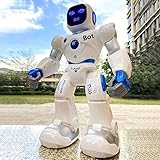
- 【BRILLIANT GIFT IDEA FOR KIDS】It's a big surprise to kids as the robot is up to 15.8 inches in height. With various pioneering ways to play, it can build kids' imagination and creativity. Kids will love this Birthday or Christmas gift!
- 【STEM LEARNING ROBOT】With 10 expressions, 9 flexible joints, and 10 songs, this robot moves more dynamically than typical toys—making playtime more engaging and lifelike. It's a fun way for kids to explore basic programming while building logic, creativity, and coordination!
- 【DIVERSE FUNCTIONS】Gymnastics, storytelling, dance, music, and recording—the Ruko robot enriches childhood with creativity and early artistic exploration. More than just a toy, it’s a fun, engaging friend!
- 【RECHARGEABLE & LONG-LASTING】 Enjoy up to 100 minutes of playtime on a full charge, giving kids plenty of time to play, explore, and have fun without frequent battery changes.
- 【CHARGING REMINDER】For proper charging, please use the original cable included in the package. USB-C to USB-C cables are not supported and will not charge the device. Charge Before Use: No response? Charge for 30 mins first.
Wang Leehom’s official Chengdu concert announcement, published December 4, 2025, confirms the December 19–21 concert dates and the Chengdu Dong’an Lake Sports Park Multifunctional Gymnasium as the venue. The official announcement does not independently confirm the performance of “Open Fire,” the six robots, their Unitree model, or the choreography, so those details remain attributed to event and technology reporting.
A later Record China report dated May 29, 2026 said a Unitree humanoid robot appeared again as a backup dancer at Leehom’s Hangzhou concert. The secondary report suggests that the Chengdu appearance may have been part of a repeatable promotional or production concept, although the available evidence does not establish how the Hangzhou routine was operated or whether the same number of robots participated.
| Question | Best-supported answer | Evidence boundary |
|---|---|---|
| When did the Chengdu performance happen? | December 19, 2025 | The official announcement confirms the broader December 19–21 concert run; event reporting supplies the performance details. |
| Where was the concert? | Chengdu Dong’an Lake Sports Park Multifunctional Gymnasium | Confirmed by Wang Leehom’s official announcement. |
| How many robots performed? | Six | Reported by CGTN and other event coverage. |
| Which model was reported? | Unitree G1 | Reported by event and industry coverage; Unitree’s product page establishes the G1 model but does not verify the concert routine. |
| Were the robots confirmed to be autonomous? | No | No cited production source confirms independent choreography, emotional response or the absence of human supervision. |
Which robots appeared with Wang Leehom?
Reports identified the Chengdu performers as Unitree G1 humanoid robots, not Boston Dynamics Spot quadrupeds and not the larger Unitree H1 robots used in an earlier Chinese television performance. Unitree’s official G1 product page describes the G1 as a humanoid robot with a complex mechanical structure and high-power actuation, but the product page does not identify the machines used at Leehom’s concert.
Recommended Free Tools
The distinction between G1 and H1 matters because Unitree has used more than one robot platform for public performances. A model name associated with one show should not automatically be transferred to another show, even when both demonstrations involve synchronized humanoid movement.
For readers investigating the same hardware rather than a toy, the most precise product search is Unitree G1 humanoid robot. Secondary reports from February 2026 described an Amazon U.S. listing at approximately $17,990 or $18,000, but the live marketplace page, seller, configuration, shipping terms and availability were not independently verified in this research. The G1 should be treated as a specialized research-and-development machine, not as a conventional consumer dancing toy.
How can humanoid robots dance on a live stage?
Humanoid robots can dance on a live stage by executing rehearsed or generated motion trajectories while separate control systems continuously protect balance, timing and joint limits. A polished performance usually combines offline choreography with real-time stabilization rather than asking the robot to invent dance steps during the concert.
A typical technical pipeline can include the following layers:
- Choreography and motion capture: Human dance demonstrations can provide the source movement. A robot cannot simply copy human joint angles because the robot’s proportions, joint limits, mass distribution and range of motion differ.
- Motion retargeting: A retargeting system maps human movement onto the robot’s joints and body geometry. The mapping must preserve the intended pose while avoiding impossible or unstable configurations.
- Trajectory refinement: Optimization can smooth the movement, satisfy mechanical constraints and produce feasible foot and body paths before the routine reaches the stage.
- Balance and disturbance recovery: Real-time controllers can adjust the robot’s posture and foot placement when the floor, landing or movement differs slightly from the planned model.
- Show synchronization: Robot motion can be aligned with musical time, lighting and other stage effects through a conventional show-control workflow.
- Safety and supervision: Operators, emergency stops and pre-performance checks remain important because a fall, missed cue or failed actuator can interrupt a live number.
A 2026 whole-body humanoid-dancing research paper, dated April 5, 2026, describes a pipeline using motion capture, quadratic-programming-based motion retargeting, trajectory optimization and model-predictive control. The research team validated the approach in a four-minute public performance involving four robots. The paper explains a credible way to make group dancing robust, but the paper does not prove that the Chengdu concert used the same software or control architecture.
Rank #2

- 【Humanoid Robot with ESP32】 Powered by ESP32 and 17 intelligent servos, Tonybot smart humanoid robot delivers smooth, dynamic performance. Use the app to easily control it for walking, dancing, kicking, and more. Tonybot can stand up automatically, which is great for playing football and performing gymnastics.
- 【Multimodal Large AI Models】Powered by an AI model module that combines language, voice, and vision models, Tonybot Ultimate Kit unlocks advanced embodied AI functions such as natural conversation and scene understanding. (Ultimate Kit Only)
- 【AI Vision & Voice Interaction】Equipped with an ESP32-S3 vision module and voice interaction module, Tonybot AI robot enables offline face recognition, target tracking, visual line following, voice control, and more. Customize commands and train it to be your AI assistant.
- 【Expandable AI Development with Sensors】 Tonybot robot kit comes with an ultrasonic sensor, IMU sensor, buzzer, and supports modules like dot matrix display, fan, temp/humidity sensors, and WiFi for endless AI-driven development.
- 【3 Programming Options & Comprehensive Tutorials】Tonybot smart AI robot supports Arduino, Python, and Scratch programming, with open-source low-level code and step-by-step tutorials covering everything from beginner learning to advanced humanoid robot development.
A separate 2025 research paper on residual-action reinforcement learning, evaluated primarily on Unitree G1 hardware, describes a method for improving long-horizon humanoid motion tracking. The research supports the broader role of simulation and reinforcement learning in making humanoid movement more robust; the research does not establish that the Leehom performance used that particular algorithm.
Timecode is another possible integration layer. Boston Dynamics describes Spot Choreographer as a system that can synchronize robot movement from timecode input, much like music, lighting and other stage effects. Boston Dynamics’ example concerns Spot robots and Boston Dynamics software, not Unitree G1 robots, so the example should be understood as an industry precedent rather than evidence about Chengdu’s production.
Why are synchronized steps and flips difficult for humanoid robots?
Synchronized steps and flips are difficult because a humanoid robot must coordinate many joints while keeping its center of mass and feet within a recoverable balance state. A robot also has to complete the movement on the intended musical beat, return to a stable pose and leave enough margin for small differences in timing, contact and landing.
Group choreography adds another constraint: six machines must execute the same sequence without drifting into one another or visibly falling out of formation. The audience sees the final silhouette, so small errors in arm height, leg timing or spacing can become obvious even when every robot remains upright.
Flips raise the difficulty further because the robot temporarily loses ordinary foot contact with the floor. The motion must control takeoff, body rotation and landing while protecting actuators and avoiding a destabilizing impact. Event reporting described the Chengdu movements as Webster-style flips, but no cited production source explains the exact motion-generation method, landing strategy or safety procedure used for those specific flips.
Costumes add a production-integration challenge. The silver, sequin-like outfits helped the robots fit the visual concept, but the available reports do not explain whether the costumes were purely cosmetic, how the costumes affected sensors or cooling, or whether the costumes were designed around the robots’ joint clearances.
How was the Chengdu G1 performance different from Unitree’s H1 Spring Festival performance?
The Chengdu show involved six reported Unitree G1 robots serving as backup dancers for a pop concert, while Unitree’s earlier “YangBOT” performance used sixteen H1 robots in a synchronized Yangko-inspired routine at the 2025 Chinese Spring Festival Gala.
| Production | Robot platform and count | Performance role | Technical details reported |
|---|---|---|---|
| Wang Leehom, Chengdu, December 19, 2025 | Six Unitree G1 humanoids, according to event reporting | Supporting performers alongside Leehom and human dancers during “Open Fire” | Synchronized arm movements, leg kicks and reported Webster-style flips; the exact control system was not disclosed. |
| “YangBOT,” 2025 Chinese Spring Festival Gala | Sixteen Unitree H1 robots, according to Unitree’s company account | Group performance with synchronized Yangko-inspired movements | Unitree described video-based dance-motion generation and mapping, reinforcement-learning-based whole-body dance motion, a group-dance control console, rhythm alignment and foot-end shock/noise reduction. |
Unitree’s February 28, 2025 account of the H1 “Fuxi” Yangko performance describes the H1 production’s control and motion techniques. Those company claims help show how robotic performance is developing, but H1’s Spring Festival Gala history should not be presented as proof of the G1 Chengdu concert’s hardware or software stack.
Rank #3
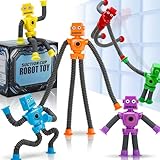
- 6 Fun Robot-Shaped Toys – Includes 6 colorful robots (red, yellow, blue, green, purple, orange) with stretchy pop tube arms & legs for endless bending, twisting, and sticking fun!
- Strong Suction Cup Base – Each robot’s hands and feet have powerful suction cups that securely stick to glass, mirrors, tiles, and smooth surfaces, making them perfect for travel and on-the-go play.
- Sensory & Fidget-Friendly – Helps calm anxiety, improve focus, and relieve stress, making them ideal for autistic kids, ADHD, or anyone who loves fidget toys.
- Perfect Gift & Multi-Use Fun – Great for birthdays, Easter baskets, stocking stuffers, party favors, classroom rewards, or Valentine’s gifts – a hit with kids ages 3-9!
- Safe & Durable – Made from child-safe, non-toxic materials, these stretchy robot toys are BPA-free and designed for long-lasting play.
Unitree’s H1 support and application materials also maintain a separate H1 platform context. Keeping the platforms separate prevents a common reporting error: treating every Unitree humanoid demonstration as one interchangeable product and one shared set of capabilities.
What does the performance prove about replacing human dancers?
The performance proves that humanoid robots can occupy the visual role of backup dancers in a specific rehearsed number; the performance does not prove that humanoid robots can replace human dancers across a tour or operate as autonomous pop stars.
| The robots demonstrated | The robots did not demonstrate |
|---|---|
| Programmed group gestures and synchronized steps | Independent invention of choreography |
| Highly visible kicks, jumps and reported flips under controlled conditions | Reliable operation in every floor, lighting and crowd condition |
| Coordination with a human dance crew and a concert production | Replacement of human expression, improvisation or physical interaction |
| A compelling new stage-spectacle role for humanoid hardware | Readiness for ordinary household use |
Human dancers still contribute expression, improvisation, physical interaction, adaptation to changing stage conditions and immediate risk management. Robots can repeat a tightly rehearsed movement with visual consistency, but a concert is more than a sequence of poses. Performers must handle spacing changes, unexpected delays, costume problems, other performers and audience interaction.
The most accurate description is that humanoids are emerging as stage collaborators and spectacle performers. Calling the robots “backup dancers” is fair when describing their role in the number; calling the machines replacements for professional dancers goes beyond the evidence.
What other robot performances put the Chengdu show in context?
The Chengdu concert belongs to a wider shift from robot demonstrations focused only on walking or balancing toward productions designed around timing, visual identity and audience experience.
Boston Dynamics has a public history of robot dance demonstrations. The company’s account of Spot taking the stage recalls the 2018 “Spot” dance video and describes a later performance involving several Spot robots under operator supervision. One robot stopped during the routine, an important reminder that live robotic entertainment retains operational risks even when the choreography looks polished.
NTT InterCommunication Center’s archive of Yaskawa, Rhizomatiks and ELEVENPLAY documents an earlier human-and-machine stage project using human dancers, motorized flying cubes, industrial robots, programmed choreography and projections. The project explored coordination between humans and robots rather than presenting a humanoid robot as a conventional dancer.
Free tools Windows power users keep installed
One-click scans. No signup required.
Dedicated providers are now marketing humanoid robot entertainment and live-event performance services. RoboFonica says its 2026/27 touring music-and-dance show combines four or more humanoids with human performers and singers. RoboFonica’s official performance page provides that company description.
Rank #4

- STEAM Learning Made Fun, Building 4C Skills: Yonbo makes learning a blast, the ideal robot for kids aged 4-12 and up! 🚀 It brings STEAM (Science, Tech, Engineering, Art, Math) to life through fun play. 💡With Yonbo, kids develop essential 4C skills—creativity, critical thinking, communication, collaboration—while having a great time. Forget boring lessons or too much screen time, educational robot Yonbo helps kids learn by doing, thinking and imagining. It’s education, but fun and exciting! 🧠✨
- Your Child’s Emotional Robot Companion: This companion robot Yonbo isn’t just a toy – it’s a friend who gets your kid! 😊 With over 100 facial expressions, tones, and movements, emo robot Yonbo reacts to your child’s feelings in real-time. Happy? It dances! Sad? It shows empathy. It’s more than a robot kids toy – it’s a fun, emotional sidekick that kids can bond with, while parents enjoy knowing their child is in good hands. A robot friend, not a gadget! 💖🤖
- Interactive and Immersive Playtime: Goodbye boring playtime! 👋 Interactive robot Yonbo takes fun to a whole new level by recognizing sight, sound and scenes. Yonbo brings stories to life with immersive, interactive fun. 🎧👀 It sings, tells stories and even lets kids embark on imaginary adventures. With sound, action and facial expressions combined, Yonbo creates a whole new world for kids to explore! It’s not just watch a screen – it’s getting involved, and kids’ creativity has no limits! 🌟🎤
- Personalized Play with Customizable AI: Every kid is unique, and so is Yonbo ai robot! 😎 You can totally customize intelligent robot Yonbo’s personality and behavior, based on your child’s interests and even their MBTI personality type. Customizable robot Yonbo takes on any role with style, making every interaction fun and tailored to your child’s imagination. The adventure is always personal! 🦸♀️🐶
- Parental Peace of Mind with Full Control: Parents, you’re in charge – but you can still let your kid enjoy some independence! 😌 With the Yonbo app, you can set the kids robot toy’s personality, monitor interactions, and even get alerts when something’s up. Whether you’re cooking or working, you can control Yonbo robot remotely, ensuring your child is safe and happy. It’s like having a fun, educational robot assistant who also respects your parenting style. 🛠️👨👩👧👦
BODI, a physical-AI entertainment venture from Composition Inc., describes a 2026 Japanese stage performance in which a humanoid robot danced, walked a runway, made five-finger gestures and synchronized with live production systems. BODI’s official performance page is a company source, so the description should be treated as a provider claim rather than independent testing.
These examples suggest that robot entertainment may become a distinct production category for concerts, brand activations and experiential events. The examples do not establish that every provider uses the same robot model, level of autonomy or safety process.
Independent reader supportYour contribution helps us test, update, and keep practical guides available for everyone.Can you buy the same Unitree G1 robot?
You may find a Unitree G1 listing through a marketplace, but a current price or availability claim requires checking the live listing immediately before publication or purchase. Humanoids Daily reported on February 19, 2026 that Unitree listed a G1 on Amazon’s U.S. marketplace at approximately $17,990, while RoboHorizon reported on February 21, 2026 an approximately $18,000 listing.
What’s actually slowing this PC down?
Pick the symptom - the matching free tool is one click away.
The two secondary reports are not a substitute for verifying the current marketplace page. Prospective buyers should confirm the seller, exact G1 configuration, included equipment, shipping terms, regional restrictions, support arrangements and return policy. Unitree’s official G1 page is the authoritative reference for the product model, but the official product page does not independently confirm Amazon availability.
The G1 is also not a plug-and-play consumer appliance. A humanoid platform capable of rehearsed stage movement involves complex hardware, software, setup, safety procedures and operator expertise. A marketplace listing, even if active, would not mean that a buyer could unpack the robot and reproduce the Chengdu performance without programming, training and a controlled environment.
What is a realistic alternative for learning robotics?
A small educational dancing robot kit is a realistic alternative for readers who want a hands-on robotics project inspired by the performance, but a kit is not equivalent to a Unitree G1. Robot STEM Kits’ March 1, 2023 documentation describes the SunFounder Dancing Sloth as a small four-degree-of-freedom educational project purchased through Amazon.
A dancing robot STEM kit can provide an accessible way to explore motors, joints, programming and simple choreography. The kit’s scale, four-degree-of-freedom design and educational purpose do not reproduce the G1’s humanoid proportions, athletic movement, stage presence or control complexity.
Windows Errors? Fix Them Before They Spread
Repair common Windows errors and clear accumulated junk for a smoother, more stable PC - no reinstall needed.Free scan · no reinstallOutdated Drivers Are Slowing You Down
One free scan finds every outdated or missing driver and matches the right update for your exact hardware.Free scan · exact hardware match| Goal | Better-matched option | What to expect |
|---|---|---|
| Study the robot model reported at the concert | Unitree G1 humanoid robot | Specialized humanoid research-and-development hardware; verify configuration, seller and availability before purchase. |
| Learn basic robot motion and choreography | Small dancing robot STEM kit | Lower-complexity educational project with simple motorized movement; not a concert-scale humanoid. |
| Book a robot act for an event | Dedicated humanoid robot entertainment provider | Ask about the robot platform, supervision, venue requirements, insurance, setup and cancellation procedures. |
What should readers conclude from the Chengdu performance?
The Chengdu performance is a narrow but meaningful demonstration of humanoid robotics. The robots did not need to behave like independent artists to make the appearance significant: they had to repeat a visually demanding routine, stay coordinated with human performers, fit the show’s design and remain sufficiently stable for a live audience.
Best Value
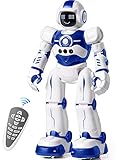
- Remote Control and Hand Gesture Control:This gesture sensing robot not only can be controlled by infrared controller, but also can turn left ,turn right, slide backward, and slide forward according to how your hand gesture commands; Multi function includes auto display and obstacles avoidance as well;The toy robot’s eyes light up with bright blue illuminating LED when it moves;
- Intelligent Programming: This smart robot toy can demonstrating a set of 50 actions inputted by the user.If you switch programming function,this Interactive robot will playback using its moves record feature to repeat the movement one by one as you created like turn left+turn right+walk forward+walk backward+patrol+dance+and many others action mode you selected;
- Premium Material:This Remote Control Robot is made of non-toxic ABS plastic, with flexible multi-joint in shoulder,elbows and thumbs ,and the bottom skating wheels are pretty sturdy to well carry out a various combination of moves;This playful robot really entertain your kids and bring you endless joys;
- Convenient Rechargeable Robot Toy:this RC robot is powered by built-in batteries.Directly connect to USB charging interface like your power bank,plug,computers.Rechargeable way saves your money for batteries and you only recharge the robot about 2 hours, and its playtime is about 60 minutes;
- Ideal Birthday Xmas Gift & Kids Intimate Companion : The infrared control Robot is versatile and vivid can dance,sing,walk,patrol,even can speak.Each robot measures 5.9 x 3.3 x 10.6 inch.
The performance also shows why entertainment is a useful test environment. A concert offers a rehearsed sequence, planned lighting and predictable marks, but the public sees failures immediately. A robot that can perform well on stage has demonstrated more than a laboratory walk, while still operating far inside a controlled scenario compared with a home, workplace or unstructured public space.
For now, the fairest verdict is simple: Unitree G1 robots can serve as striking backup-dancer-style collaborators in a carefully prepared production. The Chengdu appearance is evidence of stage-ready spectacle, not evidence of autonomous choreography, universal reliability or the replacement of human dancers.
Frequently Asked Questions
Were the robots at Wang Leehom’s Chengdu concert fully autonomous?
No. The available reporting does not confirm that the Chengdu robots independently invented choreography or performed without human supervision. The most defensible description is preplanned choreography supported by robotic stabilization and concert-production synchronization.
Do these 3 things before closing this tab:
1Scan for outdated or missing drivers - takes under a minute2Clear out junk files and repair common Windows errors3Fix the driver behind crashes, sound loss and screen glitchesWhich robots performed as Wang Leehom’s backup dancers?
Event and industry reports identified the six Chengdu machines as Unitree G1 humanoid robots. The robots were not Boston Dynamics Spot quadrupeds and were distinct from Unitree’s H1 robots used in the 2025 Spring Festival Gala performance.
Did humanoid robots replace Wang Leehom’s human backup dancers?
No. The robots occupied the visual role of backup dancers in one rehearsed number, but human dancers still supplied expression, improvisation, interaction and adaptation to changing stage conditions.
How much does a Unitree G1 humanoid robot cost?
Secondary reports in February 2026 described an Amazon U.S. G1 listing at approximately $17,990 to $18,000, but the live listing was not independently verified. Buyers should confirm the current seller, configuration, shipping terms, support and availability before purchasing.
The Bottom Line
Bottom line: Six reported Unitree G1 humanoid robots joined Wang Leehom and human dancers in Chengdu on December 19, 2025, performing a rehearsed routine with synchronized movements and reported flips. The appearance marks an important step for robotic entertainment, but it does not show that humanoids can improvise, work without supervision or replace professional dancers.
The Tool Desk
Outbyte PC Repair FREEClear out junk files and repair common Windows errorsFree Scan →Outbyte Driver Updater FREEFix the driver behind crashes, sound loss and screen glitchesFind Drivers →Quick Recap
Product prices and availability are accurate as of the date/time indicated and are subject to change. Any price and availability information displayed on Amazon at the time of purchase will apply.

