
iTechGuides is reader-supported. When you buy through links on our site, we may earn an affiliate commission. As an Amazon Associate I earn from qualifying purchases. Learn more
There is no single best Nvidia replacement for every AI workload. AMD Instinct is conventional data-center accelerator hardware paired with the ROCm software stack; Google TPU is a custom accelerator consumed through Google Cloud; and current AWS Trainium and Inferentia details could not be verified from authoritative material available for this comparison. Choose by workload, framework and compiler fit, memory and scaling needs, measured latency or throughput, and the cost and availability of the specific deployment. AMD’s published MI355X specification is 288 GB of HBM3E and 8 TB/s of peak theoretical bandwidth, while Google documents different TPU generations for fine-tuning, serving, and large-scale training. Those figures are not cross-platform benchmarks, so a representative pilot remains essential.
What are the main Nvidia alternatives for AI workloads?
AMD Instinct and Google Cloud TPU are the two alternatives with documented, current evidence here, but they are not interchangeable products. Instinct accelerators are installed in servers or rack-scale systems and run through ROCm. TPUs are Google-designed accelerators provisioned as a cloud service, with software compiled for the TPU architecture. AWS Trainium and Inferentia belong in an evaluation plan, yet their current generations, specifications, service availability, and workload guidance are not established by the authoritative material available for this article.
AMD Instinct: hardware you deploy
AMD’s Instinct portfolio is positioned for AI training, inference, high-performance computing, and sovereign-AI deployments. The portfolio pages cover MI200, MI300, MI350, and MI400 families and describe ROCm as the associated open software stack. Depending on the product and server design, an organization may use PCIe cards, integrated accelerator systems, or rack-scale platforms. That gives buyers control over host systems, networking, storage, and where the hardware runs, but also makes server qualification and operations part of the project.
Quick wins for a faster PC:
Repair Windows errors before they cause bigger problemsFix Now →Scan for outdated or missing drivers - takes under a minuteDriver Scan →Clear out junk files and repair common Windows errorsFree Scan →Google TPU: a cloud accelerator platform
Google TPU is accessed through Google Cloud rather than purchased as a general-purpose accelerator card. Google’s current guidance lists TPU7x (Ironwood), TPU v6e (Trillium), and TPU v5p as supported Compute Engine generations. Google recommends Compute Engine or Google Kubernetes Engine (GKE) for TPU resource management instead of the legacy Cloud TPU API. Capacity, quota, region, and the selected cloud service therefore affect whether a design can be deployed.
#1 Best Overall
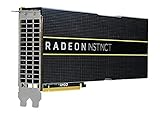
- HP Q1K38A AMD Radeon Instinct MI25 - GPU Computing Processor - Radeon Instinct MI25-16 GB HBM2 - for ProLiant XL270d Gen9
AWS Trainium and Inferentia: include them, but verify first
The available evidence does not verify which Trainium or Inferentia generations are current, what their present specifications are, which AWS services expose them in a reader’s region, or how their software supports a particular model. Treat AWS as an open research item rather than assigning it a rank against AMD or Google. Before committing, obtain current AWS documentation for the exact instance family, compiler and library support, quotas, and pricing.
What do AMD Instinct memory and bandwidth specifications tell you?
AMD’s published numbers show why Instinct is attractive for models constrained by accelerator memory. They describe capacity and peak theoretical bandwidth, not measured tokens per second, training time, latency, utilization, or total cost on a complete system.
| Accelerator | Memory | Peak theoretical bandwidth | How to interpret it |
|---|---|---|---|
| MI355X (MI350 series) | 288 GB HBM3E | 8 TB/s | AMD-published specification for generative-AI training, inference, and HPC; not an independent workload benchmark. |
| MI325X (MI300 family) | 256 GB HBM3E | 6 TB/s | AMD-published specification; generation and system configuration affect practical results. |
| MI300X (MI300 family) | 192 GB HBM | 5.3 TB/s | AMD-published specification; capacity and bandwidth alone do not predict application throughput. |
Large HBM capacity can reduce the need to shard a model across as many accelerators, but the result depends on parameter precision, optimizer state, activation memory, sequence length, batch size, and the framework’s memory behavior. Interconnect topology, host-memory bandwidth, network fabric, and collective-communication libraries can dominate once a model spans multiple accelerators. Use the table to check whether a candidate can hold your model and working set; do not use it as a performance ranking.
Do these 3 things before closing this tab:
1Scan for outdated or missing drivers - takes under a minute2Repair Windows errors before they cause bigger problems3Fix the driver behind crashes, sound loss and screen glitchesWhich Google TPU generations and workload roles are documented?
Google’s guidance assigns different roles to its supported TPU generations rather than presenting one TPU as universally optimal.
| TPU generation | Documented role | Software and access notes |
|---|---|---|
| TPU v6e (Trillium) | Cost-efficient fine-tuning and serving; transformer, text-to-image, and convolutional-neural-network training, fine-tuning, and serving. | Training guidance covers JAX and PyTorch/XLA. Provision through Google Cloud, using Compute Engine or GKE for resource management. |
| TPU7x (Ironwood) | Large-scale training and high-bandwidth inference. | Validate current regional capacity, quota, framework support, and serving topology before sizing. |
| TPU v5p | Supported Compute Engine generation; exact suitability depends on the model and deployment pattern. | Confirm current service availability and software support for the intended workload. |
Google’s inference documentation describes TPU v5e and later as supporting inference and identifies vLLM and SGLang options with JAX or PyTorch backends. Support can vary by model, TPU generation, backend, and serving topology, so a framework name by itself is not a deployment guarantee.
Can AMD GPUs or Google TPUs replace Nvidia for AI workloads?
They can replace Nvidia in some deployments, but replacement is a workload-and-software decision rather than a specification contest. The practical question is whether the target model reaches acceptable quality, throughput, latency, utilization, reliability, and cost after porting.
Large-model training
AMD Instinct is a direct hardware alternative when you need on-premises or hosted accelerator servers and can qualify ROCm, the model framework, kernels, and the multi-accelerator fabric. MI350-series memory figures may simplify sharding for large models, but distributed-training efficiency still has to be measured with the exact parallelism strategy and network.
The Tool Desk
Outbyte Driver Updater FREEFix the driver behind crashes, sound loss and screen glitchesFind Drivers →Outbyte PC Repair FREEClear out junk files and repair common Windows errorsFree Scan →Google positions TPU7x for large-scale training. TPU training requires the computation graph to be compiled for the architecture, so model code with unsupported operations or difficult dynamic behavior can require redesign. A TPU pilot should include compilation time, graph stability, checkpointing, and restart behavior, not only steady-state step time.
Fine-tuning
Google specifically recommends TPU v6e for cost-efficient fine-tuning. That recommendation is a workload-selection guide, not a guaranteed saving: the result depends on allocation, utilization, data pipeline efficiency, and the time needed to adapt the training code.
Rank #2

- High-Performance 4K Gaming: AMD Radeon RX 7900 XT GPU with 20GB GDDR6 memory on 320-bit bus delivers exceptional 4K gaming and content creation performance
- Advanced RDNA 3 Architecture: 84 AMD RDNA 3 Compute Units with Ray Tracing and AI Accelerators, plus 80MB AMD Infinity Cache technology
- Impressive Clock Speeds: Boost clock up to 2450 MHz and game clock of 2075 MHz with 20 Gbps memory speed for smooth, high-frame-rate gaming
- Phantom Gaming 3X Cooling System: Triple striped ring fans with reinforced metal frame and 0dB silent cooling technology for optimal thermal performance
- Modern Display Connectivity: Three DisplayPort 2.1 and one HDMI 2.1 outputs support high-resolution, high-refresh-rate displays and advanced gaming features
AMD can be a strong fit when your existing framework and kernels are supported by ROCm and you want control over the accelerator environment. Measure end-to-end fine-tuning time, including data loading, evaluation, checkpoint writes, and any time spent resolving unsupported operators.
Online inference
Inference decisions are driven by tail latency, concurrency, model loading time, memory headroom, and serving-tool support. Google documents v5e and later TPU inference paths and mentions vLLM and SGLang with JAX or PyTorch backends. Confirm that the exact model, quantization method, tokenizer, batching policy, and backend are supported on the chosen TPU generation.
Free tools Windows power users keep installed
One-click scans. No signup required.
AMD Instinct can serve online models when ROCm-compatible kernels and a production serving stack meet the latency target. A large memory pool may allow a model or larger batch to stay on one accelerator, but only a measured test can show whether kernel coverage and host-to-device behavior meet the service-level objective.
Batch inference, recommendation, and embeddings
For batch jobs, total examples or tokens processed per dollar and the ability to keep the accelerator fed often matter more than single-request latency. Recommendation and embedding systems may include preprocessing, sparse or irregular operations, and database or network steps that hide accelerator gains. Benchmark the complete pipeline rather than an isolated matrix multiplication.
HPC and precision-sensitive work
AMD’s Instinct portfolio explicitly includes HPC. Google cautions that TPUs may not suit workloads requiring FP64 arithmetic, frequent logical branching, or custom operators that run on the CPU. If numerical precision, irregular control flow, or a nonstandard kernel is central to the application, treat compatibility testing as a gate before comparing speed.
What software work is required when moving away from Nvidia?
The migration burden is usually determined by operators and tooling, not by the model file alone.
What’s actually slowing this PC down?
Pick the symptom - the matching free tool is one click away.
AMD and ROCm migration
- Inventory dependencies. Record the framework version, precision modes, custom CUDA or C++ extensions, fused kernels, communication libraries, quantization path, and serving runtime.
- Check ROCm support. Verify every required framework, operator, kernel, and library for the exact Instinct generation and server image. Do not infer support from a similarly named model.
- Port custom code. Replace or adapt unsupported CUDA-specific extensions and validate numerical parity on representative inputs.
- Build the production topology. Test PCIe or fabric layout, host-memory behavior, storage, networking, and collective communication with the intended number of accelerators.
- Measure the whole workload. Capture warm-up, compilation or graph setup, steady-state throughput, tail latency, utilization, and failure recovery.
AMD’s open-stack positioning can make source-level investigation and deployment control easier, but it does not remove the need to validate model kernels and system integration.
Google TPU and XLA compilation
Google’s documentation states: “Code that runs on TPUs must be compiled by the accelerated linear algebra (XLA) compiler.” XLA compiles the graph’s linear algebra, loss, and gradient components into TPU machine code. In practice, that means shape behavior, supported operations, control flow, and graph partitioning are part of the porting project.
- Choose the supported runtime. Decide whether the implementation will use JAX or PyTorch/XLA and confirm the selected TPU generation supports the required features.
- Make shapes and control flow compile reliably. Identify dynamic shapes, frequent branching, host callbacks, and custom CPU operators that may prevent efficient compilation.
- Validate numerical behavior. Compare loss curves, evaluation metrics, and representative predictions at the intended precision.
- Test serving separately. Training compatibility does not prove that the model, batching policy, and serving backend work for online inference.
- Provision correctly. Use the current Compute Engine or GKE workflow, then test quota, regional capacity, startup time, and autoscaling behavior.
How should you benchmark an Nvidia alternative before migrating?
A fair comparison uses the same model revision, dataset slice, precision, batch policy, quality target, and service-level objective on every candidate. Peak FLOPS or HBM numbers are useful for screening capacity, but they cannot substitute for a matched workload test.
Rank #3
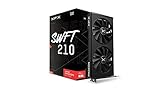
- Chipset: AMD RX 7600
- Memory: 8GB GDDR6
- XFX SWFT Dual Fan Cooling Solution
- Boost Clock: Up to 2655 MHz
- Define the decision. State whether the goal is minimum training time, fine-tuning cost, tokens per second, p95 or p99 latency, embedding throughput, or HPC time-to-solution.
- Freeze the workload. Record model commit, tokenizer, sequence length, batch or concurrency, precision, quantization, optimizer, dataset, and evaluation metrics.
- Check fit before tuning. Confirm accelerator memory, host memory, storage bandwidth, interconnect, framework version, compiler, kernels, and serving runtime.
- Warm up and repeat. Separate compilation, model loading, and cache warm-up from steady-state measurements. Run enough repetitions to expose variance and tail behavior.
- Measure end to end. Collect throughput, latency percentiles, accelerator utilization, memory use, power or energy where available, data-pipeline time, and quality results.
- Test scale-out. Compare one accelerator with the intended multi-accelerator topology and record scaling efficiency, communication time, and checkpoint or restart behavior.
- Calculate delivered cost. Include hardware or cloud allocation, storage, networking, engineering time, idle capacity, quota constraints, and operations. The available evidence does not provide comparable current prices, so this calculation must use your quoted deployment.
- Run a failure drill. Test an out-of-memory case, an unavailable capacity request, a worker failure, and rollback to the existing platform before production cutover.
How do AMD, Google TPU, and AWS compare across practical buying criteria?
| Criterion | AMD Instinct | Google TPU | AWS Trainium or Inferentia |
|---|---|---|---|
| Product category | Data-center accelerator hardware with ROCm. | Custom accelerator accessed through Google Cloud. | Current category details were not verified from authoritative material available here. |
| Best-documented roles | AI training, inference, HPC, and sovereign-AI deployments. | v6e for documented fine-tuning and serving guidance; TPU7x for large-scale training and high-bandwidth inference. | Workload guidance not established here. |
| Memory evidence | MI355X: 288 GB HBM3E; MI325X: 256 GB HBM3E; MI300X: 192 GB HBM. | Comparable capacity figures were not supplied in the available material. | Not stated. |
| Software requirement | Validate ROCm framework, library, kernel, and server support. | XLA compilation is required; JAX and PyTorch/XLA are documented for v6e training. | Compiler, libraries, and framework support require current AWS verification. |
| Access model | Procure or lease compatible accelerator systems and operate the surrounding infrastructure. | Provision through Google Cloud, preferably Compute Engine or GKE under current guidance. | AWS service and regional availability require verification. |
| Price or benchmark conclusion | No matched cross-vendor benchmark or comparable price was established; vendor specifications are not rankings. | No matched cross-vendor benchmark or comparable price was established. | Insufficient evidence for a responsible comparison. |
What can go wrong during an alternative-accelerator project?
The model fits in memory but runs slowly
Capacity is only the first check. Unsupported or unoptimized kernels, host-to-device transfers, synchronization, data loading, and collective communication can leave an accelerator underused. Profile the complete step or request path and fix the largest idle interval before adding hardware.
Compilation or custom operators block TPU deployment
Frequent branching, dynamic shapes, host callbacks, or CPU-only custom operators can make XLA compilation fail or produce an inefficient graph. Isolate those operations, simplify shapes where possible, and decide whether the resulting code still meets quality and latency requirements.
A ROCm port passes correctness but misses the service target
Correct outputs do not prove production performance. Check kernel selection, precision, batching, communication, and serving-runtime behavior under the same concurrency and tail-latency target used in the existing service.
Cloud capacity is unavailable when the model is ready
TPU deployments depend on project quotas, region, supported service, and current capacity. Confirm allocation before committing to a launch date, and keep a tested fallback or a smaller supported configuration.
Peak specifications are treated as benchmark results
HBM capacity and theoretical bandwidth describe hardware limits under specified conditions. They do not establish training time, inference latency, utilization, quality, or total cost for your model; those require the benchmark procedure above.
Which alternative should you choose?
- Choose AMD Instinct first when you need deployable accelerator hardware, control over the server environment, and a model stack that can be validated on ROCm. MI350-series memory and bandwidth specifications are especially relevant when model capacity is the immediate constraint.
- Evaluate Google TPU v6e when fine-tuning or serving fits Google’s documented TPU software path and you value a cloud-managed accelerator. Budget engineering time for XLA compilation and verify Compute Engine or GKE capacity.
- Evaluate TPU7x when the workload is genuinely large-scale training or high-bandwidth inference and the project can secure the required cloud resources. Treat the recommendation as workload-specific rather than a general performance claim.
- Keep AWS in the comparison queue only after obtaining current primary documentation for Trainium or Inferentia, including the exact instance, compiler, supported frameworks, regional availability, quotas, and pricing.
- Retain the incumbent platform when custom operators, strict latency, mature tooling, or operational requirements make migration risk larger than the measured benefit. An alternative is successful only when it meets the complete production target, not when its peak specification looks larger.
Frequently Asked Questions
How much code must be rewritten to move an existing model to AMD or TPU?
There is no reliable percentage because the work is concentrated in framework versions, custom kernels, dynamic control flow, and serving integrations. Make an operator and dependency inventory first, then estimate from a small port that reaches one representative training or inference path.
Can Google TPU capacity be assumed to be available when a project starts?
No. Allocation depends on the Google Cloud project, region, quota, supported service, and current capacity. Verify those constraints and the expected startup time before making a TPU the only production target.
What should a migration acceptance report contain?
Record the exact model and software revisions, precision, data and batching settings, compilation or startup time, throughput, latency percentiles, utilization, memory use, quality metrics, scaling efficiency, delivered cost, and recovery results. This makes the decision reproducible when hardware, drivers, or cloud availability changes.
Is a mixed AMD-and-TPU architecture automatically cheaper?
Not necessarily. Splitting training, batch processing, or serving across platforms can add data movement, duplicate monitoring, and separate optimization paths. Use a mixed design only when the measured benefit of assigning distinct workload phases outweighs that operational complexity.
PC Slower Than It Used to Be?
A free scan shows the junk files, broken settings and background clutter dragging Windows down - then fixes them in one click.Free scan · Windows 10 & 11Crashes, No Sound, or Screen Glitches?
Random freezes, missing sound and display glitches usually trace back to one bad driver. Find and replace yours safely.Free scan · under a minuteQuick Recap
Product prices and availability are accurate as of the date/time indicated and are subject to change. Any price and availability information displayed on Amazon at the time of purchase will apply.

