
Quick wins for a faster PC:
Repair Windows errors before they cause bigger problemsFix Now →Fix the driver behind crashes, sound loss and screen glitchesFind Drivers →Microsoft has stopped producing HoloLens 2, and it has said there will be no hardware replacement. That means there is no announced HoloLens 3 path. Remaining new units may still be available through distributors and partners while inventory lasts. Microsoft says HoloLens 2 support, including security updates, ends on December 31, 2027.
Is HoloLens 3 coming?
Microsoft has not announced a HoloLens 3. A Microsoft spokesperson said the company is no longer producing HoloLens 2 and will continue investing in mixed reality through first-party software and services, alongside partnerships with the wider mobile-phone and mixed-reality hardware ecosystem. The statement points to software and partner hardware rather than a replacement headset; it does not rule out Microsoft revisiting the category in the future.
The Register reported the discontinuation and quoted Microsoft’s statement. MacRumors separately reported that work associated with a third version had reportedly been canceled. The clearest practical conclusion is that there is no announced successor or hardware replacement.
Can you still buy HoloLens 2?
Microsoft has ended production and signaled a last time to buy for customers and partners. Distributors can sell their remaining inventory until it runs out, so availability depends on the seller and location; there is no ongoing production to replenish stock. Any listing should be treated as remaining, used, or refurbished inventory, and its condition and availability should be confirmed with the seller.
#1 Best Overall

- Comfortable on-ear design with lightweight, padded earcups for all-day wear.
- Background noise-reducing microphone.
- High-quality stereo speakers optimized for voice.
- Mute control with status light. Easily see, at a glance, whether you can be heard or not.
- Convenient call controls, including mute, volume, and the Teams button, are in-line and easy to reach.
Japan Business Systems’ November 14, 2024 notice said sales would end when inventory ran out. It also noted that Microsoft had announced no successor as of September 30, 2024.
How long will Microsoft support HoloLens 2?
Microsoft says support for HoloLens 2, including security updates, will end on December 31, 2027. The November 2024 Windows Holographic release was the device’s final feature release; monthly security servicing continues until the support deadline. Organizations should distinguish the end of feature development from the later end of security servicing.
Rank #2
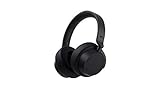
- Spectacular Omnisonic sound wraps you in your favorite music, shows, and more.Control Type:Touch
- Power through your day with up to 18.5 hours of music listening time [2] or up to 15 hours of voice calling on Microsoft Teams [4]. And, listen to almost an hour of music with just a 5-minute charge
- Soft, over-ear pads are breathable, lightweight and comfortable.
- Intuitive touch controls let you skip tracks, answer/end calls, and get hands-free assistance.
- Full charge now lasts up to 20 hours [2]. Listen to almost an hour of music with a 5-minute charge.
Microsoft’s HoloLens release notes identify the November 2024 release as the final feature release. The support endpoint was also reported in The Register’s account of Microsoft’s announcement.
Do not confuse HoloLens 2 support with Windows Mixed Reality
Microsoft’s separate Windows Mixed Reality policy says that after November 2026, that platform will no longer receive security or nonsecurity updates, bug fixes, technical support, or online technical-content updates. This is not the HoloLens 2 device-support deadline. Check which product and software components your deployment actually uses before applying either date.
Rank #3

- Compatible devices: Requires a PC that meets the requirements for and has installed one of these operating systems: Microsoft Windows 10, Windows 8.1, Windows 8 and Windows 7
- Connectivity technology: Wired
- Clarity, Comfort, and Convenience - Digital USB for superior clarity, built-in unidirectional microphone with acoustic noise cancellation
- Leatherette ear pads for improved comfort, in-line volume controls
- Pivoting boom microphone with 180-degree movement, flexible 6-foot cable
Microsoft’s deprecated-features documentation describes the Windows Mixed Reality cutoff.
What HoloLens 2 was designed to do
HoloLens 2 began shipping to customers on November 7, 2019. Microsoft highlighted hand and eye tracking, spatial mapping, and on-device AI intended to support low-latency interaction with holograms. It was positioned for enterprise use, not as a mass-market consumer headset.
Rank #4
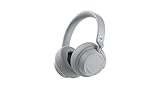
- Spectacular Omnisonic sound wraps you in your favorite music, shows, and more.
- On-ear dials let you adjust volume or keep it quiet with 13 levels of active noise cancellation.
- Soft, over-ear pads are breathable, lightweight and comfortable.
- Intuitive touch controls let you skip tracks, answer/end calls, and get hands-free assistance.
- Power through your day with up to 18.5 hours of music listening time[2] or up to 15 hours of voice calling on Microsoft Teams[4]. And, listen to almost an hour of music with just a 5-minute charge
Microsoft’s shipping announcement gives the November 7, 2019 date and describes the device’s capabilities. That history matters for replacement planning: the headset was part of a larger workflow, not simply a display to swap for another headset.
Independent reader supportYour contribution helps us test, update, and keep practical guides available for everyone.How enterprise users should plan a HoloLens 2 transition
With feature releases over and security servicing scheduled to end December 31, 2027, organizations should treat the remaining support period as a migration window. Start with the deployment and its operational dependencies rather than selecting a new device based on a headline feature or assuming another headset is equivalent.
Free tools Windows power users keep installed
One-click scans. No signup required.
- Inventory the deployment. Record device count, condition, locations, users, applications, accessories, and any workflows that depend on HoloLens-specific capabilities.
- Check remaining-device availability. If additional HoloLens 2 units are needed for continuity, confirm whether sellers have new remaining stock or are offering used or refurbished units, and verify warranty, condition, and delivery terms.
- Map application and management dependencies. Identify required hand or eye tracking, field of view, ergonomics, application compatibility, device-management tooling, and the software services supporting each workflow.
- Compare candidate hardware and services against the workload. Evaluate capability, enterprise support, security-update commitments, availability, and total cost of ownership. Do not assume a partner device or other mixed-reality product is a direct HoloLens 2 replacement without verifying the specific application and support terms.
- Test a migration before relying on it. Pilot the target hardware and software with representative users and real tasks. Confirm that applications, administration, security controls, and support processes work before expanding deployment.
- Set a transition schedule ahead of the cutoff. Decide when to stop adding dependencies to HoloLens 2, when to move critical workflows, and how to handle devices that remain in service as the support endpoint approaches.
Microsoft’s stated direction is software, services, and partnerships with other hardware ecosystems, but that does not itself establish a particular replacement device, equivalent capabilities, or support terms. Those details need to be checked against the products and services available to your organization.
Quick Recap
Product prices and availability are accurate as of the date/time indicated and are subject to change. Any price and availability information displayed on Amazon at the time of purchase will apply.

