
A Microsoft Defender alert beginning with “Trojan:” is a detection label, not enough information to identify one specific malware family. Before deciding whether your PC is infected, record the complete threat name, affected path, detection time, and Protection History status. Do not select Allow on device.
A blocked or quarantined download may never have run. A recurring detection, “Remediation incomplete,” or evidence of execution requires deeper checks.
Read the complete Defender alert
Open Start → Settings → Privacy & security → Windows Security → Virus & threat protection → Protection history. (On some Windows 10 builds the path begins Start → Settings → Update & Security.) Labels vary by Windows release, language, and organization policy, but the destination is the Windows Security app.
Expand the alert and record:
- the complete detection name, such as
Trojan:Win32/...,Trojan:Script/...,Trojan:PowerShell/...,TrojanDownloader:..., orTrojanSpy:...; - the file, process, or URL involved;
- the full file path;
- detection time and severity;
- the current status and recommended action.
Names usually combine a threat category, platform or file type, Microsoft’s family or variant identifier, and sometimes a suffix such as !ml or !MSR. A suffix does not, by itself, identify a criminal campaign or payload. If an entry exists, check the complete name in Microsoft’s Malware Encyclopedia.
Outdated Drivers Are Slowing You Down
One free scan finds every outdated or missing driver and matches the right update for your exact hardware.Free scan · exact hardware matchPC Slower Than It Used to Be?
A free scan shows the junk files, broken settings and background clutter dragging Windows down - then fixes them in one click.Free scan · Windows 10 & 11#1 Best Overall

- Does Not Fix Hardware Issues - Please Test Your PC hardware to be sure everything passes before buying this USB Windows 11 Software Recovery USB.
- Make sure your PC is set to the default UEFI Boot mode, in your BIOS Setup menu. Most all PC made after 2013 come with UEFI set up and enabled by Default
- Does Not Include A KEY CODE, LICENSE OR A COA. Use your Windows KEY to preform the REINSTALLATION option
- Free tech support
Microsoft’s guidance on quarantine, removal, restoration, and allowed items is documented in its Defender FAQ.
What the status means
| Protection History status | Meaning and next action |
|---|---|
| Threat blocked | Defender prevented the item from running or completing an action. Confirm whether it was also removed or quarantined, then scan if the source was suspicious. |
| Threat removed | Defender deleted the detected item. A new scan is still sensible if the file could have executed. |
| Threat quarantined | The item was isolated and blocked from operating. Choose Remove when permanent deletion is appropriate; do not restore it merely because an application needs it. |
| Actions needed | Open the entry and complete the listed remediation step. |
| Remediation incomplete or partially removed | Defender could not fully clean the threat. Proceed to a Full scan and then an Offline scan. |
| Allowed threat | The item was previously permitted by a user or administrator. Reverse that decision unless its publisher, signature, hash, and purpose are independently verified. |
A historical entry alone does not prove that the file remains active. Check its status and run a new scan rather than deleting Protection History.
What to do in the first five minutes
- Do not click Allow on device or restore the file.
- If the alert involves a possible remote-access tool, credential stealer, or suspicious script, temporarily disconnect from the internet.
- In Protection History, choose Remove where offered, or leave the item quarantined.
- Update Windows and Defender security intelligence.
- Run the follow-up scan that matches the situation below.
Microsoft says quarantined files are moved to a protected location and blocked from operating. Restoration returns a file to its original location and should be reserved for a file proven legitimate. Allowing an item adds it to an allowed list and stops future alerts, so Microsoft recommends doing that only for trusted software and publishers.
Choose the right follow-up scan
Quick scan
Use a Quick scan when Defender already blocked or removed the item and there are no recurring alerts or unusual symptoms. It is a rapid confidence check, not a complete examination of every file.
Full scan
Choose Windows Security → Virus & threat protection → Scan options → Full scan → Scan now when the file may have run, or when the detection involved an installer, script, crack, attachment, or downloaded archive. A Full scan checks every file and program.
Microsoft Defender Antivirus Offline scan
Choose Windows Security → Virus & threat protection → Scan options → Microsoft Defender Antivirus (offline scan) → Scan now when the alert returns after reboot, remediation is incomplete, or a startup component or persistent process may be interfering. Save work first. Windows restarts, scans in the Windows Recovery Environment before normal processes load, then restarts again. Review results later in Protection History. See Microsoft’s current scan guidance at Virus and threat protection in the Windows Security app.
Is the computer definitely infected?
No. The alert does not establish that the Trojan executed, how long it ran, or whether data was accessed.
Rank #2

- Dual USB-A & USB-C Bootable Drive – compatible with nearly all Windows PCs, laptops, and tablets (UEFI & Legacy BIOS). Works with Surface devices and all major brands.
- Fully Customizable USB – easily Add, Replace, or Upgrade any compatible bootable ISO app, installer, or utility (clear step-by-step instructions included).
- Complete Windows Repair Toolkit – includes tools to remove viruses, reset passwords, recover lost files, and fix boot errors like BOOTMGR or NTLDR missing.
- Reinstall or Upgrade Windows – perform a clean reinstall of Windows 7 (32bit and 64bit), 10, or 11 (amd64 + arm64) to restore performance and stability. (Windows license not included.). Includes Full Driver Pack – ensures hardware compatibility after installation. Automatically detects and installs drivers for most PCs.
- Premium Hardware & Reliable Support – built with high-quality flash chips for speed and longevity. TECH STORE ON provides responsive customer support within 24 hours.
- A download can be detected and blocked before execution.
- A file can be quarantined after detection without evidence that it changed Windows.
- An executed Trojan may create persistence, alter settings, or access accounts.
- A potentially unwanted application or false positive can trigger a detection.
- A browser cache, archive, restore point, installer, shared folder, or USB drive can cause a file to reappear.
Assess execution evidence, persistence, account activity, and the file’s behavior—not the word “Trojan” alone.
Quick wins for a faster PC:
Scan for outdated or missing drivers - takes under a minuteDriver Scan →Clear out junk files and repair common Windows errorsFree Scan →If the detection keeps coming back
Record the new detection time and path each time. Do not repeatedly delete only the visible file or clear Defender’s history; that can hide evidence without stopping reinfection.
- Run a Full scan, followed by Defender Offline.
- Remove suspicious recently installed applications and browser extensions.
- Review Settings → Apps → Startup and Task Scheduler for unfamiliar entries, taking care not to disable legitimate Windows tasks.
- Disconnect removable drives and rescan them separately.
- Check browser notification permissions and cloud-synced folders if the same download is recreated.
- Confirm the item was not previously allowed.
Recurring detections can originate from a scheduled task, startup entry, installer, malicious extension, archive or disk image, restore point, email cache, shared folder, or USB device. If a trusted file appears to be detected incorrectly, use the false-positive process below.
When to protect your accounts
Change passwords from a known-clean device if the item executed, or if its confirmed family is a stealer, spyware, banker, keylogger, or remote-access Trojan; also do so if you entered credentials while the device may have been compromised or see suspicious sign-ins, reset emails, or financial activity.
- Prioritize email, financial, password-manager, and work accounts.
- Revoke active sessions and refresh recovery methods where the service allows it.
- Enable multifactor authentication.
- Contact banks or payment providers promptly if transactions look suspicious.
A blocked-before-execution download does not automatically require resetting every account.
Handling a possible false positive
- Verify where the file came from and who publishes it.
- Check its digital signature and compare its hash with the publisher’s official release.
- Submit the file through Microsoft’s official sample-submission channel for review.
- Keep it quarantined while the result is assessed.
Do not create a broad Defender exclusion just to stop notifications. Microsoft warns that exclusions reduce protection; if one is genuinely necessary, use the narrowest full path and filename rather than an entire drive or broad folder. A clean result from another scanner does not prove that Defender is wrong, because products use different signatures, heuristics, cloud judgments, and scan coverage.
Independent reader supportYour contribution helps us test, update, and keep practical guides available for everyone.Defender, a second scanner, or professional help?
Defender is the sensible first response because it is already integrated with Windows. A reputable on-demand second opinion can help when alerts persist, browser or adware symptoms remain, or a false positive is plausible. It does not replace active protection.
Rank #3
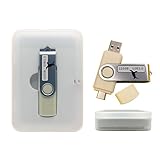
- Supports UEFI and Legacy BIOS boot on many PCs and laptops. If boot issues occur, check Secure Boot settings and use the included boot instructions.
- Complete All-in-One Dual USB-A & USB-C System Toolkit – boot, repair, recover, reinstall, reset forgotten Windows or Linux passwords, restore files, access locked systems, run LIVE/install best Linux OS systems - all from one ultra-fast 128 GB USB 3.0 drive loaded with premium Linux and Windows utilities.
- Fully Customizable USB – easily Add, Replace, or Upgrade any compatible bootable ISO app, installer, or utility (clear step-by-step instructions included).
- Powered by the most powerful Multi-Boot Manager – easily launch dozens of OS and recovery tools without reformatting. Works with laptops, desktops, mini-PCs, Windows tablets and other modern USB-C devices — no adapters or setup required.
- Includes 31+ OS & Utilities (x86-64 & ARM64) – Linux Ubuntu, Kali, Mint, Tails, retro-gaming emulator - Batocera (ready to play), Garuda, Fedora, openSUSE, Solus, CAINE Digital Forensics, 3D printing and engineering Linux OS, Windows Installers, DriverPacks, Antivirus Rescue Disks, and much more!
- Microsoft Safety Scanner is a free, on-demand Microsoft tool; it is not continuous antivirus protection.
- Malwarebytes offers second-opinion and consumer security options; current plan pricing should be checked on its site.
- ESET Online Scanner provides a free, on-demand independent scan.
Avoid running multiple real-time antivirus products without understanding Windows Security provider settings. Paid software is most useful when you need additional cross-device, identity, support, or management features—not as an automatic cure for one blocked detection.
When a reset or clean reinstall is justified
A Windows reset or clean reinstall may be appropriate when Offline scanning cannot stop recurring detections, security tools are disabled or tampered with, unknown administrator accounts or persistent remote-access tools appear, there are strong signs of privileged compromise, or you need high confidence after a serious incident. It is not automatically necessary after every Defender Trojan alert.
Recommended Free Tools
Before resetting:
- Secure accounts from another device.
- Preserve only essential personal documents.
- Do not back up executable files, cracks, scripts, unknown installers, or uninspected browser profiles.
- Verify backups are clean.
- Reinstall applications from official sources.
Bottom line
The complete detection name, path, and status determine the next step. Remove or quarantine the item, run a Full scan when execution is possible, and use Defender Offline when the alert returns or cleanup is incomplete. Escalate to account protection, a second opinion, professional assistance, or a reinstall according to the evidence—not simply because the alert contains the word “Trojan.”
Frequently Asked Questions
Is a quarantined Trojan still dangerous?
A quarantined file is isolated and blocked from operating. Leave it quarantined or remove it; do not restore it unless its legitimacy is independently verified.
Should I delete Protection History?
No. History is evidence, not the infection itself. Check the current status and scan again instead of deleting the record.
Can I use another antivirus?
Use Defender first, then a reputable on-demand second-opinion scanner if uncertainty or symptoms remain. Avoid overlapping real-time antivirus products without checking Windows Security settings.
What’s actually slowing this PC down?
Pick the symptom - the matching free tool is one click away.
Do I need to reinstall Windows after one alert?
Usually not. Consider a reset or clean reinstall only for persistent or high-confidence compromise, tampering, unknown administrator access, or when Offline scanning cannot stop the detections.
Quick Recap
Product prices and availability are accurate as of the date/time indicated and are subject to change. Any price and availability information displayed on Amazon at the time of purchase will apply.

