
iTechGuides is reader-supported. When you buy through links on our site, we may earn an affiliate commission. As an Amazon Associate I earn from qualifying purchases. Learn more
TokenGate is a research method for reducing the cost of processing a long prompt before an LLM starts answering. It learns to score input tokens, keeps a top-K subset for later computation, and uses token-gated attention during training to make that discrete selection learnable. The authors report faster time-to-first-token and lower peak memory in their evaluations, but those are paper-reported results—not a guarantee for a particular model, task, or inference stack. If you want to try it, begin with the authors’ repository and verify its current model support, setup instructions, and benchmark configuration before running it.
What is TokenGate, and which part of inference does it target?
TokenGate is a learnable token-pruning method designed to extend trained language models. Its target is prefill: the work a transformer does to process the input prompt before it can produce the first output token. Reducing that work can reduce time-to-first-token (TTFT), an important part of perceived response latency when prompts are long.
For a long-context request, the model must read and represent the prompt before generation begins. That initial pass can dominate the latency of a short answer, particularly when the prompt contains many documents, conversation turns, or other context. TokenGate is aimed at reducing the amount of that initial computation while retaining the tokens the learned gate considers important.
That scope matters. Prefill is not the same as decode, the subsequent generation of output tokens. The results described for TokenGate concern prefill and TTFT; they do not establish a general improvement to decode speed, tokens per second during generation, or every stage of an LLM deployment. A system could therefore show a large first-token improvement while seeing little or no change in the speed of later output tokens.
#1 Best Overall

- NVIDIA Volta GV100 Architecture — 4,608 CUDA Cores, 640 1st-Gen Tensor Cores delivering 14 TFLOPS FP32 and 112 TFLOPS deep learning performance for AI training, inference, HPC, and scientific computing workloads
- 32GB HBM2 ECC Memory — 900 GB/s Bandwidth — High-bandwidth memory on a 4096-bit bus with ECC error correction provides the memory capacity and throughput required for the largest AI models, simulations, and datasets
- PCIe 3.0 x16 Interface — 250W TDP — Standard PCIe Gen3 connectivity with passive cooling designed for enterprise rack server deployment in HPE ProLiant, Dell PowerEdge, and Supermicro platforms with adequate chassis airflow
- NVLink — Scale to 96GB Unified Memory — Connect two V100 GPUs via NVLink at 300 GB/s bi-directional bandwidth to scale GPU memory from 32GB to 96GB for larger AI training and HPC workloads
- Multi-Precision Computing — Supports FP64 (7 TFLOPS), FP32 (14 TFLOPS), FP16 (112 TFLOPS) and INT8 precision modes for flexible deployment across training, inference, and scientific simulation workloads
The method has two related parts that are easy to conflate:
- Token pruning scores input tokens and selects a subset to continue through later model computation.
- Token-gated attention adjusts attention logits using token-importance scores. The authors use this mechanism during training to help the gate and model adapt together despite the discrete selection step.
In other words, pruning is the selection; gated attention is part of how the selection becomes trainable. Token-gated attention should not be treated as a stand-alone inference shortcut independent of pruning. If no tokens are removed from subsequent computation, the central prefill-saving mechanism is absent.
Why long-context prefill is a distinct optimization target
TTFT combines the time needed to accept and process the prompt with the time needed to schedule the first generated token. In a short-context interaction, network, queueing, or decoding overhead may dominate. In a long-context interaction, the transformer’s prompt pass can become the visible bottleneck. TokenGate addresses that specific part of the path rather than promising a blanket acceleration of all model work.
Do these 3 things before closing this tab:
1Scan for outdated or missing drivers - takes under a minute2Repair Windows errors before they cause bigger problems3Fix the driver behind crashes, sound loss and screen glitchesPeak memory is a separate concern. During prefill, the runtime must hold activations and attention-related state for the prompt. Retaining fewer tokens for later computation can reduce that pressure, but a lower memory figure does not automatically imply a proportional latency reduction. Conversely, a faster prefill run is not necessarily a lower-memory run unless both measurements are taken under the same conditions.
This distinction is useful when deciding whether to test the method. If users mainly complain that the first response token arrives late after sending a large prompt, prefill-oriented pruning is relevant. If the problem is slow streaming after the first token, the reported TokenGate results do not answer it. Measure the two phases separately instead of inferring one from the other.
How does TokenGate select tokens and make top-K trainable?
A gate assigns importance scores to the input tokens. A top-K operation then selects a subset according to those scores, limiting which tokens continue through later computation. The key training challenge is that top-K is discrete: a small change in a score does not necessarily change the selected set, so the operation does not provide the ordinary differentiable path needed to directly train the gate through that choice.
TokenGate addresses this with token-gated attention. During training, importance scores reweight attention logits, providing a gradient path through which the gate and model can adapt together. The authors describe the approach as inspired by Mixture-of-Experts routing. That inspiration describes the routing idea; it does not mean TokenGate is itself a general-purpose expert-routing system.
Conceptually, a training step has three linked decisions. First, the gate estimates which prompt positions matter. Second, the top-K rule defines the reduced set that should receive later processing. Third, gated attention supplies a score-sensitive signal so that useful selections are rewarded through the model’s loss. The discrete set still exists, but the attention calculation gives optimization information about the importance scores.
At inference time, the practical benefit comes from carrying the selected subset into later model computation. The gate therefore has to be integrated with the model’s attention and execution path, not bolted on as a reporting-only score. The exact location of the gate, whether selection is repeated at layers, and how the implementation represents retained positions are configuration details to confirm in the paper and repository.
Rank #2

- Delivers 25 TFLOPS of AI inference performance using four MemryX MX3 accelerators in a compact M.2 2280 M-key module.
- Connects through PCI Express Gen 3 and above for straightforward integration into embedded and edge systems with an M.2 M-key slot.
- Includes 42 MB of distributed on-chip weight storage to support low-latency, batch-1 pipelined inference.
- Designed for low-power deployment with a 1 W–12 W operating range and host-managed airflow requirements.
- Supports ONNX, TensorFlow, Keras, and TFLite models through the MemryX software stack on Linux and Windows hosts.
The result is a method in which learned importance informs both the token selection and the training signal. The available description does not specify a universal scoring formula, retained-token percentage, layer-by-layer policy, or one configuration that applies to every model. Those are decisions to verify in the paper and the implementation rather than settings to assume from the method’s name.
What does “top-K” mean operationally?
K is the number of input tokens retained for the subsequent computation in a particular run. A smaller K offers more opportunity to reduce work and memory, but it also removes more context and can increase the risk that a task-relevant token is discarded. A larger K preserves more information while reducing the potential saving. The paper summary does not establish one universally safe K or a fixed retention percentage.
Do not compare two runs solely by saying that both use pruning. Record the actual retained-token budget, the original prompt length, and any rule the implementation uses to determine K. Two systems can retain the same number of tokens yet have different costs if they handle positions, layers, batches, or attention patterns differently.
Selection also changes the information presented to later layers. It is not equivalent to deleting a few characters from the input string, and it is not automatically equivalent to a human-written summary. The model still receives the selected token representations according to the implementation’s attention mechanism. Quality testing must therefore accompany every latency or memory test.
What performance did the authors report?
The TokenGate authors report the following results for transformer prefill and comparisons in their 2026 preprint:
| Reported result | What it describes | Attribution |
|---|---|---|
| 1.4–11.3× faster TTFT | Range reported across evaluated tasks | TokenGate authors, 2026 |
| 1.5–3.4× lower peak memory | Range reported across evaluated tasks | TokenGate authors, 2026 |
| Up to 6.4× faster prefill and 2× lower peak memory | Comparison against the authors’ best-performing prior token-pruning methods | TokenGate authors, 2026 |
The authors also report no accuracy degradation on the tasks they evaluated. That statement applies to those evaluations; it is not a claim that every task, model, or retained-token budget will preserve quality. “No degradation” should be read in relation to the paper’s baselines, metrics, and tested settings, which need to be inspected if you are making a production decision.
Quick wins for a faster PC:
Clear out junk files and repair common Windows errorsFree Scan →Scan for outdated or missing drivers - takes under a minuteDriver Scan →Repair Windows errors before they cause bigger problemsFix Now →These figures are ranges and maxima from the paper, not a single expected speedup. A 1.4× improvement and an 11.3× improvement describe very different operating points. The upper end may correspond to a particular task, context length, pruning setting, or comparison baseline rather than to the normal result for every request.
The available material does not expose the complete task-level tables, hardware, software, batch sizes, prompt lengths, or other settings needed to map a number to a particular deployment. Check those details in the paper before treating any result as a task-specific or hardware-specific estimate. No independent replication or hands-on implementation test is established here.
How should you interpret TTFT, prefill, and memory numbers?
Use a phase-specific measurement plan. Record the time from request acceptance to the first generated token as TTFT, and separately record the model’s prefill interval if the serving stack exposes it. Then measure decode throughput after the first token. This prevents a faster or slower scheduler, tokenizer, or output loop from being mistaken for a change in the pruning method itself.
Rank #3

- ✅Powered by 26 Tera-Operations Per Second (TOPS) Hailo-8 AI Processor. 2.5W typical power consumption
- ✅Scalable, enabling simultaneous processing of multi-streams & multi-models
- ✅Enabling real-time, low latency and high-efficiency AI inferencing on the edge devices
- ✅Supports TensorFlow, TensorFlow Lite, ONNX, Keras, Pytorch frameworks
- ✅Supports Linux and Windows. Supports the temperature range of -40°C to 85°C
For memory, report peak device memory under a fixed batch size, prompt length, model, precision, and serving configuration. Peak memory can vary with allocator behavior and temporary buffers, so a comparison is meaningful only when the measurement procedure is held constant. The authors’ 1.5–3.4× lower peak-memory range and 2× comparison result should be treated as paper-level observations until you reproduce the same conditions.
What’s actually slowing this PC down?
Pick the symptom - the matching free tool is one click away.
Quality needs its own column in an evaluation report. Use the task metric appropriate to the application and keep the retained-token budget visible. A run that reaches the first token quickly but loses a required fact, citation, or classification decision may not be an improvement for the user. The authors’ statement of no accuracy degradation is encouraging, but it does not remove the need for workload-specific checks.
How can you try TokenGate without assuming an unverified setup?
The authors identify a public code repository at github.com/tokengate-models/TokenGate. They say TokenGate natively extends standard transformer models, with Qwen3 as an example, and hybrid-attention models, with Qwen3.5 as an example. These examples are not evidence that all model families, model versions, or inference engines are supported.
The repository’s current install requirements, supported commits, checkpoints, hardware needs, and license details are not established by the available information. For that reason, there is no confirmed install command or inference configuration to copy here. Use this verification sequence before running an experiment:
- Inspect the current repository documentation. Confirm the project’s installation method, dependencies, license, and any stated limitations. Record the commit or release you use so the run can be reproduced.
- Confirm the exact model and architecture. Check whether the implementation supports your model family and model version, including whether it handles standard or hybrid attention as required. Do not infer compatibility solely from the Qwen3 or Qwen3.5 examples.
- Identify the intended workflow. Establish from the project documentation whether your use case requires training or adapting a gate, loading a provided checkpoint, or another procedure. The method description does not supply commands, checkpoint names, or a ready-to-use configuration.
- Establish a baseline on your own workload. Run the unmodified model on representative prompts and record prefill latency or TTFT, peak memory, output quality, and the relevant environment settings. Keep the model, prompt, task, and serving conditions fixed for the comparison.
- Run TokenGate with documented settings. Record the retained-token budget or other selection settings if the implementation exposes them, along with batch size, prompt length, hardware, software versions, and the repository commit.
- Compare quality and systems measurements together. Measure TTFT or prefill latency separately from decode throughput, and measure peak memory separately. Check task accuracy or output quality at the same retained-token budget; a faster run is not a useful result if the task no longer meets your quality requirement.
- Repeat representative cases. Test the range of prompt lengths and tasks your application actually serves. Keep the results tied to the exact setup rather than generalizing from one prompt or one model.
This process is an evaluation plan, not a claim that the repository currently provides each feature or setting in a particular form. The current project documentation is the authority for how to install and invoke its implementation.
Recommended Free Tools
What can go wrong in an evaluation?
One common pitfall is measuring only a synthetic long prompt. Real traffic can contain a mixture of short and long requests, different batch sizes, and different output lengths. Report the prompt-length distribution that matters to your application and identify whether the gain appears only at the longest end.
Another pitfall is changing several variables at once. Switching model versions, quantization, precision, serving engine, or batch size while adding TokenGate makes attribution impossible. Start with an unchanged baseline, alter only the pruning method, and retain the same measurement harness.
Quality failures can also be hidden by aggregate scores. A method may preserve an average benchmark number while dropping a small but important class of prompts. Inspect examples or per-category metrics where the application requires reliable retrieval, instruction following, or exact answers. If the implementation exposes multiple budgets, test each budget rather than selecting the fastest setting by default.
Finally, do not confuse a lower theoretical token count with an end-to-end saving. The gate itself, data movement, indexing, and integration overhead consume time. Only wall-clock TTFT, prefill latency, and peak memory measured in the target stack show whether those costs are outweighed by the reduced computation.
The Tool Desk
Outbyte Driver Updater FREEScan for outdated or missing drivers - takes under a minuteDriver Scan →Outbyte PC Repair FREEClear out junk files and repair common Windows errorsFree Scan →Rank #4
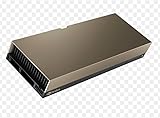
- 48GB AI graphics accelerator
How should you compare TokenGate with another pruning method?
A meaningful comparison holds the major conditions constant. Efficient-transformer results can be difficult to compare across papers when benchmarks and experiment settings differ, a concern noted in a 2021 survey of efficient Transformers. Compare methods on the same model, prompt length, and task, and make the context of every result visible.
- Latency: report TTFT or prefill latency, and keep it separate from decode throughput.
- Memory: compare peak memory under the same measurement conditions rather than treating memory savings as interchangeable with latency gains.
- Quality: evaluate accuracy or task quality at the same retained-token budget.
- Environment: record hardware, software, batch size, precision, model version, and relevant serving settings.
- Workload: hold prompt length, prompt composition, output limit, and request concurrency constant when comparing a pair of runs.
- Evidence: say whether the numbers come from the same experimental setup or from separate papers with different benchmarks.
The reported TokenGate comparisons against prior token-pruning methods are useful as the authors’ paper-level results. Without the full benchmark tables and settings, they do not support a complete head-to-head recommendation for a specific application.
How does TokenGate relate to manual prompt shortening and other pruning?
Manual shortening, truncation, summarization, retrieval filtering, and learned token pruning all reduce the information processed, but they do so differently. Truncation follows a positional rule; summarization replaces source text with a new representation; retrieval filtering chooses passages before the model sees them; TokenGate is described as learning which input tokens to retain for later model computation.
Those approaches are not interchangeable baselines unless they are evaluated with the same task, context, quality target, and latency accounting. A manual edit might remove an important detail even when it is short, while a learned gate might retain that detail and remove less useful tokens. Conversely, the gate can make an incorrect selection on a workload unlike its evaluation tasks. The only supported conclusion is that each method needs a matched test.
PC Slower Than It Used to Be?
A free scan shows the junk files, broken settings and background clutter dragging Windows down - then fixes them in one click.Free scan · Windows 10 & 11Crashes, No Sound, or Screen Glitches?
Random freezes, missing sound and display glitches usually trace back to one bad driver. Find and replace yours safely.Free scan · under a minuteWhen is TokenGate worth evaluating?
TokenGate is most relevant when prompt processing is a material part of your latency or memory problem—for example, when your application supplies long contexts and the delay before the first answer token matters. It is less informative to focus on TokenGate solely because an application generates many output tokens: the reported claims are about prefill, not a general reduction in decode cost.
It may be a sensible candidate for a long-context service that can tolerate an explicit quality-versus-retained-token evaluation and can modify the model execution path. It is a weaker candidate when the dominant cost is decoding, when prompts are usually short, or when the deployment cannot support the model integration described by the project.
Before investing in an implementation, check that the project supports the model you actually use and that you can measure quality at the intended pruning level. A useful decision is based on your own prompt distribution, task-quality threshold, hardware, and serving configuration, not on the largest speedup in a paper’s range. If you cannot verify those conditions in the implementation and paper, treat the reported figures as motivation to test—not as a deployment forecast.
What remains to verify before a production decision?
Several practical details are not established in the summarized paper material: the complete task-by-task benchmark results, the exact hardware and software configurations, the current repository installation path, supported commits, checkpoint availability, and deployment commands. These are not minor conveniences; they determine whether a reported number can be reproduced and whether the method fits a particular serving stack.
For a production review, request or record the paper table that corresponds to your model and workload, then pin the repository version and dependencies. Run a baseline and TokenGate under identical conditions, include quality checks, and retain logs for prompt length, retained-token budget, TTFT, prefill latency, decode rate, and peak memory. If those records do not show a benefit that meets your service objective, the paper’s maximum does not justify shipping the change.
Best Value

- Professional AI & Creator Workstation: AMD Radeon AI PRO R9700 GPU with 32GB GDDR6 is engineered for AI development, professional content creation, and compute-intensive workloads.
- Massive 32GB Memory Capacity: 32GB of GDDR6 memory on a 256-bit bus provides ample bandwidth for large AI models, 8K video editing, and complex 3D rendering.
- Advanced RDNA 4 with AI Accelerators: 64 Compute Units with 3rd Gen Ray Tracing and dedicated 2nd Gen AI Accelerators for groundbreaking AI performance and visual computing.
- Professional Blower Cooling: Efficient single blower design exhausts heat directly out of the chassis, ideal for multi-GPU workstation and server configurations.
- Enterprise-Grade Thermal Solution: Vapor chamber heatsink with industrial Honeywell PTM7950 thermal interface material ensures reliable cooling under sustained professional loads.
Frequently Asked Questions
Does TokenGate make generated answers shorter?
No such effect is established by the reported results. The method selects input tokens for model computation; the cited performance claims concern prefill rather than output length.
Can I get the same benefit by deleting parts of a prompt myself?
Not necessarily. Manual prompt shortening changes the information the model receives, while TokenGate is described as a learned selection method; there is no evidence here that the two preserve task quality in the same way.
Is TokenGate proven to work with retrieval-augmented generation?
The available description does not report a specific retrieval-augmented generation evaluation. A RAG deployment would need testing with its own retrieved passages, query types, and quality checks.
Free tools Windows power users keep installed
One-click scans. No signup required.
Does TokenGate require a particular GPU?
No specific hardware requirement is established in the available material. Check the current repository documentation and the paper’s experimental setup before choosing hardware or estimating resource needs.
Will TokenGate speed up decoding after the first token?
That has not been established. The reported gains target transformer prefill and TTFT, so measure decode throughput separately rather than assuming it improves.
Is the 11.3× figure a guaranteed speedup?
No. It is the upper end of a 1.4–11.3× TTFT range reported by the TokenGate authors in their 2026 preprint. The task, prompt, hardware, and settings behind each value must be checked in the paper.
Do I need to retrain the entire language model?
The method is described as a learnable component that extends trained models, but the exact training or checkpoint workflow is implementation-specific. Verify whether the repository expects gate training, a supplied checkpoint, or another adaptation procedure.
Free tools Windows power users keep installed
One-click scans. No signup required.
Are Qwen3 and Qwen3.5 automatically supported?
They are the authors’ examples of standard-transformer and hybrid-attention model families. Confirm the exact model versions and repository instructions instead of assuming every checkpoint or serving engine is compatible.
What should I log in a TokenGate experiment?
Log the model and repository commit, prompt length and task, retained-token budget, batch size, hardware, software and precision settings, TTFT or prefill latency, decode throughput, peak memory, and the task-quality result.
Can I compare TokenGate numbers with a different paper’s speedup?
Only cautiously. Use the same model, prompt length, task, budget, hardware, software, batch size, and measurement definitions where possible. A 2021 efficient-Transformer survey notes that differing benchmarks and settings make cross-paper comparisons difficult.
The Bottom Line
TokenGate is a focused prefill optimization: a learned gate scores prompt tokens, top-K pruning limits later computation, and token-gated attention makes that discrete choice trainable. The authors report 1.4–11.3× faster TTFT, 1.5–3.4× lower peak memory, and up to 6.4× faster prefill in their 2026 preprint comparisons. Treat those as author-reported ranges, not deployment guarantees. Verify the current repository, reproduce the baseline on your own workload, and judge TTFT, memory, and quality together before adopting it.
Quick Recap
Product prices and availability are accurate as of the date/time indicated and are subject to change. Any price and availability information displayed on Amazon at the time of purchase will apply.

