
Quick wins for a faster PC:
Scan for outdated or missing drivers - takes under a minuteDriver Scan →Clear out junk files and repair common Windows errorsFree Scan →iTechGuides is reader-supported. When you buy through links on our site, we may earn an affiliate commission. As an Amazon Associate I earn from qualifying purchases. Learn more
The safest way to avoid a counterfeit Carhartt jacket is to control the buying channel first: Carhartt recommends shopping at carhartt.com or using its Retail Locator to find an authorized retailer. For secondhand gear, Carhartt Reworked is the brand’s only official resale program and says every item is inspected.
If you are evaluating an outside listing, do not rely on one logo, one tag, or one style number. Establish which Carhartt line and era the jacket claims to be, compare its model code with the garment shown, and then check several physical details—labels, lining, fabric, stitching, and measurements—against specifications for that exact model. A copied code can look valid, and authentic older or WIP garments may not match current U.S. workwear conventions.
Start with the seller before inspecting the jacket
Seller and channel provide the strongest first indication of risk because a genuine jacket can still be misrepresented in an online listing. Carhartt’s own counterfeit guidance says to shop at carhartt.com or use its Retail Locator to identify authorized retailers. It also warns buyers to be cautious with auction and marketplace sites, domains that imitate the Carhartt name, questionable social-media promotions, and contact details that do not appear legitimate.
Free tools Windows power users keep installed
One-click scans. No signup required.
These are warning signs, not automatic proof. A marketplace can contain both genuine and counterfeit goods, and an unfamiliar domain may be a legitimate independent retailer. Treat the channel check as a risk screen, then verify the specific seller and garment.
Popular on Amazon

- Updated blanket lining in body
- Quilted nylon lining in sleeves
- Corduroy-trimmed collar with under-collar snaps for optional hood
- Left-chest pocket with zipper closure
- Two inside pockets
Check the exact seller account
- Read the seller’s account history, location, feedback pattern, and other listings rather than judging only the marketplace’s overall reputation.
- Look at the domain character by character. Misspellings, extra words, unusual subdomains, or a checkout destination that changes to an unrelated site deserve caution.
- Find a usable business address, telephone number, and email address. A copied logo with no credible way to contact the business is a poor sign.
- Be skeptical of social-media deals that use urgent language, unusually large discounts, or links that lead to an unfamiliar store.
- Save screenshots of the listing, seller profile, photographs, price, and promised condition before paying. Listings can change after a dispute.
Do not infer authenticity from a branded storefront, a high follower count, or the existence of buyer protection. Those features may provide a way to seek recourse, but they do not authenticate the jacket.
Identify the Carhartt line and production era
Carhartt garments do not all use the same tags, model-number system, materials, or fit. Before deciding that a label looks wrong, determine what the listing claims to sell. The principal distinctions are U.S. Carhartt workwear, older or legacy U.S. products, and Carhartt WIP.
U.S. workwear
Current U.S. workwear uses six-digit style numbers, according to the independent garment-checking guide. A listing that claims to show a current U.S. style should identify a jacket whose cut, features, and construction agree with that number. The number alone is not authentication; counterfeiters can copy a real number from a genuine product page or photograph.
Legacy U.S. garments
Older U.S. products can use codes such as J001 rather than the six-digit format associated with current workwear. A vintage or discontinued jacket should therefore be compared with information for its claimed period, not judged against a current label template. Wear, repairs, fading, and replacement components can also make an older garment look unlike a new example.
Carhartt WIP
Carhartt WIP is a distinct line with its own article-number format and specifications. The independent guide specifically distinguishes WIP numbering from U.S. workwear numbering and notes that materials can differ even when two jackets share a familiar style name. A WIP Detroit jacket, for example, should be checked against WIP information rather than the material specification for a U.S. Detroit jacket.
Ask the seller to state the line, approximate age, and model. If the answer is vague, the photos show conflicting labels, or the claimed line does not match the code and construction, increase your risk assessment before buying.
Also popular on Amazon
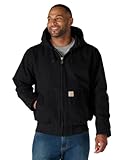
- 12-Ounce, 100% ring-spun cotton washed duck
- Nylon lining quilted to 80g 3M Thinsulate insulation in body, sleeves, and hood
- Attached hood with low profile adjustment at hood hem
- Updated lower front pockets with brushed tricot lining and reinforced bottoms
- Pen stall in wearer's right, lower front pocket
Cross-check the model or article number
Use the code as a consistency test, not as a pass–fail certificate. The independent guide describes six-digit style numbers for current U.S. workwear, legacy examples such as J001, and a separate format for WIP article numbers. Your goal is to see whether the number, line, garment type, and visible construction all describe the same item.
What’s actually slowing this PC down?
Pick the symptom - the matching free tool is one click away.
- Read every character. Ask for a sharp photograph of the style or article label. Distinguish letters from numbers and note hyphens, spaces, and suffixes.
- Search the exact code. Use the number with the claimed line or jacket name. Compare the results with the photographs, not just with a title copied into the listing.
- Match the garment category. A result for a vest, trouser, or different jacket is a mismatch even if the code itself appears in a legitimate result.
- Match construction and features. Check the pocket layout, hood or collar, closure type, lining, fabric description, and visible branding against the claimed model.
- Resolve era differences. A legacy code may lead to archived descriptions or secondhand references. Do not reject an older jacket solely because it lacks a current six-digit label.
- Record contradictions. If the code belongs to another line, the photos show a different pocket layout, or the seller’s description changes, ask for clarification or walk away.
A valid search result proves only that the code exists. It does not prove that the code was sewn into the jacket pictured, that the label is original, or that the seller owns a genuine garment.
Ask for photographs that let you verify the item
Stock images and a single front photograph are not enough for a meaningful check. Request clear, well-lit images of the actual jacket. Explain that you need the photographs to confirm the model and condition, not merely to inspect the logo.
- Full front and back views, laid flat or worn without heavy folds.
- The outer brand patch or logo at a readable distance.
- Inner neck, size, care, and style or article labels.
- Closures, snaps, zippers, buttons, pocket interiors, and hood or collar attachment.
- Main seams, cuffs, waistband, hem, and any areas with repairs or alterations.
- Lining in a sleeve, body panel, or pocket so its layout and material can be seen.
- A tape-measure photograph for chest, shoulder, sleeve, and length measurements when fit matters.
This request is a practical application of garment-level checking; it is not a published Carhartt requirement or evidence that Carhartt offers a public photo-authentication service. A seller who cannot provide images of the actual item leaves important questions unanswered.
Inspect several physical details together
Physical checks are most useful when they agree with the claimed line, model, and era. The independent guide discusses label layout, lining, fabric, stitching, and measurements as corroborating clues. None is universal across every Carhartt jacket.
Do these 3 things before closing this tab:
1Repair Windows errors before they cause bigger problems2Fix the driver behind crashes, sound loss and screen glitches3Clear out junk files and repair common Windows errorsLabels and tag layout
Compare the label arrangement with examples for the specific line and period. Check whether the style or article number, size, care information, and branding appear in a coherent layout. Look for inconsistent fonts, printing that is unusually blurry, crooked sewing, spelling errors, or a tag whose information describes a different garment.
Also popular on Amazon

- 12-Ounce, 100% Cotton ring-spun washed duck
- Sherpa lining in body
- Quilted lining in sleeves
- Cardura reinforced sleeve hem with inner rib knit cuff
- Attached hood with low profile adjustment at hood hem
Do not turn a single label difference into a verdict. Older production, WIP garments, regional manufacturing, and alterations can produce legitimate variations. A copied authentic-looking tag is also possible, which is why labels must be checked alongside construction and provenance.
Lining and internal construction
Inspect the lining’s material, color, panel arrangement, and attachment. Compare it with specifications or reliable photographs for the exact model and era. A jacket may have a different lining from another Carhartt line with a similar name. Replacement lining or repairs can explain an otherwise genuine mismatch, so ask the seller whether work has been done.
Fabric weight and hand
Look at the weave, surface, and apparent weight of the canvas or other outer fabric. The guide notes that material specifications differ between lines and models; the WIP Detroit and U.S. Detroit examples should not be treated as interchangeable. A fabric that feels unusually thin, glossy, or unlike the claimed specification is a reason to investigate further, not standalone proof.
Stitching and seams
Examine main seams, pocket corners, cuffs, waistband, and stress points. Compare stitch paths and reinforcement with photographs or specifications for the same jacket. Uneven tension, loose threads, skipped stitches, or a pocket placed differently from the model reference can indicate a reproduction or a heavily altered garment. They can also result from wear or repair, so distinguish original construction from later damage.
Measurements and proportions
Ask for actual measurements rather than relying on the printed size. Compare chest width, shoulder span, sleeve length, body length, and hem with the claimed model and era. A size label may be genuine while the jacket has shrunk, been altered, or been measured incorrectly. Measurements that conflict with the model’s documented proportions add to the overall risk when other details also disagree.
Use a confidence ladder instead of one “tell”
The most defensible order of checks is provenance first, model and label consistency second, and construction and material details as corroboration. This ladder is an editorial method for weighing evidence, not an official Carhartt scoring system.
Also popular on Amazon
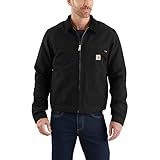
- 12-Ounce, 100% ring-spun cotton duck
- Updated blanket lining in body
- Quilted nylon lining in sleeves
- Corduroy-trimmed collar with under-collar snaps for optional hood
- Left-chest pocket with zipper closure
| Level | What to examine | How to interpret it |
|---|---|---|
| 1. Channel and seller | Official site, authorized retailer found through the Retail Locator, Reworked, or an outside listing with credible seller details | Establishes the starting level of purchase risk; it does not authenticate an individual marketplace item. |
| 2. Line, era, and model | U.S. workwear, legacy U.S., or WIP; claimed style or article number; jacket type and features | Reveals whether the listing is describing a coherent product. |
| 3. Labels and construction | Tag layout, lining, fabric, stitching, closures, pockets, and measurements | Independent details that should agree with the exact model and production period. |
| 4. Contradictions | Copied code, conflicting line names, mismatched pocket layout, unexplained repairs, or evasive seller answers | Several independent mismatches justify declining the purchase or reporting the listing. |
One odd-looking logo, a soft fabric, the absence of a union label, or manufacture outside the United States is not enough by itself to declare a counterfeit. A pattern of contradictions across separate details is much more persuasive.
The Tool Desk
Outbyte PC Repair FREEClear out junk files and repair common Windows errorsFree Scan →Outbyte Driver Updater FREEFix the driver behind crashes, sound loss and screen glitchesFind Drivers →Choose the purchase route with authenticity and recourse in mind
There are two official routes worth separating from general third-party shopping. Carhartt recommends its own site or an authorized retailer for new gear. Carhartt Reworked describes itself as the only official resale program and says each item is inspected. Its education page states a free 30-day return window if the item is not a perfect fit; assortment and condition change over time.
| Option | What is established | Typical condition | Important qualification |
|---|---|---|---|
| Carhartt.com | Carhartt’s recommended direct shopping channel for genuine products | New | Verify the exact product and current terms at purchase. |
| Authorized retailer found through Carhartt’s Retail Locator | Carhartt’s recommended way to identify authorized retailers | Usually new | Retailer-specific inventory and return terms must be checked with that retailer. |
| Carhartt Reworked | Carhartt’s only official resale program; each item is inspected | Used or previously owned | The program’s assortment and condition vary; its education page states a free 30-day return window for an imperfect fit. |
| Independent marketplace or auction listing | No general marketplace label establishes authenticity | New or used | Evaluate the individual seller, listing evidence, and available purchase protections. |
Do not describe an outside listing as safe merely because it uses a branded storefront or offers buyer protection. Those features address transaction risk, not whether the jacket is genuine.
Independent reader supportYour contribution helps us test, update, and keep practical guides available for everyone.Common shortcuts that produce false positives
“The logo looks slightly different, so it is fake”
Logo placement and appearance can vary by line, age, wear, photography, and repairs. Compare the complete jacket with the claimed model before drawing a conclusion.
“It is soft, so it cannot be genuine”
Fabric hand changes with material, washing, weathering, and use. Compare the jacket’s construction and material specification for its line and era instead of using softness as a test.
Recommended Free Tools
“There is no union label, so it is counterfeit”
Label sets vary across products and production periods. The absence of one label is not conclusive without a model-specific expectation.
Also popular on Amazon

- 12-Ounce, 100% ring-spun cotton washed duck
- Nylon lining quilted to 80g 3M Thinsulate insulation in body, sleeves, and hood
- Attached hood with low profile adjustment at hood hem
- Updated lower front pockets with brushed tricot lining and reinforced bottoms
- Pen stall in wearer's right, lower front pocket
“It was made outside the United States, so it is fake”
Country of manufacture alone does not establish authenticity. Check the complete label set, claimed line, code, and construction.
“The style number appears online, so this jacket is real”
Counterfeiters can copy authentic numbers. Confirm that the number belongs to the same line and garment type and that the physical details match.
What to do when a listing looks suspicious
- Stop and save the listing URL, seller name, photographs, description, price, and messages.
- Ask for the missing label, lining, seam, closure, and measurement photographs.
- Compare the claimed line and model code with the jacket shown. Note each contradiction separately.
- Do not send additional payment or personal information merely because the seller creates urgency.
- Send suspicious website or product-listing URLs to Carhartt at brandprotection@carhartt.com.
Carhartt’s official guidance asks buyers to use that email for suspicious sites or product listings. Keep your evidence when contacting the seller or platform so you can use whatever purchase protections apply to your transaction; those rules differ by service and are not universal.
Crashes, No Sound, or Screen Glitches?
Random freezes, missing sound and display glitches usually trace back to one bad driver. Find and replace yours safely.Free scan · under a minutePC Slower Than It Used to Be?
A free scan shows the junk files, broken settings and background clutter dragging Windows down - then fixes them in one click.Free scan · Windows 10 & 11If you already bought a suspected counterfeit
Preserve the jacket exactly as received, including packaging, tags, and any included paperwork. Photograph the garment and save the listing, seller profile, payment record, tracking information, and messages. Contact the seller and the platform through the transaction record, following the applicable dispute or return procedure rather than relying on a private message alone.
Carhartt says buyers who believe they purchased fake gear can seek help through brandprotection@carhartt.com or customer service at 1-800-833-3118. Provide the listing URL and your saved evidence. Do not alter, wash, repair, or discard the jacket before the seller, platform, or brand has had an opportunity to review the matter.
A practical pre-purchase checklist
- Is the seller Carhartt itself, an authorized retailer identified through the Retail Locator, Reworked, or an outside seller?
- Does the seller provide a credible business identity and clear contact details?
- Does the listing name the correct line: U.S. workwear, legacy U.S., or WIP?
- Does the style or article number match the garment type, features, and era?
- Have you seen the actual inner labels, lining, seams, closures, and measurements?
- Do fabric, stitching, pocket layout, and proportions agree with the claimed model?
- Are differences explained by wear, repairs, alterations, or a documented production variation?
- Have you saved the listing and confirmed the available return or dispute route before paying?
If several answers remain unresolved, the rational choice is to skip the listing. A lower price is not compensation for uncertain provenance, weak evidence, and limited recourse.
The Bottom Line
Authenticate the transaction and the garment together: buy through Carhartt’s recommended channels when possible, identify the jacket’s line and era, verify the model code against the actual construction, and require several matching physical details. Report suspicious listings to brandprotection@carhartt.com; do not treat any single tag, logo, or number as conclusive proof.

