
iTechGuides is reader-supported. When you buy through links on our site, we may earn an affiliate commission. As an Amazon Associate I earn from qualifying purchases. Learn more
Google AI Overviews is only one way to research a purchase. You can also compare products with ChatGPT Shopping Research, Google Shopping, Amazon’s shopping features, retailer and brand pages, expert publications, YouTube reviews, and online communities. Each answers a different kind of question: AI tools can organize a comparison, sellers can confirm purchase details, and reviewers or owners can add evidence about how products work in practice.
No single destination is established as the best for every shopper. Use the same requirements as you move between sources, then confirm the exact model, current price, stock, shipping, and return terms with the seller before buying.


What should you use instead of Google AI Overviews to research a product?
Choose a source based on the question you need answered, rather than looking for one universal replacement. A conversational shopping tool can help turn a list of needs into a comparison; a retailer page is better for checking the offer you can actually buy; expert reviews, videos, and forums can provide testing, demonstrations, and owner perspectives.
What’s actually slowing this PC down?
Pick the symptom - the matching free tool is one click away.
These destinations overlap, but they are not interchangeable. A merchant listing may be precise about a model’s stated specifications and return policy without explaining how it performs after months of use. A reviewer may test performance but not know whether your local store has the item in stock. A community thread may reveal recurring owner complaints, but it may concern a different version. Treat product research as gathering complementary evidence.
#1 Best Overall

- The 2024 ERG guide helps satisfy 49 CFR 172.602 DOT requirement. This requirement states that hazmat shipments be accompanied by emergency response info.
- Pocketbook aids in emergency preparedness, planning, and training with ERGs numerically indexed and color-coded to help emergency responders find vital information fast.
- 2024 Updates: The Pipeline and Hazardous Materials Safety Administration (PHMSA) released a comprehensive summary of updates. Most significantly a QR code on the back cover that provides access to critical incident reporting information.
- Other changes for 2024 have been made to continue to provide the most accurate emergency response information to help all front-line persons and all first responders stay safe during transportation emergencies.
- Specifications: 4" x 5 1/2" Pocketbook Size, English, Spiralbound. Copyright 2024.
Quick guide to the main alternatives
| Destination | Best fit | What to verify |
|---|---|---|
| ChatGPT Shopping Research | A guided comparison involving several requirements, trade-offs, or a buyer’s guide. | Open the cited pages and confirm product details, price, and availability with the retailer; OpenAI says these details can be wrong or change. |
| Google Shopping and its AI shopping features | Discovering products through aggregated shopping information, listings, prices, reviews, and AI-supported recommendations. | Personalization, location-dependent prices, and the possibility that generative AI information varies in quality. |
| Amazon shopping features | Choosing among similar products already being considered in Amazon’s catalog. | It is a retailer-specific view of the choices available there; consult other retailers or independent sources if broader coverage matters. |
| Retailer and brand pages | Confirming specifications, availability, seller details, and policies. | Exact model numbers and seller terms; a product page may not explain real-world performance. |
| Expert publications, YouTube, Reddit, and other forums | Finding product testing, demonstrations, and owner discussion. | Review date, methodology, exact model or version, and whether commenters mean the same product. |
How do ChatGPT Shopping Research and Google Shopping differ?
ChatGPT Shopping Research is designed to ask about your needs and constraints, research public retail sites, and assemble a buyer’s guide. Google Shopping draws on shopping information from brands, retailers, and other content providers, with ranking and personalization shaping what appears.
The practical difference is the starting point. A conversational guide can be useful when you have a defined use case and want help organizing trade-offs. Google Shopping can help you browse a wider set of listings and shopping information. Neither should be treated as a final authority on the offer a merchant will honor.
ChatGPT Shopping Research: start with constraints
OpenAI describes Shopping Research as a guided process: the shopper explains what they need, responds to follow-up questions, and receives a buyer’s guide based on research across public retail sites. That makes it a sensible place to begin when your needs are more specific than “find a popular product.” For example, you might need a device for a particular use, have a fixed budget, and care more about battery life than a premium finish. The assistant can help keep those conditions in view while collecting options.
Its answer is still a research aid, not a live guarantee of a product’s terms. OpenAI warns that product details, prices, and availability can be incorrect or change. Open the cited merchant pages rather than relying only on a summary, and check that each page describes the same model and configuration you were comparing.
Google Shopping: browse aggregated shopping information
Google says its Shopping experience uses product information supplied by brands, retailers, and other content providers. Ranking and personalization affect results, and Google cautions that AI-generated information can vary in quality. That combination can help with discovery, but it means a result should not automatically be read as a complete or neutral ranking of every available option.
Google reported on November 13, 2025, that its Shopping Graph contained more than 50 billion product listings, with 2 billion updated hourly. These are figures Google reported about its own Shopping Graph, not an independently audited count. The scale describes the underlying listing collection; it does not guarantee that every listing is relevant to your needs, available in your market, or current at the moment you check out.
Amazon’s Help Me Decide: useful within one retailer’s catalog
Amazon says Help Me Decide uses a shopper’s Amazon activity and preferences, including browsing and shopping activity and searches, to help choose among products. It is best understood as retailer-native assistance: it can help organize choices within the Amazon shopping environment, rather than provide an independent survey of the entire market.
Recommended Free Tools
If you are comparing products available there, this context may make it convenient. If the decision depends on whether another retailer carries a different version, has a better offer, or provides different terms, check those sources separately. The feature’s Amazon context is a reason to consider the scope of its recommendations, not a claim that its suggestions are necessarily wrong.
Where can you read customer reviews or find expert testing?
Retailer and brand pages, expert publications, YouTube, Reddit, and other forums are all channels shoppers use. Their value depends on the evidence they provide: published specifications, hands-on testing, a video demonstration, or an owner’s account of continued use.
Retailer and brand pages: confirm what is being sold
Use the seller or manufacturer’s page to resolve factual questions about a specific listing: the model number, stated features, included accessories, seller identity, stock, shipping, and return conditions. These pages are essential when moving from research to a purchase because third-party summaries may not reflect the current offer.
Read the listing closely rather than matching only a product name. Similar names can refer to different configurations or versions, and a marketplace listing can have a seller other than the retailer whose site you are using. A published specification tells you what the product claims to include; it does not, by itself, establish how well that feature performs in everyday use.
Expert publications: look for methods, not just a verdict
An expert review is most useful when it explains how the product was evaluated and connects its conclusion to your priorities. Look for the exact model, review date, testing conditions, and the aspects the reviewer measured or observed. A conclusion based on one use case may not transfer to another: a reviewer focused on portability, for instance, may weigh trade-offs differently from someone focused on durability.
Rank #3
If a publication offers no clear method, treat its recommendation as a perspective rather than a test result you can independently assess. Compare its specific observations with the manufacturer’s specifications and with other forms of evidence. The survey of purchase-research habits identifies expert publications and professionals as a channel, but it does not measure the quality of any particular review.
YouTube: see a product demonstrated
Video can show setup, interfaces, size, noise, or an ordinary task in a way a product description cannot. Before relying on a demonstration, check whether the video identifies the exact model and whether the product is being shown under conditions relevant to your use. A short demonstration can answer “what does this look like?” without answering “how dependable is it over time?”
Reviewers may use different versions, accessories, or test conditions. If a video makes a performance claim, see whether it shows the evidence or explains the method. For purchase details, return to the seller’s current listing rather than assuming a video’s price or availability remains valid.
The Tool Desk
Outbyte Driver Updater FREEScan for outdated or missing drivers - takes under a minuteDriver Scan →Outbyte PC Repair FREERepair Windows errors before they cause bigger problemsFix Now →Reddit and other forums: find owner questions and discussion
Online communities can surface questions that product pages and polished reviews do not emphasize, including recurring setup frustrations or experiences after extended use. They are discussion spaces, not controlled tests: an individual account can be useful context without proving how common a problem is.
Check the post date, product version, and the details of the owner’s setup. A complaint about a model with a particular configuration may not apply to another one with a similar name. Look for multiple accounts that describe comparable circumstances, then seek confirmation from a more direct source when the issue could change your purchase decision.
How do people actually research products online?
A 2026 Product.ai report found that shoppers used a mix of sources when researching their most recent online purchase above $50. The figures below describe the report’s respondents, not the share of all shoppers in every market.
| Research channel | Respondents who used it |
|---|---|
| Online customer reviews | 50% |
| Brand or retailer website | 31% |
| Friends or family | 26% |
| YouTube videos or reviewers | 24% |
| AI assistant | 20% |
| Reddit or online forums | 12% |
| Expert publications or professionals | 7% |
| Did not research | 16% |
Product.ai’s report, published in June 2026, surveyed 1,463 people describing that most recent purchase. Respondents could select multiple tools, so these percentages are not mutually exclusive and should not be added as if each person chose exactly one channel. The results illustrate why a useful alternative need not be a single website: many shoppers report combining sources.
How can you compare product research sources fairly?
Keep your requirements consistent as you move between services. Otherwise, one destination may appear to recommend a better product simply because it was given a different budget or use case.
- Write down the decision. Note what the product must do, your budget, and which trade-offs matter. Separate must-haves from preferences so that a polished recommendation does not distract from a requirement you cannot compromise on.
- Check the scope. Ask whether a source spans retailers or presents choices from one store, and whether it can account for your market and account access. This helps distinguish an aggregated discovery service from assistance tied to a retailer’s own catalog.
- Identify the evidence type. Mark whether a claim comes from specifications, expert testing, owner reviews, a video demonstration, or a generated recommendation. Different evidence types answer different questions; do not treat them as equivalent proof.
- Inspect how personalization works. A tool may ask for budget, use case, and preferences, or may use shopping activity to shape suggestions. Consider whether those inputs match the comparison you want to make.
- Follow citations and merchant links. Check whether a recommendation gives you direct sources you can inspect. Read the underlying page when a detail matters, rather than accepting a generated comparison without a way to verify it.
- Verify the transaction at the seller. Before checkout, confirm the exact model and seller, then check current price, availability, shipping, and return terms. These details can differ from what appeared in a research result.
This method is useful whether you start in a conversational tool, a shopping service, or a review. It separates the question “Which product seems to fit?” from the separate question “What exactly can I buy, from whom, and on what terms?”
Independent reader supportYour contribution helps us test, update, and keep practical guides available for everyone.What can go wrong when you rely on shopping results?
The main risk is treating a discovery or recommendation result as if it were a final, complete offer. Prices and inventory are volatile; AI-generated product information can contain errors; and personalized or retailer-specific results may not show the same set of options to every shopper.
- The price has changed. A comparison may reflect a price that is no longer current. Check the seller’s live listing and the amount shown at checkout.
- The item is unavailable. A product can appear in a result even when stock or delivery options have changed. Confirm availability for your location with the merchant.
- The listing is for a different version. Compare the model number and configuration, not just the product family name. Make sure reviews and specifications refer to the same item.
- The result reflects a narrow catalog or personalized view. Retailer-native assistance is useful for choices within that store, but it does not establish that the displayed options cover the whole market. Compare elsewhere if breadth matters.
- A review does not match your circumstances. Check the date, test conditions, and setup. An owner’s experience or reviewer’s verdict may not apply to a different version or use case.
- A summary overstates what its evidence shows. A stated feature, a short video, a review, and a generated recommendation are different kinds of evidence. Follow the underlying source when a claim is important to the decision.
Google says the quality of generative AI information can vary, and OpenAI says Shopping Research details such as price and availability may be wrong or change. That is why citations and direct merchant pages matter: they give you a route to check claims and purchase terms instead of treating a summary as the offer itself.
Do these 3 things before closing this tab:
1Repair Windows errors before they cause bigger problems2Scan for outdated or missing drivers - takes under a minute3Clear out junk files and repair common Windows errorsWhich alternative should you choose for your next purchase?
Start with the hardest unanswered question. If you need help translating several requirements into a shortlist, try a guided comparison. If you need to browse offers, use a shopping service. If the concern is performance, seek a review that explains its testing or a demonstration of the relevant task. If you want to understand owner experience, search discussions while checking model and date. When the choice is made, the seller’s page is where to settle the transaction details.
Best Value
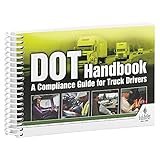
- Handy reference covers critical elements of truck driver training including key FMCSA regulatory compliance topics, general info about orientation & company policies, trip preparation, on-the-road information, and incident/accident handling procedures.
- Filled with truck driver essentials, this handbook helps meet DOT entry-level driver training requirements (49 CFR 380, Subpart E).
- Easy-to-understand, concise DOT compliance resource works great for truck driver education "finishing training," new hire orientation training, and drivers new to the field. Ideal for Driving Training Instructors for use in aiding their curriculum.
- Features quizzes at the end of every chapter.
- 7" x 5" English spiral bound handbook with 192 pages.
You do not need to choose one destination for the whole process. A practical sequence is to define your constraints, gather candidate products, inspect the evidence behind claims that matter, and verify the exact item and terms with the seller. The right mix depends on the category and on what uncertainty you are trying to reduce.
Frequently Asked Questions
Can I use more than one product research source for the same purchase?
Yes. For a useful cross-check, keep the same budget and must-have features in each search, then compare whether the sources point to the same model and explain their recommendations with inspectable evidence.
Why do product recommendations look different from one shopper to another?
Some shopping results are personalized, and Amazon says Help Me Decide uses activity and preferences. Google also says ranking and personalization influence Shopping results, so two people may not see an identical set of suggestions.
Quick wins for a faster PC:
Scan for outdated or missing drivers - takes under a minuteDriver Scan →Repair Windows errors before they cause bigger problemsFix Now →Fix the driver behind crashes, sound loss and screen glitchesFind Drivers →Are the percentages in the Product.ai survey shares of all shoppers?
No. The report describes 1,463 respondents discussing a recent online purchase above $50; it is not a universal estimate for every population or market. Respondents could select multiple channels.
Does a large shopping catalog mean every listed product is available to me?
No. Google’s November 13, 2025 Shopping Graph figures describe listings in Google’s system, not stock in your location. Availability and delivery options still need to be checked with the merchant.
Quick Recap
Product prices and availability are accurate as of the date/time indicated and are subject to change. Any price and availability information displayed on Amazon at the time of purchase will apply.

