
Recommended Free Tools
iTechGuides is reader-supported. When you buy through links on our site, we may earn an affiliate commission. As an Amazon Associate I earn from qualifying purchases. Learn more
Europe is looking for alternatives to US cloud providers, but it is not replacing AWS, Microsoft Azure and Google Cloud with one European equivalent. European clouds can replace hyperscalers for many infrastructure, storage, Kubernetes and regulated workloads, while hybrid or multicloud architectures remain more realistic for advanced AI, proprietary platforms and global services.
The shift is about more than hosting servers inside the European Union. European buyers are evaluating ownership, operational control, legal jurisdiction, encryption, supply-chain dependence, portability, service breadth and total cost. The result is likely to be selective migration and stronger negotiating leverage—not an immediate break with American hyperscalers.
Key takeaways
- The European Commission awarded a sovereign-cloud procurement framework worth up to €180 million over six years in April 2026.
- European alternatives are credible for virtual machines, dedicated servers, object storage, Kubernetes, conventional databases and many regulated workloads, but no single provider matches the full global platform breadth of AWS, Azure or Google Cloud.
- Data residency, European ownership, European operations, legal sovereignty and technological portability are separate requirements; a server located in Europe does not automatically satisfy all five.
- Hetzner is strongest for cost-conscious, self-managed infrastructure, while OVHcloud and Scaleway offer broader public-cloud portfolios and STACKIT, Open Telekom Cloud and similar providers target enterprise and public-sector buyers.
- A full migration is easiest for Linux, containers, PostgreSQL, S3-compatible storage and infrastructure-as-code, and hardest for proprietary serverless, data-warehouse, identity, analytics and AI services.
- The practical strategy for many European organizations is a workload-specific hybrid or multicloud model with tested data-export paths.
Why is Europe looking for alternatives to US cloud providers?
Europe is looking for alternatives to US cloud providers because cloud infrastructure has become strategic infrastructure for government, healthcare, finance, industry, artificial intelligence, defence, research and public administration. Dependence on a small number of non-European companies creates concerns about bargaining power, legal exposure, geopolitical resilience and control over critical technology.
The European Commission describes technological sovereignty as the ability to act independently in the digital sphere by developing and controlling critical technologies, data and infrastructure while reducing dependence on non-EU providers. The Commission’s technology-sovereignty policy treats cloud as part of that broader strategic capability.
Popular on Amazon
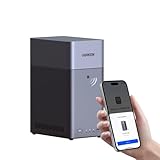
- Entry-level NAS Personal Storage:UGREEN NAS DH2300 is your first and best NAS made easy. It is designed for beginners who want a simple, private way to store videos, photos and personal files, which is intuitive for users moving from cloud storage or external drives and move away from scattered date across devices. This entry-level NAS 2-bay perfect for personal entertainment, photo storage, and easy data backup (doesn't support Docker or virtual machines).
- Set Your Devices Free, Expand Your Digital World: This unified storage hub supports massive capacity up to 64TB.*Storage drives not included. Stop Deleting, Start Storing. You can store 22 million 3MB images, or 2 million 30MB songs, or 43K 1.5GB movies or 67 million 1MB documents! UGREEN NAS is a better way to free up storage across all your devices such as phones, computers, tablets and also does automatic backups across devices regardless of the operating system—Window, iOS, Android or macOS.
- The Smarter Long-term Way to Store: Unlike cloud storage with recurring monthly fees, a UGREEN NAS enclosure requires only a one-time purchase for long-term use. For example, you only need to pay $459.98 for a NAS, while for cloud storage, you need to pay $719.88 per year, $2,159.64 for 3 years, $3,599.40 for 5 years. You will save $6,738.82 over 10 years with UGREEN NAS! *NAS cost based on DH2300 + 12TB HDD; cloud cost based on 12TB plan (e.g. $59.99/month).
- Blazing Speed, Minimal Power: Equipped with a high-performance processor, 1GbE port, and 4GB RAM on Board, this NAS handles multiple tasks with ease. File transfers reach up to 125MB/s—a 1GB file takes only 8 seconds. Don't let slow clouds hold you back; they often need over 100 seconds for the same task. The difference is clear.
- Let AI Better Organize Your Memories: UGREEN NAS uses AI to tag faces, locations, texts, and objects—so you can effortlessly find any photo by searching for who or what's in it in seconds. It also automatically finds and deletes similar or duplicate photo, backs up live photos and allows you to share them with your friends or family with just one tap. Everything stays effortlessly organized, powered by intelligent tagging and recognition.
Cloud concentration is also a commercial concern. In November 2025, the Commission opened Digital Markets Act investigations into cloud-computing services involving interoperability, business-user access to data, tying and bundling, contractual terms and switching barriers. In June 2026, the Commission said more than half of EU businesses relied on cloud services when it announced a preliminary position that AWS and Azure should be designated as gatekeepers under the DMA. That preliminary position is evidence of regulatory scrutiny, not proof that customers are abandoning those platforms.
Geopolitical resilience is another reason. Export restrictions, sanctions, trade disputes and changes in cross-border data policy can affect technology supply chains and cloud availability. These risks do not prove that a European provider is automatically safer or cheaper. They do explain why public-sector buyers and regulated companies want alternatives, negotiating leverage and the ability to move sensitive workloads.
What has the European Union done to promote sovereign cloud?
The European Commission has moved from general policy statements toward procurement and capacity-building. In April 2026, the Commission awarded a sovereign-cloud procurement framework worth up to €180 million over six years. The selected groupings included STACKIT; Scaleway; Post Telecom with Clever Cloud and OVHcloud; and Proximus with S3NS, Clarence and Mistral. Eligibility required at least the Commission’s SEAL-2 data-sovereignty level, while several successful bidders reached SEAL-3, according to the Commission procurement announcement and its official press-release document.
What’s actually slowing this PC down?
Pick the symptom - the matching free tool is one click away.
The procurement is important because it demonstrates institutional demand and gives European providers a route into public-sector workloads. It is not a universal endorsement of every selected provider’s products, regions or commercial terms, and it does not mean that one provider can replace every AWS, Azure or Google Cloud service.
The proposed Cloud and AI Development Act also aims to expand European capacity. The Commission’s stated objective is to at least triple EU data-centre capacity within five to seven years while introducing four cloud-and-AI sovereignty assurance levels for public-sector risk assessment. Capacity expansion may improve Europe’s position, but building data centres does not by itself recreate the software ecosystems, global regions, AI hardware access and managed services of the largest hyperscalers.
What does “European cloud” or “sovereign cloud” actually mean?
“European cloud” and “sovereign cloud” are not interchangeable labels. A buyer should define the exact requirement before comparing providers.
| Requirement | What it means | What it does not prove |
|---|---|---|
| Data residency | Data is stored or processed in specified European data centres. | That the provider is European-owned or outside all foreign legal obligations. |
| European ownership | The provider is headquartered and controlled in Europe. | That every subcontractor, software component or support function is European. |
| Operational sovereignty | European entities and personnel operate the service, including support, administration and incident response. | That no non-European technology exists anywhere in the stack. |
| Legal sovereignty | The buyer reduces exposure to conflicting foreign laws and government-access requests. | Automatic immunity from every government request or legal risk. |
| Technological sovereignty | The workload uses open standards and can be moved without depending heavily on proprietary APIs. | Zero switching costs or identical functionality on another provider. |
The European Commission’s Sovereign Cloud Framework explanation treats operational and organisational control as distinct from simply locating servers in Europe. A contract, certification or product page must therefore be checked at service and region level.
“GDPR-compliant” is not a universal technical property of a cloud provider. Compliance depends on the customer’s processing activity, configuration, contract, access controls, data flows, subprocessors and other organizational measures. Similarly, a European company may use non-European hardware, software or partners, while a non-European company may offer European data-residency controls that satisfy a narrower requirement.
Which European cloud providers are credible alternatives?
European providers target different workloads and buyers. Treating them as interchangeable produces misleading comparisons.
OVHcloud: broad infrastructure and regulated French workloads
OVHcloud is one of the more obvious European alternatives for general-purpose infrastructure. Its portfolio includes public cloud, virtual machines, bare metal, object storage, Kubernetes, databases and data services. OVHcloud also advertises a SecNumCloud-qualified environment for sensitive workloads and describes that environment as compatible with Amazon S3, which may simplify object-storage migration.
OVHcloud is a good candidate when a buyer wants a relatively broad European infrastructure portfolio, European regions or a regulated French deployment option. The ordinary public-cloud product and a qualified sovereign environment should not be treated as the same offering. Certification, region, available services and operational model must be verified individually.
PC Slower Than It Used to Be?
A free scan shows the junk files, broken settings and background clutter dragging Windows down - then fixes them in one click.Free scan · Windows 10 & 11Crashes, No Sound, or Screen Glitches?
Random freezes, missing sound and display glitches usually trace back to one bad driver. Find and replace yours safely.Free scan · under a minuteOVHcloud’s published prices also show why price comparisons need dates and regions. On the Germany section of its public-cloud pricing page, a b3-8 instance with two vCores, 8 GB of RAM and 50 GB of NVMe storage was listed at €0.0512 excluding VAT per hour, with the page marking the price as applying on April 1, 2026. At 730 hours, that is approximately €37.38 excluding VAT before other charges. The figure comes from OVHcloud’s public-cloud pricing page; it is not a complete workload cost.
Also popular on Amazon

- 【Advanced Home Data & Media Hub】For advanced home users who need phone backup, file storage, and centralized data management. Centralize family photos, 4K videos, movies, computer backups, and personal files in one place while running multiple apps for home entertainment and everyday data management. Suitable for households with growing digital libraries and multiple NAS use cases.
- 【Built for Creators, Media Servers & Advanced Apps】Powered by the Intel N100 Quad-Core CPU, 8GB DDR5 RAM, 2.5GbE networking, and dual M.2 NVMe slots, DXP2800 handles large files and heavier workloads with ease. Run Docker, virtual machines, and media server applications compatible with Plex—ideal for content creators, tech enthusiasts, and advanced home users managing 4K videos, RAW photos, personal media libraries, and multiple NAS apps.
- 【Up to 80TB for Growing Digital Libraries】 Supports up to 80TB of storage using two HDD bays and two M.2 NVMe SSD slots for family photos, movies, RAW photos, 4K videos, work files, and device backups. AI photo management supports recognition of people, objects, scenes, and locations, album organization, and duplicate photo detection. HDDs and SSDs are not included.
- 【AI-powered Home Surveillance】Turn DXP2800 into a centralized home surveillance hub by connecting compatible network cameras and storing recordings locally on your NAS. AI-powered features include Face Recognition, People Detection, and Pet Detection, helping advanced home users review important events more efficiently while managing home surveillance and personal data in one place.
- 【One data Center Across Your Devices】Keep files from desktops, laptops, phones, tablets, and other devices together instead of scattered across cloud accounts and external drives. Access, back up, organize, and share data across Windows, macOS, Android, iOS, web browsers, and compatible smart TVs—ideal for creators and advanced home users working across multiple devices.
Scaleway: developer-facing public cloud and managed services
Scaleway offers a developer-oriented European public cloud with compute, storage, Kubernetes, managed databases and AI-related infrastructure where capacity is available. Scaleway’s security and compliance material describes the company as a European cloud provider and presents controls intended to address non-European extraterritorial laws. Those statements are provider claims, not an independent legal conclusion for every workload.
Scaleway can suit European startups, container teams and developers who want more managed functionality than a basic virtual-machine provider supplies. Buyers must check whether the required service exists in the target region and whether the service’s operational and legal controls match the project’s sovereignty requirements.
Pricing is volatile. Scaleway announced a pricing change effective June 1, 2026, so an old comparison table can quickly become inaccurate. Use the live Scaleway pricing information and its dated pricing-update announcement when building a business case.
Do these 3 things before closing this tab:
1Clear out junk files and repair common Windows errors2Scan for outdated or missing drivers - takes under a minute3Repair Windows errors before they cause bigger problemsHetzner: low-cost, self-managed infrastructure
Hetzner is strongest when the buyer needs cost-conscious virtual machines, dedicated infrastructure, development environments or self-managed Kubernetes rather than a hyperscaler-style platform. Hetzner markets its European Cloud around hourly billing, European locations, data sovereignty and German operations, and cites DIN ISO/IEC 27001:2022 certification. The provider also states that customer data is not transferred to third countries on its European Cloud page; buyers should confirm that claim against the exact product and contract.
Hetzner can be attractive for startups, agencies and experienced infrastructure teams running conventional Linux workloads. The trade-off is operational responsibility. Customers may need to design and operate databases, backups, monitoring, patching, high availability, incident response and security controls themselves. A low-cost VM is therefore not automatically a low-cost replacement for an AWS or Azure managed platform.
STACKIT: enterprise and public-sector sovereignty
STACKIT, backed by the Schwarz Group, is positioned toward enterprise and public-sector sovereignty requirements. STACKIT’s inclusion in the Commission’s 2026 sovereign-cloud procurement is meaningful evidence of institutional credibility, but it is not a blanket endorsement for every workload or commercial buyer.
Enterprise buyers should verify ordinary commercial availability, regions, certifications, support arrangements, managed-service breadth and export mechanisms. A platform optimized for large procurement processes may not be the easiest self-service option for an individual developer or small company.
Free tools Windows power users keep installed
One-click scans. No signup required.
Open Telekom Cloud and T-Systems
Open Telekom Cloud and T-Systems are enterprise-oriented candidates whose relevance is likely strongest for German and European enterprise procurement, public-sector systems, managed infrastructure, compliance-heavy environments and organizations that already work with Deutsche Telekom. Buyers should verify current service availability, pricing, support terms and sovereignty certifications rather than assuming that a telecom-backed cloud is a direct substitute for every developer service on a hyperscaler.
3DS OUTSCALE and specialist sovereign offerings
3DS OUTSCALE belongs in a comparison of specialist European sovereign and regulated-cloud options. It should be evaluated for the specific enterprise or regulated workload rather than presented as a universal replacement for AWS, Azure or Google Cloud.
Proximus, S3NS and partner-based sovereignty
The Proximus grouping selected in the Commission procurement includes S3NS, a Thales–Google Cloud joint venture, alongside Clarence and Mistral. The grouping demonstrates that a sovereign cloud can involve European ownership and operations combined with technology partnerships. The Commission’s provider-grouping document is a reminder to inspect the entire control chain rather than relying only on a provider’s headquarters.
What can European cloud providers replace?
European providers can already replace hyperscalers for many core-infrastructure workloads. Replacement becomes more difficult when the application depends on proprietary platform services or global-scale AI and analytics.
Quick wins for a faster PC:
Fix the driver behind crashes, sound loss and screen glitchesFind Drivers →Clear out junk files and repair common Windows errorsFree Scan →| Workload | Replacement difficulty | Likely approach |
|---|---|---|
| Linux virtual machines | Low | Compare Hetzner, OVHcloud and Scaleway on resilience, support and total cost. |
| Dedicated servers | Low | Evaluate Hetzner and OVHcloud for European capacity and operational requirements. |
| Object storage | Low to medium | Check S3 compatibility, lifecycle policies, replication, egress and export testing. |
| Containerized applications | Medium | Use Kubernetes only where justified and verify networking, IAM and storage portability. |
| Managed PostgreSQL | Medium | Compare engine versions, extensions, backup recovery, replicas and migration tooling. |
| Serverless functions | Medium to high | Expect redesign if the application relies on Lambda, Azure Functions or Cloud Functions APIs. |
| Proprietary databases | High | Plan data-model changes, application rewrites and a carefully tested cutover. |
| Data warehouses and advanced analytics | High | Consider hybrid architecture if equivalent services or ecosystem integrations are missing. |
| AI training and large-scale inference | High | Check GPU availability, networking, model tooling, capacity reservations and regional limits. |
| Global edge delivery | Medium to high | Use a European provider where performance is sufficient, or retain a separate global CDN strategy. |
| Highly regulated public-sector systems | Medium | Evaluate certified, product-specific sovereign environments and operational controls. |
A 2026 European Parliament technical assessment reported that selected European providers offered broadly equivalent services across core categories such as compute, storage, networking and managed container orchestration, while also noting fewer services than the largest US hyperscalers. The assessment is summarized in the European Parliament technical document.
Also popular on Amazon
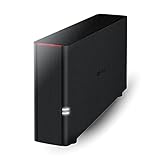
- Value NAS with RAID for centralized storage and backup for all your devices. Check out the LS 700 for enhanced features, cloud capabilities, macOS 26, and up to 7x faster performance than the LS 200.
- Connect the LinkStation to your router and enjoy shared network storage for your devices. The NAS is compatible with Windows and macOS*, and Buffalo's US-based support is on-hand 24/7 for installation walkthroughs. *Only for macOS 15 (Sequoia) and earlier. For macOS 26, check out our LS 700 series.
- Subscription-Free Personal Cloud – Store, back up, and manage all your videos, music, and photos and access them anytime without paying any monthly fees.
- Storage Purpose-Built for Data Security – A NAS designed to keep your data safe, the LS200 features a closed system to reduce vulnerabilities from 3rd party apps and SSL encryption for secure file transfers.
- Back Up Multiple Computers & Devices – NAS Navigator management utility and PC backup software included. NAS Navigator 2 for macOS 15 and earlier. You can set up automated backups of data on your computers.
The difference is infrastructure equivalence versus platform equivalence. An S3-compatible object store does not reproduce every surrounding AWS service. Managed Kubernetes does not automatically reproduce a hyperscaler’s identity, observability, service mesh, marketplace, analytics and disaster-recovery integrations. The more proprietary the current architecture, the less realistic a simple relocation becomes.
The same European technical assessment cited an indicative comparison in which OVHcloud and Scaleway offered around 80 services while AWS offered around 200. The exact counts depend on definitions and measurement date, so the figures should be treated as a dated comparison rather than a permanent ranking. The service-count discussion appears in the European cloud sovereignty assessment.
What does sovereignty cost?
Sovereignty can increase cost, but no universal “European premium” applies to every provider or service. Costs depend on region, utilization, bandwidth, support, certification tier, resilience and how much infrastructure the customer must operate.
A January 2026 comparison of six services cited by the European Parliament technical assessment found selected AWS European Sovereign Cloud services approximately 15% more expensive on average than comparable services in AWS’s Frankfurt region. That limited comparison is not a market-wide price finding; it illustrates how segregated operations and additional sovereignty controls can affect pricing. See the dated technical assessment for the comparison’s scope.
A complete total-cost-of-ownership model should include:
- Compute, storage, snapshots and backups
- Managed databases and Kubernetes control planes
- Public IPv4 addresses, load balancers and network traffic
- Data egress and cross-region replication
- Monitoring, security and logging tools
- Support plans and contractual minimums
- Migration engineering and dual-running systems
- Staff time for patching, operations, incident response and capacity planning
- Compliance reviews, audits and sovereignty-specific controls
- Disaster recovery and tested restoration
Hetzner may have a lower infrastructure price than a hyperscaler, but the customer may need to recreate services that AWS, Azure or Google Cloud would manage. Conversely, a sovereign environment may cost more while reducing legal exposure or satisfying a procurement requirement that a cheaper general-purpose region cannot meet.
How should a company assess a European cloud provider?
A provider comparison should score the exact service and region against the buyer’s requirements rather than rank companies with one overall score.
| Decision criterion | Questions to ask |
|---|---|
| Ownership and control | Who owns the provider, control plane and operating entities? |
| Geography | Where are primary data, replicas, backups and support systems located? |
| Operations | Who can administer the environment and respond to incidents? |
| Legal exposure | Which laws apply, and how does the provider handle foreign authority requests? |
| Certification | Does certification apply to this product, region, version and customer type? |
| Encryption | Can the customer control keys, and can the provider access plaintext? |
| Subprocessors | Which partners, support vendors and technology providers are involved? |
| Platform depth | Are the required databases, queues, analytics, AI and identity services available? |
| Resilience | How many availability zones or independent failure domains exist? |
| Economics | What are the costs of egress, backups, support, replicas and managed services? |
| Portability | Can data, infrastructure definitions and application state be exported and restored elsewhere? |
| Support | What response times, escalation paths and specialist skills are included? |
How can an organization prepare for migration?
Start with a workload inventory, not a provider shortlist. Classify every component as stateless compute, stateful database, object storage, Kubernetes, identity, messaging, analytics, AI, monitoring, security, backup or disaster recovery.
Next, identify proprietary dependencies. Common examples include Lambda, Azure Functions, Cloud Functions, DynamoDB, Cosmos DB, Bigtable, vendor-specific queues, proprietary IAM policies, cloud data warehouses, managed machine-learning pipelines, cloud-specific networking and monitoring agents. These components usually require redesign rather than a lift-and-shift move.
The most portable architectures often use Linux, containers, PostgreSQL, S3-compatible object storage, infrastructure-as-code and OpenTelemetry. Kubernetes can improve portability when the team can operate it effectively, but Kubernetes is not free portability: networking, storage classes, identity, ingress, observability, backup and upgrade procedures still vary by provider.
Use a small proof of concept before committing. Deploy a representative service, import realistic data, measure latency and egress, test backups and restoration, validate IAM, simulate an outage and export the workload. A provider’s claim of compatibility is less valuable than a successful restore in an independent environment.
The Tool Desk
Outbyte Driver Updater FREEFix the driver behind crashes, sound loss and screen glitchesFind Drivers →Outbyte PC Repair FREEClear out junk files and repair common Windows errorsFree Scan →Is full migration, hybrid cloud or multicloud the better strategy?
The best strategy depends on workload portability, sovereignty requirements and operational capacity.
Also popular on Amazon
- Value NAS with RAID for centralized storage and backup for all your devices. Check out the LS 700 for enhanced features, cloud capabilities, macOS 26, and up to 7x faster performance than the LS 200.
- Connect the LinkStation to your router and enjoy shared network storage for your devices. The NAS is compatible with Windows and macOS*, and Buffalo's US-based support is on-hand 24/7 for installation walkthroughs. *Only for macOS 15 (Sequoia) and earlier. For macOS 26, check out our LS 700 series.
- Subscription-Free Personal Cloud – Store, back up, and manage all your videos, music, and photos and access them anytime without paying any monthly fees.
- Storage Purpose-Built for Data Security – A NAS designed to keep your data safe, the LS200 features a closed system to reduce vulnerabilities from 3rd party apps and SSL encryption for secure file transfers.
- Back Up Multiple Computers & Devices – NAS Navigator management utility and PC backup software included. NAS Navigator 2 for macOS 15 and earlier. You can set up automated backups of data on your computers.
| Strategy | Best when | Main risk |
|---|---|---|
| Full European migration | The workload is portable, sovereignty is mandatory and the organization can operate a smaller service catalog. | Replatforming effort and loss of hyperscaler-specific capabilities. |
| Hybrid cloud | Sensitive data needs European control while advanced AI, analytics or global delivery remain on a hyperscaler. | More complex networking, identity and data-governance boundaries. |
| Multicloud | Resilience, bargaining power and provider substitution justify the added operational cost. | More contracts, monitoring systems, IAM relationships, skills requirements and failure modes. |
Full migration is most plausible for standard infrastructure, European-facing SaaS, internal applications, backup, staging and regulated workloads with clear certification requirements. Hybrid cloud is often more practical when the business needs both European operational controls and hyperscaler AI or analytics. Multicloud should not be adopted merely as a slogan; a second provider adds complexity unless the organization has tested how it will operate and recover across both environments.
When is a European cloud provider the better choice?
A European provider is often the better choice when European sovereignty is a hard requirement, the workload uses portable technologies, the buyer wants negotiating leverage or the application mainly needs standard infrastructure rather than proprietary platform services.
A European provider may also be commercially attractive for European workloads with predictable traffic, especially when the buyer values European support, straightforward infrastructure pricing or a dedicated compliance environment. The buyer should still compare availability, backups, recovery objectives, support and egress rather than choosing on geography alone.
When is staying with AWS, Azure or Google Cloud rational?
Staying with a US hyperscaler can be rational when an application depends on proprietary databases, serverless services, advanced analytics, global regions, large AI capacity, integrated identity or an existing enterprise agreement that lowers total cost.
European sovereignty requirements do not necessarily demand that every workload leave a hyperscaler. A company can isolate sensitive data, use European-operated infrastructure for designated workloads, maintain independent backups and require tested export paths while retaining a hyperscaler for services that have no practical European equivalent. The legal and regulatory acceptability of that design must be assessed for the specific data and sector.
What is the realistic future of European cloud?
Europe has credible alternatives for core infrastructure and many regulated workloads, but Europe does not yet have a single pan-European replacement matching AWS, Azure or Google Cloud across the full service catalog, global footprint, AI ecosystem and partner marketplace.
The likely outcome is a more plural cloud market. European providers will compete for infrastructure, sovereign workloads, public-sector procurement and portability-conscious developers. US hyperscalers will remain important for global scale, advanced managed services and AI. Buyers will increasingly separate workloads by sensitivity and portability instead of asking which provider should host everything.
What’s actually slowing this PC down?
Pick the symptom - the matching free tool is one click away.
The strongest architecture is therefore not necessarily the one with the most European branding. It is the one that makes control requirements explicit, uses open interfaces where practical, measures the full operating cost and proves that data and applications can be exported before an outage, legal dispute or price change forces a move.
Frequently Asked Questions
Are European cloud providers a complete replacement for AWS, Azure and Google Cloud?
European cloud providers can replace AWS, Azure and Google Cloud for many virtual-machine, storage, Kubernetes, database and regulated workloads, but no single European provider currently matches the hyperscalers across their entire global service catalog. Proprietary AI, analytics, serverless and identity dependencies often make hybrid cloud more practical.
Does storing data in the EU make a cloud service sovereign?
No. EU data residency addresses where data is stored or processed, but sovereignty also involves ownership, operational personnel, legal jurisdiction, encryption, subcontractors and technology dependencies. A buyer must assess the exact product, region, contract and certification.
Which European cloud is best for low-cost virtual machines?
Hetzner is a strong candidate for cost-conscious, self-managed virtual machines and dedicated infrastructure, while OVHcloud and Scaleway offer broader public-cloud portfolios. The cheapest hourly instance is not necessarily the cheapest complete solution after backups, monitoring, databases, support and staff time are included.
Recommended Free Tools
Can a European cloud run AI workloads?
Some European providers offer AI infrastructure and GPUs, but availability, hardware supply, networking, model tooling and scaling capacity vary by provider and region. Ordinary application hosting may move to Europe while large-scale AI training or inference remains hybrid.
The Bottom Line
Bottom line: Europe is looking for alternatives to US cloud providers, and those alternatives are real for core infrastructure and many regulated workloads. The strongest business case is usually workload-specific: move portable or sensitive systems to a suitable European provider, retain hyperscaler services where they remain materially better, and build tested portability instead of assuming that either a full break or permanent lock-in is the only choice.

