
No. Apple TV 4K can act as an Apple home hub instead of a HomePod. An iPhone is commonly used to set up and manage Apple Home, but with iOS 18 or later it can also add and control Matter accessories locally without a hub. For control while away from home, automations, and some Thread features, you need compatible hub hardware.
What counts as an Apple home hub?
Apple’s supported home hub options include HomePod, HomePod mini, and Apple TV 4K. HomePod and HomePod mini automatically become hubs when set up. Apple TV becomes a hub after you add it to a room in the Home app. A HomePod is therefore optional if you have a compatible Apple TV 4K.
| # | Preview | Product | Price | |
|---|---|---|---|---|
| 1 |

|
Apple - HomePod mini - Yellow | $129.00 | Buy on Amazon |
| 2 |
|
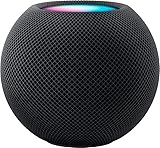
Apple - HomePod mini - Black | $129.00 | Buy on Amazon |
| 3 |

|
Apple - HomePod mini - Orange | $129.00 | Buy on Amazon |
| 4 |

|
Amazon Echo Dot (newest model) - Vibrant sounding speaker, Designed for Alexa+, Great for bedrooms,... | $39.99 | Buy on Amazon |
| 5 |

|
Apple - HomePod mini - Space Gray | $149.99 | Buy on Amazon |
Apple describes a home hub as enabling remote control, shared control, and automations. Availability of HomePod and Apple TV varies by country or region. See Apple’s home hub setup and compatibility guidance.
When do you need a hub rather than just an iPhone?
Control while away from home
To control your Apple Home accessories remotely, Apple requires a home hub such as Apple TV 4K or HomePod. The hub and iPhone must be signed in to the same Apple Account, and Home must be enabled in iCloud settings. Apple’s remote-control instructions explain the account requirements.
Recommended Free Tools
#1 Best Overall
- Rich, 360-Degree Sound – Delivers deep bass and crisp high frequencies for immersive audio in any room.
- Siri Voice Assistant – Control music, smart home devices, and get information hands-free.
- Seamless Apple Integration – Works effortlessly with iPhone, iPad, Mac, and Apple TV for a connected experience.
- Compact & Stylish Design – Small but powerful, fits perfectly in any space.
- Privacy & Security – Designed to keep your personal information safe and secure.
Automations and shared control
Apple identifies automations and sharing control as home hub functions. If those capabilities matter, plan on using a supported hub rather than relying only on an iPhone’s local control.
Can an iPhone control Matter accessories without a hub?
Yes, with iOS 18 or later, an iPhone can add and control Matter accessories in the Home app without a home hub. Apple lists supported Matter types including lights, locks, switches, outlets, thermostats, blinds and shades, air conditioners, bridges, and motion, contact, temperature, humidity, and ambient-light sensors. Apple still recommends a home hub for the best experience. See its Matter accessory guidance.
Rank #2
- Rich, 360-Degree Sound – Delivers deep bass and crisp high frequencies for immersive audio in any room.
- Siri Voice Assistant – Control music, smart home devices, and get information hands-free.
- Seamless Apple Integration – Works effortlessly with iPhone, iPad, Mac, and Apple TV for a connected experience.
- Compact & Stylish Design – Small but powerful, fits perfectly in any space.
- Privacy & Security – Designed to keep your personal information safe and secure.
This is a local-control exception, not a replacement for all hub functions: Apple says remote control while away requires a hub. Apple’s general home-hub setup page also says a hub is required to add Matter accessories; read that general guidance alongside the more specific iOS 18 statement describing hub-free local setup and control.
What changes if an accessory uses Thread?
Thread support depends on the accessory, Apple device model, and the function you want. Apple says Thread accessory automations, notifications, or remote control require a Thread-enabled home hub or a compatible third-party Thread border router. A Thread-capable iPhone may locally pair and manage some accessories, but that does not provide the hub’s remote functions.
Rank #3
- Rich, 360-Degree Sound – Delivers deep bass and crisp high frequencies for immersive audio in any room.
- Siri Voice Assistant – Control music, smart home devices, and get information hands-free.
- Seamless Apple Integration – Works effortlessly with iPhone, iPad, Mac, and Apple TV for a connected experience.
- Compact & Stylish Design – Small but powerful, fits perfectly in any space.
- Privacy & Security – Designed to keep your personal information safe and secure.
Apple lists these examples of Thread-capable hardware:
- Apple TV 4K (3rd generation) Wi-Fi + Ethernet
- Apple TV 4K (2nd generation)
- HomePod (2nd generation)
- HomePod mini
For local pairing and management, Apple also lists iPhone 15 Pro, iPhone 15 Pro Max, or later running iOS 18. Some battery-powered accessories may require a manufacturer firmware update before iPhone pairing. Check Apple’s current Thread accessory guidance and the accessory maker’s compatibility details; model and configuration requirements matter.
Rank #4
- Your favorite music and content – Play music, audiobooks, and podcasts from Amazon Music, Apple Music, Spotify and others or via Bluetooth throughout your home.
- Alexa is happy to help – Ask Alexa for weather updates and to set hands-free timers, get answers to your questions and even hear jokes. Need a few extra minutes in the morning? Just tap your Echo Dot to snooze your alarm.
- Keep your home comfortable – Control compatible smart home devices with your voice and routines triggered by built-in motion or indoor temperature sensors. Create routines to automatically turn on lights when you walk into a room, or start a fan if the inside temperature goes above your comfort zone.
- Do more with device pairing – Fill your home with music using compatible Echo devices in different rooms, or create a home theatre system with Fire TV.
- Say goodbye to drop-offs and buffering - With eero Built-in, Echo Dot doubles as a mesh wifi extender, adding up to 1,000 sq. ft. of wifi coverage to your existing eero network.
How do you set up Apple TV as the hub?
- On Apple TV, open Settings, then choose AirPlay and Apple Home.
- Assign Apple TV to a room in the Home app. Apple TV becomes a home hub when it is added to a room.
- For remote access, make sure Apple TV and your iPhone use the same Apple Account, and enable Home in iCloud settings.
Keep the hub at home, connected to home Wi-Fi, powered on, and up to date. Apple also says to enable iCloud Keychain and two-factor authentication for the Apple Account.
Quick Recap
Best Value
- Rich, 360-Degree Sound – Delivers deep bass and crisp high frequencies for immersive audio in any room.
- Siri Voice Assistant – Control music, smart home devices, and get information hands-free.
- Seamless Apple Integration – Works effortlessly with iPhone, iPad, Mac, and Apple TV for a connected experience.
- Compact & Stylish Design – Small but powerful, fits perfectly in any space.
- Privacy & Security – Designed to keep your personal information safe and secure.
Which setup should you choose?
| What you need | Suitable route | Important qualification |
|---|---|---|
| Hub functions without buying a HomePod | Apple TV 4K | Add it to a room in the Home app; check exact model and configuration if Thread matters. |
| Voice control and a hub in one device | HomePod or HomePod mini | These become hubs automatically when set up. |
| Local control of Matter accessories only | iPhone with iOS 18 or later | Does not provide remote control while away or the other functions Apple assigns to a hub. |
| Thread automations, notifications, or remote control | Thread-enabled home hub or compatible third-party Thread border router | Verify the exact Apple device and accessory requirements with Apple and the manufacturer. |
Product prices and availability are accurate as of the date/time indicated and are subject to change. Any price and availability information displayed on Amazon at the time of purchase will apply.

