
iTechGuides is reader-supported. When you buy through links on our site, we may earn an affiliate commission. As an Amazon Associate I earn from qualifying purchases. Learn more
There is no single best microcontroller for every IoT device. Start with the radio and protocol your product needs, then compare exact chips or modules for power behavior, compute and memory, peripherals, security, software support, and production constraints. The families below are candidates to investigate—not a performance ranking.
How to choose an IoT microcontroller
Write down the device’s requirements before comparing vendor families. “IoT” can mean a Wi-Fi-connected appliance, a Bluetooth LE sensor, or a low-power mesh node; those designs do not necessarily need the same radio, protocol stack, or power profile.
1. Start with connectivity
Identify whether the device needs Wi-Fi, Bluetooth LE, Thread, Zigbee, Matter, or a combination. Check whether the radio is integrated and whether the exact chip or module supports the required protocol and stack. A vendor portfolio may cover several protocols without every device in that portfolio supporting all of them.
2. Match power to the workload
Compare sleep, wake, processing, transmit, and receive behavior under the schedule and radio conditions your product will use. Vendor figures taken under different conditions are not a fair battery-life comparison. No apples-to-apples independent battery-life ranking is established for the candidates here, so validate the intended workload on representative hardware.
Popular on Amazon
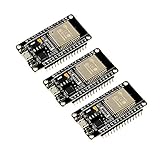
- 2.4GHz Dual Mode WiFi + Bluetooth Development Board
- Support LWIP protocol, Freertos
- SupportThree Modes: AP, STA, and AP+STA
- Ultra-Low power consumption, Compatible with Arduino IDE
- ESP32 is a safe, reliable, and scalable to a variety of applications
3. Check compute, memory, peripherals, and package
Confirm exact flash and RAM capacity, then allow headroom for the application, protocol stack, updates, and any signal processing, graphics, or local inference. Check GPIO, ADC, timers, buses, USB, package, and antenna options against the sensors, actuators, enclosure, and board layout you actually need.
4. Assess security and the software path
At the exact product and SDK level, verify device identity, secure boot and update capabilities, cryptographic support, and lifecycle management. Review the SDK and protocol stack, examples, flashing and debugging support, and whether a representative evaluation board is available. A capable chip is a poor fit if the software path cannot support the product’s requirements.
Also popular on Amazon

- 2.4GHz Dual Mode WiFi + Bluetooth Development Board
- Support LWIP protocol, Freertos;ESP32 is a safe, reliable, and scalable to a variety of applications
- SupportThree Modes: AP, STA, and AP+STA
- Ultra-Low power consumption, Compatible with Arduino IDE
- 1PCS 30Pin ESP32 Development Board 2.4GHz WiFi Dual Cores Microcontroller Integrated with Antenna RF Low Noise Amplifiers Filters
5. Treat production as a separate decision
An evaluation board can shorten prototyping, but it is not automatically suitable for a production design. Recheck antenna selection, power design, layout, certification path, bill of materials, supply evidence, and lifecycle status for the product itself.
Windows Errors? Fix Them Before They Spread
Repair common Windows errors and clear accumulated junk for a smoother, more stable PC - no reinstall needed.Free scan · no reinstallCrashes, No Sound, or Screen Glitches?
Random freezes, missing sound and display glitches usually trace back to one bad driver. Find and replace yours safely.Free scan · under a minuteIoT microcontroller families to shortlist
These examples are grounded in vendor product materials. They identify plausible starting points for particular design needs; they do not establish an overall winner or a measured cross-vendor ranking.
Also popular on Amazon

- Powerful ESP-32 Board: Unlock the world of Internet of Things (IoT) and advanced electronics with the heart of this kit: the ESP-32 board. It features a powerful dual-core processor, integrated Wi-Fi and Bluetooth 4.2, making it perfect for building connected, smart devices that communicate with your phone or the cloud. It's fully compatible with the Arduino IDE for easy programming.
- Super Starter Kit: This kit contains over 35 different modules and electronic components, including sensors, displays, motors, and input devices. From LEDs and buttons to an OLED screen, servo motor, and keypad, you have everything needed to explore a vast range of projects in one box.
- Step by Step Online Tutorial: Jump right in with our detailed, beginner-friendly tutorial. Access 30+ projects with complete code, clear circuit diagrams, and step-by-step instructions. Learn the fundamentals of electronics, coding, and how to utilize the ESP-32's unique capabilities without any prior experience.
- Hands-on Learning for All Skill Levels: Perfect for students, makers, engineers, and hobbyists. Start with basic circuits and coding, then progress to intermediate and advanced IoT applications. Build practical projects like weather stations, smart home controllers, remote-controlled devices, and interactive gadgets. The skills you learn are the foundation for real-world innovation.
- Quality & Great Support: Elegoo is committed to quality. We provide a clear, detailed tutorial guide, refined code, and a well-organized component kit. All modules are carefully selected for reliability and ease of use. Our dedicated technical support team and active online community are ready to help you succeed in your learning journey.
| Candidate | Why investigate it | What to verify |
|---|---|---|
| Espressif ESP32-S3 | Prototype or design that needs integrated Wi-Fi and Bluetooth LE. | Exact module and memory configuration, antenna, power behavior, and production-board requirements. |
| Nordic nRF52820 | Bluetooth LE or mesh design where its listed protocol and peripheral support fits. | Current datasheet, exact SKU, software support, and electrical conditions for the intended workload. |
| Silicon Labs EFR32MG26 | Multiprotocol wireless mesh applications involving Matter, OpenThread, or Zigbee. | Exact memory configuration, protocol stack, RF needs, and security features for the chosen part. |
| Silicon Labs EFM32 | MCU-only design, including cases where a separate connectivity component is appropriate. | Whether integrated radio is needed and whether the selected MCU and software fit the rest of the system. |
| NXP MCX W72 | Bluetooth LE 6.x and channel-sounding applications such as secure access control, indoor localization, or asset tracking. | Exact family capabilities, SDK, certification path, and supported stack. |
Espressif ESP32-S3: integrated Wi-Fi and Bluetooth LE
Espressif documents the ESP32-S3-DevKitC-1 as an entry-level development board equipped with ESP32-S3-WROOM variants that integrate Wi-Fi and Bluetooth LE. It breaks out I/O for peripheral wiring and breadboard use, making it a concrete option for evaluating a connected prototype.
Espressif describes ESP-IDF as a framework for IoT applications involving Wi-Fi, Bluetooth, power management, and other system features. That is the vendor’s description of its development framework, not an independent assessment of performance or suitability. The board is useful for prototyping; it does not show that every ESP32-S3 configuration is right for a power-sensitive or production design.
Also popular on Amazon

- High-performance foundation line, ARM Cortex-M4 core with DSP and FPU, 512 Kbytes Flash, 180 MHz CPU, ART Accelerator, Dual QSPI
- On-board ST-LINK/V2-1 debugger/programmer with SWD connector
- Can be powered from USB
- Three LEDs, Two Push-buttons
- Support of wide choice of Integrated Development Environments (IDEs) including IAR, ARM Keil, GCC-based IDEs
Nordic nRF52820: Bluetooth LE and mesh options
Nordic describes its Bluetooth LE portfolio as wireless SoCs combining MCU functionality with a 2.4 GHz radio. The vendor’s nRF52820 listing specifies a 64 MHz Arm Cortex-M4, 256 KB flash, and 32 KB RAM, and lists Bluetooth LE, Bluetooth Mesh, Thread, Zigbee, USB, and common interfaces. These are product-specific vendor specifications, not evidence that the part has the lowest power consumption in a comparative test. Check the chosen SKU’s current datasheet and software support.
Do these 3 things before closing this tab:
1Repair Windows errors before they cause bigger problems2Fix the driver behind crashes, sound loss and screen glitches3Clear out junk files and repair common Windows errorsSilicon Labs EFR32 and EFM32: wireless mesh or MCU-only designs
Silicon Labs positions EFR32MG26 as a multiprotocol wireless SoC for mesh use cases involving Matter, OpenThread, and Zigbee. Its product material lists Cortex-M33 processing, multiple memory configurations, RF capabilities, and security features. Confirm the memory option and features for the exact part rather than assuming every configuration is identical.
Also popular on Amazon

- with pre-soldered header Raspberry Pi Pico. RP2040 microcontroller chip designed by Raspberry Pi in the United Kingdom
- Dual-core Arm Cortex M0+ processor, flexible clock running up to 133 MHz. 264KB of SRAM, and 2MB of on-board Flash memory.
- Castellated module allows soldering direct to carrier boards. USB 1.1 with device and host support. Low-power sleep and dormant modes. Drag-and-drop programming using mass storage over USB. 26 × multi-function GPIO pins.
- 2 × SPI, 2 × I2C, 2 × UART, 3 × 12-bit ADC, 16 × controllable PWM channels.Accurate clock and timer on-chip.Temperature sensor.
- Accelerated floating-point libraries on-chip.8 × Programmable I/O (PIO) state machines for custom peripheral support
Silicon Labs also describes EFM32 as MCU-only families for energy-efficient embedded IoT and presents EFM32PG26 as a software-compatible MCU-only counterpart to the EFR32 xG26 wireless platform. Consider this distinction when deciding whether radio should be integrated or supplied by a separate connectivity component.
NXP MCX W72: Bluetooth channel sounding
NXP’s wireless MCU portfolio spans offerings for Matter, Wi-Fi, Bluetooth LE, Thread, and Zigbee, but that portfolio-level list does not mean every device supports every protocol. NXP positions MCX W72 for Bluetooth LE 6.x and channel-sounding applications including secure access control, indoor localization, and asset tracking. Its product page identifies a document revision dated July 28, 2026. Confirm the exact family, SDK, certification path, and supported stack for the design.
Independent reader supportYour contribution helps us test, update, and keep practical guides available for everyone.Prototype before committing to a production design
The ESP32-S3-DevKitC-1 is one documented evaluation option for ESP32-S3 application development and peripheral prototyping. Use an evaluation board to exercise representative peripherals and software, then assess the production design independently. Board-level antenna, power, layout, certification, and component choices can differ from those on a development kit.
Quick wins for a faster PC:
Scan for outdated or missing drivers - takes under a minuteDriver Scan →Repair Windows errors before they cause bigger problemsFix Now →Fix the driver behind crashes, sound loss and screen glitchesFind Drivers →Make the final comparison on your own design conditions
Shortlist parts only after translating the product requirements into a repeatable evaluation. For a meaningful power comparison, match the workload, radio protocol, output power, connection interval, sleep schedule, peripherals, and board conditions. Record the exact chip or module, software version, and configuration so that results apply to the design you intend to build.
- Confirm that the exact part supports the required radio and protocol stack.
- Measure or validate power behavior using the product’s actual transmit, receive, processing, and sleep pattern.
- Check memory headroom, interfaces, package, antenna, and physical integration against the product design.
- Exercise the SDK, example projects, flashing, and debugging on representative hardware.
- Review security capabilities, certification requirements, supply evidence, and lifecycle status before production selection.
What the available comparisons do not establish
The vendor material cited here supports product-specific feature and specification claims, not an independently tested cross-vendor winner. It also does not establish a normalized price or availability comparison. Price, stock, and lifecycle status need to be checked for the exact part and order at the time of purchase; verify current datasheets, SDK support, distributor information, and relevant radio certifications before locking a design.

