
iTechGuides is reader-supported. When you buy through links on our site, we may earn an affiliate commission. As an Amazon Associate I earn from qualifying purchases. Learn more
Google’s April Fools’ Day history begins with a search engine powered by imaginary brainwaves, reaches fake broadband delivered through plumbing and a smell-based search engine, and ends—at least for the conventional prank program—with a pandemic-era cancellation. The best-known twist came in 2004, when Google announced real Gmail on April 1 with 1 GB of storage. Many people assumed the product itself was a joke.
This is a chronology of Google’s documented public April Fools’ Day stunts and product parodies. It covers the major entries in the commonly cited public record, including regional Google teams and individual products. It is not a provably complete inventory of every internal joke, local post, or short-lived experiment. Google’s consolidated chronology has major entries for 2000, 2002, and every year from 2004 through 2019, but no comparable verified flagship entry for 2001 or 2003.
How to read Google’s April Fools’ history
Google’s pranks were rarely one company-wide gag. They came from Search, Gmail, Maps, YouTube, Google Japan, Google Netherlands, Google Israel, Google Australia, and other product or regional teams. Some were simple landing-page jokes; others spread across product interfaces, videos, mock documentation, fake hardware, and temporary feature changes.
The list below therefore uses documented to mean entries preserved in the public chronology and supporting historical material. The absence of a year from the list does not prove that nobody at Google made a joke privately. It means that no comparable major public entry is established in the consolidated chronology.
Popular on Amazon

- CRISP CLARITY: This 23.8″ Philips V line monitor delivers crisp Full HD 1920x1080 visuals. Enjoy movies, shows and videos with remarkable detail
- INCREDIBLE CONTRAST: The VA panel produces brighter whites and deeper blacks. You get true-to-life images and more gradients with 16.7 million colors
- THE PERFECT VIEW: The 178/178 degree extra wide viewing angle prevents the shifting of colors when viewed from an offset angle, so you always get consistent colors
- WORK SEAMLESSLY: This sleek monitor is virtually bezel-free on three sides, so the screen looks even bigger for the viewer. This minimalistic design also allows for seamless multi-monitor setups that enhance your workflow and boost productivity
- A BETTER READING EXPERIENCE: For busy office workers, EasyRead mode provides a more paper-like experience for when viewing lengthy documents
2000–2006: Google establishes the formula
2000 — MentalPlex
Google’s first widely documented April Fools’ hoax was MentalPlex. The landing page invited visitors to look at an animated graphic and mentally project the information they wanted to find. Instead of returning a useful search result, it produced pseudo-error messages blaming failures on weak brainwave signals, aluminum-foil interference, or insufficient conviction.
MentalPlex established several ideas Google would reuse for years: take a real technical concept, explain it with confident jargon, and push it just far enough beyond reality to become absurd.
2001 — No comparable verified flagship prank
The commonly cited public chronology does not identify a major Google April Fools’ entry for 2001. That should not be read as proof that no employee or regional team made any joke that year; it is more accurately described as a gap in the documented core chronology.
2002 — PigeonRank
PigeonRank parodied Google’s real PageRank system by claiming that pigeons powered the ranking of search results. The mock technical explanation used computer-science language, references to pigeon food, and a punning “lin/ax kernel” to make the ridiculous premise sound like an efficient engineering breakthrough.
The joke worked because it exaggerated a genuine public question about how Google ranked pages: instead of mysterious algorithms and enormous data centers, the explanation offered flocks of specially trained birds.
2003 — Another gap in the core chronology
As with 2001, the consolidated public record does not identify a comparable verified Google April Fools’ centerpiece for 2003. It is safer to call 2003 an undocumented or unrepresented year in the major public chronology than to claim that Google made no joke anywhere.
2004 — Copernicus and the real Gmail “double fake”
Google advertised fictional jobs at the Google Copernicus Center, supposedly a lunar research facility. The announcement described Copernicus as an operating system intended for work on the Moon.
PC Slower Than It Used to Be?
A free scan shows the junk files, broken settings and background clutter dragging Windows down - then fixes them in one click.Free scan · Windows 10 & 11Outdated Drivers Are Slowing You Down
One free scan finds every outdated or missing driver and matches the right update for your exact hardware.Free scan · exact hardware matchOn the same day, Google announced Gmail. The service was real, but its 1 GB of free storage sounded so implausible in 2004 that many readers assumed the announcement was another prank. Google’s playful tone reinforced the confusion. Gmail was not a hoax; the joke was that a genuine product sounded too extraordinary to believe.
This is one of the classic April Fools’ “double fakes”: a real announcement presented in a way that made people think the announcement itself was fictional.
2005 — Google Gulp
Google Gulp was a fictional beverage designed to improve search performance and intelligence. Its mock scientific explanation promised DNA analysis and neurotransmitter adjustments, turning the idea of a productivity drink into a parody of biotechnology marketing.
The imagined product came in flavors including Glutamate Grape, Sugar-Free Radical, Beta Carotty, and Sero-Tonic Water. Distribution was invitation-only, a joke that also echoed Gmail’s early invitation-based access model.
The Tool Desk
Outbyte Driver Updater FREEScan for outdated or missing drivers - takes under a minuteDriver Scan →Outbyte PC Repair FREEClear out junk files and repair common Windows errorsFree Scan →2006 — Google Romance
Google Romance treated dating as an information-retrieval problem. Its fictional “Soulmate Search” promised to generate “Contextual Dates” from uploaded profiles and other personal information.
Also popular on Amazon

- CRISP CLARITY: This 22 inch class (21.5″ viewable) Philips V line monitor delivers crisp Full HD 1920x1080 visuals. Enjoy movies, shows and videos with remarkable detail
- 100HZ FAST REFRESH RATE: 100Hz brings your favorite movies and video games to life. Stream, binge, and play effortlessly
- SMOOTH ACTION WITH ADAPTIVE-SYNC: Adaptive-Sync technology ensures fluid action sequences and rapid response time. Every frame will be rendered smoothly with crystal clarity and without stutter
- INCREDIBLE CONTRAST: The VA panel produces brighter whites and deeper blacks. You get true-to-life images and more gradients with 16.7 million colors
- THE PERFECT VIEW: The 178/178 degree extra wide viewing angle prevents the shifting of colors when viewed from an offset angle, so you always get consistent colors
The service borrowed the language of search, matching, and personalization, then applied it to relationships. The page eventually made clear that the service was an April Fools’ joke.
2007–2012: Infrastructure, artificial intelligence, and increasingly elaborate interfaces
2007 — Gmail Paper and Google TiSP
Gmail Paper proposed printing users’ email and sending it through the postal system. Advertisements would appear on the reverse side of the printed messages, turning digital communication into a bizarre advertising-supported paper service.
Google TiSP—short for Toilet Internet Service Provider—went in the opposite direction. It proposed delivering broadband through plumbing and sewage lines with a fiber cable, wireless router, and fictional plumbing hardware. The gag parodied the complexity of home broadband installation by making the household toilet part of the network infrastructure.
Quick wins for a faster PC:
Fix the driver behind crashes, sound loss and screen glitchesFind Drivers →Clear out junk files and repair common Windows errorsFree Scan →2008 — A global slate of product and regional jokes
Google’s 2008 output was unusually broad. Rather than relying on one dominant company-wide premise, different products and regional teams produced a collection of smaller parodies:
- Google Weblogs, or GWeblogs: Blogger supposedly gained algorithmic blog editing and automatic content generation.
- Gmail Custom Time: users could supposedly pre-date messages, allowing an email to appear as though it had been sent earlier.
- Google Book Search Scratch and Sniff: book search was presented as though digital readers could experience scents from scanned books.
- Google Calendar dating appointments: an “I’m Feeling Lucky” option supposedly arranged dates through Calendar.
- Google Manpower Search: a China-focused joke about searching for human labor or manpower.
- Google Saturi Translate: a regional translation gag built around a fictional language or translation service.
- Google Wake Up Kit: a fictional product intended to help people wake up.
- Project Virgle: a fake Google–Virgin project to establish a settlement on Mars.
- Orkut “Yogurt”: Orkut temporarily adopted a yogurt-themed identity.
- YouTube’s international Rickroll: featured videos redirected visitors to Rick Astley’s “Never Gonna Give You Up,” using the then-famous bait-and-switch meme.
The 2008 slate showed how Google’s prank tradition was changing. The company was no longer limited to one fake corporate announcement; nearly any product surface could become part of the joke.
2009 — CADIE and interface manipulation
The centerpiece of 2009 was CADIE, a fictional artificial-intelligence system presented across multiple Google properties. CADIE appeared to influence or operate several products, allowing Google to parody the emerging excitement around machine learning and autonomous software.
Related gags included Brain Search, CADIE-enhanced features in Google Docs, AI-themed HTTP headers, a Google Earth experience supposedly powered by CADIE, and a fake 3D version of Chrome. Google also presented a concept for an oil-tanker data center and made YouTube pages appear upside down.
2010 — Topeka, animal translation, and a large collection of product gags
Google temporarily changed its name to Topeka. The move reversed a real naming gesture by Topeka, Kansas, during the competition to win Google’s fiber project. It was a reminder that April Fools’ jokes could respond to real events, not merely invent unrelated products.
Other documented 2010 jokes included:
- Google Books in anaglyph 3D: books were presented with a red-and-blue stereoscopic effect.
- Upload to Google Docs: users could supposedly upload physical objects, not just digital files.
- Alternative search-speed units: Google offered humorous ways to measure how quickly searches were completed.
- YouTube TEXTp: videos could supposedly be viewed as ASCII-style text.
- Animal Translator beta: Google claimed to offer translation between animals and humans.
- Google Voice Standard Voicemail Mode: a fictional setting that made voicemail more ordinary or less feature-rich.
- The API “evil bit”: an invented programming flag that could identify whether an API request was evil.
- Human-powered Google Wave notifications: people, rather than software, supposedly delivered Wave notifications.
- Google Analytics “hits”: Analytics was presented as though it had returned to an older measurement term.
- Picasa cardboard cutouts: users could supposedly order life-size physical versions of their photos.
- ReaderAdvantage: a fictional rewards program for Google Reader activity.
- Wingdings in AdSense: advertising interfaces were presented in the famously difficult-to-read symbol font.
2011 — Gmail Motion, Chromercise, and a respectful response in Japan
Gmail Motion claimed that users could read and send email through body gestures detected by a webcam. Google Docs Motion extended the same fictional gesture-controlled technology to collaborative documents.
Chrome contributed Chromercise, a mock hand-strengthening program intended to make users faster at browsing. YouTube offered a silent-film-style viewing mode and a horse-drawn carriage option for uploading videos, combining old-fashioned cinema with modern video hosting.
Google Japan did not stage a conventional prank in the immediate aftermath of the Tōhoku earthquake and tsunami. Instead, it featured children’s drawings and said the usual joke had been postponed. That response is important context: Google’s April Fools’ program was not treated as more important than a major disaster affecting the region.
Recommended Free Tools
2012 — Google Maps in 8-bit and fiber you could eat
Google Maps 8-bit transformed Maps into a retro role-playing-game-style experience. It included pixel graphics and a fictional quest narrative, turning navigation into a video-game adventure.
Also popular on Amazon
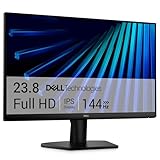
- Clear visuals. Fluid motion: A 144Hz refresh rate and 1ms MPRT deliver smooth, tear‑free motion across work, gaming, and streaming for clearer, more fluid viewing.
- Eye comfort: TÜV Rheinland 3‑star* certification reduces harmful blue light while preserving stunning color quality without compromise. *TÜV Rheinland 3-star eye comfort certification.
- Wide viewing angle: Get consistent views across a wide 178° /178° viewing angle.
- In-Plane Switching (IPS): See excellent color accuracy and consistency across wide viewing angles with In-plane Switching (IPS) technology.
- Ultra-thin bezels: Maximize your viewing experience with thin bezels.
The year’s other documented jokes included:
- Google Voice for Pets: fictional collars supposedly translated animal vocalizations into messages.
- Parking karma: Google presented the idea that drivers could earn or spend a moral score related to parking.
- Canine staffing: dogs were supposedly being employed at Google offices.
- Interplanetary Analytics: Google Analytics reports extended beyond Earth.
- Google Panda: a panda-themed plush assistant appeared as a fictional product.
- Google Fiber edible fiber: the joke deliberately confused dietary fiber with broadband fiber.
2013–2019: Maps games, regional experiments, fake hardware, and product-team jokes
2013 — YouTube’s shutdown claim, Google Nose, and Pokémon on Maps
YouTube claimed it would stop accepting new uploads and spend years selecting the best video. Everything else would supposedly be deleted. The announcement parodied both online-video overload and the idea that an authority could identify one definitive “best” video.
Google Nose proposed a smell-based search system. It promised “scent-based” results, extending Google’s text, image, and map indexing into an impossible sensory database.
Google Maps also hosted a Pokémon Challenge, in which users could search for Pokémon characters around the map. The fictional experience was notable because it involved The Pokémon Company, Game Freak, and Nintendo. It should not be confused with Pokémon Go, which became a real product in 2016. The later game made the 2013 concept look unusually prescient, but the April Fools’ experience and Pokémon Go were not the same product.
2014 — Auto Awesome Photobombs, Shelfies, and specialized parodies
Google+ offered Auto Awesome Photobombs, a fictional extension of Google’s automatic photo effects. Gmail introduced Shelfies, shareable selfies used as custom themes.
Google Apps for Business presented a fictional productivity suite designed for businesses such as pirates. Google Maps and other Google teams added smaller interface and product jokes, continuing the shift toward many coordinated gags rather than one single annual announcement.
2015 — Pac-Man View, Smartbox, com.google, and Dial-Up Mode
Pac-Man View turned Google Maps into a playable Pac-Man game on real-world streets. It was one of Google’s most successful examples of placing a recognizable game directly inside a familiar product interface.
Inbox by Gmail announced Smartbox, a fictional physical mailbox. It supposedly offered automatic sorting, notifications, temperature control, and spam protection—features that translated inbox-management concepts into household hardware.
Free tools Windows power users keep installed
One-click scans. No signup required.
Google also launched com.google, a horizontally reflected version of Search. Google Fiber introduced Dial-Up Mode, which supposedly slowed modern internet service so users could appreciate life’s small moments. YouTube played with the recurring “Darude—Sandstorm” meme, and Google presented a talking Google Panda.
2016 — Gmail Mic Drop and the cost of a poorly placed joke
Gmail Mic Drop added a fictional feature that appended a minion-themed mic-drop animation and message to an email. The feature was withdrawn after users reported accidentally using it in serious communications, including job-related exchanges.
Mic Drop is unusual in Google’s April Fools’ history because the criticism was not merely that the joke was unfunny. The problem was product placement: a playful control appeared in a real email workflow where a mistaken click could have practical consequences.
Other 2016 jokes included Google Cardboard Plastic, a parody of premium hardware, and emoji-based photo search in Google Photos. The contrast between those harmless concepts and Mic Drop’s accidental real-world use illustrates why April Fools’ features need a clear exit path, prominent labeling, and careful placement.
What’s actually slowing this PC down?
Pick the symptom - the matching free tool is one click away.
2017 — Google’s high-volume global year
Google’s 2017 slate was one of its largest and most international. Documented examples included:
Also popular on Amazon

- CURVED FOR ENHANCED ENGAGEMENT: An immersive viewing experience with a curved monitor that wraps more closely around your field of vision; It creates a wider view, enhancing depth perception and minimizing peripheral distraction
- SMOOTH PERFORMANCE FOR SEAMLESS CONTENT: Stay in the action when playing games, watching videos, or working on creative projects; The 100Hz refresh rate reduces lag and motion blur so you don't miss a thing in fast-paced moments¹
- MORE GAMING POWER: Gain the edge with optimizable game settings; Color and image contrast can be adjusted to see scenes more vividly and spot enemies hiding in the dark; Game Mode adjusts any game to fill the screen so you can view every detail²
- KEEP IT EASY ON THE EYES: Care for your eyes and stay comfortable, even during long sessions; Advanced eye comfort technology certified by TÜV reduces eye strain by minimizing blue light and reducing irritating screen flicker²
- INCREASED VERSATILITY: Connect to more; Plug devices straight into your monitor for increased flexibility, making your computing environment even more convenient
- Ms. Pac-Maps: another Pac-Man-inspired Maps experience.
- Google Wind: Google Netherlands proposed using windmills and machine learning to disperse clouds.
- Haptic Helpers: a fictional system for adding taste, touch, and smell to virtual reality.
- Google Cloud Mars region: Cloud services were presented as though they could run in a Mars region, including a “Ziggy Stardust” data center concept.
- Chromebook mobile accessories: fictional accessories extended Chromebook use to mobile scenarios.
- Google Translate for Heptapod B: Translate supposedly supported the fictional language from the film and story Arrival.
- Google Gnome: an outdoor Google Assistant product that could report environmental conditions and mow the lawn.
- Google Now for Dogs & Cats: a fictional assistant experience for pets.
- Google Play for Pets: a pet-oriented version of the app marketplace.
Contemporary coverage also identified a Google Cloud Earth–Mars storage region and other regional or product-team jokes. The exact set of 2017 entries varies depending on whether a compilation includes every short-lived regional page, which is why a documented chronology is more defensible than claiming a perfectly exhaustive corporate inventory.
2018 — Hummus API, a physical Gboard, Waldo, and a bad-joke filter
Google Israel launched the fictional Cloud Hummus API, which supposedly organized information about hummus. The joke used the language of cloud computing and application programming interfaces to treat a beloved food as structured data.
Google Japan proposed a physical handwriting board for Gboard. Google Maps hid Where’s Waldo? scenes across the map, giving users a search-and-discovery task inside the navigation product.
Do these 3 things before closing this tab:
1Fix the driver behind crashes, sound loss and screen glitches2Repair Windows errors before they cause bigger problems3Scan for outdated or missing drivers - takes under a minuteFiles Go announced a Bad Joke Detector that would delete poor jokes from a device. Google Australia presented Googz, and Search Console’s fictional Recrawl Now button redirected users to a Rickroll.
2019 — Snake, tulip translation, spoon bending, and Screen Cleaner
Google Maps offered Sssnakes on a Map, a Snake game playable in selected cities and in a worldwide mode. It was a natural extension of Google’s habit of turning Maps into a temporary game board.
Google Netherlands presented Google Tulip, a fictional system that translated signals from tulip roots into human speech. Google Calendar offered a game that cleared meetings one at a time, turning the appeal of an empty calendar into a playable interface.
Google Japan presented a spoon that could type Japanese characters in Gboard by bending it. Google Assistant could return a historical prank when prompted about April Fools. Google Colab added fictional “Power Mode” effects, while Gmail marked its fifteenth anniversary with celebratory branding.
YouTube used a fake Aquaman 2 placement to point viewers toward Shazam!. Files introduced Screen Cleaner, which supposedly removed dirt from a device through vibration and a pineapple-scented shield.
2020: Google suspends the conventional prank program
Google canceled its planned 2020 April Fools’ jokes because of the COVID-19 pandemic. Teams were asked to focus on helping people instead. The decision marked a clear break from the annual pattern of increasingly elaborate public stunts.
The researched chronology reports no return to the conventional April 1 Google prank program through August 11, 2026. That does not mean Google stopped making playful products or humorous announcements altogether. It means the familiar company-wide or multi-product April Fools’ tradition did not return in the documented record.
Independent reader supportYour contribution helps us test, update, and keep practical guides available for everyone.2021–2025: Google Japan’s novelty keyboards are a separate tradition
Google Japan resumed an annual novelty-keyboard tradition beginning in 2021, but these releases were issued on October 1, not April Fools’ Day. They should not be mislabeled as post-2020 April Fools’ pranks.
What’s actually slowing this PC down?
Pick the symptom - the matching free tool is one click away.
- 2021 — Gboard Yunomi: a teacup-shaped keyboard.
- 2022 — Gboard Bar Version: a 5.25-foot single-row keyboard.
- 2023 — Gboard CAPS: a large wearable key-shaped hat.
- 2024 — Möbius-strip-style keyboard: a double-sided keyboard inspired by a Möbius strip.
- 2025 — Gboard Dial Version: a rotary-dial-inspired keyboard.
These releases belong in the broader story of Google Japan’s playful hardware experimentation, but their October timing matters. They are not evidence that Google restored its former April 1 prank schedule.
Also popular on Amazon

- 【INTEGRATED SPEAKERS】Whether you're at work or in the midst of an intense gaming session, our built-in speakers provide rich and seamless audio, all while keeping your desk clutter-free.
- 【EASY ON THE EYES】 Protect your eyes and enhance your comfort with Blue-Light Shift technology. This feature reduces harmful blue light emissions from your screen, helping to alleviate eye strain during long hours of use and promoting healthier viewing habits.
- 【WIDEN YOUR PERSPECTIVE】Our sleek minimal bezel design ensures undivided attention. The nearly bezel-free display seamlessly connects in a dual monitor arrangement, delivering an unobstructed view that lets you focus on more at once, completely distraction-free.
April 1, 2026: a real Google AI Pro storage increase
On April 1, 2026, Google increased storage for Google AI Pro from 2 TB to 5 TB at no additional cost. This was a genuine product change, reflected in Google’s current Google One plan documentation and contemporary reporting.
It is best understood as a modern, real-life double fake: an actual announcement made on the date when readers are trained to distrust unusual technology news. Unlike Gmail in 2004, the 2026 announcement was not a fictional prank. It was a real storage increase that happened to arrive on April Fools’ Day.
What changed across Google’s prank history?
1. The jokes moved from explanations to experiences
Early pranks such as MentalPlex and PigeonRank were mostly fake explanations. They invented a ridiculous mechanism behind a familiar Google service. Later jokes increasingly altered the product itself: Maps became Pac-Man or Snake, YouTube turned upside down, Gmail gained Mic Drop, and Google Docs supposedly responded to body motion.
2. Google used real product language to make impossible ideas sound plausible
Google Gulp borrowed the language of genetics and neurotransmitters. Google TiSP used fiber, routers, and plumbing hardware. Cloud Hummus API used software terminology. Google Nose and Google Tulip extended the company’s indexing and translation concepts into impossible sensory systems.
3. Regional teams made the program more international
The later chronology includes jokes from Japan, the Netherlands, Israel, Australia, China, and other product or regional groups. That variety explains why different lists of Google April Fools’ jokes may contain slightly different entries. Some compilations include only the best-known global jokes; others preserve short-lived regional pages.
4. Real products sometimes became the biggest April Fools’ surprise
Gmail remains the defining example. Its 1 GB storage offer was real, but the date and presentation made it sound fictional. The 2026 Google AI Pro storage increase created a similar situation in reverse: a real plan change arrived on a date associated with fake announcements.
5. Interactivity increased both engagement and risk
Maps games, temporary search modes, and product interfaces made Google’s jokes more memorable than static press releases. They also created greater room for confusion. Gmail Mic Drop demonstrated that a joke embedded in a working communication tool can affect real users, particularly when it is placed near ordinary controls.
Recommended Free Tools
Quick reference: the documented core chronology
| Year | Best-known documented entry or theme |
|---|---|
| 2000 | MentalPlex |
| 2001 | No comparable verified flagship entry in the core chronology |
| 2002 | PigeonRank |
| 2003 | No comparable verified flagship entry in the core chronology |
| 2004 | Copernicus; real Gmail announced as an April Fools’ “double fake” |
| 2005 | Google Gulp |
| 2006 | Google Romance |
| 2007 | Gmail Paper; Google TiSP |
| 2008 | GWeblogs, Gmail Custom Time, Virgle, international and regional jokes |
| 2009 | CADIE and AI-themed product jokes |
| 2010 | Topeka, TEXTp, Animal Translator, 3D Books, and many product gags |
| 2011 | Gmail Motion, Chromercise; postponed Japan prank |
| 2012 | Google Maps 8-bit, Google Voice for Pets, edible Google Fiber |
| 2013 | YouTube shutdown hoax, Google Nose, Pokémon Challenge |
| 2014 | Auto Awesome Photobombs, Shelfies, pirate-oriented business tools |
| 2015 | Pac-Man View, Smartbox, com.google, Dial-Up Mode |
| 2016 | Gmail Mic Drop, Cardboard Plastic, emoji photo search |
| 2017 | Google Wind, Haptic Helpers, Mars Cloud region, Google Gnome, pet services |
| 2018 | Cloud Hummus API, physical Gboard, Where’s Waldo?, Bad Joke Detector |
| 2019 | Sssnakes on a Map, Google Tulip, spoon-bending Gboard, Screen Cleaner |
| 2020–2025 | Traditional April 1 program suspended; Google Japan novelty keyboards appeared separately on October 1 from 2021 |
| 2026 | Real Google AI Pro storage increase from 2 TB to 5 TB |
Frequently Asked Questions
Did Google make an April Fools’ prank every year from 2000 through 2019?
No. The commonly cited core chronology has entries for 2000, 2002, and every year from 2004 through 2019. It does not identify a comparable verified flagship prank for 2001 or 2003.
Was Gmail an April Fools’ joke?
No. Gmail was a real product announced on April 1, 2004. Its 1 GB storage offer and playful presentation made many people think it was fictional, which is why it is often called an April Fools’ double fake.
Did Google stop making April Fools’ jokes?
Google canceled its planned 2020 jokes because of the COVID-19 pandemic and asked teams to focus on helping people. The researched public chronology reports no return to the conventional April 1 program through August 11, 2026.
Are Google Japan’s novelty keyboards from 2021 through 2025 April Fools’ pranks?
No. They are related to Google Japan’s playful hardware tradition, but the documented releases were made on October 1. They should be treated separately from Google’s April Fools’ Day program.
Was the Google AI Pro 5 TB upgrade on April 1, 2026 real?
Yes. Google AI Pro storage increased from 2 TB to 5 TB at no additional cost. It was a genuine product change announced on April 1, not a fictional prank.
The Bottom Line
Google’s documented April Fools’ history runs from MentalPlex in 2000 through a final conventional run of product parodies in 2019. The pranks evolved from fake technical explanations into interactive games, mock hardware, regional experiments, and temporary changes to real interfaces. Google suspended the traditional program in 2020, while Google Japan continued a separate October novelty-keyboard tradition. The April 1, 2026 Google AI Pro storage increase was real—a fitting modern double fake for a company whose most famous April Fools’ announcement, Gmail, was real too.

