
Quick wins for a faster PC:
Clear out junk files and repair common Windows errorsFree Scan →Scan for outdated or missing drivers - takes under a minuteDriver Scan →Repair Windows errors before they cause bigger problemsFix Now →iTechGuides is reader-supported. When you buy through links on our site, we may earn an affiliate commission. As an Amazon Associate I earn from qualifying purchases. Learn more
An LLM can produce a smooth, specific explanation for a failure without ever observing the failing system. Treat its first “root cause” as a hypothesis, not a diagnosis. The dependable path is evidence first: capture the exact error and context, ask for competing explanations, run tests that could disprove each one, and verify the result against logs, source, and a controlled reproduction.
What an LLM actually knows when it explains an error
A language model generates one token at a time. It chooses the continuation that best matches statistical patterns learned from its training data. Pretraining does not attach a true-or-false label to every sentence, and rare or arbitrary facts are not reliably predictable. When you ask, “Why did this break?”, the model is therefore not automatically inspecting your process, reading your deployment history, or replaying your code. It is constructing the most plausible explanation from the text in your prompt and patterns seen during training.
OpenAI defines a hallucination as a “plausible but false statement generated by a language model.” A causal story can be grammatically precise, technically familiar and completely wrong for your particular incident. Fluency is evidence that the model can express an explanation; it is not evidence that the explanation caused your failure.
The Tool Desk
Outbyte Driver Updater FREEScan for outdated or missing drivers - takes under a minuteDriver Scan →Outbyte PC Repair FREERepair Windows errors before they cause bigger problemsFix Now →Why missing and arbitrary facts are dangerous
Suppose a service began returning HTTP 500 responses after a change. The decisive fact might be an environment variable present only in production, a one-line configuration difference, a clock skew, or a dependency that resolved to a different build. None of those details can be inferred safely from a generic stack trace. If they are absent from the prompt, the model may fill the gap with a common pattern, such as a null value, a race condition or a version mismatch. The pattern may be common in other incidents while being irrelevant to yours.
Popular on Amazon

- Multifunctional NOYAFA NF-8508 Network Cable Tester: There are nine features to meet your needs. Continuity Testing, Cable Scan, Port Flash, Length Measurement, POE Power Supply Test, QC testing, Optical Power Meter, VFL and NVC function.It is perfectly suited for various engineering cabling projects, network troubleshooting, network equipment maintenance and testing scenarios. Its precise cable scanning and fault localization capabilities help you effortlessly pinpoint the root cause of issues.
- 7 WAVELENGTHS OPTICAL POWER METER: NF-8508 network cable tester can measure 7 standard wavelengths, 850/1300/1310/1490/1550/1625/1650, power detecting range(dBm): -70 ~ +10. Its power detection range spans from -70 dBm to +10 dBm, supporting FC/SC/ST connectors. It enables precise fiber optic power measurement, helping users efficiently assess fiber signal strength and ensure healthy fiber link operation. It effortlessly detects attenuation issues within fibers, thereby safeguarding fiber network stability.
- High Efficiency Visual Fault Locator: Easy identification of fiber breakpoints, poor connections, bending or cracking. Excellent for finding the right fiber to splice or quickly finding a break. Emmiting Energy: standard wavelenth: 650nm. Fast flashing, slow flashing, high precison.The built-in self-calibration ensures stable long-term performance, and Class IIIa laser (output<5mW) ensures safe daily operation.
- PORT FLASHING:The indicator light on the connection port in the NF-8508 device flashes to help accurately locate the cable. Displays port information, including operating speed, duplex mode, and negotiation settings. Port lights flash on the same screen to show the port's operating speed, making it easy to pinpoint lines and ports.
- PoE Testing and Cable Length Test: PoE testing can check cable mapping polarity and voltage of PoE network switches, withstand 60VDC. Automatically detects and switches between 10M/100M/1000M modes, Includes cable tracking, short circuit test, interruption of circuit test and etc The RJ45 cable tester can quickly measure the length of the cable with a range of 200m. Not only network cables, but also phone lines and BNC cables.
Why the answer sounds like a root cause
Conversation creates pressure to continue. Anthropic describes a default insufficient-information or refusal circuit in its interpretability work. A “known entity” feature can inhibit that refusal; when the feature misfires, the model proceeds to confabulate. In Anthropic’s words, “At a basic level, language model training incentivizes hallucination: models are always supposed to give a guess for the next word.” A misfire can produce “a plausible—but unfortunately untrue—response.”
This is an incentive problem as well as a technical one. If an answer is scored only for accuracy, a wrong guess can earn credit while “I don’t know” earns none. OpenAI’s 2025 discussion uses its SimpleQA benchmark to illustrate the consequence. For gpt-5-thinking-mini, the reported abstention rate was 52%, accuracy 22% and error 26%. For o4-mini, abstention was 1%, accuracy 24% and error 75%. These are results for that benchmark and year, not a universal failure rate for either model or for debugging questions.
The same conversational behavior that makes an assistant useful for brainstorming can therefore make it sound certain when evidence is incomplete. A sentence such as “the deployment failed because the migration ran before the new schema was available” is a hypothesis expressed in declarative form. Unless the model was given migration logs, schema state and a reproducible trace, it has not established that sequence.
Recommended Free Tools
What confidence, consistency and uncertainty signals can tell you
Confidence prompts are useful for eliciting caveats, but a model’s stated confidence is not a measurement of truth. Anthropic’s 2022 study found that models can estimate whether a proposed answer is true and can produce a probability of knowing, yet they “struggle with calibration of P(IK) on new tasks.” A probability that sounds precise can be poorly calibrated on your codebase, incident type or version.
Also popular on Amazon
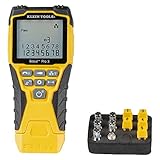
- VERSATILE CABLE TESTING: Cable tester tests voice (RJ11/12), data (RJ45), and video (coax F-connector) terminated cables, providing clear results for comprehensive testing on unenergized Ethernet cables (not designed to test PoE)
- EXTENDED CABLE LENGTH MEASUREMENT: Measure cable length up to 2000 feet (610 m), allowing for precise cable length determination
- COMPREHENSIVE FAULT DETECTION: Test for Open, Short, Miswire, or Split-Pair faults, ensuring thorough fault detection and identification
- BACKLIT LCD DISPLAY: Backlit LCD screen displays cable length, wiremap, cable ID, and test results, ensuring easy readability in various lighting conditions
- EFFICIENT CABLE TRACING: Trace cables, wire pairs, and individual conductor wires using the multiple style tone generator (requires analog probe Cat. No. VDV500-123, sold separately), simplifying cable tracing tasks
Sampling the model several times and checking whether answers agree can expose instability. Agreement is still not proof: the same misleading pattern can cause every sample to repeat the same false cause. Conversely, a correct diagnosis may be phrased differently across samples. Treat consistency as a prioritization signal, not a verdict.
Nature’s 2024 semantic-entropy work describes an uncertainty estimator for a subset of arbitrary confabulations. It can support a warning, abstention or grounded retrieval when risk is high, but it does not certify every answer that remains. Detection coverage is partial.
A 2026 Nature study makes the evaluation trade-off explicit. Accuracy-only metrics favor guessing when questions are unanswerable, while open-rubric scoring can state the cost of errors and reward abstention. In an experiment covering 4,326 questions per model, a consistency mitigation reduced incorrect responses but also reduced correct responses. A verifier may lower hallucinations while increasing refusals or missed answers; the acceptable balance depends on the cost of each kind of mistake.
An evidence-first workflow for using an LLM to debug
Use the model as a reasoning and test-design assistant. Keep system evidence and human verification in charge of the diagnosis.
Also popular on Amazon

- New Upgraded Multi-function Network Cable Tester: NF-8506 TDR network tester has IP scanning, POE test, anti-interference RJ11 RJ45 CAT5 CAT6 cable test, continuity test, Ping network rate test, port flashing, sensitivity adjustment, cable Function of length test and LED flashlight.
- 200m cable length test: The NF-8506 Network cable tester is a portable cable length tester. The cable tester can accurately measure the cable length in the range of 8.2ft/ 2.5m-656ft /200m, find the cable fault distance and facilitate real-time field measurementt
- PING Tester+IP Scanner: This handheld Ping cable toner can be used to diagnose and maintain local area networks (Lans) running TCP/IP protocols. Powerful PING capabilities can verify connections, check the integrity of transmitted and received data, indicate network traffic load by measuring round-trip times and provide IP addresses
- Network Rate Test + Cable Continuity Test: Ethernet tester can quickly assess network rate issues. Conducts PING tests from multiple locations to gauge server and website response speeds. Allows users to ensure the integrity and connectivity of network cables by identifying any breaks, openings, or short circuits along the cable length.
- POE Tester: Identifies PoE devices efficiently. Detects crossover methods (unknown/end-span/mid-span/8-core power supply) and polarity. Comprehensive PoE detection, including non-standard, IEEE 802.3AF, and IEEE 802.3AT.
- Record observations before interpretation. Copy the exact error text, relevant log lines, timestamps with time zone, request or job identifiers, software and dependency versions, operating-system and runtime details, deployment or configuration changes, and the smallest input that reproduces the failure. Mark which facts are observed and which are assumptions.
- Provide a minimal reproduction. Remove secrets and unrelated code, but preserve the failing path, inputs and environment difference. If the problem occurs only in production, capture a safe representative trace or a staging reproduction rather than asking the model to infer production state.
- Request competing hypotheses. Tell the model to separate observations from assumptions, list several plausible causes, and rank them by the evidence actually supplied. Ask it to identify what would make each hypothesis less likely. This prevents the first fluent story from becoming the incident narrative.
- Demand falsifiable tests. For every proposed cause, require a concrete check whose result could disconfirm it: compare configuration values, inspect a source diff, query schema or dependency state, add a targeted log, replay the request, or run a controlled version change. A suggestion that cannot be tested is not a root-cause finding.
- Check primary evidence. Read the application and infrastructure logs, distributed traces, source diff, package documentation, issue tracker and deployment records. Let timestamps and identifiers establish the order of events. If evidence conflicts, preserve the conflict instead of asking the model to smooth it away.
- Run a controlled rerun. Change one variable at a time in a disposable environment. Confirm that reproducing the suspected condition reproduces the failure and that removing it removes the failure. Record commands, versions and results so another engineer can repeat the test.
- State uncertainty explicitly. Ask the model to name missing information and to say “insufficient evidence” when no hypothesis is testable. Update the prompt with new observations rather than with your preferred conclusion.
- Verify before remediation. Do not apply a speculative fix to production, authentication or security controls, medical or financial systems, or safety-critical equipment without independent review, rollback planning and an observed test result.
How to prompt for useful debugging instead of a guess
A strong prompt defines the model’s role and the evidence boundary. For example:
Here are the observed facts, copied verbatim: [logs, error, timestamps, versions, recent diff, reproduction]. Do not infer facts that are not listed. Separate observations from assumptions. Give three competing hypotheses ranked by evidence. For each, propose a test that could disprove it, the expected result if it is true, and the expected result if it is false. List the information still missing and abstain if no hypothesis is testable.Follow up with the test output, not with a leading statement such as “I think the cache caused this.” Ask the model to revise its ranking and show which observation changed its view. Keep a human-readable incident record outside the chat; a model’s context can be truncated, altered or unavailable to the next responder.
Comparing common LLM debugging approaches
| Approach | Evidence grounding | Abstention behavior | Reproducibility | Main risk | Verification cost |
|---|---|---|---|---|---|
| “Why did this break?” with a short error | Low; usually only the pasted text | Often weak because the prompt requests a single explanation | Low; wording and sampling can change the answer | Confident but irrelevant root cause | Low to ask, high if the guess drives a bad fix |
| Context-rich prompt with logs and a diff | Moderate to high, limited to supplied evidence | Better when missing facts and abstention are required | Moderate; another engineer can inspect the same inputs | Hidden or misread evidence still misleads the model | Moderate |
| Hypotheses plus falsifiable tests | High after tests are run | Explicit; untestable causes remain unconfirmed | High when commands, versions and results are recorded | Incomplete test design or an uncontrolled variable | Moderate to high |
| Grounded retrieval or an automated verifier | Depends on source freshness and coverage | Can abstain on high uncertainty, but detectors are partial | Potentially high with pinned sources and test suites | Stale, missing or incorrectly ranked evidence | Higher latency and infrastructure cost |
Choose the approach according to the cost of a false positive, the latency you can tolerate and the evidence available. A low-risk local typo may justify a quick suggestion. A security incident or data-loss event requires primary evidence and controlled verification regardless of how persuasive the generated explanation sounds.
What’s actually slowing this PC down?
Pick the symptom - the matching free tool is one click away.
Failure modes that fool both people and models
Anchoring on the first plausible cause
Once a model names a familiar culprit, responders tend to search for confirming evidence. Counter this by requiring at least two alternatives and a disconfirming test for each before changing code.
Also popular on Amazon

- DIGITAL MODE: Easily trace and locate cables on an active network to identify their paths and destinations effectively
- ANALOG MODE: Isolate individual wire pairs, facilitating the tracing of voice, data, video, and audio cables
- CONTINUITY AND POLARITY TESTING: Results for continuity and polarity tests are displayed on LEDs that are clearly labeled and easy to read
- TRACE UNSTRIPPED WIRES: Rugged Angled Bed of Nails (ABN) clips securely attach to wires
- WIRE MAPPING CAPABILITIES: Utilize wire mapping capabilities to verify Pin-to-Pin connections and shield detection
Confusing correlation with causation
A log line immediately before an error is a lead, not proof. Delayed queues, retries and clock differences can reorder what you see. Correlate request IDs and monotonic event times where available, then reproduce the sequence.
Over-trusting a precise version or setting
Models may invent a release number, flag name or API behavior that sounds authentic. Check every such detail against the package’s official documentation, installed metadata and source. If the detail cannot be verified, label it unconfirmed.
Applying a fix that hides the symptom
Increasing a timeout, suppressing an exception or retrying indefinitely can make dashboards look better while worsening data loss or load. Define the invariant you must preserve, test the change under the failing condition and keep a rollback path.
Crashes, No Sound, or Screen Glitches?
Random freezes, missing sound and display glitches usually trace back to one bad driver. Find and replace yours safely.Free scan · under a minuteWindows Errors? Fix Them Before They Spread
Repair common Windows errors and clear accumulated junk for a smoother, more stable PC - no reinstall needed.Free scan · no reinstallLeaking sensitive evidence
Logs can contain credentials, personal data, tokens and internal topology. Redact secrets and minimize identifiers before sending material to any external service. Preserve enough structure to reproduce the behavior, and follow your organization’s retention and access rules.
Also popular on Amazon

- VERSATILE CABLE TESTING: Cable tester for data (RJ45) terminated cables and patch cords, ensuring comprehensive testing capabilities
- LARGE BACKLIT LCD: Backlit LCD display enables easy reading of pin-to-pin wiremap results, even in low-lit areas
- COMPREHENSIVE FAULT DETECTION: Test for Open, Short, Miswire, Split-Pair faults, Cross-over, and Shield, providing thorough fault detection
- INTUITIVE USER INTERFACE: User-friendly interface with three buttons and simple, easy-to-identify test responses, ensuring a smooth testing experience
- MULTIPLE TONE GENERATOR STYLES: Tone on a single wire, wire pair, or all 8 conductor wires using the multiple style tone generator (solid/warble); requires probe Cat. No. VDV500-123 (sold separately)
When an LLM is the right tool—and when it is not
An LLM is useful for translating an unfamiliar stack trace, suggesting instrumentation, generating a minimal test, summarizing a source diff, or enumerating edge cases. Those tasks produce candidate actions that a person can inspect.
It is not an authority for a missing log, an unseen runtime state or a causal claim that has not survived a controlled test. If the available evidence cannot distinguish hypotheses, the correct technical answer is that the cause is currently unknown. OpenAI’s Model Spec states that indicating uncertainty or asking for clarification is preferable to providing confident information that may be incorrect.
A practical decision checklist
- Do I have the exact error, timestamp, version and recent-change data?
- Can another person reproduce the failure from the supplied steps?
- Did the model distinguish observations from assumptions?
- Are there competing hypotheses rather than one narrative?
- Does every proposed cause have a test that could disprove it?
- Have logs, traces, source and documentation confirmed the relevant facts?
- Was one variable changed at a time in a safe environment?
- Is the remediation reviewed, reversible and appropriate for the system’s risk?
The Bottom Line
Ask an LLM to organize evidence and design tests, not to manufacture certainty. The real root cause is the explanation that survives logs, reproduction, source inspection and controlled verification.
Do these 3 things before closing this tab:
1Fix the driver behind crashes, sound loss and screen glitches2Clear out junk files and repair common Windows errors3Scan for outdated or missing drivers - takes under a minuteQuick Recap
Product prices and availability are accurate as of the date/time indicated and are subject to change. Any price and availability information displayed on Amazon at the time of purchase will apply.

