
Free tools Windows power users keep installed
One-click scans. No signup required.
iTechGuides is reader-supported. When you buy through links on our site, we may earn an affiliate commission. As an Amazon Associate I earn from qualifying purchases. Learn more
Cambricon MLU supports PyTorch, TensorFlow, Caffe and MXNet, but they are not equally current. PyTorch through Cambricon’s torch_mlu backend is the strongest documented route for new training, inference and distributed workloads. Cambricon’s current platform material covers community PyTorch 2.1 through 2.8 and features such as DDP, FSDP/FSDP2, HSDP, tensor, context and pipeline parallelism, SDPA, Inductor, MLU Graph and AOTInductor. TensorFlow has official manuals and training material, while Caffe and MXNet appear mainly as documented compatibility paths in MLU270 and MLU220 materials. Your practical choice should therefore be based on the exact NeuWare release, MLU generation, operators, workload mode and migration cost—not on the fact that a framework is named as supported.
Which software frameworks run on Cambricon MLU?
Four frameworks are explicitly identified in Cambricon documentation: PyTorch, TensorFlow, Caffe and MXNet. The evidence is strongest and most current for PyTorch because Cambricon maintains the torch_mlu integration and documents a broad set of recent PyTorch capabilities. TensorFlow is an officially adapted option, but the current sources provide less version and feature detail. Caffe and MXNet are named in MLU270 and MLU220 documentation without a comparable modern release matrix.
| Framework | Evidence of MLU support | Depth indicated by current sources | Best fit | Main caution |
|---|---|---|---|---|
PyTorch with torch_mlu |
Cambricon’s official extension connects community PyTorch to MLU; current platform material covers PyTorch 2.1–2.8. | Deepest and most current, including distributed and compiler features. | New training, inference, distributed jobs and migration from CUDA-oriented PyTorch projects. | Use Cambricon-provided wheels or containers with matching CNToolkit, CNNL and CNCL dependencies. |
| TensorFlow | Cambricon’s software curriculum, portal manuals and NeuWare material identify TensorFlow. | Documented, but version and feature parity are less explicit than PyTorch. | Existing TensorFlow estates and teams using Cambricon’s adapted integration. | Confirm operators, compiler path and training/inference scope for the target NeuWare release. |
| Caffe | Named in the NeuWare MLU270-S Series User Manual and MLU220 FAQ. | Legacy or compatibility-oriented documentation. | Maintaining older Caffe models or validated vendor deployments. | No current release matrix or modern distributed/compiler feature evidence is established. |
| MXNet | Named in the NeuWare MLU270-S Series User Manual and MLU220 FAQ. | Legacy or compatibility-oriented documentation. | Existing MXNet applications with a validated Cambricon toolchain. | Availability is version-sensitive; verify it for the card and NeuWare release you will deploy. |
What does “support” mean on an MLU platform?
Framework support can mean several different things. A vendor may provide an adapted runtime, a set of device operators, an offline compiler, an inference-only path or a complete training stack. Treating all of those as equivalent leads to failed migrations.
- Runtime integration: the framework can place tensors and execute operators on the MLU.
- Model coverage: the operators used by your model are implemented, tested and numerically acceptable.
- Workload coverage: the path supports online training, online inference, offline model generation, quantization or only some of these modes.
- Distributed support: collective communication and parallel strategies work across devices and hosts.
- Compiler and graph support: graph capture, optimization, kernel generation and deployment tooling are available.
- Tooling: profilers, debuggers, migration utilities and operator-development interfaces are usable for the release you selected.
Cambricon’s torch_mlu package is a backend extension, not a separate Python framework. Its repository describes connections between community PyTorch and MLU and lists CNToolkit, CNNL, CNCL, CNCV, DALI, CNNL_Extra and BANGC OPS as dependencies. The adapted PyTorch path is documented as retaining native PyTorch Python APIs and model compatibility while adding online training and inference, offline model generation, quantization and operator addition.
#1 Best Overall

- NVIDIA Volta GV100 Architecture — 4,608 CUDA Cores, 640 1st-Gen Tensor Cores delivering 14 TFLOPS FP32 and 112 TFLOPS deep learning performance for AI training, inference, HPC, and scientific computing workloads
- 32GB HBM2 ECC Memory — 900 GB/s Bandwidth — High-bandwidth memory on a 4096-bit bus with ECC error correction provides the memory capacity and throughput required for the largest AI models, simulations, and datasets
- PCIe 3.0 x16 Interface — 250W TDP — Standard PCIe Gen3 connectivity with passive cooling designed for enterprise rack server deployment in HPE ProLiant, Dell PowerEdge, and Supermicro platforms with adequate chassis airflow
- NVLink — Scale to 96GB Unified Memory — Connect two V100 GPUs via NVLink at 300 GB/s bi-directional bandwidth to scale GPU memory from 32GB to 96GB for larger AI training and HPC workloads
- Multi-Precision Computing — Supports FP64 (7 TFLOPS), FP32 (14 TFLOPS), FP16 (112 TFLOPS) and INT8 precision modes for flexible deployment across training, inference, and scientific simulation workloads
Why is PyTorch with torch_mlu the leading current path?
Cambricon’s current platform overview lists community PyTorch versions 2.1 through 2.8. It also names a feature set that is materially broader than the framework descriptions available for the other options.
| Capability | What Cambricon’s current PyTorch material indicates |
|---|---|
| Distributed data parallelism | DDP is listed for multi-device training. |
| Sharded training | FSDP, FSDP2 and HSDP are listed. |
| Parallel model execution | Tensor, context and pipeline parallelism are listed. |
| Attention and graph optimization | SDPA and MLU Graph are listed. |
| Compilation | Inductor and AOTInductor are listed. |
| Extension paths | cppwrapper and related operator-development routes are listed. |
This does not mean every model works unchanged. A listed feature still depends on the exact PyTorch build, MLU generation, NeuWare release, operator set and configuration. It does mean that PyTorch has the clearest documented path for contemporary training and inference projects.
How do I use PyTorch on MLU?
Start with a matched Cambricon software environment rather than installing an arbitrary upstream PyTorch wheel. The normal migration pattern keeps most PyTorch code intact while changing device selection, distributed initialization and any unsupported operators.
The Tool Desk
Outbyte Driver Updater FREEScan for outdated or missing drivers - takes under a minuteDriver Scan →Outbyte PC Repair FREEClear out junk files and repair common Windows errorsFree Scan →- Choose the compatibility target. Record the MLU card generation, NeuWare release, CNToolkit version and the PyTorch version within the documented 2.1–2.8 range.
- Install the vendor-matched environment. Use the Cambricon-provided wheel or container and its compatible CNNL, CNCL and other listed dependencies. Mixing versions can produce import errors, missing symbols or runtime failures before the model starts.
- Move tensors and modules to MLU. Replace the CUDA device path with the
mludevice path used bytorch_mlu. Keep device selection centralized so data loaders, checkpoints and evaluation code use the same setting. - Run a small operator and shape test. Exercise the model’s forward pass, loss, backward pass and representative batch sizes before attempting a long training run.
- Check unsupported operations. Inspect warnings and failures for operators that lack an MLU implementation or require a different layout, data type or fallback strategy.
- Enable distributed features only after single-device success. Validate CNCL communication, rank initialization and checkpoint behavior before trying DDP, FSDP or parallel execution.
- Choose online or offline deployment. For services that compile or optimize ahead of time, validate offline model generation and quantization separately from eager execution.
The exact import and launch commands vary by the Cambricon release and container. The important distinction is that torch_mlu supplies the backend and device integration; it does not remove the need to match the complete NeuWare software stack.
How does TensorFlow support compare with PyTorch?
TensorFlow is an official Cambricon option, supported by dedicated manuals, courses and a place in NeuWare’s list of mainstream frameworks. It is a sensible choice when an organization already has TensorFlow models, training code and operational tooling that would be expensive to rewrite.
Rank #2

- Delivers 25 TFLOPS of AI inference performance using four MemryX MX3 accelerators in a compact M.2 2280 M-key module.
- Connects through PCI Express Gen 3 and above for straightforward integration into embedded and edge systems with an M.2 M-key slot.
- Includes 42 MB of distributed on-chip weight storage to support low-latency, batch-1 pipelined inference.
- Designed for low-power deployment with a 1 W–12 W operating range and host-managed airflow requirements.
- Supports ONNX, TensorFlow, Keras, and TFLite models through the MemryX software stack on Linux and Windows hosts.
The limitation is visibility into current parity. The available TensorFlow material does not expose a version matrix comparable to PyTorch 2.1–2.8, nor does it enumerate an equivalent set of current distributed and compiler features. Before committing, verify the exact TensorFlow version, supported operators, graph and compiler route, precision modes, training behavior and inference packaging in the target NeuWare documentation.
When TensorFlow is the practical choice
- Your production estate already depends on TensorFlow checkpoints, input pipelines and serving code.
- The model uses operators that are validated in the Cambricon TensorFlow integration.
- Your team has TensorFlow-specific debugging and deployment expertise and the migration cost to PyTorch would outweigh the ecosystem advantages.
When to reassess the choice
If you need the newest distributed strategies, current compiler paths or integrations built around the broader Cambricon open-source ecosystem, compare the workload against the documented PyTorch route before porting. A TensorFlow label alone does not establish feature parity.
Do these 3 things before closing this tab:
1Repair Windows errors before they cause bigger problems2Scan for outdated or missing drivers - takes under a minute3Clear out junk files and repair common Windows errorsCan Caffe and MXNet run on an MLU card?
Yes, Cambricon documentation names both Caffe and MXNet as supported. The NeuWare MLU270-S Series User Manual says NeuWare can support mainstream frameworks including TensorFlow, Caffe, PyTorch and MXNet, and an MLU220 FAQ also lists Caffe and MXNet.
Those statements establish a compatibility path, not a current parity guarantee. The searched documentation does not provide a release-by-release matrix, modern distributed feature list or compiler roadmap for either framework. Treat them as version-sensitive options that require validation on the specific card, NeuWare release and model.
Caffe: a maintenance-oriented fit
Caffe can make sense when the model, preprocessing pipeline and deployment process are already stable and vendor-validated. Rewriting a mature Caffe estate solely to use a newer framework may introduce conversion and numerical-risk work that delivers no business benefit. For a new project, however, the lack of current feature evidence makes PyTorch the safer starting point.
Rank #3
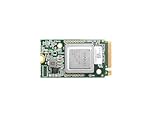
- ✅Powered by 26 Tera-Operations Per Second (TOPS) Hailo-8 AI Processor. 2.5W typical power consumption
- ✅Scalable, enabling simultaneous processing of multi-streams & multi-models
- ✅Enabling real-time, low latency and high-efficiency AI inferencing on the edge devices
- ✅Supports TensorFlow, TensorFlow Lite, ONNX, Keras, Pytorch frameworks
- ✅Supports Linux and Windows. Supports the temperature range of -40°C to 85°C
MXNet: validate the complete toolchain
MXNet users should verify that the required framework build, operators, model format and MLU generation are available together. Do not infer availability on one MLU family from a document covering another family; use the release-specific compatibility information supplied with your target environment.
Which Cambricon ecosystem projects use the PyTorch route?
Several current integrations reinforce the practical importance of torch_mlu.
- VeOmni: its documentation describes running on MLU through
torch_mlu,torch.mluand CNCL, with optional Apex or Triton kernel paths. - LMDeploy: its Cambricon inference path uses a PyTorch engine and the
device_type='camb'setting for large-language-model and vision-language-model pipelines. - MMCV: its build instructions describe MLU operators with
torch_mlu,mlu-opsandFORCE_MLU=1.
These examples are ecosystem evidence rather than a universal guarantee. Each project still has its own supported versions, operators and hardware assumptions. Their common PyTorch route does show where current integration effort is concentrated; equivalent current integrations for Caffe and MXNet were not identified in the available material.
Which framework is best for training, inference or an existing codebase?
| Your situation | Most defensible starting point | Reasoning |
|---|---|---|
| New deep-learning training project | PyTorch with torch_mlu |
Current version coverage and documented DDP, FSDP, HSDP, parallelism and compiler features. |
| New MLU inference service using current ecosystem projects | PyTorch with torch_mlu |
LMDeploy and other integrations use the PyTorch path. |
| Existing TensorFlow production estate | TensorFlow integration, after release validation | Preserves existing models and tooling when required operators and deployment modes are confirmed. |
| Existing Caffe deployment | Caffe, if the exact model and toolchain are validated | Reduces rewrite risk for a legacy or vendor-validated application. |
| Existing MXNet application | MXNet, if the exact release and card are supported | Preserves the current estate while avoiding an unsupported assumption about modern parity. |
There is no independent, apples-to-apples benchmark in the available evidence that ranks these frameworks by universal MLU performance. Framework choice should therefore prioritize compatibility, operator coverage and engineering risk over an invented speed hierarchy.
What should I verify before selecting a framework?
Use this checklist with the model and hardware team. A “yes” for the framework name is not enough if any of the implementation details fail.
Rank #4
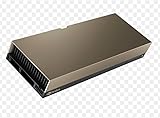
- 48GB AI graphics accelerator
- Release coverage: Is the exact framework version supported by the exact NeuWare release and MLU generation?
- Operator coverage: Are every model operator, custom layer and preprocessing step implemented on MLU?
- Fallback behavior: If an operator falls back to the CPU, is that allowed for your latency and throughput targets?
- Workload mode: Do you need training, online inference, offline compilation, quantization or several of these?
- Precision: Are the data types used by the model supported with acceptable numerical behavior?
- Distributed communication: Do DDP, FSDP, tensor or pipeline parallelism and CNCL work for your topology?
- Compiler path: Is MLU Graph, Inductor, AOTInductor or another required compiler feature available in your release?
- Tooling: Can your team profile, debug, inspect memory and add an operator when the model needs it?
- Deployment format: Will the result run in the intended container, service or offline model package?
- Support access: Can your organization obtain the required SDK, wheels, containers and documentation?
What are the common failure modes during migration?
Installing an unmatched package set
A framework wheel that imports successfully on one machine may still be incompatible with another CNToolkit, CNNL or CNCL version. Recreate the vendor-matched container or wheel set first, then diagnose model errors inside that controlled environment.
Assuming API compatibility means operator compatibility
Native PyTorch APIs and models are a major migration advantage, but an individual model can still hit an unsupported operator, layout or data type. Reduce the model to a minimal failing operation, check the release’s operator support and use a documented alternative or custom operator path where available.
Starting with distributed training
Distributed failures can hide basic single-device issues. Establish a correct forward and backward pass on one MLU, then add communication, ranks, checkpointing and sharding one layer at a time.
Confusing offline compilation with eager execution
An operator that works in an online path may require separate validation for offline model generation or quantization. Test the final deployment artifact, not only the development run.
Recommended Free Tools
Choosing a legacy framework without a release check
Caffe and MXNet are named in vendor documents, but those references do not specify the current feature cadence. Ask for confirmation tied to the target card, NeuWare release and model before treating either framework as production-ready.
Best Value

- Professional AI & Creator Workstation: AMD Radeon AI PRO R9700 GPU with 32GB GDDR6 is engineered for AI development, professional content creation, and compute-intensive workloads.
- Massive 32GB Memory Capacity: 32GB of GDDR6 memory on a 256-bit bus provides ample bandwidth for large AI models, 8K video editing, and complex 3D rendering.
- Advanced RDNA 4 with AI Accelerators: 64 Compute Units with 3rd Gen Ray Tracing and dedicated 2nd Gen AI Accelerators for groundbreaking AI performance and visual computing.
- Professional Blower Cooling: Efficient single blower design exhausts heat directly out of the chassis, ideal for multi-GPU workstation and server configurations.
- Enterprise-Grade Thermal Solution: Vapor chamber heatsink with industrial Honeywell PTM7950 thermal interface material ensures reliable cooling under sustained professional loads.
How do SDK availability and enterprise access affect planning?
Cambricon’s developer portal states that SDK downloads are currently restricted to enterprise users. That access condition can affect project scheduling: obtain the required NeuWare packages, framework builds, manuals and support channels before promising a migration date. If the project depends on a particular PyTorch release or an older Caffe/MXNet deployment, confirm that the corresponding artifacts are actually available to your organization.
What is the bottom-line framework decision?
Choose PyTorch with torch_mlu for a new MLU project unless a validated requirement points elsewhere. It has the clearest current version coverage, the broadest documented training, inference, distributed and compiler feature set, and the strongest surrounding ecosystem evidence. Choose TensorFlow when preserving an existing TensorFlow estate is more valuable than moving frameworks, but validate release-specific parity. Keep Caffe or MXNet for existing, tested deployments rather than assuming their older documentation represents the same current capabilities as PyTorch.
Frequently Asked Questions
Is torch_mlu an official PyTorch backend or a separate framework?
It is Cambricon’s backend extension that connects community PyTorch to MLU. Your application still uses PyTorch concepts and Python APIs, while the extension and associated libraries provide device execution and Cambricon-specific integration.
Can I install any upstream PyTorch wheel and add MLU support later?
The documented path relies on Cambricon-provided wheels or containers and matched CNToolkit, CNNL and CNCL dependencies. Plan the environment as a complete NeuWare stack instead of treating MLU support as an independent plug-in.
Does framework support guarantee that my model will run unchanged?
No. Support depends on the model’s operators, data types, graph behavior, card generation and NeuWare release. A small representative forward and backward test is needed before a production migration.
Where should an enterprise obtain Cambricon framework packages and documentation?
Cambricon’s developer portal says SDK downloads are currently restricted to enterprise users. Confirm access and artifact availability with the organization’s Cambricon channel before building the project schedule around a particular release.
Quick Recap
Product prices and availability are accurate as of the date/time indicated and are subject to change. Any price and availability information displayed on Amazon at the time of purchase will apply.

