
iTechGuides is reader-supported. When you buy through links on our site, we may earn an affiliate commission. As an Amazon Associate I earn from qualifying purchases. Learn more
Choose by the communication pattern you need, not by a throughput guess: use SQS to buffer work for workers, SNS to fan out a publication, EventBridge to route business events, Kinesis Data Streams for a high-volume stream, MSK when Kafka compatibility matters, and RabbitMQ when AMQP or broker-level routing control is central. These services overlap, but they are not interchangeable: a queue, event bus, stream, Kafka log, and AMQP broker make different trade-offs in consumption, replay, ordering, and operational ownership.
The practical decision is often which service should own each part of a flow. You can combine them—for example, route events to SQS when a worker needs buffering, or send events to Kinesis or MSK for analytics—rather than forcing every requirement into one system.
What is the difference between SNS, SQS, Kinesis, MSK, EventBridge, and RabbitMQ?
The key distinction is how a message is distributed and consumed. SNS pushes publications to subscribers; SQS holds work for consumers to poll; EventBridge routes events by rules; Kinesis and Kafka/MSK organize data as streams or logs; RabbitMQ brokers messages through exchanges, queues, and bindings.
The Tool Desk
Outbyte Driver Updater FREEFix the driver behind crashes, sound loss and screen glitchesFind Drivers →Outbyte PC Repair FREEClear out junk files and repair common Windows errorsFree Scan →| Option | Core model | Best fit | Main trade-off |
|---|---|---|---|
| Amazon SNS | Push pub/sub fan-out | One publication needs to reach multiple independently filtered subscribers. | It is a notification and delivery pattern, not a substitute for a queue or replayable stream. |
| Amazon SQS | Pull-based queue | Buffering work, asynchronous jobs, retries, and decoupling producers from worker capacity. | Consumers poll; queue processing is not the same as rereading an event log. |
| Kinesis Data Streams | Partitioned real-time stream | High-velocity ingestion, telemetry, analytics, multiple readers, or rereading stream data. | Requires stream and partition capacity planning, plus stream-oriented consumers. |
| Amazon MSK | Managed Apache Kafka log | Kafka APIs, ecosystem tools, migration continuity, partitioned logs, and consumer-managed replay. | Kafka concepts and tuning require more operational attention than a serverless queue or event bus. |
| Amazon EventBridge | Managed event bus with rules and targets | Routing business or integration events by content to AWS, SaaS, or custom targets. | Its routing model is not that of a durable work queue or replayable log; ordering is not its primary model. |
| RabbitMQ | AMQP broker with exchanges, queues, bindings, and acknowledgements | Existing AMQP applications, portability, and control over broker-level routing. | Broker and topology ownership is greater than with fully serverless AWS services. |
A useful AWS classification groups SNS and EventBridge as event services, SQS and Amazon MQ as messaging services, and Kinesis Data Streams and MSK as streaming services. AWS also identifies Amazon MQ as a possible fit for RabbitMQ-compatible migration scenarios. The categories help orient a design, but the producer and consumer behavior you need should decide the service.
#1 Best Overall

- GIGABIT ETHERNET PORTS: Features 5 x 1.0Gbps Ethernet ports for high-speed connectivity. Auto-negotiating ports detect the optimal speed for connected devices and work with existing Cat5e or Cat6 Ethernet cables.
- PLUG-AND-PLAY UNMANAGED NETWORK SWITCH: Simple plug-and-play setup with no software to install or configuration required.
- FLEXIBLE MOUNTING OPTIONS: Compact metal design supports desktop or wall-mount placement for versatile installation.
- SILENT & ENERGY-EFFICIENT OPERATION: Fanless design ensures silent performance, while IEEE 802.3az Energy Efficient Ethernet reduces power consumption without compromising high-speed network performance.
- REGIONAL COMPATIBILITY: Made for use in U.S. & CA only
How do I choose the right service for my workload?
Start by describing what a consumer is meant to do with each publication: process a unit of work, receive a notification, react to a business event, or read an ongoing data stream. Then test the choice against replay, ordering, filtering, and operational requirements.
Choose SNS for one-to-many notification
Use SNS when one publication should be pushed to several subscribers, especially when subscribers need independent filtering. It is a natural fit for broadcast-style notifications and fan-out. If downstream processing needs to wait in a buffer, or consumers need stream-style rereading, SNS alone is not the same pattern as a queue or a stream.
Choose SQS for independently processed work
Use SQS when producers should be able to submit work without waiting for workers to process it. Workers poll the queue, which gives the system a buffer between incoming work and processing capacity. Select FIFO when strict ordering is required; do not assume ordinary queue semantics provide the same behavior as an ordered event log.
Quick wins for a faster PC:
Repair Windows errors before they cause bigger problemsFix Now →Fix the driver behind crashes, sound loss and screen glitchesFind Drivers →Choose Kinesis Data Streams for continuous data
Use Kinesis Data Streams when the data is an ongoing, partitioned stream—such as high-velocity telemetry or analytics input—and multiple readers or rereading are part of the design. This choice brings stream- and partition-capacity planning with it. It is a different operating model from placing discrete work items in a queue.
Choose MSK when Kafka compatibility is a requirement
Use MSK when applications depend on Kafka APIs, Kafka ecosystem tooling, or migration continuity, or when consumer-managed replay of a partitioned log is important. The benefit is compatibility with that ecosystem; the cost is taking on more Kafka concepts and tuning than a serverless queue or event bus normally requires.
Rank #2

- 𝗢𝗻𝗲 𝗦𝘄𝗶𝘁𝗰𝗵 𝗠𝗮𝗱𝗲 𝘁𝗼 𝗘𝘅𝗽𝗮𝗻𝗱 𝗡𝗲𝘁𝘄𝗼𝗿𝗸: 5× 10/100/1000Mbps RJ45 Ports supporting Auto Negotiation and Auto MDI/MDIX.
- 𝗚𝗶𝗴𝗮𝗯𝗶𝘁 𝘁𝗵𝗮𝘁 𝗦𝗮𝘃𝗲𝘀 𝗘𝗻𝗲𝗿𝗴𝘆: Latest innovative energy-efficient technology greatly expands your network capacity with much less power consumption and helps save money.
- 𝗥𝗲𝗹𝗶𝗮𝗯𝗹𝗲 𝗮𝗻𝗱 𝗤𝘂𝗶𝗲𝘁: IEEE 802.3X flow control provides reliable data transfer and Fanless design ensures quiet operation.
- 𝗣𝗹𝘂𝗴 𝗮𝗻𝗱 𝗣𝗹𝗮𝘆: Easy setup with no software installation or configuration needed.
- 𝗔𝗱𝘃𝗮𝗻𝗰𝗲𝗱 𝗦𝗼𝗳𝘁𝘄𝗮𝗿𝗲 𝗙𝗲𝗮𝘁𝘂𝗿𝗲𝘀: Prioritize your traffic and guarantee high quality of video or voice data transmission with Port-based 802.1p/DSCP QoS and IGMP Snooping.
Choose EventBridge for event routing
Use EventBridge when the main job is to route business or integration events based on their content to multiple AWS, SaaS, or custom targets. Its rules and targets are designed around routing, including cross-account event flows. If the core need is queue buffering or replay from a log, choose a service built around that pattern instead.
Choose RabbitMQ for AMQP and broker control
Use RabbitMQ when existing applications speak AMQP, portability across environments matters, or the design depends on broker-level exchanges, queues, bindings, and acknowledgements. That control can be valuable, but it also means more responsibility for broker and topology behavior than with fully serverless AWS services.
What’s actually slowing this PC down?
Pick the symptom - the matching free tool is one click away.
How should I compare persistence, ordering, retries, and replay?
These concerns sound similar but answer different questions. Persistence asks whether a message is held for later delivery; ordering asks whether consumers must observe a sequence; retry behavior asks what happens when processing fails; replay asks whether a consumer can read prior events again. Decide each requirement separately rather than treating “reliable messaging” as one feature.
- Buffering and work recovery: SQS is the queue-oriented choice when work needs to wait for a worker and be processed asynchronously. Queue semantics are not equivalent to retaining and rereading a stream.
- Fan-out persistence: SNS is designed for pushed pub/sub delivery. If subscribers need an independent work buffer, combine the fan-out with queue-based buffering instead of assuming pub/sub alone supplies queue behavior.
- Ordering: Strict ordering is a stated reason to choose SQS FIFO. Kinesis and Kafka/MSK are partitioned stream or log patterns; their ordering and consumer behavior should be designed around those structures rather than assumed to be universal across all events.
- Replay: Kinesis supports rereading stream data, while MSK fits consumer-managed replay in a Kafka log. EventBridge is not primarily a replayable-log model, and SQS should not be selected merely because an event might need historical rereading.
- Failure handling: Retry and dead-letter behavior is a required design axis, but exact mechanics depend on the selected service and configuration. Verify current service documentation and limits for the deployment rather than assuming a common policy applies across all six.
For a system with both ordered processing and historical reprocessing, write down the scope: whether ordering is needed for all data or only within a partition or work group, how far back a consumer must reread, and what happens when one item repeatedly fails. Those answers can change the service choice even when the incoming event rate stays the same.
When should I combine services instead of choosing one?
Use more than one service when distinct parts of the flow need different semantics. AWS documents patterns that route EventBridge or SNS events to SQS for buffering, and route events to Kinesis or MSK for analytics.
Rank #3
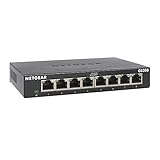
- GIGABIT ETHERNET PORTS: Features 8 x 1.0Gbps Ethernet ports for high-speed connectivity. Auto-negotiating ports detect the optimal speed for connected devices and work with existing Cat5e or Cat6 Ethernet cables.
- PLUG-AND-PLAY UNMANAGED NETWORK SWITCH: Simple plug-and-play setup with no software to install or configuration required.
- FLEXIBLE MOUNTING OPTIONS: Compact metal design supports desktop or wall-mount placement for versatile installation.
- SILENT & ENERGY-EFFICIENT OPERATION: Fanless design ensures silent performance, while IEEE 802.3az Energy Efficient Ethernet reduces power consumption without compromising high-speed network performance.
- REGIONAL COMPATIBILITY: Made for use in U.S. & CA only
Fan out, then buffer each worker path
For a publication that several independent consumers need, SNS can provide the fan-out while SQS queues give worker paths a buffer. This separates the producer’s publish action from the pace at which each worker can process its assigned work. It is useful when one slow consumer should not define the processing cadence of every other consumer.
Route business events, then process asynchronously
EventBridge can make the routing decision using event rules and send a selected event to SQS when the target needs queued work. This combines content-based event routing with a pull-based worker model; it does not turn the event bus into a queue.
Route events to an analytics stream
When events also need stream-oriented analytics or multiple readers, route them to Kinesis Data Streams or MSK. The bus or publisher can serve integration routing while the stream or log serves analytics consumers. This division keeps the routing and data-consumption responsibilities explicit.
Every added service creates another boundary to configure, observe, secure, and troubleshoot. Add a component only when it provides a requirement—such as fan-out, buffering, routing, or replay—that the other component does not cover well.
What operational trade-offs should architects evaluate?
Managed does not mean decision-free, and compatibility does not mean cost-free. Compare the ownership model and operational fit alongside message semantics before committing to a design.
Rank #4
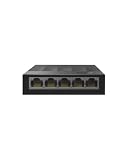
- 【One Switch Made to Expand Network】Features 5 RJ45 ports with 10/100/1000Mbps speeds, supporting Auto-Negotiation and Auto MDI/MDIX for hassle-free setup. Ideal for expanding your network, with 1 uplink (input) port and 4 output ports to split your Ethernet connection to multiple devices.
- 【Gigabit that Saves Energy】Latest innovative energy-efficient technology greatly expands your network capacity with much less power consumption and helps save money
- 【Reliable and Quiet】IEEE 802.3X flow control provides reliable data transfer and Fanless design ensures quiet operation
- 【Plug and Play】Easy setup with no software installation or configuration needed
- 【Ethernet Splitter】Connect to your router or modem for additional wired connections (laptop, gaming console, printer, etc)
Scaling and backpressure
Queues buffer work and let workers poll, so the consumer side can process asynchronously from the producer. Streams require capacity and partition planning, and consumers must be built for stream-oriented reading. Event routing can simplify target selection, but it does not replace planning for what happens when a destination cannot keep up. Define expected producer and consumer behavior during surges, including where backlog accumulates and who is responsible for draining it.
Compatibility and portability
MSK is the Kafka-oriented option when Kafka APIs and tooling are material requirements. RabbitMQ is relevant when AMQP compatibility or portability across environments is more important than serverless simplicity. AWS notes that standards-based services can improve portability, and that Amazon MQ can support RabbitMQ-compatible migration scenarios. Compatibility should be checked against the application’s actual protocol and broker features rather than treated as a blanket guarantee.
Operations, observability, and security
For any candidate, determine how teams will see delivery failures, consumer lag or backlog, routing outcomes, and processing errors. Establish ownership for alerting and recovery before launch. Also validate the security and compliance controls required by the workload, including access boundaries between producers, consumers, accounts, and targets. The services have different architectural models, so a single monitoring or security assumption should not be carried across them without verification.
Cost, quotas, and regional fit
There is no single price or capacity figure that applies across all six choices. Cost and service limits depend on the deployment, traffic shape, region, configuration, and current pricing model. Check region-specific prices, quotas, retention settings, compliance needs, and service limits for the exact design before procurement; do not choose from a generic benchmark that does not match your workload.
What decision process can I use before implementation?
Use this sequence to turn a broad “messaging service” requirement into a concrete architecture choice.
Best Value

- 𝗘𝗶𝗴𝗵𝘁 𝟮.𝟱 𝗚𝗯𝗽𝘀 𝗣𝗼𝗿𝘁𝘀 𝗳𝗼𝗿 𝗦𝘂𝗽𝗲𝗿-𝗙𝗮𝘀𝘁 𝗖𝗼𝗻𝗻𝗲𝗰𝘁𝗶𝗼𝗻𝘀: 8× 2.5-Gigabit ports unlock the highest performance of your Multi-Gig bandwidth and devices, and provide up to 40 Gbps of switching capacity.
- 𝗔𝘂𝘁𝗼-𝗡𝗲𝗴𝗼𝘁𝗶𝗮𝘁𝗶𝗼𝗻: Auto-negotiation intelligently senses the link speeds and adjusts between 3-speeds (100Mb/1G/2.5G) for compatibility and optimal performance for all your devices, including 2.5G WiFi 6 AP, 2.5G NAS, 2.5G PCIe Adapter, 2.5G Server, gaming computer, 4K video, and more.
- 𝗜𝗱𝗲𝗮𝗹 𝗳𝗼𝗿 𝗩𝗮𝗿𝗶𝗼𝘂𝘀 𝗦𝗰𝗲𝗻𝗮𝗿𝗶𝗼𝘀: Built for LAN parties, home entertainment, small and home offices, and instant transfer for workstations.
- 𝗛𝗮𝘀𝘀𝗹𝗲-𝗙𝗿𝗲𝗲 𝗖𝗮𝗯𝗹𝗶𝗻𝗴: Instantly upgrade to 2.5 Gbps without the need to upgrade to Cat6 wiring, reducing wiring costs and hassle. *
- 𝗦𝗶𝗹𝗲𝗻𝘁 𝗢𝗽𝗲𝗿𝗮𝘁𝗶𝗼𝗻: Industry-leading fanless design ensures silent operation, ideal for any home or business.
- Name the interaction: classify each flow as worker queue, pub/sub fan-out, business-event routing, real-time stream, Kafka log, or AMQP broker.
- Specify consumption: decide whether consumers poll work, receive pushed publications, match routed events, or read a continuing stream or log.
- Define history and sequence: state whether strict ordering matters, whether it is scoped to a partition or queue, and whether consumers must reread prior data.
- Plan failure behavior: document retries, dead-letter handling, and what an operator does when a consumer or target remains unavailable. Confirm the selected service’s current controls and limits.
- Test scaling and ownership: identify where backlog or stream capacity is managed, who tunes consumers, and which broker or topology responsibilities the team will own.
- Check integration constraints: confirm whether Kafka APIs, AMQP, AWS/SaaS targets, cross-account routing, or portability requirements are hard constraints.
- Validate the deployment: verify regional availability, pricing, quotas, retention, compliance, permissions, and observability for the actual account and configuration.
If the design passes only by assuming that ordering, replay, or retries work identically in every service, it is not ready for implementation. Make those behaviors explicit in the service configuration and consumer contract.
Can I use one service for the whole architecture?
Sometimes, but only if one communication model satisfies every important producer and consumer need. A queue is not automatically a pub/sub system, a routing bus is not automatically a durable log, and protocol compatibility can matter more than avoiding an additional component.
Use a single service when the application has one clear pattern and the service’s operational model fits the team. Use a combination when the architecture genuinely requires different roles—for example, fan-out plus worker buffering or event routing plus analytics. Keep the boundary purposeful so the added moving parts solve a specific requirement.
Windows Errors? Fix Them Before They Spread
Repair common Windows errors and clear accumulated junk for a smoother, more stable PC - no reinstall needed.Free scan · no reinstallCrashes, No Sound, or Screen Glitches?
Random freezes, missing sound and display glitches usually trace back to one bad driver. Find and replace yours safely.Free scan · under a minuteFrequently Asked Questions
Is EventBridge a message queue?
No. EventBridge is an event bus that routes events through rules and targets; SQS is the pull-based queue when the destination needs buffered work for workers. A routed event can be sent to SQS when both behaviors are needed.
Is Kinesis the same as Kafka?
No. Kinesis Data Streams is a partitioned real-time stream service, while MSK is managed Apache Kafka. Both serve stream-oriented designs, but Kafka API and ecosystem compatibility specifically point toward MSK.
Can RabbitMQ run on AWS?
AWS documents Amazon MQ as supporting RabbitMQ-compatible migration scenarios. Check compatibility against the particular AMQP application and broker features you rely on before treating a migration as drop-in.
Which is cheapest: SQS, SNS, Kinesis, MSK, EventBridge, or RabbitMQ?
There is no universal cheapest option established for every workload. Regional pricing, traffic shape, configuration, service limits, and infrastructure ownership affect the comparison, so calculate against the intended deployment rather than a generic ranking.
Do these 3 things before closing this tab:
1Clear out junk files and repair common Windows errors2Scan for outdated or missing drivers - takes under a minute3Repair Windows errors before they cause bigger problemsQuick Recap
Product prices and availability are accurate as of the date/time indicated and are subject to change. Any price and availability information displayed on Amazon at the time of purchase will apply.

