
Build your home emergency kit around a several-day supply of water, food, medicine, light, communications and sanitation, then tailor it to your local hazards and everyone in your household. FEMA’s baseline is one gallon of water per person per day for at least three days, plus at least three days of non-perishable food. Keep supplies accessible, and make a smaller portable kit if you may need to evacuate.
Start with the core supplies
FEMA’s basic checklist is a practical starting point for a household that could be isolated by severe weather. Scale quantities for the number of people, pets and likely time without normal services.
- Water: Store one gallon per person per day for at least three days, for drinking and sanitation. Add water for pets and account for household circumstances that increase needs. FEMA’s basic emergency supply kit checklist gives this baseline.
- Food: Keep at least a three-day supply of non-perishable food. Include items household members can eat, and add a manual can opener if you store canned food.
- First aid and medication: Pack a first aid kit and the prescription medicines your household may need. Include glasses and other essential medical supplies.
- Light and signaling: Keep a flashlight, spare batteries and a whistle to signal for help.
- Communications: Store a battery-powered or hand-crank radio that receives NOAA Weather Radio tone alerts, with extra batteries. Keep phones charged and have a portable charger or spare battery. Follow local official alerts as well as radio broadcasts.
- Sanitation and shelter-in-place supplies: Pack moist towelettes, garbage bags and plastic ties. FEMA’s basic checklist also includes a dust mask, plastic sheeting and duct tape.
- Tools and information: Include a wrench or pliers for utility shutoffs and local maps. Use shutoff tools only when utility or emergency officials direct you to do so.
FEMA’s newer checklist describes a supply for “several days,” while its basic checklist specifies the quantities above. The three-day figures are preparedness guidance, not a guarantee that every household or location will be covered.
Adapt the kit to your household
A checklist cannot account for every person’s needs. Add supplies that let each household member stay as safe and independent as possible, and consider what you would need if power, mobility or access to services were disrupted.
The Tool Desk
Outbyte PC Repair FREEClear out junk files and repair common Windows errorsFree Scan →Outbyte Driver Updater FREEScan for outdated or missing drivers - takes under a minuteDriver Scan →#1 Best Overall

- [7400mWh (2000mAh) POWER BANK WILL KEEP DEVICES POWERED] The FosPower FOSPWB-2376 emergency radio incorporates a 7400mWh (2000mAh) power bank capable of providing emergency power to any small tablet or phone.
- [3 POWER SOURCES POWER WHEN YOU NEED IT] Use the emergency weather radio's 3 power sources when you need a boost of power or need to recharge the radio. The radio's crank lever and solar panel are both capable of regenerating enough power to keep the radio, lights, and SOS alarm ready to go when you need it most. AAA Batteries ensure you have power when not able to regenerate power.
- [2 LIGHT SOURCES ALWAYS POWERED] The emergency crank radio can also provide light. The 4 LED reading light and 1W flashlight provides enough output to keep you and your loved ones out of the dark in an emergency situation.
- [NOAA EMERGENCY WEATHER BROADCAST ACCESS] The radio will dependably receive up to the second emergency weather forecasts and emergency news broadcasts from NOAA and AM/FM stations.
- [LIMITED LIFETIME WARRANTY] Includes a Limited Lifetime Warranty. Please visit FosPower's website for more information.
- Infants and children: Add formula, diapers and any other essential care supplies.
- Pets and service animals: Pack food, water and supplies needed to care for them.
- Disability and medical needs: Plan for assistive technology, medical equipment, backup batteries and supplies for service animals. If medication needs refrigeration, plan how to manage that during an outage.
- Documents: Protect important family documents so they can be retrieved or carried if needed.
- Evacuation and mobility: Keep a smaller portable version of essential supplies if leaving home may be necessary.
FEMA’s disability preparedness guidance emphasizes planning around each person’s needs and independence. A household communication and evacuation plan should complement the supplies; a kit does not replace following emergency instructions.
Add supplies for the weather your area faces
Winter storms
For cold-weather hazards, FEMA’s winter-storm checklist adds supplies that help protect against cold and support travel or sheltering:
Rank #2

- Superior Thermal Retention: Crafted from advanced aluminized Mylar, these foil emergency blankets are designed to retain up to 90% of body heat, providing crucial warmth in survival situations. A trusted addition to your survival gear and supplies.
- Multi-Purpose Survival Tool: Ideal for various emergency scenarios, including camping, hiking, and natural disasters. Can be used as ground cover, shelter, or to prevent hypothermia and shock. A good addition for camping or prepper gear and supplies.
- Compact & Lightweight Design: Each survival space blanket measures 82" x 52" when unfolded yet folds down to a compact size, making it easy to store in bug out bags, backpacks, cars, emergency kit, survival kit, or apocalypse gear without adding bulk
- Durable & Reusable Material: Made with tear-resistant Mylar, these blankets are not only durable but also reusable, ensuring long-term reliability for multiple emergency uses. Add them to you tornado shelter supplies and bug out bag supplies.
- Essential Emergency Preparedness: A must-have for any emergency kit. Space emergency blankets are perfect for use as emergency camping blankets, hiking, car safety kits, and disaster preparedness, offering peace of mind in unpredictable situations.
- Extra warm clothes, sturdy shoes, gloves and hygiene supplies.
- Blankets or sleeping bags rated for low temperatures.
- Local maps, a multi-tool, and matches or a lighter stored in a waterproof container.
- Protection for important documents.
- Medical equipment and backup batteries, medication refrigeration planning, and pet supplies.
These are hazard-specific additions, not requirements for every climate. See FEMA’s winter weather guidance for the winter checklist.
Flooding
For flooding, alerts and safe decisions matter as much as stored supplies. Monitor NOAA Weather Radio, the Emergency Alert System or local alert systems, and follow authorities’ instructions. Ready.gov/FEMA’s warning is direct: “Do not walk, swim or drive through flood waters. Turn Around. Don’t Drown!” A home kit does not make it safe to remain in an area when officials say to evacuate. See Ready.gov’s flood guidance.
Quick wins for a faster PC:
Repair Windows errors before they cause bigger problemsFix Now →Fix the driver behind crashes, sound loss and screen glitchesFind Drivers →Clear out junk files and repair common Windows errorsFree Scan →Rank #3
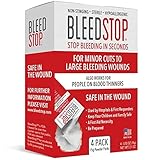
- BLEEDSTOP IS THE ONLY BRAND NAME BLOOD COAGULANT IN ALL WALGREENS, AND CVS . BleedStop is also available in all RiteAid stores. No other product works as well as BleedStop.
- STOPS BLEEDING UPON CONTACT: BleedStop powder is quick, safe and easy to use on moderate to severe wounds, lacerations, cuts, scrapes and nosebleeds (for nosebleeds see BleedStop Nosebleed Strip product available on ), making it one of the most essential supplies for every day first-aid, such as kitchen cuts and protecting your children. Also a necessity for rigorous outdoor activities such as camping, hiking and cycling, among others where moderate to severe bleeding wounds can occur.
- WORKS FOR PEOPLE ON BLOOD THINNERS TOO: Are you taking blood thinners regularly Be assured that BleedStop first-aid powder will work to control bleeding for you too.
- SAFE and NON STINGING: While BleedStop is used by doctors and in emergency rooms across the country, it can be safely applied on everyone, including kids, whenever needed as it's a non-stinging formula.
- HOW TO USE: Simply pour a layer thick enough to cover the entire surface of the wound/laceration before applying firm pressure over the bleeding site using sterile gauze or bandage. BleedStop powder is safe on to leave it on the wound, so it's not necessary to wash it off before bandaging. Please seek emergency medical treatment if bleeding doesn't stop after a prolonged period of time.
Keep alerts and charging in your plan
A radio with NOAA Weather Radio tone-alert reception can provide warnings when internet or mobile service is unavailable, while local alert systems add area-specific instructions. Keep spare radio batteries with the kit and a charged portable phone battery or charger available for outages. FEMA says its app can provide real-time National Weather Service weather and emergency alerts for up to five locations nationwide; that is an app capability, not a substitute for having power-independent alert options. The feature was described on FEMA’s page last updated October 29, 2024: FEMA app information.
Quick Recap
Best Value

- Massive 10000mAh Battery for Extended Emergency Power – Unlike standard models, this Emergency Weather Radio features a built-in 10000mAh rechargeable battery that provides backup power for your smartphone and essential devices during outages. The USB Output (5V/1A) supports emergency phone charging when grid power is unavailable. Ideal for hurricanes, winter storms, camping, RV travel, home emergencies, emergency kits, survival gear, and disaster supplies. Realistic Charging Expectations: The 10000mAh rating refers to the internal battery cell; actual output varies due to conversion loss and device efficiency. Expect approximately 1–1.5 charges for an iPhone 14.
- PX6 Waterproof & Compact Design – Ready for Outdoor Use – Rated IPX6 water resistant, this emergency radio is protected against water spray and splashing, making it suitable for camping, fishing, hiking, hurricane preparedness, and outdoor use. It is designed for splash resistance only and is not intended for heavy rain, immersion, or underwater use. Measuring approximately 6.3"L x 3.5"W x 3.1"H and weighing about 1.1 lbs (500g), this compact weather radio easily fits backpacks, go-bags, vehicles, RVs, and emergency storage areas without adding bulk. Includes a built-in compass for outdoor navigation support.
- 3-Mode Flashlight & Reading Lamp – Emergency Lighting Solution – This portable Emergency Radio includes a high-efficiency LED flashlight with three modes: High, Low, and SOS signaling for blackouts, nighttime emergencies, camping, and outdoor use. The built-in 1.3W reading lamp provides soft, wide-angle lighting for reading maps, checking emergency supplies, or navigating in the dark. Designed for camping gear, survival kits, hurricane preparedness, car emergency kits, and family emergency supplies, this weather radio provides dependable backup lighting when electricity is unavailable.
- NOAA Weather Radio & AM/FM – Manual Tuning, No Automatic Alert – Stay informed with NOAA weather broadcasts and AM/FM reception: AM 520–1710kHz, FM 87–108MHz, NOAA 162.400–162.550MHz. Manual Tuning Required: extend the antenna, select NOAA mode, then slowly rotate the tuning knob until the clearest local NOAA station is received. This NOAA Weather Radio does NOT support SAME technology, automatic NOAA alerts, or location-based alerts; users must manually tune to and listen to NOAA broadcasts. Large controls make tuning easier for families and seniors.
- 3 Charging Modes: Solar, Hand Crank & USB-C Input – Stay powered with USB-C Input, built-in solar panel, or hand crank generator when electricity is unavailable. About 1 minute of steady hand cranking provides 15–20 minutes of radio listening; actual runtime varies by use and cranking speed. The radio can be used while charging via USB-C, but charging may take longer. This Solar Radio and Hand Crank Radio supports hurricane supplies, camping essentials, outdoor adventures, RV trips, survival kits, and 72-hour emergency preparedness. Multiple charging methods keep your emergency radio ready for blackouts, storms, remote travel, and off-grid situations.
Rank #4

- Prepare Now for the El Nino Storm Season: El Nino pushes storms closer to the U.S. coast, leaving as little as 48 hours to prepare. Backup supplies when weather catches you off guard
- Hand-Assembled in New England: Designed by a disaster professional and assembled by a real person, not a faceless factory. Every kit checked by hand before it ships
- Emergency Lifeline When You're Stuck: For flash floods, closed roads, or power outages when you can't reach a store. Below-average hurricane forecast for El Niño doesn't mean no risk-the storm that hits may arrive faster and closer to home
- Upgraded 2026 Version: Premium lined and insulated rain poncho replaces economy version plus expanded comfort kit for extended emergencies
- Comfort-Focused Emergency Kit: Beyond basic first aid with bandages, bacitracin, lip balm, alcohol wipes, PLUS hand lotion and dental pick
Make the kit usable when it matters
- Choose an accessible storage place. Keep the home supplies together where household members can reach them, and make portable essentials easy to take.
- Check household-specific items. Confirm that food, water, medicines, infant supplies and pet supplies reflect the people and animals who rely on them.
- Plan for the relevant hazards. Add cold-weather gear or other locally appropriate supplies, and know which official alert sources to monitor.
- Know what the tools are for. Keep maps, a can opener and utility shutoff tools with the supplies, but follow officials’ directions before operating shutoffs.
- Pair supplies with a plan. Decide how household members will communicate and where they would go if evacuation is necessary; heed emergency officials’ instructions.
Product prices and availability are accurate as of the date/time indicated and are subject to change. Any price and availability information displayed on Amazon at the time of purchase will apply.

