
iTechGuides is reader-supported. When you buy through links on our site, we may earn an affiliate commission. As an Amazon Associate I earn from qualifying purchases. Learn more
An AI agent should begin with read-only access to the minimum mining telemetry required for its assigned task. Give it narrowly scoped write actions only through an allowlisted control service, and require an operator’s explicit approval for firmware, miner-configuration, pool or payout changes, fleet-wide actions, network controls, and anything touching power, cooling, or other site infrastructure. Keep wallet private keys, payout credentials, administrator secrets, and unrestricted shell access outside its reach. Enforce these limits in the agent’s harness—not in the model’s instructions alone—and add MFA-protected remote access, network segmentation, logging, testing, and a rapid stop or revoke path.
This boundary matters because Bitcoin’s consensus rules validate blocks, not your mine’s APIs, credentials, machines, or electrical systems. A safe agent can observe and diagnose aggressively while changing production systems only within a controlled, reviewable process.
Why do Bitcoin mines need a separate AI permission model?
Mining software receives block data and distributes hashing work to specialized hardware, usually application-specific integrated circuits (ASICs). In a pool, the operation also depends on an external coordination and reward-distribution relationship. The Bitcoin Developer Guide describes these protocol and hardware roles, but it does not define who may log in to a miner, alter its firmware, or change a pool account.
The Tool Desk
Outbyte PC Repair FREERepair Windows errors before they cause bigger problemsFix Now →Outbyte Driver Updater FREEFix the driver behind crashes, sound loss and screen glitchesFind Drivers →Bitcoin nodes provide an important but different safeguard. Bitcoin Core checks each received block against protocol rules; as the Bitcoin Core validation page puts it, it checks that a block is fully valid so it can trust the block “without trusting the miner who created it.” That validation cannot stop an agent from shutting down a rack, exposing an API token, redirecting payout settings, or reaching a building-management network.
#1 Best Overall
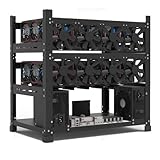
- SLOT - 6/8/12 GPU slots, support 2 ATX power supplies.
- MATERIAL - The open air mining frame case made up of the highest quality stainless steel material, strong, durable and available. Fully protecting your GPU and eectronic device.
- PERFECT DESIGN - Professional design for mining rig frame, accelerating the air convection, super cooling design for heat dissipation. Enough space reserved between the graphics cards.
- EASY TO INSTALL - Easy to install and strong structure. Keep all cables clean and organized, along with everything in your mining machine.
- NEED TO ASSEMBLE BY YOURSELF - For installation steps, please refer to the user manual. The Frame Only, Not includes Fans or other CPU, GPU, PSU, Motherboards, Cables. If you are not 100% satistifed with this Miner, please feel free to contact us, we will offer you a satisfactory soluiton within 24 hours.
Permissions therefore belong at the agent harness and at every connected management system. The Australian Cyber Security Centre’s guidance on agentic-AI harnesses says, “No harness is inherently secure,” and warns, “Do not rely on model safety controls instead of harness-enforced controls.” Treat the model as an untrusted decision-maker whose possible actions are constrained by software, identity, network policy, and human review.
What should an AI agent be allowed to read?
Start with telemetry that answers the specific operational question and nothing more. For a health-monitoring or diagnosis task, that normally means device identity, online status, hashrate, temperature, fan or other cooling readings, power or energy telemetry, and relevant alerts.
Expose only task-relevant fields
Define the agent’s task before granting a data scope. An agent looking for overheating does not need payout addresses, employee records, cloud-account metadata, or credentials for unrelated services. A fleet report may need aggregated energy and hashrate, while a technician-assist workflow may need per-device temperatures and error codes. Remove unrelated fields at the API or proxy, rather than merely telling the model to ignore them.
Recommended Free Tools
Keep secrets out of context
Do not place API passwords, SSH keys, wallet seeds, private keys, payout credentials, or administrator tokens in prompts, tool responses, logs, or model memory. Bitcoin.org explains in its Bitcoin FAQ that private keys are the credentials that authorize spending bitcoin. An agent that can read or replay one has a financial authority unrelated to diagnosing mining hardware.
Separate operational data from control data
Use different identities and endpoints for telemetry and changes. A read-only service account should not become writable because the same dashboard offers both functions. If the agent must request a change, have it submit a structured proposal to a control service instead of receiving a general-purpose shell or unrestricted API token.
What write permissions are safe for an AI agent?
Write access should consist of a small allowlist of named operations with explicit targets, validated parameters, rate limits, and a safe-stop or rollback behavior where feasible. The agent should never be able to turn a natural-language instruction into arbitrary commands.
Use an action allowlist
Examples of bounded operations include restarting one named miner, placing one device into a maintenance state, or applying a pre-approved temperature limit within an established range. Each operation should specify the device identifier, permitted parameter range, maintenance window, requesting identity, and expiration time. Reject unknown fields, wildcard targets, out-of-range values, stale approvals, and duplicate requests.
Constrain blast radius
Default to one device or one small, explicitly named group. Add a rate limit and a maximum number of concurrent actions. A request that would affect an entire site should use a different permission and approval path from a request affecting one miner, even if both are technically exposed by the same management API.
Validate both inputs and results
The harness should validate tool parameters before execution and verify the returned state afterward. For example, after a restart it can confirm that the intended miner came back with the expected firmware, hashrate, and alarm state. If the result is inconsistent, stop further actions and notify an operator instead of allowing the agent to improvise.
| Permission tier | Typical capability | Required guardrails |
|---|---|---|
| Telemetry only | Read health, temperature, hashrate, power and alerts | Read-only identity, field filtering, no secrets |
| Single-device control | Pre-approved restart, maintenance mode or bounded setting change | Allowlisted API, target and range validation, rate limits, audit trail |
| Fleet or site control | Changes across multiple miners or shared services | Separate role, change plan, explicit human approval, staged rollout and rollback |
These tiers are a practical policy framework, not a vendor-certified standard. Set the exact operations and ranges through a site risk assessment.
Which changes must have a human approval?
Require an operator to approve any action whose mistake could create a prolonged outage, financial loss, safety issue, or difficult recovery. Approval should be explicit, attributable, and tied to the exact proposed change—not a blanket instruction such as “keep the mine profitable.”
Firmware and miner configuration
Firmware updates can alter performance, security, boot behavior, or compatibility. Configuration changes can raise power draw, disable protections, or make a device unreachable. The agent may inventory versions, compare a proposed update with an approved package, and prepare a change plan; an operator should authorize installation and any rollback.
Rank #2

- Genuine New Canaan Avalon Q Miner with full manufacturer warranty. Trust a reliable seller – no used or refurbished units
- Maximize profits with 90TH/s hash rate at just 18.6J/TH – one of the most energy-efficient ASIC miners for home or business mining
- Ready to mine right out of the box! Includes a 110V-240V power cord for seamless setup in any standard outlet
- Designed for home-friendly mining with advanced noise reduction – mine Bitcoin without disturbing your household
- Note: All products we offer are brand new and in pristine condition. Returns are accepted. If the return is not due to a verified product failure, a restocking fee will be deducted from your refund to cover handling and logistics costs.
Pool, account and payout settings
Pool endpoints, worker identities, payout addresses, fee settings, and related account controls can redirect revenue or expose credentials. Keep the credentials themselves unavailable to the agent. Require a person to review the target, old value, new value, scope, and effective time before any such write.
Broad fleet actions
A change that touches multiple machines deserves a separate approval even when each individual operation is low risk. Use a canary device or small batch first, observe the result, and require renewed approval before expanding the rollout.
Network, identity and access controls
Firewall rules, VPN settings, administrator creation, API scopes, and segmentation changes can open paths far beyond the mine. The agent may report a connectivity problem or draft a rule, but a human should approve and implement the access-control change through a controlled workflow.
Quick wins for a faster PC:
Repair Windows errors before they cause bigger problemsFix Now →Scan for outdated or missing drivers - takes under a minuteDriver Scan →Power, cooling and site infrastructure
Actions affecting breakers, power distribution, cooling systems, environmental controls, or other industrial equipment can injure people or damage property. Treat them as operational-technology (OT) changes with a formal work order, local safety checks, and an operator in the approval loop. There is no universal Bitcoin-specific threshold; define one for your site and jurisdiction.
Should an AI agent have administrator or shell access to mining rigs?
No. General administrator rights and unrestricted shell access make it possible for a prompt, tool bug, stolen token, or compromised integration to bypass every intended limit. Use a dedicated management API or proxy that exposes only the approved operations.
If a vendor API cannot express per-action permissions, put a policy-enforcing gateway in front of it or keep the agent read-only. The gateway should authenticate the calling service, verify the device and parameters, enforce approval state and expiry, and record the complete request. Do not solve an API limitation by handing the model a root password.
Keep private keys and payout credentials in a separate wallet or secrets system with human-controlled access. Even an agent that never initiates a payment should not be able to retrieve credentials that could later be reused by another tool or attacker.
How should remote access to the mine be protected?
Remote administration should follow the Australian Cyber Security Centre’s Industrial control systems: Remote access protocol. Its core rule is: “Only allow it when needed, with approval, time limits, least privilege, and multi-factor authentication.” Apply that rule to the agent’s service identity as well as to human technicians.
- Use a controlled entry point. Terminate remote sessions at a VPN, jump host, or equivalent gateway; do not expose miner-management interfaces directly to the public internet.
- Require MFA and strong service identity. Bind the agent to a non-human identity with only the scopes its task needs. Do not share a technician’s administrator account with automation.
- Make access temporary. Issue an approval-bound session or token with a start time, expiry, target devices, and maximum duration. Revoke it when the task ends.
- Segment the network. Keep miners, management services, wallets, corporate systems, and building controls in separate zones. Permit only the specific flows required for telemetry and approved actions.
- Monitor and record sessions. Capture authentication events, commands or API calls, approvals, configuration changes, and security alerts. Protect the records from alteration and review them.
How do you build a safe agent harness?
Build the control path before connecting a model to production. A practical sequence is:
- Write the task definition. State what the agent may observe, what outcome it is expected to achieve, and what it must never touch.
- Inventory dependencies. Map miner models, management APIs, pool relationships, network zones, power and cooling controls, secrets stores, and human owners.
- Create separate read and write identities. Start with telemetry-only access. Add a distinct identity for each approved write class rather than one powerful account.
- Implement typed tools. Define operations such as
get_miner_healthorrequest_single_device_restartwith fixed schemas. Reject free-form commands and unknown parameters. - Add policy checks. Verify target, range, maintenance window, approval ID, token expiry, and concurrency limits before every write.
- Show a human-readable change. The approval screen should display the affected devices, current and proposed values, expected impact, validation results, and rollback method.
- Execute in stages. Apply a canary change, check health telemetry, and require an explicit decision before expanding to the next batch.
- Provide a stop and revoke path. An operator must be able to disable the agent, revoke tokens, block its network route, and return equipment to a safe state without asking the model for help.
- Review the integration. Test malformed parameters, stale approvals, duplicate calls, unavailable miners, compromised tokens, and misleading tool output before production.
The harness, not the model’s conversational behavior, must enforce these steps. Guidance from the Australian Cyber Security Centre specifically recommends restricting tools and permissions to task needs, validating tool parameters and outputs, and using human approval for sensitive or high-impact actions.
What should be logged and monitored?
Keep an auditable timeline that lets an investigator reconstruct what happened. Record the agent’s task and prompts, model responses that led to an action, tool calls and parameters, approval identity and time, actual API results, device state before and after, authentication events, network activity, and configuration changes.
Protect logs against deletion or editing, synchronize timestamps, and alert on unusual behavior such as repeated denied requests, attempts to access secrets, new targets, unexpected geographic access, or a sudden increase in action volume. Log the reason for a denial as well as successful changes; denied attempts can reveal prompt-injection or credential-abuse attempts.
Rank #3
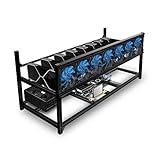
- ✅Premium Aluminum Construction: Constructed from high-quality aluminum for enhanced durability and heat dissipation, ensuring longevity and optimal performance.
- ✅ Accommodates 8 GPUs: Designed to house up to 8 graphics cards, providing ample space for expanding your mining setup and maximizing efficiency.
- ✅ Superior Airflow and Cooling: Engineered with optimized airflow design to prevent overheating and maintain optimal operating temperatures for prolonged mining sessions.
- ✅ Easy Assembly: Simple and straightforward assembly process allows for quick setup, getting you up and running in no time.
- ✅ Sleek and Space-Saving Design: Compact and minimalist design saves space while adding a professional touch to your mining rig setup.
For industrial environments, NIST’s Protecting Information and System Integrity in Industrial Control System Environments discusses capabilities including authentication and authorization, application allowlisting, file-integrity checking, and change control. Select safeguards through a risk assessment rather than assuming every mine needs an identical stack.
Independent reader supportYour contribution helps us test, update, and keep practical guides available for everyone.How should the agent be tested before production?
Use an isolated lab or staging network with representative miner software, APIs, alarms, and failure conditions. Do not begin by giving a new agent access to a live fleet.
- Test that read-only credentials cannot invoke writes.
- Submit out-of-range values, wildcard targets, malformed tool calls, expired approvals, and replayed requests.
- Simulate a miner that fails to restart, reports false telemetry, or disappears during a rollout.
- Verify that the stop switch and token revocation work when the model is still generating requests.
- Confirm that logs contain enough detail to identify the prompt, approval, target, and resulting state.
After lab testing, use a small production canary with a defined maintenance window and an operator watching the equipment. Expand only after the measured behavior matches the change plan. Document who can override the agent, how to restore the previous configuration, and how to operate the mine manually during an outage.
Do these 3 things before closing this tab:
1Clear out junk files and repair common Windows errors2Scan for outdated or missing drivers - takes under a minute3Repair Windows errors before they cause bigger problemsNIST SP 800-82 Rev. 4 was published as an initial public draft on 21 September 2026, with comments due 30 November 2026; do not treat that draft as a final standard. NIST SP 1800-10 (2022) provides manufacturing-ICS examples, while the Australian remote-access guidance was last reviewed on 5 April 2023. Check current revisions when you formalize controls.
How can you compare different permission designs?
When reviewing an architecture, score it on six questions rather than on how autonomous the demonstration appears:
| Question | What to examine |
|---|---|
| Action scope | Is access telemetry-only, limited to one device, or able to reach a fleet or site service? |
| Impact and reversibility | Could an error interrupt mining, affect funds, or create a safety hazard, and how quickly can it be undone? |
| Approval | Which operations require an identified person’s approval, and does approval expire? |
| Isolation | Can the agent reach only intended devices and services through segmented paths? |
| Auditability | Can a reviewer reconstruct what the agent saw, proposed, received approval for, and changed? |
| Recovery | Can operators halt the agent, revoke access, roll back configuration, and continue manually? |
A design that scores well on convenience but poorly on isolation or recovery is not ready for production control.
What do current mining-management platforms indicate?
Platform documentation shows the direction of agent integration, but it is not proof that a deployment is safe or production-ready. Tether’s MDK documentation describes autonomous monitoring and diagnosis followed by operator-approved writes. Tether also announced MOS, an open-source mining-management and automation platform, on 2 February 2026 in its Mining OS and Mining SDK announcement.
What’s actually slowing this PC down?
Pick the symptom - the matching free tool is one click away.
Before adopting any platform, verify its current release, API scopes, approval workflow, audit-log retention, rollback behavior, supported miner models, and ability to run inside your network zones. Treat these products as implementation examples, not as a substitute for your own risk assessment or change-control policy.
What are the most common permission mistakes?
- Starting with root access: begin with read-only telemetry and add one bounded operation at a time.
- Letting the model write commands: expose typed, allowlisted tools through a policy gateway.
- Approving a whole class of changes forever: bind approval to a target, value, window, and expiry.
- Mixing wallets and operations: isolate private keys and payout credentials from the agent and its logs.
- Putting management APIs on the public internet: require a segmented, MFA-protected gateway and temporary access.
- Skipping recovery drills: rehearse token revocation, manual operation, rollback, and incident escalation before an outage.
- Assuming consensus security covers the facility: protocol validation does not protect local equipment, accounts, networks, or power systems.
What is a practical starting policy?
For a new deployment, allow read-only health, temperature, hashrate, power, and alert telemetry for named miners. Permit the agent to propose diagnoses and generate a structured change request, but keep all writes behind a gateway with parameter validation, a short-lived approval, staged execution, and complete logging. Require a human for firmware, pool or payout settings, fleet-wide operations, access-control changes, and electrical or cooling controls. Keep secrets separate, segment the network, test in isolation, and maintain an operator-controlled stop and recovery procedure.
Frequently Asked Questions
Can an agent read a public payout address without holding wallet keys?
If reconciliation genuinely requires it, expose only the specific public address or account identifier through a read-only field. Never expose the private key, seed, signing credential, or a token that can change payout destinations.
What should an approval screen show before a mining change runs?
Show the exact miner IDs, current values, proposed values, maintenance window, expected effect, validation checks, and rollback action. Tie the approval to an expiry time so an old decision cannot be reused after conditions change.
Windows Errors? Fix Them Before They Spread
Repair common Windows errors and clear accumulated junk for a smoother, more stable PC - no reinstall needed.Free scan · no reinstallCrashes, No Sound, or Screen Glitches?
Random freezes, missing sound and display glitches usually trace back to one bad driver. Find and replace yours safely.Free scan · under a minuteWhat if a mining vendor offers only one administrator API account?
Do not give that account to the model. Place a policy-enforcing proxy in front of the API and expose only typed, allowlisted operations; if the proxy cannot reliably restrict actions, keep the integration telemetry-only.
Do small or hobby mines need the same controls as a large facility?
The scale can be smaller, but the boundaries remain useful: separate observation from control, keep financial credentials away from automation, require approval for irreversible or safety-relevant actions, and retain a manual recovery path. Adjust the number of reviewers and rollout stages to the site’s real impact.
Quick Recap
Product prices and availability are accurate as of the date/time indicated and are subject to change. Any price and availability information displayed on Amazon at the time of purchase will apply.

