
The SmartThings app is Samsung’s free Android and iPhone control center for compatible Samsung and third-party smart-home devices. It connects products, organizes them by room, shows their status, and creates routines that automate lights, appliances, sensors, TVs, and more. A separate SmartThings hub is sometimes required, but not for every device.
SmartThings is more than a remote control for Samsung appliances. SmartThings is a broader smart-home platform that can coordinate products from many manufacturers through Works with SmartThings integrations, Matter, Wi-Fi, Bluetooth, cloud services, and optional hub-based protocols.
Key takeaways
- SmartThings is Samsung’s smart-home platform and mobile app for controlling, monitoring, and automating compatible Samsung and third-party products.
- The SmartThings app is free for ordinary consumer use on Android and iOS, although devices, hubs, third-party subscriptions, and developer services may cost extra.
- You do not always need a SmartThings hub: Wi-Fi, Bluetooth, supported cloud-integrated, and some Matter devices can work without separate SmartThings hub hardware.
- Zigbee and Z-Wave products usually require compatible hub hardware, while Matter devices may require a Matter controller, Thread infrastructure, or both depending on the product.
- SmartThings supports routines, scenes, notifications, voice assistants, device status, and ecosystem features instead of merely providing individual device controls.
- Samsung announced a planned $4.99-per-month personal developer API plan targeted for October 2026; Samsung says that planned charge does not apply to ordinary users of the official SmartThings app.
What is the SmartThings app?
The SmartThings app is the Android and iOS interface for Samsung’s connected-home platform. The app lets users add compatible products, assign them to rooms, control them, view status, receive notifications, and build automations. Samsung says SmartThings works with Samsung products as well as compatible products from hundreds of brands and Matter-compatible devices; exact support still varies by model, country, connection method, and feature.
For example, a Samsung household might use SmartThings to control a television, monitor a washing machine, switch on a smart plug, receive a door-sensor alert, and run a “Good Night” scene from one app. The value is the coordination between devices, not simply having another remote control.
What’s actually slowing this PC down?
Pick the symptom - the matching free tool is one click away.
#1 Best Overall

- Echo Hub — An easy-to-use smart home control panel redesigned for your home. Arrange controls on your dashboard to quickly adjust devices, view cameras, start routines, and more.
- Customize your dashboard — Arrange devices into sections and resize them to focus on what matters most. Create a personalized layout that matches how your family uses their connected devices.
- Reimagined for your home - With an Alexa+ and compatible Ring subscription (sold separately), get Ring camera event summaries to stay in the know. Search your Ring footage using simple voice commands. Create routines by voice, activate modes to manage multiple devices at once, and chat with Alexa to easily control your smart home.
- Home security for the whole family — Use Echo Hub to easily arm and disarm your compatible security system, making it easy for everyone in your family to manage home security. Use the Alexa app and compatible cameras, locks, alarms, and sensors to check in while you're out.
- Works with thousands of Alexa compatible devices — WiFi, Bluetooth, Zigbee, Matter, Sidewalk, and Thread devices sync seamlessly with the built-in smart home hub.
Samsung describes the broader ecosystem on its SmartThings platform and ecosystem page. The official platform is available on Android and iOS, so owning a Samsung phone is not a requirement.
What is the difference between SmartThings, the app, a hub, and the API?
These four terms describe different parts of the SmartThings ecosystem:
| Term | What it means | Who needs it |
|---|---|---|
| SmartThings platform | Samsung’s larger ecosystem for connecting, monitoring, controlling, and automating compatible devices and services. | Anyone building or using a SmartThings home. |
| SmartThings app | The consumer Android and iOS app used to add devices, control them, organize rooms, create routines, and manage alerts. | Most household users. |
| SmartThings hub | Hardware that can connect or manage certain Zigbee, Z-Wave, Matter, and other hub-dependent products, and can support local processing for compatible automations. | Users whose devices or desired automations require hub capabilities. |
| SmartThings API | Developer infrastructure that allows apps, services, dashboards, and commercial systems to interact with SmartThings. | Developers and businesses, not ordinary users operating devices in the official app. |
A normal user does not need to understand or subscribe to the SmartThings API to operate devices through the official app. API access is a separate developer product with separate rules, authentication, and rate limits.
What can you control with SmartThings?
SmartThings can control or monitor any supported device whose integration exposes the required functions. Common categories include:
- Samsung appliances: compatible refrigerators, washers, dryers, ovens, air conditioners, vacuums, and other connected appliances.
- Entertainment devices: compatible Samsung TVs and related home-entertainment products.
- Lighting: bulbs, switches, dimmers, and lighting bridges supported by SmartThings.
- Power products: smart plugs, outlets, and power-monitoring devices.
- Security and entry: locks, cameras, door sensors, motion sensors, alarms, and other supported security products.
- Climate equipment: thermostats, air-conditioning products, and other compatible heating or cooling devices.
- Matter products: supported bulbs, plugs, switches, locks, sensors, thermostats, shades, appliances, and other Matter device categories.
- Ecosystem devices: selected wearables, phones, and presence-related features that can participate in household automations.
SmartThings can show device status and, where a product supports it, historical information or energy data. SmartThings Energy and related energy-management functions may depend on the device, country, account, and current service availability.
The official SmartThings app guide documents core functions such as device control, rooms, routines, notifications, presence, and settings.
How does SmartThings connect to devices?
SmartThings can reach devices through several connection routes, and the route determines setup requirements, available features, and how much the internet matters.
| Connection route | Typical role | Important limitation |
|---|---|---|
| Wi-Fi | Connects compatible appliances, TVs, plugs, lights, and other products directly to the home network. | Remote access and many cloud integrations require internet service. |
| Bluetooth | Helps discover or set up nearby compatible devices and can connect directly over a short range. | Bluetooth range and phone proximity limit its usefulness for whole-home control. |
| Cloud-to-cloud integration | Links a manufacturer’s online service to SmartThings without necessarily using a SmartThings hub. | A manufacturer or internet-service outage can interrupt control. |
| Matter | Uses an industry connectivity standard intended to improve interoperability between platforms and manufacturers. | Matter does not guarantee that every proprietary feature appears in SmartThings. |
| Zigbee or Z-Wave | Provides mesh-network connectivity for many sensors, switches, locks, and other hub-connected products. | These products usually require compatible hub hardware. |
| SmartThings Edge | Moves supported hub-connected device commands and automations from the cloud to local hub processing. | Local execution depends on the specific device, integration, automation, and hub support. |
Samsung explains that Bluetooth can be used to discover and connect compatible devices, while Wi-Fi supports monitoring and control at home or away. The SmartThings Edge and platform-transition documentation explains the supported local-processing model.
Quick wins for a faster PC:
Scan for outdated or missing drivers - takes under a minuteDriver Scan →Clear out junk files and repair common Windows errorsFree Scan →Fix the driver behind crashes, sound loss and screen glitchesFind Drivers →What is Matter, and why does Matter matter for SmartThings?
Matter is an industry connectivity standard designed to make smart-home devices work more consistently across participating platforms and manufacturers. SmartThings supports Matter products, which gives buyers another way to add compatible devices without relying solely on a brand-specific integration.
Matter improves interoperability, but Matter is not a guarantee of complete feature parity. A Matter connection might expose basic on/off, brightness, temperature, or lock controls while leaving advanced features in the manufacturer’s own app. A Matter device may also require a compatible Matter controller. A Thread-based Matter product may additionally need Thread infrastructure in the home.
Before buying a Matter product for SmartThings, check the exact model and answer four questions:
- Which Matter device category does the product use?
- Does the home already have a compatible Matter controller?
- Does the device use Thread, and if so, is Thread infrastructure available?
- Does SmartThings expose the particular feature the buyer wants?
Samsung’s SmartThings overview confirms Matter support, but model-level compatibility remains the deciding factor.
Rank #2
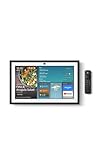
- MEET ECHO SHOW 15 - A stunning 15.6" Full-HD (1080p) smart display that's perfect for your kitchen and ready to show you more. Use customizable widgets to keep your day on track, watch your favorite shows with Fire TV and powerful vibrant sound, and enjoy natural video calling, with 3.3x zoom and wide field of view.
- FAMILY ORGANIZATION HUB - See your top widgets at a glance, like your family’s calendars and to-do lists, local weather, smart home, and more.
- ALL YOUR FAVORITES, ALL RIGHT HERE - Built-in Fire TV unlocks endless entertainment, so you can enjoy your favorite content from thousands of apps like Prime Video, Netflix, YouTube, Apple TV, and more (subscription may be required). Fire TV remote included. Plus, now you can quickly add a device to play music with Active Media - start playing a song in the kitchen, then add the living room and bedroom on the fly.
- SMART HOME CENTRAL - Control smart devices with your voice or a few taps using the smart home dashboard. Easily turn on all your living room lights at once or check live camera feeds to see what's happening around your home.
- YOUR FAVORITE MEMORIES ON DISPLAY - Brighten your space (and your day) by turning your home screen into a photo slideshow that displays your favorite memories. Auto curate your images and show off your favorite family memories.
Do you need a SmartThings hub?
You need a SmartThings hub only when the device or the desired behavior requires hub hardware. Many Wi-Fi products, Bluetooth setup devices, Samsung products, cloud-connected products, and some Matter setups can work without purchasing a separate SmartThings hub.
| Situation | Is a hub likely needed? | Why |
|---|---|---|
| Compatible Samsung Wi-Fi appliance | Often no separate hub | The appliance can connect through Wi-Fi and its supported SmartThings integration. |
| Nearby Bluetooth setup device | Not necessarily | The phone can discover and connect to supported devices over Bluetooth. |
| Supported cloud-connected product | Usually no SmartThings hub | SmartThings communicates through the manufacturer’s online integration, although internet access may be essential. |
| Zigbee product | Usually yes | Zigbee devices generally need compatible hub hardware to join the home system. |
| Z-Wave product | Usually yes | Z-Wave devices generally communicate through a compatible hub. |
| Matter product | Depends | The product may need a Matter controller, and Thread products may need Thread infrastructure. |
| Local hub automation | Often beneficial or required | Supported hub-connected devices and automations may run locally through SmartThings Edge. |
Do not assume that buying a hub makes every SmartThings routine local. Local execution is limited to supported devices and automations. A hub can also add cost, setup work, and another piece of hardware to maintain, so Wi-Fi-only households may not need one.
How do you set up the SmartThings app?
Setting up SmartThings usually involves installing the app, signing in, adding a supported product, assigning a room, and testing control before creating automation.
- Install SmartThings. Download the official app from the Apple App Store or Google Play.
- Sign in. Use an existing Samsung account or create one if required.
- Grant relevant permissions. Device discovery, Bluetooth setup, notifications, and location-based routines may require different permissions.
- Prepare the device. Turn the product on and place it in pairing mode according to the manufacturer’s instructions.
- Add the device. Open the device-add control in SmartThings, select the brand or scan for nearby devices, and follow the product-specific prompts.
- Choose a home and room. Put the product in the correct location so voice commands and routines remain understandable.
- Rename it clearly. “Living Room Lamp” is more useful than a model number or automatically generated name.
- Test manual control. Turn the device on and off, change a setting, or check its status before building an automation.
- Create one simple routine. Start with a single trigger and a single action so failures are easy to diagnose.
- Review notifications. Keep alerts that communicate something important and disable repetitive notifications that create noise.
If a product does not appear, confirm that the product is powered on, in pairing mode, supported in the current region, and not already linked to another account. Also check whether the device needs a manufacturer bridge or SmartThings hub, whether the phone has Bluetooth and required permissions enabled, and whether the product requires a particular Wi-Fi setup. Samsung’s supported-device and troubleshooting documentation is the appropriate model-level reference.
PC Slower Than It Used to Be?
A free scan shows the junk files, broken settings and background clutter dragging Windows down - then fixes them in one click.Free scan · Windows 10 & 11Crashes, No Sound, or Screen Glitches?
Random freezes, missing sound and display glitches usually trace back to one bad driver. Find and replace yours safely.Free scan · under a minuteHow do you create a SmartThings routine?
A SmartThings routine is an automation that performs actions when a trigger, condition, or schedule is met. A scene is better understood as a group of actions launched together, while manual control is a command started by tapping a device in the app.
Example: automatic entry lighting
- Trigger: A compatible motion sensor detects movement after sunset.
- Conditions: The home is occupied and the routine is within the chosen evening time window.
- Actions: SmartThings turns on the entry light at the selected brightness.
- Optional action: SmartThings turns the light off after a delay.
- Test: Trigger the sensor and verify both the light response and the off behavior.
Three useful beginner routines
| Routine | Trigger or schedule | Possible actions |
|---|---|---|
| Good Morning | A selected time or a household presence event. | Turn on bedroom lights, adjust a thermostat, open compatible shades, and report selected appliance status. |
| Away mode | All household members leave or the user activates a scene. | Turn off selected lights, lock a compatible door, adjust climate settings, and enable useful alerts. |
| Night lighting | Motion after sunset or during a defined nighttime window. | Turn on a hallway light at low brightness and turn it off after a delay. |
Start with one dependable trigger. Presence detection can be delayed or ambiguous, and multiple routines that control the same device can conflict. SmartThings routines and automation tools are described in Samsung’s SmartThings app support documentation.
Can SmartThings work with non-Samsung devices?
Yes. SmartThings supports selected third-party products through Works with SmartThings certification, Matter, cloud-to-cloud integrations, hub-connected protocols, and voice-assistant integrations. Examples in Samsung’s ecosystem materials include Philips Hue, Ring, Aeotec, Yale, Google Nest, and other partner brands.
A brand name is not enough to prove compatibility. One product family can contain models with different radios, bridges, regional firmware, or SmartThings support. A device may also appear in SmartThings while offering fewer controls than it offers in its native app.
The Tool Desk
Outbyte Driver Updater FREEFix the driver behind crashes, sound loss and screen glitchesFind Drivers →Outbyte PC Repair FREERepair Windows errors before they cause bigger problemsFix Now →For every product, check the exact model, supported country, connection method, required bridge or hub, SmartThings features, and whether the desired automation is supported. Samsung’s device-support information should be checked before purchase.
How does SmartThings work with Alexa, Google Assistant, and Bixby?
SmartThings can integrate with Bixby, Amazon Alexa, and Google Assistant, but each voice ecosystem must be configured separately. After setting up the voice-enabled speaker, phone, or assistant app, the user authorizes or links SmartThings in that ecosystem.
Clear device names and room assignments matter. A name such as “Living Room Lamp” is easier for a voice assistant to understand than a duplicate name or a manufacturer’s default label. Duplicate devices can appear when the same product is independently added to more than one ecosystem, so remove or hide unnecessary duplicates.
Voice integration does not make Alexa, Google Home, and SmartThings identical. Voice assistants may expose only the controls supported by their integration, and advanced SmartThings routines may not appear as fully editable routines in Alexa or Google Home. Samsung provides setup information for linking SmartThings with Alexa and Google Assistant, while its voice-services documentation covers Bixby and other voice options.
Rank #3
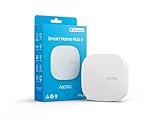
- Powered by SmartThings: Connect, monitor, and automate your home through the SmartThings app. Build a reliable, unified smart home using Samsung's proven ecosystem
- Matter + Zigbee Smart Home Hub: Supports the newest Matter standard plus Zigbee for lighting, sensors, plugs, switches, thermostats, and more - thousands of compatible devices. PLEASE NOTE: Z-Wave not supported
- Easy Setup with Wi-Fi or Ethernet: Get started in minutes using Wi-Fi or a wired Ethernet connection for apartments, houses, and expanding smart home systems - Z-Wave not supported
- Automations That Work for You: Create custom routines for security, lighting, comfort, and energy savings. Many local automations continue working even if your internet goes offline
- Wide Device Compatibility: Connect compatible smart devices from Aeotec and many other brands to build a unified system for lighting, voice control, energy management, and climate settings
Is SmartThings free?
For ordinary consumer use, Samsung currently presents the SmartThings app as free to download and use without a SmartThings app subscription fee. Free app access does not make the entire smart home free: compatible lights, appliances, sensors, hubs, bridges, internet service, manufacturer subscriptions, and third-party services can still cost money.
Samsung announced on June 23, 2026, a planned $4.99-per-month personal developer plan for SmartThings API access targeted for October 2026. Samsung’s announcement says ordinary users controlling devices through the official SmartThings app are not affected. The planned API pricing is therefore relevant to developers, custom dashboards, property-management systems, energy tools, and businesses—not to a household simply turning on a light in the SmartThings app.
The SmartThings API announcement also describes planned commercial tiers. Developer documentation separately describes endpoint-specific rate limits and possible 429 Too Many Requests responses in the SmartThings API overview. Both topics are separate from ordinary consumer app usage.
What happens when SmartThings loses internet access?
SmartThings does not guarantee that every device and routine will continue operating during an internet outage. Cloud-connected devices generally depend on the manufacturer’s service, and remote control from outside the home requires internet connectivity.
Recommended Free Tools
Supported hub-connected devices and automations may execute locally through SmartThings Edge, which can reduce dependence on the cloud for supported functions. Local execution varies by device, integration, automation, and hub, so a user should verify the specific routine instead of assuming that every automation works offline.
| Symptom | Likely area to investigate | First checks |
|---|---|---|
| Local control and remote control both fail | Power, home network, device, hub, or account problem. | Check power, network connectivity, device status, hub status, and whether the product is still paired. |
| Local control works but remote control fails | Internet, cloud service, account, or integration problem. | Test the device locally, check the manufacturer’s service status, and review the SmartThings account connection. |
| A routine runs inconsistently | Unreliable trigger, conflicting routines, offline device, cloud dependency, or presence delay. | Test the trigger alone, inspect overlapping routines, and determine whether the automation is supported locally. |
| A device appears but controls are missing | Matter feature limits, a restricted cloud integration, or an unsupported model variant. | Compare the SmartThings controls with the native app and verify the exact integration route. |
Account security also matters. Use a strong account password, enable two-factor authentication where offered, review household sharing, and avoid giving more home access than another person needs.
How can you check SmartThings compatibility before buying?
Use this checklist before purchasing a device for SmartThings:
- Is the exact model listed as compatible, rather than merely the brand?
- Does the product use Matter, Wi-Fi, Bluetooth, Zigbee, Z-Wave, or a cloud integration?
- Is a SmartThings-compatible hub or a separate manufacturer bridge required?
- If the product uses Matter, does it require a Matter controller or Thread infrastructure?
- Does SmartThings expose the feature you actually need, such as dimming, energy data, lock status, temperature control, or a particular appliance cycle?
- Is the product supported in your country and account region?
- Does the manufacturer require a separate subscription?
- Will the product and the desired routine work locally if the internet fails?
- Can the product be shared with household members?
- Does the product also need to work with Alexa, Google Home, or Apple Home?
Compatibility should be treated as a combination of model + region + protocol + controller + feature. A “Works with SmartThings” label is useful, but it does not promise that every model from the same manufacturer or every native-app feature will work identically.
Free tools Windows power users keep installed
One-click scans. No signup required.
What are SmartThings’ main advantages and disadvantages?
| SmartThings advantage | Corresponding trade-off |
|---|---|
| Strong coordination with Samsung TVs, appliances, phones, and wearables. | Samsung products may receive richer support than products from less integrated brands. |
| Support for selected third-party products and Matter. | Compatibility and feature depth still vary by exact model, region, protocol, and integration. |
| Routines, scenes, notifications, status, and energy-management tools in one app. | Complex routines can be difficult to troubleshoot when several cloud services or triggers are involved. |
| A mainstream consumer interface with official manufacturer support. | Cloud dependencies and vendor-specific limitations can reduce predictability. |
| Optional hub support and local execution for supported devices and automations. | A hub adds hardware cost, setup complexity, and maintenance. |
| Integration with Bixby, Alexa, and Google Assistant. | Voice platforms may expose only a subset of SmartThings controls and routines. |
SmartThings is a strong fit for households that already use Samsung products, want one mainstream app for Samsung and selected third-party devices, value Matter support, or want routines involving appliances and entertainment devices.
SmartThings may be a poor fit for households with mostly obscure or unsupported products, users who require local-only operation, people seeking highly experimental automations, or anyone who wants to avoid Samsung accounts and cloud dependencies.
How does SmartThings compare with other smart-home platforms?
SmartThings is not automatically the best platform for every household. The right choice depends on existing devices, preferred voice assistant, tolerance for cloud services, and desired automation complexity.
| Platform | Potentially strongest fit | Main consideration |
|---|---|---|
| SmartThings | Samsung households wanting appliance, TV, phone, and selected third-party coordination. | Model-level compatibility, cloud dependencies, and varying local support require checking. |
| Google Home | Households centered on Google services, Nest products, and Google Assistant. | Feature availability depends on the product’s Google integration. |
| Amazon Alexa | Echo-centered households that prioritize broad voice use. | SmartThings-linked products may expose fewer controls than in the native SmartThings app. |
| Apple Home | Apple households prioritizing Apple-device integration and a privacy-oriented home experience. | Product compatibility and automation features depend on Apple Home support. |
| Home Assistant | Users seeking deep customization and strong local-control potential. | Setup, configuration, and maintenance are substantially more technical. |
| Hubitat | Users comfortable with dedicated hub hardware and a more technical local-first approach. | Hardware and interface add complexity compared with a basic app-led setup. |
Many households use more than one ecosystem, but adding the same device independently to multiple platforms can create duplicate devices and confusing automations. Decide which platform should own each routine and keep names consistent.
Rank #4
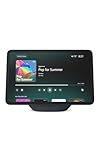
- New size, more viewing area: The 11“ smart display features a vibrant Full-HD touchscreen with 60% more viewing area versus Echo Show 8 (2025 release), built-in smart home hub, AZ3 Pro chip for powerful performance, and Omnisense technology for highly personalized experiences.
- Content looks and sounds incredible: Watch shows on Prime Video, Netflix, and more on the vibrant Full-HD 11" screen and enjoy room-filling spatial audio, crisper vocals, wider sound stage, and up to 2x bass versus Echo Show 8 (2023 release). With Alexa+, find the name of that song you love and discover new shows based on your preferences.
- Your everyday assistant: The 11" display makes it easy to see recipes and calendars at a glance, find meal inspo, and manage your shopping lists. With Alexa+, find recipes based on foods you love, make reservations, order groceries, and more.
- Simple Smart Home control: Pair and control thousands of devices that work with Alexa without needing a separate smart home hub. Easily view your camera feeds. Manage lights, thermostats, and more using the display or your voice. With Omnisense technology, you can activate routines via temperature, presence, or visual ID detection.
- Crystal-clear video calls: Video calls feel natural on the vibrant 11" screen with a centered, auto-framing camera, 3.3x zoom, and noise reduction technology. Use live view to check in on your family, pets, and more while you're away.
Why do older SmartThings guides mention SmartApps and Groovy?
Older SmartThings guides may recommend legacy Groovy device handlers or SmartApps, but those instructions can be outdated. SmartThings moved away from that legacy technology, with supported functionality transitioning toward Edge, Scenes, Routines, and newer integration methods.
When following an old tutorial, check whether it relies on a legacy SmartApp, a Groovy device handler, or a discontinued developer workflow. The official platform-transition FAQ is a better starting point for understanding current SmartThings architecture.
Is SmartThings worth using?
SmartThings is worth using when its compatibility matches the devices already in the home and the household values centralized control and automation. Samsung owners can gain especially convenient coordination between compatible appliances, TVs, phones, and wearables, while Matter and partner integrations broaden the platform beyond Samsung hardware.
SmartThings is less compelling when local-only reliability is the top priority, the home contains many unsupported products, or the user wants advanced custom logic without depending on vendor integrations. In those cases, Home Assistant or Hubitat may be a better fit, although both demand more technical setup than a typical SmartThings installation.
Do these 3 things before closing this tab:
1Clear out junk files and repair common Windows errors2Scan for outdated or missing drivers - takes under a minute3Repair Windows errors before they cause bigger problemsThe practical decision is simple: choose SmartThings for the devices and routines it supports today, not for a brand label or a promise that every smart-home feature will work everywhere.
Frequently Asked Questions
Can I use SmartThings without a Samsung phone?
Yes. Samsung makes the SmartThings app available on Android and iOS, so a Samsung phone is not required. Device compatibility, permissions, and regional availability still apply.
Does SmartThings work without Wi-Fi?
Some supported hub-connected devices and automations may continue locally through SmartThings Edge, but SmartThings does not operate fully offline for every device or routine. Cloud-connected devices and remote access generally require internet connectivity.
Is SmartThings the same as Alexa?
No. SmartThings is Samsung’s smart-home platform and app, while Alexa is Amazon’s voice-assistant and smart-home ecosystem. SmartThings can integrate with Alexa, but the integration may expose fewer controls than the SmartThings app.
Can SmartThings and Google Home be used together?
Yes. SmartThings can integrate with Google Assistant and Google Home after the services are configured separately. Clear names and room assignments help, but advanced SmartThings routines may not appear with full control in Google Home.
Is the planned $4.99 SmartThings fee required for normal users?
No. Samsung announced the $4.99-per-month plan as a personal developer API plan targeted for October 2026 and said ordinary users controlling devices through the official SmartThings app are not affected. The app itself is currently presented as free for consumer use.
The Bottom Line
Bottom line: SmartThings is Samsung’s free consumer app and broader smart-home platform for connecting compatible Samsung, Matter, and third-party devices. You do not automatically need a hub, and you do not need the developer API for normal use. Check the exact model, region, protocol, required controller, available features, and local-versus-cloud behavior before buying.
Quick Recap
Product prices and availability are accurate as of the date/time indicated and are subject to change. Any price and availability information displayed on Amazon at the time of purchase will apply.
Recommended Free Tools

