
iTechGuides is reader-supported. When you buy through links on our site, we may earn an affiliate commission. As an Amazon Associate I earn from qualifying purchases. Learn more
What happened when audiophiles tested $200 cables against bananas? In a November 2024 diyAudio blind-listening experiment, participants compared a CD-derived file with recordings made through copper wire, wet mud, and a banana; listeners generally could not identify the signal paths consistently, but the test did not directly prove that a specific $200 cable sounded identical to a banana.
The viral version of the story is both entertaining and misleading. A banana really did appear in the experiment, and the reported listening results challenged dramatic claims about expensive audio cables. However, the primary test was not a simple head-to-head comparison between one commercial $200 cable and one piece of fruit.
Key takeaways
- The diyAudio experiment began on November 25, 2024, and compared four concealed audio versions: an original CD-derived file, a 180-centimeter professional copper-wire path, a wet-mud path, and a banana path.
- The banana path used 13 centimeters of banana combined with 120 centimeters of copper; the mud path used 20 centimeters of wet mud combined with 120 centimeters of copper.
- Later coverage reported that six of 43 participants correctly identified the premium-cable category, but the underlying test was an enthusiast-run four-choice exercise rather than an independently audited laboratory study.
- The experiment tested a short, line-level recording setup, so its result does not establish that speaker cables, phono cables, long runs, power cables, or every expensive cable are electrically interchangeable.
- The practical buying lesson is to pay for appropriate resistance, capacitance, shielding, connectors, durability, and length—not automatically for exotic conductor descriptions or mystical sound claims.
What exactly happened in the banana cable experiment?
The banana cable experiment was a concealed-identity listening test organized by a diyAudio moderator using the name Pano. The original thread started on November 25, 2024, and invited participants to compare short audio excerpts in several genres, including rock, jazz, and classical music. The thread’s original announcement and discussion provide the primary record of the experiment.
Each musical excerpt was supplied in four versions. Participants received coded files rather than labels such as “banana” or “copper,” and they were asked to submit their guesses privately before the answer key was revealed. The clips were reported as 30 seconds long.
Popular on Amazon
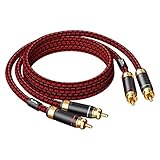
- Heavy Duty, Strong and Rugged Cable, Low-frequency vigorous and thick, IF is sweet, high-frequency resolution of first-class.
- 2-Male to 2-Male RCA audio cable enhances audio connections; ideal for audiophile ,home-entertainment and high-fidelity (HiFi) systems.
- High density 4N oxgen-free copper shielding, high-quality polished metal and corrosion-resistant Ultra thickness 3U Gold-plated connectors making it less susceptible to outside interference.(EMI protection), ensuring the highest quality audio transfer.
- With two moveable Black metal ring with arrow mark, easy to distinguish the direction of input and output (CD to Amplifier), Red/white color-marked connectors for quick, easy left-and-right hookups.
- High End and Premium Quality , 12 months manufacturer warranty.
| Version | Signal path | What it represented |
|---|---|---|
| Original | Audio file derived from a CD | Untouched reference |
| Copper | 180 cm of professional copper wire | Conventional conductive path |
| Mud | 20 cm of wet mud plus 120 cm of copper | Unusual, poor conductive path |
| Banana | 13 cm of banana plus 120 cm of copper | Unusual, moisture-based conductive path |
The exact conductor lengths come from the methodology post in the diyAudio thread. The setup matters: the test routed a low-level audio signal through unusual materials and then recorded the result. It was not an ordinary living-room comparison of speaker cables carrying power to loudspeakers.
Was it really a $200 cable versus a banana?
No—not according to the available primary description. The primary diyAudio setup identifies an original file, professional copper wire, wet mud, and a banana. The cited setup does not identify a particular commercial $200 cable model being connected directly against a banana.
“$200 cables versus bananas” is better understood as a media shorthand for the broader argument about expensive audiophile interconnects. Later reports used the striking price-and-fruit framing, but the underlying experiment was a four-version signal-path test. The distinction is important because a claim about one unnamed premium category is not evidence about every product sold for $200, and it is certainly not evidence that every premium cable has the same electrical design.
The defensible statement is narrower: under the conditions of this experiment, listeners did not consistently identify the tested paths. The experiment did not prove that a banana sounds exactly like a named $200 commercial cable.
What did listeners actually hear?
Reported listening impressions were mixed. Some participants said they preferred the banana or mud versions. Other listeners described possible noise, grit, or other differences. Pano reportedly found the files surprisingly alike and noted that, at one stage, only one participant had identified the original more often than not—and only by a slim margin. The thread discussion of listener impressions shows why subjective comments and identification results need to be separated.
A listener’s preference is not the same as a correct identification. Someone can prefer a sample without knowing whether the sample passed through copper, mud, banana, or no additional path. Preference may reflect taste, expectation, a small level difference, recording artifacts, or an actual audible characteristic. Identification testing asks a different question: can the listener repeatedly determine which hidden condition produced the sample?
Later coverage reported that six of 43 participants correctly identified the premium-cable category. Six divided by 43 is approximately 13.95 percent, but the percentage is only a description of that reported count—not a universal measure of human hearing or proof that all cable differences are inaudible. With four choices, a simple random-choice baseline would be about 25 percent per guess, although the experiment’s full trial structure and independence of guesses are not presented as a complete independently audited statistical analysis.
Recommended Free Tools
The safest interpretation is that the participants did not demonstrate a consistent ability to identify the tested signal paths under the conditions used. That conclusion is more precise than saying that the result proved “random guessing” or that no physical difference existed.
Also popular on Amazon

- Powerful Bass: TODN R-Series HiFi RCA cables feature 4-core 99.99% OFC conductor that delivers strong bass and rich details, like heavy bass in electronic music. And 4-strand core increase the total surface area of conductor that improves high frequency performance more effectively than 2-core. Ideal for audiophiles who like powerful music, such as electro, rock and more! Please note: The newer versions of the R-Series have the 'TODN' logo on the shell, while the older versions do not have the 'TODN'
- Stronger & More Stable: After many tests, we designed a premium ferrite bead at about 15cm from the plug, a location that maximizes the shielding of the high end RCA cable. And, this shielded RCA cable also features tinned copper braided shielded to reduce EMI & RFI, and improves signal transmission stability. Lets you enjoy your music without annoying buzzing or static
- Gold-plated Preferred: These are RCA male to male shielded cables. Engineered with a 24K gold-plated plug, this high end 2 channel RCA cable for Hifi systems provides superior corrosion resistance, conductivity, and longer lifespan, resulting in a more reliable connection compared to regular RCA cables. This high-quality RCA cable ensures a secure, stable connection that is easy to plug and unplug. Perfect for audiophiles who pursuit Hifi sound
- Elegant Design: With 7 mm diameter, 2 channel RCA stereo cable (left-black coil and right-red coil) feature nylon braided jacket -- abrasion-resistant, tangle-free design. Easy to route behind racks while maintaining a clean studio. And arrow mark on ferrite bead - simplify to distinguish direction of input and output, ensuring secure and stable connections
- Ideal Gift for Audiophiles: TODN RCA shielded audio cable are used with a wide variety of high-end audio components to create superior sound systems. HiFi interconnect RCA cable are compatible with devices featuring RCA interfaces, such as car audio, subwoofers, CD/DVD players, phono preamps, turntables, amps, speakers, etc. After 48 hours of burn-in, the signal transmission of RCA to RCA stereo shielded becomes smoother, with more noticeable performance improvement on high end audio gear
How can a banana carry an audio signal?
A banana can conduct enough electricity to pass a low-level audio signal because its water and dissolved ionic material provide a conductive path. The banana is not a good replacement for copper: its resistance is much higher, its behavior is less stable, and its contact points can change as the fruit dries, shifts, or oxidizes.
Passing enough signal to make a recording is a very low bar. The audible and electrical result depends on the source impedance, load impedance, signal level, moisture, banana condition, contact pressure, connection geometry, and the rest of the recording chain. A banana can therefore function as an improvised conductive element in a deliberately unusual experiment without being an appropriate audio cable.
The same distinction applies to wet mud. Wet material containing water and dissolved minerals can conduct electricity, but the path is resistive, variable, mechanically unreliable, and vulnerable to noise. “It passes audio” does not mean “it is electrically equivalent to a properly designed cable.”
Why does a blind listening test matter?
A concealed-identity test removes some of the expectations that influence sighted listening. When listeners can see a thick cable, read its price, feel its weight, or know which sample is supposed to be the premium one, those cues can affect judgments about detail, bass, soundstage, and musicality.
A blind or ABX-style test instead asks whether a listener can identify a known difference when the identity is hidden. Repeated success is more informative than a confident one-time impression, although a useful test still needs careful level matching, clean switching, sufficient trials, and controls against accidental clues.
The original exercise was closer to a concealed four-way identification test than to a rigorously standardized laboratory ABX trial. The later discussion moved toward a more formal web-based ABX test that compared the original recording against a selected conductor and kept score. The diyAudio thread announced that online version on March 6, 2026; the announced test page was apno.pythonanywhere.com. The online test is useful as an enthusiast experiment, but a personal result should not be treated as a universal scientific finding.
What does the test say about expensive audio cables?
The experiment weakens the claim that exotic conductor materials automatically produce audible improvements in every audio system. It does not establish that all expensive cables are fraudulent, useless, or electrically identical.
What’s actually slowing this PC down?
Pick the symptom - the matching free tool is one click away.
A cable can cost more because it has stronger connectors, better strain relief, greater flexibility, custom length, more robust shielding, lower or specified capacitance, better termination, a warranty, or installation support. Those are legitimate mechanical and electrical benefits. They are different from claims that a conductor automatically creates a wider soundstage, deeper bass, greater detail, or a more “musical” presentation.
Also popular on Amazon
- Standard Audiophile Grade: This is a pair of 0.5m/1.64ft entry-level audiophile shielded RCA cables, which are constructed with 99.99% OFC cores and high-quality manufacturing, ensuring signal integrity with noticeable improvements in clarity, dynamic range, and noise reduction. Whether for beginner or mid-range systems, this shielded RCA phono cable is a reliable choice. NOTE: Choosing the right length is essential, add 20% extra length for routing flexibility. We offer custom length services
- Powerful Bass: This PRO-Series RCA cables shielded feature a 4-core OFC conductor (4-core x 28-wire x 0.1 mm, outer diameter 7mm). They offer better conductivity and signal transfer than standard copper. It delivers strong bass and rich details, like heavy bass in electronic music. The 4-strand core increase the total surface area of conductor that improves high frequency performance more effectively than 2-core. Ideal for audiophiles who like powerful music, such as electro, rock and more
- Stronger & More Stable: This RCA interconnect cable feature a tinned copper braided shielding around the conductor. It offers higher coverage and greater flexibility than wrap shields, providing superior protection against EMI & RFI, good for hifi home theater systems. Furthermore, a ferrite bead with arrow mark is added 15cm/0.49ft from the connector to absorb any remaining high-frequency noise from external side and arrow mark easy to distinguish the direction of input and output
- Gold-plated Preferred: These are RCA male to male shielded cables. Engineered with a 24K gold-plated plug, this high end 2 channel RCA cable for Hifi systems provides superior corrosion resistance, conductivity, and longer lifespan, resulting in a more reliable connection compared to regular RCA cables. Red/Black-marked plug for left-and-right, this high-quality RCA cable ensures a secure, stable connection that is easy to plug and unplug
- Ideal Gift for Audiophiles: TODN RCA shielded audio cable are used with a wide variety of high-end audio components to create superior sound systems. HiFi interconnect RCA cable are compatible with devices featuring RCA interfaces, such as car audio, subwoofers, CD/DVD players, phono preamps, turntables, amps, speakers, etc. After 48 hours of burn-in, the signal transmission of RCA to RCA stereo shielded becomes smoother, with more noticeable performance improvement on high end audio gear
For a short line-level connection, a correctly built cable may already perform well enough that spending substantially more produces little or no audible improvement. If a premium cable solves a real problem—hum, interference, unreliable connectors, unusual capacitance requirements, or a difficult installation—the premium may be justified. If the only justification is an elaborate description of the metal, the buyer should ask for relevant measurements or controlled listening evidence.
Terms such as “directional,” “quantum,” “cryogenic,” or “ultra-pure” describe claims or construction choices, not automatic proof of audible superiority. The burden of evidence should rise with the size of the sonic claim.
What are the experiment’s most important limitations?
The banana result is interesting, but the test cannot answer every question about cables. Several limitations prevent a sweeping conclusion.
Quick wins for a faster PC:
Scan for outdated or missing drivers - takes under a minuteDriver Scan →Clear out junk files and repair common Windows errorsFree Scan →Fix the driver behind crashes, sound loss and screen glitchesFind Drivers →Who took part?
Later coverage reported 43 participants and sometimes described them as audio experts. The primary thread does not independently establish that every participant was professionally trained, nor that the group represented audiophiles generally. The participants came from an audiophile forum, which creates a self-selected sample with unknown listening experience, equipment, hearing ability, and motivation.
Was four-choice identification the best design?
A four-choice test asks listeners to distinguish an untouched original plus three re-recorded versions. That gives participants more possible answers and more ways to become confused than a carefully controlled two-sample ABX comparison. Thread participants discussed whether the banana and mud should instead be grouped as potentially poor-quality paths and whether a simplified test would be clearer. Those discussions appear in the four-choice design discussion.
The four-choice format is not automatically invalid, but the result should be described as evidence from that particular task, not as a final ranking of all cable designs.
Could the recording chain have caused the audible differences?
Every re-recorded sample passed through a playback and recording chain. Differences could therefore have originated in the DAC, amplifier, analog-to-digital converter, gain setting, noise floor, contact quality, glitches, or the conductor itself. Including the original file helps provide a control, but it does not remove every possible confounding variable.
Free tools Windows power users keep installed
One-click scans. No signup required.
A test of a signal path is not identical to a test of a cable in isolation. The result reflects the entire chain used to create the files.
Also popular on Amazon
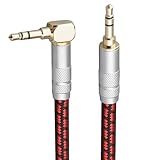
- Heavy Duty,Sturdy and durable Stereo 3.5mm to 3.5mm aux audio cable, Outer diameters of cable up 6.2mm, Cable is very thick, but Flexible,No stiff
- 20AWG: 4N high purity copper conductor,High quality polished metal and Corrosion-resistant 24K Gold-plated connectors, it making it less susceptible to outside interference.No more fear of wire breaking down after a few years of using extra shielding. We have strictly tested each audio cable before we sent it to you
- High End design, 90 degree elbow design makes connection easier. Intelligent step-down design provides a secure fit with phones in nearly any type of cases. Cotton braided make cable have excellent Anti-abrasion, Tangle-free ,long working life
- Low-frequency vigorous and thick, IF is sweet, high-frequency resolution of first-class
- Seamlessly transmits stereo audio for high quality sound. Grasp the details of music and make the sound clearer and fuller
Was level matching strict enough?
Small volume differences can bias listeners toward the louder sample. The later test-development discussion specifically raised strict level matching and the need to avoid clues such as glitches, unequal lengths, and recording artifacts. The discussion of level matching and the later ABX design is relevant because a listener may detect a level or artifact difference rather than the intended cable characteristic.
Does the result apply to every type of cable?
No. The experiment concerns a short, low-current, line-level recording path. It should not be generalized automatically to speaker cables, phono cables, instrument cables, power cables, digital links, or long unbalanced connections.
| Application | Why the banana experiment is limited | What deserves attention |
|---|---|---|
| Short RCA or XLR line-level interconnect | Closest to the tested category, provided the electrical conditions are similar | Shielding, connector quality, capacitance, grounding, and reliable termination |
| Speaker cable | Speaker cables carry substantially more current and may run much farther | Conductor resistance, gauge, length, termination, and amplifier loading |
| Phono cable | Cartridge output and loading are more sensitive to cable capacitance | Capacitance, grounding, shielding, and appropriate connectors |
| Guitar or high-impedance instrument cable | Source impedance can interact audibly with cable capacitance | Capacitance, length, shielding, and pickup compatibility |
| Long unbalanced run | Noise and interference become more consequential over distance | Shielding, balanced wiring where suitable, grounding, and construction |
| Digital connection | Digital links have format-specific impedance and error behavior | Correct interface, connectors, length limits, and signal integrity |
Secondary coverage also emphasizes the difference between line-level interconnects and speaker cables. A one-meter or similarly short test cannot settle what happens when resistance, capacitance, shielding, or interference becomes more significant in a different application.
When can a cable genuinely affect sound?
A cable can affect sound or system performance when its electrical or mechanical properties interact with the equipment or environment. The following cases are practical engineering problems, not evidence for mystical conductor claims:
- Damage or poor termination: A broken conductor, loose plug, cold solder joint, or intermittent contact can cause dropouts, distortion, hum, or channel loss.
- Inadequate shielding: An unbalanced cable in a noisy environment can pick up hum or radio-frequency interference.
- Excessive capacitance: Capacitance can interact with some source, amplifier, phono, or instrument circuits.
- Speaker-cable resistance: Long or undersized speaker cable can create voltage loss and interact with the loudspeaker’s impedance.
- Phono and guitar connections: Cartridge and pickup circuits can be sensitive to cable capacitance and loading.
- Long runs: Distance increases the importance of resistance, capacitance, shielding, grounding, and connector reliability.
- Oxidized or insecure contacts: Contact resistance and mechanical instability may matter more than the claimed purity of the conductor.
Dismissing unsupported audiophile claims does not mean dismissing cable engineering. It means evaluating the property that solves the actual problem.
Independent reader supportYour contribution helps us test, update, and keep practical guides available for everyone.What should you buy instead of a $200 exotic cable?
Start with the use case and specifications, then choose a reliable construction at a price that makes sense. A sensible buying order is more useful than a blanket rule that every cheap cable is good or every expensive cable is bad.
- Identify the connection: Determine whether you need RCA, XLR, speaker wire, a phono cable, an instrument cable, a headphone cable, or a digital link.
- Measure the required length: Avoid unnecessary excess cable, but leave enough slack to prevent strain on the connectors.
- Check electrical requirements: Consider shielding for unbalanced analog connections, capacitance for phono and instrument applications, and adequate gauge for long speaker runs.
- Inspect mechanical quality: Look for secure connectors, strain relief, flexibility appropriate to the installation, and a termination that will not loosen.
- Spend according to the problem: Pay more for custom length, installation, durability, service, or a documented electrical requirement—not merely because the conductor has a premium-sounding name.
- Test before upgrading: If you believe a new cable changes the sound, level-match the comparison and conceal the cable identities before deciding.
Budget-oriented readers may find ordinary RCA interconnects, XLR cables, speaker wire, banana plugs, and bulk cable from Monoprice suitable for straightforward systems. Readers who want custom lengths and conventional, transparent construction may consider Blue Jeans Cable. DIY users who are comfortable terminating their own connections may find Parts Express useful for bulk wire, connectors, banana plugs, and supplies. Studio users who value professional cable construction may look at Mogami cable assemblies through authorized dealers.
Crashes, No Sound, or Screen Glitches?
Random freezes, missing sound and display glitches usually trace back to one bad driver. Find and replace yours safely.Free scan · under a minuteWindows Errors? Fix Them Before They Spread
Repair common Windows errors and clear accumulated junk for a smoother, more stable PC - no reinstall needed.Free scan · no reinstallThose names are starting points, not universal endorsements. Verify the connector type, length, construction, return policy, and current price for the specific product before buying.
Also popular on Amazon
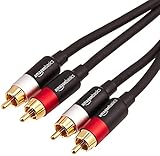
- IN THE BOX: (1) 15 foot 2-Male to 2-Male RCA audio stereo subwoofer cable
- CRYSTAL CLEAR AUDIO: Enhances audio connections; ideal for home-entertainment and high-fidelity (HiFi) systems
- RCA INPUT/OUTPUT: 2 RCA output (connect to either L or R input) and 2 RCA input; input can be high frequency (digital audio) or low frequency (subwoofer)
- GOLD PLATED CONNECTORS: Corrosion-resistant 24K gold-plated full-metal connectors
- RELIABLE PERFORMANCE: Eliminates unwanted noise/feedback for pure, clear audio; minimal signal loss for reliably consistent audio
Should you try the online banana-and-mud test?
You can try the announced diyAudio online ABX-style test if the page remains accessible, but treat the result as a personal listening exercise rather than a regulated laboratory benchmark. The test is useful for examining how confidently you can identify hidden samples and how your confidence compares with your accuracy.
Do not use one successful score—or one unsuccessful score—to prove a universal theory about cables. A meaningful personal comparison should control volume, prevent visual and handling clues, use repeated trials, and distinguish “I prefer sample A” from “I can identify sample A when its identity is hidden.”
What is the fair verdict on the banana cable experiment?
The experiment is a strong antidote to the idea that an expensive conductor automatically creates an audible improvement. In a particular short-run, line-level recording setup, listeners generally failed to identify the tested signal paths consistently, even though the paths included conventional copper, wet mud, and a banana.
Do these 3 things before closing this tab:
1Fix the driver behind crashes, sound loss and screen glitches2Clear out junk files and repair common Windows errors3Scan for outdated or missing drivers - takes under a minuteThe experiment is not a license to replace a speaker cable with fruit. It did not directly test a named $200 commercial cable, did not cover every cable category, and did not eliminate every recording-chain or statistical limitation. The useful consumer conclusion is more practical: buy a properly constructed cable that meets the electrical and mechanical requirements of the system, and demand better evidence before paying a large premium for unsupported sonic promises.
Frequently Asked Questions
Did audiophiles really compare a $200 cable with a banana?
A real diyAudio experiment used a banana, wet mud, copper wire, and an original CD-derived file, but the available primary description does not identify a specific commercial $200 cable. The $200-versus-banana wording is a media shorthand for the wider expensive-cable debate.
Can a banana safely replace an audio cable?
No. A banana can conduct enough electricity to pass a low-level signal in an unusual experiment, but its resistance, moisture, contact quality, and mechanical stability are unsuitable substitutes for a properly built audio cable, especially a speaker cable.
Does the experiment prove that expensive audio cables never matter?
No. The experiment supports a narrower conclusion about a short, line-level recording setup. Cable construction can matter when shielding, capacitance, resistance, connector reliability, length, or mechanical durability creates a real system requirement.
The Tool Desk
Outbyte Driver Updater FREEScan for outdated or missing drivers - takes under a minuteDriver Scan →Outbyte PC Repair FREEClear out junk files and repair common Windows errorsFree Scan →What did six of 43 participants mean in the cable test?
Later reports counted six of 43 participants as correctly identifying the premium-cable category. That is approximately 13.95 percent, but the count is not an independently audited universal statistical proof and should be interpreted alongside the test’s four-choice design and other limitations.
The Bottom Line
Bottom line: The banana experiment challenges unsupported claims that expensive conductor materials automatically sound better, but it does not show that bananas are suitable cables or that every cable category is interchangeable. Buy for correct specifications, shielding, gauge, connectors, durability, and length; spend extra on sonic claims only when controlled evidence supports them.

