
Many U.S. curbside programs commonly accept clean paper and cardboard, metal cans, glass bottles and jars, and some plastic bottles, jugs, or containers. But there is no universal list: your city, county, or hauler decides what its program collects. Check its current accepted-material guide before putting an uncertain item in the bin.
A useful starting rule is to keep accepted recyclables empty, clean, dry, and loose. The details still vary by provider, especially for plastics, glass, cartons, and packaging made from several materials.
What commonly goes in a curbside recycling bin?
The U.S. Environmental Protection Agency (EPA) lists paper and cardboard, food boxes, mail, beverage and food cans, glass bottles and jars, and plastic bottles and caps among common recyclables. These are starting points, not a guarantee that your local program accepts every item or format. The EPA advises residents to confirm acceptance with their recycling provider.
| Material | Common examples | Preparation to check |
|---|---|---|
| Paper and cardboard | Newspapers, magazines, office paper, mail, paperboard food boxes, corrugated boxes | Keep clean and dry; flatten cardboard boxes. |
| Metal | Empty food and beverage cans | Empty and rinse away food residue. |
| Glass | Food and beverage bottles and jars | Check whether glass is collected and whether caps should be removed. |
| Plastic | Some bottles, jugs, jars, and other containers | Follow the local list for accepted product forms; empty and rinse containers. |
| Cartons and lined packaging | Some cartons and paper packaging with a lining | Confirm curbside acceptance; collection may instead use drop-off or mail-in options. |
These categories reflect national guidance, not a promise that every listed example belongs in every cart. For instance, Nashville’s municipal guide excludes curbside glass and limits accepted plastics to bottles, jars, or jugs. Your local list is the deciding source.
#1 Best Overall

- PCR: Made of post-consumer recycled resin for commercial recycling use
- BUILT-IN HANDLES: Enable easier lifting and carrying
- DESIGNED TO EASILY STACK: Designed to stack or nest for increased productivity
- DURABLE: Commercial grade construction to withstand years of indoor and outdoor use
- EASY TO CLEAN: Texture and design prevent liquid and debris build up for easy cleaning
How to decide whether a particular item can go in the bin
Check three things in your city, county, or hauler’s current recycling guide: whether it accepts the material and the item’s specific form, whether the item needs special preparation, and whether there is a separate route such as a retail drop-off, household hazardous-waste program, or compost collection. If the guide does not clearly accept the item, keep it out of the recycling cart until you can confirm.
A recycling symbol or a material’s theoretical recyclability does not establish curbside acceptance. Programs select materials based on their own collection and processing systems, so the same object can be accepted in one community and rejected in another. The EPA’s guidance is direct: “Do not put items in your recycling bin unless you know they are accepted.”
What to do with common materials
Paper and cardboard
Newspapers, magazines, office paper, mail, paperboard food boxes, and corrugated cardboard are commonly collected. Keep them clean and dry, and flatten boxes to save space. Remove food scraps from pizza boxes; EPA guidance notes that a box without food scraps may be recyclable, but local rules still determine acceptance. Food-soiled paper may belong in the trash or an accepted compost stream, depending on local services.
Rank #2

- Space Saving Profile - The Highboy bin is perfect for tight or compact spaces; its narrow tall design and sleek shape make it ideal for the kitchen, garage, office, or other areas where space is limited while still large enough for household recycling.
- Easy Bag Removal - This indoor/outdoor recycle bin was designed with a tapered shape and vented sides to make it simple to remove a trash bag. Eliminate the struggle to remove a full bag of waste. The recommended bag size for ideal use is 33 gallons.
- Dustpan Edge - Sweep debris directly into the slim trash can with a dustpan edge that eliminates the need for a separate dustpan, making it easy and efficient to clean. The waste container is also made with smooth plastic to ensure easy cleaning.
- Easy to Carry - Designed with you in mind, the Highboy durable plastic recycling can has sturdy pass-through handles on top and a hand groove on the bottom. This makes moving the heavy-duty recycling container easier than ever.
- Multipack of 2 – The Highboy comes in a pack of 2, making it the perfect for kitchen, patio, garage, or office recycling bin. This is an excellent slim trash can for business or commercial use and pairs well with United Solutions’ Highboy Waste Container.
Metal cans
Empty food and beverage cans are commonly accepted. Rinse off food residue when needed, following your provider’s instructions. Do not assume that the same rules apply to every metal object: appliances, hazardous items, and other scrap metal may need a different collection channel.
What’s actually slowing this PC down?
Pick the symptom - the matching free tool is one click away.
Glass bottles and jars
Many programs accept food and beverage bottles and jars, sometimes with colors mixed together, but glass collection is not universal. Follow local directions about caps. Broken glass and other glass forms may be excluded, and should not be put in the cart unless the provider explicitly allows them. Nashville is one example of a municipal program that does not accept glass curbside.
Plastic containers
Use the local accepted-material list rather than relying on resin identification symbols. Many programs focus on bottles, jugs, and jars; the EPA describes plastic bottles and containers as a broad category while noting that communities decide which plastics they collect. Check the specific item type, not just the number or symbol on its packaging.
Rank #3

- DURABLE: Made of heavy-duty plastic that ensures long-lasting use and prevents dents, chips, or peeling so it will always have a professional look. Rolled rims add strength and are easy to clean.
- EFFICIENT: Fits under standard-height desk.
- OPTIONS: Recycling option and numerous color options available.
- CLEAN: Smooth resin construction is easy-to-clean.
- VERSATILE: Perfect for homes, bedrooms, bathrooms, offices, conference rooms, registers, admissions, display rooms, gift shops and more.
Cartons and mixed-material packaging
Some cartons and lined paper packages appear in EPA material categories, but their collection methods can include curbside, drop-off, or mail-in recycling depending on the item and local system. Check your provider’s list instead of assuming that every carton or lined package belongs in the cart.
How should you prepare recyclables?
For many containers, “empty, clean, dry, and loose” is a practical rule of thumb. The EPA advises that plastic, metal, and glass containers generally be empty and rinsed clean of food debris, while paper should be empty, clean, and dry. Flatten cardboard. Your provider’s instructions take precedence if they differ.
Do these 3 things before closing this tab:
1Repair Windows errors before they cause bigger problems2Scan for outdated or missing drivers - takes under a minute3Clear out junk files and repair common Windows errors- Do not put recyclables in a plastic bag unless your local program specifically directs you to do so. Bags can interfere with sorting; some retailers collect plastic bags and film separately.
- Keep food residue out of containers and avoid recycling wet or food-soiled paper unless your local guide says it is accepted.
- Check whether caps, lids, or labels need special handling rather than guessing.
What generally should not go in a mixed curbside bin?
Do not casually place food, hazardous waste, electronics, textiles, broken glass, or plastic bags and film in a mixed curbside cart. Each may have a separate local disposal route; the correct option depends on the material and the services available where you live.
Rank #4
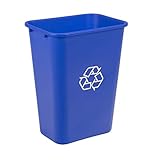
- VERSATILE USAGE: Ideal for 10 gallon trash bin needs in offices, public spaces, restaurants, schools, hospitals, and other high-traffic areas
- DURABLE CONSTRUCTION: Crafted from co-polymer polypropylene plastic, this 10 gallon trash can withstands everyday wear and tear for lasting performance
- EASY MAINTENANCE: Features a smooth finish on this bathroom garbage can that allows for quick and simple cleaning with a damp cloth
- CONVENIENT STORAGE: The lightweight and nestable design of this slim trash can allows for easy storage and transport alongside matching bins
- NOW AMAZON BASICS: Previously Amazon Commercial brand, now Amazon Basics
Plastic bags and film generally do not belong loose in the curbside cart. Some retailers offer separate collection, but confirm that a drop-off location accepts the particular film before taking it there. Hazardous products, electronics, and textiles likewise require instructions specific to your local waste system.
Independent reader supportYour contribution helps us test, update, and keep practical guides available for everyone.Why local rules matter
Collection lists differ because programs choose which materials they can handle. A national list can identify common material groups but cannot settle whether a particular product is accepted where you live. To find the applicable rules, look up the current recycling guide from your city, county, or waste hauler; if an item remains unclear, contact the provider rather than treating its symbol or material as proof.
How to interpret national recycling statistics
EPA figures provide historical U.S. context, not a prediction of what happens to an item placed in your local cart. The EPA says paper made up 23 percent of municipal solid waste generated each year; the cited page does not attach a year to that figure. For 2018, the EPA reports that Americans recycled about 68 percent of the paper they used. It also reports that the United States generated more than 35 million tons of plastics in 2018, of which 8.7 percent was recycled, and generated 12.3 million tons of glass, of which 31.3 percent was recycled. These national figures do not describe current-year performance, a particular municipality, or the likelihood that a specific item in a curbside cart was recycled.
Quick Recap
Sources and local guidance
- U.S. EPA: How Do I Recycle Common Recyclables
- U.S. EPA: Standardized Terms for Materials Accepted by Municipal Recycling Programs
- U.S. EPA: Frequent Questions on Recycling
- Illinois EPA: Interactive Curbside Bin Recycling Guide
- Metropolitan Government of Nashville and Davidson County: Recycle Right
Product prices and availability are accurate as of the date/time indicated and are subject to change. Any price and availability information displayed on Amazon at the time of purchase will apply.

