
What’s actually slowing this PC down?
Pick the symptom - the matching free tool is one click away.
iTechGuides is reader-supported. When you buy through links on our site, we may earn an affiliate commission. As an Amazon Associate I earn from qualifying purchases. Learn more
Top 5 Portable Headphone Amps: Your Sound Upgrade Guide starts with one verdict: the FiiO BTR17 is the best all-rounder for Bluetooth, USB, balanced headphones, and extra power; the Qudelix-5K is the best value for wireless EQ; the FiiO KA17 is the best wired-power choice; the KA15 is the affordable wired pick; and the iFi GO bar Kensei is the premium dongle.
A portable headphone amp can solve a real problem—insufficient volume, hiss, missing headphone connectivity, inconvenient cables, or the lack of useful EQ—but an external device is not automatically an audible upgrade. Choose according to your headphones, phone, connection preference, and need for power rather than DAC-chip names or maximum sample-rate figures.
Key takeaways
- The FiiO BTR17 is the most versatile pick because it combines Bluetooth, USB DAC operation, 3.5mm and 4.4mm outputs, EQ, a screen, and desktop mode.
- The Qudelix-5K offers 20-band parametric or graphic EQ, Bluetooth, USB operation, and iOS, Android, Windows, macOS, and Linux control through its apps and Chrome interface.
- The FiiO KA17 is the strongest value choice for wired use, with 3.5mm and 4.4mm outputs, desktop mode, THX amplification, and 10-band PEQ.
- Balanced output can provide more voltage or power, but a 4.4mm or 2.5mm connector is not automatically higher fidelity and requires a compatible headphone cable.
- Manufacturer power figures must be read with their impedance, output, gain, and operating-mode conditions; more power does not automatically mean better sound.
What is the best portable headphone amp?
The best portable headphone amp depends on whether you need Bluetooth, wired USB operation, high output, or advanced EQ. The FiiO BTR17 is the best overall recommendation for readers who want one device for a phone, computer, wireless listening, and demanding headphones. The Qudelix-5K is a better value for IEM owners and EQ enthusiasts, while the FiiO KA17 makes more sense when Bluetooth is unnecessary.
Do these 3 things before closing this tab:
1Scan for outdated or missing drivers - takes under a minute2Repair Windows errors before they cause bigger problems3Fix the driver behind crashes, sound loss and screen glitchesThis ranking is an editorial recommendation based on documented features, product differentiation, price signals, and use cases. It is not a claim that every product sounds better in a controlled, level-matched listening test. Independent measurements and listening impressions should be added if units become available for testing.
Popular on Amazon
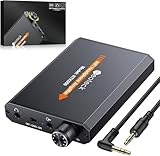
- 【16-300 Ohm Hi-Fi Impedance Compatibility】This headphone amplifier supports 16-300Ω impedance headphones, compatible with low,mid,and high-end devices. With SNR>120dB and THD+N=0.0003%, it effectively reduces noise and delivers pure sound quality. It’s perfect for mobile devices and it offers a premium audio experience
- 【Immersive Surround Sound】This 3.5 mm headphone amp featuring a two-stage gain switch to enhance signal input and a 3.5mm audio jack for output, it boosts power output while refining sound quality and tone, delivering clear, true stereo. Music lovers enjoy lifelike surround sound and immerse in precise audio effects.Meanwhile,this amplifier suAApports volume adjustment according to your needs,which is ideal for the elderly to enjoy music clearly
- 【Aluminum Matte Surface】Neoteck headset amp with fashion design provides you a comfortable handheld feeling while the aluminum matte surface makes it reduce interference and improves heat resistance.Besides,internal HiFi structure in amplifier supports more stable audio signal transmission
- 【12 Hours Long Battery Life】This long-lasting headset amplifier is powered by a 1500mAh lithium battery(Type-C power Cable Included) With over 12 hours of continuous use,whether you're on the go or using it for extended periods at home or in the studio, it ensures a high-quality audio experience
- 【Compact Smartphone-Sized Design】With a design similar in size to a smartphone and weighing only 102g, this portable headphone amplifier is lightweight and portable, taking up minimal space. Ideal for on-the-go travel, it lets you enjoy high-quality music anytime, anywhere
Quick comparison
| Product | Type | Outputs | EQ and controls | Battery | Best for | Price information | Main drawback |
|---|---|---|---|---|---|---|---|
| FiiO BTR17 | Bluetooth receiver and USB DAC/amp | 3.5mm; 4.4mm | 10-band PEQ; screen; physical controls; FiiO Control | Required for Bluetooth; runtime varies by codec, gain, volume, and mode | Most versatile and powerful portable setup | Current US price and stock must be checked at publication | Larger, more expensive, and more power than some IEM users need |
| Qudelix-5K | Bluetooth receiver and USB DAC/amp | 3.5mm; 2.5mm balanced | 20-band PEQ/GEQ; iOS, Android, and Chrome control | Manufacturer claims 6–20 hours depending on conditions | Value, IEMs, and software-based EQ | $109 was shown on Qudelix’s official store page when crawled; recheck current price | 2.5mm balanced connector and lower output than the most powerful picks |
| FiiO KA17 | Wired USB dongle DAC/amp | 3.5mm; 4.4mm | 10-band PEQ; desktop mode; hardware controls | Powered by the connected source unless externally powered in a supported setup | Wired power and 4.4mm value | Current US price must be checked at publication | No Bluetooth and potentially significant phone battery drain |
| FiiO KA15 | Wired USB dongle DAC/amp | Product information should be checked for the exact regional version before purchase | 10-band PEQ; FiiO Control; display-based controls | Powered by the connected source | Affordable wired everyday use | TechRadar reported a US launch price of about $99.99; current price may differ | Less headroom than the KA17 and no Bluetooth |
| iFi GO bar Kensei | Premium wired USB dongle DAC/amp | 3.5mm S-Balanced; 4.4mm balanced | iFi processing features including K2HD | Powered by the connected source | Premium construction, processing, and compact high output | £449 was shown on iFi’s UK product page; do not treat that as a US price | Expensive, wired-only, and premium processing is preference-dependent |
Prices are time- and region-sensitive. The Qudelix price is an official-store signal, the KA15 figure is a reported launch price, and the GO bar Kensei figure is a UK price. Check the retailer, currency, warranty region, availability, and return policy immediately before buying.
Do you need a portable headphone amp at all?
You may need a portable headphone amp when your current device cannot reach a comfortable listening level, clips or sounds strained, produces audible hiss or interference, lacks a headphone jack, or cannot provide the wireless operation, balanced connection, or system-wide EQ you want.
You probably do not need one when your existing source is already loud enough, clean, and quiet. A higher wattage rating, a more expensive DAC chip, or support for 768 kHz audio does not guarantee an audible improvement with ordinary streaming content. Compare devices at matched volume; a louder device can seem better even when the difference is only level.
Recommended Free Tools
What is the difference between a DAC and a headphone amplifier?
A DAC converts digital audio into an analog signal. A headphone amplifier supplies the voltage and current needed to drive the headphones. Most portable products combine both functions, so the labels “portable headphone amp,” “DAC/amp,” and “dongle DAC” often describe overlapping devices rather than completely separate categories.
A phone or laptop may already contain both circuits. An external unit becomes useful when the built-in output lacks power, has audible noise, does not support the desired connector, or offers less practical EQ and connection flexibility.
Which type of portable headphone amp should you buy?
Choose the product category before choosing a model. A USB dongle is the smallest wired option, a Bluetooth DAC/amp adds wireless convenience, and a battery-powered unit with desktop mode is the better fit for headphones that need substantial headroom.
| Type | How it connects | Advantages | Trade-offs | Best use |
|---|---|---|---|---|
| USB dongle | USB-C or Lightning data connection | Direct digital connection, usually low latency, no Bluetooth codec | Cable clutter and phone battery drain; adapter compatibility matters | Music, video, and gaming when wired use is acceptable |
| Bluetooth DAC/amp | Bluetooth from phone, tablet, or computer; wired headphones into the receiver | Phone can stay in a pocket or bag; convenient for walking and commuting | Requires charging; codec support, latency, signal conditions, and implementation affect results | Wireless everyday listening |
| Battery-powered unit with desktop mode | Bluetooth or USB, with external power for higher-output operation | More headroom for difficult over-ear headphones and flexible source options | Larger, costlier, and desktop mode reduces portability | Users who need one device for portable and desk listening |
| Portable digital audio player | Standalone operating system and internal or removable storage | Can play music without a phone | Unnecessary if a phone is already the preferred source | Listeners who want a separate music player |
Is wired USB or Bluetooth better?
Wired USB is the better choice for the lowest practical latency, direct digital connection, and avoiding Bluetooth codec dependencies. Bluetooth is the better choice when convenience matters more than cable-free source-to-receiver latency and when the phone supports the receiver’s preferred codec.
| Consideration | Wired USB | Bluetooth |
|---|---|---|
| Connection | USB-C or Lightning data cable | Wireless pairing from a compatible source |
| Codec compression | No Bluetooth codec is involved | Depends on source and receiver codec support |
| Latency | Usually lower and preferable for gaming | Can matter in competitive games and some video applications |
| Power | Usually draws power from the phone or computer | Uses the receiver’s rechargeable battery |
| Convenience | Requires a cable and correct adapter | Phone can remain in a pocket or bag |
| Quality ceiling | Depends on USB implementation and supported formats | Depends on codec, source, operating system, signal, and receiver implementation |
The Qudelix-5K supports Qualcomm QCC5124 Bluetooth, LDAC, aptX Adaptive, AAC, and aptX HD, while its listed USB DAC mode reaches 24-bit/96 kHz according to Qudelix’s official product specifications. The BTR17 supports SBC, AAC, aptX, aptX HD, LDAC, aptX Adaptive, and aptX Lossless according to FiiO’s official BTR17 parameter page. Both the source and receiver must support a codec for that codec to be used.
How much power do your headphones need?
Headphone sensitivity, impedance, listening volume, musical peaks, and available headroom all matter. Impedance alone does not determine whether an amplifier is necessary: some high-impedance headphones are efficient enough for portable use, while some low-impedance planar headphones can require substantial current.
Balanced output and desktop mode can change the available voltage or power, but power figures are meaningful only when the load impedance and test conditions match. FiiO specifies the BTR17 at up to 650 mW + 650 mW at 32 ohms in balanced desktop mode in its European product information; the figure is per channel and should not be treated as the BTR17’s result in every mode or connection. See FiiO’s BTR17 product information and the detailed BTR17 specifications for separate 3.5mm, 4.4mm, gain, and desktop-mode conditions.
The iFi GO bar Kensei is specified at 477 mW at 32 ohms through its balanced output and 300 mW at 32 ohms through its S-Balanced output. Those are manufacturer specifications, not a universal prediction of sound quality or compatibility; the figures are documented on iFi’s GO bar Kensei specification page.
Quick wins for a faster PC:
Scan for outdated or missing drivers - takes under a minuteDriver Scan →Repair Windows errors before they cause bigger problemsFix Now →Fix the driver behind crashes, sound loss and screen glitchesFind Drivers →More output generally provides more headroom for difficult headphones, but a 650 mW device will not automatically sound better than a 100 mW device. Efficient IEMs may instead make low noise, low gain, and fine volume control more important than maximum power.
What does balanced output mean?
Balanced headphone output uses a different circuit arrangement and can provide more voltage or power, depending on the design. A 4.4mm or 2.5mm connector is not inherently higher fidelity, and balanced operation requires a headphone cable wired for the matching balanced output.
Also popular on Amazon

- 【16-600Ω Headphone Amplifier】 The portable headphone amplifier provides a high-fidelity audio experience for headphones within the impedance range of 16-600Ω, delivering clear, detailed, and powerful sound wherever you go
- 【New Bluetooth Wireless Connectivity】 Featuring Bluetooth wireless functionality, this amplifier easily connects to your phone, iPad, MP3, or other Bluetooth-enabled devices without the need for cables, allowing for a hassle-free music experience. Enjoy high-quality audio without the constraints of wired connections
- 【With Bass and Volume Control Knob】 Equipped with a bass knob, you can adjust the bass intensity, providing a richer and smoother bass performance for a more immersive music experience. Enhances signal input for optimal headphone performance
- 【 Professional Call Function 】Use wired headphones with microphone,plug the headphones into the output port of the amplifier.You can use the function of making phone calls and smoothly make calls and receive replies from the other party through the amplifier (note:customers need to provide two TRRS cables themselves to use the call function)
- 【3.5mm Aux In and Out】 SNR>100db, THD+N=0.0003%, offering clearer and more realistic stereo sound with no distortion. It accurately filters noise, reduces background noise, and delivers high-quality audio. Wherever you are, enjoy an unparalleled acoustic experience
Do not connect a balanced headphone output to an incompatible single-ended wiring scheme with a casually chosen adapter. Buy a correctly wired balanced cable only when the headphone and the amplifier support the same connector and electrical arrangement. Balanced output is a power-delivery option, not a universal cure for weak sound, noise, or poor tuning.
For context, the Qudelix-5K lists a 3.5mm unbalanced output at 2.0 V RMS and a 2.5mm balanced output at 4.0 V RMS in Qudelix’s specifications. The BTR17 and KA17 use 3.5mm and 4.4mm outputs, which may suit buyers who already own modern 4.4mm balanced cables.
Which portable headphone amp is best for EQ?
The Qudelix-5K is the strongest EQ recommendation because it offers 20-band double-precision PEQ/GEQ, stores presets in internal memory, and supports iOS, Android, and Chrome-based control on Windows, macOS, and Linux. Qudelix describes these capabilities on its official Qudelix-5K page.
EQ can be a more meaningful practical upgrade than a higher advertised sample rate because EQ changes frequency balance directly. When boosting frequencies, reduce the preamp or overall level enough to prevent digital clipping. Check whether a chosen EQ preset applies in both Bluetooth and USB modes, whether the preset is stored in the device, and whether app control is required.
The FiiO KA17 provides a 10-band adjustable PEQ through FiiO’s software ecosystem and includes desktop mode, according to FiiO’s KA17 product information. FiiO also lists 10-band PEQ and app-based control for the KA15 in its KA15 product information. Verify the exact app, firmware, operating system, and mode behavior before purchase because software support can change independently of the hardware.
FiiO BTR17: best overall portable wireless amp
Best for: Buyers who want Bluetooth, USB, 3.5mm and 4.4mm outputs, a screen, EQ, and substantially more power than a typical pocket Bluetooth receiver.
The Tool Desk
Outbyte Driver Updater FREEScan for outdated or missing drivers - takes under a minuteDriver Scan →Outbyte PC Repair FREEClear out junk files and repair common Windows errorsFree Scan →The BTR17 works as a Bluetooth receiver and a wired USB DAC/amp. FiiO lists a THX AAA 78+ amplifier design, FiiO Control support, a 10-band PEQ, a screen, physical controls, 3.5mm and 4.4mm outputs, USB support up to 768 kHz/32-bit, and native DSD512 in its official BTR17 product information. High-resolution format support is a compatibility feature, not proof that ordinary music will sound better.
FiiO’s European product information gives the BTR17 approximate dimensions of 86.6 × 41.2 × 16.3 mm. The device is larger and heavier than the Qudelix-5K and a simple wired dongle, but the extra size accommodates the display, controls, battery-powered Bluetooth operation, and higher-output circuitry.
The BTR17 is especially useful when one device must serve a phone, laptop, Bluetooth source, wired USB source, and desktop setup. Its desktop mode uses external power, so the highest-output configuration is not equivalent to carrying a tiny receiver with no additional power arrangement. FiiO also identifies a driver-free UAC 1.0 mode intended for compatibility with devices including Nintendo Switch and PS5 in its European product information.
Limitations: The BTR17 may be unnecessary for efficient IEMs, can expose hiss if a sensitive IEM is paired with an aggressive gain setting, and costs more than value-focused alternatives. Battery life depends on codec, output, gain, volume, display use, and connection mode.
Crashes, No Sound, or Screen Glitches?
Random freezes, missing sound and display glitches usually trace back to one bad driver. Find and replace yours safely.Free scan · under a minuteWindows Errors? Fix Them Before They Spread
Repair common Windows errors and clear accumulated junk for a smoother, more stable PC - no reinstall needed.Free scan · no reinstallVerdict: Buy the BTR17 when “best” means the broadest combination of wireless convenience, wired flexibility, controls, balanced output, and headroom. Do not buy it merely because its maximum power or supported sample rate is larger.
Qudelix-5K: best value and best EQ software
Best for: IEM owners, EQ enthusiasts, and buyers who want an inexpensive wireless receiver with unusually deep software control.
The Qudelix-5K provides Bluetooth and USB DAC operation, a 3.5mm unbalanced output, and a 2.5mm balanced output. Qudelix lists LDAC, aptX Adaptive, AAC, and aptX HD support, a claimed 6–20-hour battery range depending on operating conditions, an integrated microphone, Qualcomm cVc noise cancellation, and iOS, Android, and Chrome control for Windows, macOS, and Linux on its official product page.
Also popular on Amazon

- Mini HiFi headphone amplifier,which make it convenient to carry, can output remarkable sound without distortion.
- Amp Using Time: More Than 5 Hours, Load Impedance: 16-300Ω.
- Two-stage gain switch enhances the signal input into the amp circuit for optimal performance of the headphones.
- 3.5mm AUX input and output and SNR>120dB and Distortion 0.004% make it possibility to output not just louder sound, but a sharper.
- Compatibility MP3, MP4, Phones, laptop Computer and 3.5mm Audio a Various of Digital Devices.
The Qudelix-5K’s defining advantage is its 20-band double-precision PEQ/GEQ and internal preset storage. That makes the Qudelix-5K a particularly strong choice for listeners who want to correct headphone frequency response, switch profiles between headphones, or control several computers and phones without relying on one operating system’s audio settings.
The official store page showed a $109 price signal when crawled, but price and availability can change. The 2.5mm balanced connector is less common than 4.4mm, and maximum output is lower than the BTR17, KA17 in desktop mode, and GO bar Kensei. USB operation is listed up to 24-bit/96 kHz, which is ample for many normal listening setups but lower on paper than the maximum USB formats advertised by some competitors.
Verdict: Buy the Qudelix-5K if wireless convenience and configurable EQ matter more than a screen, 4.4mm output, or maximum power. The Qudelix-5K is the most sensible choice for many IEM users because software flexibility is more useful than unused amplifier headroom.
FiiO KA17: best wired power and value
Best for: Buyers who want a wired USB dongle with 4.4mm output, desktop mode, and more output capability without paying for Bluetooth.
The KA17 combines a USB DAC with 3.5mm and 4.4mm outputs, a THX AAA 78+ amplifier, 10-band adjustable PEQ, desktop mode, and protection features for temperature and DC output. FiiO lists dual ESS ES9069Q DAC chips and USB support up to 768 kHz/32-bit in its official KA17 information. Those component and format specifications do not by themselves establish better audible performance.
The KA17 is the rational wired alternative to the BTR17. The KA17 removes Bluetooth and its battery, which reduces wireless convenience but can make sense for a laptop or phone user who always listens over USB. The KA17 draws power from the connected source in ordinary use, so phone battery drain is an important trade-off. Desktop mode can materially increase output but requires the relevant external-power arrangement.
Limitations: The KA17 is not a wireless receiver, and its higher-output modes may be excessive for efficient IEMs. Compare output figures only when the product page gives the same impedance, connector, gain, and operating mode.
Verdict: Buy the KA17 if you want wired power and a 4.4mm output, and you do not need Bluetooth. The KA17 is a better-value choice than the BTR17 for a cable-first setup.
FiiO KA15: best affordable wired everyday pick
Best for: Buyers who want a compact wired DAC/amp with EQ and more controls than a minimalist dongle.
Free tools Windows power users keep installed
One-click scans. No signup required.
The KA15 sits below the KA17 in FiiO’s product line and adds 10-band PEQ and app-based control through FiiO’s product ecosystem. FiiO documents the KA15’s EQ and software features on its regional KA15 product page. Confirm the output connectors and exact regional version before ordering because product information and availability can vary by market.
TechRadar reported an approximately $99.99 US release-period retail price in its KA15 review. That is a launch-price signal, not a guaranteed August 2026 price. If the KA17 is available for only a small premium, the KA17’s extra headroom and 4.4mm-oriented feature set may be more compelling.
The KA15 is aimed at ordinary portable headphones and IEMs rather than the most demanding full-size headphones. Like other wired dongles, the KA15 uses power from the connected phone or computer and does not provide Bluetooth.
Verdict: Buy the KA15 when you want an affordable wired everyday device with EQ and controls. Choose the Qudelix-5K instead if wireless use is essential, or move to the KA17 if difficult headphones and extra headroom are priorities.
Also popular on Amazon

- 【High-Fidelity Sound】Neoteck 16-300Ω Audio Headphone Amplifier Boasts a 3.5mm AUX Input and Output, with an SNR>120Db and THD+N of 0.0003%. which Allows it to Output not only Louder Sound but also a Sharper and More Realistic Stereo Sound without Distortion. Get Lost in your Music like Never Before.
- 【Enhanced Bass Performance】With our Bass Switch on the Headphone Amplifier, you can Enjoy a More Delicate and Mellow Bass Performance, Providing you with an Even More Enjoyable and Immersive Music Experience. This is the Perfect Accessory for Any Audiophile.
- 【Universal Compatibility】Our HiFi Headphone Amplifier Boasts Remarkable Compatibility for Various Digital Devices such as MP3 Players, Ipods, Mobile Phones, Laptops, Notebooks/Netbooks, or Portable CD Players. You can Always Enjoy High-Quality Sound with Various Mainstream Devices.
- 【Extended Battery Life】Our Audio Power Amplifier Features a Rechargeable Battery that Allows it to Stay Uninterrupted for More than 8 Hours ,which Make You Enjoy Non-Stop High-Quality Sound without Worrying about Battery Life and Perfect for Long Commutes or Trips.(Not Recommended to Use while Charging Due to Safety and Current Interference)
- 【Compact and Durable】Neoteck Headphone Amplifier with Aluminum Matte Surface is Durable to Use and Provides a Comfortable Handheld Feeling. Moreover,Lightweight and Compact Design Makes it Easy to Carry Wherever you Go.Never Compromise on Sound Quality Again–Take High-Fidelity Listening Experience with You Anywhere.
iFi GO bar Kensei: best premium USB dongle
Best for: Buyers who want a compact, premium, wired-only dongle with high output and iFi’s selectable processing features.
The GO bar Kensei has a USB-C input, 3.5mm S-Balanced and 4.4mm balanced outputs, and support for PCM up to 384 kHz, DSD, DXD, and MQA full decoding according to iFi’s official specification page. iFi also lists K2HD and other analogue-stage and processing features. Present those features as selectable processing that some listeners may prefer, not as objectively superior fidelity.
iFi specifies 477 mW at 32 ohms balanced and 300 mW at 32 ohms through the S-Balanced output. The GO bar Kensei weighs 65.5 g and measures 65 × 22 × 13.2 mm. The same official page showed a £449 UK price signal; that figure must not be presented as a US price. US price, warranty, and regional availability require separate verification.
The GO bar Kensei is a premium upsell rather than a value recommendation. It is wired-only, draws power from the source, and costs substantially more than the Qudelix-5K, KA15, and KA17 in the price signals available for this comparison.
Do these 3 things before closing this tab:
1Fix the driver behind crashes, sound loss and screen glitches2Repair Windows errors before they cause bigger problems3Scan for outdated or missing drivers - takes under a minuteVerdict: Buy the GO bar Kensei when premium construction, compact high output, and iFi processing justify the price. Buy the KA17 instead if you mainly want wired power and 4.4mm output at a more rational value.
Which is better: the BTR17 or Qudelix-5K?
The BTR17 is better for output power, 4.4mm compatibility, screen-based control, and all-in-one versatility; the Qudelix-5K is better for price, compactness, battery-conscious value, and advanced EQ software.
| Choose the BTR17 when you need | Choose the Qudelix-5K when you need |
|---|---|
| Bluetooth, USB, and desktop-mode flexibility | Bluetooth and USB without a display or larger chassis |
| 3.5mm and 4.4mm outputs | 3.5mm and 2.5mm balanced outputs |
| More headroom for demanding headphones | 20-band PEQ/GEQ and internal preset storage |
| Physical controls and a screen | Cross-platform app and Chrome control |
| One device for portable and desk use | Small, inexpensive wireless use, especially with IEMs |
Which is better: the KA17 or KA15?
The KA17 is the better choice when extra output and 4.4mm-oriented flexibility matter; the KA15 is the better choice when ordinary IEMs or portable headphones are easy to drive and the KA15 is meaningfully cheaper.
Both are wired USB products with EQ-oriented software support, but the KA17 is positioned higher and includes desktop mode and THX AAA 78+ amplification. The KA15 is the more approachable everyday option, although a small sale-driven price difference can make the KA17 the stronger purchase.
Quick wins for a faster PC:
Fix the driver behind crashes, sound loss and screen glitchesFind Drivers →Clear out junk files and repair common Windows errorsFree Scan →Scan for outdated or missing drivers - takes under a minuteDriver Scan →Which portable amps are best for IEMs and full-size headphones?
The Qudelix-5K is the safest general recommendation for IEMs because its low-power, software-focused design offers useful EQ and wireless convenience; the BTR17 and KA17 are better suited to full-size headphones that need more headroom. The GO bar Kensei is also powerful, but its premium price is difficult to justify for easy-to-drive IEMs alone.
Very sensitive IEMs can reveal background hiss from a high-power amplifier. Start with the lowest gain, use conservative volume, and test both outputs. If hiss remains, a lower-noise dongle or an inline attenuator may be more appropriate than buying an even more powerful amplifier. Independent noise measurements should be checked before making a definitive low-noise claim.
For full-size headphones, consider sensitivity as well as impedance. A 300-ohm headphone is not automatically difficult, and a low-impedance planar headphone is not automatically easy. Manufacturer output figures are useful only when their impedance, output type, gain, and desktop-mode conditions resemble your setup.
How do you check phone, computer, and console compatibility?
USB audio compatibility depends on the phone connector, operating system, adapter, cable, USB Audio Class mode, and whether the product needs a driver. Do not generalize from one tested phone or computer to every device.
| Source | What to verify | Practical guidance |
|---|---|---|
| USB-C Android phone | USB audio routing, data cable, power behavior, and app support | Use a data-capable USB-C cable; unlock the phone and select the external output if required |
| USB-C iPhone | USB-C data connection and source power behavior | Use a suitable data cable and confirm the phone recognizes the DAC |
| Lightning iPhone | Lightning-to-USB adapter that supports data, not charging only | Use an appropriate Apple-compatible data adapter and check power requirements |
| Windows or macOS | Driver, USB mode, app availability, and exclusive audio control | Check whether the manufacturer provides native control or a browser-based interface |
| Nintendo Switch or PS5 | UAC mode, console USB support, microphone behavior, and physical port | The BTR17’s official material identifies a driver-free UAC 1.0 mode for compatibility with devices including Nintendo Switch and PS5 |
Microphone input and inline-button support are separate from headphone playback. Verify those features specifically if calls, voice chat, or console microphones matter.
Also popular on Amazon

- 1️⃣ *🚗 Boost Old Car AUX — Louder & Clearer*----:Small Headphone amp that makes my old car’s AUX sound louder without upgrading the stereo.✅ Connects between phone/MP3 and car AUX✅ Louder volume, fuller bass, cleaner treble✅ 16-300Ω impedance range.Compact & rechargeable — toss it in your glove box.
- 2️⃣ *🎧 Drive 300Ω Headphones from Your Laptop*----:✅ 30mW into 16Ω / 15mW into 300Ω✅ 2-stage gain — match low (16-80Ω) or high (80-300Ω)✅ SNR >100dB, THD+N as low as 0.0003%.Unleash the full potential of demanding headphones.
- 3️⃣ *🎛️ Studio-Grade Specs in a Palm-Sized Device*----:✅ SNR >100dB — black background, no hiss✅ THD+N 0.0003% — virtually no distortion✅ 2-stage gain — for IEMs to 300Ω cans✅ 3.5mm in/out — phones, laptops, MP3, consoles✅ Aluminum housing — shields interference, premium feel
- 4️⃣ *🔋 12+ Hours of Playtime*----:✅ USB rechargeable ✅ 2-3 hour charge = 12+ hours playback✅ Slim profile (95×52×13mm) — fits any pocket✅ Includes 12cm + 100cm audio cables.Enough for a cross-country flight or full day of listening.
- 5️⃣ *🎁 Perfect For*----:✅ Audiophiles with 250-300Ω headphones✅ Old car owners — boost AUX volume & clarity✅ Mobile listeners — upgrade phone/laptop sound✅ Gamers — enhance footsteps & environmental audio✅ Music producers — low-distortion monitoring on the go✅ Gift for music lovers — Father’s Day, birthday, holiday
How do you set up a portable headphone amp?
- Connect the DAC/amp with a data-capable USB cable. A charging-only cable will not carry audio.
- For an older Lightning iPhone, use an adapter that supports data and meets the DAC’s power requirements.
- Unlock the phone or computer and confirm that the external DAC/amp appears as the audio output.
- Start at low volume and the lowest gain setting.
- Use a balanced output only with a correctly wired balanced headphone cable. Do not improvise with an incompatible adapter.
- If EQ boosts frequencies, reduce the EQ preamp or overall level to prevent digital clipping.
- Test ordinary listening, quiet passages, and loud peaks for hiss, distortion, or insufficient volume.
- For Bluetooth, pair the receiver, select a suitable codec, and test latency and connection stability before relying on it for gaming.
How do you fix common portable amp problems?
No sound over USB
Check the USB-C or Lightning cable, phone permissions, USB audio routing, device volume, hardware mute state, exclusive-control apps, DAC recognition, data-adapter support, and USB mode. Disconnect the unit, unlock the phone, reconnect it, try another data cable, restart the music app, and test another source.
Bluetooth crackling or dropouts
Check codec selection, distance, obstructions, wireless congestion, firmware, app updates, and whether the receiver is behind your body or inside a bag. Temporarily switch to AAC or another more stable codec, re-pair the receiver, and test with the phone nearby.
Distortion or unexpectedly low volume
Check low-gain mode, EQ boost clipping, desktop-mode requirements, balanced-output wiring, the headphone cable, the adapter, and the source’s volume limit. Reduce EQ preamp, disable boost processing, use high gain only when necessary, and compare with a known-good cable.
The Tool Desk
Outbyte PC Repair FREEClear out junk files and repair common Windows errorsFree Scan →Outbyte Driver Updater FREEScan for outdated or missing drivers - takes under a minuteDriver Scan →Hiss with IEMs
Use the lowest gain and test both outputs. If hiss remains, consider a lower-noise dongle or an inline attenuator rather than a more powerful amplifier.
Shorter-than-expected battery life
Bluetooth codec, output mode, volume, gain, screen use, and balanced headphones can all reduce runtime. Treat manufacturer battery figures as conditional ranges rather than guaranteed daily runtime.
How should you choose among the five?
A transparent buying framework gives power and headphone compatibility 25% of the decision, connectivity and compatibility 20%, portability 20%, software and EQ 20%, and price and value 15%. Compare power at the same impedance where possible, identify whether a figure requires balanced or desktop mode, and separate manufacturer ratings from independent measurements.
| Budget or priority | Recommendation | Why |
|---|---|---|
| Under roughly $120 and wireless EQ | Qudelix-5K | Bluetooth, broad software control, and 20-band PEQ |
| Under roughly $120 and wired EQ | KA15 | Compact wired format with 10-band PEQ; verify current price |
| Wired power and 4.4mm output | KA17 | Desktop mode, THX amplification, and 10-band PEQ |
| Bluetooth plus USB and desktop flexibility | BTR17 | Most complete feature combination and greater output headroom |
| Premium wired dongle | GO bar Kensei | Premium construction, processing features, and high specified output |
Do not let DAC-chip branding dominate the decision. Output capability, noise with sensitive IEMs, EQ behavior, connector type, phone compatibility, battery use, and latency are more useful buying criteria for most readers.
Frequently Asked Questions
Will a portable headphone amp make every pair of headphones sound better?
No. A portable headphone amp is most useful when the existing source lacks volume, headroom, low noise, a needed connector, wireless convenience, or effective EQ. A higher power rating or higher supported sample rate does not guarantee an audible improvement.
Can a 4.4mm balanced cable be used with any headphone amplifier?
No. A balanced cable must match the amplifier’s balanced output and the headphone’s wiring. A 4.4mm connector is not automatically higher fidelity, and an incompatible adapter can create an unsafe single-ended connection.
Is Bluetooth suitable for gaming with a portable headphone amp?
Bluetooth can introduce latency that matters for competitive gaming and some video applications. Use USB mode when low latency is important, and verify the specific codec, console, operating system, and receiver combination.
Does a high-impedance headphone always need a portable amplifier?
No. Headphone sensitivity matters alongside impedance. Some high-impedance headphones are efficient enough for moderate portable use, while some low-impedance planar headphones can require substantial current and headroom.
What’s actually slowing this PC down?
Pick the symptom - the matching free tool is one click away.
The Bottom Line
Bottom line: Buy the FiiO BTR17 if you want the most versatile portable device for Bluetooth, USB, balanced headphones, and extra power. Buy the Qudelix-5K for the best wireless value and EQ software, the FiiO KA17 for wired power and 4.4mm output, the KA15 for affordable wired everyday use, and the iFi GO bar Kensei only when its premium construction and processing features justify the price. Match the device to your headphones and connection needs rather than buying maximum specifications you will not use.

