
The top 5 dash cam parking modes are buffered motion-and-impact detection, time-lapse recording, low-bitrate continuous recording, impact-only energy-saving mode, and radar-assisted adaptive recording. Buffered motion-and-impact detection is the best all-around choice for most drivers, but every mode requires model-compatible constant power and battery protection.
“Parking mode” is not one universal feature. It describes several ways a dash cam can monitor a vehicle after the ignition is switched off or the vehicle has remained stationary. The useful differences are whether the camera records continuously, saves footage before an event, protects the vehicle battery, and covers both front and rear cameras.
Key takeaways
- Buffered motion-and-impact detection is the strongest general-purpose choice because supported cameras can save footage from immediately before detected motion or an impact.
- Time-lapse parking mode provides broad continuous coverage, but reduced-frame-rate footage is not equivalent to normal-speed video for identifying fast events.
- Low-bitrate recording covers a scene continuously and can be more dependable than motion detection in busy locations, at the cost of more storage and power.
- Impact-only or energy-saving mode uses less power but can miss an approach, a light scrape, or the moments before a collision.
- Radar-assisted and adaptive parking modes are specialized, model-dependent systems that may require a radar module, battery pack, or proprietary installation.
What are the top 5 dash cam parking modes?
The top 5 dash cam parking modes are ranked below by practical usefulness, not by a universal industry standard. Manufacturers use different names for similar functions, and one camera may offer only two or three of these recording behaviors.
| Rank and mode | What it records | Pre-event footage? | Power use | Storage use | Best for | Main drawback |
|---|---|---|---|---|---|---|
| 1. Buffered motion-and-impact detection | Motion-triggered and impact-triggered event clips | Yes, when the exact model supports buffering | Low to moderate | Low to moderate | Overnight parking and hit-and-run evidence | False triggers or missed activity outside the lens view |
| 2. Time-lapse recording | Continuous scene coverage at a reduced frame rate | Not in the same sense as buffered event recording | Moderate | Lower than normal-speed continuous recording | Long parking periods where chronological coverage matters | Fast events may be difficult to inspect |
| 3. Low-bitrate continuous recording | Continuous video encoded at a lower bitrate | Not usually event-buffered | Moderate to high | Moderate to high | Busy parking lots with constant movement | More battery and card consumption than event-only modes |
| 4. Impact-only or energy-saving mode | Low-power monitoring followed by impact-event recording | Usually no | Lowest among the main options | Low | Multi-day parking and battery preservation | Can miss non-triggering scrapes and approaching people |
| 5. Radar-assisted or adaptive parking mode | Activity selected by radar or intelligent power management | Model-dependent | Low to moderate, depending on hardware | Model-dependent | Extended surveillance on supported systems | Extra hardware, installation, and compatibility requirements |
1. Why is buffered motion-and-impact detection the best overall parking mode?
Buffered motion-and-impact detection is the best overall parking mode for most drivers because the camera temporarily retains recent video and adds that pre-event footage when motion or an impact triggers an event file. Pre-event video can show a person approaching, a vehicle maneuvering beside the car, or the seconds before a door strike.
Quick wins for a faster PC:
Fix the driver behind crashes, sound loss and screen glitchesFind Drivers →Clear out junk files and repair common Windows errorsFree Scan →#1 Best Overall

- UPSCALED 4K FRONT + 1080P REAR DUAL DASH CAM: The ROVE R2-4K DUAL records the road ahead and behind at the same time. The front camera captures at 2.5K (QHD) and intelligently upscales to 4K (2160P) for higher-detail playback, while the rear camera records at Full HD 1080P. This is upscaled 4K, not native 4K, engineered to show sharper everyday detail than standard 1080P dash cams, so you can read license plates, signs, and surroundings in front and rear footage.
- SONY STARVIS 2 IMX675 SENSOR + SUPER NIGHT VISION: The front camera uses a Sony STARVIS 2 IMX675 5MP image sensor with a wide F1.5 aperture (F1.8 rear) and HDR to pull in more light for clearer low-light footage. This advanced sensor enhances nighttime clarity, helping capture license plates, road signs, and surrounding vehicles with greater reliability when driving after dark, through tunnels, or in dusk and dawn conditions.
- ULTRA FAST 5.8GHz WIFI/ UP TO 20MB/s DOWNLOAD SPEED: With its built-in dual-band 5.8GHz and 2.4GHz WiFi, you can use the ROVE dash cam app to view and manage dash cam recordings instantly on your iPhone and Android smartphone. Using the ROVE app, download your recorded videos directly to your smartphone at up to 20 MB/sec, then easily share them on social media with friends and family. Additionally, manage camera settings and update the latest firmware over-the-air via the ROVE App.
- CAR CAMERA WITH GPS: The new front and rear dashcam comes with built-in GPS, which enables you to view real-time live speed and compass on the 3” IPS wide camera screen. It records precise driving routes, locations, and speed stamps directly on the video so you can watch dashcam videos with GPS data using ROVE's free GPS Player on your PC or Mac & get additional evidence when you need it.
- FEATURES WITH STATE-OF-THE-ART TECHNOLOGY INCLUDED: Experience peace of mind with this front and rear car dash cam. It comes with a free 128GB microSD card and offers advanced features such as an f1.5 aperture, motion detection, G-sensor, seamless loop recording, emergency video lock, screen saver, live speed and compass direction, voice guidance, ring of threads for optional CPL filter, a built-in supercapacitor for extended product life, support for up to 1TB microSD cards, and many more.
BlackVue describes motion detection as saving a buffered one-minute clip and separately buffering impact events in its recording-mode documentation. VIOFO describes buffered parking as an available implementation of supported auto-event-detection modes in its advanced buffered parking documentation. The exact buffer length, cameras included, event duration, and file-protection behavior must be confirmed for the exact model.
Buffered recording is especially valuable for a hit-and-run. An impact-only camera may wake after the collision, while buffered motion detection may already be recording the striking vehicle’s approach. Buffered recording does not guarantee a readable license plate: distance, angle, lighting, motion blur, weather, window tint, exposure, and camera resolution still determine what the footage shows.
When should you choose buffered motion detection?
- Choose it for overnight street parking on a quiet residential street.
- Choose it for workplace or shopping-center parking where an approaching person or vehicle may be visible before contact.
- Choose front-and-rear support when rear impacts, bumper strikes, or door dings are concerns.
- Lower motion sensitivity or narrow detection zones when rain, trees, shadows, headlights, or passing traffic create repeated false triggers.
Motion detection responds to visible activity; impact detection responds to a physical jolt measured by the G-sensor. A minor scrape or door ding may not create enough force to trigger impact recording, and activity outside the camera’s field of view cannot be detected.
2. When is time-lapse parking mode the better choice?
Time-lapse parking mode is the better choice when broad, continuous scene coverage matters more than normal-speed detail. The camera records throughout the parking period at a reduced frame rate, producing a chronological record without saving full-rate video continuously.
BlackVue documents a one-frame-per-second implementation in which a one-minute time-lapse clip represents 30 minutes of real time and plays at 30 times normal speed; the BlackVue manual describes that model-specific behavior. Other cameras can use different frame rates and playback behavior.
Time lapse can use less storage than ordinary continuous recording, but time-lapse footage is not ordinary video. A fast-moving car, a hand reaching toward the vehicle, or a brief door impact may appear only in a few frames or may be difficult to analyze. Reduced-frame-rate recording may also omit audio, depending on the camera.
Who benefits most from time lapse?
Time lapse suits drivers who want to review what happened throughout a long parking period, such as a vehicle left at work or in a busy lot. Time lapse is less suitable when the primary goal is capturing a clear, normal-speed view of a rapidly developing collision.
3. Why choose low-bitrate continuous recording?
Low-bitrate continuous recording keeps recording continuously while using a lower video bitrate than normal driving footage. Low-bitrate recording can outperform motion detection in a busy parking area because constant pedestrian and vehicle movement can cause motion mode to trigger repeatedly or create too many protected files.
Recommended Free Tools
Rank #2
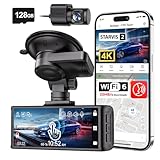
- [4K+1080P Dual Recording] REDTIGER F7N TOUCH captures your drive journey in stunning 4K UHD resolution with STARVIS 2 sensor 170° wide-angle view for the front dash cam and 1080P FHD resolution 140° wide-angle for the rear car camera. Equipped with WDR and HDR technology, the enhanced super night vision ensures better visibility even in low-light situations, providing you with reliable recordings day and night.
- [Voice Control & Touch Screen] F7NTOUCH dashcam features voice commands, allowing for hands-free control of your 4K car camera, which enhances safety by minimizing distractions. The dual camera dash cam also has smart touchscreen that can lock emergency video, turn on wifi, and capture scenery with one click. Redtiger also retains the buttons, multiple control methods are integrated.
- [Built-in GPS & 5.8GHz WiFi] Both Android and IOS users can connect to dashcam WiFi via the REDTIGER Cam app. Although the dash cam is installed wired, you can enjoy wireless control on your smartphone, faster 20MB/s download speed and share your driving experiences in real-time with friends and insurance companies. Car recorder built-in GPS provides traceable location, speed, and accurate route in the recordings.
- [Loop Recording & G-Sensor] REDTIGER F7N TOUCH dual channel dash cam automatically overwrites the oldest footage when the memory is full, ensuring endless recording with the included 128GB card. With a built-in G-sensor that detects sudden movements or impacts, it automatically locks and protects the associated footage when an event is detected on the road, ensuring it won't be overwritten during loop recording.
- [24-hour Parking Monitoring*] REDTIGER Car dashboard camera offers G-Sensor Parking Mode that automatically record when it detects any collisions or sudden motion while vehicles is parked. Time Lapse Parking Mode provides continuous surveillance by offering a condensed overview of any events that may occur during parking periods. *Please note that the parking monitoring function requires a separate hardwire kit.
VIOFO lists low bitrate as a distinct parking option alongside auto-event detection and time lapse in its parking-mode selection guide. Continuous recording offers more complete coverage than event-only recording, but the camera still cannot record outside its lens view and the lower bitrate may reduce fine detail.
The trade-off is predictable: low bitrate uses more storage than motion-triggered recording and generally draws more power than an impact-only mode. A low-bitrate setting is a practical compromise for a curbside location or shopping center where the scene is active enough to make motion detection unreliable.
4. When is impact-only or energy-saving mode safest for the battery?
Impact-only or energy-saving parking mode is safest for conserving power because the camera remains in a low-power state and records primarily after the G-sensor detects a physical impact. This mode is appropriate for multi-day parking when preserving the starter battery matters more than documenting every approach.
BlackVue says its power-saving mode does not support pre-buffering and begins event recording within approximately two seconds of impact detection in supported implementations, according to its parking-mode settings documentation. Thinkware also lists energy-saving parking options, while Garmin documents Parking Guard behavior and constant-power requirements in its battery-impact support article.
The Tool Desk
Outbyte PC Repair FREEClear out junk files and repair common Windows errorsFree Scan →Outbyte Driver Updater FREEFix the driver behind crashes, sound loss and screen glitchesFind Drivers →Impact-only mode can miss a person walking up to the car, a light scrape that does not trigger the G-sensor, or the approach immediately before a collision. Impact sensitivity is also model-specific. Use impact-only mode for long-term parking, a weak or sensitive vehicle electrical system, or situations where battery preservation is the overriding priority—not as the strongest choice for detailed hit-and-run evidence.
5. What is radar-assisted or smart adaptive parking mode?
Radar-assisted or smart adaptive parking mode uses a radar accessory or intelligent power-management system to reduce unnecessary camera operation and wake the camera when relevant activity is detected. Radar-assisted parking is a specialized option rather than a universal dash-cam category.
Thinkware lists RADAR Parking Mode among its parking options. Thinkware’s Smart Parking Recording documentation also describes lower-power behavior that can change when battery voltage or operating temperature requires protection.
Radar-assisted systems can be attractive for extended surveillance, but the specific camera may require a separate radar module, battery pack, or proprietary installation. Radar parking is not automatically better than buffered motion detection: a well-implemented buffered system may provide better pre-event evidence with less complexity, while radar’s main advantage is more selective activity detection and power management.
Free tools Windows power users keep installed
One-click scans. No signup required.
Rank #3
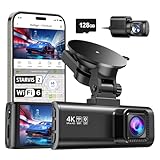
- [4K+1080P Front & Rear Recording] REDTIGER F7NP dash cam captures every detail with stunning 4K front and 1080P rear video. Featuring the advanced STARVIS 2 sensor plus the 170° front and 140° rear wide-angle lens, this dash camera delivers sharper images, balanced lighting, and reliable evidence day or night. Ideal for commuting, road trips, rideshare drivers, and new drivers.
- [STARVIS 2 Sensor & WDR Night Vision] Equipped with the advanced STARVIS 2 sensor, F1.5 large aperture, and 6-layer optical lens, F7NP 4K dual dash cam delivers clear, high-contrast footage in any lighting. WDR and HDR technology balance highlights and shadows, ensuring sharp night vision and crisp details day or night, providing reliable evidence and enhanced safety for every drive.
- [Built-in 5.8GHz WiFi & Smart App] Connect your smartphone to the dashcam’s built-in 5.8GHz WiFi to enjoy ultra-fast downloads up to 20MB/s. Using Redtiger Cam app, you can preview, download, and replay videos in real time, check GPS ata (route, speed, and location), and manage settings effortlessly, making it simple to review footage and share important moments.
- [Loop Recording & Free Memory Card] This car camera supports seamless loop recording to ensure continuous coverage without interruption. Older files are automatically overwritten when storage is full, while important events are safely locked. A free memory card is included, giving you ample space for 4K recordings and allowing you to use the camera right out of the box.
- [24/7 Parking Mode* & G-Sensor] Enjoy round-the-clock protection with two parking modes: time-lapse recording for continuous low-bitrate monitoring and G-sensor mode that records when collision is detected. The car security camera with G-sensor automatically locks important clips, ensuring crucial evidence is safely preserved even while your vehicle is parked.(*Hardwire kit needed.)
Which parking mode is best for your situation?
The best dash-cam parking mode depends on how long the vehicle sits, how much movement surrounds it, and how much battery risk you can accept.
| Parking situation | Recommended mode | Why | Important qualification |
|---|---|---|---|
| Quiet overnight street parking | Buffered motion-and-impact detection | Captures an approaching person or vehicle and can preserve pre-event footage | Use a clear front-and-rear view and tune motion sensitivity |
| Busy curbside or shopping-center parking | Low bitrate or time lapse | Continuous coverage avoids relying entirely on motion triggers | Expect greater storage and power use than impact-only mode |
| Workplace parking for one day | Buffered motion-and-impact detection | Balances event evidence, power use, and storage | Verify that parking mode remains active after ignition-off |
| Airport or vacation parking for several days | Impact-only, energy-saving, or adaptive mode | Reduces starter-battery demand during long inactivity | A dedicated dash-cam battery pack may be the safer power source |
| Vehicle with a weak or aging battery | Energy-saving mode or no parking mode | Reduces the chance of excessive battery discharge | Test the battery or use a dedicated battery pack rather than lowering the cutoff |
| High concern about rear impacts | Buffered front-and-rear system | Provides a better chance of covering rear and front approaches | Rear-camera parking recording may consume more power and may need separate activation |
Does dash-cam parking mode drain the car battery?
Yes. Dash-cam parking mode can drain the vehicle battery because parking surveillance requires power after the ignition is off. Battery risk depends on battery age and health, battery capacity, the vehicle’s normal parasitic draw, the number of cameras, camera power consumption, ambient temperature, parking duration, voltage cutoff, and how long the vehicle is driven afterward.
A low-voltage cutoff reduces risk but does not guarantee that the vehicle will start. A weak battery can become unreliable before a cutoff activates, and cold weather reduces available battery performance. Lowering the cutoff may extend recording while increasing the chance of a no-start condition.
BlackVue documents selectable voltage and timer protection and gives example default values of 12.0 V for passenger vehicles, with a recommendation of 12 V or higher in winter, in its recording-mode documentation. Garmin documents shutdown below 12 V for its Constant Power Cable in its support guidance. Those are manufacturer-specific settings, not a universal safe voltage for every vehicle, battery, climate, or dash cam.
PC Slower Than It Used to Be?
A free scan shows the junk files, broken settings and background clutter dragging Windows down - then fixes them in one click.Free scan · Windows 10 & 11Crashes, No Sound, or Screen Glitches?
Random freezes, missing sound and display glitches usually trace back to one bad driver. Find and replace yours safely.Free scan · under a minuteWhat power equipment does parking mode require?
| Power method | How it works | Advantages | Risks or limits |
|---|---|---|---|
| Hardwire kit | Connects to the fuse box and usually provides constant power plus ACC detection | Clean permanent installation and common battery-protection features | Requires correct fuse selection, routing, and installation |
| OBD power cable | Uses the vehicle’s diagnostic port and communicates ignition state on supported systems | Easier installation than fuse-box wiring | May be incompatible with some vehicles or occupy the diagnostic port |
| Always-on 12-volt outlet | Powers the camera through a socket that remains live after shutdown | Simple installation | The socket may switch off, lack low-voltage protection, or leave the camera in normal recording mode |
| Dedicated dash-cam battery pack | Supplies parking power separately from the starter battery | Better for multi-day parking, multiple cameras, or sensitive vehicle batteries | Higher purchase cost, installation space, and a need to recharge while driving |
VIOFO describes OBD and hardwire cables with ACC detection and low-battery protection in its parking-mode guide. Garmin states that supported parking features require a constant-power cable, Parking Mode Cable, or an always-on 12-volt outlet, depending on the model.
How do you set up and test parking mode?
Use this model-agnostic sequence, then follow the exact camera manual for menu names and wiring requirements:
- Confirm that the exact dash-cam model supports parking mode.
- Confirm whether the required hardwire kit, OBD cable, radar module, or battery pack is included or sold separately.
- Install a constant-power solution with low-voltage protection and, if available, a timer cutoff.
- Connect to the camera through its Wi-Fi, Bluetooth, mobile app, or desktop interface.
- Open the model’s recording settings and select the desired parking mode.
- Enable front and rear recording if the camera offers independent parking-camera controls.
- Set motion sensitivity and detection zones to limit false triggers from rain, trees, traffic, shadows, and headlights.
- Choose a conservative voltage cutoff and timer rather than maximizing recording time.
- Turn the vehicle off and confirm that the camera actually enters parking mode.
- Walk near the vehicle or create safe test movement and verify that an event file is saved.
- Check whether the event contains the expected pre-event footage when buffered recording is advertised.
- Restart the vehicle and confirm that normal driving recording resumes.
Thinkware documents the path Dash Cam Settings > Record Settings and says changes are finalized by tapping the back arrow. Thinkware also warns that changing parking-mode settings can erase prior parking footage; consult the Thinkware parking-mode setup instructions before changing a configured system.
Independent reader supportYour contribution helps us test, update, and keep practical guides available for everyone.What should you check before buying a parking-mode dash cam?
- Buffered or unbuffered: Confirm that the exact model saves video from before the trigger. A product page that merely says “motion detection” does not prove buffering.
- Trigger types: Check whether the camera responds to motion, impact, or both.
- Front and rear behavior: Confirm that the rear camera remains active in parking mode and that the installation covers the likely impact areas.
- Power protection: Look for low-voltage and timer cutoffs, and verify that the necessary cable includes those functions.
- Heat handling: A dash cam remains inside a vehicle in direct sun. Models with a supercapacitor rather than a lithium-ion internal battery are generally better suited to vehicle heat, but model specifications still control.
- Storage: Continuous time lapse and low-bitrate modes write for the whole parking period. Use a compatible high-endurance microSD card and follow the manufacturer’s formatting instructions.
- Recovery: Confirm that the camera returns to normal driving recording after the engine starts.
- Connectivity: Cloud alerts may require LTE service, SIM compatibility, data service, a subscription, or a phone connection. Connectivity is not the same as local recording.
- Total cost: Include the camera, compatible power cable, memory card, installation, and—where relevant—a dedicated battery or cellular service.
Commercial examples for different buyers
For a value-oriented front-and-rear system with buffered parking, the VIOFO A229 Pro 2CH is a relevant example in the dossier. The surfaced price signal was $349.99 for front and rear, $309.99 for front-only, and $379.99 for front, rear, and cabin configurations on August 16, 2026; prices can change, and the required power solution may be extra.
Do these 3 things before closing this tab:
1Scan for outdated or missing drivers - takes under a minute2Repair Windows errors before they cause bigger problems3Fix the driver behind crashes, sound loss and screen glitchesRank #4

- 💖💖【Important Note】Due to soaring memory chip costs, many brands have eliminated memory cards entirely, requiring a separate purchase. However, to save you the hassle of buying extra accessories, we are resisting cost pressures without raising our dashcam's price. Starting June 26, 2026, this camera will include a 32GB memory card (previously 64GB) so you can still use it out of the box. For extended storage, we highly recommend purchasing a Class 10, U3, and V30 (or higher) memory card.
- 【4K 2160P Resolution Dash Cam】Capture every drive in stunning 4K UHD resolution with the Galphi front dash cam, featuring a 160-degree wide-angle lens for clear, cinematic video footage. Ideal for family cars, new drivers, and Uber/Lyft drivers, it provides reliable video evidence for accident disputes and insurance claims.
- 【Advanced 5GHz WiFi with App】 Featuring cutting-edge 5GHz WiFi and a free app, the video download speed reaches up to 8MB/s, compared to just 2MB/s with the 2.4GHz option. This greatly reduces download times and minimizes lag during video playback.
- 【No Screen & Less Distraction】This dash camerma features a screen-free design, minimizing distractions while you drive so you can stay focused on the road. Enjoy peace of mind knowing your camera is recording without taking your attention away from the journey.
- 【Compact and Super Easy to Install】The dash cam's slim and compact design ensures it won't obstruct your view. With easy installation and clear, detailed instructions included, even first-time users can set it up without any hassle.
For buyers who prioritize connected parking, the North American BlackVue DR970X-2CH LTE Plus II NA is a premium example with LTE hardware, cloud compatibility, parking mode, and battery-discharge prevention. The surfaced North American price signal was $540.99, but another BlackVue direct listing showed $526.99. The North American listing specifies U.S. carrier support for T-Mobile only, not AT&T or Verizon, so carrier compatibility must be checked before purchase.
For premium parking without built-in LTE, the BlackVue DR970X-2CH Plus II is a relevant non-LTE example with 4K front video, FHD rear video, parking mode, and battery-discharge prevention. The surfaced direct price signal was $499.99 and should be rechecked before publication or purchase.
VIOFO’s A229 Pro product page also surfaces the BP100 7,650-mAh dash-cam battery pack as a parking-mode accessory. A dedicated battery pack is most relevant for multi-day parking, weak or sensitive starter batteries, or dual- and triple-camera systems; it costs more and must be charged while driving.
What are the most common parking-mode mistakes?
- Assuming every “parking mode” is buffered: Verify pre-event recording for the exact model.
- Using a cigarette-lighter socket without testing it: The socket may shut off after a delay, remain powered without battery protection, or fail to signal the camera to change modes.
- Setting the voltage cutoff too low: More recording time is not worth risking a no-start vehicle, especially with an old battery or cold weather.
- Ignoring the memory card: A worn, incompatible, full, or failing card can prevent reliable parking recording. Review files and format the card according to the camera’s instructions.
- Forgetting the rear camera: A front-only or front-active-only parking setup may miss a rear or side impact.
- Expecting motion detection to see everything: Rain, fog, dirt, tint, obstructions, shadows, and activity outside the lens can reduce detection.
- Calling the system “24/7 protection”: A camera can stop because of low voltage, overheating, a defective card, a disconnected cable, or unexpected vehicle power loss.
- Skipping local rules: Audio and video surveillance can raise privacy concerns. Check applicable state, local, property-owner, and condominium rules rather than assuming one rule applies everywhere.
Which dash-cam parking mode should you choose?
Choose buffered motion-and-impact detection for the best overall balance of pre-event evidence, storage efficiency, and everyday parking protection. Choose time lapse for broad chronological coverage, low bitrate for busy locations where motion detection may trigger constantly, impact-only or energy-saving mode for long-term parking and battery preservation, and radar-assisted or adaptive parking only when the specific system’s hardware and power-management benefits justify the added complexity.
Frequently Asked Questions
Which dash-cam parking mode is best for a hit-and-run?
Buffered motion-and-impact detection is generally the best dash-cam parking mode for a hit-and-run because supported cameras can save footage from before motion or impact triggers an event. The camera still needs constant power, a clear view, protected event files, and front-and-rear coverage if a rear or side impact is possible.
Does parking mode work through a cigarette-lighter socket?
Parking mode can work through a cigarette-lighter socket only when the socket remains powered after the vehicle is switched off and the camera has a suitable way to detect ignition status and protect the battery. Many sockets shut off, lack low-voltage cutoff, or leave the camera recording normally, so the specific vehicle and cable must be tested.
What is the difference between buffered and unbuffered parking mode?
Buffered parking mode temporarily retains recent footage and adds pre-trigger video to a saved event. Unbuffered motion detection starts recording only after the camera sees movement, so the beginning of an approach or incident may be missing.
Is a dedicated dash-cam battery pack necessary?
A dedicated dash-cam battery pack is not necessary for every installation, but it is a strong option for multi-day parking, multiple cameras, weak or sensitive starter batteries, and drivers who want to reduce dependence on the vehicle battery. The pack costs more, occupies installation space, and must be recharged while driving.
The Bottom Line
Bottom line: For most drivers, buy a dash cam with genuinely buffered motion-and-impact parking mode, front-and-rear recording, a compatible constant-power cable, and conservative battery protection. Choose continuous low-bitrate or time-lapse coverage when the parking area is busy, and choose energy-saving or impact-only recording when preserving battery power matters more than capturing every approach.
Quick Recap
Product prices and availability are accurate as of the date/time indicated and are subject to change. Any price and availability information displayed on Amazon at the time of purchase will apply.

