
The best parental control apps for your phone are Apple Screen Time for iPhone families and Google Family Link for Android families because both are free and built into their ecosystems. Choose a paid app such as Qustodio, Bark, OurPact, or Net Nanny only when you need broader filtering, cross-platform management, location tools, or safety alerts.
This guide updates the 2025 buying question using product information and independent research available through August 16, 2026. Current prices and features are labeled as 2026 observations; they should not be treated as verified 2025 specifications.
Key takeaways
- Apple Screen Time is the best first choice for iPhone and iPad families that need app limits, Downtime, content restrictions, communication controls, and purchase approval without paying for a separate service.
- Google Family Link is the best free starting point for compatible Android devices, but Google says controls vary by device and parents cannot remotely see the child’s screen.
- Qustodio is the strongest broad paid option when a family needs time schedules, web filtering, reports, app controls, and location features across more than one platform.
- Bark is designed to alert parents to possible safety problems in supported messages, apps, social platforms, and searches; Bark is not a guarantee that every conversation will be captured.
- OurPact is a strong scheduling and app-blocking choice, but independent testing reports that setup may require a Windows or Mac computer, software, and a USB connection.
- iPhone and Android do not offer equal third-party monitoring access, so a feature labeled “available on iPhone” may work differently from the same feature on Android.
What are the best parental control apps for your phone?
There is no universal best parental control app. Choose the child’s phone platform first, then decide whether the family needs restriction, supervision, safety alerts, or broader device management.
| Best for | Recommended option | Why choose it | Main limitation |
|---|---|---|---|
| iPhone-only families | Apple Screen Time | Free, integrated iPhone and iPad limits, schedules, communication controls, content restrictions, and Family Sharing management | Less useful for mixed-platform families and not designed for full message surveillance |
| Android families on a budget | Google Family Link | Free supervised-account controls, app approvals, screen-time limits, content restrictions, and compatible-device location features | Controls vary by device and it cannot remotely show the child’s screen |
| Broad paid control | Qustodio | Combines scheduling, web filtering, reports, app controls, and location tools | Feature parity is weaker on iPhone than Android, and some Android features need special installation |
| Safety alerts for teens | Bark | Focuses on possible danger in supported texts, apps, social media, searches, and other activity | Monitoring coverage differs sharply by platform and supported service |
| Schedules and app blocking | OurPact | Strong schedules, app rules, allowances, location tools, and cross-platform management | Computer-and-USB setup may be required; communication monitoring is limited |
| Web filtering | Net Nanny | Strong positioning around internet filtering, schedules, app blocking, and family device packages | Exact features and prices depend on the package and device |
| Windows-heavy households | Norton Family | Manages activity across Windows, Mac, iOS, and Android through apps or a web dashboard | Less compelling for Mac-centric families, and renewal pricing may be higher |
| Location and filtering | Mobicip | Offers content filtering, app timers, social-media timers, and family-map features | Compatibility and device limits require plan-level checking |
| Deeper Android communications supervision | MMGuardian | Offers family subscriptions covering phone and tablet apps, with stronger Android-oriented monitoring options | More surveillance-oriented than basic screen-time tools |
Independent 2025 research found substantial differences among parental-control apps in platform compatibility, privacy practices, and monitoring features. The 2025 comparative study is especially useful because it examines what these products actually do rather than treating marketing categories as equivalent.
Quick wins for a faster PC:
Repair Windows errors before they cause bigger problemsFix Now →Scan for outdated or missing drivers - takes under a minuteDriver Scan →Clear out junk files and repair common Windows errorsFree Scan →#1 Best Overall

- Whole-Home Mesh Wi-Fi Coverage up to 5,500 sq. ft. – Replace your traditional router and range extender setup with a seamless mesh Wi-Fi system. Three Deco M5 units work together to deliver strong, reliable coverage throughout your home and help eliminate dead zones.
- Seamless Roaming with One Network Name – Unlike traditional Wi-Fi extenders that create multiple network names, Deco M5 keeps you connected with a single Wi-Fi name and password, allowing uninterrupted roaming as you move from room to room.
- Fast, Stable Connections with Adaptive Routing – TP-Link Adaptive Routing technology automatically selects the best path for each connected device to optimize performance and maintain stable connections throughout your home.
- Built-In Network Security and Parental Controls – Includes a free lifetime subscription to TP-Link HomeCare, featuring advanced antivirus protection, powerful parental controls, and Quality of Service (QoS) tools to help manage and secure your network.
- Simple Setup in Minutes + Alexa Compatible – Set up your network quickly using the TP-Link Deco app. Plug in your units, follow guided instructions, and get connected in minutes. Works with Alexa for added convenience.
What does parental control mean?
Parental control is an umbrella term for several different technologies, and a product that blocks activity is not necessarily a product that reads or interprets activity.
| Function | Typical controls | Best suited to |
|---|---|---|
| Restriction | Screen-time limits, Downtime, bedtime schedules, app blocking, website filtering, download approvals, purchase controls, and communication restrictions | Young children and families establishing predictable boundaries |
| Supervision | Activity reports, browsing history, app-use reports, location history, current location, and geofence alerts | Parents who need visibility across multiple devices |
| Safety alerts | Possible bullying, self-harm, sexual content, drugs, violence, predatory behavior, suspicious contacts, or risky searches | Families concerned about specific online risks, especially with teens |
| Device and family management | Cross-platform dashboards, multiple child profiles, remote pause, location sharing, device setup, and support for computers, tablets, consoles, or routers | Families with several children or different device ecosystems |
Monitoring-heavy services and restriction-heavy services should not be ranked as if they solve the same problem. A family that wants a bedtime limit may need only a built-in setting, while a parent concerned about self-harm language may prefer an alerting service and a clear conversation plan.
Are built-in parental controls good enough?
Built-in controls are good enough for many families when the main requirements are screen-time limits, schedules, app approvals, content restrictions, and basic location sharing. Built-in controls are also usually the least invasive and the least expensive option.
Apple Screen Time: best for iPhone and iPad families
Apple Screen Time should be the first option for most families whose children use an iPhone or iPad and whose parents use Apple devices. Apple provides App Limits, Downtime, Always Allowed apps and contacts, Communication Limits, content and privacy restrictions, Communication Safety, Screen Time reports, and Family Sharing administration. Apple’s Screen Time documentation explains the available controls and Family Sharing setup.
Recommended Free Tools
Apple says parents can manage a child’s settings from an iPhone, iPad, Mac, or Apple Vision Pro when Family Sharing is configured. Screen Time is particularly appropriate when parents want to restrict behavior without installing a third-party monitoring service that may collect additional activity data.
To configure Screen Time for a child in Family Sharing:
- Set up Family Sharing and add the child’s Apple Account.
- On the parent device, open Settings, tap Screen Time, and select the child under Family.
- Follow the setup instructions and create a Screen Time passcode known only to the parent.
- Configure Downtime, App Limits, Always Allowed, Communication Limits, and content restrictions.
- Allow emergency, school, medical, transportation, authentication, and accessibility apps before enabling strict schedules.
Apple Screen Time is not a full social-media or text-message surveillance system. Apple’s operating-system privacy model limits the ability of third-party services to reproduce every Android-style monitoring feature, and Apple’s built-in controls are primarily designed for restriction and family management.
Google Family Link: best free option for Android
Google Family Link is the best free starting point when a child uses a compatible Android device and the family mainly needs app approval, daily screen-time limits, bedtime controls, content restrictions, and device location features. Google’s Family Link documentation lists the main supervision controls.
What’s actually slowing this PC down?
Pick the symptom - the matching free tool is one click away.
Google warns that Family Link controls vary according to the child’s device and operating system. Some controls apply specifically to Google services or compatible Android devices, so parents should verify the actual child device rather than assuming every listed function will be available.
Google Family Link setup generally involves installing Family Link on the parent device, creating or selecting the child’s supervised Google Account, signing the child into a compatible Android device, and following the supervision instructions. Parents can then set daily limits and bedtime, review app downloads, configure content restrictions, and enable location where supported and appropriate.
Google explicitly states that parents cannot remotely see what is on a child’s screen through Family Link. Family Link is therefore a control and supervision tool, not a remote screen-viewing or complete communications-monitoring service. Google’s explanation of screen visibility covers this limitation.
Microsoft Family Safety: useful for Windows and Xbox households
Microsoft Family Safety is most useful when a family already relies on Microsoft accounts, Windows PCs, and Xbox consoles. Microsoft’s family-safety tools can help coordinate screen-time and account controls across Microsoft hardware, but Microsoft Family Safety should not be treated as a complete replacement for Apple Screen Time or Google Family Link on every child’s phone.
Rank #2
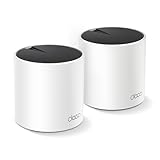
- Wi-Fi 6 Mesh Wi-Fi - Next-gen Wi-Fi 6 AX3000 whole home mesh system to eliminate weak Wi-Fi for good(2×2/HE160 2402 Mbps plus 2×2 574 Mbps)¹²
- Whole Home WiFi Coverage - Covers up to 4500 square feet with seamless high-performance Wi-Fi 6 and eliminate dead zones and buffering. Better than traditional WiFi booster and Range Extenders¹
- Connect More Devices - Deco X55(2-pack) is strong enough to connect up to 150 devices with strong and reliable Wi-Fi¹
- Our Cybersecurity Commitment - TP-Link is a signatory of the U.S. Cybersecurity and Infrastructure Security Agency’s (CISA) Secure-by-Design pledge. This device is designed, built, and maintained, with advanced security as a core requirement
- More Gigabit Ports - Each Deco X55 has 3 Gigabit Ethernet ports(6 in total for a 2-pack) and supports Wired Ethernet Backhaul for better speeds. Any of them can work as a Wi-Fi Router
Families whose primary problem is Windows and Xbox use should consider Microsoft Family Safety. Families whose primary problem is an iPhone or Android phone should begin with the relevant phone ecosystem’s built-in controls.
When is a paid parental-control app worth it?
A paid parental-control app is worth considering when built-in controls cannot cover the family’s combination of platforms, web filtering, reports, location, app rules, or safety alerts. A paid subscription is not automatically better: a paid app can add setup complexity, privacy exposure, renewal costs, and platform limitations.
| Need | Start with | Pay for a third-party app when |
|---|---|---|
| Basic iPhone limits | Apple Screen Time | The family needs cross-platform reporting, specialized filtering, or supported safety alerts |
| Basic Android limits | Google Family Link | The family needs broader reports, filtering, location workflows, or communications supervision |
| Mixed iPhone and Android devices | Compare built-in controls separately | A unified dashboard is more valuable than the differences in platform capability |
| Teen safety concerns | Family discussion plus built-in controls | Safety-alert monitoring is appropriate and the family accepts its privacy trade-offs |
| Web filtering | Built-in content restrictions | The family needs more detailed category filtering and browsing reports |
Which paid parental-control app should you choose?
Qustodio: best broad all-purpose option
Qustodio is the strongest general-purpose paid candidate for families that want time scheduling, web filtering, reports, app controls, and location tools in one service. Qustodio is particularly relevant for mixed-device families that find Apple Screen Time and Google Family Link too fragmented.
Qustodio’s practical limitation is platform parity. Recent testing coverage reports more extensive text and call logging or blocking on Android, while advanced Android functionality may require a special version installed from Qustodio’s website rather than the standard app-store version. iPhone families should verify the exact iOS feature set before subscribing. Independent parental-control app testing discusses these platform and installation differences.
Choose Qustodio if: you want a broad paid dashboard and reports across several device types. Skip it if: you need guaranteed identical monitoring on iPhone and Android or want the least invasive option.
Bark: best for safety alerts
Bark is designed to surface possible safety problems in supported texts, apps, social-media services, searches, and other activity rather than simply recording every action. Bark also advertises website and app blocking, location tracking and alerts, screen-time schedules, contact approvals, and coverage for multiple children and devices.
Bark should be described as an alerting service, not a promise of complete message capture. Coverage depends on the operating system and the specific app or service. Bark says its iPhone and iPad solution uses Bark Sync because Apple restricts direct third-party monitoring, and independent reviews note that Bark’s iOS monitoring does not cover the same app set as Android. TechRadar’s Bark review discusses those iOS limitations.
Bark’s official pricing page observed on August 16, 2026 listed the Bark App starting at $14 per month, with Android shown at $14 per month or $99 per year and iOS shown at $20 per month or $148 per year. The same page separately lists Bark Home, Bark Phone, Bark Phone Pro, and Bark Watch costs. These are 2026 page observations, not verified 2025 prices, and prices may vary by country or change after publication. Bark’s current pricing page should be checked before purchase.
PC Slower Than It Used to Be?
A free scan shows the junk files, broken settings and background clutter dragging Windows down - then fixes them in one click.Free scan · Windows 10 & 11Outdated Drivers Are Slowing You Down
One free scan finds every outdated or missing driver and matches the right update for your exact hardware.Free scan · exact hardware matchChoose Bark if: the main concern is identifying possible danger and starting a parent-child conversation. Skip it if: the family wants only a simple bedtime schedule or is uncomfortable with content-oriented monitoring.
OurPact: best for schedules and app blocking
OurPact is a strong choice when the family prioritizes schedules, manual app blocking, app rules, allowances, location, and a visual management workflow. OurPact has historically been especially notable for iOS app management, although independent reviews describe weaker web and communication monitoring than some rivals.
Setup is a major practical consideration. Independent testing reports that OurPact may require a Windows or Mac computer, OurPact Connect software, iTunes in the tested setup, a USB cable, and the child device’s screen-lock passcode. Tom’s Guide’s OurPact review describes the computer-based setup requirement.
OurPact offers free and paid plans, with paid tiers emphasizing device coverage, schedules, app rules, manual blocks, and location features. Check the official plan page for current prices because exact pricing may change. OurPact’s pricing page and OurPact’s feature and pricing support page are the appropriate references.
Rank #3

- VLAN Network Segregation: This router includes five preconfigured VLANs that isolate IoT devices, guest users, and work systems into separate, secure networks. Each LAN port and every WiFi SSID can be assigned to a VLAN, giving you complete control over how traffic flows inside your home.
- Dual VPN Client and Server Support: The router works as both a VPN client and a VPN server, supporting OpenVPN, IPsec, and WireGuard. You can route selected VLANs through a VPN while keeping others on your regular ISP connection, giving each device group the exact level of privacy it needs.
- Full WiFi 6 on Both Bands: With dual-band WiFi 6 support, the router delivers modern wireless performance across 2.4GHz b/g/n/ax and 5GHz a/n/ac/ax. It improves capacity, stability, and speed while remaining compatible with older devices, making it ideal for busy homes with many connections. Wi-Fi Mesh is available after firmware update.
- High-Performance Hardware Architecture: Powered by the IPQ6000 quad-core ARM processor at 1.2GHz, along with 128MB flash, 256MB RAM, and hardware NAT acceleration, the router handles multitasking, streaming, VPN traffic, and VLAN isolation smoothly without slowing your network.
- Flexible and Powerful Parental Controls: You can use trusted services like OpenDNS, CleanBrowsing, and Cloudflare for filtering, then add custom block lists, allow lists, and schedules. The router includes defenses against common bypass attempts, letting families create rules that match each user. Best of all, it's subscription free!
Choose OurPact if: you want predictable schedules and app control more than detailed communications monitoring. Skip it if: you cannot complete computer-based setup or need broad web and social-media analysis.
Net Nanny: best for web filtering
Net Nanny is a good fit for parents who put real-time internet filtering and scheduled access ahead of message monitoring. Net Nanny lists single-device packages, five-device and 20-device Family Protection Passes, a web dashboard, and an iOS parent app. Net Nanny’s product page provides the current package structure.
Net Nanny combines web filtering with screen-time scheduling, app blocking, and location features, but exact availability depends on the selected package and device. Check whether the child’s browsers, apps, and operating systems are covered before paying for a family plan.
No web filter can guarantee that every harmful page will be blocked. Encrypted traffic, in-app browsers, VPNs, proxy sites, alternative DNS settings, private browsing, search-engine settings, user-generated content, and newly created domains can all reduce coverage.
Free tools Windows power users keep installed
One-click scans. No signup required.
Choose Net Nanny if: web access and category filtering are the central concern. Skip it if: the main requirement is full text-message or social-media monitoring.
Norton Family: best for Windows and Android households
Norton Family is most compelling when Windows PCs and Android phones are central to the household. Norton says parents can manage children’s activity from Windows, Mac, iOS, and Android through its apps or web dashboard, with screen-time supervision and geofencing features. Norton’s Family product page describes its compatibility and features.
Norton Family is less attractive as a reason to switch when the household is Mac-centric and already satisfied with Apple Screen Time. Norton also warns that renewal prices may be higher than introductory prices, so compare the renewal price rather than evaluating only the first promotional term.
Choose Norton Family if: Windows and Android management matter most or a Norton security bundle has practical value. Skip it if: you need highly specialized social-media alerts or an Apple-first experience.
Do these 3 things before closing this tab:
1Repair Windows errors before they cause bigger problems2Scan for outdated or missing drivers - takes under a minute3Clear out junk files and repair common Windows errorsMobicip: best alternative for filtering, timers, and family location
Mobicip combines device management, content filtering, app timers, social-media timers, app-age restrictions, and family-map location tools. Mobicip’s official pricing page advertises management for up to five devices, although families should confirm the exact device limit and feature split for the selected plan. Mobicip’s pricing and features page is the current reference.
Choose Mobicip if: your family wants filtering and location in one alternative dashboard. Skip it if: you need a feature that must work identically on iOS and Android without compatibility checking.
MMGuardian: best for deeper Android communications controls
MMGuardian is aimed at families seeking more extensive communications supervision, particularly on Android. MMGuardian’s official pricing page says family subscriptions can cover up to five device apps, including phones or tablets and Apple devices, but the feature split between Android and Apple devices must be checked before purchase. MMGuardian’s plan information provides the current subscription structure.
MMGuardian is more surveillance-oriented than Apple Screen Time or Google Family Link. Use it only when the specific safety reason is clear, the child understands the boundaries, and the family has decided what information parents will actually review.
The Tool Desk
Outbyte Driver Updater FREEFix the driver behind crashes, sound loss and screen glitchesFind Drivers →Outbyte PC Repair FREEClear out junk files and repair common Windows errorsFree Scan →Rank #4

- 【Up to 1100 Mbps VPN Speed 】 Hardware-accelerated WireGuard and OpenVPN-DCO deliver up to 1100 Mbps VPN throughput, over 3× faster than Brume 2 for smooth remote access and file transfers.
- 【Three 2.5G Ports & Multi-WAN】Tri-port 2.5GbE design with flexible WAN LAN configuration supports multi-gigabit wired setups, dual-ISP Multi-WAN and failover to keep home and SOHO networks online.
- 【Stealth VPN Obfuscation】VPN obfuscation disguises VPN traffic as regular HTTPS, helping you evade blocking, bypass restrictive networks and maintain stable, private connections.
- 【DPI protection】Deep Packet Inspection with visual dashboards blocks adult/gambling/malicious sites, while SQM and QoS prioritize gaming, calls, and video when bandwidth is tight
- 【OpenWrt & USB 3.0 Expansion】OpenWrt with 1GB DDR4 and 8GB eMMC lets you install plugins and build VPN, ad-blocking or NAS, while USB 3.0 Type‑C connects high-speed storage or 4G/5G dongles
How do iPhone parental-control apps differ from Android apps?
Third-party parental-control apps generally have more technical access on Android than on iPhone, so an app’s Android feature list must not be copied into an iPhone recommendation.
| Capability | iPhone or iPad | Android |
|---|---|---|
| Built-in screen-time limits | Apple Screen Time provides App Limits, Downtime, and related controls | Google Family Link provides daily limits, bedtime, and supervised-account controls on compatible devices |
| Full text-message access | Often restricted or unavailable to third-party apps | Some services offer deeper controls, depending on permissions, device, app, and installation method |
| Social-media monitoring | Usually limited to supported services or indirect synchronization methods | Often broader, but still service-specific and permission-dependent |
| App blocking | Available through Apple or selected third-party mechanisms, with platform restrictions | Often more extensive, but may require accessibility, administrator, VPN, or other permissions |
| Special installation | May require desktop synchronization or an indirect method | Some advanced products may require a special download rather than the standard app-store version |
Android monitoring can require accessibility access, device-administrator privileges, VPN or filtering permissions, notification access, battery-optimization exemptions, or a special child-device installation. If a child revokes those permissions, the service may stop enforcing limits or collecting reports.
On iPhone, Apple’s restrictions can prevent complete text-message access, complete social-media monitoring, reliable app-level activity capture, silent background monitoring, or certain web-history collection. Recent testing coverage emphasizes that platform differences materially affect the product experience. Recent built-in-control comparisons also support starting with the platform’s native tools.
Which parental-control app is best for screen-time limits?
Apple Screen Time and Google Family Link are the best free choices for screen-time limits within their respective ecosystems. OurPact is the best paid choice when visual schedules and app blocking are more important than communications monitoring, while Qustodio and Net Nanny are stronger when reports or web filtering are also required.
- iPhone or iPad: Start with Apple Screen Time.
- Compatible Android device: Start with Google Family Link.
- Mixed devices: Consider Qustodio or Net Nanny after verifying iOS and Android parity.
- Schedule-first household: Consider OurPact.
- Windows and Xbox household: Consider Microsoft Family Safety or Norton Family.
Do not make schedules so restrictive that the child cannot call emergency services, reach an approved parent or contact, or use required school, medical, transportation, authentication, or accessibility apps. Apple’s Always Allowed and Communication Limits controls are useful for preserving those exceptions. Apple’s Screen Time guidance explains these settings.
Which parental-control app has the best web filtering?
Net Nanny has the clearest web-filtering focus, followed by Qustodio, Norton Family, and Mobicip. Apple Screen Time and Google Family Link are suitable for basic ecosystem-level content restrictions, but a dedicated filter may provide more categories, reports, and scheduling options.
Web filtering still has boundaries. Parents should test the exact browsers and devices used by the child, restrict installation of alternate browsers where appropriate, and remember that a blocked app may remain reachable through its website, an in-app browser, a messaging link, a VPN, a proxy, a different DNS service, a game console, or another device.
Which parental-control app is best for location tracking?
Location tracking is a separate buying criterion, not automatic evidence that one parental-control app is better overall. OurPact, Norton Family, Mobicip, Google Family Link, and Bark all advertise location-related features, while Apple provides location sharing through Family Sharing and Find My.
Windows Errors? Fix Them Before They Spread
Repair common Windows errors and clear accumulated junk for a smoother, more stable PC - no reinstall needed.Free scan · no reinstallOutdated Drivers Are Slowing You Down
One free scan finds every outdated or missing driver and matches the right update for your exact hardware.Free scan · exact hardware match| Option | Location capability described in the supplied sources | Important qualification |
|---|---|---|
| Apple Family Sharing and Find My | Family location sharing | Not the same as a third-party parental-control dashboard |
| Google Family Link | Location features on compatible supervised Android devices | Availability varies by device and operating system |
| Bark | Location tracking and alerts | Product and platform coverage should be checked before purchase |
| OurPact | Current location, location features, and geofencing are advertised | Setup and device support may affect the experience |
| Norton Family | Geofencing alerts | Confirm the supported device and plan |
| Mobicip | Family map and location sharing | Confirm plan tier and platform support |
A live location may be delayed, approximate, or unavailable because of indoor GPS conditions, weak mobile data, battery-saving settings, a powered-off device, or an unavailable network. Current location, location history, and geofence arrival alerts are different features. Location monitoring can also create trust problems if parents do not explain when and why it is used.
Independent reader supportYour contribution helps us test, update, and keep practical guides available for everyone.How should you compare parental-control apps?
Use platform coverage, feature purpose, platform parity, privacy, setup effort, and total cost rather than a single unexplained ranking.
| Criterion | Questions to ask before subscribing |
|---|---|
| Platform coverage | Does the child use iPhone, Android, Windows, Mac, Chromebook, Xbox, or several of these? |
| Feature purpose | Do you need blocking, scheduling, filtering, reports, location, alerts, or message supervision? |
| Platform parity | Does the feature work fully on both operating systems, only on Android, only through a browser, or only with special installation? |
| Privacy | Does the product read content, classify it, generate alerts, store reports remotely, or provide a deletion process? |
| Setup | Are parent and child apps, passcodes, administrator access, VPN permissions, accessibility access, desktop software, or USB required? |
| Cost | What is the currency, billing period, device limit, introductory price, renewal price, and cancellation process? |
| Tamper resistance | What happens if the child disables permissions, uninstalls the app, uses a guest profile, resets the phone, or switches to an uncovered browser? |
Marketing claims such as “monitors social media,” “tracks location,” or “works on iPhone” are incomplete without naming the supported services, operating systems, countries, device versions, and type of access. A service may provide an alert, metadata, a usage report, or message content; those are not interchangeable.
What can make a parental-control app fail?
No consumer parental-control app is completely tamper-proof. Parents should test controls on the actual child device and plan for ordinary bypass routes.
Best Value

- Dual-band Wi-Fi 6 with 5.9 GHz support and configurable WAN/LAN 2.5GbE port enable fast wireless and wired transfers
- Comprehensive network security provided through Threat Prevention, VLAN segmentation, and WPA3 support
- Standalone router that can be incorporated into a mesh system for whole home coverage
- Parental controls and web filtering keep your family protected
- DS router app provides easy-to-follow setup and network management through your mobile device
- The child may uninstall the child app, disable permissions, turn off device administration, or revoke accessibility or notification access.
- The child may use a guest profile, add another account, reset the device, install an alternate browser, or use a VPN, proxy, or alternative DNS.
- A child may reach a restricted service through its website, an in-app browser, a messaging link, a game console, a school device, a smart TV, or a friend’s phone.
- A location service may stop updating when the phone is offline, out of battery, indoors, or affected by battery-saving settings.
- A safety-alert system may misunderstand sarcasm, quoted lyrics, fiction, gaming language, dark humor, slang, or a conversation about mental health.
Safety alerts should be treated as prompts for context and conversation, not automatic proof of wrongdoing. Parents should decide in advance which alerts require immediate intervention and which require a calm discussion.
How do privacy and trust affect the choice?
Privacy is a central buying criterion because parental-control software may collect browsing data, location, app activity, contact information, notifications, or message content. Built-in controls generally offer a less invasive starting point, while monitoring-first services require parents to accept more sensitive permissions and data flows.
Before installing a monitoring product, explain what is monitored, who can see it, whether content is read or classified, how long reports remain available, and how the child’s data can be deleted. Use the least invasive tool that solves the actual safety problem, and revisit the rules as the child gets older.
The 2025 academic comparison of family and parental-control apps is useful for evaluating privacy and feature practices together rather than treating privacy as a footnote. Read the peer-reviewed comparison of parental-control and family apps before choosing a product that analyzes communications or location.
What should you do before relying on an app?
- Create or verify the parent family account and secure it with a unique password and multi-factor authentication where available.
- Update the parent and child devices and install the correct parent and child components.
- Set a parent-only passcode for Apple Screen Time, Family Link, or the selected third-party service.
- Configure emergency, school, medical, transportation, authentication, and accessibility exceptions.
- Test one blocked app, one bedtime schedule, one website filter, and one location or geofence alert on the child’s actual device.
- Check what happens when the device is offline, the app is disabled, a permission is revoked, or the phone is restarted.
- Review app-store permissions, alternate browsers, guest accounts, VPNs, and other devices that could bypass the main setup.
- Explain the rules and monitoring scope to the child rather than relying on secret surveillance.
- Review the settings after one week and again as the child’s age, school needs, and independence change.
Which app should each type of family choose?
| Family situation | Best starting point | When to upgrade or switch |
|---|---|---|
| iPhone-only family needing limits | Apple Screen Time | Choose OurPact for schedule-heavy management, Net Nanny for web filtering, or Bark for supported safety alerts |
| Android-only family needing free controls | Google Family Link | Choose Qustodio for broader reports, Bark for safety alerts, or MMGuardian for deeper Android communications supervision |
| Mixed iPhone and Android family | Compare built-in controls and consider Qustodio or Net Nanny | Verify every important feature separately on iOS and Android before subscribing |
| Young child who mainly needs boundaries | Apple Screen Time or Google Family Link | Pay only if the built-in controls do not cover the child’s devices or required filters |
| Teen where safety alerts are the priority | Bark, with explicit privacy boundaries | Use alerts as conversation prompts, not automatic evidence |
| Windows and Xbox household | Microsoft Family Safety or Norton Family | Add a phone-specific tool if the child’s iPhone or Android requirements exceed the Microsoft controls |
| Privacy-conscious household | Built-in controls plus family agreements | Choose a paid monitoring service only for a defined, documented safety need |
| Parent who mainly needs location | Apple Family Sharing and Find My or Google Family Link on compatible Android | Consider OurPact, Norton Family, Mobicip, or Bark only if geofencing or a unified dashboard is necessary |
Final recommendation
Start with the free control built into the child’s phone: Apple Screen Time for iPhone and iPad, or Google Family Link for compatible Android devices. Those tools cover the basic needs of most families without adding a separate subscription or a more invasive monitoring layer.
Choose Qustodio or Net Nanny when cross-platform management and filtering justify a paid service. Choose Bark when safety alerts are the central concern, OurPact when schedules and app blocking matter most, Norton Family when Windows and Android dominate, Mobicip when filtering and family location are the priority, and MMGuardian only when deeper Android communications supervision is an intentional choice.
Before paying, verify the child’s exact operating system, supported apps, device count, setup requirements, introductory and renewal prices, data practices, and likely bypass routes. The best parental-control app is the least invasive tool that reliably solves the family’s actual problem.
Frequently Asked Questions
Do I need to pay for a parental-control app?
Many families do not need to pay for parental controls. Apple Screen Time provides strong basic controls for iPhone and iPad, while Google Family Link provides free supervision for compatible Android devices; a paid app is justified when you need broader cross-platform management, specialized web filtering, detailed reports, location workflows, or safety alerts.
Do these 3 things before closing this tab:
1Scan for outdated or missing drivers - takes under a minute2Repair Windows errors before they cause bigger problems3Fix the driver behind crashes, sound loss and screen glitchesCan parental-control apps read a child’s texts on iPhone?
Third-party parental-control apps generally cannot provide the same text-message access on iPhone that some Android products offer. Apple’s platform restrictions limit direct monitoring, so parents must verify whether a service provides alerts, metadata, synchronization, or message content for the specific iOS version and service.
Can a child bypass a parental-control app?
A child may weaken a consumer parental-control app by uninstalling it, revoking permissions, using a guest profile, resetting the device, installing an alternate browser, using a VPN or proxy, or switching to an uncovered device. Parents should secure administrator accounts and test bypass routes before relying on the controls.
Are parental-control safety alerts always accurate?
Safety alerts are not always accurate because systems can misunderstand sarcasm, lyrics, fiction, gaming language, slang, dark humor, or conversations about mental health. Parents should treat an alert as a prompt to investigate context and talk with the child, not as proof of misconduct.
The Bottom Line
Bottom line: Start with Apple Screen Time on iPhone or Google Family Link on Android. Pay for Qustodio, Bark, OurPact, Net Nanny, Norton Family, Mobicip, or MMGuardian only when a specific need—cross-platform control, filtering, scheduling, location, safety alerts, or Android communications supervision—justifies the added cost, permissions, and privacy trade-offs.
The Tool Desk
Outbyte PC Repair FREEClear out junk files and repair common Windows errorsFree Scan →Outbyte Driver Updater FREEScan for outdated or missing drivers - takes under a minuteDriver Scan →Quick Recap
Product prices and availability are accurate as of the date/time indicated and are subject to change. Any price and availability information displayed on Amazon at the time of purchase will apply.

