
The best fleet management software depends on the fleet’s primary problem: Samsara is the strongest broad all-in-one starting point, Motive fits trucking compliance, Geotab suits enterprise integrations, Fleetio leads maintenance, Verizon Connect fits dispatch-heavy operations, and Azuga deserves consideration for small safety-focused fleets.
That verdict is an editorial assessment of product positioning, not the result of an independent hands-on benchmark. A 12-vehicle contractor, a long-haul carrier, a municipal maintenance department, and a 1,000-vehicle enterprise should not buy the same platform simply because a comparison list calls one product “best.”
Research and product positioning in this article are current as of August 16, 2026. Pricing, packaging, hardware availability, integrations, and regulatory support can change and should be confirmed in the vendor’s current quote.
Key takeaways
- Samsara is the strongest broad connected-operations starting point when GPS, ELD, driver workflows, safety, video, assets, and integrations need to work in one platform.
- Motive is the strongest shortlist candidate for trucking fleets that prioritize ELD/HOS, driver qualification, IFTA, CSA management, fuel, dispatch, and safety.
- Geotab is better suited to enterprise and technically sophisticated fleets that need configurable software packages, analytics, hardware options, and a broad Marketplace ecosystem.
- Fleetio is a maintenance-first fleet-management system for vehicle records, inspections, work orders, parts, fuel, operating costs, and total cost of ownership; Fleetio is not automatically a replacement for live telematics, ELD, or video.
- Indicative 2026 market comparisons range from about $5 per vehicle per month for maintenance-focused software to roughly $25–$60 for hardware-inclusive telematics, but the products and included services are not equivalent.
How should you compare the best fleet management software?
Compare fleet software by operating model rather than by feature count. Start by identifying whether the fleet primarily needs maintenance control, live vehicle visibility, trucking compliance, dispatch, driver safety, asset tracking, or EV monitoring.
#1 Best Overall
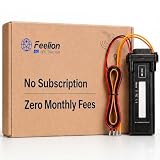
- [No Monthly Fees or Subscription Required] — Built-in 4G SIM included with no monthly fees, no activation fees, and no contracts. Enjoy full network coverage across the United States and Canada—simply install and start tracking right awa
- Real-Time GPS Tracking & Live Location Sharing — Get accurate real-time location updates as fast as every 20 seconds while the vehicle is in motion. Easily share live tracking access with family or friends through a secure link and set custom sharing durations anytime.
- Smart Security Alerts Built-in 3.7V 150mAh Li-ion backup battery (0.555Wh) supports power disconnection alerts if external power is removed.
- 180-Day Route History Playback — Review driving history, parking records, and travel routes directly in the app for up to 180 days.
- Easy Hardwired Installation — Connect the red wire to positive and the black wire to negative for normal operation. The orange ACC wire is optional and can be left unconnected if ignition monitoring is not needed. Compatible with 9V–90V powered vehicles and devices.
A 20-vehicle carrier with regulated drivers, ELD requirements, and dashcams may need more capable software than a 100-vehicle service fleet that only needs GPS and preventive-maintenance reminders. Vehicle count matters, but regulatory and workflow complexity often matter more.
| Platform | Best fit | Core strength | Hardware model | Pricing approach | Main caution |
|---|---|---|---|---|---|
| Samsara | Broad connected operations | Telematics, ELD, driver app, safety, video, assets, integrations | Vehicle Gateway plus optional cameras and asset devices | Quote-based | Check contract length, hardware dependence, feature packaging, and total cost |
| Motive | Trucking and regulated carriers | ELD/HOS, driver qualification, IFTA, CSA, fuel, dispatch, safety | Connected vehicle and in-cab hardware; verify the quoted configuration | Quote-based | Confirm exact ELD, camera, compliance, hardware, and contract package |
| Geotab | Enterprise and data-led fleets | Open ecosystem, analytics, software packages, Marketplace integrations | GO hardware with MyGeotab software and package-dependent capabilities | Sales-led or partner-dependent | Reseller and package complexity can make like-for-like pricing difficult |
| Fleetio | Maintenance-first fleets | Records, inspections, work orders, parts, fuel, costs, and lifecycle management | Primarily software; can receive telematics data through integrations | Plan or trial details should be verified directly | Does not by itself replace full GPS, ELD, or video telematics |
| Verizon Connect | Dispatch-heavy and mixed operations | Tracking, routing, dispatch, compliance, assets, EV visibility, and video | Connected telematics hardware plus optional video and asset devices | Quote-based | Check package terms, contract structure, and integration compatibility |
| Azuga | Small safety-focused fleets | GPS, driver behavior, maintenance, fuel, and driver rewards | Verify current device and camera requirements directly | Quote-based; third-party estimates vary | Confirm current pricing, coverage, hardware, and feature availability |
The table is an editorial synthesis, not a standardized laboratory ranking. Product capabilities can vary by plan, region, vehicle type, hardware, reseller, and contract.
What does fleet management software include?
Fleet management software can combine GPS location, telematics, dispatch, inspections, maintenance, fuel, compliance, safety, video, asset tracking, and reporting, but no platform includes every capability at the same depth.
- GPS location, trip history, geofences, alerts, and vehicle utilization
- Vehicle diagnostics, engine data, odometer readings, and fault codes
- Driver identification, vehicle assignment, messaging, and mobile workflows
- Dispatch, route planning, multi-stop optimization, job workflows, proof of delivery, and customer ETAs
- DVIRs, inspections, preventive-maintenance schedules, work orders, parts, vendors, and repair records
- Fuel transactions, fuel economy, IFTA mileage, and operating-cost reports
- ELD/HOS, driver qualification, CSA and safety workflows for applicable carriers
- Dashcams, incident video, driver scorecards, coaching, and event detection
- Trailer, equipment, cargo, and non-powered asset tracking
- EV battery, charging, range, and mixed-fleet monitoring
- Dashboards, APIs, webhooks, exports, and integrations with TMS, ERP, CRM, payroll, fuel, and maintenance systems
Geotab’s fleet-management overview illustrates why the category is difficult to compare: the platform spans tracking, routing, maintenance, fuel, safety, ELD, DVIR, IFTA, EV suitability, and integrations, while capabilities are organized into different software packages.
Which fleet management software is best for each use case?
What is the best overall fleet management software?
Samsara is the best broad all-in-one starting point for organizations that want connected telematics, driver workflows, ELD, safety tools, video, asset visibility, and integrations in one platform.
Samsara describes a plug-and-play Vehicle Gateway, a driver-app ELD model, support for supported iOS and Android devices, automatic rulesets, and connected operations on its ELD and compliance product page. Samsara’s product positioning makes the platform a sensible first demo for a mixed commercial fleet that wants one operational system rather than several disconnected tools.
Best fit: Contractors, delivery fleets, field-service organizations, construction companies, utilities, and growing fleets that need several connected capabilities.
Check before buying: Samsara’s pricing is quote-based. Confirm contract length, gateway and camera ownership, installation, video storage, ELD and routing modules, minimum vehicle commitments, API access, device replacement, cancellation, and data export. A broad platform can be unnecessarily expensive for a non-regulated fleet that needs only maintenance or basic location tracking.
Do these 3 things before closing this tab:
1Fix the driver behind crashes, sound loss and screen glitches2Clear out junk files and repair common Windows errors3Scan for outdated or missing drivers - takes under a minuteWhat is the best fleet management software for trucking compliance?
Motive is the best shortlist candidate for trucking and regulated-carrier operations where ELD/HOS, driver qualification, IFTA, CSA management, fuel, dispatch, inspections, and safety are central.
Motive’s fleet-management product page positions the platform around real-time GPS, vehicle and driver pairing, delivery monitoring, driver communication, traffic and weather overlays, inspections, ELD, driver qualification, IFTA, CSA, fuel, and asset monitoring.
Best fit: Long-haul carriers, regional trucking companies, and fleets with regulated drivers that need compliance and transportation workflows in the same system.
Check before buying: Confirm the exact ELD device, supported jurisdiction, camera package, offline behavior, log-transfer process, driver-qualification features, IFTA reports, hardware replacement terms, and contract duration. A feature appearing on the overall platform page does not prove that the feature is included in every quote.
What’s actually slowing this PC down?
Pick the symptom - the matching free tool is one click away.
What is the best fleet management software for enterprise integrations?
Geotab is the best fit for enterprise and technically sophisticated fleets that value an open ecosystem, configurable software packages, analytics, hardware choices, and integrations more than a simple self-serve purchase.
Geotab’s platform uses GO hardware with MyGeotab software, and Geotab’s software-package information separates capabilities across plans. Geotab’s product pages also emphasize a Marketplace with more than 400 integrations; the count is a dated vendor-page signal and should be rechecked before publication or procurement.
Best fit: Large mixed fleets, organizations with data teams, companies integrating telematics into ERP or TMS systems, and buyers that need different configurations across vehicle groups.
Rank #2

- Peace of Mind in a Plug: This OBD GPS tracker for car is the simplest way to know your vehicle's location. Just plug it in and get instant, real-time tracking on your phone, covering you in over 100 countries. It’s the ultimate hidden gps tracker for car, giving you a silent guardian for your fleet, teen driver, or family car
- Your Invisible Co-Pilot: This undetectable gps tracker for car is a discreet, black device that hides in plain sight. No wires, no magnets, just plug-and-play secrecy. It’s the perfect car tracker device hidden from view, providing continuous, reliable monitoring for your most valuable assets without anyone knowing
- Smart Alerts That Keep You in Control: Go beyond simple location. Set custom geofences and receive instant alerts for arrivals, departures, and speeding. This gps tracker for vehicles transforms data into actionable insights, letting you manage your fleet or protect your teen driver with proactive, intelligent oversight
- Powerful Simplicity for Everyone: Manage multiple vehicles effortlessly from one intuitive app. Whether you're a fleet owner, a concerned parent, or managing the family cars, this vehicle tracker offers multi-account access. It’s the versatile gos tracker for vehicles that makes advanced tracking accessible to all
- 12 Months Subscription Free: No subscription fee, no activation fee. Enjoy full access to GPS tracking, trip history, GeoFence alerts, and vehicle monitoring for 12 months. Then choose $6.99/month or $69.99/year
Check before buying: Ask whether the purchase is direct or reseller-led, which GO device and software package are included, which integrations carry extra charges, how API limits work, who handles implementation, and how historical data can be exported. Geotab’s flexibility can be valuable, but package and partner complexity can make quotes difficult to compare.
Free tools Windows power users keep installed
One-click scans. No signup required.
What is the best fleet management software for maintenance?
Fleetio is the best maintenance-first option for vehicle records, preventive maintenance, inspections, work orders, parts, fuel, operating costs, documents, and asset lifecycle management.
Fleetio’s Geotab Marketplace listing describes maintenance, asset, fuel, vehicle-record, inspection, cost, and integration capabilities. Fleetio can receive telematics information from providers such as Geotab, Motive, and Verizon Connect, allowing a maintenance department to pair a dedicated maintenance system with a separate tracking or compliance platform.
Best fit: Municipal fleets, maintenance departments, construction fleets, service businesses, and organizations whose main problem is missed service, incomplete records, parts control, or unclear vehicle cost.
Check before buying: Fleetio can manage imported or integrated telematics data, but Fleetio should not automatically be treated as a substitute for live GPS, native ELD/HOS, advanced dispatch, or integrated dashcams. Ask whether the required integration supports two-way defect updates, fuel synchronization, odometer data, fault codes, and the specific plan being quoted.
Quick wins for a faster PC:
Repair Windows errors before they cause bigger problemsFix Now →Fix the driver behind crashes, sound loss and screen glitchesFind Drivers →Clear out junk files and repair common Windows errorsFree Scan →What is the best fleet management software for field service and dispatch?
Verizon Connect is a strong choice for dispatch-heavy field-service and mixed fleets that need tracking, routing, workforce visibility, asset monitoring, compliance, EV visibility, and video in a mature platform.
Verizon Connect’s product platform positions the service around tracking, driver behavior, maintenance, fuel, dispatch, routing, assets, compliance, EV operations, and video. The platform is relevant to HVAC, plumbing, electrical, landscaping, utilities, telecom, delivery, and other businesses where assigning work and communicating arrival times matter as much as locating vehicles.
Best fit: Field-service operations with technician scheduling, customer ETAs, route planning, mixed vehicle types, and dispatch teams.
Check before buying: Separate basic map visibility from actual route optimization. Test time windows, technician skills, capacity constraints, real-time rerouting, customer notifications, proof of service, and CRM or field-service integrations using real jobs. Verify the quote’s routing, video, EV, compliance, and asset modules rather than assuming that the overall platform includes every capability.
Recommended Free Tools
Is Azuga the best value for a small fleet?
Azuga is worth evaluating for small and midsize safety-focused fleets that prioritize GPS tracking, driver behavior, maintenance alerts, fuel management, and driver-reward features.
Azuga may suit a buyer that wants a safety-oriented platform without the broader enterprise scope of some all-in-one systems. The available comparison coverage is not sufficient to treat third-party Azuga prices or package boundaries as authoritative.
Best fit: Small contractors, service fleets, and other non-regulated or lightly regulated operations that want driver scoring, safety coaching, GPS, and incentives.
Check before buying: Confirm current device compatibility, cellular coverage, dashcam availability, driver-reward details, maintenance and fuel features, API support, monthly minimums, contract terms, and the complete installed cost. A small-fleet product is valuable only if drivers can use it consistently and administrators can act on its alerts.
Windows Errors? Fix Them Before They Spread
Repair common Windows errors and clear accumulated junk for a smoother, more stable PC - no reinstall needed.Free scan · no reinstallOutdated Drivers Are Slowing You Down
One free scan finds every outdated or missing driver and matches the right update for your exact hardware.Free scan · exact hardware matchDo you need software-only fleet management or connected hardware?
Software-only fleet management is usually the better starting point when the organization mainly needs records, maintenance, inspections, work orders, fuel, documents, costs, and manually entered or imported meter readings.
A connected telematics platform normally requires a vehicle gateway or diagnostic device, cellular service, a driver mobile app or in-cab hardware, and optional cameras, trailer trackers, or asset devices. Connected hardware adds live operational data but also adds installation, device health, replacement, cellular, and cancellation considerations.
Rank #3
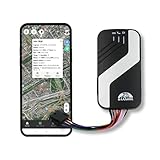
- [Compatibility]: You’ll need to buy a SIM card to use this trackers. TK403 A/B GPS tracker for vehicles should be installed to the on-board power supply. It’s compatible with various fuel cars. Car Automobile 403 A/B GPS tracker supports 2G/4G network. Please download the APP (BAANOOL IOT) on Apple Store or Google Play.
- [Free APP/Platform]: We provide free web platform and APP, no any charges, no monthly fee. Using this car GPS tracker can greatly save your cost. Our platform will help you manage your cars, vehicles and fleets. Devices can be controlled by SMS/APP/web platform. And it supports multiple languages.
- [Functions]: There are many features which you require, such as over speed alarm, waterproof, GEO-fence, cut off the engine, motion alarm, real time positioning, remote controller (for 403B model), historical playback and so on. This device also can be connected with other platform.
- [Worldwide Coverage]: Our devices can be used in worldwide, you just need to insert a SIM card into it. Works with GPS satellites, accurate location, real time tracking. It’s totally fine if you want to use 403 vehicle trackers in other countries.
- [Service]: BAANOOL GPS trackers have 15 months warranty. BAANOOL is an original manufacturer which provides complete after-service. If devices have any problems, contact us to acquire a perfect solution.(A SIM card isn’t included)
| Need | Software-only system | Connected telematics platform |
|---|---|---|
| Vehicle records and documents | Strong fit | Usually available, but may not be the deepest workflow |
| Preventive maintenance and work orders | Usually the primary strength | May provide reminders and fault data; depth varies |
| Live GPS and trip history | Requires imported or manually entered data | Requires gateway and cellular connection |
| Engine diagnostics and fault codes | Usually requires an integration | Available when compatible hardware is installed |
| ELD/HOS | Not normally the primary function | Requires a supported ELD configuration and applicable subscription |
| Dashcams and incident video | Requires a separate camera platform | Usually an optional hardware and storage module |
| Implementation burden | Lower hardware burden | Includes installation, pairing, training, and device-health processes |
Fleetio is the clearest maintenance-first example in this shortlist. Samsara describes its Vehicle Gateway and driver-app model, while Geotab uses GO hardware with MyGeotab software. Hardware and software should therefore be priced and evaluated together when live telematics is required.
When is ELD/HOS compliance required?
ELD/HOS compliance depends on the driver, vehicle use, operating jurisdiction, and applicable exemption; not every vehicle in every fleet requires an ELD.
The Tool Desk
Outbyte PC Repair FREERepair Windows errors before they cause bigger problemsFix Now →Outbyte Driver Updater FREEScan for outdated or missing drivers - takes under a minuteDriver Scan →Before selecting an ELD, determine whether the operation is interstate or intrastate, whether drivers qualify for short-haul treatment, whether specialized or agricultural exemptions apply, and which vehicles and drivers are regulated. Canadian requirements and U.S. federal requirements should not be assumed to be interchangeable.
Samsara states that Samsara has been FMCSA-registered since 2017, and Verizon Connect markets an FMCSA-certified ELD solution on its ELD compliance page. These are vendor claims and should not be generalized to every plan, device, geography, or configuration. Regulated carriers should verify the current FMCSA registration and the exact device/software configuration before purchase.
During a pilot, test log creation, driver and vehicle pairing, edits and annotations, inspection workflows, roadside inspection behavior, log transfer, cellular outages, unassigned miles, and support response. A product that is technically compliant but confusing to drivers can still create operational risk.
How deep are the maintenance tools?
Maintenance depth is determined by the complete work-management workflow, not by whether a platform displays engine fault codes.
- Preventive maintenance by mileage, engine hours, calendar date, or fault code
- Inspection-to-work-order conversion and defect escalation
- Parts inventory, labor, vendors, purchase orders, warranties, recalls, and repair history
- Fuel and maintenance-cost correlation
- Total cost of ownership and replacement planning
- Outsourced repair-shop and mobile-mechanic workflows
- Asset lifecycle records for vehicles, trailers, equipment, and other assets
A telematics gateway may provide odometer readings and fault codes without providing parts, labor, vendor, warranty, or lifecycle controls. The Fleetio and Verizon Connect integration description shows the practical distinction: telematics data such as odometer readings, fault codes, inspections, and fuel information can feed a maintenance workflow, but integration quality and available functions must be tested for the quoted plans.
Do you need dispatch, routing, cameras, or EV monitoring?
Choose these modules only when the operating workflow requires them; a GPS map, a dashcam, and a route planner solve different problems.
| Capability | What to verify | Common mistake |
|---|---|---|
| Live tracking | Refresh interval, cellular behavior, historical trips, geofences, and device-health alerts | Assuming a map provides route optimization |
| Route optimization | Stops, time windows, capacity, skills, traffic, rerouting, ETAs, and proof of delivery | Confusing a planned route with multi-stop optimization |
| Dispatch | Driver assignment, job status, customer messaging, technician workflows, and CRM/TMS integration | Buying tracking without a usable dispatcher workflow |
| Dashcams | Road-facing or dual-facing view, event detection, live access, storage, retention, privacy, and cellular usage | Assuming AI classifies every safety event correctly |
| EV monitoring | Battery, charging, range, energy use, route suitability, and charging integration | Assuming EV support equals complete charging management |
Samsara and Verizon Connect both market integrated video and driver-safety functions. Those capabilities should not be presented as automatically reducing crashes. Vendor-reported safety outcomes and customer case studies are not independent benchmarks unless independent evidence is available.
How much does fleet management software cost?
Fleet management software can cost from roughly $5 per vehicle per month for maintenance-focused software to approximately $25–$60 per vehicle per month for hardware-inclusive telematics in 2026 comparisons, but the ranges describe unlike products and are not standardized prices.
StackScored’s 2026 pricing comparison reports the broad market range. A separate FleetOps Club comparison gives indicative third-party ranges of approximately $27–$50 per vehicle per month for Samsara, about $25 for Motive, approximately $5–$10 for Fleetio, and approximately $25–$35 for Azuga. These are secondary-market estimates, not official list prices, and may exclude hardware, installation, cameras, ELD, storage, integrations, taxes, minimum terms, or premium support.
| Cost component | Questions to ask |
|---|---|
| Subscription | Is billing per vehicle, user, device, asset, module, or minimum fleet size? |
| Hardware | Is the gateway purchased, rented, financed, or included? Who owns it after cancellation? |
| Installation | Are installation, removal, wiring, and replacement charges separate? |
| Cameras and video | Are camera hardware, cellular data, event processing, and video storage separate charges? |
| Compliance | Are ELD, HOS, driver qualification, DVIR, IFTA, and log transfer included in the quoted plan? |
| Integrations | Do API access, fuel cards, TMS, ERP, CRM, payroll, and maintenance connections cost extra? |
| Implementation | What do data migration, configuration, training, and onboarding services cost? |
| Exit costs | Are there early-termination charges, device-return requirements, or data-export fees? |
A lower monthly rate can become more expensive when routing, maintenance, ELD, cameras, fuel, and integrations must be purchased from separate systems. Compare the complete three-year cost, not only the advertised per-vehicle rate.
How should you weight a fleet software comparison?
Score each shortlisted vendor against the workflows that create operational value, and change the weighting when the fleet’s primary use case changes.
| Criterion | Suggested general-fleet weight | What the score should measure |
|---|---|---|
| Core tracking and reliability | 15% | Location accuracy, refresh behavior, offline buffering, coverage, and device health |
| Maintenance and inspections | 15% | PM rules, DVIRs, defects, work orders, parts, costs, and records |
| Driver safety and coaching | 15% | Events, scorecards, coaching, video workflow, and alert quality |
| Compliance and ELD | 15% | Applicable rules, logs, inspections, transfer, and support |
| Dispatch and routing | 15% | Assignments, optimization, ETAs, job status, and customer communication |
| Integrations and portability | 10% | APIs, field mappings, exports, sync frequency, and historical data |
| Ease of use and adoption | 10% | Driver, dispatcher, mechanic, and administrator task completion |
| Total cost and contract flexibility | 5% | Complete cost, term, ownership, cancellation, and module exposure |
For a long-haul carrier, increase the weight for ELD/HOS, IFTA, driver qualification, CSA, fuel, trailer tracking, and safety. For field service, increase dispatch, technician scheduling, customer ETAs, mobile jobs, and CRM integrations. For municipal or maintenance departments, increase work orders, parts, preventive maintenance, cost accounting, inspections, and asset lifecycle. For a small non-regulated fleet, increase price transparency, month-to-month availability, installation simplicity, mobile usability, and low implementation burden.
Crashes, No Sound, or Screen Glitches?
Random freezes, missing sound and display glitches usually trace back to one bad driver. Find and replace yours safely.Free scan · under a minutePC Slower Than It Used to Be?
A free scan shows the junk files, broken settings and background clutter dragging Windows down - then fixes them in one click.Free scan · Windows 10 & 11How do you run a fleet management software pilot?
Run a pilot with real vehicles, drivers, routes, maintenance records, and failure scenarios instead of judging the product from a polished demonstration.
Rank #4

- EASY INSTALLATION: The SALIND 11 GPS vehicle tracking device features powerful built-in magnets, making it simple to attach to your car, truck, or fleet vehicles. It securely sticks to any metal surface, ensuring stable performance and real-time location tracking without hassle.
- LONG LASTING BATTERY - The 7.500 mAh battery lasts for several months! When tracking 6-8h every day, the battery can last up to 14 days without recharging. With an active tracking time of approx. 1h/day, the battery lasts 40 days and up to 70 days in standby mode. This reduces annoying charging to a minimum and your GPS tracker device for vehicles reliably protects what you love. The battery status can be viewed online at any time
- VERSATILE APPLICATIONS - SALIND GPS Tracker 11 is extremely robust and water splash-proof. It can be used as anti-theft protection for cars, classic caravans, boats, excavators, containers and much more. You can easily carry and change it
- MULTIPLE ALARMS - GPS tracker can send you alarm for various occasions. E.g. in the event of strong vibrations, exceeding the speed limit or a low battery level. You can easily set all alarms to your comfort and needs. Set up a geofence and keep track of the drivers via our app or webapp. Get an alarm when speed limits are reached, a geofence is surpassed or the battery is low
- SUBSCRIPTION: Includes a SIM card and offers a lifelong device replacement, along with 24/7 customer support in multiple languages. Control your locators with our free app compatible with Android and iOS and share it with the whole family. Choose between the Premium or Basic plans, with options from monthly to every 2 years, from $5.50 per month, with payment frequency depending on the duration of the subscription. See pricing details in images.
- Select representative vehicles: Include the main vehicle type, an older or difficult vehicle, a trailer or non-powered asset if relevant, and an EV if mixed-fleet monitoring matters.
- Use real routes: Include urban stops, rural coverage, warehouses, underground parking, cross-border travel, and the most difficult route the operation regularly serves.
- Include representative users: Test with a dispatcher, driver, mechanic, safety manager, and administrator rather than only the procurement team.
- Test daily workflows: Pair drivers and vehicles, complete an inspection, create a defect, schedule maintenance, assign a job, send a message, retrieve a video clip, and export a report.
- Test compliance where applicable: Create and annotate logs, transfer records, handle unassigned miles, simulate an outage, and confirm the support process.
- Measure completion: Record task time, errors, duplicate work, alert volume, driver questions, data delays, and the number of manual corrections required.
- Test the exit path: Ask for a sample data export containing vehicle history, maintenance records, driver logs, video, geofences, fuel data, compliance records, and API-generated data.
A pilot should include at least one difficult route, one maintenance workflow, one compliance workflow when applicable, and one camera-equipped vehicle when video is under consideration. A low-connectivity route is especially important because “real-time” performance varies with device behavior, cellular coverage, refresh interval, and subscription tier.
What should you ask during a fleet software demo?
- Which exact features, devices, cameras, storage limits, APIs, and integrations are included in the written quote?
- What is the contract length, renewal process, minimum vehicle count, cancellation policy, early-termination charge, and device-return requirement?
- Who owns the gateway, camera, and tracker hardware, and can the hardware be reused with another platform?
- What happens when a vehicle loses power or cellular service, and how long does the device buffer data offline?
- Can drivers continue required ELD workflows offline, and how are logs, annotations, and unassigned miles reconciled?
- Which ELD device and software configuration is registered or certified for the buyer’s exact jurisdiction and use case?
- What are the video-retention period, cellular-data implications, privacy controls, user permissions, and incident-review process?
- Can the platform handle cars, vans, trucks, trailers, heavy equipment, refrigerated assets, older vehicles, and EVs in the same deployment?
- Which maintenance features are native, and which require Fleetio or another integration?
- How often do integrations synchronize, what happens when a record fails, and who resolves duplicate or mismatched driver and asset IDs?
- Can the buyer export all operational and compliance data in a usable format at no charge?
- What onboarding, installation, training, replacement, and support services are included?
What operational risks should fleet buyers avoid?
Hardware lock-in
Proprietary gateways and cameras can simplify support while making a vendor change more expensive. Ask about ownership, reuse, removal, replacement, and cancellation charges before installation.
Feature bundling
A vendor may advertise a large platform while placing ELD, dashcams, video storage, routing, maintenance, driver qualification, fuel, asset tracking, or API access in separate modules or higher tiers. Require every required module in the quote.
The Tool Desk
Outbyte PC Repair FREEClear out junk files and repair common Windows errorsFree Scan →Outbyte Driver Updater FREEScan for outdated or missing drivers - takes under a minuteDriver Scan →GPS confusion
GPS location alone does not provide engine diagnostics, driver behavior, ELD records, fuel economy, automated DVIRs, or fault-code alerts. A GPS tracker should not automatically be described as a complete fleet-management platform.
Connectivity failure
Test rural, underground, warehouse, and cross-border environments. Ask how data is buffered, how quickly data synchronizes after reconnection, how power loss is reported, and how replacement devices are shipped.
Driver adoption and privacy
Drivers may reject a system that makes inspections slow, produces excessive alerts, has confusing ELD workflows, or creates distrust around cameras and scoring. Establish a written policy covering off-duty use, access, retention, coaching, automated classifications, incident review, and employee or union concerns.
Integration failure
An integration can exist technically while still failing operationally. Test field mappings, sync frequency, error handling, duplicate records, historical data, driver and asset identifiers, defect-status synchronization, and fuel reconciliation. The Motive–Fleetio integration documentation shows why plan-dependent capabilities and setup requirements must be checked instead of inferred from an integration logo.
What’s actually slowing this PC down?
Pick the symptom - the matching free tool is one click away.
Which fleet management software should you shortlist?
Shortlist two or three platforms that match the fleet’s primary workflow, then require each vendor to demonstrate the same real-world scenarios.
| Fleet situation | First shortlist | Why |
|---|---|---|
| Mixed commercial fleet needing one connected platform | Samsara; compare with Verizon Connect or Geotab | Broad telematics, safety, operations, asset, and integration coverage |
| Long-haul or regulated carrier | Motive; compare with Samsara or Geotab | ELD/HOS, driver qualification, IFTA, CSA, fuel, dispatch, and safety emphasis |
| Large enterprise with complex systems | Geotab; compare with Samsara or Verizon Connect | Configurable packages, analytics, hardware options, and ecosystem integrations |
| Maintenance department or municipal fleet | Fleetio; add telematics through Geotab, Motive, Verizon Connect, or another integration if needed | Deep records, inspections, work orders, parts, fuel, and lifecycle workflows |
| Dispatch-heavy field service | Verizon Connect; compare with Samsara | Tracking, routing, dispatch, workforce visibility, assets, and video |
| Small safety-focused fleet | Azuga; compare with a simpler GPS or maintenance option | Driver behavior, rewards, GPS, maintenance, and fuel emphasis |
| Non-regulated fleet needing maintenance only | Fleetio | A full ELD and video telematics platform may be unnecessary |
Frequently Asked Questions
What is the best fleet management software overall?
Samsara is the strongest broad all-in-one starting point for fleets that need GPS, ELD, driver workflows, safety, video, asset visibility, and integrations together. Motive, Geotab, Fleetio, Verizon Connect, or Azuga may be better when trucking compliance, enterprise flexibility, maintenance, dispatch, or small-fleet safety is the primary requirement.
How much does fleet management software cost per vehicle?
Indicative 2026 comparison data ranges from roughly $5 per vehicle per month for maintenance-focused software to approximately $25–$60 per vehicle per month for hardware-inclusive telematics. The ranges are not standardized and may exclude hardware, installation, cameras, ELD, storage, integrations, taxes, and contract commitments.
Does every fleet need an ELD?
No. ELD requirements depend on the driver, vehicle use, jurisdiction, hours-of-service rules, and applicable exemptions such as short-haul or specialized operations. Regulated carriers should verify current requirements and the exact device configuration before purchase.
Is Fleetio a replacement for Samsara or Motive?
Fleetio is not automatically a replacement for Samsara or Motive because Fleetio is primarily a maintenance and fleet-operations system, while Samsara and Motive provide connected telematics and, depending on the plan, ELD, safety, video, and driver workflows. Fleetio can integrate with telematics platforms when a fleet wants dedicated maintenance depth plus live vehicle data.
What should a fleet pilot test before signing a contract?
A fleet pilot should test representative vehicles, difficult routes, real drivers, inspections, defects, maintenance scheduling, dispatch, compliance workflows, camera retrieval, cellular outages, support response, and complete data export. The pilot should also expose hardware ownership, replacement, installation, cancellation, and integration limitations.
The Bottom Line
Bottom line: Samsara is the strongest broad all-in-one starting point, but the best fleet management software is the platform that fits the fleet’s regulated status, vehicle mix, daily workflows, integrations, and budget. Shortlist Samsara, Motive, Geotab, Fleetio, Verizon Connect, or Azuga according to the primary problem, compare the complete contract cost, and run a pilot with real vehicles and routes before signing.
Quick Recap
Product prices and availability are accurate as of the date/time indicated and are subject to change. Any price and availability information displayed on Amazon at the time of purchase will apply.

