
What’s actually slowing this PC down?
Pick the symptom - the matching free tool is one click away.
iTechGuides is reader-supported. When you buy through links on our site, we may earn an affiliate commission. As an Amazon Associate I earn from qualifying purchases. Learn more
The 4 Best Point-and-Shoot Cameras of 2026 are the Fujifilm X100VI for the best overall enthusiast experience, Ricoh GR IV for pocketable street photography, Sony RX100 VII for travel zoom, and Canon PowerShot G7 X Mark III for casual photos and selfies—provided the Canon is available at a fair price.
These cameras are not interchangeable alternatives. The Fujifilm and Ricoh use larger APS-C sensors and fixed lenses, the Sony trades some sensor size for a versatile 200mm-equivalent zoom, and the Canon is an older, screen-oriented compact whose availability and resale price now matter as much as its specifications.
Key takeaways
- The Fujifilm X100VI is the best overall premium point-and-shoot for photographers who want a 35mm-equivalent f/2 lens, viewfinder, physical controls, and an APS-C sensor.
- The Ricoh GR IV is the smallest large-sensor choice, weighing approximately 262g and combining a 28mm-equivalent f/2.8 lens with five-axis stabilization, but it has no built-in viewfinder and was listed out of stock in the United States when checked.
- The Sony RX100 VII is the most versatile travel camera because its built-in zoom reaches a 200mm-equivalent telephoto perspective while retaining a pocketable body, electronic viewfinder, and strong autofocus features.
- The Canon PowerShot G7 X Mark III remains a useful casual and selfie-oriented compact only when genuine new or fairly priced used stock is available.
- The Canon PowerShot V1 is a video-first alternative, not a direct replacement for a stills-focused camera, while the Ricoh GR IV HDF and GR IV Monochrome are specialist variants rather than general-purpose winners.
What counts as a point-and-shoot camera in 2026?
In this guide, a point-and-shoot camera means a camera with a permanently attached lens, whether that lens is a premium fixed focal length or a built-in zoom. Manual exposure controls, RAW capture, a viewfinder, and enthusiast features do not disqualify a camera from the category. Interchangeable-lens cameras are outside the scope because their lenses, bodies, and buying decisions form a different system.
The category is broader than the inexpensive automatic compacts many people remember. The Fujifilm X100VI and Ricoh GR IV are enthusiast cameras with large APS-C sensors and fixed lenses. The Sony RX100 VII is a more conventional advanced compact whose small body contains a substantial zoom range. The Canon G7 X Mark III sits closer to the casual, creator-friendly compact tradition.
Popular on Amazon
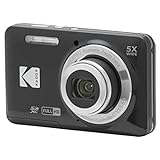
- 16MP Sensor: Captures detailed photos with a CMOS sensor for everyday shooting
- Optical Zoom: 5x optical zoom with a 28mm wide angle lens for flexible framing indoors or outdoors
- Full HD Video: Records 1080p video for travel clips, family moments, or simple vlogging
- Memory Support: Works with Class 10 SD, SDHC, or SDXC cards up to 512GB
- Rechargeable Battery: Included LB-012 lithium-ion battery charges in the camera over USB with the supplied adapter in about 2 hours; charge it for at least 4 hours before first use to maximize battery life
That distinction matters because “best” depends on the photograph. A fixed lens can deliver a larger sensor and a brighter, simpler optical design. A zoom can cover travel, family events, distant details, and wildlife that a fixed 28mm or 35mm lens cannot reach.
Quick comparison: which point-and-shoot camera is right for you?
| Camera | Best for | Sensor | Lens or zoom | Viewfinder | Stabilization | U.S. price or availability note | Main compromise |
|---|---|---|---|---|---|---|---|
| Fujifilm X100VI | Best overall premium compact | 40.2MP APS-C | 35mm-equivalent 23mm f/2 fixed lens | Hybrid optical/electronic | Five-axis, rated up to six stops under CIPA conditions | Verify the live U.S. price; the available specification sheet is not a current retail quote | Large for a pocket and limited to one focal length |
| Ricoh GR IV | Pocketable street and everyday stills | Approximately 25.74MP APS-C | 28mm-equivalent 18.3mm f/2.8 fixed lens | None built in; rear screen only | Five-axis, rated up to six stops at the center under CIPA 2024 testing | $1,599.95 listed; official U.S. page showed out of stock when checked August 16–18, 2026 | No viewfinder, zoom, or long-subject reach |
| Sony RX100 VII | Travel, family events, and distant subjects | One-inch class | Built-in zoom to a 200mm-equivalent telephoto perspective | Electronic | See manufacturer specifications for the current implementation | Check the live U.S. product page for current price and stock | Smaller sensor and slower long end limit low-light performance |
| Canon PowerShot G7 X Mark III | Casual photos, selfies, and light vlogging | One-inch class | Built-in everyday zoom | Screen-oriented operation | Check current Canon specifications | Canon lists the model in its U.S. point-and-shoot category, but dependable stock and a stable price were not established | Older technology and potentially inflated resale pricing |
Specifications and current product availability should be checked against the Fujifilm X100VI specification sheet, the official Ricoh GR IV product page, Sony’s RX100 VII product page, and Canon’s U.S. PowerShot category. Prices and stock in this article are U.S.-focused observations checked August 16–18, 2026, not permanent worldwide prices.
1. Fujifilm X100VI: What is the best overall premium point-and-shoot?
The Fujifilm X100VI is the best overall premium point-and-shoot for buyers who want a traditional photographic experience without carrying an interchangeable-lens system. Its 40.2-megapixel APS-C sensor, 35mm-equivalent f/2 lens, hybrid viewfinder, physical controls, film simulations, and built-in ND filter make it the most complete stills-oriented choice here.
Free tools Windows power users keep installed
One-click scans. No signup required.
According to Fujifilm’s X100VI specifications, the camera uses a 40.2MP X-Trans CMOS 5 HR APS-C sensor, a fixed 23mm f/2 lens equivalent to 35mm in full-frame terms, five-axis sensor-shift stabilization rated at up to six stops under CIPA conditions, and a built-in four-stop ND filter. The camera records JPEG, HEIF, and 14-bit RAW files and supports 6.2K and 4K video modes.
Why the 35mm-equivalent lens works so well
A 35mm-equivalent field of view is a balanced everyday perspective. The X100VI can handle travel scenes, environmental portraits, family documentation, street photography, and ordinary indoor subjects without looking as wide as a 28mm lens. The fixed lens also encourages the photographer to move, choose a composition, and learn one focal length rather than endlessly zooming.
The lens is still a limitation. The X100VI is a poor fit for wildlife, sports from the stands, distant architecture, or buyers who regularly need a tight portrait. A 35mm-equivalent lens can also feel too narrow in cramped interiors compared with the Ricoh’s 28mm perspective.
What makes the X100VI different to use?
The hybrid optical/electronic viewfinder is the X100VI’s major handling advantage. The optical mode provides a direct view through the scene, while the electronic mode shows exposure and focus information before capture. Physical exposure controls and Fujifilm’s film simulations further suit photographers who want deliberate, camera-centered operation.
Recommended Free Tools
The X100VI is not a universally easy automatic compact. Automatic modes are available, but the camera’s strongest appeal is direct control and an engaging shooting process. The body is compact beside a mirrorless camera with a comparable lens, but most users will not find it genuinely pocketable in ordinary clothing.
Who should not buy the X100VI?
Do not choose the X100VI if you need a long zoom, a truly pocket-sized camera, the strongest autofocus and video flexibility, or a low scarcity premium. The X100VI is also a poor value when a seller prices it substantially above official or normal market pricing. Verify the current U.S. selling price rather than treating an older specification-sheet MSRP signal as a live price.
2. Ricoh GR IV: Is it the best pocketable point-and-shoot for street photography?
The Ricoh GR IV is the best pocketable large-sensor point-and-shoot for street, walkaround, and everyday still photography. The GR IV combines an approximately 25.74MP APS-C sensor, a 28mm-equivalent f/2.8 lens, five-axis stabilization, a slim 262g body, USB-C, and approximately 0.6-second startup in a design built for quick snapshots.
Ricoh lists the GR IV at $1,599.95 in the United States, while the official U.S. product page showed the camera out of stock when checked August 16–18, 2026. The same page lists approximate dimensions of 109.4 × 61.1 × 32.7mm, approximately 262g with battery and memory card, Bluetooth 5.3, Wi-Fi, USB-C, and a battery rating of approximately 250 images.
The Tool Desk
Outbyte Driver Updater FREEFix the driver behind crashes, sound loss and screen glitchesFind Drivers →Outbyte PC Repair FREERepair Windows errors before they cause bigger problemsFix Now →Why choose 28mm instead of 35mm?
A 28mm-equivalent lens shows more of the environment. The GR IV suits streets, interiors, travel scenes, architecture, and documentary images where the surrounding context matters. The wider view also gives the photographer more flexibility in tight spaces.
The 28mm perspective is not automatically better. Faces can look less flattering when photographed too close, and distant subjects remain small. Buyers who prefer a more balanced people-and-travel perspective may find the X100VI’s 35mm equivalent easier. The older GR IIIx remains relevant for buyers who specifically want a 40mm-equivalent view and can find it substantially cheaper.
What does the GR IV sacrifice for pocketability?
The GR IV has no built-in viewfinder, so composition takes place on the rear screen. That omission is a major operational difference, not a minor specification detail. Screen viewing can be less comfortable in bright sunlight and changes how a photographer composes compared with the X100VI or RX100 VII.
The GR IV’s small body is a strong portability advantage, but “pocketable” depends on clothing, a case, and the owner’s tolerance for exposing a camera to dust and impact. The camera is genuinely smaller and lighter than the X100VI, yet not every user will comfortably carry it in a jeans pocket.
Ricoh’s approximately 250-image CIPA battery figure makes a spare battery sensible for travel. The fast startup, stabilization, and Bluetooth 5.3 connectivity support the GR IV’s snapshot role, but the camera is not the right choice for advanced video, a built-in viewfinder, strong subject tracking, or distant action.
Also popular on Amazon

- 16MP Sensor: Captures detailed photos with a CMOS sensor for everyday shooting
- Optical Zoom: 4x optical zoom with a 27mm wide angle lens for flexible framing indoors or outdoors
- Full HD Video: Records 1080p video for travel clips, family moments, or simple vlogging
- Memory Support: Works with Class 10 SD, SDHC, or SDXC cards up to 512GB
- LCD Screen and Battery: 2.7in LCD screen with 2 AA alkaline batteries for convenient on-the-go use
3. Sony RX100 VII: Which point-and-shoot camera is best for zoom and travel?
The Sony RX100 VII is the best zoom point-and-shoot for travel and general-purpose flexibility. Its pocketable body combines a built-in zoom reaching a 200mm-equivalent telephoto perspective with an electronic viewfinder, tilting screen, strong autofocus and subject tracking, and 4K video.
The RX100 VII solves the fixed-lens cameras’ biggest practical problem: the photographer can change framing without changing position. The zoom is useful for family events, museums, performances, distant travel details, wildlife within reasonable light, and situations where moving closer is impossible. Sony’s current product information should be checked for live U.S. pricing and availability.
What is the RX100 VII’s image-quality compromise?
The RX100 VII uses a smaller one-inch-class sensor than the APS-C sensors in the X100VI and GR IV. The smaller sensor enables the compact body and long zoom, but the camera generally gives up some low-light performance, dynamic-range headroom, and background separation to the larger-sensor fixed-lens cameras.
Windows Errors? Fix Them Before They Spread
Repair common Windows errors and clear accumulated junk for a smoother, more stable PC - no reinstall needed.Free scan · no reinstallCrashes, No Sound, or Screen Glitches?
Random freezes, missing sound and display glitches usually trace back to one bad driver. Find and replace yours safely.Free scan · under a minuteThe long zoom end is also relatively slow, so telephoto reach does not guarantee good results in dim conditions. Sensor size and lens aperture matter more than reach when the light is poor. Choose the Sony for framing flexibility, not as the maximum-low-light-quality option.
Is the Sony better for autofocus and video?
The Sony is the strongest all-purpose choice among these four for autofocus flexibility, subject tracking, and video-oriented use. Independent comparison coverage identifies the RX100 VII’s zoom, tilting screen, autofocus, and 4K video as key advantages over fixed-lens alternatives in the RTINGS comparison of the RX100 VII and Ricoh GR IIIx.
The RX100 VII’s controls and menus can be intimidating, especially for a casual buyer. It is also an older premium compact whose price may be difficult to justify beside newer or used alternatives. Check the current price, warranty, and return policy before buying.
4. Canon PowerShot G7 X Mark III: Is it still worth buying?
The Canon PowerShot G7 X Mark III is the best casual and selfie-oriented choice only when a genuine new or fairly priced used example is available. Its small one-inch-class compact body, built-in everyday zoom, tilting screen, and approachable operation suit family photos, selfies, social content, and light vlogging better than the more specialized Ricoh GR IV.
Quick wins for a faster PC:
Fix the driver behind crashes, sound loss and screen glitchesFind Drivers →Clear out junk files and repair common Windows errorsFree Scan →Canon’s U.S. PowerShot category continues to list the G7 X Mark III, but the available research does not establish dependable U.S. inventory or a stable current price. That makes availability a central part of the recommendation.
When does the G7 X Mark III make sense?
The G7 X Mark III makes sense when the camera is available from a reputable seller at a price that reflects its age. The tilting screen and conventional zoom are convenient for selfies and casual video, and the camera is less demanding to operate than a GR-series model.
The G7 X Mark III should not be presented as the best still-image camera in this group. The X100VI and GR IV have larger APS-C sensors, while the Sony offers more advanced zoom and autofocus flexibility. The Canon’s older technology and uncertain stock become especially important when a reseller asks a scarcity-driven price.
Before buying a used G7 X Mark III, check the lens-barrel operation, sensor for dust, screen condition, battery health, included charger and battery, return policy, and warranty status. Do not call the G7 X Mark III “best value” unless the actual purchase price supports that conclusion.
How do sensor sizes affect these four cameras?
Sensor size affects light-gathering potential, noise, dynamic range, depth of field, and body design, but megapixel count alone does not determine image quality. The X100VI and GR IV use APS-C sensors; the RX100 VII and G7 X Mark III use one-inch-class sensors; and Canon’s creator-focused PowerShot V1 uses a larger 1.4-type, 22.3MP sensor.
| Sensor class | Cameras in or near this guide | Practical advantage | Practical compromise |
|---|---|---|---|
| APS-C | Fujifilm X100VI, Ricoh GR IV | Generally stronger low-light potential, dynamic range, and background separation | Fixed lenses and larger bodies than ordinary small-sensor compacts |
| One-inch class | Sony RX100 VII, Canon G7 X Mark III | Smaller bodies and room for useful zoom lenses | Generally less light-gathering capability and separation than APS-C |
| 1.4-type | Canon PowerShot V1 | Video-focused design with a sensor positioned between common compact cameras and APS-C | Creator-oriented body and lens; not a direct stills-first substitute for the four picks |
The X100VI’s 40.2MP resolution is notable, but lens design, aperture, stabilization, autofocus, JPEG processing, and focal length are more useful buying criteria than the pixel count by itself. The official Fujifilm specification sheet confirms the resolution and camera features without proving that the X100VI wins every image-quality situation.
What is the difference between 28mm, 35mm, 40mm, and a 200mm-class zoom?
Focal length determines how much of the scene fits in the frame and how close the photographer must stand. The GR IV’s 28mm equivalent is wide and contextual, the X100VI’s 35mm equivalent is balanced, a 40mm-equivalent GR IIIx framing is slightly tighter and natural-looking, and the RX100 VII’s zoom provides the widest range of perspectives.
| Perspective | Best suited to | Watch out for |
|---|---|---|
| 28mm equivalent | Street scenes, interiors, architecture, travel, and environmental documentary work | People photographed too close can look less flattering; distant subjects remain small |
| 35mm equivalent | Everyday photography, people, family documentation, and general travel | Too narrow for some interiors and too short for wildlife or distant action |
| 40mm equivalent | A slightly tighter, natural-looking street and documentary perspective | Found on the previous-generation GR IIIx rather than the standard GR IV |
| 24–200mm-class zoom | Travel, events, distant details, performances, and changing subjects | Usually trades some low-light performance and simplicity for reach |
Which camera has the best viewfinder and handling?
The Fujifilm X100VI has the strongest traditional handling because its hybrid optical/electronic viewfinder and physical dials support deliberate composition. The Sony RX100 VII also has an electronic viewfinder in a genuinely small body. The Ricoh GR IV and Canon G7 X Mark III rely on rear-screen operation, which is convenient but less similar to a conventional viewfinder camera.
Do these 3 things before closing this tab:
1Fix the driver behind crashes, sound loss and screen glitches2Repair Windows errors before they cause bigger problems3Scan for outdated or missing drivers - takes under a minute| Camera | Composition method | Handling implication |
|---|---|---|
| Fujifilm X100VI | Hybrid optical/electronic viewfinder | Best for bright-light composition, traditional camera use, and direct exposure control |
| Ricoh GR IV | Rear screen only | Smallest large-sensor body, but less comfortable for some users in bright light |
| Sony RX100 VII | Electronic viewfinder plus tilting screen | Flexible framing for travel, low and high angles, and distant subjects |
| Canon G7 X Mark III | Screen-oriented operation with tilting screen | Approachable for selfies and casual video, but less suited to traditional viewfinder shooting |
Which point-and-shoot camera is best for moving subjects?
The Sony RX100 VII is the safest choice for moving subjects because it combines autofocus and subject-tracking capability with flexible zoom framing. The Fujifilm X100VI is more general-purpose than the Ricoh for ordinary autofocus use, but exact autofocus rankings should not be treated as universal without controlled testing.
Also popular on Amazon

- MEANINGFUL GIFT - This digital camera features a high-performance CMOS Sensor and anti-shake function, enabling you to capture vibrant, clear 44MP photos and record smooth, stable Full HD 1080P videos. It's a meaningful Christmas, birthday gift for kids, teens, students, and beginners to discover the joy of photography, experience and record their lovely life, and preserve funny, memorable moments with family and friends.
- COMPACT FOR TRAVEL & EASY TO USE - Special pocket-size design, this camera for photography fits in your pocket for easy carrying. Comes with a lanyard and powerful battery, portable to take along while traveling or camping. With clear, simple settings and features, this camera is easy for kids and starters to figure out and operate on their own. Simply insert the included SD card and battery, power it on, and start taking photos and recording videos. Capture life’s moments with ease!
- SAFE MATERIALS & CREATIVE FILTERS - Made of high-grade and reliable materials, the kid camera is safe, non-toxic, and durable. This digital vlogging camera for photography supports a variety of cute filter effects to choose from, and kids can create creative pictures. The timestamp function helps add the date and time to your photos and videos, allowing you to track special moments, such as birthdays, trips, or events. 16X digital zoom allows for enlarging distant subjects in photos.
- SMALL BUT POWERFUL - Equipped with two powerful rechargeable batteries, providing long-lasting use during vacations and camping trips. The automatic turn-off feature helps conserve energy. The kids digital camera features a large LCD screen and the ability to playback photos and videos on the camera or a computer. Also supports multiple features, including anti-shake, self-timer, webcam capability, time-lapse, slow motion, continuous shooting, motion detection, face detection, and so on.
- WARRANTY & PACKAGE LIST - We provide a two-year satisfaction warranty, along with a no-hassle replacement policy. Any problems or questions with the camera, please contact us for help. Package list: Digital Camera, 32 GB SD Card, Type C Cable, Charger Adapter, 2 Rechargeable Batteries, Lanyard, and Bag.
The Ricoh GR IV is designed around deliberate snapshot photography rather than sports, wildlife, or fast-moving distant subjects. The X100VI and GR IV are also poor choices when the buyer routinely needs to isolate action far away because neither camera has a long zoom.
Independent reader supportYour contribution helps us test, update, and keep practical guides available for everyone.Which camera is best for video?
The Sony RX100 VII is the strongest all-purpose video option among the four listed cameras, while the Canon PowerShot V1 is the clearest video-first alternative. The X100VI is capable of 6.2K and 4K recording but is primarily compelling for stills and hybrid users. The GR IV should not be chosen by a buyer whose main requirement is advanced video.
Canon positions the PowerShot V1 toward creators with a 1.4-type 22.3MP sensor, 16–50mm-equivalent stills lens, built-in three-stop ND filter, microphone support, cooling fan, and cropped 4K60 recording. Canon announced an estimated $899.99 launch price, but its later U.S. shop page showed a $1,029 regular-price signal and an unavailable notice. The launch announcement reflects launch pricing, not a guaranteed current selling price.
The PowerShot V1 is therefore a good video-first alternative for a vlogger who values microphone support, cooling, and creator ergonomics. The PowerShot V1 is not an automatic replacement for the G7 X Mark III in a stills-focused ranking because it does not offer the same traditional compact-camera priorities, and availability was uncertain when checked.
Should you buy a point-and-shoot camera or keep using a smartphone?
A smartphone is better when automatic HDR, computational night photography, instant sharing, casual video, and not carrying another device matter most. A dedicated point-and-shoot camera is better when optical zoom, physical controls, RAW capture, independent battery life, deliberate handling, or reduced dependence on phone storage and notifications matter more.
| Choose a dedicated camera when you want… | Choose a smartphone when you want… |
|---|---|
| Optical zoom instead of computational cropping | Instant sharing and automatic backup or editing |
| Physical exposure controls and camera ergonomics | Automatic HDR and computational night photography |
| RAW files and a deliberate shooting process | Casual video with no extra battery or memory card |
| A separate device with its own battery and storage | The lightest possible everyday carry |
What are the best alternatives to these four cameras?
Canon PowerShot V1 for video-first buyers
Choose the PowerShot V1 instead of the four general-purpose picks when vlogging is the main requirement and the camera is actually available at an acceptable price. The cooling fan, microphone compatibility, built-in ND filter, and creator-focused design are more relevant to video production than to a stills-first buyer.
Ricoh GR III and GR IIIx for used-market buyers
The GR III remains a 28mm-equivalent alternative, while the GR IIIx offers a 40mm-equivalent perspective. Either can make sense if the camera is significantly cheaper than the GR IV or if the buyer specifically wants the older focal length. Label both as previous-generation options and inspect used condition carefully.
Fujifilm X100V for a lower-cost used X100 experience
The X100V can be attractive on the used market for buyers who want the X100 shooting philosophy at a lower price. Compare used condition, shutter count where available, battery health, warranty, seller reputation, and return rights before treating the X100V as a bargain. The X100V should not outrank the X100VI without a clear price-based reason.
Ricoh GR IV HDF and GR IV Monochrome for specialists
The Ricoh GR IV HDF adds a highlight diffusion filter for a softer, more atmospheric rendering. Ricoh lists it at $1,599.95, but the standard GR IV remains the more sensible default recommendation for most buyers.
The Ricoh GR IV Monochrome uses a monochrome-specific sensor and built-in red filter and is listed by Ricoh at $2,199.95. Because the camera cannot produce conventional color photographs, it should not occupy one of the four general-purpose slots.
How should you choose among the four?
- Choose the Fujifilm X100VI if you want the richest all-around enthusiast experience, a viewfinder, physical dials, a 35mm-equivalent perspective, and strong APS-C still-image capability.
- Choose the Ricoh GR IV if you want the smallest large-sensor camera, a 28mm-equivalent perspective, fast snapshot handling, and are comfortable composing on a rear screen.
- Choose the Sony RX100 VII if you need zoom, autofocus flexibility, a viewfinder, travel reach, or a small camera for distant subjects and events.
- Choose the Canon G7 X Mark III if you want a simple, screen-oriented compact for casual photos, selfies, and light vlogging and can find one at a fair price.
- Choose the Canon PowerShot V1 if your primary need is creator-focused video rather than a traditional stills camera.
- Keep using your smartphone if instant sharing, computational photography, automatic HDR, and convenience outweigh the benefits of a dedicated camera.
What should you check before buying?
- Check official stock first. Availability is particularly important for the Ricoh GR IV, whose U.S. product page showed out of stock when checked, and the Canon PowerShot V1, whose U.S. shop page showed unavailable.
- Separate price types. Distinguish manufacturer-listed price, current retail price, temporary sale price, used-market price, and inflated third-party pricing. A technically excellent camera can become a bad purchase when scarcity creates a large premium.
- Confirm geography and warranty. A U.S. price or stock status does not establish availability in another country. Verify whether the seller provides a valid regional warranty and accepts returns.
- Budget for basic ownership items. Every camera needs a compatible SDXC memory card. A spare battery is particularly sensible for the GR IV because Ricoh lists approximately 250 images under its stated test conditions. A case, wrist strap, and screen protector may also be useful, but do not buy accessories before confirming the camera’s battery and card requirements.
- Inspect used cameras. Check sensor dust, lens-barrel operation, stabilization, screen condition, battery health, included charger and battery, shutter count where available, return policy, and warranty status.
- Match accessories to the camera. A small camera bag makes more sense for the X100VI than for the GR IV or RX100 VII. External ND filters are not automatically necessary because the X100VI and PowerShot V1 already include built-in ND functionality. External microphones and grips are sensible for a PowerShot V1 video setup, not a priority for a stills-first buyer.
Older recommendations can be misleading in this category. The RTINGS point-and-shoot roundup is useful comparison context, but its search result still highlights the Ricoh GR III rather than the newer GR IV. A current 2026 buying guide should audit each model’s generation, current stock, and real purchase price instead of copying an earlier lineup.
Free tools Windows power users keep installed
One-click scans. No signup required.
Frequently Asked Questions
What is the best point-and-shoot camera of 2026?
The Fujifilm X100VI is the best overall point-and-shoot camera of 2026 for buyers who prioritize still photography, a viewfinder, physical controls, and a 35mm-equivalent f/2 lens. The Ricoh GR IV is a better choice when pocketability and a 28mm perspective matter more, while the Sony RX100 VII is better for zoom.
Is the Ricoh GR IV better than the Fujifilm X100VI?
Neither camera is universally better: choose the Ricoh GR IV for a smaller body, 28mm-equivalent lens, and fast street shooting, or choose the Fujifilm X100VI for a viewfinder, 35mm-equivalent lens, higher resolution, and a more traditional camera experience. The Ricoh GR IV has no built-in viewfinder.
Which point-and-shoot camera has the best zoom?
The Sony RX100 VII has the best zoom among these four cameras, reaching a 200mm-equivalent telephoto perspective in a pocketable body. The long zoom improves travel and event flexibility, but its smaller one-inch-class sensor and relatively slow telephoto end are disadvantages in low light.
Is the Canon G7 X Mark III still worth buying in 2026?
The Canon PowerShot G7 X Mark III is worth considering only when it is available at a fair new or used price. Canon continues to list the model in its U.S. point-and-shoot category, but stable current inventory and pricing were not established, so inflated reseller prices can make it a poor purchase.
Should I buy a point-and-shoot camera instead of using my phone?
Buy a point-and-shoot camera when you want optical zoom, physical controls, RAW capture, independent battery life, and a deliberate shooting experience. Keep using a smartphone when automatic HDR, computational night photography, instant sharing, casual video, and carrying no extra device are more important.
The Bottom Line
The Fujifilm X100VI is the richest all-around enthusiast choice, the Ricoh GR IV is the best genuinely small large-sensor camera for street photography, and the Sony RX100 VII is the practical winner when zoom and autofocus flexibility matter. The Canon PowerShot G7 X Mark III remains relevant for casual photos and selfies only if its availability and price are reasonable. If none of those trade-offs fit, a smartphone, a fairly priced used camera, or the video-first Canon PowerShot V1 may be the better answer.

