
iTechGuides is reader-supported. When you buy through links on our site, we may earn an affiliate commission. As an Amazon Associate I earn from qualifying purchases. Learn more
There is no universal failure-rate database for every laptop brand sold in the United States. But for most buyers in 2026, Apple is the safest broad low-hassle choice, Lenovo ThinkPad is the strongest Windows and business option, LG is the biggest current survey surprise, ASUS and Acer are compelling repairability-and-value choices, and Framework is the standout if keeping a laptop repairable matters more than proven long-term failure statistics.
The important qualification is that the laptop line and exact model matter more than the logo. A ThinkPad is not the same as an IdeaPad, a Dell Latitude is not an Inspiron, and a business-class HP EliteBook should not be judged by the cheapest HP consumer notebook. The ranking below combines reliability surveys, owner satisfaction, support, repairability, parts access, software longevity, and consistency across product families.
Our ranking at a glance
| Rank | Brand | Best starting point | Short verdict |
|---|---|---|---|
| 1 | Apple | MacBook Air or MacBook Pro | Safest broad low-hassle recommendation |
| 2 | Lenovo | ThinkPad T, X, or P series | Best Windows choice when you buy the right line |
| 3 | LG | Gram and Gram Pro | Exceptional current owner-satisfaction momentum |
| 4 | ASUS | ExpertBook, Zenbook, ROG, or selected TUF | Strong repairability and product variety |
| 5 | Samsung | Galaxy Book Pro or Ultra | Quietly strong premium Windows option |
| 6 | Microsoft | Surface Laptop | Good premium hardware, but model-dependent serviceability |
| 7 | HP | EliteBook, ProBook, or selected OmniBook | Credible reliability in business and premium ranges |
| 8 | Dell | Latitude or Precision | Excellent enterprise proposition, uneven consumer range |
| 9 | Acer | Swift, Aspire Vero, or selected Chromebook | Good budget-and-repairability compromise |
| 10 | MSI | Prestige, Creator, Raider, or selected Stealth | Strong gaming satisfaction, weaker support reputation |
| 11 | Framework | Laptop 13, Laptop 16, or Chromebook Edition | Repairability leader, but a provisional reliability pick |
This is an editorial, evidence-weighted ranking, not a published composite score. Apple and Lenovo are the most defensible top-two general recommendations, but the winner changes according to what you mean by reliable: Framework leads for repairability, ThinkPad for business serviceability, Apple for low-hassle ownership, ASUS and Acer for mainstream repairability, and LG for current satisfaction.
The Tool Desk
Outbyte Driver Updater FREEScan for outdated or missing drivers - takes under a minuteDriver Scan →Outbyte PC Repair FREERepair Windows errors before they cause bigger problemsFix Now →What laptop reliability actually means
Reliability is often used as a vague synonym for premium materials, speed, popularity, or good reviews. Those are related considerations, but they are not the same thing.
Popular on Amazon
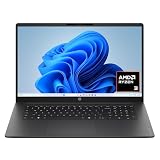
- FULL HD IPS DISPLAY - Enjoy vibrant, crystal-clear images with 178-degree wide-viewing angles
- AMD RYZEN 3 30 PROCESSOR - Everyday performance you can count on; Multitask, stream, game casually, and edit photos smoothly with responsive power and vibrant HDR visuals
- ENJOY UP TO 14 HOURS AND 15 MINUTES OF BATTERY LIFE - HP Fast Charge restores battery from 0 to 50% in approximately 45 minutes
- AMD RADEON 610M GRAPHICS - Experience smooth entertainment; Built for streaming and multitasking, enjoy realistic visuals and efficient performance for work and play
- STORAGE AND MEMORY - 512 GB PCIe NVMe M.2 SSD offers fast speed and efficient storage; and 8 GB LPDDR5 RAM memory boosts performance with higher bandwidth
| Term | What it means for a laptop buyer |
|---|---|
| Reliability | How often the computer develops a fault or stops working properly. |
| Durability | How well the chassis, hinges, keyboard, ports, screen, and battery tolerate physical and thermal wear. |
| Longevity | How long the laptop remains useful, compatible, and supported. |
| Repairability | How easily an owner or repair shop can diagnose and replace failed parts. |
| Support quality | How effectively the manufacturer handles warranty claims, repairs, parts, and technical assistance. |
| Value-adjusted reliability | Whether the laptop is economical to repair rather than replace after a failure. |
These categories can conflict. A MacBook can be dependable in daily use but expensive and difficult to repair. A Framework laptop can be exceptionally easy to repair without yet having the large, long-term failure dataset needed to prove that it fails less often. A gaming laptop may have more fan noise and shorter battery life because it contains high-power hardware; those are design trade-offs, not automatically defects.
How this ranking was built
The strongest U.S. evidence comes from Consumer Reports. Its current reliability research draws on surveys covering 75,923 portable computers purchased new between 2019 and 2025. It estimates the likelihood of a problem within the first three years rather than promising a lifespan or reporting a complete warranty-claims census. Overall, 16% of the surveyed laptops broke or stopped working as they should within three years.
Consumer Reports also says that 56% of its members considered reliability more important than performance or affordability, nearly six in ten laptops that broke were taken in for repair, and 22% of laptops purchased during the survey period had an extended warranty or service contract. Those figures describe surveyed owners, not every U.S. laptop buyer, so they should be treated as useful evidence rather than a national failure-rate registry.
Which? adds a longer ownership view. Its May 2026 report is based on a February-and-March 2025 survey of 15,644 people, including 9,791 laptop owners. Its seven-year reliability calculation weights the proportion of laptops without a fault at 50%, time to the first fault at 25%, and the effect of the fault on everyday use at 25%. Battery-life deterioration was the most common problem. The least reliable brand in the study had 36% of models develop a fault within seven years, while satisfaction with manufacturer repairs ranged from 55% to 64%. The complete brand table is paywalled, so this article does not invent a hidden ranking.
The PCMag Readers’ Choice 2025 survey helps measure owner satisfaction, perceived reliability, repair experiences, and technical support. It ran from November 11, 2024, through February 3, 2025. LG performed exceptionally well across several categories and scored 9.8 for size and weight; MSI and Apple tied for second in overall satisfaction at 9.1, and ASUS scored 8.5. Apple led for technical support, while MSI performed particularly well for gaming satisfaction and repair-related ratings. These are self-reported owner experiences, not controlled failure measurements.
Finally, U.S. PIRG and iFixit measure a different question: whether a laptop can be opened, diagnosed, and repaired. PIRG’s 2025 research placed ASUS and Acer among the strongest major brands for repairability and found Apple difficult to repair. A summary of PIRG’s 2026 report gave Apple a C-, Lenovo a C, ASUS a B+, Acer a B, and HP, Dell, Samsung, and Microsoft B-. iFixit’s model-level results are especially important: current ThinkPad models have reached the top of its scoring system, while MacBook and Surface scores vary significantly by generation.
For the final ordering, reliability and ownership evidence receive the most weight, followed by model consistency, warranty and service, repairability, parts access, and software support. No exact decimal scores are assigned because these studies use different countries, time periods, samples, definitions, and survey designs. Confidence is high for Apple and Lenovo, moderate for most established brands, and provisional for Framework because its repairability evidence is strong but its long-term failure data is limited.
Quick wins for a faster PC:
Clear out junk files and repair common Windows errorsFree Scan →Fix the driver behind crashes, sound loss and screen glitchesFind Drivers →The 11 most reliable laptop brands, ranked
1. Apple
Best for: Buyers who want a low-maintenance laptop, strong software integration, long useful ownership, and responsive mainstream support.
Recommended lines: MacBook Air and MacBook Pro.
Apple is the safest broad recommendation when reliability means minimizing day-to-day hassle. Its premium lineup is relatively consistent, its operating system and hardware are tightly integrated, and current Consumer Reports models receive the strongest survey marks, with some MacBook Pro models scoring as high as 85 overall. PCMag’s 2025 readers also placed Apple first for technical support.
The right interpretation is not that every MacBook will outlast every Windows laptop. It is that Apple offers one of the most predictable ownership experiences across its main laptop range. That consistency is why it ranks first even though it loses ground on repairability.
The important trade-off: modern MacBooks commonly use soldered memory and storage, and out-of-warranty repairs can be expensive. A failed port, display, battery, or logic board may result in a much larger bill than the same type of repair on a serviceable business laptop. Apple offers Self Service Repair for selected Mac models, but availability, parts, tools, and repair complexity vary by model.
Free tools Windows power users keep installed
One-click scans. No signup required.
Choose a MacBook when the software you need runs well on macOS and you value low-hassle ownership. Check compatibility first if you rely on Windows-only applications, specialized peripherals, older plug-ins, or games. Also use Apple’s macOS compatibility list rather than assuming that every Mac receives every future release.
2. Lenovo
Best for: Windows business users, programmers, students who want a durable refurbished machine, and anyone who values parts access and serviceability.
Recommended lines: ThinkPad T, X, and P series; selected Yoga and Legion models.
Lenovo has the strongest Windows reliability story when the purchase is restricted to the right product family. ThinkPad business laptops combine durable designs, strong keyboards, useful ports and docks, service manuals, replacement-part availability, and configurable business warranties. iFixit has also highlighted recent ThinkPad repairability improvements: the ThinkPad T14 Gen 5 reached 9/10, while newer ThinkPad generations have reached 10/10 in iFixit’s scoring.
The model distinction is essential. In current Consumer Reports buying-guide data, the ThinkPad T14s Gen 6 scored 74 overall while an IdeaPad Flex 5 scored 58. Those are overall product scores, not direct failure rates, but they illustrate why the ThinkPad reputation should not be transferred automatically to every Lenovo laptop.
Buy: a ThinkPad T, X, or P model when repairability, keyboard quality, business support, and a long working life matter. A professionally refurbished ThinkPad can also be a better long-term value than a brand-new bargain laptop, provided the battery, warranty, BIOS status, screen, and operating-system support are checked.
Be cautious with: the lowest-priced IdeaPad configurations and models with soldered memory, minimal cooling, weak hinges, or limited warranty service. Lenovo’s 2026 PIRG repairability grade was only middle-of-the-field because that assessment includes documentation and manufacturer-policy factors, not just how easy one ThinkPad is to open.
3. LG
Best for: Buyers who prioritize a light, premium Windows laptop and are comfortable with a smaller U.S. laptop service ecosystem.
Do these 3 things before closing this tab:
1Repair Windows errors before they cause bigger problems2Fix the driver behind crashes, sound loss and screen glitches3Clear out junk files and repair common Windows errorsRecommended lines: Gram and Gram Pro.
LG is the clearest current challenge to the usual Apple-versus-Lenovo conversation. Consumer Reports’ current buying-guide material gives LG Gram Pro models overall scores of 78 to 80, and PCMag readers rated LG exceptionally well for satisfaction-related categories, including a 9.8 score for size and weight.
That makes LG a strong choice for frequent travelers, students, and remote workers who want a very light computer without dropping into budget construction. Its position is based on current survey and model-performance momentum rather than a claim that LG has a proven lower failure rate than every competitor.
The qualification: extremely light designs can involve compromises in rigidity, ports, cooling headroom, and repairability. LG also has a smaller U.S. laptop presence and a thinner service ecosystem than Apple, Lenovo, Dell, or HP. Before buying, confirm that the exact Gram configuration is available from a seller with a sensible return window and that replacement parts or authorized service are accessible in your area.
4. ASUS
Best for: Buyers who want broad choice, good value, or better-than-average repairability among major mainstream brands.
Recommended lines: ExpertBook, Zenbook, selected Vivobook, ROG, TUF, and ProArt models.
ASUS ranks highly because it combines a wide product range with some of the strongest major-brand repairability results. U.S. PIRG has placed ASUS near the top of major laptop brands for repairability, and ASUS provides official repair information, selected self-repair resources, and genuine-parts guidance in the United States.
That does not make every ASUS laptop equally dependable. An ExpertBook is aimed at a different ownership pattern than a Vivobook, while a ROG or TUF gaming laptop experiences more heat, fan activity, and battery stress than a Zenbook. PCMag’s 2025 overall satisfaction score for ASUS was 8.5, but survey results and support experiences vary by product family and country.
Choose ASUS when you can identify a well-reviewed exact model with replaceable storage, a reasonable warranty, and accessible service documentation. Treat gaming models separately from thin productivity laptops, and verify the U.S. warranty process before purchasing from a marketplace seller.
Windows Errors? Fix Them Before They Spread
Repair common Windows errors and clear accumulated junk for a smoother, more stable PC - no reinstall needed.Free scan · no reinstallOutdated Drivers Are Slowing You Down
One free scan finds every outdated or missing driver and matches the right update for your exact hardware.Free scan · exact hardware match5. Samsung
Best for: Premium Windows buyers who value battery life, displays, thin designs, and integration with Samsung phones and tablets.
Recommended lines: Galaxy Book Pro and Galaxy Book Ultra.
Samsung’s Galaxy Book range is a quietly strong premium Windows option. Current Consumer Reports models score well, with some Galaxy Book models reaching 79 overall. The strongest models combine good displays, battery performance, portability, and convenient ecosystem features.
Samsung ranks below LG and ASUS mainly because its U.S. laptop range is narrower and its independent repair and business-service ecosystem is less established than Lenovo’s, Dell’s, or HP’s. Do not generalize from Samsung’s phone or appliance reputation to its laptops; evaluate the exact Galaxy Book generation, battery, ports, warranty, and parts availability.
Samsung is a sensible choice for a Galaxy phone owner who wants ecosystem integration, but buyers planning to keep a laptop for many years should confirm the availability of replacement batteries, displays, and other model-specific parts before paying a premium.
6. Microsoft Surface
Best for: Buyers who want premium Windows hardware, Microsoft integration, and a clean design more than maximum modularity.
Recommended line: Surface Laptop.
Microsoft’s Surface Laptop line has become substantially more serviceable than early Surface designs. Microsoft provides official warranty information, self-repair guidance for selected devices, and model-specific service information. iFixit’s results likewise show that some newer Surface Laptop models are much easier to repair than early Surface products.
Surface nevertheless ranks in the middle because current reliability evidence is closer to average than exceptional, and the family is not uniform. Surface Pro is a detachable tablet-laptop hybrid with different repair constraints; it should not be judged identically to Surface Laptop. Parts, service options, and self-repair suitability can also vary by country and model.
What’s actually slowing this PC down?
Pick the symptom - the matching free tool is one click away.
Choose Surface Laptop when design, portability, and Microsoft integration are priorities. Choose a ThinkPad, Latitude, or Framework instead when replaceable parts and independent repair are central to the purchase.
7. HP
Best for: Business buyers who can select EliteBook or ProBook, and consumers considering selected newer OmniBook models.
Recommended lines: EliteBook, ProBook, and selected OmniBook.
HP’s business lines benefit from extensive parts, service, and fleet-support infrastructure. EliteBook and ProBook models can be strong reliability choices, while selected OmniBook models score competitively in current Consumer Reports data. Some OmniBook models reach 72 overall, although certain HP 17-inch models score only 47 to 51.
Recommended Free Tools
That wide spread explains HP’s seventh-place ranking. The brand’s budget consumer range is too varied to support a single brand-wide conclusion. Hinge, display, battery, and charging-port quality can differ considerably between configurations.
Do not recycle old SquareTrade statistics claiming that a particular proportion of HP laptops will fail within three years. That research examined much older machines and does not describe current HP products. For a business purchase, compare EliteBook or ProBook service terms with the actual warranty on the consumer HP model you are considering.
8. Dell
Best for: Businesses that need enterprise support, service documentation, and configurable warranties.
Also popular on Amazon

- Intel Celeron N4120: 4 Cores & Threads, 1.1GHz Base Clock, Up to 2.6GHz Boost Clock, 4MB Cache, Intel UHD Graphics 600. The perfect combination of performance, power consumption, and value helps your device handle multitasking smoothly and reliably with four processing cores to divide up the work.
Recommended lines: Latitude and Precision; consider XPS, Inspiron, and Alienware separately.
Quick wins for a faster PC:
Fix the driver behind crashes, sound loss and screen glitchesFind Drivers →Clear out junk files and repair common Windows errorsFree Scan →Scan for outdated or missing drivers - takes under a minuteDriver Scan →Dell remains one of the strongest enterprise laptop providers. Latitude and Precision systems commonly offer service manuals, replacement-part information, configurable warranty options, and business support that can make a major difference when downtime costs money.
Dell ranks eighth overall because that business strength does not transfer automatically to Inspiron, XPS, or Alienware. Current Consumer Reports model scores span roughly 58 to 68 for several Latitude and premium models, while consumer experiences vary by generation and configuration. The evidence does not justify saying that all Dell laptops are unreliable, nor does it justify ranking every Dell model near the top simply because Latitude is serviceable.
If buying for work, compare the warranty type—mail-in, depot, onsite, or advanced exchange—as carefully as the processor and display. A well-supported Latitude can be a safer business investment than a cheaper consumer model with similar specifications.
9. Acer
Best for: Budget-conscious buyers who want reasonable value and better repairability than many inexpensive alternatives.
Do these 3 things before closing this tab:
1Clear out junk files and repair common Windows errors2Scan for outdated or missing drivers - takes under a minute3Repair Windows errors before they cause bigger problemsRecommended lines: Swift, Aspire, Aspire Vero, selected Chromebooks, and selected Predator gaming laptops.
Acer is one of the better budget-and-repairability compromises. U.S. PIRG has placed Acer among the stronger major brands for repairability, and Swift, Aspire, and Chromebook models can offer sensible specifications at lower prices than premium rivals.
Repairability is not the same as low failure rates, however. Many consumer Acer laptops carry only one year of standard U.S. limited warranty coverage, although terms vary by model and commercial TravelMate systems may receive longer coverage. Check Acer’s official warranty terms for the exact machine.
The cheapest Acer configurations may compromise on hinge strength, chassis rigidity, display quality, cooling, memory, and battery capacity. A Swift or better-equipped Aspire can be a sensible purchase; do not use the strengths of those lines to defend every entry-level Acer notebook.
10. MSI
Best for: Gaming and creator users who prioritize performance and owner satisfaction and are willing to scrutinize support terms.
Recommended lines: Prestige, Creator, Raider, Stealth, and selected higher-end gaming models.
MSI performs better in gaming-owner satisfaction than its overall position suggests. PCMag’s 2025 readers rated MSI highly for gaming satisfaction and repair-related experiences, and MSI tied Apple for second place in overall satisfaction at 9.1.
The counterweight is support. Laptop Mag’s current brand and support discussion placed MSI in the bottom tier for technical support. MSI’s unusually broad range also makes a brand-wide conclusion unreliable: a Prestige ultraportable, Creator workstation, Raider gaming laptop, and entry-level Cyborg are not equivalent in cooling, materials, battery, or serviceability.
The Tool Desk
Outbyte Driver Updater FREEFix the driver behind crashes, sound loss and screen glitchesFind Drivers →Outbyte PC Repair FREEClear out junk files and repair common Windows errorsFree Scan →Gaming laptops naturally place more stress on fans, batteries, power adapters, GPUs, hinges, and thermal systems. Extra fan noise or shorter battery life is not automatically a failure, but buyers should inspect thermal throttling, battery-swelling reports, GPU-driver stability, storage and memory replacement, display cost, and local warranty handling.
11. Framework
Best for: Buyers who define reliability as the ability to keep repairing, upgrading, and maintaining a laptop over time.
Recommended lines: Laptop 13, Laptop 16, and Chromebook Edition.
Framework is the clearest repairability leader in this group. Its modular design, replaceable components, published repair guides, and parts ecosystem are central to the product rather than afterthoughts. If a keyboard, battery, storage device, port, or display eventually fails, the owner has a better chance of replacing that component instead of discarding the entire computer. See Framework’s official product and parts information alongside iFixit’s repairability coverage.
Framework is ranked provisionally because it does not yet have the same large-sample, seven-year failure data available for Apple, Lenovo, HP, Dell, and other established brands. It is not scientifically justified to call Framework the laptop brand with the lowest failure rate. Parts availability, the buyer’s willingness to perform repairs, tool access, and the company’s continued platform support all affect the real outcome.
Choose Framework if serviceability and upgradeability matter more than a mature enterprise service network. Choose Apple or a mainstream business laptop if you prefer a large support ecosystem and do not want to perform repairs yourself.
Best laptop brands by use case
Best for low-hassle general use: Apple
Start with an Apple MacBook Air or MacBook Pro if your applications work on macOS and you value consistent hardware, battery life, integrated software support, and strong technical assistance. The trade-off is higher repair cost and limited upgrades.
Best Windows business laptop: Lenovo ThinkPad
Start with ThinkPad T, X, or P series. Dell Latitude and Precision and HP EliteBook and ProBook are credible alternatives, particularly when their onsite or priority support options are better for your organization. Compare the actual service contract rather than relying on the logo.
Free tools Windows power users keep installed
One-click scans. No signup required.
Best for repairability: Framework or current ThinkPad
Framework is the clearest repairability-first choice. A current ThinkPad is the safer established-brand choice, particularly for a buyer who wants business parts and service infrastructure. ASUS, Acer, Dell Latitude, and HP EliteBook can also be good choices when the exact model has accessible storage, memory, battery, and service documentation.
Best budget choice: Acer or a refurbished business laptop
Look first at Acer Swift, better-equipped Aspire, or a Chromebook with a verified update date. Also compare a professionally refurbished ThinkPad, Latitude, or EliteBook. A refurbished business laptop may offer a stronger chassis and better parts access than a new entry-level machine, but check battery health, seller warranty, BIOS or enterprise locks, display condition, keyboard layout, and operating-system support.
Best premium Windows choices: LG, Samsung, ASUS, or Surface Laptop
LG Gram is attractive for weight and portability; Samsung Galaxy Book Pro and Ultra for display and Samsung ecosystem integration; ASUS Zenbook for variety and repairability; and Surface Laptop for Microsoft integration and design. Check the exact model’s parts access before choosing any thin premium laptop.
Best for gaming: Lenovo Legion or ASUS ROG/TUF
Also investigate Acer Predator, MSI Raider or Stealth, and Dell Alienware by generation. PCMag’s survey found MSI and ASUS particularly strong for gaming-related satisfaction, but MSI’s weaker support assessment is an important counterpoint. Gaming reliability depends heavily on cooling, battery design, power delivery, GPU drivers, and the quality of the individual generation.
Best for ChromeOS longevity: a Chromebook with a verified update window
Google is a ChromeOS platform provider rather than a current laptop manufacturer. Acer, HP, Lenovo, and ASUS make many of the better-known Chromebook models. Google says eligible Chromebooks receive up to 10 years of automatic updates, tied to the device’s platform release date—not necessarily the date you buy it. Check the individual machine at Settings → About ChromeOS → Additional details → Update schedule.
Some pre-2021 Chromebooks can opt into extended updates, but Google says doing so removes Android-app and Google Play Store support. Ten years of software updates also does not guarantee ten years of battery health, physical durability, performance, or parts availability.
The model matters more than the brand
A brand ranking is useful only as a starting filter. Before buying, compare the product family and exact SKU.
| Brand | Usually the stronger starting point | What not to assume |
|---|---|---|
| Apple | MacBook Air or MacBook Pro | High reliability does not mean inexpensive repair or user upgrades. |
| Lenovo | ThinkPad T, X, or P | IdeaPad automatically has ThinkPad durability or serviceability. |
| HP | EliteBook, ProBook, selected OmniBook | The cheapest HP 15- or 17-inch model represents the whole company. |
| Dell | Latitude or Precision | Inspiron, XPS, and Alienware have the same service model as Latitude. |
| ASUS | ExpertBook, Zenbook, selected ROG/TUF | A thin Zenbook and a high-power gaming model have the same reliability trade-offs. |
| Acer | Swift, Aspire Vero, selected Chromebook or Predator | Repairability guarantees premium materials or low failure rates. |
| Samsung | Galaxy Book Pro or Ultra | Phone and appliance support experience predicts laptop parts availability. |
| Microsoft | Surface Laptop | Surface Pro’s detachable design is equally easy to repair. |
| MSI | Prestige, Creator, Raider, selected Stealth | Gaming performance proves long-term dependability. |
| Framework | Laptop 13, Laptop 16, Chromebook Edition | Repairability evidence is the same as long-term failure-rate evidence. |
Consumer Reports’ current model results demonstrate the spread. MacBook Pro models score as high as 85 overall; LG Gram Pro models score 78–80; Samsung Galaxy Book models reach 79; Lenovo’s ThinkPad T14s Gen 6 scores 74 compared with 58 for an IdeaPad Flex 5; HP OmniBook models reach 72 while some HP 17-inch models score 47–51. Dell Latitude and premium models fall around 58–68, and some Acer Swift models outperform cheaper Acer alternatives. These are overall product scores, not direct brand failure rates, but they show why a logo-only ranking is inadequate.
What to check before purchasing
- Find the exact model number. Do not stop at a name such as Aspire, Yoga, Surface, Galaxy Book, or MacBook. Retailers often sell different memory, storage, display, battery, and processor configurations under the same family name.
- Check memory and storage. Determine whether RAM is soldered and whether the SSD can be replaced. Buy enough memory and storage for the intended ownership period if upgrades are impossible.
- Verify battery replacement. Look for a replacement part, service guide, and realistic repair options. A battery that is technically replaceable but unavailable is not much help.
- Read the warranty details. Check duration, country, accidental-damage exclusions, depot or mail-in service, onsite support, advanced exchange, shipping responsibility, and whether the warranty applies to a marketplace purchase.
- Look for official documentation. A service manual, parts catalog, repair guide, and diagnostic tools are valuable signals. ASUS provides selected U.S. repair resources; Microsoft provides Surface self-repair information; Apple provides model-specific repair information.
- Check independent repairability. Search the exact generation in iFixit’s repairability database. Do not use a score for an earlier or later generation as a substitute.
- Inspect the physical design. Pay attention to hinge mounting, port placement, USB-C charging, display replacement, fan access, battery swelling risk, and whether the cooling system is adequate for the processor and graphics hardware.
- Confirm software support. For Chromebooks, check the exact Auto Update Expiration date. For Macs, check Apple’s current macOS compatibility list. For Windows laptops, consider driver, firmware, and application support over the planned ownership period.
- Check application compatibility. ARM-based Windows laptops can offer excellent battery life, but verify compatibility with specialized software, games, drivers, peripherals, virtual machines, and older accessories. Apple silicon Macs likewise require a check for Windows-only tools and plug-ins.
- Use the return window. Test the keyboard, ports, display, sleep and wake behavior, Wi-Fi, Bluetooth, charging, fan noise, battery behavior, and external monitor support before the seller’s return period expires.
- Compare total ownership cost. Include the price of extended coverage, battery replacement, display repair, storage upgrades, labor, shipping, and downtime—not only the purchase price.
Common laptop failures to plan for
Which? identifies battery-life deterioration as the most common fault, followed by sluggish performance and occasional crashes. The main real-world failure categories are:
| Problem | What it may indicate | What to check before buying |
|---|---|---|
| Battery capacity loss | Normal chemical aging, heat exposure, or heavy charge cycles. | Battery replacement cost, warranty coverage, and whether the battery is accessible. |
| Battery swelling | A safety problem requiring prompt shutdown and professional handling. | Service availability and whether the chassis design makes battery replacement practical. |
| Sluggish performance | Insufficient memory, aging storage, software buildup, thermal throttling, or a workload beyond the laptop’s design. | RAM capacity, SSD type, cooling, and suitability for the intended applications. |
| Crashes or sleep/wake failures | Drivers, firmware, operating-system faults, memory, storage, or motherboard problems. | Update policy, diagnostic tools, warranty process, and driver availability. |
| Broken hinges | Mechanical stress, thin mounting points, repeated opening at the edge, or a drop. | Hinge construction, chassis rigidity, and display-lid replacement cost. |
| Failed USB-C charging port | Wear, debris, cable damage, power-delivery failure, or a board-level fault. | Whether multiple ports support charging and whether the port is replaceable separately. |
| Keyboard or trackpad failure | Wear, liquid damage, debris, or a top-case defect. | Replacement method and whether the keyboard is sold separately or integrated into a costly assembly. |
| Display or backlight failure | Panel, cable, hinge, or motherboard problems. | Screen availability, replacement cost, and repair guide. |
| Fan noise and overheating | Dust, blocked vents, thermal-paste aging, high sustained workload, or inadequate cooling. | Cooling design, fan access, thermal reviews, and warranty support. |
| SSD failure or data loss | Storage wear, controller failure, corruption, or accidental damage. | Replaceable SSD, backup plan, and recovery options. |
| Wi-Fi or Bluetooth failure | Driver, antenna, card, firmware, or motherboard issue. | Replaceable wireless module and long-term driver support. |
A laptop with a worn battery is not necessarily defective; batteries are consumable components. A broken hinge, swollen battery, repeated crash, failed charging port, or motherboard fault is more consequential because repair cost and parts availability can determine whether the machine remains economical to keep.
Reliability advice for gaming laptops
Gaming laptops deserve a separate standard. Discrete GPUs, high-wattage processors, large batteries, multiple fans, and powerful adapters generate more heat and mechanical complexity than a basic school laptop. That does not make gaming brands inherently unreliable, but it increases the importance of thermal design and serviceability.
- Keep vents clear and clean the cooling system according to the manufacturer’s guidance.
- Check whether memory and storage can be replaced.
- Investigate battery-swelling policies and replacement cost.
- Test the power adapter and charging port under load.
- Check GPU-driver and game compatibility for the exact graphics chip.
- Consider fan noise and heat as design trade-offs, but treat thermal throttling, shutdowns, and repeated crashes as warning signs.
- Compare display, keyboard, hinge, motherboard, and GPU repair costs before buying a thin high-performance model.
Lenovo Legion, ASUS ROG and selected TUF, Acer Predator, and higher-end MSI lines are sensible starting points. Alienware should be evaluated by generation and support terms rather than by Dell’s enterprise Latitude reputation. Razer and Alienware also appear less consistently in mainstream reliability surveys; the original ranking discussed in this article omitted them after Consumer Reports gave them low reliability scores, but gaming-brand evidence is not perfectly comparable to mainstream laptop surveys.
Why older rankings look different
The older SlashGear ranking published October 15, 2024 placed Dell first, followed by Gateway, ASUS, Acer, HP, Lenovo, Microsoft, MSI, Samsung, LG, and Apple. It said it combined Consumer Reports, PCMag, SquareTrade, Statista, and its own reviews. That list is useful as a search-intent benchmark, but it is not a reproducible current failure-rate ranking.
Its biggest problems are methodological:
- It does not explain how conflicting sources were converted into one ordinal list.
- The cited SquareTrade study analyzed laptops purchased roughly from 2006 to 2009 and reported a 31% average three-year total failure rate. That is historical context, not current evidence for 2026 laptop brands.
- Statista ownership or market-share figures can show availability and popularity, but they cannot establish failure rates.
- Personal ownership anecdotes are not representative samples.
- It treats brands as homogeneous even though ThinkPad, IdeaPad, Latitude, Inspiron, EliteBook, and budget HP lines have different designs and service models.
- It conflates repairability with reliability and popularity with dependability.
Gateway should not be treated as a leading independent current brand. Acer acquired Gateway in 2007, and the revived Gateway laptops have limited U.S. distribution, particularly through Walmart. Google should be discussed as a ChromeOS platform provider rather than a current laptop manufacturer. Toshiba is not a meaningful current U.S. new-laptop choice. These distinctions prevent an old brand list from misleading buyers shopping today.
How to make a reliable laptop last longer
- Back up important files before a failure occurs. Reliability cannot protect against theft, liquid damage, or data corruption.
- Keep firmware, operating-system updates, and hardware drivers current from the manufacturer or operating-system provider.
- Do not block ventilation with bedding or soft furniture, especially on gaming and high-performance laptops.
- Use a compatible charger and avoid repeatedly stressing a loose USB-C port.
- Handle the display from the center rather than lifting the laptop by one corner.
- Investigate unusual battery bulging, trackpad lifting, heat, smell, or sudden shutdowns promptly.
- Replace a worn battery or failing SSD when the rest of the machine remains supported and economical to repair.
- Keep purchase records and warranty information, particularly for business machines and refurbished laptops.
Bottom line
For a U.S. buyer seeking the fewest ownership surprises, start with Apple’s MacBook Air or MacBook Pro. For Windows, start with a Lenovo ThinkPad, then compare Dell Latitude or Precision and HP EliteBook or ProBook. LG is a strong premium ultraportable surprise, while ASUS and Acer deserve attention when repairability and value matter. Framework is the best repairability-first alternative, but its long-term failure-rate evidence is not yet as mature as that of the largest brands.
Whatever brand you choose, spend more time checking the exact model’s battery, memory, SSD, warranty, repair guide, parts availability, and software-support date than reading the logo on the lid. That model-level check is usually more predictive of ownership quality than a brand ranking alone.
Outdated Drivers Are Slowing You Down
One free scan finds every outdated or missing driver and matches the right update for your exact hardware.Free scan · exact hardware matchWindows Errors? Fix Them Before They Spread
Repair common Windows errors and clear accumulated junk for a smoother, more stable PC - no reinstall needed.Free scan · no reinstallFrequently Asked Questions
Is Apple objectively the most reliable laptop brand?
Apple is the safest broad low-hassle recommendation based on current Consumer Reports model and reliability coverage, strong owner satisfaction, and PCMag’s technical-support results. It is not a guarantee that every MacBook fails less often than every Windows laptop, and Apple’s repair costs and limited upgrades are significant disadvantages.
Are ThinkPads more reliable than all other Windows laptops?
ThinkPad T, X, and P series are among the strongest Windows choices for business serviceability, durability, documentation, and parts access. That reputation should not be transferred automatically to every Lenovo model, especially lower-cost IdeaPad configurations.
Does a repairable laptop have fewer failures?
No. Reliability measures how often a fault occurs; repairability measures how easily and affordably the fault can be fixed. A repairable laptop may be the better long-term ownership choice even if its failure rate is not proven to be lower.
Do Chromebooks really last 10 years?
Eligible Chromebooks can receive up to 10 years of automatic ChromeOS updates, but the period is tied to the device’s platform release date. Check Settings → About ChromeOS → Additional details → Update schedule. Updates do not guarantee 10 years of battery health, physical durability, performance, or parts availability.
Recommended Free Tools
Is a refurbished business laptop more reliable than a new budget laptop?
It can be a better value because ThinkPad, Latitude, and EliteBook business models often have stronger service documentation and parts access. Check battery health, seller warranty, BIOS or enterprise locks, display and keyboard condition, replacement-part availability, and current operating-system support before buying.
The Bottom Line
Best overall: Apple MacBook. Best Windows business choice: Lenovo ThinkPad. Best repairability: Framework or a current ThinkPad. Best mainstream value and repairability: ASUS or Acer. Best gaming starting points: Lenovo Legion and ASUS ROG/TUF. The final decision should always be made at the exact-model level, with warranty, parts, battery replacement, upgradeability, and software support checked before purchase.

