
Supermicro currently lists BIOS 2.3a for the X9SCL family, but the right firmware and update method depend on the exact board suffix, revision, and symptoms. First check the model printed on the board and the BIOS/BMC versions reported by setup or the management interface. A plain X9SCL should not be assumed to have the onboard IPMI hardware documented for the X9SCL-F and X9SCL+-F.
Identify the exact X9SCL variant and installed firmware
Before downloading anything, record the complete model name from the board label or PCB, including any suffix, and its revision. Then note the BIOS version shown during startup or in BIOS setup. If the board has a BMC/IPMI interface, record its firmware version separately; BIOS and BMC firmware are distinct.


- Board model and revision: Check the label or board printing rather than relying on a system listing that may omit a suffix.
- BIOS version: Read it from the startup screen or BIOS setup.
- BMC/IPMI version: Check the management interface or inventory, if present.
- Symptoms: Establish whether there is a specific BIOS- or firmware-related problem. An old version by itself is not a reason to flash.
Supermicro’s BIOS index groups X9SCL, X9SCL-F, X9SCL+-F, X9SCM and X9SCM-F together for BIOS 2.3a. The listed archive is X9SCM1_106.zip, with release notes for the group. Confirm that the archive instructions cover your exact board and revision before using it.
Does the X9SCL have IPMI?
The family manual identifies onboard IPMI for X9SCM-F, X9SCL-F and X9SCL+-F. It does not identify plain X9SCL as having that feature. Check the complete model suffix and verify that the board actually exposes a BMC/IPMI management interface; do not infer IPMI support from the X9SCL name alone.
Recommended Free Tools
#1 Best Overall
If you have an -F or -+-F board, that establishes the documented presence of onboard IPMI, not which BMC firmware image or update sequence is right for your board. Supermicro’s MBD-X9SCL firmware resource lists BIOS information, but the available model-specific details do not establish a current X9SCL BMC release. Do not install a BMC image until you have matched the exact model, board revision and installed BMC version to official model-specific instructions.
Should you update the BIOS?
Supermicro’s MBD-X9SCL BIOS/Firmware resource page says: “Please do not download / upgrade the BIOS/Firmware UNLESS your system has a BIOS/Firmware-related issue.” The page also warns that flashing the wrong firmware can cause irreparable damage. Treat BIOS 2.3a as the version currently listed in the cited vendor resources, not as a reason on its own to update a working system.
Rank #2
Before proceeding, verify the model and revision, compare the installed BIOS version with the official listing, read the release notes and the instructions in the downloaded archive, and confirm that the reported problem is one the update is intended to address. If any of those checks fail, stop rather than selecting a package based only on the shared X9SCM/X9SCL archive name.
Choose the documented BIOS procedure
| Situation | Documented path | Important distinction |
|---|---|---|
| The system boots and you are performing a normal BIOS update | Bootable USB/DOS update described in the family manual; follow the exact archive and board instructions. | This is an update procedure, not BIOS recovery. |
| The main BIOS block is corrupted and the board needs recovery | USB-attached recovery media with Super.ROM in its root, using the manual’s Ctrl+Home startup procedure. |
This is a recovery path with specific media and failure limitations, not a routine way to update. |
Normal update from bootable USB/DOS
- Download the official package only after confirming it applies to the precise board variant and revision. Read the included readme and release notes; follow those instructions if they differ from the legacy family-manual example.
- Prepare bootable USB media for DOS as directed by the package. The family manual’s example runs
AMI.BAT BIOSname.###from the DOS prompt, with the BIOS filename and extension supplied by the package. Do not substitute a guessed filename or command. - Start the board from the USB device and run the package’s specified update command. Do not shut down, reset or interrupt the system while the flash is in progress. The manual warns that interruption can cause boot failure.
- After the update, follow the exact package/manual directions for power cycling, clearing CMOS if instructed, and loading BIOS defaults. Do not assume every package uses an identical post-flash sequence.
Supermicro’s BIOS index points users whose systems cannot boot DOS USB to FAQ #33615. The index does not itself provide the workaround details, so use that FAQ rather than improvising a different flashing method.
Rank #3
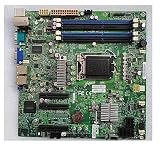
- X9SCL-F For ServerBoard E3-1200 V1 V2 Serie 2nd 3rd Gen Core i3 IPMI 2.0 LGA1155 DDR3 SATA 2.0 PCI-E 3.0
Recovery of a corrupted main BIOS block
The family manual describes a separate recovery method: place Super.ROM in the root of USB-attached media, then hold Ctrl+Home during power-on until two short beeps. It explicitly says a USB hard disk cannot be used for this recovery method. The manual distinguishes boot-sector damage from a corrupted main BIOS block; boot-sector damage requires board RMA repair rather than this recovery procedure. Use recovery only when the documented failure condition applies and the exact board instructions support it.
What to do about old IPMI firmware
Do not use BIOS 2.3a as an IPMI update, and do not assume that a generic BMC guide applies to this X9SCL-era system. The available model-specific firmware page supplies BIOS details but does not establish an X9SCL BMC version or supported remote-update sequence. First confirm the suffix, PCB revision, that a BMC is present, and its current firmware version. Then locate official BMC documentation and a package explicitly matched to those details. Without that match, there is no safe, evidence-based image or sequence to recommend.
Rank #4

- Intel C242 Chipset
- Up to 64GB DDR4 2666MHz ECC UDIMM; 2 DIMM slots
- Dual Gbe LAN with Intel i210-at
- 4 SATA3 (6Gbps); RAID 0, 1, 5, 10
- M. 2 NGFF connector
An official Super BMC IPMI User’s Guide describes a Maintenance > BIOS Update feature, says a reboot is required for the update to take effect, and mentions an SFT-OOB-LIC key. That general guide does not establish that the interface, license or feature is available on an X9SCL-family board, so it is not a recommendation for updating this system.
Quick Recap
Best Value
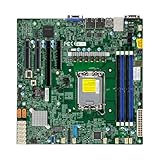
- Form Factor microATX Dimension 9.6" x 9.6" (24.38cm x 24.38cm)
- Memory clock speed: 4400.0 MHz
- Compatible devices: Server
- Platform: windows
- Cpu model socket: LGA 1700
Before you flash: a short safety checklist
- Confirm the complete board model and revision, including suffixes.
- Record BIOS and, where applicable, BMC versions separately.
- Use only an official package whose readme explicitly matches the board.
- Do not update solely because a version looks old; identify a relevant firmware issue first.
- For the manual’s USB procedures, use suitable USB media; the manual specifies no capacity or brand.
- Keep power stable and do not reset or shut down during a flash.
- Use the manual’s recovery route only for its stated main-BIOS-block recovery case, not as a normal update method.
Product prices and availability are accurate as of the date/time indicated and are subject to change. Any price and availability information displayed on Amazon at the time of purchase will apply.
Quick wins for a faster PC:
Fix the driver behind crashes, sound loss and screen glitchesFind Drivers →Clear out junk files and repair common Windows errorsFree Scan →Scan for outdated or missing drivers - takes under a minuteDriver Scan →
