
iTechGuides is reader-supported. When you buy through links on our site, we may earn an affiliate commission. As an Amazon Associate I earn from qualifying purchases. Learn more
Choose SAR when the main problem is illumination or obscuration; choose EO/IR when the main problem is understanding exactly what you are looking at. Synthetic-aperture radar (SAR) actively illuminates the scene with microwaves, so it can collect imagery day or night and remain useful through many clouds, smoke, and dust conditions. Electro-optical/infrared (EO/IR) systems use reflected visible or near-infrared light and emitted thermal energy to provide imagery that is usually easier to recognize and interpret. Visible EO excels at color and fine visual detail in clear light, while thermal IR can reveal heat signatures without sunlight. For missions that require both persistent detection and confident identification, a fused SAR-plus-EO/IR architecture is usually the most resilient choice.
What is the difference between SAR radar and EO/IR?
SAR and EO/IR measure different physical signals, so “better” depends on the job. SAR measures microwave energy that it transmits and receives back from the surface. EO/IR measures reflected light or infrared radiation emitted by objects. The first distinction is therefore not simply radar versus camera; it is active microwave sensing versus optical and thermal sensing.
SAR produces an image from the strength and timing of returned radar echoes. Surface roughness, moisture, geometry, structure, wavelength and polarization can all change the backscatter. A radar image can show a subtle surface change or a material contrast that is invisible in a normal photograph, but its brightness is not a direct representation of color or visual appearance.
EO/IR is a family of channels rather than one sensor. Visible cameras capture reflected sunlight; low-light channels amplify available illumination; and infrared channels cover near-, short-, mid- and long-wave bands. Thermal infrared records emitted energy, allowing a camera to detect temperature differences without an external light source.
#1 Best Overall

- 【Enhanced Thermal Clarity】Start with 128x128 thermal imaging and enhance to 240x240 resolution with TISR technology for greater details. The wide 40°x 30° field of view and a 25Hz refresh rate deliver accurate, smooth thermal images—ideal for detailed inspections in homes and on electrical systems and machinery
- 【Wide Application with Smart Alerts and Photograph】From underfloor heating to leak detection and electrical inspections, the TC004 Mini adapts to every challenge. When temperatures exceed preset levels, an on screen warning alerts you instantly while automatically capturing a photo to streamline your diagnostics. In addition, TC004 Mini also supports manual photo taking to help you record and solve problems, and the built-in 512MB eMMC storage can store up to 8,000 photos
- 【Effortless Temp Measurement with Alerts】Easily measure temperatures between -4°F to 842°F (-20°C to 450°C), with an accuracy error within ±3.6°F/2%, the thermal camera automatically pinpointing the highest, lowest, and central spots. Plus, you can choose from 5 different color palettes - White Hot, Black Hot, Iron, Rainbow, and Red Hot - to meet your specific work needs. Instant warnings will alert you when the temperature exceeds your preset level, making your job more efficient
- 【Longer Runtime, Fewer Charges】Designed for efficiency, this thermal imaging camera gives you 15 hours of power and automatic shut-off options at 5, 10, and 20-minute intervals to extend battery life. Keep going without the hassle of frequent charging, no matter how long your inspections last. A charging cable is given with the machine, but no charging head.
- 【Portable, Durable & Hassle-Free】Take this thermal imaging camera anywhere with its mini, pocket-friendly design. The ergonomic design makes it easier for you to hold during use, and the lightweight design is more suitable for long-term use. Engineered for durability, it can survive drops up to 2 meters without skipping a beat. Supports IP54 waterproof rating to ensure worry-free daily use. Get peace of mind with TOPDON's lifetime technical support to keep it running smoothly
When should I choose SAR?
Start with SAR when the mission must continue through darkness, cloud, smoke or broad-area surface change. Its own microwave illumination removes the requirement for sunlight, and radar wavelengths can pass through many conditions that block visible imagery.
Persistent day-and-night collection
Because SAR transmits its own energy, it does not depend on the Sun. The same basic sensing principle works during daylight and at night, making it suitable for repeated monitoring when a visible camera would lose useful illumination.
Cloud, dust and smoke resilience
At typical radar frequencies, SAR can image through clouds. Longer wavelengths can also remain useful in cloudy or dusty conditions that defeat visible and some infrared channels. This makes SAR valuable for mapping after storms, monitoring remote regions, and maintaining surveillance when atmospheric obscurants are present. “Can see through clouds” does not mean unaffected by every weather condition: heavy precipitation, surface geometry and the selected wavelength can still reduce quality.
Surface change and material response
Radar backscatter responds to roughness, moisture, dielectric properties and structure. Those responses support flood and wetness mapping, terrain and infrastructure change detection, sea-state and ice-hazard mapping, environmental monitoring, oil-spill boundary mapping, and reconnaissance. A surface can therefore look similar in visible imagery while producing a meaningful radar change.
Large-area monitoring
SAR is a strong first sensor when the search area is wide and the question is “what changed?” or “where is the object?” Analysts can use repeated collections to identify new construction, altered terrain, disturbed ground or movement patterns, then cue a higher-detail sensor for inspection.
When should I choose EO/IR?
Choose EO/IR when operators need intuitive visual detail, color, spectral information, thermal contrast or fine target identification in conditions that provide adequate visibility.
Visible electro-optical imagery
Visible EO produces the image people recognize most readily. In good illumination and clear air it preserves color, edges, markings and surface texture that help an operator distinguish among similar objects. Visible satellite imagery depends on sunlight and becomes dark at night, so a visible-only payload cannot provide the same uninterrupted schedule as an active radar.
Free tools Windows power users keep installed
One-click scans. No signup required.
Thermal infrared
Thermal IR senses emitted radiation rather than reflected sunlight. Warm engines, people, fires and recently disturbed areas can stand out when their temperature differs from the background. Thermal imaging therefore supports night operations even when visible light is absent.
Thermal contrast is not guaranteed. If a target and its surroundings have nearly the same temperature, the image may contain little useful separation. Clouds, precipitation, humidity and atmospheric transmission can also reduce detail. During the day, a visible camera may preserve color and fine markings that a thermal image does not.
Recognition and identification
EO/IR systems are commonly designed for real-time detection, tracking, classification and identification of air, sea-surface and ground targets. Their imagery is generally more intuitive for operators than a radar product, particularly when the task requires reading markings, assessing shape, or comparing visual details.
Rank #2

- 【Dual Mode Inspection】Combines conventional thermal imaging (Center/Hot/Cold spot modes) with thermometer mode for flexible temperature analysis. Use full-screen thermal imaging to monitor moving animals, machinery, automotive, or HVAC systems in real time, ensuring continuous observation with no detail loss. When you need exact numbers such as kitchen use, thermometer mode provides quick, point-and-shoot readings with a clear digital display.
- 【User-Friendly Operation】Weighing just 240g, this compact thermal imager offers a balanced feel with a non-slip grip even during extended use. Intuitive button controls let you power on, navigate menus, capture images, and switch between seven color palettes effortlessly—so you can start inspecting right away.
- 【Multi-Scenario Application】Built with high-precision sensors (NETD < 50mK), it detects subtle temperature differences down to 0.05°C. The -4°F to 1022°F temperature range handles everything from household inspections to high-heat diagnostics, including home kitchens, insulation checks, and automotive maintenance.Adjustable emissivity and distance settings help improve accuracy across materials like cement, ceramic,etc.
- 【Fast Anomaly Detection with Instant Alerts】A 50° wide field of view lets you scan larger areas in less time. Set custom high and low temperature alarms for instant alerts when temperatures exceed your limits. Adjustable level and span settings enhance thermal contrast, making it easier to identify issues such as insulation gaps and floor heat loss.
- 【All-Day Battery Life 】The built-in 2500mAh rechargeable battery provides up to 14 hours of continuous use for uninterrupted inspections. Backed by a 1-year warranty for added peace of mind.
Which sensor works best in darkness, clouds, fog and smoke?
The environmental constraint should drive the first choice. SAR is usually the most dependable option for darkness and cloud. Thermal IR is useful at night but can lose contrast in weather. Visible EO offers the clearest familiar detail only when illumination and atmospheric visibility cooperate.
Windows Errors? Fix Them Before They Spread
Repair common Windows errors and clear accumulated junk for a smoother, more stable PC - no reinstall needed.Free scan · no reinstallOutdated Drivers Are Slowing You Down
One free scan finds every outdated or missing driver and matches the right update for your exact hardware.Free scan · exact hardware match| Condition or mission need | Usually favor | Why |
|---|---|---|
| Persistent monitoring through cloud or at night | SAR | Active microwave illumination supports day-and-night collection and is generally resilient to cloud. |
| Familiar visual detail, color and fine inspection | Visible EO | Reflected-light imagery preserves direct visual cues when visibility and illumination are good. |
| Heat-signature detection at night | Thermal IR | It measures emitted radiation and does not require an external light source. |
| Surface structure, moisture or deformation change | SAR | Backscatter responds to structure, roughness and dielectric properties. |
| Target recognition and classification in clear conditions | EO/IR | Visible and infrared bands support identification workflows and operator interpretation. |
| Highest resilience across changing conditions | Fused SAR and EO/IR | Independent measurements cover blind spots that either modality has alone. |
Is SAR better than EO/IR at night?
SAR is the more reliable night sensor when the requirement is consistent detection or mapping. It supplies its own illumination, so darkness does not remove the signal. Thermal IR is also a night-capable option, but its usefulness depends on target-to-background temperature contrast and atmospheric transmission.
Night operations still involve different questions. If an analyst needs to detect a newly disturbed area over a broad region, SAR may provide the stronger evidence. If an operator needs to recognize a person, vehicle or vessel by its heat signature, thermal IR may be more informative. If visible detail is required, a visible channel needs enough artificial or residual light.
Can SAR see through clouds, fog and smoke?
SAR can image through clouds at typical radar frequencies and is generally less affected by cloud, dust and smoke than visible EO. Longer radar wavelengths are particularly useful when visible and infrared instruments are blocked by atmospheric obscurants.
That capability has limits. Radar is not immune to every storm or atmospheric effect, and the final image still depends on wavelength, viewing geometry, surface orientation and the amount of precipitation. A radar image may remain collectable while becoming harder to interpret, especially over complex terrain or rough water.
Recommended Free Tools
Why is SAR imagery harder to interpret than EO/IR?
SAR brightness represents microwave backscatter, not a natural-color view. Two objects that look alike to a person may have different moisture, roughness or structural properties and therefore different radar responses; conversely, visually different objects can produce similar backscatter.
Radar images also contain speckle, a grainy pattern caused by interference among many reflected wavelets. Topography and viewing geometry can create foreshortening, layover and shadow effects, so an object’s apparent position or shape may differ from a photograph. Analysts need training and contextual information such as viewing angle, polarization, wavelength and prior imagery to avoid treating radar brightness as a literal picture.
EO imagery is usually more immediately legible because it resembles human vision. That does not make it universally more accurate: an easy-to-read image can still be unavailable at night or obscured by cloud, while SAR may reveal a change that EO cannot see.
How do detection, classification and identification change the sensor choice?
Separate the workflow into three questions: where is something, what broad category is it, and exactly what is it? SAR often provides the dependable first indication over a large area; EO/IR commonly supplies the visual or thermal evidence needed for classification and identification.
Quick wins for a faster PC:
Fix the driver behind crashes, sound loss and screen glitchesFind Drivers →Clear out junk files and repair common Windows errorsFree Scan →Scan for outdated or missing drivers - takes under a minuteDriver Scan →Detection
Detection asks whether a meaningful object or change is present. SAR is well suited to persistent search because illumination and cloud are less restrictive. Thermal IR can also detect heat sources at night when their temperature differs from the background.
Rank #3

- 【Enhanced Thermal Clarity for Precise Inspections】The RT280 handheld thermal imaging camera features a 2.8-inch 320×240 LCD screen for smooth, detailed thermal visuals. Equipped with TISR technology, it enhances thermal image effective resolution from 120×90 to 240×180, enabling the capture of tiny temperature differences. Its 50°x 38° FOV and 25Hz frame rate deliver clear, smooth images, making it ideal for home inspections, electrical checks, mechanical fault diagnosis, and automotive engine inspections.
- 【Smart PC Analysis with 2D/3D & Temperature Insights】Easily transfer images from this thermal imager to Windows PC(Not compatible with Mac) for advanced analysis. The included software supports point, line, and area temperature analysis, 2D/3D thermal imaging, and automatic report generation. Complex thermal data from this infrared cameras thermal imaging device is instantly transformed into actionable, shareable insights, helping you solve problems efficiently and professionally.
- 【Built-in 8GB eMMC Storage for Over 20,000 Images】Capture and store more than 20,000 images and videos with this thermal camera, preserving every detail of your inspections. The 8GB eMMC storage ensures all critical thermal imaging data is saved securely and easily accessible. Whether documenting electrical panels, HVAC systems, or machinery, your ir camera keeps all inspection records organized and ready for analysis.
- 【Accurate Temperature Measurement with Smart Alerts】Measure temperatures from –4°F to 1022°F with ±3.6°F / ±2% accuracy. The RT280 thermal imaging camera automatically detects the highest, lowest, and central temperature points. High/low alarms instantly alert you to anomalies, making it easy to prevent overheating, insulation gaps, or mechanical faults. Clear visual and auditory warnings improve efficiency and safety in every inspection.
- 【9 Color Palettes, Laser Targeting & LED Light】Switch between 9 color palettes to visualize subtle temperature differences with clarity. The built-in laser pointer and LED light allow precise targeting in dark or confined spaces. This infrared camera makes it easy to locate hotspots, leaks, or irregular temperature patterns, delivering professional-grade thermal imaging for electrical, HVAC, plumbing, or mechanical diagnostics.
Classification
Classification assigns a broad type, such as vehicle, vessel, structure or disturbed ground. Radar structure and motion cues can contribute, while EO/IR spectral and visual cues often make the category easier for a human or automated system to judge.
Identification
Identification requires enough detail to distinguish one specific target or configuration from another. Clear EO or suitable IR imagery generally offers the most intuitive evidence, provided the target is not hidden by cloud, smoke, darkness or poor atmospheric visibility.
What are SAR’s main limitations?
SAR’s advantages come with operational and analytical trade-offs:
- Interpretation burden: radar products are not conventional photographs and require trained analysis.
- Speckle: granular interference can obscure small or low-contrast features.
- Topographic effects: terrain geometry can produce shadow, layover and foreshortening.
- Geometry dependence: the same object can return different signals from different look angles.
- Material ambiguity: brightness reflects microwave interaction with a surface, not a unique object label.
These limits do not eliminate SAR’s value; they determine how its output should be used. It is strongest as a physically informative change and detection product, with contextual data and follow-up imagery supporting interpretation.
What are EO/IR’s main limitations?
EO/IR performance depends more directly on illumination, atmospheric transmission and target contrast:
- Visible-light dependence: visible imagery needs sunlight or another light source and is dark at night without it.
- Cloud and obscurant sensitivity: clouds, fog, smoke and dust can block or scatter visible light and reduce some infrared channels.
- Thermal-contrast dependence: a target near the background temperature may be difficult to separate.
- Weather effects: precipitation and humidity can reduce thermal detail and transmission.
- Daytime trade-off: thermal imagery can reveal heat differences but may not preserve the color and fine visual detail visible EO provides.
When is a fused SAR and EO/IR system worth it?
Fusion is justified when losing either persistent detection or confident identification would materially harm the mission. SAR can maintain a broad-area watch and flag changes; EO/IR can then inspect the cue with visual or thermal detail.
Use SAR to cue, EO/IR to inspect
A practical sequence is to collect SAR routinely, detect an anomaly or moving object, and direct an EO/IR payload to the location when visibility permits. The two products answer different questions rather than duplicating one another.
What’s actually slowing this PC down?
Pick the symptom - the matching free tool is one click away.
Use EO/IR to explain, SAR to verify change
An optical image may show what a structure looks like today, while radar comparisons reveal whether its surface, moisture or geometry changed between collections. Reviewing both reduces the chance that a lighting change is mistaken for a physical change.
Plan for disagreement
Signals will not always align. A thermal hotspot may have no obvious visible signature, and a radar bright spot may reflect roughness or moisture rather than a new object. Fusion workflows should preserve each modality’s metadata and let analysts inspect the original products instead of forcing one combined image to carry every explanation.
Independent reader supportYour contribution helps us test, update, and keep practical guides available for everyone.Which sensor fits common mission scenarios?
Flood, storm and environmental monitoring
SAR is useful when clouds persist over the area of interest and when the mission concerns wetness, inundation, terrain or broad surface change. EO/IR can add visual context once skies clear, while thermal channels may highlight fires or temperature anomalies.
Rank #4
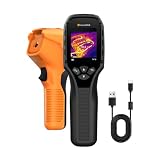
- 【Dual Mode Inspection】Combines thermal imaging with Center/Hot/Cold spot modes for real-time visual temperature display, and integrates thermometer mode for fast point-and-shoot readings with precise digital output. Full-screen thermal imaging enables continuous monitoring of moving targets,ensuring stable observation without loss of detail during dynamic inspections.
- 【User-Friendly Operation】 At just 240g, this compact thermal imager features a non-slip grip and balanced handheld design for comfortable long-duration inspections or mobile use. It offers intuitive button controls for power on/off, menu navigation, and image capture, and supports 7 selectable color palettes, enabling fast switching.
- 【Multi-Scenario Application】It supports a broad measurement range from -4°F to 1022°F with enhanced with adjustable emissivity and distance settings,making it suitable for applications.Equipped with a high-sensitivity sensor (NETD < 50mK), the thermal camera can detect extremely subtle temperature differences as small as 0.05°C.
- 【Quick Anomaly Detection with Alerts 】Featuring a 50° wide field of view, the device enables faster scanning of large surfaces and broader inspection coverage. It supports custom high/low temperature alarms for instant notification when abnormal thermal conditions are detected. Level and span adjustment functions make it easier to clearly identify localized issues.
- 【All-Day Battery Life】Built-in 2500mAh rechargeable battery provides up to 14 hours of continuous operation, supporting full-day inspection without frequent recharging. The device also includes a 1-year warranty, ensuring long-term reliability and peace of mind for using.
Infrastructure and construction change
Repeated SAR collections can reveal structural or surface changes even when lighting differs between dates. EO/IR is valuable for inspecting visible construction details, equipment and damage after a radar alert.
Do these 3 things before closing this tab:
1Fix the driver behind crashes, sound loss and screen glitches2Clear out junk files and repair common Windows errors3Scan for outdated or missing drivers - takes under a minuteMaritime surveillance
SAR supports sea-state, ice-hazard and broad-area surface monitoring under changing illumination. EO/IR can help classify a detected vessel and provide recognizable visual or thermal cues when the atmosphere allows.
Night security and perimeter monitoring
Thermal IR is a natural choice for people, engines and fires that produce contrast at night. SAR becomes more attractive when the perimeter is large, clouded or subject to repeated surface-change analysis rather than close visual inspection.
Reconnaissance and targeting support
SAR can provide persistent detection and terrain or infrastructure context. EO/IR can support the recognition and identification stage, but the appropriate combination depends on target type, weather, geometry and the consequences of misclassification.
How should I specify a sensor architecture?
Write the requirement in terms of the decision an operator must make, then map that decision to the signal and environment. The following sequence prevents a platform from being selected solely because its imagery looks familiar.
The Tool Desk
Outbyte PC Repair FREEClear out junk files and repair common Windows errorsFree Scan →Outbyte Driver Updater FREEFix the driver behind crashes, sound loss and screen glitchesFind Drivers →- Define the decision: state whether the priority is detection, change mapping, classification, identification, tracking or thermal-alerting.
- Define the coverage: determine whether the system must search a broad region or inspect a small target at high detail.
- List environmental constraints: record night operation, expected cloud, fog, smoke, dust, precipitation, humidity and terrain complexity.
- Describe the target signature: note whether useful evidence is likely to be structural, moisture-related, visual, spectral or thermal.
- Set the analyst workflow: provide for trained SAR interpretation when radar is included, and specify how EO/IR cues will confirm or reject radar detections.
- Choose single or fused sensing: select one modality only when its blind spots are acceptable; otherwise design a cueing and confirmation path that preserves both data types.
- Test representative conditions: evaluate the architecture in the actual weather, terrain, look angles and target-background contrasts expected in operation.
What is the practical decision rule?
If the problem is seeing through darkness or cloud, start with SAR. If the problem is understanding exactly what an object is, start with EO/IR. Add thermal IR when heat contrast is the useful signature, and combine SAR with EO/IR when the mission requires both persistent detection and confident recognition across changing conditions.
Frequently Asked Questions
Does SAR work in heavy rain or severe storms?
SAR is more weather-resilient than visible imaging, but severe precipitation and the chosen radar frequency can still affect returns and interpretation. Treat cloud penetration as a strong advantage, not a guarantee of unchanged image quality in every storm.
Why can a radar image show a bright area that is not an object?
Bright backscatter can come from roughness, moisture, orientation, double-bounce structure or other surface properties. Comparing viewing geometry, polarization and repeat imagery helps determine whether the signal represents a target or a change in the surface.
Is thermal imaging always better than visible cameras at night?
Thermal cameras do not need sunlight, but they depend on temperature contrast and atmospheric transmission. A visible camera with adequate artificial illumination can preserve color and markings that thermal imagery cannot.
Do SAR and EO/IR require the same analyst training?
No. EO/IR products are generally more intuitive, while SAR interpretation requires familiarity with speckle, geometry, wavelength, polarization and backscatter behavior. Teams using both should train analysts to understand each modality’s failure modes.
Quick Recap
Product prices and availability are accurate as of the date/time indicated and are subject to change. Any price and availability information displayed on Amazon at the time of purchase will apply.

