
Outdated Drivers Are Slowing You Down
One free scan finds every outdated or missing driver and matches the right update for your exact hardware.Free scan · exact hardware matchPC Slower Than It Used to Be?
A free scan shows the junk files, broken settings and background clutter dragging Windows down - then fixes them in one click.Free scan · Windows 10 & 11iTechGuides is reader-supported. When you buy through links on our site, we may earn an affiliate commission. As an Amazon Associate I earn from qualifying purchases. Learn more
Privacy-focused personalization can replace an always-centralized AI service with three architectural choices: process data on the user’s device, train or analyze models through federated computation, or use a hybrid that keeps routine work local and sends only suitable requests to a protected cloud environment. These approaches can be combined. Keeping raw records off a central server reduces exposure, but it does not automatically protect model updates, derived profiles, outputs, or the systems that operate the service. The right design depends on the data involved, the privacy guarantee required, device capabilities, latency, and how much engineering complexity an organization can support.
What are privacy-focused alternatives to cloud-based AI personalization?
The main alternatives are on-device personalization, federated learning or analytics, and privacy-enhancing hybrid cloud designs. On-device processing keeps the most sensitive inputs and interaction history close to the person. Federated computation lets many devices contribute to a model or aggregate without sending their raw records to a central collection point. A hybrid design handles simple or sensitive tasks locally and uses a cloud service only when confidential-computing controls, limited inputs, and explicit policies make that acceptable.
None of these labels is a complete privacy guarantee. A device can leak data through telemetry, a federated update can reveal information, and a confidential cloud still requires trustworthy implementation and operations. Evaluate the entire data path: collection, storage, updates, inference, outputs, deletion, and administrator access.
Can AI personalization run on my device?
Yes. A device can store a user profile, rank content, adapt settings, or run an inference model locally instead of uploading every event to a provider. This can reduce network exposure and often improves responsiveness, but the actual protection depends on the operating system, application code, hardware security, and the data that the app still chooses to transmit.
#1 Best Overall

- YOUR CONTENT, SUPER SMOOTH: The ultra-clear 6.7" FHD+ Super AMOLED display of Galaxy A17 5G helps bring your content to life, whether you're scrolling through recipes or video chatting with loved ones.¹
- LIVE FAST. CHARGE FASTER: Focus more on the moment and less on your battery percentage with Galaxy A17 5G. Super Fast Charging powers up your battery so you can get back to life sooner.²
- MEMORIES MADE PICTURE PERFECT: Capture every angle in stunning clarity, from wide family photos to close-ups of friends, with the triple-lens camera on Galaxy A17 5G.
- NEED MORE STORAGE? WE HAVE YOU COVERED: With an improved 2TB of expandable storage, Galaxy A17 5G makes it easy to keep cherished photos, videos and important files readily accessible whenever you need them.³
- BUILT TO LAST: With an improved IP54 rating, Galaxy A17 5G is even more durable than before.⁴ It’s built to resist splashes and dust and comes with a stronger yet slimmer Gorilla Glass Victus front and Glass Fiber Reinforced Polymer back.
What Android’s OnDevicePersonalization module provides
The Android Open Source Project says the OnDevicePersonalization (ODP) module was introduced in Android 13. It supplies building blocks for APKs that deliver personalized experiences and describes a policy engine that can govern data ingress, egress, and allow-listed operations. User controls are represented as policies rather than being left solely to an application’s informal promises.
“The goal of OnDevicePersonalization module is to build new technology to enable OEMs and app developers to continue to offer a quality personalization experience to their end users while keeping user information private.”
ODP documentation also describes federated learning and federated analytics as ways to train models or perform analysis on local raw data without centrally collecting that raw data. This is platform documentation, not proof that every Android application or handset uses ODP. Support depends on the device software, the application’s implementation, and the policies enforced in that implementation.
Recommended Free Tools
What belongs on the device?
- Raw interaction signals: viewing history, local search activity, sensor-derived context, or app-use events that do not need to leave the handset.
- Personal profile state: preferences, local embeddings, rankings, and short-term context used only to tailor the current experience.
- Routine inference: recommendations, notification timing, keyboard or interface adaptation, and other low-latency decisions that fit the device’s processor and memory.
- Policy checks: rules that decide whether a field may be read, exported, retained, or used for a particular operation.
Local processing does not remove the need for access controls. A malicious app, compromised device, debugging interface, backup, or overly broad export permission can still expose local state. Applications should minimize what they retain, encrypt sensitive stores, separate identifiers from profile data, and provide a way to inspect or delete locally held signals.
Does federated learning keep my data private?
Federated learning can keep local raw records from being centrally collected, but it is not inherently anonymous and is not a complete privacy guarantee. Devices train or analyze data near its source, then send an update, statistic, or other contribution for aggregation. The contribution, the aggregation service, the resulting model, and operational logs all need protection.
How federated computation works
- A service distributes a model or analysis task to participating devices.
- Each device trains or computes against its local records; the raw records remain on that device under the application’s control.
- The device produces an update or statistic rather than uploading the underlying interaction history.
- A coordinator aggregates contributions and returns a new model or result.
- The system applies access, retention, and auditing rules to contributions, aggregates, and outputs.
Privacy questions arise at every step. A small or unusual contribution may be linkable to a person. A model can memorize information. A coordinator may see metadata such as participation, timing, or device identifiers. An attacker may infer properties from repeated updates or from a released model. Secure aggregation, contribution limits, clipping, noise, encryption, and strict retention can reduce these risks, but each affects utility, performance, or complexity.
What the documented examples actually establish
Android’s platform documentation explicitly presents federated learning and federated analytics as methods for collaborative training and analysis without central collection of local raw data. Google’s October 2026 research article describes a system with externally verifiable privacy guarantees and identifies data minimization, anonymization, transparency and control, and verifiability and auditability as design principles. That report describes Google’s system; those properties should not be assumed for every federated product.
What’s actually slowing this PC down?
Pick the symptom - the matching free tool is one click away.
A UK government privacy-enhancing-technology repository reports that Siri voice recognition has used federated learning and differential privacy. Its summary describes local model training, periodic communication of model weights for aggregation, and added noise intended to reduce re-identification risk. This is a repository’s description of material associated with Apple, not a universal or necessarily current technical specification for Siri.
Rank #2
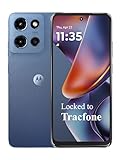
- Carrier: This phone is locked to Tracfone, which means this device can only be used on the Tracfone wireless network. Tracfone plan required, activating is easy, just 3 steps.
- DISPLAY: Immersive viewing on a 6.7-inch super-bright 120Hz display with powerful stereo speakers and Bass Boost for cinematic entertainment.
- CAMERA SYSTEM: Advanced 50MP Quad Pixel camera captures sharp, detailed photos and videos in any lighting condition
- PERFORMANCE: Lightning-fast 5G connectivity paired with a powerful processor and RAM Boost for smooth multitasking.
- BATTERY LIFE: Long-lasting 5000mAh battery with TurboPower charging technology delivers hours of power in minutes.
Can an AI service use the cloud without seeing my personal data?
Sometimes, with a hybrid architecture that limits what leaves the device and places cloud processing inside a protected environment. The device can perform classification, filtering, personalization, or redaction locally, then send only the minimum request needed for a heavier operation. A cloud component may add trusted execution environments (TEEs), secure multi-party computation (sMPC), homomorphic encryption, differential privacy, or combinations of these technologies.
Apple’s Private Cloud Compute pattern
Apple describes Apple Intelligence as processing tasks on the device when possible and using Private Cloud Compute when a request needs more computational power. Apple says personal data sent to Private Cloud Compute is used exclusively to fulfill the request and is not stored, and says independent experts can inspect the server software. These are Apple’s vendor claims, not an independent audit established here, so a purchaser should verify the implementation, availability, and applicable device and regional requirements.
What a hybrid request should contain
- A narrowly defined task instead of a complete interaction history.
- Only the profile attributes required for that task, with direct identifiers removed or replaced where possible.
- A policy decision recorded before transmission, including the user’s controls and the permitted purpose.
- Transport and server-side protections, plus an explicit retention and deletion rule.
- A response filtered on the device before it changes the local profile or is shown to the user.
Hybrid processing is not a way to call an ordinary cloud API and claim privacy. If the provider can inspect prompts, intermediate values, logs, or outputs, those elements remain part of the exposure surface.
Which privacy-enhancing technologies can protect cloud personalization?
Each technology protects a different point in the data path. The OECD’s 2025 policy analysis groups TEEs, federated learning, and sMPC among approaches for confidential or minimized AI inputs, and discusses differential privacy, TEEs, and homomorphic encryption for confidential model co-creation and sharing. Combining technologies can address individual weaknesses, but it also increases cost and can reduce utility, efficiency, or usability.
| Technology | What it helps protect | Questions to ask |
|---|---|---|
| Trusted execution environment (TEE) | Runs code and data in an isolated hardware-backed area intended to limit inspection by the host. | Is the environment remotely attested? Can the workload and configuration be inspected? Who controls keys, updates, logs, and administrators? |
| Secure multi-party computation (sMPC) | Lets multiple parties compute jointly without exposing each party’s input in plaintext to the others. | How many parties are involved, what collusion is tolerated, and what latency and communication costs apply? |
| Homomorphic encryption | Allows selected computations on encrypted values so the operator need not decrypt the inputs for that computation. | Which operations are supported, how large is the performance overhead, and where are keys held? |
| Differential privacy | Provides a mathematical framework for quantifying privacy loss when an individual’s data appears in a dataset or released result. | What is the privacy parameter, what is the unit of protection, how are repeated releases composed, and how is utility evaluated? |
| Federated learning or analytics | Keeps local raw data near its source while sharing updates or aggregate results. | Are contributions protected from the coordinator, limited and clipped, aggregated securely, and prevented from revealing information through the final model? |
NIST’s SP 800-226, published in March 2025, treats differential privacy as a formal framework rather than a product badge and emphasizes evaluation factors and implementation hazards. “Uses differential privacy” is therefore incomplete evidence. Ask what is protected, at what granularity, under which parameters and composition assumptions, and what testing supports the claim.
How do on-device, federated, hybrid, and centralized designs compare?
The following comparison is a decision framework, not a guarantee for any particular product. A single service may combine several rows.
| Approach | Where raw data stays | What leaves the device | Main privacy advantage | Main costs or risks |
|---|---|---|---|---|
| On-device | On the handset or local computer. | Ideally nothing for the personalization decision; optional telemetry or updates may still leave. | Reduces routine transfer of personal records and can work with limited connectivity. | Limited compute, battery, storage, accessibility, and model size; local compromise remains possible. |
| Federated computation | On participating devices or sites. | Updates, statistics, metadata, or model weights. | Supports collaborative training or analysis without centrally collecting local raw data. | Updates and outputs can leak information; coordination, secure aggregation, and participation bias add complexity. |
| Hybrid confidential cloud | Routine and sensitive inputs stay local; selected requests enter a protected cloud workload. | Minimized, policy-approved requests and responses. | Combines local minimization with cloud capacity for demanding models. | Requires trust in attestation, code, keys, operators, availability, and the provider’s stated retention behavior. |
| Conventional centralized cloud | Provider infrastructure, often with a complete event history or profile. | Most inputs and context. | Strongest central compute, simpler model updates, and broad cross-device consistency. | Creates the largest central exposure and makes provider access, retention, breach, and secondary-use controls critical. |
How should I choose an architecture?
Start with the consequence of disclosure, not with the model brand or hosting preference. Use the following sequence to match protection to workload.
- Inventory every signal. List raw events, identifiers, profile fields, inferred attributes, model updates, prompts, outputs, logs, backups, and administrative metadata.
- Classify sensitivity and purpose. Separate data needed for the immediate feature from optional analytics, advertising, debugging, and future training. Do not export a field merely because the model can accept it.
- Set the boundary. Keep high-consequence data and routine decisions on the device where feasible. Define the exact event that may cross the boundary and the reason it is necessary.
- Choose the computation method. Use local inference for small, frequent decisions; federated computation when a shared model needs distributed learning; and a confidential hybrid for workloads that exceed device capacity.
- Define output controls. Decide whether updates must be clipped, aggregated, encrypted, noised, rate-limited, or reviewed before release. Protect the result as carefully as the input.
- Document user controls. Provide understandable switches for collection, personalization, participation in training, retention, and deletion. Make the controls enforceable in code and policy, not only in a privacy notice.
- Test failure modes. Measure whether prompts, updates, logs, model behavior, backups, and error messages can reveal a person or sensitive attribute.
- Reassess over time. Device support, operating-system APIs, cloud workloads, model versions, and privacy parameters change. Revalidate the boundary after updates.
How do I implement on-device personalization safely?
1. Build a local data contract
Specify which fields the local model may read, how long each field remains, and which operations may export information. Use separate stores for identifiers, preferences, and derived features so a single permission does not expose the complete profile.
Rank #3

- YOUR CONTENT, SUPER SMOOTH: The ultra-clear 6.7" FHD+ Super AMOLED display of Galaxy A17 5G helps bring your content to life, whether you're scrolling through recipes or video chatting with loved ones.¹
- LIVE FAST. CHARGE FASTER: Focus more on the moment and less on your battery percentage with Galaxy A17 5G. Super Fast Charging powers up your battery so you can get back to life sooner.²
- MEMORIES MADE PICTURE PERFECT: Capture every angle in stunning clarity, from wide family photos to close-ups of friends, with the triple-lens camera on Galaxy A17 5G.
- NEED MORE STORAGE? WE HAVE YOU COVERED: With an improved 2TB of expandable storage, Galaxy A17 5G makes it easy to keep cherished photos, videos and important files readily accessible whenever you need them.³
- BUILT TO LAST: With an improved IP54 rating, Galaxy A17 5G is even more durable than before.⁴ It’s built to resist splashes and dust and comes with a stronger yet slimmer Gorilla Glass Victus front and Glass Fiber Reinforced Polymer back.
2. Enforce ingress and egress policies
On Android, ODP’s documented policy-engine pattern is a useful model: define allow-listed operations and guard both data entering a workload and data leaving it. Treat policy evaluation as a technical control. A screen that says “private” without an enforced export rule is not equivalent.
3. Keep the model proportionate
Choose a model that fits available CPU, memory, battery, and accessibility requirements. Quantization, caching, and staged updates can reduce resource use, but verify that quality remains acceptable for users with older hardware or limited storage.
4. Make deletion real
Deleting a visible preference is not enough if embeddings, caches, diagnostic logs, backups, or federated-update queues retain the same information. Map every derived artifact to a deletion process and state how long deletion takes on a connected and disconnected device.
Quick wins for a faster PC:
Fix the driver behind crashes, sound loss and screen glitchesFind Drivers →Repair Windows errors before they cause bigger problemsFix Now →Scan for outdated or missing drivers - takes under a minuteDriver Scan →How should federated systems be evaluated?
Ask for evidence about the contribution and the final model, not just a statement that raw data stays local.
- Contribution exposure: Can the coordinator inspect an individual update, participation pattern, device identifier, or timing?
- Aggregation: Is there secure aggregation, a minimum group size, or another mechanism that prevents single-device results from being isolated?
- Inference leakage: Has the released model been tested for memorization, membership inference, or reconstruction of sensitive attributes?
- Noise and parameters: If differential privacy is used, what privacy parameter, clipping rule, sampling assumption, and composition accounting apply?
- Governance: Who can change the coordinator, model, policy, or retention period, and are those changes logged and independently reviewable?
- User choice: Can a person decline participation, inspect the local data used, and remove queued contributions?
Google’s October 2026 report emphasizes externally verifiable guarantees, transparency and control, and auditability for its described system. Those are useful evaluation criteria for any provider, but they are not automatically inherited by another implementation.
What are the practical trade-offs?
The most private architecture is not always the most usable one. The OECD identifies utility, efficiency, and usability as persistent trade-offs when privacy-enhancing technologies are combined.
- Quality: A local model may lack the breadth or freshness of a large cloud model. Federated training can improve a shared model without central raw data, but uneven participation and device diversity affect results.
- Latency: Local inference avoids network round trips. Hybrid requests add connectivity and attestation steps, while sMPC or homomorphic encryption can add substantial computation and communication overhead.
- Device resources: Larger models consume memory, battery, storage, and thermal headroom. Resource-heavy privacy controls may be unsuitable for older or lower-cost hardware.
- Reliability: On-device features can continue offline, while cloud-assisted functions depend on connectivity and service availability.
- Engineering: Local policy enforcement, secure update delivery, federated coordination, key management, attestation, and privacy accounting require specialist skills and continuing maintenance.
- Accessibility: A design that assumes a recent device can exclude users with older hardware, limited storage, or restricted connectivity. Offer a degraded local mode rather than silently moving all data to a central service.
What should a provider disclose before I trust its personalization?
Look for a concrete data-flow description rather than a broad “AI privacy” claim. A credible disclosure identifies what is processed locally, what crosses the boundary, whether updates or outputs are protected, how long each artifact is retained, and who can access the systems.
- Which Android, iOS, browser, or hardware versions are supported?
- Are policy controls technically enforced, and can users inspect or change them?
- Does the provider see prompts, intermediate computations, model updates, logs, or only encrypted results?
- What independent attestation, code inspection, audit, or reproducible evidence supports a confidential-cloud claim?
- For differential privacy, what is the protected unit and how are repeated releases accounted for?
- Can users delete local profiles, queued updates, cloud-side requests, and derived records?
- What happens when a device is offline, unsupported, rooted, jailbroken, or running an older operating-system version?
Answers should be specific to the version and region you use. Android APIs, device support, Apple Intelligence behavior, Private Cloud Compute availability, and cloud implementations can change.
Rank #4

- PRIVACY DISPLAY: Automatically hide your screen from those beside you. The built-in privacy display can be preset¹ to turn on when receiving notifications, typing passwords, or using specific apps
- TYPE IT IN. TRANSFORM IT FAST: Enhance any shot in seconds on your smartphone by using Photo Assist² with Galaxy AI.³ Add objects, restore details, or apply new styles by simply typing or tapping
- NIGHTS, CAPTURED CLEARLY: From gigs to city lights, record and capture moments after dark with clarity using Nightography so your photos and videos stay crisp and clear on your Samsung Galaxy
- MAKE IT. EDIT IT. SHARE IT: Turn everyday moments into something personal with creative tools built right into your mobile phone, whether it’s a special contact photo, custom wallpaper, an invitation or more⁴
- HELP THAT KEEPS UP: Stay in the moment while Now Nudge with Galaxy AI helps you respond faster and stay organized with smart suggestions⁵ that appear exactly when you need them on your phone
Which approach fits common personalization workloads?
Private recommendations on a single device
Use on-device storage and inference when recommendations depend mainly on one person’s local history and do not need a global model. Add a clear local deletion control and avoid exporting event-level telemetry by default.
Improving a shared model across many users
Federated learning or analytics can be appropriate when a provider needs population-level improvement but should not centralize local raw records. Require protections for updates and outputs, and evaluate whether the resulting model can reveal participation or training examples.
Large-model assistance with sensitive context
Use a hybrid flow: redact and minimize context locally, then send only the approved task to a confidential workload. Confirm attestation, inspectable code or independent review, retention behavior, and a recovery path if the protected service is unavailable.
Do these 3 things before closing this tab:
1Clear out junk files and repair common Windows errors2Scan for outdated or missing drivers - takes under a minute3Repair Windows errors before they cause bigger problemsRegulated or high-consequence decisions
Do not treat any single PET as a substitute for governance, security review, access control, and human oversight. Keep a documented purpose, limit inputs, test outputs for harmful inference, and establish an appeal or correction process before personalization affects eligibility, safety, employment, health, or finances.
What is the bottom line for privacy-focused personalization?
Choose the smallest data boundary that still delivers the required experience. On-device processing is the clearest way to avoid routine central collection; federated computation can support shared learning without uploading local raw records; and a hybrid confidential cloud can add capacity when local resources are insufficient. In every case, verify protections for updates, derived profiles, outputs, logs, and operator access, and treat vendor assurances as claims that require version-specific evidence.
Frequently Asked Questions
Can personalization work when my device is offline?
Local ranking and profile-based decisions can continue offline if the model and needed profile state are stored on the device. Features that require a fresh global model, federated coordination, attestation, or a larger cloud model will pause, use a cached result, or fall back to a reduced local mode.
Will deleting an app delete every personalization record?
Not necessarily. Backups, diagnostic logs, federated-update queues, synced profiles, and derived embeddings may be stored separately from the app’s main data. Check the provider’s retention and deletion process for each location rather than assuming uninstalling removes all copies.
The Tool Desk
Outbyte Driver Updater FREEFix the driver behind crashes, sound loss and screen glitchesFind Drivers →Outbyte PC Repair FREEClear out junk files and repair common Windows errorsFree Scan →Is a trusted execution environment the same as end-to-end encryption?
No. A TEE is an isolated execution area intended to limit inspection while code runs; encryption protects data in particular states or during transfer. A complete design may use both, but it still depends on attestation, keys, workload integrity, patching, and administrator controls.
Does turning off personalized ads stop all AI personalization?
Usually not. Advertising preferences may be separate from recommendations, interface adaptation, search ranking, fraud detection, or accessibility features. Review the service’s individual personalization and diagnostic controls, including local profile storage and model-training participation.
Quick Recap
Product prices and availability are accurate as of the date/time indicated and are subject to change. Any price and availability information displayed on Amazon at the time of purchase will apply.

