
Windows Errors? Fix Them Before They Spread
Repair common Windows errors and clear accumulated junk for a smoother, more stable PC - no reinstall needed.Free scan · no reinstallOutdated Drivers Are Slowing You Down
One free scan finds every outdated or missing driver and matches the right update for your exact hardware.Free scan · exact hardware matchLocal AI agents run their model on hardware in your home; cloud agents send prompts and any included home context to a hosted service. Neither choice determines the whole smart-home data path: speech recognition, device integrations, automation execution, and remote access may each be local or cloud-based. For many homes, a practical approach is to keep predictable or safety-critical routines in ordinary automations and use an AI agent selectively for flexible language tasks.
What “local” and “cloud” mean in a smart home
A smart-home command can pass through several components: a microphone, speech-to-text, a conversation model, device integrations, an automation controller, and text-to-speech. Each component may run at home or use a remote service. A local language model does not make cloud speech processing or a manufacturer-cloud device integration local.
Home Assistant’s documentation describes local protocols—including Zigbee, Z-Wave, Matter, Thread, and ESPHome—that can work on the home network without internet access. That does not make every feature offline: cloud-only integrations and selected services still need connectivity. The same distinction applies to other platforms: check each part of the actual setup rather than relying on the word “local.”
- Local agent: The model performs inference on hardware in the home. If speech processing and the relevant device-control path are also local, those parts need not send requests to a hosted AI service.
- Cloud agent: The model runs on a provider’s infrastructure. Prompts and the home context included with them are sent to that service. Cloud-only integrations or speech services may send additional data through their own paths.
- Hybrid setup: Some components run at home and others remotely. This can be a deliberate trade-off, but the data path should be understood component by component.
Local vs. cloud: the practical trade-offs
| Decision | Local agent | Cloud agent | What to check |
|---|---|---|---|
| Data handling | Inference can stay on home hardware if the rest of the relevant pipeline is local. | The prompt and included home context go to the selected hosted service. | Check speech processing, model requests, integrations, logging, and remote access separately. |
| Internet outage | Local automations and locally connected devices can continue if the controller and home network remain available. | Cloud inference and cloud-only integrations need an internet connection. | Internet independence does not protect against power, router, hub, or local-network failure. |
| Model capability and response time | Depend on the chosen model and hardware; smaller models may be less capable or slower for some tasks. | Hosted models avoid local inference hardware, but provider offerings change. | There is no general rule that one is always smarter or faster. Compare the model and workload you plan to use. |
| Cost | Requires suitable compute and uses home electricity; demanding models can require substantial upfront hardware. | May involve a subscription or usage charges, depending on the provider and feature. | Check current provider terms and the hardware needed for your chosen local workload. |
| Voice and languages | Local speech-to-text and text-to-speech are possible, subject to available hardware and language support. | Cloud speech services offload processing and may offer broader language support in a particular setup. | Identify which voice components send audio or text outside the home, and confirm support for the languages you use. |
| Setup and maintenance | Offers more control, but you may need to choose and maintain hardware, models, integrations, and updates. | Provides access to hosted models, while depending on the provider’s account, service, and availability. | Match the configuration to your technical comfort and reliability requirements. |
These are architectural tendencies, not guarantees. Actual behavior depends on the controller, devices, integrations, model, language, network, and software version. Home Assistant’s offline FAQ and privacy FAQ describe the distinction between local operation and cloud-dependent features for its own ecosystem.
Do these 3 things before closing this tab:
1Clear out junk files and repair common Windows errors2Fix the driver behind crashes, sound loss and screen glitches3Repair Windows errors before they cause bigger problems#1 Best Overall

- Echo Hub — An easy-to-use smart home control panel redesigned for your home. Arrange controls on your dashboard to quickly adjust devices, view cameras, start routines, and more.
- Customize your dashboard — Arrange devices into sections and resize them to focus on what matters most. Create a personalized layout that matches how your family uses their connected devices.
- Reimagined for your home - With an Alexa+ and compatible Ring subscription (sold separately), get Ring camera event summaries to stay in the know. Search your Ring footage using simple voice commands. Create routines by voice, activate modes to manage multiple devices at once, and chat with Alexa to easily control your smart home.
- Home security for the whole family — Use Echo Hub to easily arm and disarm your compatible security system, making it easy for everyone in your family to manage home security. Use the Alexa app and compatible cameras, locks, alarms, and sensors to check in while you're out.
- Works with thousands of Alexa compatible devices — WiFi, Bluetooth, Zigbee, Matter, Sidewalk, and Thread devices sync seamlessly with the built-in smart home hub.
Choose the right tasks for an AI agent
An AI agent is useful when a command is phrased flexibly, needs interpretation, or asks for a summary. It is not a substitute for a reliable rule when the desired behavior is predictable. Home Assistant documents LLM conversation agents that can be used through Assist or in scripts and automations, with user-configurable access to entities. This is an example of platform-specific control, not a feature to assume on every smart-home system.
Keep predictable routines deterministic
Use ordinary automations for clear triggers and outcomes: a leak sensor can trigger a known response, a schedule can control lights, and a door state can activate a predefined notification. Those rules do not need an LLM to decide what the sensor reading means.
Use an LLM for flexible requests
Natural-language requests with ambiguous phrasing or requests to summarize exposed sensor information are better candidates for an agent. Home Assistant has described both locally run Ollama models and cloud LLM integrations. Provider and integration availability can change, so verify current platform documentation before choosing a specific service.
Rank #2
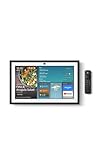
- MEET ECHO SHOW 15 - A stunning 15.6" Full-HD (1080p) smart display that's perfect for your kitchen and ready to show you more. Use customizable widgets to keep your day on track, watch your favorite shows with Fire TV and powerful vibrant sound, and enjoy natural video calling, with 3.3x zoom and wide field of view.
- FAMILY ORGANIZATION HUB - See your top widgets at a glance, like your family’s calendars and to-do lists, local weather, smart home, and more.
- ALL YOUR FAVORITES, ALL RIGHT HERE - Built-in Fire TV unlocks endless entertainment, so you can enjoy your favorite content from thousands of apps like Prime Video, Netflix, YouTube, Apple TV, and more (subscription may be required). Fire TV remote included. Plus, now you can quickly add a device to play music with Active Media - start playing a song in the kitchen, then add the living room and bedroom on the fly.
- SMART HOME CENTRAL - Control smart devices with your voice or a few taps using the smart home dashboard. Easily turn on all your living room lights at once or check live camera feeds to see what's happening around your home.
- YOUR FAVORITE MEMORIES ON DISPLAY - Brighten your space (and your day) by turning your home screen into a photo slideshow that displays your favorite memories. Auto curate your images and show off your favorite family memories.
Bound access and consequences
- Expose only the devices, sensors, and actions the agent needs for the task.
- Require an explicit confirmation before actions such as unlocking a door, disabling an alarm, or changing a safety setting.
- Keep a manual control option and test what happens when the internet or a cloud service is unavailable.
This caution reflects the limits of language models: Paulus Schoutsen, author of Home Assistant’s AI-agent article, wrote, “With AI, this is the opposite. AI models hallucinate and their output cannot be completely trusted – yet the current hype is to infuse AI into every product imaginable.” For additional security context, NIST’s 2025 white paper on telehealth smart-home integration identifies access control, authentication, monitoring, data security, governance, and network segmentation. Its focus is healthcare integration; it is not a consumer-product certification.
Voice control is a pipeline, not a single setting
A voice assistant can combine local and cloud components. Home Assistant’s local voice guide describes a configuration in which local speech-to-text, Home Assistant, and local text-to-speech handle speech on home hardware. Other configurations can use cloud speech processing, a cloud LLM, or both. “Local voice” therefore needs to describe a specific pipeline, not just the speaker or the model.
- Audio capture: Where is the microphone, and where is its audio processed?
- Speech recognition: Is speech converted to text at home or by a cloud service?
- Conversation model: Does the agent run locally or on a hosted service?
- Device access: Which entities and actions can the conversation agent reach?
- Speech synthesis: Is the spoken response generated locally or remotely?
- Other connections: Does remote access or a cloud-only device integration participate in the request?
Language coverage and compute needs vary by pipeline. A focused local setup may support a narrower command set than a more demanding full local speech pipeline. Home Assistant’s voice documentation discusses combinations of local and cloud services, but those details apply to its documented configurations rather than every voice assistant.
Rank #3
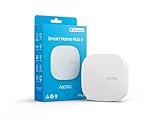
- Powered by SmartThings: Connect, monitor, and automate your home through the SmartThings app. Build a reliable, unified smart home using Samsung's proven ecosystem
- Matter + Zigbee Smart Home Hub: Supports the newest Matter standard plus Zigbee for lighting, sensors, plugs, switches, thermostats, and more - thousands of compatible devices. PLEASE NOTE: Z-Wave not supported
- Easy Setup with Wi-Fi or Ethernet: Get started in minutes using Wi-Fi or a wired Ethernet connection for apartments, houses, and expanding smart home systems - Z-Wave not supported
- Automations That Work for You: Create custom routines for security, lighting, comfort, and energy savings. Many local automations continue working even if your internet goes offline
- Wide Device Compatibility: Connect compatible smart devices from Aeotec and many other brands to build a unified system for lighting, voice control, energy management, and climate settings
A vendor-reported timing example
In a September 2025 article, Home Assistant reported generated-speech timings for a described prompt. The table below preserves the values and setup labels reported there; they are one vendor’s example, not a general comparison of local and cloud systems.
| Configuration reported by Home Assistant | Reported time |
|---|---|
| Cloud, non-streaming | 6.62 seconds (the article labels this “13x faster”) |
| Cloud, streaming | 0.51 seconds |
| Piper, non-streaming, on an i5 | 5.31 seconds |
| Piper, streaming, on an i5 | 0.56 seconds |
The article also identifies Ollama gemma3:4b running on an RTX 3090 as its local model example. These timings are tied to Home Assistant’s stated prompt and setup; they do not establish how another model, device, language, network, or voice pipeline will perform.
Matter and Thread: local control, with compatibility checks
Matter is an application-layer smart-home control standard that can run over local Wi-Fi or Thread. Thread is a low-power, IP-addressable mesh network; a Thread logo alone does not mean a device supports Matter. Home Assistant advises checking for explicit Matter support rather than inferring it from Thread compatibility.
Rank #4
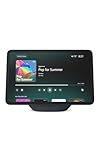
- New size, more viewing area: The 11“ smart display features a vibrant Full-HD touchscreen with 60% more viewing area versus Echo Show 8 (2025 release), built-in smart home hub, AZ3 Pro chip for powerful performance, and Omnisense technology for highly personalized experiences.
- Content looks and sounds incredible: Watch shows on Prime Video, Netflix, and more on the vibrant Full-HD 11" screen and enjoy room-filling spatial audio, crisper vocals, wider sound stage, and up to 2x bass versus Echo Show 8 (2023 release). With Alexa+, find the name of that song you love and discover new shows based on your preferences.
- Your everyday assistant: The 11" display makes it easy to see recipes and calendars at a glance, find meal inspo, and manage your shopping lists. With Alexa+, find recipes based on foods you love, make reservations, order groceries, and more.
- Simple Smart Home control: Pair and control thousands of devices that work with Alexa without needing a separate smart home hub. Easily view your camera feeds. Manage lights, thermostats, and more using the display or your voice. With Omnisense technology, you can activate routines via temperature, presence, or visual ID detection.
- Crystal-clear video calls: Video calls feel natural on the vibrant 11" screen with a centered, auto-framing camera, 3.3x zoom, and noise reduction technology. Use live view to check in on your family, pets, and more while you're away.
Google’s Matter help says supported Matter devices can be controlled locally without routing the command through the Nest or device-manufacturer cloud. This supports local device control in compatible setups; it does not mean voice recognition, AI inference, remote access, or every related feature is local. Confirm that the device and controller support the Matter functions you need.
How to decide for your home
- List the actions that matter. Separate routine, predictable automations from requests that genuinely benefit from flexible language or summaries.
- Map the data path. For voice, identify where audio capture, transcription, model inference, device control, and speech synthesis happen. Check whether devices or remote-access features call a vendor cloud.
- Set boundaries for consequential actions. Decide which entities the agent can access and where confirmation or a manual control path is necessary.
- Test offline behavior. Disconnect internet access in a controlled test and check local automations, device control, voice functions, and cloud-dependent features separately.
- Compare the complete operating cost and upkeep. Account for suitable local compute and electricity, or any provider charges and service dependence, as well as updates and troubleshooting.
- Verify device and language support. Check the exact controller, integrations, Matter compatibility where relevant, voice pipeline, and languages before committing to the design.
The most useful comparison is between complete configurations, not model names alone. Home Assistant’s documentation is authoritative for its own integrations and vendor-reported examples; Google’s statement applies to supported Matter configurations. Neither establishes the behavior of every smart-home product.
Quick Recap
Product prices and availability are accurate as of the date/time indicated and are subject to change. Any price and availability information displayed on Amazon at the time of purchase will apply.
What’s actually slowing this PC down?
Pick the symptom - the matching free tool is one click away.

