
The Tool Desk
Outbyte Driver Updater FREEFix the driver behind crashes, sound loss and screen glitchesFind Drivers →Outbyte PC Repair FREERepair Windows errors before they cause bigger problemsFix Now →KernelUNO is an Arduino sketch that gives an Uno R3 a small Unix-like shell over its serial connection, plus a virtual filesystem held in RAM. It is “an OS” only in the informal, lightweight sense: it is not Linux, a general-purpose computer environment, or a way to keep files after the board loses power.
What KernelUNO does
The KernelUNO project describes itself as a Unix-like shell and RAM filesystem for Arduino UNO R3. After uploading the sketch, you interact with it through a serial terminal. Its commands combine basic file and directory operations, system-status utilities, and GPIO control.
The repository currently lists 26 commands. They include filesystem commands such as ls, cd, pwd, mkdir, touch, cat, echo, and rm; pin-related commands such as pinmode, write, read, gpio, and pwm; and utilities including uptime, uname, dmesg, df, free, reboot, find, alias, and slots. CNX Software reported 23 built-in commands in its April 27, 2026 overview, so command counts can differ between snapshots; the current repository listing is the better guide to the present command set.
How its virtual filesystem works
KernelUNO creates /home and /dev at boot. The filesystem is deliberately tiny: the repository specifies a maximum of 10 files or directories, content of up to 32 bytes per file, and names up to 12 characters long. Its /dev/pin2, /dev/pin3, and /dev/pin4 entries represent GPIO pins rather than ordinary stored files.
Do these 3 things before closing this tab:
1Repair Windows errors before they cause bigger problems2Fix the driver behind crashes, sound loss and screen glitches3Clear out junk files and repair common Windows errors#1 Best Overall

- START CODING WITH THE ELEGOO UNO R3: Connect the included USB cable, upload your first sketch, and build sensor, motor, display, and automation projects, making it a practical controller for maker desks, classrooms, coding clubs, and robotics labs
- ATMEGA328P CORE FOR EVERYDAY PROJECTS: A 16 MHz clock, 32 KB flash, 14 digital I/O pins with 6 PWM outputs and 6 analog inputs provide a versatile foundation for LEDs, buttons, relays, servos, displays and sensors
- RELIABLE USB PROGRAMMING AND CLEAR WIRING: The ATmega16U2 USB interface supports sketch uploads and serial communication, while clearly labeled headers help simplify connections to jumper wires, shields and modules
- POWER AND EXPAND YOUR WAY: Run the board from USB or a recommended 7-12 V external supply, then add compatible shields and modules for data logging, automation, robotics, test fixtures and custom electronics projects
- BOARD AND USB CABLE INCLUDED: Comes with 1 ELEGOO UNO R3 development board and 1 USB-A to USB-B data cable; breadboard, sensors, shields and power adapter are not included, and younger learners should work with an experienced adult
Because the filesystem lives in RAM, its contents are temporary. Do not treat it as persistent storage or expect files to survive a reset or power loss. Hackaday’s April 23, 2026 coverage also describes the filesystem as non-permanent. External flash or EEPROM have been mentioned as possible future directions, not as current KernelUNO features.
What you need to try it
CNX Software’s April 27, 2026 setup overview specifies an Arduino Uno R3 or a compatible board using a Microchip ATmega328P, plus a USB cable for programming. LEDs and resistors are optional if you want to experiment with GPIO commands. The project repository names Uno R3; compatibility with every Uno revision or clone is not established by these sources.
Rank #2
![Arduino Uno REV3 [A000066] - ATmega328P Microcontroller, 16MHz, 14 Digital I/O Pins, 6 Analog Inputs, 32KB Flash, USB Connectivity, Compatible with Arduino IDE for DIY Projects and Prototyping](https://m.media-amazon.com/images/I/515P6aYSP4L._SL160_.jpg)
- ATmega328P Microcontroller: Powered by the reliable ATmega328P, running at 16 MHz with 32KB of flash memory, 2KB SRAM, and 1KB EEPROM, offering ample resources for a wide range of basic to advanced electronics projects.
- 14 Digital I/O Pins & 6 Analog Inputs: Features 14 digital I/O pins (6 of which support PWM output) and 6 analog inputs (10-bit resolution), providing flexible options for sensors, motors, and other external components.
- USB Connectivity for Easy Programming: The built-in USB port allows for direct programming and serial communication, enabling a simple connection to your computer for sketch uploading and debugging through the Arduino IDE.
- Compatible with Arduino IDE: Full compatibility with the Arduino IDE ensures easy access to a vast array of libraries, code examples, and community-driven projects, making the Uno a great choice for both beginners and experienced makers.
- Widely Used in Education & Prototyping: The Arduino Uno is a standard in educational environments, widely used for learning and teaching electronics and programming. It's perfect for prototyping, robotics, IoT projects, and more.
- Connect the board to a computer with a USB programming cable.
- Upload the KernelUNO sketch to the board using your usual Arduino workflow.
- Open a serial terminal and use it to interact with the shell. The cited project descriptions do not establish a specific terminal application or serial setting, so consult the repository instructions for the applicable setup details.
- Try shell commands for directories and files, or use GPIO commands with suitable components connected. KernelUNO uses Arduino functions including
pinMode(),digitalWrite(),digitalRead(), andanalogWrite()for pin behavior.
Limits on an Uno’s resources
The ATmega328P platform has 2KB of RAM, 1KB of EEPROM, and 32KB of flash, according to CNX Software’s April 27, 2026 report. That report estimates that its reported KernelUNO build used about 38% of flash and about 85% of SRAM. These are figures attributed to that report, not independent measurements here, and they help explain why the filesystem is small. CNX Software also reported a six-message dmesg buffer; the project’s own stated filesystem limits are listed above.
Who KernelUNO is for
KernelUNO is best suited to learning, demonstrations, and small experiments with shell-style commands and Arduino pins. The serial shell offers a different interface for exploring a microcontroller, but its tiny, volatile filesystem and constrained hardware do not make it a replacement for a desktop operating system or a storage solution.
Quick wins for a faster PC:
Scan for outdated or missing drivers - takes under a minuteDriver Scan →Repair Windows errors before they cause bigger problemsFix Now →Rank #3

- START CODING WITH A FLEXIBLE UNO R3 BOARD: Connect the included USB cable, upload sketches with Arduino IDE and build sensor, motor, display and automation projects for maker desks, classrooms, coding labs and electronics prototyping
- ATMEGA328P CORE FOR EVERYDAY PROJECTS: A 16 MHz clock, 32 KB flash, 2 KB SRAM, 1 KB EEPROM, 14 digital I/O pins with 6 PWM outputs and 6 analog inputs support LEDs, buttons, relays, servos, displays and sensors
- CH340C USB-TO-SERIAL INTERFACE: The onboard CH340C handles USB communication for sketch uploads and serial monitoring, while clearly labeled digital, analog and power headers help simplify wiring to modules and shields
- USB OR EXTERNAL POWER: Run the board from the included USB cable or a recommended 7-12 V external DC supply, then expand with compatible shields and modules for robotics, data logging, automation and custom embedded projects
- BOARD AND USB CABLE INCLUDED: Comes with 1 ELEGOO UNO R3 controller board and 1 USB-A to USB-B data cable; breadboard, jumper wires, sensors, shields and power adapter are not included
Linux Magazine’s 2026 overview also describes sensor reading and simple scripts. Those capabilities are not established by the repository details cited here, so treat them as that publication’s characterization rather than as a verified inventory of built-in features.
Independent reader supportYour contribution helps us test, update, and keep practical guides available for everyone.How to judge it against another Arduino shell
If you are comparing KernelUNO with another microcontroller shell or OS-like project, focus on practical differences rather than the label “OS.” Check the supported board and MCU, whether storage persists after power loss, which commands and scripting features are available, the RAM and flash footprint, and how peripherals such as GPIO are accessed. The sources cited here do not establish a direct commercial alternative or a comparative winner.
Quick Recap
Best Value
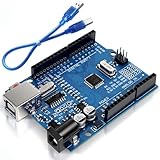
- Unlock your creativity with the versatile UNO R3 Board ATmega328P! Explore endless possibilities in electronics projects with its user-friendly Arduino development environment, extensive digital and analog I/O pins, and compatibility with various sensors and modules. Let your imagination soar!
- Experience the power of UNO R3 Board ATmega328P! This feature-packed development board boasts a high-performance ATmega328P microcontroller, 32KB of flash memory, and 2KB of SRAM. It's perfect for both beginners and advanced users seeking to build innovative applications in robotics, home automation, and more.
- Ignite your passion for electronics with the UNO R3 Board ATmega328P! Its open-source design allows for customization, while its 14 digital I/O pins and 6 analog input pins provide ample connectivity options. Get ready to bring your ideas to life and create interactive projects like never before.
- Elevate your DIY projects with the UNO R3 Board ATmega328P! This highly versatile development board offers seamless integration with the Arduino ecosystem, providing access to a vast library of code and resources. With its reliable performance and broad compatibility, you can easily prototype and realize your electronic dreams.
- Discover the endless potential of the UNO R3 Board ATmega328P! With its robust communication interfaces, including UART, SPI, and I2C, you can connect and communicate with a wide range of devices. Whether you're a hobbyist or a professional, this powerful development board is a must-have for creating innovative and interactive electronic systems.
Rank #4

- TURN CODE INTO REAL-WORLD RESULTS — Follow 22+ guided lessons to make LEDs blink, read temperature and distance, move servo and stepper motors, control an LCD and respond to joystick or IR input; ideal for a family weekend build, homeschool unit, coding club or STEM classroom
- MORE PROJECT VARIETY IN ONE ORGANIZED KIT — Includes the UNO R3 controller, LCD1602 with pre-soldered header, breadboard power module, ultrasonic and DHT11 sensors, joystick, IR receiver and remote, SG90 servo, stepper motor, relay, DC motor, fan blade, displays, LEDs, buttons, resistors and jumper wires
- START WITHOUT SOLDERING — Plug-in modules, a solderless breadboard and the pre-soldered LCD help beginners focus on wiring, code and testing; the illustrated component list makes it easier to find each part and move from one lesson to the next
- LEARN THE LOGIC, THEN CREATE YOUR OWN — Use Arduino IDE and the included example code to understand digital input and output, analog sensing, timing, motor control and display functions, then change thresholds, speeds and sequences for alarms, environmental monitors, reaction games and motion projects
- CLEAR SETUP SUPPORT FOR FIRST-TIME BUILDERS — Download the latest tutorial and code, select the UNO board and correct computer port, check component polarity and breadboard rows, and keep power-module input at 9V or below; younger learners should work with an experienced adult
Product prices and availability are accurate as of the date/time indicated and are subject to change. Any price and availability information displayed on Amazon at the time of purchase will apply.

