
Free tools Windows power users keep installed
One-click scans. No signup required.
Jira vs Trello vs Asana in 2026 has no universal winner: choose Asana for most cross-functional business teams, Jira for software development and technical delivery, and Trello for simple visual Kanban workflows. The right choice depends on workflow complexity, dependencies, reporting, automation, governance, team size, and budget.
Jira, Trello, and Asana overlap, but they are built around different operating models. Jira is an engineering-oriented issue and agile work platform; Trello is a low-friction board-and-card system; Asana is a structured cross-functional project and work-management platform.
The recommendations below are fit-based editorial judgments rather than independent usability or performance benchmarks. Vendor prices, plan names, AI allowances, automation limits, and included features can change, so verify the live pricing page before purchasing.
Key takeaways
- Asana is the best overall choice for most mixed business teams because its Starter plan combines timeline and Gantt views, dashboards, forms, custom fields, and unlimited automations.
- Jira is the best choice for software, DevOps, IT, and agile product teams that need backlogs, issue hierarchies, configurable workflows, releases, technical dependencies, and developer integrations.
- Trello is the easiest tool to adopt when a team mainly needs boards, lists, cards, assignments, checklists, due dates, and lightweight automation.
- Trello Free supports up to 10 collaborators and 10 open boards per Workspace, while Asana Personal currently lists two users and Jira Free supports up to 10 users.
- A due date is not the same as a dependency, and a basic timeline is not the same as portfolio planning. Jira, Trello, and Asana differ substantially in planning depth even when all three advertise similar views.
Jira vs Trello vs Asana at a glance
Jira vs Trello vs Asana in 2026 is primarily a choice between technical process control, visual simplicity, and cross-functional structure. Use the table as a starting point, then test the product against one representative project before migrating the entire organization.
#1 Best Overall

- Ergonomic Posture Correction: Designed to elevate your laptop to the perfect eye level, this adjustable laptop stand significantly reduces neck, shoulder, and spinal fatigue. Transform your desk into a healthier workstation, ideal for long hours of typing, Zoom meetings, or gaming.
- Unshakable Dual-Rod Stability: Unlike single-hinge models, our stand features a highly engineered dual-support rod mechanism. It perfectly distributes weight to ensure a 100% wobble-free typing experience, safely supporting heavy-duty devices up to 22 lbs (10kg).
- Advanced Thermal Cooling Panel: Maximize your device's performance. The unique geometric heat-vent design on the upper panel provides superior airflow compared to standard solid stands. This continuous heat dissipation prevents your laptop from thermal throttling and hardware damage during intensive tasks.
- Universal 10-16” Compatibility: A versatile computer riser that seamlessly fits all 10 to 16-inch laptops. Broadly compatible with MacBook Pro/Air, Dell XPS, HP, Lenovo, ASUS, Chromebook, and large gaming laptops. The anti-slip silicone pads firmly grip your device and protect it from scratches.
- Foldable, Portable & Ready to Go: Maximize your productivity anywhere. The dual-foldable design allows the stand to collapse completely flat in seconds. Easily slip it into your backpack or briefcase, making it the ultimate portable office accessory for business trips, cafes, or hybrid work setups.
| Tool | Best for | Core work model | Learning curve | Strongest planning capability | Free-plan headline limit | Biggest weakness |
|---|---|---|---|---|---|---|
| Jira | Software engineering, DevOps, IT, agile product delivery | Issues, backlogs, boards, workflows, releases | Steepest of the three | Technical dependencies, backlogs, releases, agile reporting, advanced multi-team planning | Up to 10 users and 2 GB storage | Can be unnecessarily complex for nontechnical teams |
| Trello | Simple visual task tracking and Kanban | Boards, lists, cards, checklists | Lowest | Fast visual coordination | Up to 10 collaborators and 10 boards per Workspace | Complex dependencies, capacity planning, and portfolio reporting require workarounds or upgrades |
| Asana | Marketing, operations, agencies, creative, product, and mixed teams | Tasks, projects, multiple views, forms, fields, rules | Moderate | Business-project dependencies, timelines, forms, approvals, dashboards, and cross-project visibility | Personal currently lists up to two users | More expensive than Trello and less specialized than Jira for software delivery |
Asana’s pricing page, Trello’s pricing page, and Atlassian’s Jira Cloud plan documentation are the authoritative sources for the plan signals in this table.
What is Jira really built for?
Jira is built primarily for engineering-oriented work and issue management. Jira’s natural vocabulary includes backlogs, Scrum and Kanban boards, work items, issue hierarchies, workflows, releases, components, dependencies, agile reports, and developer-tool integrations.
Jira can support general project management, but Jira’s configuration model is most valuable when the team needs controlled states and technical traceability. A software team might connect an epic to stories and subtasks, move work through configured statuses, associate work with a release, track dependencies, and report on sprint or delivery progress.
Jira’s depth is also the source of its adoption cost. Permissions, roles, work types, workflows, schemes, boards, backlog configuration, queries, releases, and integrations create more administrative decisions than a simple task board requires. Jira is worthwhile when those decisions solve real delivery problems; Jira is excessive when a team only needs owners, deadlines, and a shared list.
What’s actually slowing this PC down?
Pick the symptom - the matching free tool is one click away.
Jira’s official product information describes capabilities including backlogs, dependencies, reports, workflow customization, planning, capacity, and automation. Treat vendor feature descriptions as product capabilities, not independent proof that Jira is superior for every team.
What is Trello really built for?
Trello is built around visual boards, lists, and cards. Teams can create cards, assign members, add due dates and checklists, attach files, comment, and move work through columns such as “To do,” “In progress,” and “Done.”
Trello’s central advantage is low cognitive and administrative overhead. A new team can usually understand the board model quickly and start moving cards without designing an issue hierarchy or a formal workflow. Built-in automation can handle board-level actions such as moving cards, assigning members, setting due dates, and sending notifications.
Trello can be extended with Power-Ups and paid views, but extensions add configuration, cost, or maintenance. Trello’s board-centric model can become fragmented when one initiative spans many boards or when leaders need reliable cross-project capacity, dependency, and portfolio reporting.
Do these 3 things before closing this tab:
1Repair Windows errors before they cause bigger problems2Fix the driver behind crashes, sound loss and screen glitches3Clear out junk files and repair common Windows errorsTrello’s plan guidance explains how plan-specific features affect boards, views, automation, and administration. Trello is not incapable of supporting complex work; complex work simply becomes less natural as the number of boards, dependencies, and reporting requirements increases.
What is Asana really built for?
Asana is built for cross-functional project and work management. Asana combines tasks and projects with list, board, calendar, timeline, and Gantt views, then adds dependencies, custom fields, forms, rules, dashboards, templates, approvals, proofing, and integrations.
Asana is usually the middle ground between Trello’s simplicity and Jira’s process depth. Marketing teams can use forms for campaign intake, custom fields for campaign status, timelines for launch schedules, approvals for creative review, and dashboards for leadership reporting. Operations, product, design, and agency teams can use the same general model without adopting software-development terminology.
Asana is not a replacement for every Jira workflow. Teams that depend on Jira-native issue types, detailed releases, developer integrations, or highly customized technical workflows may find Jira more appropriate for engineering. Asana’s Jira Cloud synchronization creates a hybrid option when business teams prefer Asana and engineering prefers Jira, subject to qualifying Asana tiers.
Asana’s Jira Cloud FAQ documents the availability and qualifications for two-way synchronization. Confirm the required Asana tier before treating the integration as part of a buying decision.
Which tool is best for each team type?
Jira is the best fit when technical delivery is the system of record, Asana is the best default for cross-functional business work, and Trello is the best fit for lightweight visual coordination.
| Team or use case | Recommended tool | Reason |
|---|---|---|
| Software engineering | Jira | Backlogs, agile boards, issue hierarchies, releases, workflow customization, and technical integrations |
| DevOps or IT delivery | Jira | Issue-based work, technical dependencies, releases, and operational workflows |
| Marketing | Asana | Campaign planning, intake forms, dependencies, approvals, custom fields, timelines, and reporting |
| Creative or design | Asana | Ownership, deadlines, approvals, proofing, and cross-functional visibility |
| Small startup | Trello or Asana | Trello minimizes setup; Asana is better when projects need dependencies and reporting |
| Solo user | Trello or Asana | Trello suits visual personal planning; Asana suits structured project tracking |
| Agency with multiple clients | Asana | Stronger cross-project structure, intake, reporting, and deadline management |
| Simple editorial calendar | Trello or Asana | Trello suits board-first publishing; Asana adds calendar, dependencies, and reporting |
| Complex product roadmap | Jira or Asana | Jira suits technical product delivery; Asana suits cross-functional business roadmaps |
| Enterprise governance | Jira or Asana Enterprise | Compare identity, audit, security, compliance, data, and governance requirements at the relevant tier |
| Kanban-only workflow | Trello | Fast visual board experience with minimal process overhead |
| Mixed business-and-engineering organization | Asana plus Jira integration, or carefully configured Jira | Choose whether engineering or cross-functional planning is the primary system of record |
This table is a decision aid, not an independently measured benchmark. A team should validate the recommendation with its own terminology, approval process, reporting needs, and administrative constraints.
Rank #2

- 【Adjustable & Ergonomic】:This laptop stand can be adjusted to a comfortable height and angle according to your actual needs, letting you fix posture and reduce your neck fatigue, back pain and eye strain. Very comfortable for working in home, office and outdoor.
- 【Sturdy & Protective】 :Made of sturdy metal, it can support up to 17.6 lbs (8kg) weight on top; With 2 rubber mats on the hook and anti-skid silicone pads on top & bottom, it can secure your laptop in place and maximum protect your device from scratches and sliding. Moreover, smooth edges will never hurt your hands.
- 【Heat Dissipation】 :The top of the laptop stand is designed with multiple ventilation holes. The open design offers greater ventilation and more airflow to cool your laptop during operation other than it just lays flat on the table.
- 【Portable & Foldable】:The foldable design allows you to easily slip it in your backpack. Ideal for people who travel for business a lot.
- 【Broad Compatibility】:Our desktop book stand is compatible with all laptops from 10-15.6 inches, such as MacBook Air/ Pro, Google Pixelbook, Dell XPS, HP, ASUS, Lenovo ThinkPad, Acer, Chromebook and Microsoft Surface, etc.Be your ideal companion in Home, Office & Outdoor.
Which tool is easiest to use and adopt?
Trello is easiest to understand immediately, Asana offers the best usability-to-depth balance, and Jira has the steepest learning curve. “Easiest” here is a practical judgment based on each product’s operating model, not the result of a documented usability test.
Recommended Free Tools
Why does Trello feel easiest?
Trello’s board/list/card model is easy to explain: lists represent stages or categories, and cards represent work. Trello requires little training for a basic workflow, which makes Trello attractive to small businesses, startups, clients, and occasional collaborators.
The trade-off appears later. Teams may need naming conventions, board ownership, Power-Ups, additional views, and rules to keep a growing Trello environment consistent. A simple board can remain effective; a network of boards can become difficult to govern.
Why is Asana the middle ground?
Asana gives nontechnical teams more structure than Trello without requiring every user to think in backlogs, sprints, releases, or issue schemes. Multiple project views let different stakeholders see the same work as a list, board, calendar, timeline, or Gantt schedule.
Why does Jira require more training?
Jira’s learning curve reflects Jira’s strengths: work types, workflows, permissions, boards, backlog management, releases, queries, schemes, and technical integrations. Jira becomes easier to justify when the team needs those controls and harder to justify when the team only wants a shared project plan.
Quick wins for a faster PC:
Fix the driver behind crashes, sound loss and screen glitchesFind Drivers →Repair Windows errors before they cause bigger problemsFix Now →Jira Free also restricts or omits several administrative and advanced capabilities, including aspects of permissions, roles, work-level security, audit logs, email notifications, apps, and advanced roadmaps, according to Atlassian’s Jira Cloud plan comparison.
How do Jira, Trello, and Asana compare for planning?
Asana is strongest for business-project scheduling, Jira is strongest for technical delivery planning, and Trello is strongest for simple visual flow. The word “timeline” does not mean the same planning capability in all three products.
| Planning need | Jira | Trello | Asana |
|---|---|---|---|
| Basic Kanban board | Yes, with agile-oriented configuration | Core experience | Yes |
| Backlog and sprint planning | Strongest fit | Possible, but not the core model | Possible, but not Jira’s main strength |
| Timeline or Gantt scheduling | Basic timeline; advanced multi-team planning requires Plans on Premium or Enterprise | Timeline is available on Premium | Timeline and Gantt begin on Starter |
| Dependencies | Strong for technical work, releases, and cross-team delivery | Basic due dates and checklist relationships; complex dependencies need extensions or workarounds | Strong for business-project dependencies and milestones |
| Cross-project planning | Advanced Plans on higher tiers | Less central; often requires board design or extensions | Strong project and portfolio visibility on qualifying plans |
| Capacity management | Available through advanced planning capabilities | Not a core strength | Available on higher plans |
| Roadmap and release planning | Strongest for technical products and releases | Lightweight and visual | Strong for cross-functional initiatives |
Jira’s basic timeline is not a full portfolio roadmap. Atlassian’s timeline documentation states that the basic timeline works from a single space’s backlog and has limits of 5,000 work items and 500 parent work items. Cross-space planning, broader hierarchy, capacity management, and advanced dependency mapping require Jira Plans on Premium or Enterprise.
Trello’s core board view is not equivalent to a dependency graph. Trello can show due dates and checklists, but a due date only says when work should be completed. A dependency says that one task cannot start or finish until another task reaches a defined state. A project dependency graph connects many such relationships, while capacity planning asks whether the assigned people can complete the work. Those are different planning levels.
The Tool Desk
Outbyte PC Repair FREEClear out junk files and repair common Windows errorsFree Scan →Outbyte Driver Updater FREEScan for outdated or missing drivers - takes under a minuteDriver Scan →Asana’s Starter plan includes Timeline/Gantt views, dashboards, forms, custom fields, and unlimited automations according to Asana’s pricing page. “Unlimited automations” refers to the plan’s rules capability; it does not mean unlimited AI usage, API calls, third-party integration usage, or every enterprise feature.
Which tool has the best automation?
Jira has the deepest technical automation model, Trello has the simplest board automation, and Asana provides broadly useful business rules with unlimited automations on Starter according to its current pricing page. Automation quotas and product limits are volatile and should be rechecked before procurement.
| Tool | Published automation signal | Best automation use |
|---|---|---|
| Jira | Free: 100 rule runs/month; Standard: 1,700/month; Premium: 1,000 rule runs per paid user/month; Enterprise: unlimited rule runs | Technical workflows, cross-project actions, issue transitions, notifications, and delivery processes |
| Trello | Free: 250 Workspace command runs/month; Standard: 1,000/month; Premium: unlimited Workspace command runs | Moving cards, assigning members, setting dates, and triggering board notifications |
| Asana | Starter includes unlimited automations according to the current pricing page | Business intake, status changes, assignments, reminders, approvals, and recurring project processes |
Jira’s published automation limits are listed on Atlassian’s Jira pricing page. The limits depend on the Jira product and plan, so do not transfer a Jira Software quota to Jira Service Management or another Atlassian product without checking that product’s documentation.
Trello automation is excellent for actions that happen inside a board. Trello is less natural when automation must understand complex issue hierarchies, releases, technical dependencies, or multi-project delivery states.
Which free plan is best?
Jira Free is the most generous for a small technical team by user count, Trello Free is the most practical for a small board-based team, and Asana Personal is the most limited by the current listed user count. Free plans are not equivalent because users, boards, storage, views, automation, permissions, and integrations are limited differently.
| Plan | Published price | Users or collaborators | Important limits and inclusions | Best for |
|---|---|---|---|---|
| Trello Free | $0 | Up to 10 collaborators per Workspace | Up to 10 boards per Workspace, unlimited cards and Power-Ups, 10 MB per attachment, 250 automation command runs/month, assignees, due dates, mobile apps, and two-factor authentication | Individuals and small teams using a board-based workflow |
| Asana Personal | $0 | Currently lists up to 2 users | Unlimited tasks and projects, list/board/calendar views, more than 100 integrations, and 100 MB per-file storage limit | Solo users or two-person structured project work |
| Jira Free | $0 | Up to 10 users | 2 GB storage and community support; no advanced roadmaps plus restrictions involving permissions, roles, work-level security, audit logs, email notifications, and apps | Small technical teams that need Jira’s issue and agile model |
The limits above come from Trello’s pricing page, Asana’s pricing page, and Atlassian’s Jira Cloud plan documentation. Asana’s current two-user Personal limit is especially important to verify immediately before publication because a change would materially affect small teams.
Rank #3

- 【Adjustable & Ergonomic】:This laptop stand can be adjusted to a comfortable height and angle according to your actual needs, letting you fix posture and reduce your neck fatigue, back pain and eye strain. Very comfortable for working in home, office and outdoor.
- 【Sturdy & Protective】 :Made of sturdy metal, it can support up to 17.6 lbs (8kg) weight on top; With 2 rubber mats on the hook and anti-skid silicone pads on top & bottom, it can secure your laptop in place and maximum protect your device from scratches and sliding. Moreover, smooth edges will never hurt your hands.
- 【Heat Dissipation】 :The top of the laptop stand is designed with multiple ventilation holes. The open design offers greater ventilation and more airflow to cool your laptop during operation other than it just lays flat on the table.
- 【Portable & Foldable】:The foldable design allows you to easily slip it in your backpack. Ideal for people who travel for business a lot.
- 【Broad Compatibility】:Our printer stand is compatible with all laptops from 10-15.6 inches, such as MacBook Air/ Pro, Google Pixelbook, Dell XPS, HP, ASUS, Lenovo ThinkPad, Acer, Chromebook and Microsoft Surface, etc.Be your ideal companion in Home, Office & Outdoor.
What do the free plans mean in practice?
Trello Free is a strong choice when 10 boards per Workspace is sufficient and the team can work without advanced views. Jira Free is a strong choice when the team genuinely needs backlogs, issues, boards, and agile workflows, but Jira Free should not be treated as a free enterprise administration tier. Asana Personal works for one or two users but is not a broad free plan for a 10- or 15-person team based on the supplied pricing page.
How much do Trello and Asana cost?
Trello has the lowest published paid entry price, while Asana costs more but includes deeper structured project-management features at its Starter tier. The following snapshot uses US dollars and the prices supplied for August 18, 2026; monthly and annual billing must not be mixed when comparing products.
| Product and plan | Annual-billing price | Monthly-billing price | What the price signal means |
|---|---|---|---|
| Trello Standard | $5/user/month | $6/user/month | Low-cost paid board management |
| Trello Premium | $10/user/month | $12.50/user/month | Adds timeline, dashboard, table, map, calendar, administration, and security features |
| Trello Enterprise | $17.50/user/month displayed annually | Verify on the live page | Organization-wide controls and Atlassian Guard Standard signals |
| Asana Starter | $10.99/user/month | $13.49/user/month | Adds Timeline/Gantt, dashboards, forms, custom fields, and unlimited automations |
| Jira | Use live calculator | Use live calculator | Pricing varies by user count, billing term, product configuration, and Standard, Premium, Enterprise, or additional service requirements |
Check Trello’s official pricing and Asana’s official pricing immediately before buying. Use Atlassian’s live Jira pricing page rather than an old comparison table because the supplied research does not provide a reliable fixed Jira price for every team size and configuration.
Example budgets for two, ten, and fifty users
These examples show subscription arithmetic only, not a complete procurement quote. The examples assume US dollars, all listed users are billable, no discounts or taxes, no guest exceptions, no add-ons, and the quoted annual or monthly rate applies to every user.
| Team size | Trello Standard annual billing | Trello Standard monthly billing | Trello Premium annual billing | Asana Starter annual billing | Asana Starter monthly billing | Jira |
|---|---|---|---|---|---|---|
| 2 users | $10/month | $12/month | $20/month | $21.98/month | $26.98/month | Use live calculator |
| 10 users | $50/month | $60/month | $100/month | $109.90/month | $134.90/month | Use live calculator; Jira Free may cover up to 10 users if its limits fit |
| 50 users | $250/month | $300/month | $500/month | $549.50/month | $674.50/month | Use live calculator |
The annual-billing figures in the table are monthly equivalents, not necessarily the amount charged each month. Annual totals from the same assumptions are $120, $600, and $3,000 for Trello Standard at two, 10, and 50 users; $240, $1,200, and $6,000 for Trello Premium; and $263.76, $1,318.80, and $6,594 for Asana Starter.
Actual total cost can change if the vendor treats guests or external collaborators differently, if users are added partway through a term, or if the team needs AI, identity, advanced security, portfolio, workload, API, integration, or enterprise features. Power-Ups may also have separate partner pricing. Atlassian Guard is a separate subscription; Atlassian’s official Guard page should be checked for current pricing and eligibility.
Crashes, No Sound, or Screen Glitches?
Random freezes, missing sound and display glitches usually trace back to one bad driver. Find and replace yours safely.Free scan · under a minuteWindows Errors? Fix Them Before They Spread
Repair common Windows errors and clear accumulated junk for a smoother, more stable PC - no reinstall needed.Free scan · no reinstallWhat is the difference between a due date, a dependency, and portfolio planning?
A due date identifies a target completion date, a dependency identifies a relationship between tasks, and portfolio planning connects work, capacity, priorities, and dependencies across projects. Comparing these as one checkbox produces misleading tool recommendations.
- Due date: “Finish the campaign brief by Friday.”
- Dependency: “Design cannot begin until the approved brief exists.”
- Dependency graph: “Brief approval, design, legal review, localization, and launch are connected across the project.”
- Capacity planning: “The same designer is assigned to three projects and cannot complete all overlapping work.”
- Portfolio planning: “Leadership can compare initiatives, priorities, milestones, risks, and capacity across teams.”
Trello is usually enough for the first level and can be extended for the others. Asana is a stronger default for business-project dependencies and cross-functional scheduling. Jira is strongest when dependencies are tied to technical issues, epics, releases, and agile delivery, with advanced cross-space planning gated to higher tiers.
How do Jira, Trello, and Asana compare for collaboration?
Asana is the strongest default for collaboration across marketing, operations, design, product, and leadership; Jira works well when collaboration is tied to engineering delivery; Trello is effective for lightweight shared visibility.
Asana’s forms, templates, custom fields, approvals, proofing, dashboards, and multiple project views let different departments participate in the same operating process. A requester can submit an intake form, an operator can manage tasks in a list, a project manager can use a timeline, and an executive can review a dashboard.
Jira is appropriate for cross-functional work when stakeholders accept an issue-based model and the work is closely connected to engineering. Jira can be a poor collaboration surface for clients, executives, or nontechnical operators if the organization exposes technical terminology and configuration without adapting the experience.
Trello is often the fastest way to create shared visibility. Trello becomes less comfortable when leaders need standardized intake, portfolio reporting, formal approval states, or dependable cross-project dependencies.
Which security and administration issues matter?
Enterprise buyers should compare the exact plan, product, add-ons, geography, identity requirements, audit needs, and compliance obligations rather than assume that every paid tier provides enterprise governance.
Relevant questions include:
- Are SSO and user provisioning included, or do they require a separate identity product?
- Are roles, permissions, work-level security, and project restrictions sufficient for the organization?
- Are audit logs and administrative reporting included?
- Does the plan provide required data controls, retention, compliance documentation, and support?
- Are external guests and clients billed differently?
- Do AI features have separate eligibility, credit, or usage restrictions?
Jira Premium adds advanced roadmaps, unlimited storage, sandbox and release-track capabilities, and a 99.9% uptime SLA according to the supplied Jira plan signals. Trello Enterprise includes organization-wide controls and an Atlassian Guard Standard signal on its displayed pricing page, but Atlassian Guard is a separate subscription. Asana’s advanced portfolio, workload, security, and governance capabilities are plan-dependent. Verify the relevant vendor documentation for the exact procurement requirement.
When is Trello the wrong choice?
Trello is the wrong default when the team needs reliable cross-project dependencies, portfolio reporting, capacity planning, formal governance, or strict approval states.
Rank #4
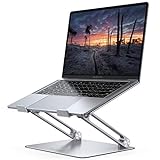
- Wide Compatibility: The laptop stand for desk is compatible with all laptops from 10" up to 17.3", including popular models like MacBook, MacBook Air, MacBook Pro, Surface Laptop, Dell XPS, Google Pixelbook, HP, ASUS, Acer, Chromebook, Alienware, etc.
- Adjustable & Portable Design: The laptop riser can be easily adjusted to comfortable height and angle based on your actual need. Besides, you also can fold the laptop stand up to carry around for travel and business trips or store it in your laptop bag.
- Upgrade Large Base: Made of high-quality aluminum alloy, the larger heavier base greatly improves the stability of the notebook stand. The laptop stand will never shaking, sliding and falling when you type on your laptop with this notebook holder.
- Ergonomic Design: The MacBook air pro stand holder works as a raiser to elevate the laptop screen to your eye level. The office computer stand let you fix posture and relieves neck, shoulder and spinal pain, it's very comfortable for working at home, office and outdoor, make typing more easier.
- Heat Dissipation: The multiple ventilation holes offers better ventilation and more airflow to cool your laptop and prevent from overheating and crashes. Anti-skid silicone and smooth edge can protects your laptop from sliding and scratches.
- Executives need portfolio-level reporting across many initiatives.
- A single initiative routinely spans many boards.
- Teams maintain spreadsheets to compensate for missing planning views.
- Work requires capacity planning across multiple teams.
- Permissions, auditability, or formal approval states are central requirements.
- Power-Ups have created inconsistent processes or additional maintenance costs.
Trello can still be extended with Power-Ups and careful board design. The issue is not that Trello cannot represent complex work; the issue is that Trello’s core board model is less naturally suited to complex multi-project planning.
When is Jira the wrong choice?
Jira is the wrong default when the team does not need software, IT, agile, issue-hierarchy, release, or technical workflow capabilities.
- Most users are marketers, clients, executives, or nontechnical operators.
- The team does not use sprints, backlogs, releases, issue hierarchies, or technical integrations.
- Adoption and simplicity matter more than process precision.
- No one can administer workflows, permissions, boards, and reporting.
- The central need is a straightforward project plan with owners and deadlines.
Jira supports broader work management than software development alone, but Jira is especially strong when technical process control is the deciding requirement. Calling Jira merely “a developer tool” is too narrow; calling Jira the simplest choice for every team is too broad.
When is Asana the wrong choice?
Asana is the wrong default when deep software-development lifecycle management or the lowest possible paid per-user price matters more than cross-functional usability.
- The team relies heavily on Jira-native workflows, releases, issue types, or developer integrations.
- The project requires technical issue tracking rather than general task coordination.
- A small team only needs a basic Kanban board and will not use forms, reporting, dependencies, or multiple views.
- The buyer is optimizing strictly for the lowest paid entry price, where Trello is cheaper on the published rates.
What are the main differences in Jira vs Trello?
Jira offers technical depth and process control, while Trello offers visual simplicity and lower setup cost.
| Decision factor | Jira | Trello |
|---|---|---|
| Primary model | Issues, backlogs, agile boards, workflows, and releases | Boards, lists, cards, checklists, and due dates |
| Best environment | Software, DevOps, IT, and technical product delivery | Small teams, simple Kanban, personal planning, and lightweight coordination |
| Workflow depth | High customization and technical states | Simple by default; extensible through Power-Ups and automation |
| Planning | Strong technical dependencies and releases; advanced multi-space planning is plan-dependent | Strong visual flow; complex planning may require extensions |
| Adoption | More training and administration | Fastest initial adoption |
| Published paid signal | Use Atlassian’s live calculator | Standard starts at $5/user/month annually; Premium starts at $10/user/month annually |
Choose Jira over Trello when the team’s work is organized around backlogs, releases, technical dependencies, and controlled workflows. Choose Trello over Jira when a visual board solves the real problem and additional Jira configuration would create resistance without improving delivery.
Independent reader supportYour contribution helps us test, update, and keep practical guides available for everyone.What are the main differences in Jira vs Asana?
Jira is stronger for agile issue tracking and technical delivery, while Asana is stronger for general business projects and cross-functional planning.
Recommended Free Tools
| Decision factor | Jira | Asana |
|---|---|---|
| Primary model | Issues, backlogs, sprints, workflows, releases | Tasks, projects, forms, fields, rules, and multiple views |
| Best environment | Engineering, DevOps, IT, and technical product teams | Marketing, operations, creative, agencies, product, and mixed organizations |
| Agile depth | Strongest of the three | Supports structured work but is not as specialized for Jira-native development workflows |
| Business collaboration | Works when stakeholders accept the issue model | Natural fit for cross-functional business stakeholders |
| Planning | Technical dependencies, releases, and advanced plans | Business dependencies, timelines, Gantt, forms, dashboards, and portfolios on qualifying plans |
| Hybrid use | Can remain engineering’s system of record | Can synchronize with Jira Cloud on qualifying tiers |
A mixed organization does not necessarily need to force every department into one tool. Business teams can use Asana while engineering uses Jira when the integration, data ownership, permissions, and plan requirements are acceptable. Review Asana’s Jira Cloud integration documentation before assuming that two-way synchronization is available on the chosen tier.
What are the main differences in Trello vs Asana?
Trello prioritizes board simplicity, while Asana adds structured project planning, intake, reporting, and collaboration controls.
| Decision factor | Trello | Asana |
|---|---|---|
| Basic experience | Board, list, card | Task and project with list, board, calendar, timeline, and Gantt views |
| Free plan | Up to 10 collaborators and 10 boards per Workspace | Personal currently lists up to two users |
| Paid entry signal | Standard: $5/user/month annually | Starter: $10.99/user/month annually |
| Dependencies | Basic due dates and checklists; complex relationships need extensions or workarounds | Structured business-project dependencies and milestones |
| Intake and approvals | Possible through board conventions and extensions | Forms, approvals, proofing, fields, and rules are central paid-tier capabilities |
| Reporting | Dashboard and related views on Premium | Dashboards and broader project reporting on Starter and higher plans |
| Best upgrade trigger | Need more views, automation, storage, administration, or boards | Need more structure than Trello provides without adopting Jira’s technical model |
Choose Trello when the board itself is the workflow. Choose Asana when the team needs the same work represented differently for contributors, managers, requesters, and executives.
Should a team use Jira and Asana together?
A Jira-and-Asana hybrid can work when engineering needs Jira’s technical workflow and business teams need Asana’s cross-functional planning. The arrangement is most defensible when each tool has a clearly defined system-of-record boundary.
Do these 3 things before closing this tab:
1Clear out junk files and repair common Windows errors2Fix the driver behind crashes, sound loss and screen glitches3Repair Windows errors before they cause bigger problemsFor example, Asana can hold campaign, launch, or business program work while Jira holds engineering issues, sprints, releases, and technical dependencies. The organization should define which fields synchronize, who owns status changes, how duplicates are handled, and where executives should look for authoritative reporting.
A hybrid deployment also introduces costs: two sets of permissions, two onboarding experiences, integration administration, possible plan requirements, and the risk of inconsistent status data. Use the hybrid model because the workflows genuinely differ, not because the organization has avoided making a clear ownership decision.
How should you choose between Jira, Trello, and Asana?
Choose the product that matches how work is actually performed, not the product with the longest feature list. Use this decision tree:
- Are you primarily shipping software or operating technical services? Choose Jira if backlogs, sprints, releases, issue hierarchies, technical dependencies, or developer integrations are central.
- Do you need only a visual board? Choose Trello if cards moving through a small number of lists solve the problem and the team does not require portfolio reporting or complex dependencies.
- Do you need campaigns, approvals, dependencies, forms, dashboards, and reporting? Choose Asana if the work is cross-functional and business users need structured project management without a strongly technical vocabulary.
- Do engineering and business teams need different workflows? Consider Jira for engineering and Asana for business teams, but verify the Jira Cloud synchronization tier and establish a clear system of record.
- Do you need enterprise identity, audit, or compliance controls? Compare the relevant enterprise tiers and add-ons directly, including SSO, provisioning, audit logs, data controls, support, and compliance documentation.
- Are you replacing spreadsheets or email? Start with the smallest workflow that solves the immediate problem. A powerful system that users avoid is worse than a simpler system that is maintained consistently.
What should you test before migrating?
Run one representative project through the candidate tool before importing the organization’s entire history. A short pilot should test both the user experience and the administrative consequences.
Crashes, No Sound, or Screen Glitches?
Random freezes, missing sound and display glitches usually trace back to one bad driver. Find and replace yours safely.Free scan · under a minuteWindows Errors? Fix Them Before They Spread
Repair common Windows errors and clear accumulated junk for a smoother, more stable PC - no reinstall needed.Free scan · no reinstallBest Value

- ✔️[Foldabe & Protable] - Foldable laptop stand for desk & Protable computer stand, It combines the advantages of market brackets, convenient travel laptop stand. Easy to use. Suitable for working at home, office and outdoor, improve comfort.
- ✔️[360°Rotation] - The computer stand with 360° rotating base, 360° rotation connected with the base is more flexible, the computer stand allows you to rotate the laptop to any angle.
- ✔️[Stable & Durable] - The Computer stand is made of one-piece fiber metal material, which is more durable and stable than ordinary aluminum alloy computer stands. The upgraded rotating base makes the stand performance more stable, and the non-slip silicone protects the laptop from sliding.Only supports laptops up to 16 inches.
- ✔️[Ergonmic Desing] - You can freely adjust the height and angle of the laptop stand to keep it at eye level, which helps to reduce the pressure on your body while working. Whether sitting or standing, there is a comfortable angle.
- ✔️[Wide Compatibility] - Our laptop stand is compatible with all laptops from 10-16 inches, such as MacBook Air/Pro, Google PixelBook, Dell XPS, HP, ASUS, Lenovo ThinkPad, Acer, Chromebook and Microsoft Surface, etc. It is an ideal companion for computer workers.
- Create the real workflow, including intake, assignment, approval, blocked work, completion, and reporting.
- Model at least one true dependency rather than only adding due dates.
- Test the views that different audiences need: board, list, calendar, timeline, Gantt, backlog, dashboard, or release view.
- Invite an external collaborator or client if guest access affects the buying decision.
- Run the automations that the team expects to use and check quotas.
- Import sample data and export it again to understand migration and exit options.
- Test the integrations that must remain authoritative, especially developer tools, email, chat, identity, storage, and reporting systems.
- Confirm attachment limits, user counting, board or project limits, AI eligibility, and add-on charges.
- Ask a nontechnical user and an administrator to complete the same workflow, then compare where confusion or overhead appears.
Migration is not just moving cards or tasks. Migration also means transferring naming conventions, ownership, permissions, historical context, automation rules, reports, integrations, and team habits.
What alternatives are worth considering?
Alternatives are worth considering only when Jira, Trello, or Asana leaves a clear gap in the team’s operating model.
| Alternative | Consider it when | Potential limitation |
|---|---|---|
| monday.com | You want highly visual, customizable workspaces and dashboards | May not provide Jira-level software depth or Trello-level minimalism |
| ClickUp | You want broad all-in-one functionality in one platform | Broad configuration can create complexity |
| Linear | You want a focused, fast product-development tool for software teams | Less suited to broad marketing, operations, or enterprise portfolio use cases |
| Microsoft Planner and Project | Your organization is deeply invested in Microsoft 365, Teams, and Entra identity | Capabilities depend on the exact Planner or Project subscription |
| Basecamp | You prioritize simple communication and project organization | Not designed for deep agile delivery, detailed dependencies, or advanced reporting |
| Wrike | You manage larger marketing, professional-services, or portfolio environments | May be excessive for low-cost or minimal-setup requirements |
These are follow-up options rather than independently verified winners in this comparison. Evaluate them against the same criteria: workflow fit, adoption, planning depth, customization, reporting, automation, collaboration, administration, price, and migration.
What about Jira Data Center in 2026?
Jira Data Center matters only to buyers considering self-managed deployment, and Jira Data Center should not be confused with Jira Cloud. Atlassian states that new Data Center license sales end March 30, 2026, with end of life scheduled for March 28, 2029.
Quick wins for a faster PC:
Clear out junk files and repair common Windows errorsFree Scan →Fix the driver behind crashes, sound loss and screen glitchesFind Drivers →Organizations evaluating self-managed Jira should examine the migration and lifecycle implications directly with Atlassian rather than treating Data Center as an equivalent fourth option in a Cloud comparison. The relevant lifecycle information is included on Atlassian’s Jira pricing and product page.
Final recommendation
Choose Asana for general-purpose project management, Jira for software and technical delivery, and Trello for simple visual Kanban workflows. Do not choose Trello for a complex multi-project planning system, Jira for a nontechnical team that primarily needs simplicity, or Asana when deep software-development workflow control is the deciding requirement.
Asana is the strongest overall recommendation for most mixed business teams because Asana balances structured tasks, dependencies, multiple views, forms, reporting, automation, templates, approvals, and cross-functional usability. Jira is the stronger recommendation when software delivery, releases, backlogs, technical dependencies, and developer integrations define the work. Trello is the stronger recommendation when the team values rapid adoption and a visual workflow above planning depth.
Before buying, count billable users, compare the same billing term, confirm free-plan limits, test a representative project, validate imports and exports, verify integrations, and recalculate the cost of AI, identity, automation, guests, and enterprise controls.
Free tools Windows power users keep installed
One-click scans. No signup required.
Frequently Asked Questions
Is Jira, Trello, or Asana best for a small business?
Asana is usually the best fit for a small business that needs structured projects, dependencies, forms, approvals, and reporting. Trello is better when the small business only needs a simple visual board, while Jira is better when the small business is primarily a software or technical team.
Is Trello cheaper than Asana in 2026?
Yes, the supplied August 18, 2026 pricing snapshot lists Trello Standard at $5 per user per month with annual billing and Asana Starter at $10.99 per user per month with annual billing. The plans are not equivalent: Asana Starter includes deeper structured project-management capabilities, while Trello Standard remains more board-oriented.
Can Asana and Jira be used together?
Yes, Asana and Jira Cloud can be used together when business teams prefer Asana and engineering prefers Jira, but two-way synchronization is available only on qualifying Asana tiers. Define which system owns each type of work and verify the integration’s current plan requirements before purchasing.
Is Jira Free enough for a small software team?
Jira Free can support up to 10 users and 2 GB of storage, making it a practical starting point for a small technical team. Jira Free omits advanced roadmaps and restricts several administrative, permission, security, notification, audit, and app capabilities, so it may not be sufficient for a growing or governed organization.
The Tool Desk
Outbyte PC Repair FREERepair Windows errors before they cause bigger problemsFix Now →Outbyte Driver Updater FREEFix the driver behind crashes, sound loss and screen glitchesFind Drivers →When should a team move from Trello to Asana?
A team should consider moving from Trello to Asana when it needs cross-project dependencies, intake forms, approvals, dashboards, timeline or Gantt planning, standardized fields, or stronger reporting. A team can remain on Trello when a small number of boards and straightforward card movement still represent the real workflow.
The Bottom Line
Bottom line: Asana is the best overall fit for most cross-functional business teams, Jira is the best fit for software and technical delivery, and Trello is the best fit for simple visual Kanban. The best tool is the one that users can adopt and maintain while providing the planning, reporting, automation, governance, and integrations the workflow genuinely requires.
Quick Recap
Product prices and availability are accurate as of the date/time indicated and are subject to change. Any price and availability information displayed on Amazon at the time of purchase will apply.

