
iTechGuides is reader-supported. When you buy through links on our site, we may earn an affiliate commission. As an Amazon Associate I earn from qualifying purchases. Learn more
Neither source is universally better. Hydropower is usually the stronger choice where a suitable river or reservoir can deliver dispatchable electricity, storage, and grid services for decades. Solar photovoltaic (PV) power is more modular and deployable in many more locations, and new solar had a lower 2024 global weighted-average levelized cost of electricity (LCOE) than new hydropower. Solar output disappears at night and falls in poor weather; hydropower output can fall during drought and is constrained by geography, water rights, and environmental limits. A sound decision compares the whole system—resource, transmission, flexibility, storage, permitting, financing, land, biodiversity, and community effects—not just the generating technology or its nameplate capacity.
What is the difference between hydropower and solar power?
Hydropower converts moving or falling water into electricity, while solar PV converts sunlight directly into electricity. The most important practical difference is controllability: a reservoir plant can often increase or decrease output when the grid needs it, whereas PV follows daylight and weather unless storage, flexible demand, transmission, or another generator is added.
Hydropower projects range from run-of-river facilities with little storage to large reservoirs that hold water for hours, seasons, or longer. Solar ranges from a few rooftop panels to utility-scale arrays covering many hectares. Those categories have different costs and impacts, so “hydro versus solar” is not a single technology comparison.
| Decision factor | Hydropower | Solar PV |
|---|---|---|
| Primary resource | Suitable flow, elevation, geology, and water governance | Solar irradiance, suitable roof or land, and grid access |
| Dispatchability | Reservoir plants can be dispatchable; run-of-river output follows streamflow | Variable by daylight, clouds, season, and system design |
| 2024 global weighted-average LCOE for new projects | USD 0.057/kWh (IRENA) | USD 0.043/kWh (IRENA) |
| Typical physical life | DOE gives 65–85 years for hydropower facilities | Depends on modules, inverters, structures, and replacements; no single global figure applies |
| Construction profile | Large civil works, licensing, and long schedules are common | Modular construction can be staged, although land, grid, and permits still govern timing |
| Main reliability constraint | Low flows, drought, sediment, and operating restrictions | Night, clouds, seasonal irradiance, and transmission or storage limits |
The LCOE figures are global weighted averages for newly commissioned projects, not a quote for a particular site. Irradiance, hydrology, financing, interconnection, construction risk, curtailment, degradation, and environmental mitigation can move a project’s delivered cost substantially.
#1 Best Overall

- Powerful yet Compact: Boasting a 1,500W AC output and a 3,000W surge peak, the Solar Generator 1000 V2 can power multiple appliances, including AC units, fridges, and electric pots. With a 1,070Wh capacity and a lightweight build of only 23.8 lbs, along with a foldable handle, it makes an excellent companion for outdoor camping, road trips, and emergencies.
- One Hour Fast Charging: Charge your Explorer 1000 v2 Portable Power Station from 0% to 100% battery level in just one hour with emergency charging activated via the Jackery App. It defaults to 1.7 hours for a full charge to optimize battery health. Alternatively, reach a full charge in 3 hours with a 600W Alternator Charger, or charge to 80% in 6 hours using a 200W solar panel.
- 10 Year Lifespan: The Explorer 1000 v2 portable power station is equipped with a durable LFP battery, maintaining over 70% of its original capacity even after 4,000 charge cycles, offering longevity exceeding 10 years.
- Tailored for Versatility: Featuring two USB-C ports, one USB-A port, one DC car port, and three pure sine wave AC ports, along with LED lights, the Solar Generator 1000 V2 is capable of charging multiple devices simultaneously, meeting power needs in various scenarios. PD 100W fast USB-C charging ensures a rapid charging speed, even without power adapters.
- Smart App Control: Effortlessly switch between different charging modes with Jackery’s App—including one hour emergency charging from 0 to 100%, 30 dB quiet overnight charging mode, and energy efficiency mode. Maximize the freedom to adjust the power station to meet your needs.
What are the main advantages of hydropower?
Hydropower’s distinctive value is not only the energy it produces. A well-sited reservoir can provide rapid response, reserves, storage, and other grid services while operating for many decades.
Reservoir plants can respond when demand changes
Operators can release more water during a demand spike and reduce generation when supply from other plants is abundant. The U.S. Department of Energy describes hydropower as able to provide power to the grid immediately and as flexible backup during outages. The IPCC likewise notes that storage hydropower can compensate for rapid variations in load and supply. This capacity value can be more important than the annual energy total in a grid with large amounts of variable renewable generation.
Long service life can spread capital costs over decades
DOE gives a typical hydropower lifespan of 65–85 years. The IPCC reports typical operation and maintenance costs of about 2–2.5% of investment per kilowatt-year over 40–80-year lifetimes. Major refurbishments, sediment management, safety upgrades, and dam monitoring still require funding, but the underlying civil works can remain productive far longer than a single financing cycle.
The Tool Desk
Outbyte Driver Updater FREEScan for outdated or missing drivers - takes under a minuteDriver Scan →Outbyte PC Repair FREERepair Windows errors before they cause bigger problemsFix Now →One project can provide several public services
Depending on its design and governance, a dam may support irrigation, municipal water supply, flood control, navigation, recreation, and drought management in addition to electricity. These services can create value that a power-only comparison misses, but they can also create competing demands for the same stored water. A project’s operating rules should state who receives water, under what conditions, and how ecological flows are protected.
Operational emissions are low relative to fossil generation
Hydropower does not burn fuel while generating electricity, and lifecycle greenhouse-gas emissions are generally low compared with fossil generation. Reservoir emissions are not zero, however: flooded vegetation and soils can release carbon dioxide and methane, with results varying by climate, reservoir age, depth, shoreline, and upstream land use.
What are the main disadvantages of hydropower?
Hydropower can be excellent at a good site and uneconomic or unacceptable at a poor one. Its largest risks arise before construction—resource, permitting, finance, and social consent—and continue through long-term water and ecosystem management.
Only specific places have a viable resource
A project needs dependable flow, useful elevation change, stable geology, a constructible layout, transmission access, and legally available water. Run-of-river and small-storage plants have less ability to shift output and can be especially exposed to seasonal flow changes and drought. Climate variability can alter both the amount and timing of water available, so historical streamflow alone is not a sufficient forecast.
Civil works and approvals can make projects slow and costly
Tunnels, dams, turbines, roads, substations, and transmission lines can require years of engineering and construction. Environmental review, water permits, dam-safety licensing, land acquisition, cultural-resource surveys, and consultation with affected communities add schedule risk. Interest during construction and redesigns can materially increase the cost beyond an early estimate.
Dams change rivers and habitats
Barriers can block fish migration and fragment habitat. Reservoirs and altered releases can change water temperature, chemistry, flow timing, and sediment transport downstream. Inundation can remove natural areas or farmland, and trapped sediment can reduce downstream replenishment of river deltas and beaches. Fish passages, environmental-flow rules, sediment bypasses, and selective water intakes can reduce some effects but do not make every site suitable.
Rank #2

- Portable Generator with 60W Solar Panel Included: with a big battery pack, ZeroKor 300W solar powered generator are powerful enough to charge smartphones,tablets,laptops,headphones or other outdoor small camping supplies(Tips:Using electrical appliances over 300W may damage the portable solar generator, especially some devices that are prone to heat or built-in air compressor such as coffee maker,Hair dryer, water pump etc )
- Multiple Charging outlets for camping gear with SOS Flashlight: with 2* 300W Max wall AC outlets, 1* DC port (9V-12.6V/10A max ), 3* 5V/3A Max USB ports, 1*quick charge USB port (5V/3A 9V/2A Max), Flashlight with reading mode and SOS mode for your outdoor Adventures, our portable solar power station offers a versatile charging solution,allowing you to charge your outdoor smart devices directly from a wall AC outlet
- Multiple Charging Optional, Solar Panel Charger 60W Included: ZeroKor portable power bank generator can be recharged by Home AC outlet, DC5521 13V-23V Solar Panel (Portable Power Station built-in MPPT), 12V Carport. Take the portable solar power bank generator with you on-the-go and never worry about power shortage,the portable AC outlet design makes it more suitable for Tent camping OFF-Grid
- Built in BMS(Battery Management System) : ZeroKor portable power station features short circuit protection, over-current protection, over-voltage protection, overload protection and overheating protection. The built-in cooling fan system will automatically start and stop according to the portable battery pack internal temperature during use. Acting as a portable solar power bank, it accommodates multiple devices simultaneously, making it perfect for indoor and outdoor use
- HIGH CONVERSION EFFICIENCY: ZeroKor solar panels 60W monocrystalline solar cell have a high conversion efficiency of 20.5%, and its performance is better than that of polycrystalline solar panels under the condition of insufficient light
Communities and cultural sites may bear the costs
Reservoir creation can displace households, affect livelihoods, and inundate culturally important or archaeological sites. Even when compensation is offered, resettlement can disrupt social networks and access to land. Opposition or unresolved rights can delay a project for years. Early, transparent participation and enforceable benefit-sharing are practical requirements, not public-relations extras.
Drought can reduce both energy and grid flexibility
A reservoir cannot provide unlimited backup if inflows are low. Operators may need to preserve water for drinking, irrigation, flood control, or ecological releases, reducing electricity production. A drought plan should test several consecutive dry years, define priority uses, and show how replacement energy and reserves will be procured.
What’s actually slowing this PC down?
Pick the symptom - the matching free tool is one click away.
What are the main advantages of solar power?
Solar PV is attractive when a project needs incremental capacity, can use existing roofs or suitable land, and values a comparatively short, modular construction path. Its economics are strongest when the grid can absorb midday production or when flexibility is funded alongside the panels.
PV can be installed at many scales
Panels can serve a single building, a commercial site, a community, or a utility-scale plant. Projects can be built in stages instead of committing immediately to one large civil-works package. Rooftops and parking structures can generate electricity near loads without acquiring a river corridor. Agricultural dual-use designs may combine production with crops or grazing where local rules and agronomy support them.
New solar currently has a lower global average LCOE
IRENA’s 2024 global weighted-average LCOE was USD 0.043 per kilowatt-hour for newly commissioned solar PV and USD 0.057/kWh for new hydropower. These are averages across countries and project types; they do not include every grid-integration or backup cost and should not be treated as a household bill estimate. A shaded roof, expensive interconnection, high curtailment, or costly storage can make a specific solar project much less competitive.
Operation uses no fuel combustion
PV produces electricity without combustion at the point of generation, avoiding fuel purchases and the associated operating emissions. Manufacturing modules, cells, glass, frames, wiring, and inverters requires energy and materials, so the full lifecycle still includes mining, processing, transport, replacement, and end-of-life management.
Quick wins for a faster PC:
Clear out junk files and repair common Windows errorsFree Scan →Scan for outdated or missing drivers - takes under a minuteDriver Scan →Solar can reduce daytime demand on hydro and fossil plants
Solar output often arrives during daylight demand. In a system with reservoirs, that energy can allow operators to conserve water for evening peaks, seasonal shortages, or emergencies. Coordinated dispatch, transmission capacity, and forecasting are needed to capture that value rather than curtailing excess midday generation.
What are the main disadvantages of solar power?
Solar’s central limitation is timing. Panels may produce strongly at midday yet provide little or no electricity after sunset, precisely when evening demand can rise.
Output varies with daylight and weather
DOE summarizes the operational challenge this way: “After sunset or on cloudy days, there may be little solar production but plenty of demand for power.” Clouds, storms, snow, shading, temperature, orientation, and inverter limits all affect output. A grid with high PV penetration therefore needs a plan for evening ramps, prolonged cloudy periods, and seasonal differences.
Rank #3
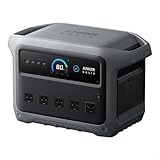
- 49 Min UltraFast Recharging: With upgraded HyperFlash tech, fully recharge at 1,600W—for outage prepping, camping trips, or tailgating events. Enable it in the Anker app.
- 2,000W Output via 10 Ports: Delivers 2,000W (3,000W peak) and 1,024Wh capacity. Power up to 10 devices—ideal for emergency backup, remote work setups, tiny homes, and off‑grid living.
- Compact and Portable: Easily carry, store, and move from room to room, your RV, or even on beach and park outings. C1000 Gen 2 is 14% smaller and 11% lighter than similar models.
- 10 Years of InfiniPower: Built to last through years of daily backup and RV and van life. After 4,000 cycles, the battery still has at least 80% capacity.
- 1.8 Hr Solar Recharging: Go fully off‑grid with sustainable power for tiny homes, camping RV off‑grid setups, and remote locations. Plug in 600W (60V max) of solar and recharge in just 1.8 hours.
Flexibility adds system costs
Storage, demand response, stronger transmission, forecasting, flexible generation, and distribution upgrades can make solar more useful. These costs are location-specific and may not appear in a plant-only LCOE. High PV shares can also create curtailment—energy that is available but cannot be delivered because demand or network capacity is insufficient.
Land, materials, and end-of-life management matter
Utility-scale arrays require land and can affect views, soils, drainage, habitat, and competing uses. Manufacturing has lifecycle impacts concentrated largely in energy- and material-intensive stages. Developers should specify module warranties, inverter replacement assumptions, storm resilience, cleaning needs, decommissioning funding, and a route for reuse or recycling before construction.
Performance is highly site-specific
Two projects with the same panel rating can deliver different energy because of irradiance, heat, orientation, tracking, shading, soiling, degradation, grid limits, and financing terms. A serious estimate uses an hourly production model and a documented interconnection study rather than multiplying nameplate capacity by an assumed universal factor.
Which is cheaper: hydropower or solar?
For newly commissioned projects in IRENA’s 2024 global dataset, solar PV was cheaper on a weighted-average LCOE basis: USD 0.043/kWh versus USD 0.057/kWh for hydropower. That comparison answers a global average question, not whether a particular dam, rooftop, or solar farm will have the lower total cost.
| Cost item | Hydropower questions | Solar PV questions |
|---|---|---|
| Up-front construction | How much will dams, tunnels, roads, turbines, transmission, resettlement, and mitigation cost? | What are module, inverter, racking, site, interconnection, and permitting costs? |
| Schedule and financing | How many years of interest and construction risk occur before revenue? | Can staged construction shorten the period before cash flow? |
| Lifetime work | What refurbishment, sediment, dam-safety, and environmental-flow costs recur over decades? | When will inverters, trackers, or modules need replacement, and who pays for disposal? |
| Grid and flexibility | Does the reservoir provide valuable reserves, or is water too constrained to dispatch? | What storage, transmission, demand response, or backup is needed for evening and cloudy periods? |
| Risk allowance | How are drought, hydrology uncertainty, permitting delay, and cost overruns priced? | How are curtailment, degradation, irradiance uncertainty, and interconnection delay priced? |
Compare alternatives using the same boundary: energy delivered to the same grid node, over the same financial life, with equivalent treatment of transmission, balancing, storage, curtailment, taxes, and environmental obligations. A low plant LCOE is not automatically a low system cost.
Recommended Free Tools
Which renewable source is more reliable?
Reliability depends on the service required. Reservoir hydropower generally has higher dispatchability and can provide reserves on demand, while solar supplies predictable daily energy but needs complementary resources for nighttime and extended low-sun periods.
When hydropower is the more reliable resource
A large reservoir with dependable inflows, sufficient stored water, and an available transmission path can respond quickly to outages and demand changes. Its reliability falls when drought, competing water uses, environmental releases, turbine outages, sediment, or transmission constraints limit dispatch. Run-of-river plants should be evaluated more like variable generation than like a fully controllable battery.
When solar contributes reliably
Solar production is forecastable over short horizons and can reduce fuel use during daylight. A geographically diverse fleet can smooth local cloud effects, while batteries or flexible demand can shift some energy into evening hours. Solar alone does not cover night demand; reliability comes from the portfolio and its operating rules, not from panel output in isolation.
Use capacity value, not only annual energy
Ask how much dependable power is available during the grid’s highest-risk hours. For hydro, model dry-year storage and water priorities. For solar, model hourly irradiance, correlated weather, curtailment, and the duration of storage or backup. The resulting capacity contribution can differ sharply from annual megawatt-hours.
Free tools Windows power users keep installed
One-click scans. No signup required.
Rank #4

- PORTABLE GENERATOR 80000mAh Lithium Battery With 60W SOLAR PANEL INCLUDED: With a superior lithium-ion battery pack, 300W power stations are powerful enough to charge smartphones,tablets,laptops,headphones or other outdoor Small Camping supplies
- PORTABLE BUT POWERFUL: EnginStar Portable Power Station with Certification, and the portable size of 9 x 5.5 x 7.5 inches, weights only 6.5 pounds, but armed with 296wh capacity and 300W AC output, EnginStar portable power station can provide enough juice to charge your phones, laptop, camera, cpap, drone, etc. Designed with 8 output ports can charge several devices at the same time, which make it a perfect emergency battery, outdoor and camping backup battery
- 110V PURE SINE WAVE & MULTIPORT: Built with two 110V pure sine wave AC outlets to make sure the solar generator (solar panel not included) works quieter, more efficient and more stable, which can protect your sensitive devices from damage such as laptop. 2 Regulated DC outputs (12V/24V) can provide a stable power output for DC appliances such as mini-fridge or car vacuum cleaner. Fast charger USB (5V/3.1A Max) and USB-C (18W)
- SUPERIOR PROTECTION SYSTEM: EnginStar camping power station with a advanced battery management system of voltage control and temperature control, the multiple safe-charging design can protect the battery bank from the damage of short circuit, overcharging and overload, to make sure you use it efficiently and safely. 100% original high quality lithium ion batteries support more than 1000 times of charge cycle
- 3 CHARGING WAYS POWER SUPPLY: 1) The solar power generator can be charged with any compatible 12-25V solar panel (panel included), built-in controller speeds up the battery recharge rate. 2) The portable power station with ac outlet can be charged via being plugged into wall outlet. 3) The portable ac battery bank can be charged from 12V socket of the car. At a maximum charging speed of 65W, it can be full charged in 3 hours
What are the environmental and community trade-offs?
Both technologies avoid combustion at the generating site but shift impacts into land, materials, water, ecosystems, and supply chains. The responsible choice is the one whose impacts can be avoided, mitigated, monitored, and accepted at the proposed location.
| Impact area | Hydropower considerations | Solar PV considerations |
|---|---|---|
| Water and ecosystems | Flow alteration, fish passage, temperature, chemistry, sediment, and reservoir habitat | Little operational water use for generation, but site drainage, habitat conversion, and panel cleaning may matter |
| Land | Reservoir inundation, access roads, transmission corridors, and downstream changes | Array footprint, fencing, glare, soil compaction, and competing agricultural or habitat uses |
| Communities | Potential relocation, livelihood disruption, cultural-site loss, and changed river access | Local land-use conflicts, views, construction traffic, and property or agricultural concerns |
| Climate emissions | Low lifecycle emissions relative to fossil generation; reservoir methane and carbon dioxide vary by site | No combustion during operation; manufacturing and materials dominate much of lifecycle impact |
| End of life | Decommissioning a dam is a major engineering and ecological decision | Modules, inverters, wiring, and structures need documented reuse, recycling, or disposal pathways |
Environmental review should set measurable commitments: minimum downstream flows, fish-migration performance, sediment actions, water-quality limits, biodiversity offsets where appropriate, resettlement standards, grievance procedures, and long-term monitoring. For solar, it should address soil restoration, vegetation, wildlife movement, stormwater, glare, and decommissioning security.
Can hydropower replace solar at night?
Reservoir hydropower can often supply electricity at night by releasing stored water, but it does not create unlimited energy. The reservoir must have sufficient water, turbine capacity, transmission access, and permission to change releases at that time.
A useful operating pattern is to let solar serve daytime demand and conserve reservoir water, then dispatch hydro during the evening ramp or overnight. This arrangement can reduce solar curtailment and preserve water for later shortages. It only works when water-management rules, ecological releases, downstream users, and market incentives permit the schedule.
Run-of-river hydro without meaningful storage cannot reliably replace nighttime solar production; its output follows river conditions. If the system needs multi-day or seasonal shifting, planners must model reservoir volume, inflow sequences, evaporation, competing uses, and drought rules rather than treating installed turbine capacity as stored energy.
How does pumped-storage hydropower fit into a solar strategy?
Pumped storage uses electricity to move water uphill when demand is low, then releases it through turbines when demand is high. It is a well-tested form of long-duration storage and can absorb surplus midday solar for evening use.
- Site requirements: suitable elevation differences, reservoirs or developable basins, geology, water availability, transmission, and environmental acceptance.
- Development profile: substantial initial capital, complex civil works, and potentially lengthy regulatory permits and implementation times.
- System role: shifting energy, supplying reserves, and reducing curtailment rather than generating net new energy.
- Risks: construction and permitting delays, ecological effects, water constraints, and exposure to the value of price differences between pumping and generation.
Batteries can be faster to deploy and locate near loads, but they bring their own cost, degradation, mineral-supply, fire-safety, and recycling considerations. The appropriate storage technology depends on required duration, cycling frequency, site conditions, and the value of capacity and ancillary services.
Independent reader supportYour contribution helps us test, update, and keep practical guides available for everyone.When should a project prioritize hydropower?
Hydropower deserves priority when the project has a high-quality site and the non-energy impacts are demonstrably manageable. Use this screening list before commissioning detailed design:
Do these 3 things before closing this tab:
1Repair Windows errors before they cause bigger problems2Fix the driver behind crashes, sound loss and screen glitches3Clear out junk files and repair common Windows errors- An existing dam or already-permitted site can be upgraded, reducing new inundation and construction risk.
- Multi-year hydrology shows dependable water after accounting for climate uncertainty and legally required ecological releases.
- The grid values fast ramping, reserves, black-start capability, or seasonal storage and can remunerate those services.
- Transmission is available or its cost and schedule are included in the business case.
- Fish passage, sediment, water quality, cultural resources, and resettlement impacts have credible mitigation and enforceable monitoring.
- Water users, affected communities, and governing authorities have a durable agreement on operating rules.
If several of these conditions are absent, a smaller retrofit, efficiency upgrade, solar-plus-storage project, or alternative resource may deliver energy with less risk.
Best Value

- Ultra-Lightweight: Weighing only 7.5 lbs, the new Explorer 300 is 17% lighter than the industry average for its class. The sleek, integrated handle design makes it effortless to carry on long hikes or pack with your camping accessories, providing reliable power without adding bulk to your load.
- Versatile Power for 6 Devices: Equipped with 2 AC outlets, a 100W USB-C PD port, 2 USB-A ports, and a 120W car port. With a 300W rated output (600W peak surge), it easily handles laptops, drones, and cameras, while also serving as a dependable battery for camping or a robust solar powered generator when paired with panels.
- Built to Last: Upgraded with premium LiFePO4 chemistry, this portable generator delivers over 4,000 charge cycles before reaching 70% capacity. This ensures more than 11 years of reliable service life, making it a sustainable and durable energy partner for a decade of exploration.
- Fast Solar Charging: Perfect for off-grid use, this solar powered generator pairs seamlessly with Jackery panels. Reach 80% capacity in approximately 2.8 hours with a 100W solar panel, or maintain your gear with a portable 40W panel (80% in 7.5 hours), making it an essential part of your hunting essentials.
- What You Get: 1* Jackery Explorer 300 Portable Power Station, 1*40W Air Solar Panel, 1* AC Adapter, 1* Car Charger Cable, 1* User Guide. 𝐍𝐨𝐭𝐞: 𝐓𝐡𝐞 𝐄𝐱𝐩𝐥𝐨𝐫𝐞𝐫 𝟑𝟎𝟎 𝐆𝐞𝐧𝐞𝐫𝐚𝐭𝐨𝐫 𝐚𝐧𝐝 𝐭𝐡𝐞 𝐒𝐨𝐥𝐚𝐫 𝐏𝐚𝐧𝐞𝐥 𝐦𝐚𝐲 𝐛𝐞 𝐬𝐡𝐢𝐩𝐩𝐞𝐝 𝐬𝐞𝐩𝐚𝐫𝐚𝐭𝐞𝐥𝐲
When should a project prioritize solar PV?
Solar is usually the better first option when speed, modularity, distributed generation, or current average energy cost matters and the site has strong sunlight plus a practical interconnection.
- Usable roofs, parking areas, brownfields, or low-conflict land can host panels near demand.
- Permitting and construction can proceed in stages, matching investment to load growth.
- The grid or on-site loads can absorb midday production without excessive curtailment.
- Storage, demand response, transmission, or firm generation is funded for evening and low-sun periods.
- Land, habitat, agricultural, glare, stormwater, and decommissioning plans are acceptable to local authorities and neighbors.
- Financial models include inverter replacement, degradation, cleaning, insurance, interconnection upgrades, and end-of-life obligations.
When is a hydro-and-solar portfolio the better answer?
A portfolio can outperform either technology alone when solar supplies low-cost daytime energy and hydropower supplies balancing, reserves, and seasonal flexibility. Evaluate the combined hourly operation rather than adding nameplate megawatts.
- Map the load: identify hourly demand, seasonal peaks, critical facilities, and outage requirements.
- Model resources together: use hourly solar production and multi-year hydrology, including dry years and environmental releases.
- Check transmission: determine whether solar output and hydro dispatch can share the network without congestion or curtailment.
- Set water rules: define reservoir priorities, minimum flows, drought triggers, and who can authorize changes.
- Size flexibility: compare hydro dispatch, pumped storage, batteries, demand response, and transmission for the required duration.
- Price the whole system: include construction, financing, operations, replacements, mitigation, decommissioning, and the value of reliability services.
- Test stakeholder acceptance: document land rights, community benefits, cultural-resource protection, and grievance resolution before final investment.
The result may be a hybrid plant, coordinated operation of separate assets, or a portfolio spread across regions. The best configuration is the one that meets reliability and environmental commitments at the lowest risk-adjusted system cost.
Outdated Drivers Are Slowing You Down
One free scan finds every outdated or missing driver and matches the right update for your exact hardware.Free scan · exact hardware matchPC Slower Than It Used to Be?
A free scan shows the junk files, broken settings and background clutter dragging Windows down - then fixes them in one click.Free scan · Windows 10 & 11What mistakes should decision-makers avoid?
- Comparing nameplate capacity: a megawatt of PV and a megawatt of dispatchable hydro do not provide the same hourly service.
- Using one global cost as a local quote: the IRENA averages exclude many site-specific grid, storage, financing, and mitigation effects.
- Treating historical water as guaranteed: drought and competing uses can reduce both annual energy and flexibility.
- Counting only plant costs for solar: storage, network upgrades, forecasting, and curtailment can be material at high penetration.
- Assuming mitigation eliminates impact: fish passage, environmental flows, habitat design, and compensation reduce harm but require measurable performance.
- Ignoring the project schedule: a theoretically cheap hydro project can lose value through years of permitting and construction delay.
- Leaving end of life undefined: specify who funds dam decommissioning or PV removal, recycling, and site restoration.
What is the practical verdict for a renewable-energy decision?
Choose hydropower where dependable water, an appropriate site, storage value, transmission, and community and ecological consent are already credible—especially when an existing facility can be upgraded. Choose solar where modular deployment, distributed generation, or lower current average LCOE is more important and the project can fund the flexibility needed after sunset and during cloudy periods. In many grids, the strongest answer is a coordinated portfolio: solar for daytime energy, hydro for balancing and reserves, and storage or flexible demand for the remaining gaps.
Frequently Asked Questions
Can an existing hydropower dam be paired with floating or ground-mounted solar?
Yes, co-locating PV with an existing reservoir or power site can share transmission and reduce the need for a new river project. Feasibility still depends on water-surface use, anchoring, ecology, recreation, safety, grid limits, and whether the combined output creates unacceptable congestion.
How should drought risk be included in a hydro-versus-solar model?
Use multiple inflow sequences, including consecutive dry years, and impose actual water priorities and environmental-release rules. Then calculate replacement energy, reserve requirements, and revenue under each scenario instead of relying on a long-term average inflow.
Do solar panels require water to operate?
Panels generate electricity without combustion and generally need far less operational water than thermal power plants. Water may still be used for occasional cleaning, dust control, construction, or vegetation management, so local scarcity and cleaning practices should be specified in the site plan.
Recommended Free Tools
What information is needed before requesting bids for either technology?
Prepare an hourly load profile, interconnection point and capacity, land or water rights, environmental constraints, financing assumptions, schedule, and required reliability services. For hydro add flow-duration, sediment, geology, and dam-safety data; for solar add irradiance, shading, soil, drainage, and geotechnical information.
Quick Recap
Product prices and availability are accurate as of the date/time indicated and are subject to change. Any price and availability information displayed on Amazon at the time of purchase will apply.

