
Do these 3 things before closing this tab:
1Clear out junk files and repair common Windows errors2Scan for outdated or missing drivers - takes under a minute3Repair Windows errors before they cause bigger problemsEarly fighter aircraft did not shoot bullets through their propeller blades. On some tractor aircraft, a synchronizer—also called interrupter gear—timed the machine gun to fire through the gaps between passing blades, withholding shots when a blade would cross the gun’s line of fire.
Why a propeller created a firing problem
On a tractor aircraft, the engine and propeller sit at the front. A fixed machine gun aimed forward would therefore fire toward the propeller’s spinning arc. If it fired continuously without regard to blade position, bullets could strike the blades. A 1931 U.S. Air Service Newsletter explanation put it this way: “Were these aerial machine guns to shoot a continuous stream, the bullets would hit the propeller, as the blades pass through the line of fire.” The newsletter article, “Shooting Through the Propeller,” was attributed to I. B. Holley, Jr., identified there as Air Force Historian.
How synchronizer gear let guns fire between blades
A synchronizer linked the gun’s firing cycle to the engine and propeller position. It allowed a shot when the firing path was clear and withheld it when a blade was about to cross that path. The bullets passed through open intervals in the propeller’s rotation; the system was designed to avoid hitting the blades, not to make blade strikes safe.
The Smithsonian National Air and Space Museum’s collection record for the Fokker Zentralsteuerung synchronizer describes an engine coupling, flexible shafts connecting to guns, and cables connected to firing buttons. This shows the basic idea in hardware: the gun and engine were mechanically linked so firing could be coordinated with propeller timing.
What’s actually slowing this PC down?
Pick the symptom - the matching free tool is one click away.
#1 Best Overall

- HISTORIC D-DAY DECALS: Build a faithful 1:48 scale model replica of the iconic WWII C-47 Skytrain military transport plane. Every model kit includes a full-color decal sheet to accurately model the famous "That's All Brother" lead aircraft—complete with its distinctive black-and-white invasion stripes—or the alternative "Night Fright" livery.
- INTRICATE COCKPIT & CABIN DETAIL: Immerse yourself in a highly detailed interior layout engineered for history enthusiasts. The multi-room interior assembly features a full cockpit layout, authentic troop benches, a rear washroom compartment, and a specialized navigator's desk.
- 12 SCALE MILITARY FIGURES: Bring your static wartime aviation diorama to life with twelve finely sculpted plastic scale figures included inside the box of the model building kit. The set comes equipped with three distinct flight crew members and nine fully detailed paratrooper figures ready for deployment layouts.
- CUSTOMIZABLE CARGO DOORS: Tailor your final military display layout by customizing the fuselage entryways. The rear cargo doors are engineered to be structurally fixed in either a wide-open position or a completely closed position to suit your preference.
- SKILL LEVEL 4 SPECIFICATIONS: Designed for experienced scale modelers ages 12 and up, this 102-part hobby set yields a commanding display piece measuring 16.0 inches long with an impressive 23.625-inch wingspan. Parts come molded in olive drab and clear; plastic model cement and paint are required for completion and sold separately.
Fokker’s Eindecker: a fixed gun aimed with the aircraft
The Fokker E.III Eindecker is an early combat-aircraft example of a forward-firing fixed gun synchronized to shoot between propeller blades. The Museum of Flight identifies its armament as a 7.92 mm Maschinengewehr (MG) 08/15 and notes that the Eindecker’s interrupter gear could be unreliable. The museum’s E.III description therefore illustrates both the advantage of a fixed forward gun and the limits of early synchronization.
With the gun fixed to the aircraft, a pilot aimed by pointing the aircraft at the target. That avoided the need to swing a gun independently, but the firing mechanism had to work in step with the propeller.
Rank #2

- Add this WW II dive bomber to your collection with this 54-piece model kit
- Features 2-underwing 37mm BK cannons, pilot and co-pilot figures, 4-piece canopy section
- Kit is molded in light grey and clear, paint and glue are sold separately
- Model Scale 1:48
- This kit is recommended for ages 12 years and up
Another solution: put the gun above the propeller
Synchronizing was not the only way to keep bullets out of the blades’ path. The Smithsonian describes the Nieuport 11’s Lewis gun mounted on the upper wing, where it could fire above the propeller arc. This mounting arrangement avoided firing through the propeller’s path, though it placed the gun in a different position from a fixed gun mounted behind the engine.
| Approach | How it cleared the propeller | Practical distinction |
|---|---|---|
| Synchronizer or interrupter gear | Timed shots for the gaps between blades. | Enabled a fixed forward gun aimed by pointing the aircraft; early gear could be unreliable. |
| Upper-wing gun, as on the Nieuport 11 | Mounted the Lewis gun above the propeller arc. | Avoided the arc rather than timing shots through it. |
What happened if the timing failed?
Synchronization reduced the risk of a blade strike; it did not make one harmless. The 1931 Air Service Newsletter account says that repeated hits near a blade tip could tear the tip off, unbalance the propeller, and cause severe vibration. Combined with the Museum of Flight’s warning about the Eindecker gear’s unreliability, that explains why dependable timing mattered: a malfunction could threaten the aircraft, not merely damage its propeller.
Rank #3
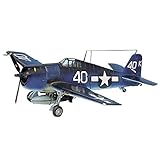
- 1/72nd scale
- Highly detailed cockpit interior and landing gear
- Authentic markings available for two versions
- Optional part to build as -3 or -5 version included
- Paint and glue not included
When did practical synchronization appear?
The Smithsonian dates Anthony Fokker’s fitting of one of his monoplanes with a forward-firing machine gun and the first practical machine-gun synchronizer to May 1915. The museum presents this as a practical milestone; it does not establish that no earlier concepts or experiments existed.
Quick Recap
Best Value

- Highly detailed cockpit
- Landing geat with extreme detail
- Fully engraved panel lines and rivet details
- Authentic markings
- Decals included to enhance realism
Rank #4

- 1/72nd scale
- Includes two sprues of gray styrene
- Authentic decals included
- Paint and glue not included
Product prices and availability are accurate as of the date/time indicated and are subject to change. Any price and availability information displayed on Amazon at the time of purchase will apply.

