
The Tool Desk
Outbyte Driver Updater FREEFix the driver behind crashes, sound loss and screen glitchesFind Drivers →Outbyte PC Repair FREEClear out junk files and repair common Windows errorsFree Scan →iTechGuides is reader-supported. When you buy through links on our site, we may earn an affiliate commission. As an Amazon Associate I earn from qualifying purchases. Learn more
Vision AI can protect retail margins when it turns camera footage and transaction data into timely, actionable exceptions. At checkout, it may flag a missed scan, an item left in a basket, or possible product switching so an employee can intervene. In stores, related systems can expose shelf gaps, stockouts, queues, and traffic patterns. The margin benefit is conditional: a detected anomaly only becomes financial improvement when the retailer’s starting loss rate, integration quality, response process, customer experience, and deployment cost support it.
Published results show why this distinction matters. UST reports an 80% reduction in over-the-counter losses and up to 10% higher profit per lane per day in one unnamed US grocery deployment, while Centific reports results from an anonymized 175-store program. Those are vendor-reported case studies, not a dependable forecast for a typical store.
What is vision AI doing in a retail operation?
Vision AI is software that interprets images or video to identify events, objects, and exceptions. In a retail deployment, it is usually connected to cameras, point-of-sale (POS) events, and sometimes scales or other sensors. The system compares what appears to happen in a lane or aisle with what the transaction and inventory systems say happened, then sends a reviewable alert when the two do not agree.
This is different from putting an ordinary camera in a store. A camera records; a vision workflow attempts to classify an event, associate it with a transaction or location, and route it to a person or process. The value comes from that loop: observe, compare, alert, respond, and measure.
#1 Best Overall

- AI Motion Detection 2.0 – Driving AI to the next level, human&vehicle detection and flexible detection area are more accurate than before. For quicker locating in crucial moments, human&vehicle smart searching in recordings offers you great help.
- Tried-and-True Safe Guard – This one-stop security solution can work with TVI, AHD, CVI, CVBS & IP cameras, the kit includes 1080P cams. The 8CH 3K lite DVR can hook up with 1080P@30fps or 3K/5MP@20fps cams. Therefore, you can also DIY it with other cameras in your home.
- Reliable 24/7 Continuous Recording – With a pre-installed 1TB HDD(Support up to 10TB HDD), providing 24/7 surveillance recording for you. Upgraded H.265+ saves more storage space and uses less bandwidth, recording videos longer and smoother viewing.
- Remote Access Anytime, Anywhere – Stay connected through the ANNKE Vision app. View live footage, play back recordings remotely, and check in on your property anytime, anywhere for convenient home security and greater peace of mind.
- Clear Night Vision and IP67 Weatherproof Protection – Built-in IR LEDs provide black-and-white night vision up to 100ft. With an IP67-rated design, these wired security cameras are built to withstand rain, dust, and changing weather conditions for reliable outdoor surveillance.
How can vision AI reduce retail shrink at checkout?
It can reduce certain forms of shrink by finding checkout exceptions while there is still time for a cashier or supervisor to correct them. The strongest documented use case is self-checkout and assisted-checkout exception detection, not a universal claim that every camera prevents theft.
Missed or false scans
A system can compare an item’s movement in the camera view with the POS sequence. If an item appears to be placed in the bagging area without a corresponding scan, the workflow can show an alert and an image to an attendant. HKEX-hosted company disclosure describes combining computer vision with weight-based protection and alerts for missed or fake scans. That is an integration pattern, not proof that every installation will achieve the same detection rate.
Items left in a basket or cart
Checkout vision may identify merchandise that remains in a basket or cart while the transaction is being completed. Staff can ask the customer to rescan the item or verify that it was intentionally removed. The operational design matters: an alert that no one sees or cannot resolve quickly does not recover margin.
Crashes, No Sound, or Screen Glitches?
Random freezes, missing sound and display glitches usually trace back to one bad driver. Find and replace yours safely.Free scan · under a minuteWindows Errors? Fix Them Before They Spread
Repair common Windows errors and clear accumulated junk for a smoother, more stable PC - no reinstall needed.Free scan · no reinstallPossible product switching
Computer vision can flag a product presentation that appears inconsistent with the item selected at the terminal, such as a lower-priced item being used to represent a higher-priced one. The alert should be treated as a prompt for human verification rather than an automatic accusation. Lighting, packaging changes, occlusion, and similar-looking products can all create ambiguous cases.
Using existing cameras and POS data
UST describes connecting checkout CCTV to a POS-linked AI workflow, allowing a retailer to add software to installed camera infrastructure rather than replace every lane. Whether that is practical depends on camera position, resolution, retention, network capacity, and the quality of POS event data. Existing equipment can lower hardware disruption, but integration and calibration still require implementation work.
Can cameras detect missed scans at self-checkout reliably?
They can detect patterns associated with missed scans and surface them for review, but reliability is deployment-specific. The retailer must validate performance in its own store formats, product mix, lighting, lane layouts, and customer workflows instead of assuming a published case-study result transfers directly.
- Capture the event: Cameras observe the hand, item, scanner, bagging area, and cart or basket.
- Synchronize data: The platform receives the POS scan, price, timestamp, and lane identifier, and may also receive weight or scale data.
- Compare expected and observed activity: Algorithms look for a mismatch, such as an item moving to the bagging area without a matching scan or a scan that does not fit the observed product.
- Score and route the exception: A confidence threshold determines whether to alert an attendant, place the event in a review queue, or record it for later analysis.
- Resolve and learn: Staff confirm, correct, or dismiss the event. Those outcomes should feed quality monitoring and threshold adjustments.
Retailers should measure both missed detections and false alerts. A high alert volume can overwhelm attendants, slow legitimate shoppers, and turn a loss-prevention tool into a service problem. A conservative threshold may reduce nuisance alerts while allowing some losses through; the right balance depends on labor coverage and the value of the items involved.
Recommended Free Tools
Rank #2
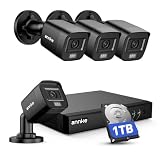
- 【AI Motion Detection 2.0】Driving AI to the next level, human&vehicle detection and flexible detection area are more accurate than before. For quicker locating in crucial moments, human&vehicle smart searching in recordings offers you great help.
- 【Tried-and-True Safe Guard】This one-stop security solution can work with TVI, AHD, CVI, CVBS & IP cameras, the kit includes 1080P cams. The 8CH 3K lite DVR can hook up with 1080P@30fps or 3K/5MP@20fps cams. Therefore, you can also DIY it with other cameras in your home.
- 【Reliable 24/7 Continuous Recording】With a pre-installed 1TB HDD(Support up to 10TB HDD), providing 24/7 surveillance recording for you. Upgraded H.265+ saves more storage space and uses less bandwidth, recording videos longer and smoother viewing.
- 【Remote Access Anytime, Anywhere】Stay connected to your home security system through your smartphone. View live footage and play back recordings remotely, keeping an eye on your property whenever and wherever you need.
- 【Clear Night Vision and IP67 Weatherproof Protection】Built-in IR LEDs provide black-and-white night vision up to 100ft. With an IP67-rated design, these wired security cameras are built to withstand rain, dust, and changing weather conditions for reliable outdoor surveillance.
Which retail vision AI use cases have the strongest evidence?
Evidence supports several distinct applications, but they should not be treated as one general “margin improvement” product. Checkout shrink detection, inventory availability, and traffic intelligence solve different problems and require different integrations.
| Use case | What the system observes | Operational response | Evidence cited |
|---|---|---|---|
| Self-checkout or assisted-checkout exception detection | Item movement, scans, bagging activity, possible product switching, and sometimes weight changes | Attendant or supervisor reviews an image and resolves the transaction exception | UST; HKEX-hosted company disclosure |
| Inventory and stockout management | Shelf availability and product-facing conditions | Replenishment, shelf checks, or inventory investigation | NVIDIA 2024 State of AI in Retail and CPG survey |
| Traffic and queue intelligence | People flow, queue length, and arrival patterns | Move labor, open a lane, or adjust store operations | IDC FutureScape: Worldwide Retail 2024 Predictions |
| Curbside arrival detection | Vehicle or customer arrival at a pickup area | Prepare and hand off an order | IDC FutureScape: Worldwide Retail 2024 Predictions |
Inventory visibility can improve availability and sales, but the available evidence does not establish a general independent margin effect for shelf-vision systems. Keep an availability business case separate from a shrink business case so that each has its own baseline, intervention, and measurement.
What financial results have retailers and vendors reported?
The published figures below are useful for understanding what has been claimed, not for predicting what a new store will earn. Each comes from vendor-reported, commissioned, or survey material and uses a different definition of success.
| Source and context | Reported figure | How to interpret it |
|---|---|---|
| UST case study, unnamed US grocery chain with more than 300 stores; publication date not stated | 80% reduction in over-the-counter losses; up to 10% higher profits per lane per day | Vendor-reported result from one deployment; “up to” identifies a maximum reported outcome, not an average or forecast |
| Centific customer story, anonymized retailer; publication date not stated | 175 stores participated; $180 million annual shrinkage reduction; 75 labor hours saved per week | Vendor-reported results; the retailer and measurement method are anonymized in the customer story |
| IDC 2023 Global Retail Survey, reported in IDC FutureScape: Worldwide Retail 2024 Predictions | 35% planned investment in frictionless shelf-checkout or automated checkout; 34% in fraud and loss prevention; 37% in traffic intelligence and queue management | Plans reported by survey respondents, not realized savings or margin lift |
| NVIDIA 2024 State of AI in Retail and CPG survey | 39% cited stockout and inventory management; 35% loss prevention and asset protection; 21% autonomous checkout | Share of surveyed use-case priorities, not a performance benchmark |
A commissioned Forrester study for Everseen, published in September 2024, quotes a vice president of asset protection and safety at a US regional grocery retailer saying, “Evercheck contributed to thirteen consecutive quarterly drops in shrink.” This is an interview statement in commissioned material; it does not independently prove that the system caused all of those reductions.
Why are vision AI margin claims difficult to compare?
“Shrink” can include shoplifting, employee theft, administrative errors, scan errors, and other causes. A program aimed at over-the-counter loss is not measuring the same thing as one aimed at stockouts or labor hours. Store format, product mix, traffic, staffing, camera coverage, and the starting loss rate can change the result substantially.
Attribution is another problem. A retailer may change staffing, product protection, promotions, or checkout policy at the same time as it installs vision AI. A credible evaluation therefore compares a defined predeployment baseline with a similar period or control group, records intervention rates and false alerts, and states whether the result is gross recovery, avoided loss, labor capacity, or net profit after operating costs.
IDC describes fully automated checkout as “the toughest use case to justify and deploy,” contrasting it with narrower applications such as self-checkout shrink reduction and curbside arrival detection. The distinction is practical: replacing the checkout experience requires more complex hardware, exception handling, customer support, and safety processes than adding alerts to an existing staffed workflow.
Rank #3

- Crystal-Clear Surveillance: Capture detailed footage with Full HD 1080p resolution, ideal for identifying faces, license plates, and important activity in any setting. The advanced image sensor delivers sharp, true-to-life video essential for reliable evidence collection.
- Enhanced Color Night Vision: Stay protected day and night. Unlike standard infrared systems, this camera features integrated spotlights that enable color video recording in low-light conditions up to 32ft (10m) so you see crucial details like clothing color or vehicle paint, even in the dark.
- Active Crime Deterrence: Deter intruders before they act. Built-in high-lumen spotlights are triggered by motion, instantly drawing attention and helping prevent criminal activity. Great for protecting entry points, driveways, and yards.
- True Detect Heat & Motion Sensors: Minimize false notifications and get accurate alerts that matter. Swann’s True Detect technology uses PIR sensors to detect heat signatures and movement from humans and vehicles.
- Smart Search Playback: Easily locate events with Smart Search. Simply select a specific area within the video frame, and the system will scan recordings for motion in that location ideal for tracking suspicious activity or identifying when a missing item was moved.
How should a retailer evaluate a vision AI deployment?
Start with one measurable operational problem, then test the complete response process rather than buying cameras first.
Do these 3 things before closing this tab:
1Clear out junk files and repair common Windows errors2Fix the driver behind crashes, sound loss and screen glitches3Repair Windows errors before they cause bigger problems1. Define the loss or availability baseline
Document current shrink by category and lane, known scan-error rates, stockout frequency, labor spent on reviews, queue times, and customer complaints. Choose a period long enough to capture normal seasonality and record how each metric is calculated.
2. Select a narrow use case
Decide whether the first project is missed-scan detection, basket or cart exceptions, product switching, shelf availability, queue management, or another specific job. Do not combine unrelated outcomes into one ROI claim.
3. Audit the existing infrastructure
- Check camera placement, field of view, frame rate, resolution, lighting, and blind spots at each target lane or aisle.
- Confirm that POS events expose the timestamps, lane IDs, item identifiers, and transaction states the software needs.
- Assess network bandwidth, edge-processing capacity, storage, retention, and access controls.
- Identify whether scales or other sensors can provide a second signal for ambiguous events.
4. Design the alert workflow
Specify who receives an alert, what appears on screen, the maximum response time, and the permitted resolution options. An attendant should be able to dismiss a false positive, correct a transaction, escalate a safety concern, and document the outcome without leaving the customer unattended.
5. Pilot with controlled measurement
Run the system in a defined group of lanes or stores and retain comparable locations where practical. Track confirmed exceptions, recovered value, false-positive rate, response time, customer friction, labor hours, and technical downtime. Separate alerts generated from losses actually prevented or recovered.
Quick wins for a faster PC:
Repair Windows errors before they cause bigger problemsFix Now →Fix the driver behind crashes, sound loss and screen glitchesFind Drivers →Clear out junk files and repair common Windows errorsFree Scan →6. Calculate net economics
Use a simple contribution model: net benefit equals recovered or protected gross margin plus verified labor capacity, minus software, hardware, integration, support, training, networking, and ongoing review costs. Include the cost of replacing or repositioning cameras if the current infrastructure cannot support the use case.
7. Set expansion gates
Expand only when the pilot meets preagreed thresholds for accuracy, response time, customer experience, system availability, and net benefit. Recheck performance after product assortment, store layout, staffing, or POS changes.
Rank #4

- 16 CHANNEL VANDAL-PROOF SECURITY CAMERA SYSTEM: It has 16pcs 5MP 2.8mm fixed lens (Not PTZ) camera produced with IK10 vandal-proof and built-in microphone. The 4K 16CH NVR of this system comes with a 4TB hard drive. It has 2 SATA port to expand to total 16TB storage space.
- EASY POE SETUP - TRULY PLUG & PLAY: This NVR Security System utilizes PoE technology, allowing a single network cable to simultaneously handle power and video transmission between the NVR and IP cameras.
- SMART AI PERSON/VEHICLE DETECTION: This system features advanced AI technology that can distinguish between people and vehicles, ensuring you receive alarm notifications only for these specific events, while filtering out irrelevant alerts.
- 5MP HD DISPLAY: These 5MP PoE IP camera display in a 2592 x 1944 detailed image and up to 100ft night vision video monitoring, clear and crystal-clear footage during day and night.
- IP67 WEATHERPROOF & IK10 VANDAL RESISTANT DESIGN: Our security cameras feature a durable metal housing and vandal-proof cover, ensuring they withstand the harshest weather and extreme temperatures ranging from -20°C to 50°C for indoor/outdoor use.
What does AI loss prevention cost or save?
The available material does not establish a universal purchase price, recurring fee, or typical payback period. Costs are shaped by whether the retailer can use existing cameras, how many lanes and stores are covered, the required POS and sensor integrations, edge or cloud processing, implementation services, staff training, and the labor needed to review alerts.
Estimate savings in separate buckets:
- Loss reduction: confirmed value of transactions corrected or merchandise recovered, adjusted for what would likely have been caught by existing controls.
- Availability benefit: sales or gross margin associated with fewer stockouts, measured independently from shrink.
- Labor capacity: hours no longer spent on manual review or routine checks, counted as a real financial benefit only if the retailer can redeploy or avoid those hours.
- Experience and risk: queue time, intervention quality, privacy exposure, and customer trust, which can create costs even when alerts recover merchandise.
Use sensitivity cases rather than one promised number. Calculate break-even under low, middle, and high confirmed recovery rates, and state whether the result is per lane, per store, or across a chain. A vendor maximum such as “up to 10%” should never be entered as the default case.
Free tools Windows power users keep installed
One-click scans. No signup required.
What are the main operational and privacy pitfalls?
- Alert fatigue: Excessive false positives cause attendants to ignore notifications. Tune thresholds with local data and monitor dismissal reasons.
- Blind spots and changing conditions: Seasonal displays, glare, uniforms, packaging redesigns, and moved cameras can degrade detection without an obvious software failure.
- Weak integration: A vision model cannot reconcile an event accurately if POS timestamps, item IDs, or scale readings are delayed or incomplete.
- Unclear accountability: If no employee owns the alert, the system may document loss without preventing it.
- Customer friction: Interventions should be discreet, consistent, and based on verification. Automatic accusations can damage trust and create liability.
- Data governance: Define retention, access, encryption, audit logs, and deletion rules for video and event images. Limit collection to the operational purpose and follow applicable privacy and employment requirements.
- Security and resilience: Protect camera credentials, isolate devices where appropriate, monitor software updates, and provide a manual fallback when connectivity or inference services fail.
Is full automated checkout the best first project?
Usually not when the immediate goal is margin protection. IDC characterizes automated checkout as especially difficult to justify and deploy; a narrower self-checkout exception workflow can test the economic and operational assumptions with less disruption to customers and store hardware.
A retailer may eventually pursue autonomous checkout, but it should first demonstrate that cameras, POS data, staff processes, and governance work together in a limited setting. The same evidence discipline applies: define the job, measure verified outcomes, account for total cost, and expand only when the process is reliable.
Frequently Asked Questions
Does vision AI replace loss-prevention employees?
It is generally a decision-support layer rather than a replacement for staff. Employees still verify ambiguous events, handle customer conversations, and respond to situations the model cannot classify safely.
Can the same system improve both shrink and stock availability?
The camera infrastructure may be shared, but the models, data integrations, interventions, and success metrics are different. Treat checkout loss prevention and shelf availability as separate workstreams when calculating benefits.
What data should be requested from a vendor before a pilot?
Ask for definitions of every reported metric, the denominator and time period, false-positive and missed-event measurements, store and lane counts, integration assumptions, and all recurring operating costs. Request results segmented by store format when available rather than relying on a single chain-wide maximum.
How long should a retail vision AI pilot run?
There is no universal duration because seasonality, promotions, and store traffic vary. Choose a period that covers normal operating conditions and compare it with a defined baseline or control group, documenting any simultaneous policy or staffing changes.
Quick Recap
Product prices and availability are accurate as of the date/time indicated and are subject to change. Any price and availability information displayed on Amazon at the time of purchase will apply.

