
Recommended Free Tools
To troubleshoot a VPN connection that is not working properly between FortiGate and Cisco Firepower Threat Defense (FTD), first determine whether the IPsec tunnel is failing to establish or is established but not forwarding traffic. Check peer reachability and tunnel status, then follow the failing stage: compare IKE/IPsec settings if negotiation fails, or trace routes, policies, NAT, and traffic counters if the tunnel is up but users are unable to access network resources.
Start by identifying the VPN and the scope of the failure
Confirm whether you are troubleshooting a site-to-site IPsec tunnel or a remote-access VPN. Record the FortiOS and FTD software versions, peer addresses, affected local and remote subnets, and any recent configuration or network changes. Establish whether the problem affects the entire tunnel or only particular hosts, subnets, or applications. The Fortinet troubleshooting references below focus on IPsec; Cisco’s cited chapter covers FTD VPN troubleshooting more broadly, including site-to-site and remote-access logging.
Commands, menu labels, and available diagnostics vary by release. Fortinet’s detailed troubleshooting procedure is for FortiOS 5.4.0, while its FortiOS 7.6.6 page is a troubleshooting reference. Cisco’s cited material is from a Firepower Management Center configuration guide for version 6.4. Use the documentation for the software actually deployed before applying a command or changing a setting: Fortinet FortiOS 5.4.0 IPsec troubleshooting, Fortinet FortiOS 7.6.6 IPsec troubleshooting, and Cisco FTD VPN troubleshooting guide, FMC 6.4.
Check reachability and establish whether the tunnel is up
Test the intended remote host or network with ping or traceroute from a source that should use the VPN, and inspect tunnel status and logs on both peers. A failed ping does not by itself prove IKE negotiation is broken: the test may be affected by the source address, routing, firewall policy, host filtering, or the remote endpoint’s response behavior.
#1 Best Overall

- Compact and Efficient Design: The FortiGate 40F is designed for small to mid-sized businesses and enterprise branch offices, featuring a compact, fanless desktop form factor that ensures quiet operation and minimizes space usage.
- Robust Connectivity Options: Equipped with 5 GE RJ45 ports, including 1 WAN port and 4 internal ports, this model provides essential connectivity and flexibility for various network configurations in a small-scale environment.
- High-Performance Security: Offers up to 1 Gbps IPS throughput and 600 Mbps threat protection throughput, using Fortinet’s purpose-built security processor technology to deliver industry-leading performance and protection for SSL encrypted traffic.
- Advanced Threat Protection: Integrated with Fortinet’s AI-powered FortiGuard Labs, the FortiGate 40F offers comprehensive cybersecurity, identifying and mitigating both known and unknown threats to maintain robust security across your network.
- Simplified Management and Deployment: Features a user-friendly management console that provides comprehensive network automation and visibility, coupled with Zero Touch Integration with Fortinet’s Security Fabric for easy deployment.
On FortiGate, inspect the IPsec monitor and use diagnose vpn tunnel list to examine tunnel and traffic statistics. Fortinet notes that a tunnel may be established when traffic destined for the remote network is first intercepted, so an idle tunnel may not behave like a continuously active one. Check status while generating relevant traffic rather than treating a single idle-state observation as conclusive. See the Fortinet IPsec troubleshooting guidance.
If negotiation fails, compare the two peers
Compare the actual settings on FortiGate and FTD rather than changing one side at random. A mismatch in a single required parameter can prevent a security association from forming.
Rank #2
- INTEGRATED FIREWALL APPLIANCE AND SECURITY SERVICES: Comes with FortiGate-40F Firewall Appliance, 1 year of FortiCare Premium, and FortiGuard Unified Threat Protection.
- UTP SECURITY FEATURES: Offers protection from advanced threats with DNS filtering, URL filtering, video filtering, and controls against botnets.
- IDEAL FOR SMALLER SETTINGS: Best suited for small to mid-sized businesses needing reliable security without the complexity of larger systems.
- CONTINUOUS SUPPORT AND MAINTENANCE: FortiCare Premium ensures that technical help is readily available to manage and troubleshoot issues.
- COMPACT AND EFFECTIVE: Provides a powerful, yet compact security solution that effectively protects against a wide range of cyber threats.
- IKE and authentication: Confirm the IKE version or mode in use, authentication method, pre-shared key or other credentials, and any required peer IDs. Fortinet identifies mismatched pre-shared keys as a common cause.
- Phase 1 proposals: Compare encryption, authentication or integrity, and Diffie–Hellman group settings.
- Phase 2 proposals and selectors: Compare encryption and authentication or integrity settings, plus the local and remote traffic selectors. The selectors must describe the intended networks from each peer’s perspective.
- NAT traversal and intervening devices: Check whether NAT traversal is configured as required and whether a NAT device or other network boundary is affecting peer traffic.
- Additional authentication settings: Check XAuth where applicable; do not assume it applies to every site-to-site or remote-access design.
Fortinet’s troubleshooting reference specifically calls out proposal, NAT traversal, XAuth, and selector mismatches. The precise options and valid combinations depend on the deployed FortiOS and FTD releases and VPN type. Use the release-specific vendor configuration guides rather than assuming settings from an older example are current.
On FortiGate, diagnose vpn tunnel list provides an initial view of tunnel state. Fortinet also documents filtered IKE debugging to capture a negotiation attempt. Use the filter and syntax supported by the installed FortiOS release, capture only a short window around a reproduced failure, and disable debugging afterward. The detailed Fortinet procedure cited here is for FortiOS 5.4.0, so do not copy its exact debug syntax into a newer release without checking that release’s documentation.
Outdated Drivers Are Slowing You Down
One free scan finds every outdated or missing driver and matches the right update for your exact hardware.Free scan · exact hardware matchPC Slower Than It Used to Be?
A free scan shows the junk files, broken settings and background clutter dragging Windows down - then fixes them in one click.Free scan · Windows 10 & 11Rank #3
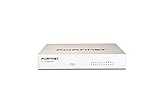
- Extensive Connectivity Options: The FortiGate 60F is designed with 10 GE RJ45 ports, including 2 WAN ports, 1 DMZ port, and 7 internal ports, offering broad flexibility and high-density connections for diverse enterprise networking needs.
- Superior Performance for Secure Networks: Features powerful system-on-a-chip acceleration to deliver top-tier security with 1.4 Gbps IPS throughput and 700 Mbps threat protection throughput, ensuring effective defense against advanced threats.
- Enhanced SSL Inspection and SD-WAN Capabilities: Utilizes purpose-built security processor technology to provide the industry's highest SSL inspection performance and robust SD-WAN functionality for secure, high-speed network operations.
- Simple and Effective Management: Comes equipped with a user-friendly management console that supports comprehensive network automation and visibility, alongside Zero Touch Integration with Fortinet's Security Fabric for streamlined deployment.
- Advanced Security Features: Leverages continuous threat intelligence from AI-powered FortiGuard Labs, identifying and mitigating both known and unknown threats, enhancing security across all network traffic, whether encrypted or not.
If the tunnel is up but traffic is not passing through the FortiGate
When negotiation succeeds but users cannot access network resources, trace the data path in both directions. A route may be sufficient for proposals to establish while user traffic still has no usable route or permitted policy.
- Verify the traffic selectors and subnets. Confirm that the source and destination addresses of the failing flow fall within the local and remote networks configured for the VPN on both peers.
- Check routing both ways. Confirm that each firewall has a route for the other side’s networks through the intended VPN path and that the return route exists. The reply must be able to get back to the initiating host.
- Check firewall policies. Verify that policies allow the intended source, destination, and service on the relevant interfaces or VPN zones. Look for a missing rule or a rule-order issue.
- Review NAT behavior. Confirm that NAT is appropriate for this design and that translation is not changing addresses in a way that conflicts with the selectors, policy, or expected return path.
- Compare traffic counters in each direction. Look for whether traffic is being sent and received, and whether encrypted and decrypted counts change while reproducing the problem.
FortiGate’s diagnose debug flow can help identify a missing policy, route, or policy-order problem. Run it against a narrowly defined, reproducible flow using syntax appropriate to the installed release; broad, uncontrolled debug output can obscure useful events. Fortinet documents the tunnel and flow diagnostics in its FortiOS 5.4.0 troubleshooting guidance and provides a newer FortiOS 7.6.6 troubleshooting reference.
Rank #4

- HARDWARE PLUS SECURITY SERVICES: FortiGate-60F Firewall Appliance bundled with 1 year of FortiCare Premium and FortiGuard Unified Threat Protection.
- UNIFIED THREAT PROTECTION (UTP): Secures against advanced online threats with comprehensive web filtering and anti-botnet technologies.
- OPTIMIZED FOR MEDIUM-SIZED BUSINESSES: Tailored for businesses needing robust security without the infrastructure of larger enterprises.
- RELIABLE CUSTOMER SUPPORT: FortiCare Premium ensures high-quality support and service continuity.
- EFFECTIVE PROTECTION: Employs advanced filtering technologies to safeguard against sophisticated threats.
Use counters to narrow the search, not as a one-to-one fault locator. If one peer’s send-side activity rises while the other peer does not show corresponding receive activity, investigate the path between peers and any NAT device. If encrypted traffic rises but decrypted traffic does not, inspect the remote peer, selectors, policy, and return path. These patterns guide investigation; they do not independently prove which device or setting is at fault.
Use Cisco FTD messages, VPN logs, and debug selectively
On FTD, start with the Message Center for system messages and the VPN logs for connection events. Cisco documents Devices > VPN > Troubleshooting as a place to view VPN events when logging is enabled. VPN syslogs can also be sent to Firepower Management Center (FMC) for analysis and archiving. The exact availability and display depend on how the system is managed and configured; consult Cisco’s FTD VPN troubleshooting chapter.
Best Value

- Robust Port Configuration: The FortiGate 120G is equipped with 18 GE RJ45 ports, including 1 management port and 1 HA port, alongside 16 switch ports. It also features 8 GE SFP slots and 4 10GE SFP+ slots, providing versatile connectivity options for complex network setups.
- Cutting-edge Performance with SP5 Acceleration: Powered by SP5 hardware acceleration, the device ensures unmatched performance, making it ideal for enterprises requiring rapid application identification, efficient business operations, and robust security.
- Dual AC Power Supplies: Designed with dual non-hot swappable AC power supplies, the FortiGate 120G ensures uninterrupted service and operational reliability, critical for maintaining mission-critical network activities.
- Superior Security Features: Integrated with Fortinet’s Security Fabric, the FortiGate 120G offers advanced threat protection, real-time SSL inspection, and AI-powered FortiGuard services, providing comprehensive defense against modern cyber threats.
- Streamlined Network Management: Features such as the FortiLink protocol allow seamless integration of security and network management, enabling centralized control and simplified operations across all networked FortiGate devices.
If logs do not isolate the failure, Cisco’s guide lists crypto debug families for IKEv1, IKEv2, and IPsec. For WebVPN, it describes conditional debugging that can filter by user, group policy, or public client IP. Select the feature and filter that match the failing connection rather than enabling broad debugging without a defined test.
Cisco warns that debug output has high CPU priority and may render the system unusable. Its guidance states: “For this reason, use debug commands only to troubleshoot specific problems or during troubleshooting sessions with the Cisco Technical Assistance Center (TAC).” Limit debugging to a specific problem and short troubleshooting session, then stop it after collecting the evidence needed.
Independent reader supportYour contribution helps us test, update, and keep practical guides available for everyone.How the FortiGate and FTD workflows differ
The diagnostic goal is the same on both platforms—locate whether the fault is in negotiation or forwarding—but their interfaces and diagnostics are not interchangeable.
| Troubleshooting task | FortiGate | Cisco FTD |
|---|---|---|
| Initial status and logs | Use the IPsec monitor and diagnose vpn tunnel list for tunnel state and statistics, as described in the cited Fortinet material. |
Start with the Message Center and VPN logs; the cited guide documents Devices > VPN > Troubleshooting when logging is enabled. |
| Negotiation investigation | Compare peer settings and use release-appropriate, filtered IKE debugging to capture a negotiation attempt. | Use the applicable IKEv1, IKEv2, or IPsec crypto debug family described in Cisco’s guide, with narrow conditions. |
| Tunnel established, traffic failing | Trace selectors, routes, policies, NAT, and traffic using tunnel statistics and flow diagnostics such as diagnose debug flow. |
Use VPN events and relevant system diagnostics to investigate the connection and forwarding path; the cited chapter does not establish a direct FTD equivalent to FortiGate’s flow command. |
| Debug scope and operational caution | Use a short, relevant capture and release-specific filters and syntax. | Prefer conditional debugging where applicable. Cisco warns that debug output has high CPU priority and may render the system unusable. |
| Version basis of the cited procedures | Detailed fault-finding steps: FortiOS 5.4.0; newer 7.6.6 troubleshooting reference available. | Firepower Management Center configuration guide version 6.4. |
Choose the next test from the evidence
- No tunnel and no successful negotiation: Reproduce one connection attempt, compare IKE and proposal settings on both peers, and inspect the corresponding negotiation events.
- Tunnel reports up, but no traffic counters change: Confirm that the test flow uses the expected source and destination and matches the configured selectors and routes.
- Traffic appears to leave one peer but not arrive at the other: Investigate the transport path and any NAT or intermediate device between the firewalls.
- Encrypted traffic rises but return or decrypted traffic does not: Check the other peer’s selectors, policy, routes, and return path while reproducing the same flow.
- Only one host, subnet, or application fails: Compare that flow’s addresses and service against the VPN selectors, routes, firewall policies, NAT rules, and endpoint filtering rather than resetting the whole tunnel first.
Make one change at a time and retest the same flow. Preserve relevant logs and the before-and-after tunnel or traffic statistics so that a change can be correlated with a result. If a debug session is no longer needed, stop it promptly; if an adjustment worsens connectivity, revert that specific change before proceeding.
What’s actually slowing this PC down?
Pick the symptom - the matching free tool is one click away.
Quick Recap
Product prices and availability are accurate as of the date/time indicated and are subject to change. Any price and availability information displayed on Amazon at the time of purchase will apply.

