
What’s actually slowing this PC down?
Pick the symptom - the matching free tool is one click away.
Test the exact VPS you plan to rent against the current RTMPS URL in your YouTube Live Control Room. Check outbound TCP on port 443, verify TLS with the endpoint hostname sent as SNI, then—before treating the server as verified—publish a controlled test feed and confirm YouTube receives it. The first two network checks narrow down problems; only the publish test checks the full encoder-to-YouTube path.
What this test can—and cannot—tell you
In this context, “RTMP access” means whether your intended VPS can send a YouTube live stream using the protocol and endpoint shown for your stream. YouTube documents RTMPS, which carries RTMP over TLS/SSL. Its developer guide specifies port 443 and says the TLS connection must use the ingestion hostname as SNI.



A successful TCP connection shows that a socket could be opened from that VPS at that time. A successful TLS handshake adds evidence that the TLS connection to the named endpoint works. Neither result proves that your encoder, stream key, or publishing configuration is correct, or that the route will remain stable for a longer broadcast.
The official materials do not establish an India-specific YouTube ingestion URL or a country-wide guarantee that every Indian data center can reach YouTube. Test the actual provider, region, server, and route you intend to use. One VPS provider’s result does not establish another’s. YouTube’s general URL workflow is described in Encrypt your stream using RTMPS; an exact-topic secondary guide also discusses verification from an Indian data center: How to Verify a YouTube Ingest URL from an Indian Data Center.
#1 Best Overall
Step 1: Get the current RTMPS URL and stream key
- Open the intended stream in YouTube Live Control Room and go to its stream settings.
- Copy the current RTMPS URL and the stream key shown for that stream. Do not substitute a hostname from an old tutorial or assume there is a special India-only hostname.
- Keep the stream key private. It is a credential: do not put it in public logs, screenshots, support posts, or a command you plan to share.
- Separate the endpoint hostname from the URL so you can use that same hostname in the TCP and TLS checks below. YouTube distinguishes the RTMPS URL from the default RTMP URL.
If you use an API-based encoder workflow, the YouTube LiveStreams API exposes RTMPS primary and backup address fields. See the LiveStreams API reference.
Step 2: Check outbound TCP from the candidate VPS
Log in to the VPS you are evaluating and test the hostname taken from its current RTMPS URL on port 443. For example, if netcat is installed:
nc -vz <host> 443
Replace <host> with the endpoint hostname, without angle brackets. Netcat availability and flags vary by operating system and version; adapt the command to the tool installed on the server. This is a suggested diagnostic, not a YouTube-prescribed command.
If the command reports a successful connection, TCP connectivity to that host and port was available from that VPS at the time of the test. It does not test TLS, SNI, stream credentials, encoder compatibility, stream health, sustained upload, or future provider policy.
Do these 3 things before closing this tab:
1Repair Windows errors before they cause bigger problems2Fix the driver behind crashes, sound loss and screen glitches3Clear out junk files and repair common Windows errorsStep 3: Check TLS and send the correct SNI hostname
Use a TLS client to connect to the same hostname on port 443 while explicitly setting the server name. A generic OpenSSL example is:
openssl s_client -connect <host>:443 -servername <host>
Use the endpoint hostname for both values. The -servername option sends that hostname as SNI; YouTube’s RTMPS developer guide says the hostname is required for authentication through SNI. Inspect whether TLS negotiation completes and whether certificate verification succeeds in your environment. OpenSSL output, flags, and certificate trust stores vary, so the example may need adaptation.
Rank #3
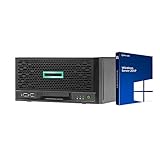
- HP MicroServer Gen10 Plus Tower Server for Business with Microsoft Windows Server 2019 OS!
- Intel Xeon E-2224 Quad-Core 3.4GHz 8MB CPU, Up To 4.6GHz Turbo
- 32GB (2 x 16GB) DDR4 PC4-21300 2666MHz Unbuffered Memory
- 16TB (4 x 4TB) 7.2K 6Gb/s SATA 3.5" HDDs in RAID
- Hard drives and memory upgrades included separately NOT installed, installation required.
YouTube states in its RTMPS documentation: “The connection must be made to port 443 on the ingestion server.” A TCP success without a TLS check is not equivalent to a working RTMPS connection.
Step 4: Publish a controlled test feed
To verify the actual publishing path, configure an encoder on the exact VPS using the current RTMPS URL and stream key, then check Live Control Room for the incoming preview and reported stream health. Use the encoder’s own diagnostics as well, and confirm that it supports RTMPS.
- Enter the RTMPS URL and stream key in the fields your encoder expects. Do not expose the key in logs or screenshots you share.
- Start a controlled test feed from the VPS.
- Confirm that Live Control Room receives the feed and reports its health. If it does not, note the encoder error and the stage at which the test stopped.
- Observe the feed for the duration relevant to your planned use. A brief successful test does not establish stability under longer use or load.
YouTube’s troubleshooting guidance identifies URL correctness, protocol and port, RTMPS support, and SSL handling as factors to check. Its setup instructions are in Encrypt your stream using RTMPS. A shell-level TCP or TLS check alone cannot replace the controlled publish test.
Rank #4
Step 5: Keep a record that applies to this VPS
Record enough detail to repeat the test or compare candidates. Do not include the stream key.
- Test time, VPS provider, region, and source host if relevant.
- Destination hostname and port taken from the current RTMPS URL.
- TCP connection result and TLS/SNI result.
- Encoder name and version, and whether Live Control Room received the preview.
- Test duration and any observed interruptions.
These are useful reporting fields, not a guarantee about future connectivity. Re-test after migration, firewall changes, or a provider change; the result applies to the server and route tested at that time.
Troubleshooting by failure stage
TCP cannot connect
- Confirm the destination hostname came from the current RTMPS URL and that you tested port 443.
- Check the VPS provider’s outbound-egress rules and the server’s local firewall policy.
- Ask the provider whether outbound connections to the destination are restricted. YouTube’s documentation cannot establish a particular provider’s egress policy.
TCP works, but TLS fails
- Confirm that you are using the RTMPS URL rather than a cleartext RTMP URL.
- Check that the destination port is 443 and the TLS client sends SNI for the endpoint hostname.
- Inspect TLS and certificate errors in the client output. YouTube identifies an incorrect URL or port and SSL handling as troubleshooting factors.
TLS works, but the encoder times out or YouTube receives nothing
- Make sure the encoder is using RTMPS, not cleartext RTMP.
- Check that the complete current URL and stream key are entered in the fields the encoder expects, without publishing the key in diagnostic material.
- Confirm the encoder supports RTMPS and inspect its own error messages. YouTube warns that a cleartext RTMP connection to an RTMPS endpoint can time out without a useful response.
You need another ingestion protocol
YouTube documents HLS for particular encoder or content needs, including HDR and codecs not supported by RTMP. Check whether your encoder supports HLS and whether it meets your stream requirements. HLS is not established as a universal workaround for blocked RTMPS. See Set up an HLS stream.
Quick wins for a faster PC:
Scan for outdated or missing drivers - takes under a minuteDriver Scan →Clear out junk files and repair common Windows errorsFree Scan →Fix the driver behind crashes, sound loss and screen glitchesFind Drivers →Best Value
How to compare candidate Indian VPS servers
Run the same checks on each actual server rather than inferring access from its advertised region or another customer’s result. Compare the evidence that matters to your workflow:
| Evidence | What to record |
|---|---|
| Provider and region | The provider and specific VPS region tested. |
| TCP reachability | Whether outbound TCP to the current YouTube RTMPS hostname on port 443 succeeds. |
| TLS with SNI | Whether TLS negotiation completes when the endpoint hostname is sent as SNI. |
| End-to-end publishing | Whether a controlled encoder feed from that server appears in Live Control Room. |
| Observed stability | The duration tested and any interruptions observed; do not treat a short test as proof of long-term stability. |
| Provider support | Whether the provider confirms its egress policy or offers a trial, if available. |
YouTube’s documentation establishes the protocol and port conditions, but does not provide a comparative benchmark of Indian VPS providers, latency or throughput figures, or provider policy guarantees. Those points require evidence from each candidate or its provider.
Or let it run in the cloud
If your goal is a 24/7 YouTube stream from uploaded videos rather than testing a VPS for a do-it-yourself encoder setup, StreamNeo runs the stream in the cloud: upload a recording or build a playlist, add your YouTube stream key once, and go live. Nothing has to stay on at home. Each slot streams your uploads as made, up to 4K 60fps, at one flat price per slot; automatic recovery can restart the stream if YouTube drops it. The first day is free with no card. Monthly pricing is $9.99 per month. UPI and cards are available in India; card checkout is available worldwide. Start your free day with StreamNeo.
Quick Recap
Product prices and availability are accurate as of the date/time indicated and are subject to change. Any price and availability information displayed on Amazon at the time of purchase will apply.

