
iTechGuides is reader-supported. When you buy through links on our site, we may earn an affiliate commission. As an Amazon Associate I earn from qualifying purchases. Learn more
To set up an Apple smart home, configure a HomePod or HomePod mini as your hub automatically, or assign an Apple TV to a room in the Home app. Then use an iPhone or iPad to add each compatible accessory by scanning its Apple Home setup code or following its Matter pairing steps. A hub is useful for remote access and automations; requirements for Matter and Thread depend on the accessory and your device configuration.
Choose an Apple home hub
Apple supports HomePod, HomePod mini, and Apple TV as home hubs. The right choice depends on the Apple devices you already own, whether your accessories need Thread, and whether the device can remain powered and connected at home. Apple does not rank these options by performance.
| # | Preview | Product | Price | |
|---|---|---|---|---|
| 1 |

|
Apple - HomePod mini - Yellow | $129.00 | Buy on Amazon |
| 2 |
|
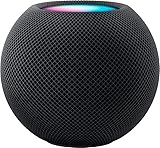
Apple - HomePod mini - Black | $129.00 | Buy on Amazon |
| 3 |

|
Apple - HomePod mini - Orange | $129.00 | Buy on Amazon |
| 4 |

|
Amazon Echo Dot (newest model) - Vibrant sounding speaker, Designed for Alexa+, Great for bedrooms,... | $79.99 | Buy on Amazon |
| 5 |

|
Apple - HomePod mini - Space Gray | $149.99 | Buy on Amazon |
| Hub option | Setup | Thread consideration |
|---|---|---|
| HomePod or HomePod mini | Set up the speaker; it automatically becomes a home hub. | Apple lists HomePod mini and HomePod (2nd generation) among its Thread-capable hub examples. Check the exact model and accessory requirements. |
| Apple TV | Assign it to a room using Settings > AirPlay and Apple Home > Room. | Apple lists specified Apple TV 4K configurations as Thread-capable. Confirm that your exact model supports the required Thread feature. |
Apple’s official hub setup instructions say HomePod and HomePod mini automatically become home hubs when set up. Only the home owner can add a HomePod or Apple TV to the Home app as a hub.
Check the active hub
On an iPhone, iPad, or Mac, open the Home app, open Home Settings, then select Home Hubs & Bridges. The active hub appears at the top. Apple says you can turn off Automatic Selection to choose a preferred hub.
#1 Best Overall
- Rich, 360-Degree Sound – Delivers deep bass and crisp high frequencies for immersive audio in any room.
- Siri Voice Assistant – Control music, smart home devices, and get information hands-free.
- Seamless Apple Integration – Works effortlessly with iPhone, iPad, Mac, and Apple TV for a connected experience.
- Compact & Stylish Design – Small but powerful, fits perfectly in any space.
- Privacy & Security – Designed to keep your personal information safe and secure.
Understand Matter and Thread requirements
Matter and Thread are related in some devices but are not interchangeable. Matter is a smart-home compatibility standard; Thread is a networking technology that some accessories use. A Matter device may use Wi-Fi instead of Thread, while a Thread accessory needs Thread-capable infrastructure.
Apple’s iPhone setup guide says Matter-enabled accessories require a home hub, and that Thread-based accessories need a Thread-enabled hub or compatible third-party Thread border router. Apple’s troubleshooting guidance adds that an iPhone running iOS 18 or later can add and control Matter accessories in Home without a home hub, while recommending a hub for the best experience. These instructions address different conditions, so check the current guidance for your iOS version and the accessory rather than assuming every Matter device has the same hub requirement.
Rank #2
- Rich, 360-Degree Sound – Delivers deep bass and crisp high frequencies for immersive audio in any room.
- Siri Voice Assistant – Control music, smart home devices, and get information hands-free.
- Seamless Apple Integration – Works effortlessly with iPhone, iPad, Mac, and Apple TV for a connected experience.
- Compact & Stylish Design – Small but powerful, fits perfectly in any space.
- Privacy & Security – Designed to keep your personal information safe and secure.
Apple names HomePod mini, HomePod (2nd generation), specified Apple TV 4K configurations, and supported third-party Thread border routers as Thread infrastructure examples. Verify the exact Apple TV configuration and accessory requirements before setup.
Add a compatible accessory in the Home app
Use an iPhone or iPad; Apple says accessories cannot be added using a Mac. Before beginning, check the accessory’s packaging, manual, or manufacturer app for Apple Home, HomeKit, or Matter compatibility and any required firmware or extra setup steps. A device described simply as “smart” is not necessarily compatible.
Rank #3
- Rich, 360-Degree Sound – Delivers deep bass and crisp high frequencies for immersive audio in any room.
- Siri Voice Assistant – Control music, smart home devices, and get information hands-free.
- Seamless Apple Integration – Works effortlessly with iPhone, iPad, Mac, and Apple TV for a connected experience.
- Compact & Stylish Design – Small but powerful, fits perfectly in any space.
- Privacy & Security – Designed to keep your personal information safe and secure.
- Prepare the accessory. Plug it in or install batteries, power it on, and follow any initial setup instructions from its manufacturer. Keep it near the iPhone or iPad during pairing.
- Open Apple Home. On the iPhone or iPad, open the Home app and choose Add Accessory.
- Pair it. Follow the onscreen instructions. Depending on the device, scan a QR code, enter an eight-digit Apple Home setup code, or use an 11- or 21-digit Matter code.
- Complete any Matter handoff. If the Matter accessory was already paired in another ecosystem, Apple’s flow may require you to choose More Options and enter a pairing code generated in the accessory’s app.
- Finish setup. Assign the accessory to a room and give it a name. The name can be used with Siri.
For device-specific instructions, see Apple’s guide to adding an accessory and iPhone setup guide.
Independent reader supportYour contribution helps us test, update, and keep practical guides available for everyone.Fix common pairing problems
When setup fails, work through these checks in order. Accessory makers may have additional model-specific steps.
Rank #4
- Your favorite music and content – Play music, audiobooks, and podcasts from Amazon Music, Apple Music, Spotify and others or via Bluetooth throughout your home.
- Alexa is happy to help – Ask Alexa for weather updates and to set hands-free timers, get answers to your questions and even hear jokes. Need a few extra minutes in the morning? Just tap your Echo Dot to snooze your alarm.
- Keep your home comfortable – Control compatible smart home devices with your voice and routines triggered by built-in motion or indoor temperature sensors. Create routines to automatically turn on lights when you walk into a room, or start a fan if the inside temperature goes above your comfort zone.
- Do more with device pairing – Fill your home with music using compatible Echo devices in different rooms, or create a home theatre system with Fire TV.
- Say goodbye to drop-offs and buffering - With eero Built-in, Echo Dot doubles as a mesh wifi extender, adding up to 1,000 sq. ft. of wifi coverage to your existing eero network.
- Confirm compatibility and setup requirements. Check for Apple Home, HomeKit, or Matter support, and look for required firmware updates, bridges, or manufacturer-app setup.
- Check power and proximity. Make sure the accessory is on and bring it closer to the iPhone or iPad, then closer to the router if Apple Home reports “Unable to add to home.”
- Turn on Bluetooth. Enable Bluetooth on the iPhone or iPad used for pairing.
- Check Wi-Fi. Apple says the iPhone or iPad, accessories already added to the home, and home hubs should be on the same Wi-Fi network. Some accessories cannot use 5 GHz Wi-Fi and require 2.4 GHz.
- Update and restart. Install available accessory firmware updates. Restart the home hub and any third-party bridge if pairing still fails.
- Reset only when needed. If the accessory was previously added to another home, it may need to be reset. Follow the product manual; resetting can remove its existing configuration.
- Respond to hub alerts. For a “Home Hub Required” or software-update message, check Home Hubs & Bridges and update the hub. If an Apple TV is involved, check its Wi-Fi connection and use the same Wi-Fi network during troubleshooting.
Apple’s accessory troubleshooting guide and home hub troubleshooting guidance provide further steps, including checks for Wi-Fi interference.
Do these 3 things before closing this tab:
1Fix the driver behind crashes, sound loss and screen glitches2Repair Windows errors before they cause bigger problems3Scan for outdated or missing drivers - takes under a minuteQuick Recap
Best Value
- Rich, 360-Degree Sound – Delivers deep bass and crisp high frequencies for immersive audio in any room.
- Siri Voice Assistant – Control music, smart home devices, and get information hands-free.
- Seamless Apple Integration – Works effortlessly with iPhone, iPad, Mac, and Apple TV for a connected experience.
- Compact & Stylish Design – Small but powerful, fits perfectly in any space.
- Privacy & Security – Designed to keep your personal information safe and secure.
Product prices and availability are accurate as of the date/time indicated and are subject to change. Any price and availability information displayed on Amazon at the time of purchase will apply.

