
iTechGuides is reader-supported. When you buy through links on our site, we may earn an affiliate commission. As an Amazon Associate I earn from qualifying purchases. Learn more
Free remote models and servers can help with code review, but only as untrusted, temporary neighbors. Send them a deliberately minimized packet, keep production credentials and sensitive source out of the job, isolate the model from the checker, impose a hard timeout, and require a local human-and-test gate before any returned patch is applied. A zero-price service does not transfer custody of your code or data; as Harper Xu puts it, “You do not receive custody because the invoice says zero.”
The workflow below turns that principle into an implementable process. It explains the four-room design proposed in Xu’s DEV Community article, separates established recommendations from unverified product claims, and gives you decision points for deciding when a free lane is acceptable and when it is not.

What is the “free lane” in a code-review workflow?
The free lane is a two-service path: a remote model proposes a change, while a separate remote server runs an explicitly allowed check. Neither service is treated as a trusted extension of your development machine. The model can be wrong or reveal data; the server can stall, retain state, or execute more than you intended.
What’s actually slowing this PC down?
Pick the symptom - the matching free tool is one click away.
The design is easiest to reason about as four rooms. Data moves through a broker or packet builder rather than directly from the editor to either remote service.
#1 Best Overall

- 【Effortless Remote Device Control】 Remotely reboot, install operating systems via BIOS interface, and power on computers – all without ever setting foot in the data center. Ideal for IT professionals and smart home users alike. (Note: PD adapters cannot be used.)
- 【Universal Compatibility & Easy Setup】 Seamlessly connect to laptops, desktops, servers, and more. Simple one-click connection via app – the computer being controlled requires no additional software.
- 【Crystal-Clear Remote Experience】 Enjoy desktop-quality visuals (3840x2160@30Hz resolution, low latency) Remote audio output for immersive and complete remote control.
- 【Instant File Transfer】 Transfer files between computers effortlessly. No more tedious synchronization issues when working remotely.
- 【Access Anytime Anywhere】 Maintain constant remote access to your computers, boosting productivity whether you're at home or on the go. Perfect for remote work and managing multiple computers.
| Room | Purpose | What enters | What leaves | Trust assumption |
|---|---|---|---|---|
| Local editor and tests | Authoritative working copy and acceptance decision | Your repository, local configuration, tests and review context | A minimized review packet; later, an approved patch | Controlled by your team |
| Packet builder or broker | Remove unnecessary context and mediate both remote calls | Selected files and a narrowly written task | Sanitized packet to the model; a separately scoped check request to the server | Trusted boundary that must be audited |
| Remote model | Suggest a diff and state its assumptions | Only the sanitized packet | Proposal, assumptions and diagnostics | Untrusted; output may be incorrect or unsafe |
| Remote check server | Run one approved check | Required inputs for that check | Pass/fail result and bounded logs | Untrusted and ephemeral; no production authority |
The model and server should not communicate through raw editor text. The broker translates each request into a constrained format and keeps the two failure domains distinct. A successful model response never authorizes a merge, and a successful server check never proves that a patch is safe.
How do you build a safe review packet?
Start with an allowlist of files and fields, not a copy of the repository. The packet should contain enough context to answer the specific review question and nothing that the remote services do not need.
- Define the review question. State the behavior, language, relevant error, or requested change in one or two sentences. Avoid pasting an entire issue tracker export or chat transcript.
- Select files by dependency. Include the changed file, its directly relevant interface or test, and small configuration excerpts only when the review requires them. Exclude unrelated directories, build output, dependency caches and full history.
- Strip identity and location data. Replace employee names, customer identifiers, repository URLs, hostnames, usernames and absolute host paths with stable placeholders. Preserve relationships, such as “service A calls service B,” without exposing real names.
- Remove secrets before serialization. Delete API keys, access tokens, private certificates, cookies, signing material, database strings and environment dumps. Do not rely on the model to recognize a secret after it has been sent.
- Redact sensitive literals. Replace personal data, proprietary algorithms, unreleased product names and customer payloads with type-preserving stand-ins where possible. Keep the replacement consistent within one packet so the model can still follow control flow.
- Normalize metadata. Record the language, toolchain family, test command category and an internal packet identifier. Do not include a credential-bearing environment or a complete machine inventory.
- Review the serialized result. Inspect the exact bytes or text that will leave your boundary. A sanitizer that works on one file can miss a secret embedded in generated code, comments, binary metadata or an error message.
- Set a size and lifetime limit. Keep the packet tied to one review task and discard it after the job unless your policy explicitly permits retention. The source article gives no universal token limit, so choose a limit that fits your own data-classification and budget rules.
Sanitization reduces exposure; it does not make a remote service confidential. If a review requires secrets, regulated records or source that cannot leave your controlled environment, route it to a local or contractually approved system instead of trying to disguise the data.
The Tool Desk
Outbyte Driver Updater FREEScan for outdated or missing drivers - takes under a minuteDriver Scan →Outbyte PC Repair FREEClear out junk files and repair common Windows errorsFree Scan →What should the broker allow between the model and the server?
The broker should expose two narrow interfaces: one for proposing a patch and one for requesting a named check. It should never forward arbitrary editor text, shell commands or a model-generated URL to the server.
Rank #2
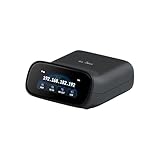
- 【Dual-Band Wi-Fi 6 Desktop KVM Device】Comet Pro supports both 2.4 GHz and 5 GHz Wi-Fi bands for a cleaner setup with less cabling. By providing both wired and wireless connectivity, it eliminates single points of failure and redefines flexibility for remote access.
- 【4K Video Passthrough & Two-Way Audio】The GL-RM10 features 4K@30FPS video passthrough and two-way audio, delivering ultra-clear, low-latency streams via H.264 encoding without interrupting the local display. Its audio support ensures crystal-clear voice interaction —ideal for remote meetings and IT support to create a natural "face-to-face" experience.
- 【Touchscreen Interface】The 2.22-inch built-in touchscreen features an intuitive user interface that is easy to operate and requires no technical expertise, allowing you to effortlessly view and manage important functions—such as connecting to Wi-Fi networks and enabling or disabling cloud services.
- 【Built-in Tailscale】 Enables secure, efficient data transfer between devices using WireGuard's encrypted transmission and direct connection features. Ideal for home labs, offices, and multiple networking scenarios.
- 【Flexible Remote Access】Remote access can be achieved through our web based cloud control functionality, supporting Windows, macOS, and Linux systems without needing to install any software. Additionally, there is remote support via the GLKVM app available to Windows, macOS, iOS and Android devices.
Model request
- Send the sanitized files, task statement and explicit output format.
- Ask for a patch plus assumptions and affected files, not an instruction to commit or merge.
- Reject responses that contain executable commands outside the agreed format or that attempt to request additional files or credentials.
- Store the response with a packet identifier so reviewers can reconstruct what context the model saw.
Server request
- Choose the check from a fixed allowlist, such as a project test target or static analysis profile defined by your team.
- Pass only the files and generated inputs that check requires.
- Do not let the model select the check, alter its arguments, or supply a shell pipeline.
- Return bounded status and logs to the broker; do not stream an unrestricted terminal session back to the editor.
The broker is a policy enforcement point, not merely a convenience proxy. Authenticate each request internally, log the decision, and fail closed when a request does not match the schema. Keeping the model and server separate means a compromise or hallucination in one does not automatically grant the other access to your editor context.
How should a free server run a check?
Assume the server is disposable compute. It may be useful for a bounded verification, but it must not become a place where production authority, long-lived credentials or irreplaceable state accumulates.
- Start from a clean job. Create an isolated workspace for the packet. Treat any pre-existing files, caches or environment variables as untrusted.
- Provide no production keys. The server should receive neither production credentials nor credentials that can mint them. If a dependency download needs authentication, use a narrowly scoped, short-lived mechanism approved by your security team—or move the check to a trusted runner.
- Rebuild required caches inside the job. The source proposal recommends treating the free workspace as ephemeral. Recreate dependencies or caches needed for the check instead of assuming that state left by a previous job is safe.
- Permit only the named check. Use an allowlist and a non-interactive invocation. Do not provide a general shell, an unrestricted package script, or a path to the host filesystem.
- Constrain resources. Set a wall-clock deadline, memory and output limits appropriate to the check. A hung process must terminate rather than hold the queue indefinitely.
- Fail closed. A timeout, infrastructure error, truncated log or ambiguous exit status is not a pass. Mark the result unavailable and send the work through a trusted path.
- Destroy the workspace. Remove temporary files and credentials at job end, and treat any retained server-side state as a security incident until its retention is understood.
These controls are recommendations from the source article, not a certified security standard. You still need to verify what the actual service can access, how it retains data and whether its execution isolation matches your risk tolerance.
How do you review and accept a model-generated patch?
A returned diff is a proposal, never an automatic change. Apply it in a disposable local worktree and make your normal review process the final authority.
- Verify provenance. Confirm the packet identifier, requested task and files in the response match the review you initiated. Reject a response that references unseen files or introduces unrelated changes.
- Inspect the raw diff. Look for credential handling, permission changes, network calls, shell execution, dependency updates, disabled tests and changes to error handling. Read deletions as carefully as additions.
- Check assumptions. Compare the model’s stated assumptions with the actual application contract. An elegant patch based on a false assumption is still a defect.
- Apply without committing. Use a separate worktree or branch. Keep the original working tree untouched until the patch has passed review.
- Run local tests and checks. Execute the project’s trusted test suite, type checks, linters and security checks. A remote server’s “pass” is supplementary evidence, not a substitute.
- Review behavior and maintainability. Test failure paths, boundary values, authorization and data handling. Ensure the change has a clear owner and can be reverted.
- Require explicit human acceptance. A designated reviewer records approval before the patch is committed or merged. The model, broker and remote server must have no merge credential.
If any step fails, discard the proposal and return to the local source. Do not ask the model to “fix” a suspicious patch by giving it more sensitive context; narrow the question or use a trusted reviewer.
What can go wrong, and how do you contain it?
Plan for failure before enabling the lane. The table maps common failure modes to a containment action and a recovery decision.
| Failure mode | What it looks like | Containment | Recovery |
|---|---|---|---|
| Data leakage | A packet or log contains a token, name, host path or customer value | Stop the job; revoke exposed credentials if any; preserve the packet identifier | Determine what was transmitted and retained, notify the responsible security owner, and tighten redaction tests |
| Confidently wrong diff | The proposal compiles but changes a contract, authorization rule or edge case | Do not apply automatically; require local tests and human review | Discard or revise the patch using trusted context; add a regression test |
| Prompt or content injection | Repository text tells the model or broker to reveal data, run commands or ignore policy | Treat repository content as data; enforce the broker schema outside the model | Quarantine the packet and inspect the affected files before retrying |
| Server overreach | The check accesses the network, host files or undeclared credentials | Terminate the job and remove the server from the lane | Review isolation and logs; run the check on a trusted runner until controls are verified |
| Hung execution | No result arrives and the queue stops progressing | Enforce a deadline and mark the result failed or unavailable | Retry only with the same bounded policy; never extend timeouts indefinitely |
| State persistence | A later job sees files or caches from an earlier job | Destroy the workspace and invalidate any affected credentials | Use clean-job provisioning and verify deletion or retention behavior with the provider |
| Service disappearance | The free endpoint changes, throttles or becomes unavailable | Keep the local review path functional and make remote assistance optional | Use a trusted alternative or proceed without the free lane; do not weaken safeguards to restore it |
What data is appropriate for a free remote review?
Classify the material before the packet builder runs. A simple four-tier policy makes “can this leave the workstation?” an explicit decision rather than an improvisation.
Do these 3 things before closing this tab:
1Repair Windows errors before they cause bigger problems2Scan for outdated or missing drivers - takes under a minute3Clear out junk files and repair common Windows errors| Data category | Examples | Free remote lane | Reason |
|---|---|---|---|
| Public or disposable | Published sample code, synthetic fixtures, generic utility logic | Usually acceptable after routine sanitization | Exposure has limited business impact, though output can still be wrong |
| Internal | Unreleased implementation details, internal hostnames, employee identifiers | Only after minimization and policy approval | Disclosure can reveal architecture or personal information |
| Confidential | Customer records, proprietary algorithms, unreleased security fixes | Prefer a controlled service with verified retention and contractual terms | Redaction may destroy the context needed for a meaningful review |
| Secret or regulated | Private keys, production tokens, regulated records, authentication material | Do not send | Remote review creates unacceptable custody and compliance risk |
“Free” does not answer where data is processed, how long it is retained, who can administer the infrastructure or whether it is used for service improvement. Those are separate questions that require current provider documentation and, for sensitive work, a formal review.
Rank #4

- 【Power over Ethernet (PoE)】 Comet PoE (GL-RM1PE) enables easy device powering with PoE support. Users can simply connect it to a PoE switch to eliminate extra power adapters and reduce cable clutter.
- 【Built-in Tailscale】 Enables secure, efficient data transfer between devices using WireGuard's encrypted transmission and direct connection features. Ideal for home labs, offices, and multiple networking scenarios.
- 【Dual Power Option(POE & Type-C)】 It supports 5V power adapters, both PoE and the adapter can be used simultaneously for enhanced power stability.
- 【Built-in 32GB eMMC Storage】 Comet PoE (GL-RM1PE) comes with an onboard 32GB eMMC storage, to pre-store two or more system images. This enables smoother system reinstallation while offering enhanced scalability for future needs.
- 【4K@30Hz HD Video & Ultra-Low Latency】 Experience ultra-clear, low-latency 4K video streaming with efficient H.264 hardware encoding. Combined with built-in two-way audio, it enables seamless audio conferencing, real-time troubleshooting, and remote monitoring, making it ideal for professional communications and management.
How can you compare a free model-and-server workflow with another option?
Compare the trust boundary and failure behavior, not the marketing label or price. The article supplies no validated product benchmark, token allowance, server size or end date for the free options, so a responsible comparison must measure your own requirements.
| Question | What to verify | Why it changes the decision |
|---|---|---|
| Where does data cross a boundary? | Regions, subprocessors, transport and administrative access | Determines privacy, residency and incident exposure |
| What exactly is sent? | Files, prompts, logs, metadata, identifiers and generated artifacts | Redaction is only as good as the complete payload inventory |
| What can execute? | Allowed commands, network access, filesystem scope and package installation | Defines the blast radius of a malicious or compromised check |
| How long does state live? | Prompt retention, logs, caches, backups and deletion controls | Ephemeral jobs are safer only if “ephemeral” is demonstrable |
| How does failure surface? | Timeout semantics, exit-code handling, partial logs and retry behavior | Ambiguous results must not become accidental approvals |
| Can the lane be removed? | Local fallback, exportable configuration and no hidden merge dependency | A free endpoint can change or disappear without notice |
Run a small, non-sensitive pilot to answer operational questions, but do not treat a pilot as a security certification or performance benchmark. Record observed behavior separately from provider promises, and revisit the decision whenever the service, code classification or threat model changes.
Independent reader supportYour contribution helps us test, update, and keep practical guides available for everyone.What should an implementation policy require?
A written policy prevents convenience from eroding the boundary during a deadline. At minimum, require the following controls before a team enables the lane:
- An approved data classification and a packet-builder allowlist.
- Automated secret and personal-data scanning before transmission, followed by human review for high-risk repositories.
- A broker that mediates model and server calls and rejects arbitrary commands or destinations.
- No production credentials, merge credentials or unrestricted network access in the remote job.
- Ephemeral workspaces, rebuilt caches and explicit deletion or retention rules.
- Hard execution, memory and output limits with fail-closed handling.
- Local application in a disposable worktree, trusted tests and named human approval.
- Audit records containing packet ID, selected files, policy decision, model response, check result and final acceptance—without storing the sensitive payload unnecessarily.
- A tested fallback path that works when either remote service is unavailable.
Review the policy with security, legal or privacy stakeholders when the code contains regulated or contractual data. The source article offers a useful architecture, but it does not establish that any particular provider satisfies these controls.
Best Value
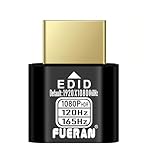
- Function:1080P 240Hz HDR HDMI Dummy Plug enables your PC or server to activate the GPU and create a virtual display for remote desktop, streaming, or computing tasks. Simulates high resolutions for remote control—supports up to 1080P @ 60Hz/120Hz/165Hz and more, ensuring smooth, clear visuals for any application.
- Advantage:Allows your computer to run “headless” without a physical monitor, reducing hardware costs and saving energy. Perfect solution for servers, colocation farms, SOHO/home servers, and remote-deployed headless PCs. Environmentally friendly alternative to expensive displays.
- Easy to use:Truly plug & play—no drivers, software, or external power required. Supports hot swapping and features ultra-low power consumption. Provides guaranteed stability for cryptocurrency mining, video rendering, game streaming, simulation mirroring, and more.
- Compatibility:Works with any discrete graphics card, laptops with HDMI output, and all major operating systems including Windows PC, Mac Mini OSX, Linux, and more. Ideal for game streaming, VR setups, mini servers, remote desktop, screen sharing, and other headless environments.
- Material Upgrade:Features a full-board copper pour and thickened aluminum alloy shell for stronger signal stability and durability. Uses brand-new, non-recycled solder for superior connection reliability. Superior shielding and heat dissipation prevent interference and lag. Built to last—even with frequent use—making it ideal for any environment needing reliable HDMI signal quality.
Is a free remote lane worth using?
It can be worthwhile for low-risk, disposable code when the remote assistance is optional and the local gate remains authoritative. It is a poor fit when the review needs secrets, production authority, regulated data, unrestricted execution or guaranteed availability.
Use it when
- The packet can be reduced to public, synthetic or explicitly approved internal material.
- The proposed check is deterministic, bounded and safe without production access.
- Your team can tolerate an unavailable or incorrect response.
- You have a working local review and test path independent of the service.
Keep the work local or use a controlled service when
- Removing sensitive context would make the review meaningless.
- The check needs privileged network, filesystem or deployment access.
- Retention, region or administrative access is unknown and the code is confidential.
- A timeout or false pass could cause material harm.
The practical verdict is narrow: treat free remote services as temporary, untrusted neighbors. Strip data before it leaves, keep credentials away, isolate the model from the checker, cap execution, and accept a patch only through your local review process. That preserves the possible productivity benefit without pretending that a zero invoice creates custody, correctness or security.
Frequently Asked Questions
Can a free model review proprietary code if I remove the API keys?
Not automatically. Proprietary logic, customer-shaped examples, internal names and unreleased fixes can remain sensitive after keys are removed; classify the complete packet and obtain approval before transmission.
Crashes, No Sound, or Screen Glitches?
Random freezes, missing sound and display glitches usually trace back to one bad driver. Find and replace yours safely.Free scan · under a minuteWindows Errors? Fix Them Before They Spread
Repair common Windows errors and clear accumulated junk for a smoother, more stable PC - no reinstall needed.Free scan · no reinstallWhat logs should a broker keep for an audit?
Keep a packet identifier, timestamp, policy decision, selected file list, service result, timeout status and final reviewer decision. Store the minimum payload needed to reconstruct the event, and protect or expire logs that contain code or identifiers.
How do I test whether a remote workspace is really ephemeral?
Use synthetic canary files and separate jobs to check whether one job can observe another, then inspect documented retention and deletion controls. A failed or inconclusive test should be treated as persistence, not as proof of isolation.
What is the safest fallback when the free service is unavailable?
Run the review and check locally using the same packet definition and acceptance gates. If local capacity is insufficient, pause the change or move it to a provider whose isolation, retention and availability have been approved rather than weakening the controls.
Quick Recap
Product prices and availability are accurate as of the date/time indicated and are subject to change. Any price and availability information displayed on Amazon at the time of purchase will apply.
Recommended Free Tools

