
iTechGuides is reader-supported. When you buy through links on our site, we may earn an affiliate commission. As an Amazon Associate I earn from qualifying purchases. Learn more
Run time-critical AI on the lunar vehicle, not in a round trip to Earth. Use the Earth link for supervision, selected evidence, model updates and bulk data delivery; use Delay/Disruption Tolerant Networking (DTN) to hold data through outages and forward it when a connection becomes available. Plan for about 1.25 seconds of lunar signal propagation each way before relay and scheduling delays, so a live link cannot be part of a rover’s safety-critical control loop.
Why can’t a lunar mission rely on a continuous Earth connection?
Earth connectivity at the Moon is intermittent because of geometry and mission operations. A vehicle can lose direct visibility to Earth, and coverage may depend on a relay. NASA’s LunaNet framework is intended to support networking, navigation, detection and information, and science services, including relay coverage when Earth is not directly visible.
Even when a signal path exists, distance makes interactive control slow. NASA and Nokia’s 2024 Future Lunar Surface Network Study estimates about 1.25 seconds of propagation each way, before any extra delay from relays or scheduling. A command-and-response exchange therefore takes longer than the one-way figure, and interruptions can stretch it further. That is unsuitable for reactions that must happen while a rover is moving or avoiding an immediate hazard.
Free tools Windows power users keep installed
One-click scans. No signup required.
The practical consequence is a division of responsibility: the vehicle must stay safe and perform essential tasks while disconnected; Earth can supervise, review results, and provide decisions that tolerate delay. Connectivity improves what the mission can do, but it should not be a prerequisite for safe operation.
#1 Best Overall

- The NVIDIA Jetson AGX Orin 64GB Developer Kit makes it easy to get started with Jetson Orin. Compact size, lots of connectors, and up to 275 TOPS of AI performance make this developer kit perfect for prototyping advanced AI-powered robots and other autonomous machines.
- The developer kit includes a Jetson AGX Orin 64GB module, and can emulate all the Jetson Orin modules. It supports multiple concurrent AI application pipelines with the NVIDIA Ampere GPU architecture, next-generation deep learning and vision accelerators, high-speed IO and fast memory bandwidth. Now you can develop solutions using your largest and most complex AI models to solve problems such as natural language understanding, 3D perception, and multi-sensor fusion.
- Jetson runs the NVIDIA AI software stack, and use-case specific application frameworks are available, including Isaac for robotics, DeepStream for vision AI, and Riva for conversational AI. You can save significant time with NVIDIA Omniverse Replicator for synthetic data generation (SDG), and by using NVIDIA TAO toolkit to fine-tune pretrained AI models from the NGC catalog.
- Jetson ecosystem partners offer additional AI and system software, developer tools, and custom software development. They can also help with cameras and other sensors, as well as carrier boards and design services for your product.
- With the computing capability of more than 8 Jetson AGX Xavier systems in a developer kit that integrates the latest NVIDIA GPU technology with the world’s most advanced deep learning software stack, you’ll have the flexibility to create tomorrow’s AI solution as well as today’s.
Which AI workloads should run onboard?
Run an AI workload onboard when waiting for Earth could make the result late, unsafe, or unavailable during an outage. Earth can handle slower review and analysis, but the vehicle needs local sensing, decision support, and logging.
Keep control and safety decisions local
- Perception and terrain classification: interpret sensor data close to where it is collected.
- Hazard detection and navigation assistance: identify conditions that may affect route choice or movement without waiting for a ground response.
- Vehicle health and fault monitoring: detect and record abnormal operating conditions even when no link is open.
- Any action with a safety consequence: keep the decision path local if a communications delay or outage could endanger the vehicle or crew.
“Onboard” does not mean that an AI model should act without constraints. Safety-critical outputs should be bounded by the vehicle’s control and fault-handling design. Treat AI as a component in that system, not as a substitute for established safety controls.
Reduce data before transmitting it
Use onboard processing to turn high-volume sensor streams into products that are easier to prioritize and send: event detections, features, region-of-interest selections, embeddings, thumbnails, and compressed summaries. These products help mission teams decide what deserves attention before a full data transfer is possible.
Keep the raw data locally until the mission has safely summarized or compressed it and has a clear retention policy. A summary can make a downlink efficient, but it may not preserve every detail needed to validate an AI result or re-examine an unexpected event. Retaining the source data where storage allows supports later replay and analysis.
Use Earth for work that can wait
Earth is well suited to policy review, noncritical analysis, assessment of model behavior, and preparation of future model updates. It can also provide human judgment on evidence sent from the Moon. None of these tasks should block an onboard function needed to keep the vehicle safe or continue essential operations.
What should a lunar mission send first when a link opens?
Prioritize information by urgency and value, not simply by the order in which it was generated. Keep independent queues for alerts, compact features, summaries, and raw data so a large science transfer cannot delay a critical message.
| Priority | Data to send | Why it belongs here |
|---|---|---|
| 1 | Safety alerts and compact vehicle state vectors | They support timely awareness of vehicle condition and significant events. |
| 2 | Model diagnostics, confidence distributions, and selected evidence frames | They help Earth teams assess an AI result without first receiving the entire sensor stream. |
| 3 | Compressed science products and prioritized raw samples | They deliver useful science while reserving capacity for urgent traffic. |
| 4 | Full raw imagery, video, and retraining corpora | These can be large and are generally best transferred opportunistically. |
The exact order within a class depends on mission rules. For example, a particular science observation may be more valuable than routine summaries, but it should not silently displace a safety alert. Give messages priorities, expiry rules, and enough context to distinguish current from stale information.
Do these 3 things before closing this tab:
1Scan for outdated or missing drivers - takes under a minute2Clear out junk files and repair common Windows errors3Fix the driver behind crashes, sound loss and screen glitchesRank #2
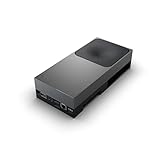
- GPU:2560-core NVIDIA Blackwell architecture GPU with 96 fifth-gen Tensor Cores
- AI Performance:2070 TFLOPS
How does DTN keep lunar AI data moving through outages?
DTN uses store-and-forward behavior: a node keeps data when the next connection is unavailable, then forwards it when a suitable link becomes available. If a transfer is interrupted, the data path can resume rather than requiring the mission to treat the contact as continuous. NASA’s Space Communications and Navigation program describes DTN as a way to address latency and disruptions.
For an AI workload, this means separating computation from transmission. The onboard system can produce and queue an alert, evidence frame, or science product without requiring Earth to be connected at that moment. When connectivity returns, the network can deliver queued material according to mission priorities. DTN does not make a link faster or guarantee that every transmission is immediate; it makes the system more tolerant of gaps.
NASA reported in 2026 that DTN became operational in its Near Space and Deep Space Networks in January 2026. NASA also reported that the PACE mission transmitted more than 34 million DTN bundles with a 100% success rate. That is operational evidence for the pattern on that mission, not a guarantee of identical performance for every lunar vehicle, link, or workload.
Design messages for delayed delivery
Each AI result should carry provenance that lets the receiver interpret it later: a timestamp, model version, confidence information, and relevant sensor context. A message arriving after an outage should be identifiable as a past observation, not mistaken for the vehicle’s current state.
Separate traffic classes so a routine data backlog does not overwhelm a new alert. Define how long each class remains useful, what happens when storage is under pressure, and whether low-priority products can be discarded or compressed further. Local logs should preserve enough information to replay decisions after contact is restored.
How should you divide the work between the vehicle and Earth?
Choose the location by delay tolerance, data volume, resilience, power, interoperability, and audit needs. The following comparison describes the trade-offs rather than prescribing one hardware configuration.
| Approach | Latency tolerance | Bandwidth use | Resilience and auditability |
|---|---|---|---|
| Onboard inference and local control | Suitable for decisions that cannot wait for a round trip. | Can reduce transmission by sending features, summaries, and selected evidence instead of every raw input. | Works through link outages; local logs and model metadata are needed for later review. |
| Earth-assisted analysis over a direct link | Appropriate for work that tolerates propagation and operational delay. | May require sending inputs to Earth before analysis. | Depends on an available direct path; an outage can delay results. |
| Earth-assisted analysis using DTN and relays | Suitable for non-immediate work that can wait for a contact opportunity. | Queues can prioritize compact products and defer large transfers. | Store-and-forward behavior and relay options can bridge disruptions; delayed results need timestamps and provenance. |
There is also a hardware trade-off. Larger onboard models can consume more power and generate more heat; smaller or quantized models and event-triggered execution can reduce those demands. The appropriate choice depends on the mission’s processor, power and thermal budgets, accuracy needs, and update policy. The cited sources do not establish a single lunar-ready model size or compute specification.
Rank #3

- 【AI Performance for Edge Computing】 Powered by N-VIDI-A Jetson AGX Thor module with 128GB memory and 2070 TFLOPS FP8 AI compute – the most powerful in Jetson series. Ideal for autonomous robots, real-time edge deployment, LLM inference, and advanced computer vision tasks. Outperforms all previous Jetson models for demanding AI workloads.
- 【Exploring Physical AI Applications】Explore solutions designed specifically for humanoid robots and physical AI applications, powered by the N-VIDI-A Isaac platform and the GR00T base model. It provides end-to-end security across the computing platform, AI models, and the entire edge-to-cloud workflow.
- 【Flexible Storage Options & Pre-loaded System】 Choose between 1TB (blank drive for custom OS) or 2TB SSD (pre-flashed system). All kits include a solid-state flashing enclosure easily flash official N-VIDI-A or custom images to the 1TB drive.
- 【Comprehensive Software & Tutorial Support】The JETSON system based on Ubuntu 24.04 provides a complete desktop Linux environment with accelerated graphics support for libraries such as CUDA 13.0, TensorRT 10.13, CuDNN 9.12, and OpenCV 4.13. Significant performance improvements are achieved in AI LLM, VLM, and Vision Transformer.
- 【Designed for Real-World Deployment】 Original Jetson AGX Thor official kit, rugged edge AI module for autonomous machines, drones, and industrial automation. This is the embedded edge AI solution .
How do LunaNet and lunar relays fit into the design?
LunaNet is the interoperability framework to consider when a mission needs services beyond a single direct-to-Earth path. NASA describes a lunar relay project as the first implementation of LunaNet, and its LunaNet framework is designed to support network, navigation, detection and information, and science services. Compatible interfaces can help a vehicle work with more than one provider as services become available.
What’s actually slowing this PC down?
Pick the symptom - the matching free tool is one click away.
NASA’s Lunar Communications Relay and Navigation Systems (LCRNS) program is intended to build commercial lunar relay and navigation infrastructure. NASA selected Intuitive Machines in 2024 as the first commercial LCRNS provider. The selection is a program milestone, not evidence that a complete catalog of commercial services, prices, or service-level agreements is available to every mission.
NASA says its Near Space Network supports missions out to 1.25 million miles from Earth. That figure describes the network’s stated reach, not a promise of continuous coverage, a specific lunar service level, or a guaranteed data rate for an individual mission. Mission designers still need to plan around visibility, relay availability, contact schedules, and the service terms that apply to their own mission.
What architecture should you build for a resilient lunar AI pipeline?
Start by classifying work according to how quickly it must complete and what happens if it cannot. Then connect those classes to local execution, storage, transmission priority, and recovery behavior.
- Define workload classes. Separate hard real-time functions, soft real-time functions, opportunistic science, and maintenance. Write down which tasks must continue during a complete communications outage.
- Keep safety-critical inference and actuation local. Use Earth for policy review, model updates, and noncritical analysis; do not make a live Earth link a condition of safe operation.
- Attach context to every result. Record provenance, timestamps, confidence, model version, and relevant sensor context so ground teams can interpret delayed outputs and reproduce decisions.
- Separate queues by purpose. Maintain distinct handling for alerts, features, summaries, and raw data, with explicit priority and expiry rules.
- Use DTN bundles for interrupted transfers. Make queued material resilient to a lost contact and capable of resuming when another connection becomes available.
- Test degraded modes. Exercise no-link and delayed-link operation, partial relay coverage, low power, storage pressure, and corrupted or stale model artifacts.
- Plan for compatible network interfaces. Use LunaNet interoperability requirements and relay interfaces where they apply, rather than assuming a mission-specific link is the only option.
- Make model updates safe to receive and deploy. Treat updates as signed, staged artifacts that can be rolled back. Validate them locally and preserve a safe operating state if an update is missing or rejected.
How can you prototype onboard lunar AI on Earth?
A developer kit can help test software architecture and workload behavior, but it is not proof that the same hardware is qualified for flight. TechRadar Pro reported in July 2026 that Lunar Outpost uses NVIDIA Jetson and CUDA-X libraries for rover mapping, autonomous navigation, mission data processing, scientific discovery, communications, and onboard video and data handling. The report does not identify the exact retail Jetson SKU used or establish flight qualification.
Recommended Free Tools
For an Earth-based prototype, select a compute platform based on the tasks you need to validate: sensor processing, inference, data reduction, queueing, and recovery after an interrupted transfer. Measure the prototype against the mission’s eventual power and thermal limits rather than assuming a developer kit’s performance or cooling arrangement will translate to a flight system. Confirm the exact model and its suitability with the hardware supplier before procurement; the public report does not establish a specific retail model.
Prototype the data path as well as the AI model. Simulate a disconnected vehicle, delayed contact, interrupted transfer, and a backlog containing mixed-priority data. Check that urgent messages can be selected first, that older observations remain clearly timestamped, and that transfer recovery does not cause duplicated or misinterpreted results. A convincing demo while continuously connected tests only part of the problem.
Rank #4

- 【Core Parameters】★AI Perf: 117/157 TOPS★GPU: 1024-core N-VI-DIA Ampere architecture GPU with 32 Tensor Cores★CPU: 8-core Arm Cortex-A78AE v8.2 64-bit CPU 2MB L2 + 4MB L3★Memory: 16GB 128-bit LPDDR5 | 102.4GB/s★Storage: Supports external NVMe 【Note: This kit does not include a SSD and pre-installed system. User need to provide your own NVMe M.2 SSD of at least 256GB and flash the operating system onto it yourself. 】
- 【Empowered by Large Al Model, Enhanced Human-Computer Interaction】Jetson Orin Super leverages three AI models and incorporates an AI voice interaction module. This multimodal visual system matches the scene being described, enabling environmental awareness and AI visual gameplay. Combined with a large-scale voice module and camera, it enables speech-to-text, semantic analysis, natural conversation, and real-time video analysis, enabling advanced embodied AI applications.
- 【Revolutionize the Industry】Jetson Orin NX modules deliver unmatched performance and efficiency for small, low-power robotics and autonomous machines, making them ideal for drones, handheld devices, and more. The module can be easily used in advanced applications in manufacturing, logistics, retail, agriculture, medical and life sciences, and comes in a highly compact and energy-efficient package.
- 【Revolutionizing AI with Unmatched Performance】The Jetson Orin NX system module adopts the Ampere architecture GPU, a new generation of deep learning and vision accelerators, high-speed I/O, and fast memory bandwidth to support multiple AI application processes. Granular structured sparsity to improve the operating throughput of Tensor Core, and can use larger and more complex AI model development solutions in natural language understanding, 3D perception and multi-sensor fusion.
- 【Tutorial materials provided】The JETSON system based on Ubuntu 22.04 provides a complete desktop Linux environment with accelerated graphics, supporting NVIDI-ACUDA 12.6, TensorRT 10.7.0, cuDNN 9.6.0, OpenCV 4.10.0, etc. The performance on AI LLM, VLM and visual Transformer is significantly improved compared with the previous generation.
What failure modes should mission teams plan for?
A robust design assumes that sensing, compute, storage, and communications can each be degraded independently. Test the recovery behavior before relying on it in the field.
- No link: continue local safety functions, queue useful products, and record decisions for later replay.
- Delayed or partial contact: send the highest-priority eligible messages first and retain unfinished transfers for a later opportunity.
- Storage pressure: apply predefined retention and compression rules by data class; do not let routine raw data crowd out safety records.
- Low power: prioritize essential inference and communication work, and defer optional or opportunistic processing according to mission policy.
- Stale or corrupted model artifact: reject it rather than allowing an unvalidated update to replace the known-good operating model.
- Confusing delayed output: use timestamps and provenance to prevent a past detection from being treated as a current condition.
These are design checks, not assurances that a particular implementation will pass them. A mission should define expected behavior for each case and verify it with its own software, hardware, storage limits, and communications plan.
PC Slower Than It Used to Be?
A free scan shows the junk files, broken settings and background clutter dragging Windows down - then fixes them in one click.Free scan · Windows 10 & 11Crashes, No Sound, or Screen Glitches?
Random freezes, missing sound and display glitches usually trace back to one bad driver. Find and replace yours safely.Free scan · under a minuteWhat is still uncertain about commercial lunar connectivity and hardware?
Public information cited here does not provide customer-facing LCRNS pricing, service-level agreements, or a complete provider catalog for non-NASA missions. It also does not identify the exact retail model used in the Lunar Outpost Jetson report. Those details matter for procurement and should be confirmed directly before selecting a service or hardware configuration.
Likewise, network reach or a successful DTN demonstration does not specify the contact schedule, data rate, coverage, or end-to-end latency available to a particular lunar mission. Treat those as mission-specific requirements to establish with the relevant network provider and vehicle design.
Frequently Asked Questions
Can a lunar rover drive safely without a live link to mission control?
It must be designed to keep essential vehicle control and hazard responses local, since a communications outage can occur and lunar propagation alone adds significant delay. The precise autonomy boundary depends on the rover’s safety architecture and mission rules.
Does DTN guarantee that lunar data will arrive?
No networking approach can guarantee delivery under every failure condition. DTN preserves and forwards data across disruptions when a viable path becomes available; missions still need policies for storage limits, message expiry, and link availability.
Quick wins for a faster PC:
Fix the driver behind crashes, sound loss and screen glitchesFind Drivers →Repair Windows errors before they cause bigger problemsFix Now →Scan for outdated or missing drivers - takes under a minuteDriver Scan →Can Earth send a new AI model while the rover is disconnected?
Earth cannot deliver an update until a communication path is available. A resilient design should continue safely with its currently validated model, then receive, verify, stage, and roll back an update if validation fails.
How much bandwidth does an AI rover need on the Moon?
There is no universal number in the cited public material: requirements depend on sensors, science objectives, contact opportunities, and how much data is reduced onboard. A mission should size its queues and transfer priorities around its own data products and provider service.
Quick Recap
Product prices and availability are accurate as of the date/time indicated and are subject to change. Any price and availability information displayed on Amazon at the time of purchase will apply.

