
Recommended Free Tools
First, open Outlook’s deleted-mail folder—usually Deleted Items for a Microsoft mailbox, but sometimes Trash for a connected Gmail or Yahoo account—and move the message back to Inbox or another folder. If it is no longer there, check Recoverable Items where your account supports it. Recovery options depend on your Outlook version, mailbox provider, and, for work or school accounts, your organization’s retention settings.
1. Look in Deleted Items or Trash
Ordinary deletion usually moves a message to the deleted folder rather than erasing it immediately. In Outlook, open Deleted Items; if you connected a Gmail or Yahoo mailbox, the folder may instead be called Trash.


- Open the deleted folder in new Outlook, classic Outlook, Outlook on the web, or your connected-mail account view.
- Select the message.
- Choose Move and select Inbox or another folder. Some Outlook clients also show a Restore option.
Microsoft’s Outlook recovery guidance describes Deleted Items and Junk Email as the first places to check for accidentally deleted items.
2. Check Recoverable Items if the message is gone
If the message is no longer in Deleted Items, it may still be in the mailbox’s Recoverable Items store. In new Outlook or Outlook on the web, open Deleted Items, select Recover items deleted from this folder, choose the message, and select Restore. The control is available only for accounts that support this recovery path.
Do these 3 things before closing this tab:
1Clear out junk files and repair common Windows errors2Fix the driver behind crashes, sound loss and screen glitches3Repair Windows errors before they cause bigger problems#1 Best Overall
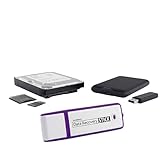
- The Data Recovery Stick requires no technical skills — simply plug it into your Windows computer, click Start, and the software automatically begins scanning and recovering lost files within minutes. Compatible with Windows Vista, 7, 8, 10, & 11, it's designed to be a reliable first step when accidental deletion occurs.
- Recover photos (JPG, BMP, PNG, TIFF), Microsoft Office documents (Word, Excel, PowerPoint, Publisher, Access), Open Office files, MP3 music files, PDFs, RTF documents, AutoCAD files, and HTML web pages. Whether it's personal memories or critical business files, the Data Recovery Stick covers the file types that matter most.
- Works with hard drives, USB drives, SD cards, memory sticks, and other common storage formats that use FAT or NTFS file systems — making it a single solution for hard drive recovery, USB drive recovery, SD card recovery, and more. Note: a media reader is required for micro SD cards and some mass storage devices.
- No Installation Required - The Data Recovery Stick runs entirely from the USB drive with no software installation on your computer — helping prevent new data from overwriting the files you're trying to recover. This also makes it ideal for use across multiple computers or in emergency situations where installation isn't practical.
- Use the Data Recovery Stick on as many computers as often as needed — simply clear the recovered data between uses to free up storage space. Software updates keep the tool compatible with newer systems and devices, backed by 25+ years of data software expertise from Paraben Consumer Software.
For classic Outlook for Windows, connect to the account online, select Deleted Items, then look for Home > Recover Deleted Items From Server. If the command appears, select the message and restore it. Microsoft notes that this classic Outlook server-recovery route is not supported when the folder is shown as Trash rather than Deleted Items, or when the command is absent.
Restored messages may not land in the same place in every client. In classic Outlook, items recovered from Recoverable Items go to Deleted Items first, where you can move them. New Outlook and web guidance says items return to their original folder when possible; if that folder no longer exists, the message goes to Inbox.
Rank #2

- Stellar Data Recovery is an easy-to-use, DIY Windows data recovery software for recovering lost and deleted documents, emails, archived folders, photos, videos, audio, etc., from all kinds of storage media, including the modern 4K hard drives.
- Supports Physical Disk Recovery The software brings an all-new option to scan physical disks to retrieve maximum recoverable data. This feature combined with its advanced scanning engine efficiently scans physical disk in RAW mode and retrieve the lost data in numerous data loss scenarios like accidental deletion, formatting, data/drive corruption, etc.
- Supports 4K Hard Drives The software recovers data from 4K hard drives that store data on large-sized sectors. With an advanced scanning engine at its disposal, the software scans the large storage sectors of 4096 bytes on 4K drives and retrieves the data in vast data loss scenarios like accidental deletion, formatting, data corruption, etc.
- Recovers from Encrypted Volumes Easily retrieves data from BitLocker-encrypted drives or drive volumes. The software allows users to select the encrypted storage drive/volume and run either a ‘Quick’ or ‘Deep’ scan to recover the lost data. Once scanning commences, the software prompts users to enter the BitLocker password to proceed further.
- Recovers from Corrupt Drives The ‘Deep Scan’ capability enables this software to thoroughly scan each sector of the problematic drive and recover files from it. Though this process takes time, it extracts every bit of recoverable data and displays it on the preview screen.
3. Understand the recovery window for your account
| Mailbox or situation | What Microsoft documents | What to do |
|---|---|---|
| Outlook.com | Messages removed from Deleted Items are documented as recoverable for 30 days. The accessed Microsoft Support guidance does not show a publication year. Source: Microsoft Support. | Try Recoverable Items promptly. Emptying that store permanently deletes its contents, which Microsoft says cannot be restored. Source: Microsoft Support. |
| Work or school Microsoft 365 / Exchange account | Availability and recovery time can depend on administrator retention settings. Microsoft gives an example of 30 days in Deleted Items and a further 14 days in Recoverable Items; these are example policy values, not a universal promise. Source: Microsoft Support. | Ask your Microsoft 365 or Exchange administrator whether the mailbox has a retention policy and whether the message remains recoverable. |
| Connected Gmail or Yahoo account shown as Trash in classic Outlook | Microsoft says the classic Outlook server-recovery command does not support accounts that show Trash instead of Deleted Items. Source: Microsoft Support. | Check the provider’s Trash folder and its own recovery options; do not assume Outlook’s server command is available. |
4. If the message still cannot be found
- Check whether it was permanently deleted. Shift+Delete bypasses Deleted Items. Recovery then depends on account type and server support, so success is not guaranteed. Microsoft’s deletion guidance explains the distinction.
- Check for automatic cleanup. Some Outlook configurations empty Deleted Items automatically. If mail disappears after you sign out, review whether that setting is enabled. Microsoft Support.
- For a work or school mailbox, contact the administrator quickly. The organization may control retention and recovery availability; the applicable window is not necessarily the Outlook.com window.
- Do not treat a purged Recoverable Items store as recoverable. Microsoft documents that emptying the Outlook.com Recoverable items store permanently deletes those messages.
Microsoft’s help steps are mailbox controls, not a promise that third-party recovery software can bypass provider retention or retrieve purged server data.
Independent reader supportYour contribution helps us test, update, and keep practical guides available for everyone.5. Keep important mail out of the deleted folder
After restoring a message, move it to a regular folder you use for keeping mail. Deleted Items and Junk are not appropriate long-term storage locations; automatic cleanup or later deletion can remove their contents.
Quick Recap
Product prices and availability are accurate as of the date/time indicated and are subject to change. Any price and availability information displayed on Amazon at the time of purchase will apply.

