
Start with the public agency that operated or controls the automated license plate reader (ALPR) system, then check the records law and retention rules for that jurisdiction. A request for a scan associated with your vehicle is different from a request for the agency’s policy or annual report, and some states exempt scan data from public disclosure. There is no nationwide right established here to view or erase your ALPR records.
First identify which record you need
ALPR systems capture plate images and associated information, but an agency’s ALPR records can include much more than scans. Separate the request into the categories that match your goal:
- Vehicle-specific data: a plate image or scan, with an approximate date, time, and location.
- Program records: the operating or privacy policy, retention schedule, annual report, audit materials, contracts, data-sharing terms, or aggregate statistics.
- Case records: records connected to a criminal or civil proceeding, which may be governed by discovery or court rules rather than public-records procedures.
Disclosure rules can differ by category. A state may keep scans confidential while requiring an agency to publish program policies or reports. A private vendor may store or process information, but that alone does not establish that the vendor is the legal custodian; begin with the public agency that operates or controls the system.
How to submit a focused request
Find the likely records custodian
Identify the city, county, state, campus, transit authority, or other agency whose equipment or system may have captured the plate. Check its ALPR or surveillance transparency page and public-records portal. For example, the Los Angeles County Sheriff’s Department has an ALPR information page with program and policy materials. An agency page can help identify the right office and records, but it does not guarantee disclosure of a particular record.
Free tools Windows power users keep installed
One-click scans. No signup required.
#1 Best Overall
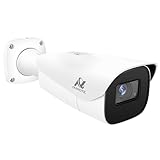
- Compatibility-- Only Work With ONWOTE TD Series NVR (PNT-808, PNA-8016-T, PNT-1232).
- LPR-- License Plate Recognition IP Network PoE Camera.
- 4MP Resolution-- 2592×1520 @30fps for sharp and fluid video.
- 1/1.8" Low-Light Image Sensor-- Ensuring clear images even in dim conditions.
- 8-32mm Motorized Varifocal Lens @F1.6 for adjustable field of view.
Give the agency useful search details
For a vehicle-specific request, provide the plate number and issuing state, a reasonable date and time range, likely location or route, and any relevant incident number. These details can help staff search; they are practical aids, not a universal statutory checklist or guarantee that the agency can locate or release a scan.
Name each record category you want
Use the agency’s public-records process and distinguish scan data from program-administration documents. If you want several types of records, list them separately so the agency can respond to each under the rules that apply.
- ALPR data or images associated with a specified plate and time range, if disclosable.
- The current ALPR operating or privacy policy and applicable retention schedule.
- Annual usage reports, camera counts, or aggregate statistics.
- Audit or access logs, if disclosable.
- Contracts, vendor agreements, or data-sharing terms, if disclosable.
A practical request might say: “Under the applicable public-records law, I request [specific record category] concerning [plate and issuing state, if relevant] for [date/time range] at or near [location]. Please identify any records withheld and the applicable exemption, and release any reasonably segregable nonexempt portions. If another office is the custodian, please direct me to it or let me know.” Adapt it to the agency’s required portal or form. This wording does not create a right of access or require an agency to preserve data outside its legal duties.
Rank #2

- LICENSE PLATE RECOGNITION CAMERA - Features 8mm - 32mm lens for an 15° - 40° Viewing Angle. F1.6 Max Aperture, 1/1.8" 4-Megapixel CMOS Image Sensor and License Plate Recognition Distance 26.25ft - 98.43ft. Supports recognizing vehicle type, vehicle color, and license plate details. Supports IVS, Tripwire & Intrusion as well as displaying vehicle plate, vehicle path & loitering detection.
- SMARTER SECURITY – Query and review license plate details professionally on a PC using a web browser. Works with most standard web browsers however for an optimal experience it is recommended to use Microsoft Edge in IE mode as the camera may require the use of a .exe plugin. Supports storage to a MicroSD Card (up to 256GB), PC/Windows only supports SFTP, IE mode in Microsoft Edge, Firefox, Chrome (limited query options).
- ACTIVE DETERRENTS – This outdoor POE IP LPR camera features a heavy-duty metal weatherproof IP67 housing as well as 4 IR LEDs for night vision up to 98 feet, includes red/blue warning LEDs which can be used as an active deterrent. Dual H.265/H.264 compression allows for maximum encryption with the latest technology as well as backwards compatibility with legacy platforms.
- SIMPLE, RELIABLE, SECURE – This Amcrest POE camera features a secure connection. At Amcrest, we want to ensure the safety of our customers, their loved ones, homes and businesses. Compatible with the following Amcrest AI NVR's for live view purposes only: B0C381YK91, B0CDHDHPR8, B0CBL8W9NY, B0D464HMBB, B0D47X8WJJ
Act promptly: retention periods vary
Some ALPR data is routinely purged, so delay can matter. The examples below are limited to the cited state provisions; they are not a national schedule. Retention periods also do not determine whether a record is open to public inspection.
Recommended Free Tools
| Jurisdiction and source | Access or disclosure example | Retention example | What to do |
|---|---|---|---|
| Virginia — Virginia Code § 2.2-5517, Virginia General Assembly | Covered system data and audit-trail data are not subject to disclosure under Virginia FOIA. Agencies must publicly post a use policy and annual report, subject to statutory exclusions. | Covered system data ordinarily must be purged after 21 days; audit-trail data after two years. An exception applies to data connected to an ongoing investigation, prosecution, or civil action, with retention tied to the specified disposition point. | Request underlying data separately from public policy or report materials. If the data relates to a case, ask whether the statutory retention exception applies. |
| North Carolina — N.C. Gen. Stat. § 20-183.32, North Carolina General Assembly | Covered captured plate data is confidential and not a public record, subject to statutory limits and exceptions. | Covered data generally may not be preserved for more than 90 days after capture. Defined agency preservation requests and warrants can allow longer retention. | A public-records request may not provide access to the scans. The statute’s sworn preservation-request procedure is for a law-enforcement agency; it does not establish an identical personal preservation right. |
| Washington — RCW 10.130.040, Washington State Legislature | The cited section focuses on retention and use limits. Check other applicable statutory provisions and public-records law before asserting access. | The default for covered agency data is 21 days, with exceptions and purpose-specific rules. The statute specifies, for example, deletion 12 hours after final disposition of a parking-enforcement case, including exhaustion of appeals, and 30 days after collection for traffic studies. Other exceptions include specified warrants or court orders, commercial vehicle systems, and evidence of listed unlawful conduct. | Identify the purpose for which the data was collected and check whether an exception applies. The cited statutory page includes a 2026 amendment and effective-date note, so check the version effective for the relevant collection and request dates. |
These rules illustrate why a request should go to the agency promptly. They do not show that every ALPR system follows the same schedule or that data still held by an agency must be released. The National Conference of State Legislatures’ state-statute overview is a secondary map, not a substitute for checking the current law in the relevant state.
What to do if the agency denies the request
There is no single ALPR-specific appeal route or deadline established for every U.S. jurisdiction. Follow the review procedure in the applicable state or local public-records law, not a deadline borrowed from another state.
Rank #3

- 𝐄𝐧𝐡𝐚𝐧𝐜𝐞𝐝 𝐃𝐮𝐚𝐥-𝐂𝐚𝐦𝐞𝐫𝐚 𝐂𝐥𝐚𝐫𝐢𝐭𝐲 𝐚𝐭 𝐔𝐩 𝐭𝐨 𝟒𝟎 𝐟𝐭 (𝟏𝟐 𝐦): Capture every event around your home in ultra-clear 3K resolution. Enjoy sharp, detailed visuals with 8× zoom to see what matters most.
- 𝐒𝐨𝐥𝐚𝐫-𝐏𝐨𝐰𝐞𝐫𝐞𝐝, 𝐈𝐧𝐬𝐭𝐚𝐥𝐥 𝐎𝐧𝐜𝐞 𝐚𝐧𝐝 𝐢𝐭 𝐑𝐮𝐧𝐬 𝐅𝐨𝐫𝐞𝐯𝐞𝐫: Experience constant peace of mind with this solar-powered security camera that's easy to set up and always on, thanks to its removable solar panel.
- 𝟑𝟔𝟎° 𝐆𝐮𝐚𝐫𝐝𝐢𝐚𝐧, 𝐍𝐨 𝐁𝐥𝐢𝐧𝐝 𝐒𝐩𝐨𝐭𝐬: Say goodbye to blind spots with full home coverage by installing the product vertically. Enjoy 360° Pan & Tilt Surveillance , check your front porch, monitor your backyard, and keep an eye on the driveway with ease.
- 𝐕𝐞𝐫𝐬𝐚𝐭𝐢𝐥𝐞 𝐈𝐧𝐬𝐭𝐚𝐥𝐥𝐚𝐭𝐢𝐨𝐧, 𝐄𝐟𝐟𝐨𝐫𝐭𝐥𝐞𝐬𝐬 𝐒𝐞𝐭𝐮𝐩: Experience the convenience of a 7-minute installation with its compact size and wire-free design.
- 𝐑𝐞𝐬𝐭 𝐚𝐬𝐬𝐮𝐫𝐞𝐝 𝐬𝐞𝐫𝐯𝐢𝐜𝐞: you can enjoy a worry-free experience, all backed by our professional customer service team.
- Keep the paper trail. Save the request, the agency’s response, and the date you received the denial.
- Ask for the legal basis. If the response does not identify it clearly, ask which statutory exemption applies and whether the agency can release nonexempt portions separately.
- Use the stated review route. Follow the denial’s instructions and check the applicable law for the reviewing official, body, and filing deadline. Those details depend on jurisdiction.
- Separate public-records review from case procedures. If the information relates to an active criminal or civil matter, discovery, a subpoena, or a court order may provide a different route. Virginia Code § 2.2-5517 includes specified criminal- and civil-case sharing exceptions.
Can you make an agency correct or delete your data?
Do not assume that an agency’s routine purge schedule gives you a personal right to demand immediate deletion or correction. The cited statutes establish retention rules and exceptions; they do not establish a general individual correction process.
Ask the records custodian what information it holds, which retention schedule governs it, whether it has been retained or flagged for a case, and whether the agency has a complaint or data-quality procedure. If an inaccurate ALPR alert led to a police stop or other action, a public-records request is not necessarily the procedure for challenging that encounter or the use of the evidence. Check the separate process and deadlines that apply to the incident or case.
Know what the statutes actually cover
The cited state examples show why it is important to name both the record and the jurisdiction. Virginia Code § 2.2-5517(F) says: “System data and audit trail data shall not be subject to disclosure under the Virginia Freedom of Information Act (§ 2.2-3700 et seq.).” That rule applies to the covered ALPR system data and audit-trail data; it does not mean every document about Virginia ALPR programs is necessarily exempt.
North Carolina’s N.C. Gen. Stat. § 20-183.32(e) says: “Captured plate data obtained in accordance with this Article is confidential and not a public record.” Its scope is the captured plate data covered by that article, not every record an agency creates about a plate-reader program. The current law and any relevant exceptions in the specific jurisdiction determine what may be requested, retained, disclosed, or challenged.
Quick Recap
Product prices and availability are accurate as of the date/time indicated and are subject to change. Any price and availability information displayed on Amazon at the time of purchase will apply.

