
To increase sales online, work on three things together: attract relevant visitors, make it easier for them to buy, and give satisfied customers a reason to return. More traffic alone does not ensure more orders. Choose a few tactics that fit your customers, product, budget, and capacity, then measure whether they improve the outcome you want.
Start with the bottleneck, not a checklist
The 20 strategies below are options, not steps every store must complete. Shopify’s guidance on developing a marketing plan recommends choosing tactics around the business, its customers, and its goals; its 2026 ecommerce marketing guide groups the work around traffic, conversion, and retention. A store with few qualified visitors has a different problem from one whose shoppers leave at checkout.


| What you observe | Likely area to investigate | Useful measures |
|---|---|---|
| Too few likely buyers reach the store | Audience fit and discovery | Qualified visits by source; resulting purchases |
| Visitors view products but hesitate | Product information, trust, usability, or value | Product-page activity; add-to-cart rate; conversion rate |
| Shoppers add items but do not complete orders | Checkout friction, delivery costs, or return uncertainty | Cart abandonment; completed orders |
| Most orders come from first-time customers | Post-purchase experience and retention | Returning-customer activity; repeat purchases; referral sales |
These are diagnostic clues, not proof of a cause. Look at the store’s own analytics and customer feedback before deciding what to change.
Attract relevant visitors
Traffic is useful when it comes from people who might genuinely want the offer. Select channels based on customer fit, the time and money available, and whether you can connect activity to meaningful store outcomes.
Recommended Free Tools
1. Define the customer and the problem your offer solves
Describe who the product is for, what need it addresses, and what would make that customer choose it. Use those answers to shape product copy and decide where to reach people. A channel with broad reach is not necessarily useful if it reaches few likely buyers.
2. Make product and category pages easier to discover
Use the terms shoppers are likely to use in relevant page titles, descriptions, and on-page content. Keep categories and navigation understandable so people and search engines can make sense of the store. Shopify’s SEO overview covers practical search basics; Google Search Central’s Best practices for ecommerce sites in Google Search, last updated December 10, 2025, explains ecommerce discoverability and site structure.
3. Share accurate product information with search engines
Review Google’s ecommerce documentation for product data and relevant structured data. Implement markup only when it accurately represents information visible on the page. Structured data can help search engines interpret product information; it is not a promise of a particular display or more sales.
4. Publish content that answers shoppers’ questions
Create useful written or visual material about product use, differences between options, or problems the product addresses. Link the explanation to the relevant product or category page so a reader can take the next step. Prioritize questions customers actually ask over content produced just to fill a publishing schedule.
Quick wins for a faster PC:
Repair Windows errors before they cause bigger problemsFix Now →Scan for outdated or missing drivers - takes under a minuteDriver Scan →5. Choose social channels by audience fit
Find out which platforms your likely customers use and whether your product can be explained well there. Set a publishing rhythm you can maintain, and respond to relevant comments and messages. Review qualified visits and orders alongside engagement; likes and views alone do not show whether a channel contributes to sales.
Rank #2
6. Try creator, influencer, or affiliate collaborations selectively
Look for partners whose audience and content suit the product, agree on what each party will do, and decide how you will assess the collaboration before it begins. Compare resulting qualified traffic and sales with the effort or cost involved; reach by itself does not establish commercial value.
7. Use paid search or social campaigns with a defined goal
Set a spend limit and choose the result you want to evaluate before launching. Track the campaign’s resulting sales and customer acquisition cost, then compare those outcomes with other ways of reaching customers. Paid promotion is an option to test, not a requirement for every store.
Help visitors decide and complete a purchase
Once a likely customer reaches the store, make it straightforward to understand the product, judge whether it is trustworthy, and see the costs and terms of buying. Shopify’s marketing-plan guidance includes conversion-focused improvements such as clear product information, reviews, and transparent shipping and return details.
Free tools Windows power users keep installed
One-click scans. No signup required.
8. Simplify navigation and check the full journey on mobile
Keep menus clear and layouts consistent across screen sizes. On a phone as well as a desktop, go through the complete journey: find a product, review its details, add it to the cart, and reach checkout. Note confusing labels, hard-to-use controls, or steps that prevent a shopper from proceeding.
9. Use product images to answer practical questions
Choose clear images that show the item and details a shopper needs to evaluate it. Where useful, show scale, important features, or the product in use. Images should help customers understand what they will receive rather than merely decorate the page.
Rank #3

- 5-PACK/50 Sets (250 Total Sets): Ten 5.5" X 8"5 Sales Order Books with two-part white & yellow forms which produce two identical records of each sales transaction, one for the customer and one for your business.
- CARBONLESS COPY: No carbon paper! Each 2-part set features a white top sheet for recording each transaction and a bottom canary yellow sheet that captures written text from top sheet.
- CONSECUTIVE NUMBERS: Individual invoice books have all consecutive numbers in the upper right corner for your convenience.
- WRAP-AROUND COVER: Fold the back cover between sets to keep invoices neat and legible.
- PERSONALIZE: Each sales order form sheet contains space at the top to add a company stamp or sticker.
10. Write specific, scannable product descriptions
State what the item is, what it does, and the attributes that matter to a buying decision. Use concise paragraphs or lists where they make details easier to find. Avoid vague claims that leave shoppers to guess whether the product meets their needs.
11. Collect and display useful customer reviews
Reviews can help shoppers assess an item through other customers’ experiences. Present them accurately and transparently, and make relevant feedback easy to find. Do not imply that a review or customer account represents experiences it does not.
12. Show shipping costs and return terms early
Make delivery costs and the applicable return policy accessible before a shopper commits to checkout. Clear terms reduce uncertainty about the total purchase and what happens if the item is not right. Shopify identifies cost transparency and clear return policies as ways to address checkout uncertainty.
13. Make business and support details easy to locate
Provide an About page, contact details, and a practical route to support. Live chat may suit a store that can staff it and answer questions promptly; another clear support channel may be more appropriate for a smaller operation. The useful choice is one customers can find and your business can maintain.
14. Review page performance and Core Web Vitals
Use performance reports to find slow pages or interactions and prioritize changes that improve the shopping experience without removing essential functionality. Shopify’s web-performance guidance notes that store features can affect performance, and performance can matter to conversion and discoverability. Recheck after adding apps, media, or other features rather than assuming each addition is cost-free.
Rank #4
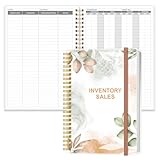
- EASY TO USE - The inventory and sales log book are easy-to-use inventory books that help you track inventory, purchases, sales, balances, unit and total costs, and manage reorders - all in one place. Easy track your inventory for small businesses.
- MONITOR YOUR DATAS - Using a sales inventory book to store all your data, you can consult your records whenever needed. Optimize your business and generate the most benefit.
- UNIQUE DESIGN - We make sure you can tailor this inventory log book to your enterprise business needs to take full advantage of its capabilities. It will work for online, consignment, home or in-store businesses.
- HIGH QUALITY - This sales book for your business, sales book size of 5.8" x 8.5", just the perfectly size to fit in your backpack, purse or laptop case. Is used to high quality 100gsm pure white paper, elastic band and a back pocket for extra space.
- THE PERFECT GIFT - Use inventory and sales log book for your personal or samll business finances, give it to your friends, family as a gift for Birthday| Easter|Children's Day|Halloween|Thanksgiving|Christmas|Back to school and New Year's Day.
15. Improve on-site search and recommendations where they help
Review what visitors search for and whether the results help them find relevant products. Consider complementary product recommendations when they answer a genuine shopping need. A search feature or recommendation block that adds clutter or irrelevant choices can work against the decision it is meant to support.
16. Test bundles, cross-sells, and upsells for relevance
Offer complementary items or quantities when they make sense for the customer, not simply to push a larger order. Evaluate average order value alongside conversion rate: a higher-value order is not a clear improvement if fewer customers complete a purchase or the offer undermines the experience.
17. Use promotions for a specific purpose
A discount or sale can be tested against a defined goal, such as supporting a particular campaign or moving a shopper toward a purchase. Consider its effect on margin and repeat purchasing as well as order volume. Do not treat a temporary rise in orders as evidence that an offer is sustainable.
18. Explore live selling or demonstrations if your audience uses them
A live product demonstration can explain an item in a format that suits some audiences. Treat an event as a channel experiment: assess attendance, qualified visits, and resulting sales, as well as the work required to prepare and run it. Amazon’s seller guidance includes live selling among its suggested tactics, but that does not make it suitable for every store.
Independent reader supportYour contribution helps us test, update, and keep practical guides available for everyone.Encourage customers to return and recommend you
A completed first order is not the only useful outcome. The product, service, and follow-up should give customers a reason to buy again or tell someone else. Choose retention tactics that fit the product’s natural repurchase cycle and the economics of the business.
Outdated Drivers Are Slowing You Down
One free scan finds every outdated or missing driver and matches the right update for your exact hardware.Free scan · exact hardware matchWindows Errors? Fix Them Before They Spread
Repair common Windows errors and clear accumulated junk for a smoother, more stable PC - no reinstall needed.Free scan · no reinstallBest Value

- QUALITY INVOICES: Adams Order books provide a professional invoice or customer receipt; a great way to create and maintain a professional image for small businesses and service providers
- 50 TWO-PART CARBONLESS FORMS: Customers get the perforated white top copy; retain the canary and pink copies for your records
- WRAP-AROUND COVER: Fold the back cover between sets to keep invoices neat and legible
- ROOM FOR CUSTOMIZATION: A blank space at top leaves room for your company stamp; a big savings over custom-printed forms
- CONSECUTIVELY NUMBERED: Large 6-digit numbers in the upper right hand corner help you thumb through orders quickly
19. Send relevant email or SMS lifecycle messages
With subscriber permission and applicable compliance in mind, use messages that fit the customer’s relationship with the store. Useful examples include relevant campaigns, abandoned-cart reminders, and post-purchase information. Avoid undifferentiated blasts; the cited merchant guidance supports these as marketing approaches but does not provide legal advice for specific jurisdictions.
20. Make repeat business and referrals worthwhile
Ask customers for feedback, and consider a loyalty or referral experience if it offers real value and fits the business’s economics. Track returning-customer activity and referral sales to see whether the program is contributing, rather than counting sign-ups alone.
How to prioritize and measure a change
Shopify’s 2026 ecommerce marketing guide recommends matching key performance indicators to a business’s stage. A new store may first need reliable baselines; a store that is scaling may need to understand channel economics. Use a consistent measurement definition and comparison period so a change in reporting does not look like a change in sales.
- Record a baseline. Capture the available measures relevant to the store: traffic sources, conversion rate, average order value, acquisition costs, repeat-customer activity, and cart abandonment. Not every store will have reliable data for every measure.
- Name the observed bottleneck. Decide whether the immediate issue is too few qualified visitors, hesitation on product pages, checkout abandonment, or weak repeat purchasing. Use analytics and customer feedback as clues rather than assuming one metric explains the cause.
- Choose a small number of changes and define the expected signal. For example, if shoppers appear uncertain about delivery, make the shipping information easier to find and look for a change in checkout behavior. State what result would count as useful before making the change.
- Change one major variable at a time where practical. This makes it easier to interpret what happened. Compare results with the baseline after enough relevant data has accumulated; there is no universal test duration or sample-size rule established by the cited guidance.
- Keep, revise, or stop the tactic. Consider its measured result, cost, operational capacity, customer experience, and any trade-off with other goals. Revisit the choice as products, customers, and the store change.
When several options could address the same bottleneck, compare audience fit, business stage and goal, total cost and capacity, measurement quality, and the effect on customer experience and site performance. These comparisons help distinguish a promising test from a tactic that is merely popular.
What’s actually slowing this PC down?
Pick the symptom - the matching free tool is one click away.
Shopify’s 2026 guide quotes Kailey Bradt, CEO of Sonsie Skin: “There’s a massive difference between someone who buys your product and someone who invests in your brand. The first might come back if they like what they bought. The second becomes part of your story, and tells that story for you.” The practical distinction is between completing a transaction and earning an experience a customer chooses to return to or share.
Quick Recap
Product prices and availability are accurate as of the date/time indicated and are subject to change. Any price and availability information displayed on Amazon at the time of purchase will apply.

